美元信用

Search documents
王涵:从关税战到卖“金卡”,特朗普在折腾啥?——特朗普“任性”行为背后的财政逻辑
Sou Hu Cai Jing· 2025-09-28 03:18
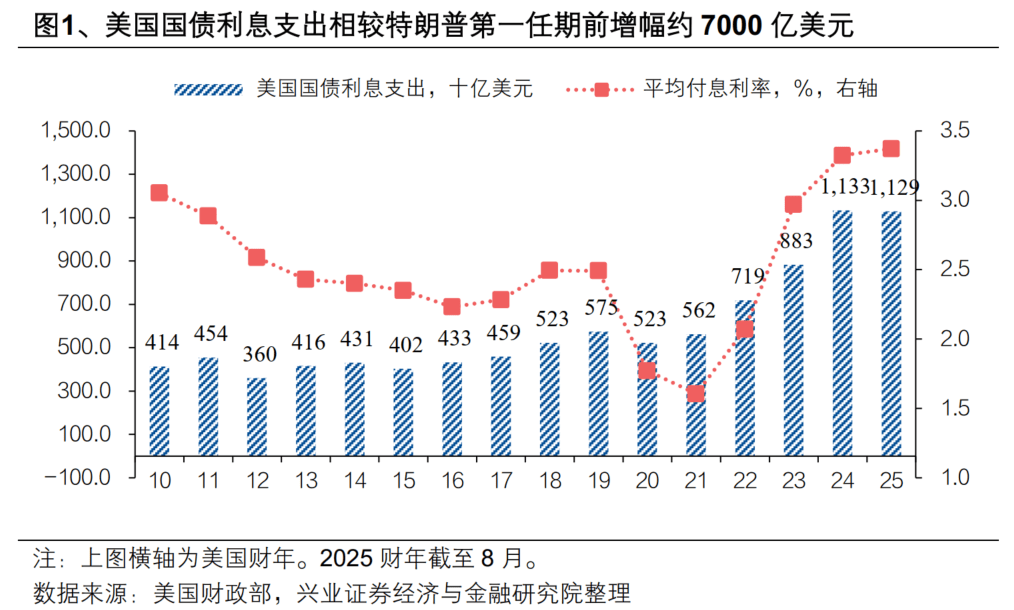
Group 1 - The core objective of recent policies by the Trump administration is to alleviate U.S. fiscal pressure, as evidenced by the significant increase in interest payments on national debt from $432.6 billion in FY2016 to nearly $1.13 trillion by FY2025 [1][5][9] - The administration's push for interest rate cuts by the Federal Reserve is aimed at reducing debt servicing costs, which have increased by approximately $700 billion since Trump's first term [1][7][9] - Despite the Fed's rate cuts potentially saving around $412 billion to $1.93 trillion in interest payments, this is insufficient to cover the existing fiscal gap of about $400 billion, prompting the administration to seek additional revenue sources [2][15][19] Group 2 - The Trump administration's policies, including the "Gold Card" initiative and increased H1B fees, are part of a broader strategy to generate revenue and address the fiscal shortfall [15][17] - The relationship between the Trump administration and the Federal Reserve has deteriorated, with the administration advocating for monetary policy to support fiscal needs, which may undermine the Fed's independence and affect the credibility of the U.S. dollar [2][17][19] - As a result of these policies, capital is expected to flow out of the U.S., benefiting non-U.S. assets such as precious metals and Chinese assets, as the dollar's creditworthiness is likely to weaken [3][19][21] Group 3 - The anticipated decline in interest rates and the weakening of the dollar may lead to increased investment in non-U.S. markets, particularly in Chinese assets, as the yuan is expected to appreciate due to narrowing interest rate differentials [3][19][21] - The Chinese capital market is expected to benefit from these trends, with a solid long-term upward trajectory supported by favorable domestic policies and the ongoing global shift towards non-U.S. assets [21][22][23] - The current geopolitical landscape and the strategic positioning of China in global markets are likely to enhance investor confidence and risk appetite, further supporting the A-share market [21][22][23]

6000亿变空头支票!特朗普算计遭盟友拆台,36万亿国债没人接盘?
Sou Hu Cai Jing· 2025-09-27 14:41
Core Viewpoint - The article discusses the implications of the Trump administration's approach to managing the U.S. national debt, which amounts to $36 trillion, by applying strategies reminiscent of personal bankruptcy restructuring, including interest rate cuts and tariffs, leading to potential backlash from allies and a weakening of the dollar's credibility [2][22]. Group 1: Economic Strategies - The Federal Reserve's interest rate cuts are interpreted as a routine monetary easing, but they reflect Trump's strategy of creating crises to force policy concessions [4][8]. - Trump's historical approach during the 1990 economic recession involved leveraging bankruptcy protection to negotiate lower interest rates, a tactic he appears to be replicating on a national scale [4][6]. - The proposed interest savings of $300 billion from rate cuts are minimal compared to the $7.5 trillion expenditure of the "Great Beautiful Act," indicating a focus on long-term debt management rather than immediate savings [8][10]. Group 2: Tariff Policies - Tariffs are framed as a means of economic colonialism, where the U.S. imposes unilateral tax increases while demanding market access for its goods, creating a disadvantage for developing countries [10][12]. - The strategy includes pressuring allies like Japan and South Korea to invest in U.S. industries, particularly in the semiconductor sector, while maintaining control over the investment decisions [12][14]. - The imposition of tariffs is expected to ultimately burden U.S. consumers, as the increased costs are likely to be passed down, potentially limiting the effectiveness of interest rate cuts [14][20]. Group 3: International Relations and Investment - Recent investment commitments from allies, such as the EU's $600 billion and Japan's $550 billion, are criticized as lacking substance and unlikely to materialize as actual investments [16][18]. - The agreements often involve loans rather than direct investments, raising concerns about the actual economic benefits for the U.S. and the risks borne by the allies' companies [18][20]. - The diminishing economic appeal of the U.S. is highlighted by allies' reluctance to fully commit to investment agreements, reflecting a shift in global economic dynamics where countries prioritize their own interests [20][22].

兴业证券王涵 | 从关税战到卖“金卡”,特朗普在折腾啥?——特朗普“任性”行为背后的财政逻辑
王涵论宏观· 2025-09-27 07:45
Core Viewpoint - The recent policies of the Trump administration, including tariff wars, interest rate cuts, and the "Gold Card" plan, are primarily aimed at alleviating U.S. fiscal pressure, despite appearing disorganized on the surface [1][6][19]. Group 1: Fiscal Pressure and Policy Responses - The U.S. government's interest expenditure has increased significantly, from $432.6 billion in FY 2016 to nearly $1.13 trillion by FY 2025, indicating a rise of approximately $700 billion [1][8]. - The Trump administration has attempted to address this fiscal gap through various measures, including tariffs, which are expected to generate around $200 billion in additional revenue, and other cost-saving initiatives [9][19]. - Despite these efforts, there remains a funding gap of about $400 billion that needs to be addressed [9][19]. Group 2: Impact of Interest Rate Cuts - The Federal Reserve's interest rate cuts are projected to save the government between $41.2 billion and $193.1 billion in interest expenditures, depending on the extent of the cuts [16][17]. - Even with aggressive rate cuts, the savings are insufficient to cover the existing fiscal shortfall, prompting the Trump administration to seek additional revenue sources [19][21]. Group 3: Currency and Asset Implications - The push for lower interest rates and the potential weakening of the U.S. dollar may lead to capital flowing out of the U.S., benefiting non-U.S. assets such as precious metals and cryptocurrencies [3][21]. - The anticipated appreciation of the Chinese yuan, driven by narrowing interest rate differentials, could attract foreign investment into Chinese markets, following a three-step process starting with Hong Kong stocks [3][23]. Group 4: Long-term Market Outlook - The current macroeconomic environment suggests that A-shares in China are likely to maintain a long-term upward trend, supported by China's competitive advantages and favorable capital market policies [25][26]. - The ongoing geopolitical dynamics and the strategic shift in China's approach to international relations may enhance investor confidence and risk appetite, further supporting the Chinese capital market [26][27].


贵金属周报(AU、AG):降息如期落地,贵金属宽幅波动-20250922
Guo Mao Qi Huo· 2025-09-22 04:59
1. Report Industry Investment Rating - No specific industry investment rating is provided in the report. 2. Core Views of the Report - Last week, gold and silver prices fluctuated widely at high levels but continued to rise on a weekly basis. The Fed cut interest rates by 25bp in September, and the dot - plot predicts two more rate cuts this year. However, due to the market's prior pricing of the rate - cut benefits and the Fed's neutral - to - hawkish tone, the prices first rose and then fell. Later, dovish remarks from Fed officials and the US government's "shutdown" risk drove prices up again. But the strong US economic data may suppress the upward pace of precious metal prices [3]. - In the short term, precious metal prices are expected to remain strong at high levels, but with the approaching National Day holiday, the risk of increased volatility should be watched. In the long - term, the bullish view remains unchanged, and it is recommended to buy gold on dips [5]. - The underlying logic of the precious metal bull market remains solid. Trump's policy combination will increase the US federal government debt, weaken the US dollar's credit, and combined with expected Fed rate cuts, complex global geopolitical situations, and continued central bank gold purchases, it will support the upward movement of the gold price center [5]. 3. Summary by Relevant Catalogs 3.1 PART ONE:行情及基本面指标跟踪 3.1.1 Gold and Silver Prices and Gold - Silver Ratio - London spot gold rose from $3642.635/oz to $3684.650/oz, a weekly increase of 1.15%. Shanghai gold futures' main contract fell from 834.22 yuan/gram to 830.56 yuan/gram, a decrease of 0.44%. London spot silver rose from $42.1610/oz to $43.0590/oz, an increase of 2.13%. Shanghai silver futures' main contract fell from 10035 yuan/kg to 9971 yuan/kg, a decrease of 0.64%. The SHFE gold - silver ratio rose from 83.13 to 83.30, an increase of 0.20% [4]. 3.1.2 ETF and CFTC Positions - The gold SPDR - ETF持仓 increased from 974.8 tons to 994.56 tons, an increase of 2.03%. The silver SLV - ETF持仓 increased from 15070 tons to 15205 tons, an increase of 0.90%. COMEX gold non - commercial net long positions increased by 4670 contracts to 266410 contracts, an increase of 1.78%. COMEX silver non - commercial net long positions decreased by 2399 contracts to 51538 contracts, a decrease of 4.45% [4]. 3.1.3 Inventory Data - The Shanghai Futures Exchange (SHFE) gold inventory increased from 52.95 tons to 57.429 tons, an increase of 8.46%. The COMEX gold inventory increased from 1210.38 tons to 1227.45 tons, an increase of 1.41%. The SHFE silver inventory decreased from 1247 tons to 1159 tons, a decrease of 6.99%. The COMEX silver inventory decreased from 16405 tons to 16300 tons, a decrease of 0.64%. The SGE silver inventory (lagged one week) increased from 1248 tons to 1252 tons, an increase of 0.33% [4]. 3.2 PART TWO:主要宏观指标跟踪 3.2.1 Exchange Rates and Interest Rates - The US dollar index rose slightly from 97.6178 to 97.6519, an increase of 0.03%. The US dollar against the offshore RMB fell from 7.1237 to 7.1196, a decrease of 0.06%. The 2 - year US Treasury yield rose from 3.5494% to 3.5673%, an increase of 0.50%. The 10 - year US Treasury yield rose from 4.0701% to 4.1255%, an increase of 1.36%. The US 10 - year real interest rate rose from 1.7% to 1.75%, an increase of 2.94% [4]. 3.2.2 US Economic Data - The US GDP showed a strong second - quarter growth, but the manufacturing and service PMI both declined. Retail sales data was strong, while consumer confidence declined. Employment cooled significantly, with weak August non - farm payrolls and a rising unemployment rate. Inflation showed signs of rising [53][60][65]. 3.2.3 Eurozone Economic Data - The Eurozone GDP bottomed out and rebounded. The manufacturing PMI increased, while the service PMI declined. Inflation data showed different trends in the Eurozone and the UK [73][74]. 3.2.4 Central Bank Gold Purchases - The People's Bank of China increased its gold reserves for the 10th consecutive month. In August 2025, China's gold reserves reached 74.02 million ounces (about 2302.279 tons), a month - on - month increase of 60,000 ounces (about 1.87 tons). Global central banks continued to be net buyers of gold in 2025, although the pace slowed down. In the first half of 2025, global central banks and other institutions net - bought 415.1 tons of gold, a year - on - year decrease of about 20.4% [83].
美国慌了!中国手里的美债规模跌到7307亿美元!
Sou Hu Cai Jing· 2025-09-21 09:20
Group 1 - China has been reducing its holdings of US Treasury bonds since 2022, with reductions of $173.2 billion in 2022, $50.8 billion in 2023, and $57.3 billion projected for 2024. In July 2025 alone, China reduced its holdings by $25.7 billion [1][3] - In contrast, Japan and the UK have increased their holdings of US Treasury bonds, with Japan purchasing $3.8 billion in July and holding $1,151.4 billion, while the UK bought $41.3 billion, holding $899.3 billion [3] - Experts attribute China's reduction in US Treasury bonds to concerns over US tariff policies and unfavorable fiscal conditions, leading to a decrease in the attractiveness of holding US debt [3] Group 2 - While China is reducing its US Treasury bond holdings, it is simultaneously increasing its gold reserves, having done so for ten consecutive months by August 2025, indicating a shift towards asset diversification for greater security [3] - Despite China's reduction, foreign investors are still buying US Treasury bonds, with total foreign holdings reaching a record high of $9.159 trillion in July, reflecting differing views on the risks and returns associated with US debt [3] - The total US debt has reached $37 trillion, with annual interest payments exceeding $1 trillion, prompting central banks globally to revise their reserve strategies and increase gold purchases, which have exceeded 1,000 tons for three consecutive years [3]
凌晨美联储降息25个基点,悬念来到中国这边
吴晓波频道· 2025-09-18 01:02
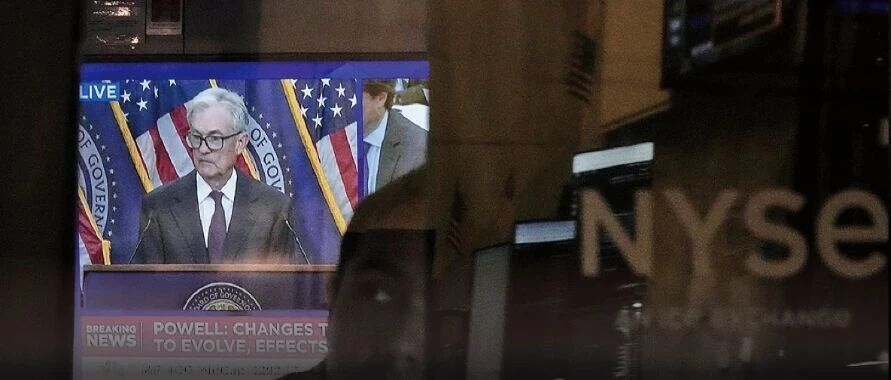
Core Viewpoint - The recent interest rate cut by the Federal Reserve is seen as the beginning of a new monetary policy phase rather than an end to economic challenges, with implications for both the U.S. and Chinese markets [2][30]. Group 1: Federal Reserve's Rate Cut - The Federal Reserve announced a 25 basis point rate cut, which was largely anticipated by the market [11][13]. - Historical data shows that previous rate cuts by the Federal Reserve have often led to significant increases in the Shanghai Composite Index, indicating a potential positive impact on Chinese stock markets [10][12]. - The decision to cut rates reflects a balancing act between maximizing employment and maintaining price stability, with current economic indicators suggesting a focus on employment due to rising unemployment rates [14][16]. Group 2: Market Reactions - Following the announcement, the U.S. dollar index saw a slight increase of 0.15%, while major stock indices experienced minor declines, indicating mixed market reactions [8]. - The rate cut is expected to have spillover effects on global financial markets, particularly influencing capital flows and exchange rates [9]. Group 3: Implications for China - The Federal Reserve's actions are likely to open up more monetary policy space for China, potentially leading to similar rate cuts by the People's Bank of China [35][37]. - Analysts suggest that the Chinese market may benefit from increased liquidity and a more favorable environment for equities and real estate as a result of the Fed's decision [36][47]. - The potential for a weaker U.S. dollar could also enhance the attractiveness of Chinese assets, providing a boost to exports [44]. Group 4: Economic Perspectives - Economists express concerns about the Federal Reserve's independence being challenged, which could undermine the credibility of the U.S. dollar and have broader implications for global markets [32][50]. - The ongoing political dynamics, particularly the influence of President Trump on the Federal Reserve, may complicate future monetary policy decisions [28][49].
我们如何看待美国降息后,金银价格走势
2025-09-17 14:59
Summary of Key Points from Conference Call Industry Overview - The discussion revolves around the precious metals market, particularly gold and silver, in the context of U.S. monetary policy and global economic conditions [1][2][3]. Core Insights and Arguments - **U.S. Monetary Policy Outlook**: The Federal Reserve is expected to lower interest rates three times in 2025, potentially bringing the rate down to a range of 3.5% to 3.75% by year-end, contrasting with the previous year’s stronger dollar environment [1][5]. - **Global Economic Divergence**: The divergence in monetary policies among the U.S., European Central Bank (ECB), and Bank of Japan (BoJ) is highlighted, with the ECB pausing rate cuts and the BoJ maintaining rates after a hike in January 2025 [1][5]. - **Labor Market Trends**: The U.S. labor market is showing signs of cooling, with non-farm payroll data underperforming and an increasing unemployment rate, while the Eurozone is experiencing a decline in unemployment [1][6]. - **Manufacturing PMI**: The Eurozone's manufacturing PMI reached a three-year high of 50.7 in August 2025, driven by improvements in France and Germany, indicating a potential economic recovery [6][7]. - **Impact of Fed's Independence**: The independence of the Federal Reserve is under threat, which could weaken the dollar's credibility and the safe-haven status of U.S. Treasuries, leading to higher long-term bond yields [1][8]. Additional Important Points - **Investment Recommendations**: Investors are advised to continue holding or investing in undervalued gold and silver companies, as they are expected to benefit significantly from the current economic environment [2][9]. - **Historical Context**: The call references the market's reaction to the Fed's previous rate cuts in September 2024, where the dollar initially weakened but later strengthened due to market expectations surrounding political developments [4]. This summary encapsulates the key points discussed in the conference call, focusing on the implications for the precious metals market and investment strategies in light of evolving economic conditions.
美联储独立性遭遇历史性考验 市场风暴“暗流涌动”
2 1 Shi Ji Jing Ji Bao Dao· 2025-09-17 12:45
Core Viewpoint - The independence of the Federal Reserve is facing significant challenges due to political interventions, particularly from the Trump administration, which may lead to a shift in monetary policy direction and increased market volatility [2][3][5]. Group 1: Federal Reserve Independence - The Trump administration's attempt to remove Federal Reserve Governor Lisa Cook is seen as a critical test of the Fed's independence, raising concerns about political influence over monetary policy [3][5]. - Analysts suggest that Trump's potential nomination of a more dovish Fed chair could further undermine the Fed's independence and alter its policy stance [2][5][7]. - The ongoing legal and procedural challenges surrounding Cook's removal highlight the contentious nature of the relationship between the government and the Fed [3][6]. Group 2: Economic Implications - Trump's interventions may lead to a more dovish monetary policy, with potential interest rate cuts exceeding current market expectations, possibly bringing the policy rate down to 2.75% to 3% [7]. - The Fed's independence is crucial for maintaining predictable interest rate paths, and any perceived loss of this independence could increase uncertainty in monetary policy, affecting investor confidence [8][9]. - The potential for a return to inflationary pressures reminiscent of the 1970s is a concern if the Fed aligns its policies too closely with political pressures [3][4]. Group 3: Market Reactions - Investors may demand higher risk premiums for U.S. dollar assets due to the challenges to the Fed's independence, leading to a steepening of the yield curve [8][9]. - The uncertainty surrounding monetary policy could weaken the credibility of the dollar, prompting a shift towards "de-dollarization" among international investors [9]. - The recent surge in gold prices indicates a potential shift in investment strategies as market participants seek to hedge against the risks associated with U.S. monetary policy changes [9].
美联储独立性遭遇历史性考验,市场风暴“暗流涌动”
2 1 Shi Ji Jing Ji Bao Dao· 2025-09-17 12:43
Core Viewpoint - The independence of the Federal Reserve is facing significant challenges, particularly due to the Trump administration's attempts to influence its leadership and monetary policy decisions [2][3][5]. Group 1: Federal Reserve Leadership Changes - The Trump administration plans to appeal a court ruling that prevents the removal of Federal Reserve Governor Lisa Cook, highlighting ongoing tensions regarding the independence of the Fed [1]. - Stephen Milan, nominated by Trump, has taken office and participated in the Fed's September interest rate decision, indicating a shift in the Fed's dynamics [1]. - Trump's potential nomination of a more dovish Fed chair next year could further influence the Fed's monetary policy direction [1][6]. Group 2: Implications for Monetary Policy - Analysts suggest that Trump's interventions may lead to a more dovish monetary policy, with potential interest rate cuts exceeding current market expectations [7]. - The Fed's independence is crucial for maintaining predictable interest rate paths, and any political pressure could undermine this stability [8]. - The risk of inflation may increase if the Fed aligns its policies with Trump's preferences, potentially leading to a repeat of the inflationary trends seen in the 1970s [3][4]. Group 3: Market Reactions and Economic Impact - The challenges to the Fed's independence may result in higher risk premiums for U.S. dollar assets, affecting investor confidence [8][9]. - The yield curve for U.S. Treasury bonds may steepen, with short-term rates declining more significantly than long-term rates due to changing market expectations [8]. - Concerns over fiscal sustainability and monetary independence could lead to a decline in the dollar's credit risk, prompting a shift away from the dollar by international investors [9].
国际金价收涨,基金经理表态对黄金的中长期配置价值维持乐观
Huan Qiu Wang· 2025-09-16 00:35
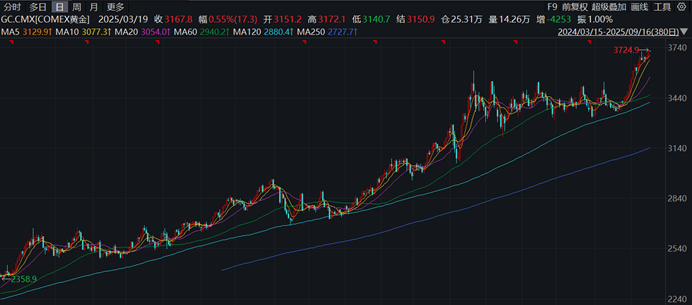
Group 1 - International precious metal futures experienced a general increase, with COMEX gold futures rising by 0.90% to $3719.50 per ounce and COMEX silver futures increasing by 0.84% to $43.19 per ounce [1][3] - Market analysts noted that pressure from President Trump on the Federal Reserve to cut interest rates has raised market concerns, while deteriorating U.S. employment data has strengthened expectations for rate cuts [3] - Progress in U.S.-China trade negotiations, coupled with escalating geopolitical tensions, has further heightened market risk aversion [3] Group 2 - The manager of Huaan Gold ETF expressed optimism regarding the medium to long-term allocation value of gold, anticipating that the Federal Reserve may implement two rate cuts by the end of the year [3] - If rate cuts exceed expectations, it would provide additional benefits for gold, especially given the current high levels of U.S. debt and deficits, which raise questions about the long-term sustainability of U.S. Treasury bonds [3] - Trump's intervention in the Federal Reserve's rate-cutting actions has sparked global concerns, potentially undermining the credibility of the U.S. dollar, which is factored into gold pricing [3]