
长期主义

Search documents
李东生与TCL的45年:为什么他们没错过时代?
远川研究所· 2026-01-13 12:30
Core Viewpoint - TCL has evolved from a traditional television manufacturer to a global technology leader, emphasizing innovation in display technology and strategic restructuring to enhance its market position and technological capabilities [5][11][22]. Group 1: Historical Context and Evolution - TCL first participated in CES in 1991, marking its entry into the global consumer electronics arena, and has since become a significant player with a 2453 square meter booth in 2026, showcasing advanced technologies like SQD-Mini LED and printed OLED displays [3][5]. - The company faced significant challenges in the early 2000s, including losses from overseas acquisitions, which led to a strategic pivot towards global integration and technology ownership [6][7]. Group 2: Strategic Decisions and Restructuring - After experiencing setbacks, TCL focused on vertical integration by establishing its own LCD panel production, investing over 300 billion yuan since 2009, which was crucial for maintaining pricing power in the television market [10][11]. - In 2017, TCL initiated a "twin restructuring" to streamline operations, selling off non-core businesses and focusing on high-value sectors like semiconductor displays and smart terminals, resulting in a doubling of revenue from approximately 75 billion yuan in 2019 to an estimated 165 billion yuan in 2024 [12][14]. Group 3: Technological Innovations - TCL has been a pioneer in display technology, launching the world's first Mini LED television in 2019 and developing printed OLED technology, which significantly improves material utilization and production efficiency [15][16]. - The company is set to lead in the printed OLED market with the establishment of the world's first high-generation printed OLED production line in Guangzhou, marking a significant advancement in display technology [17][21]. Group 4: Leadership and Vision - CEO Li Dongsheng's leadership reflects a commitment to "real economy" and a deep understanding of the challenges faced by Chinese manufacturers in a global context, emphasizing the importance of continuous innovation and adaptation [21][22]. - The company's journey illustrates the broader narrative of Chinese manufacturing's integration into the global market, with TCL serving as a case study of resilience and strategic foresight in overcoming industry challenges [22][24].



万字详解:2026年酱酒行业发展趋势与应对丨争鸣
Sou Hu Cai Jing· 2026-01-13 10:16
Core Insights - The Chinese sauce liquor industry has transitioned from a phase driven by category dividends to a mature stage driven by quality and brand, with a competitive landscape characterized by "stability at the top, breakthroughs in the middle, and elimination at the bottom" as it approaches 2026 [2][32] - The long-term development logic of the sauce liquor industry remains unchanged, but the regional competition landscape and industrial ecology will undergo significant restructuring [2][32] Industry Characteristics - The core competitiveness of the sauce liquor industry stems from its unique brewing process and category attributes, which create high costs, long cycles, and strong barriers to entry, ensuring robust long-term development [3][6] - The industry has shown strong resilience against short-term market fluctuations and price adjustments, maintaining a solid fundamental performance [3] Capital Investment and Resource Constraints - Major players like China Resources, Fosun, and COFCO have invested approximately 20 billion yuan in the sauce liquor sector from 2018 to 2023, primarily in high-quality enterprises in the core production area of Moutai Town [5] - The core production area of the sauce liquor industry, the Chishui River Valley, is limited in land resources, with top enterprises occupying over 80% of the core area resources [5][6] Long-term Strategy and Innovation - Sauce liquor enterprises must adhere to long-termism, focusing on core advantages and building differentiated competitiveness to seize opportunities during industry transformations [4][32] - The industry is moving towards a model of integrated cooperation between manufacturers and distributors, emphasizing sustainable practices over short-term price subsidies [4][32] Pricing and Market Dynamics - The pricing structure of the sauce liquor industry is becoming more rational, with the main consumption focus shifting to the 100-300 yuan mid-range price segment, which is expected to dominate the market further in 2026 [12][14] - The high-end market above 600 yuan is limited, with Moutai dominating this segment, accounting for 90% of the market share [15][32] Regional Focus and Differentiation - The industry is shifting from a national expansion model to a focus on core regional markets, with three major core markets (Guizhou, Henan, Shandong) accounting for 45% of total sales [18][19] - There is a growing trend towards diversified production areas, with northern sauce liquor brands emerging as significant players, creating new growth opportunities [21][22] Organizational and Consumer Engagement - Companies need to build professional teams that align with the long-term development of the sauce liquor industry, emphasizing specialized skills in brewing, marketing, and operations [30][31] - Enhancing consumer engagement through localized marketing strategies and educational initiatives is crucial for building brand loyalty and market demand [31][32]


看开局|头部房企2026开年说了啥
Zhong Guo Jing Ji Wang· 2026-01-13 06:56
Core Viewpoint - The real estate industry is gradually bottoming out and undergoing value reconstruction, adhering to the core concept of "long-termism" [1] Group 1: Sales Performance - In 2025, 10 real estate companies achieved sales exceeding 100 billion yuan, with 4 companies surpassing 200 billion yuan [1] - The top 10 companies by sales in 2025 were: Poly Developments (253 billion), Greentown China (251.9 billion), China Overseas Land & Investment (251.2 billion), China Resources Land (233.6 billion), China Merchants Shekou (186 billion), Vanke (178 billion), Jianfa Real Estate (156 billion), China Jinmao (135 billion), Yuexiu Property (128 billion), and Binjiang Group (105 billion) [2] Group 2: Investment Trends - The investment amount in 2025 reflects the industry's situation, with state-owned enterprises dominating the top ten in investment [2] - China Overseas Land & Investment, China Resources Land, Poly Developments, and China Merchants Shekou accounted for over 30% of the total investment among the top ten companies [2] - Private enterprises showed signs of recovering investment confidence, with total land acquisition exceeding 100 billion yuan in 2025, marking an 8% year-on-year increase [3] Group 3: Market Outlook - The year 2026 is expected to be a pivotal year for the industry, with ongoing debt restructuring among real estate companies and a focus on completing housing delivery tasks [3] - The market is anticipated to seek a new supply-demand balance while maintaining a stable adjustment, with potential structural recovery in residential market transactions [3] - The average annual sales area of new residential buildings in the next five years is projected to remain between 700 million and 800 million square meters [4] Group 4: Company Visions for 2026 - Poly Developments aims to enhance its core value through refined operations and digital marketing while expanding into property services and light-asset construction [5] - Greentown China focuses on product innovation and community service, emphasizing high quality and sustainability [6] - China Overseas Land & Investment plans to deepen its core business and enhance its competitive edge through technology and investment [7] - China Resources Land intends to accelerate its strategic layout and ensure high-quality project execution [8] - China Jinmao aims to become a leader in product innovation and sustainable development through a three-step strategic plan [9] - Yuexiu Property emphasizes high-quality growth through enhanced service offerings and community engagement [10] - Country Garden is shifting its focus from housing delivery to optimizing its debt structure and restoring normal operations [11] - China Communications Construction Company is committed to urban deep cultivation and digital transformation [12]





头部房企2026开年说了啥
Zhong Guo Jing Ji Wang· 2026-01-13 06:54
Core Insights - The real estate industry is gradually bottoming out and undergoing value reconstruction, adhering to the core concept of "long-termism" [1] - In 2025, 10 real estate companies achieved sales exceeding 100 billion yuan, with 4 companies surpassing 200 billion yuan [1] - The top 10 companies by sales in 2025 include Poly Developments, Greentown China, China Overseas Property, and others [2] Sales Performance - The sales performance of the top 10 real estate companies in 2025 is as follows: - Poly Developments: 253 billion yuan - Greentown China: 251.9 billion yuan - China Overseas Property: 251.2 billion yuan - China Resources Land: 233.6 billion yuan - China Merchants Shekou: 186 billion yuan - Vanke: 178 billion yuan - Jianfa Real Estate: 156 billion yuan - China Jinmao: 135 billion yuan - Yuexiu Property: 128 billion yuan - Binjiang Group: 105 billion yuan [2] Investment Trends - In 2025, the investment amount of the top 10 companies is primarily dominated by state-owned enterprises, with China Overseas Property, China Resources Land, Poly Developments, and China Merchants Shekou accounting for over 30% of the total investment [2] - Private enterprises show signs of recovering investment confidence, with total land acquisition exceeding 100 billion yuan, a year-on-year increase of 8% [3] Market Outlook - The year 2026 is expected to be a pivotal year for the real estate industry, with ongoing debt restructuring and the completion of housing delivery tasks [3] - The market is anticipated to seek a new supply-demand balance, with potential structural recovery in residential market transactions, while prices are expected to remain stable [3] Company Strategies - Poly Developments aims to enhance its core value through refined operations and digital marketing, expanding its service offerings [6] - Greentown China focuses on product innovation and community service to enhance quality and sustainability [7] - China Overseas Property emphasizes its main business and aims for steady growth through differentiated competition [8] - China Resources Land plans to accelerate its strategic layout and enhance project management capabilities [9] - China Jinmao is committed to becoming a leader in product innovation and transformation [10] - Yuexiu Property aims for high-quality growth through enhanced service offerings and community engagement [11] - Country Garden is shifting focus from housing delivery to optimizing debt structure and restoring normal operations [12] - China Communications Real Estate is concentrating on core urban areas and digital transformation [13]

2025ETF“翻倍基”领跑者背后:一个生态的长期主义胜利
2 1 Shi Ji Jing Ji Bao Dao· 2026-01-13 03:37
Core Insights - In 2025, Guotai Fund's ETFs, particularly the Communication ETF and Mining ETF, achieved significant performance, with the former leading the market with over 125% annual growth and the latter exceeding 106%, marking them as champions in their respective sectors [1][2][3] Group 1: ETF Performance - The Communication ETF (515880) outperformed the market by tracking a focused index that emphasizes core segments of communication equipment manufacturing, allowing it to capture substantial growth during a technological breakthrough [2][3] - The Mining ETF (561330) also doubled its value, benefiting from a unique index composition that considers resource scarcity and supply-demand dynamics, reflecting the strategic value of essential resources amid global supply chain shifts [2][3] Group 2: Strategic Positioning - Guotai Fund's long-term commitment to industry-themed ETFs has culminated in this year's success, showcasing its ability to identify and capitalize on structural market opportunities through proactive index design and product management [1][6][7] - The company has established a comprehensive product matrix that includes a variety of ETFs across different sectors, enhancing its competitive edge and enabling it to capture diverse market trends [10][11] Group 3: Market Trends and Future Outlook - The ETF market in China has evolved significantly, with a shift from broad-based beta strategies to more targeted alpha strategies, indicating a growing demand for specialized investment tools [13][14] - Guotai Fund's early positioning in industry ETFs aligns with market transformations, allowing it to serve as a key instrument for investors seeking to leverage emerging industry trends [13][14]
三四线城市地产,还有活路
3 6 Ke· 2026-01-13 02:51
Core Insights - The article highlights the resilience and growth of small and medium-sized real estate companies in lower-tier cities, despite the general industry trend of larger firms focusing on high-tier cities [1][2] Group 1: Opportunities in Lower-Tier Cities - There are still opportunities in the improvement market of lower-tier cities, as some local small and medium-sized real estate companies are quietly growing while larger firms have lost interest [2][7] - Land acquisition conditions have become more favorable, with local governments showing a friendlier attitude towards real estate companies, allowing for pre-negotiation of conditions before land acquisition [3] - The supply chain has become more accessible, as the withdrawal of larger firms has led to a reduction in new real estate projects, allowing smaller firms to collaborate with previously unattainable top design institutes [5] Group 2: Product Differentiation Strategies - Real estate companies need to either create unique products or become market leaders to escape the saturated competition in lower-tier cities, where there is a structural imbalance in supply and demand [8][10] - By innovating products and addressing common pain points, such as parking space issues, companies can create unique offerings that meet customer needs, as demonstrated by a firm that enhanced parking space dimensions to improve usability [11][12] Group 3: Building Core Competitiveness - Leadership involvement in product development is crucial, with company heads taking direct responsibility for product quality to ensure alignment between design and market needs [14][15] - Establishing a strong supply chain is essential for operational success, with companies encouraged to internalize external capabilities by forming long-term partnerships with top suppliers [16][18] - Long-term commitment to local markets and building a strong reputation can serve as a competitive advantage, as evidenced by firms that have maintained high market shares through consistent performance and customer loyalty [19][20]
以开创之姿铸行业标杆——一汽丰田荣放的破界与进化
Zhong Guo Qi Che Bao Wang· 2026-01-13 01:49
Core Insights - The article highlights the evolution of the Chinese automotive market, emphasizing the role of FAW Toyota and its RAV4 model as a pioneer in defining market trends and user needs [2][3][4] Group 1: Product Innovation - The RAV4 was introduced in 1994, merging the comfort of sedans with the ruggedness of SUVs, thus creating the "urban SUV" category [3][4] - Since its introduction to China in 2009, the RAV4 has sold over 2 million units, becoming a staple for more than 200,000 Chinese families [3][4] - The sixth-generation RAV4, set for release in 2025, is designed with the philosophy "Life is an adventure," catering to diverse user scenarios such as urban commuting and outdoor activities [4] Group 2: Technological Advancements - FAW Toyota has focused on quality through technological innovation, with the fifth-generation THS hybrid system achieving significant upgrades, including a 20% weight reduction in the transmission and a 36% increase in charging efficiency [6] - The RAV4's fuel efficiency is highlighted, with a consumption rate of only 4.59L per 100 km under hybrid conditions, and the ability to travel over 1400 km on a single tank [6] - The TSS 4.0 safety system, which includes 26 major and over 50 minor features, enhances safety through advanced perception technology [7] Group 3: Brand Trust and Reliability - FAW Toyota has built user trust through a commitment to quality, with a focus on high durability and reliability, exemplified by the RAV4's design using high-strength materials [7][8] - The brand's reputation for safety is reinforced by the TSS system, which has significantly reduced accident rates since its introduction [7] - The company emphasizes that true technological advancement should prioritize user safety and convenience rather than just flashy specifications [8] Group 4: Long-term Strategy and Market Positioning - FAW Toyota's long-term strategy focuses on creating a symbiotic relationship with users and the market, offering a diverse range of powertrains to meet varying consumer needs [9] - The company has established a robust service network across China, ensuring that users have access to quality service regardless of location [9] - In 2025, despite challenges, FAW Toyota achieved continuous growth, demonstrating the effectiveness of its commitment to quality, safety, and service [10]

为什么说蔚来百万辆下线意义不凡?
Zhong Guo Qi Che Bao Wang· 2026-01-13 01:41
Core Insights - NIO officially entered the "one million club" with the production of its one millionth vehicle, a new ES8, at its Hefei factory, marking a significant milestone in the company's growth and commitment to innovation in China's advanced technology sector [2][3] - The achievement reflects NIO's long-term strategy and maturity in its operational capabilities, transitioning from a focus on survival to prioritizing quality in its third development phase [3][5] Company Performance - NIO's journey from its first production vehicle in May 2018 to reaching one million units by January 2026 demonstrates a robust growth trajectory, with a total investment of 650 billion yuan in core technology and 180 billion yuan in a nationwide charging and battery swap network [2][4] - In 2025, NIO delivered 326,000 vehicles, a 46.9% year-on-year increase, with the new ES8 achieving over 22,000 deliveries in a single month, setting a record for vehicles priced above 400,000 yuan [2][4] Industry Impact - NIO's success is seen as a representation of the upward trajectory of China's smart electric vehicle industry, breaking the stereotype that Chinese brands cannot produce luxury vehicles [4][5] - The company has established a strong presence in the high-end market, contributing to the transformation and upgrade of the Chinese automotive industry, and enhancing the global competitiveness of Chinese high-end new energy vehicles [4][5] Regional Development - NIO's growth is closely linked to the development of the automotive industry cluster in Hefei, which has seen significant advancements in production and competitiveness, with the region leading in automotive output and new energy vehicle production [5] - The collaboration agreements signed with local companies like Chery and Jianghuai, as well as partnerships with semiconductor firms, signify a shift from isolated breakthroughs to collective advancements in the automotive sector [5] Future Outlook - NIO's future strategy includes continued investment in its 12 core technology systems, infrastructure expansion with a goal of over 10,000 charging and battery swap stations by 2030, and a focus on maintaining a growth rate of 40%-50% annually while deepening its market presence in China and expanding globally [5]


以“长期主义”重塑价值竞争:质子汽车探索商用车可持续发展路径
Huan Qiu Wang· 2026-01-12 09:19
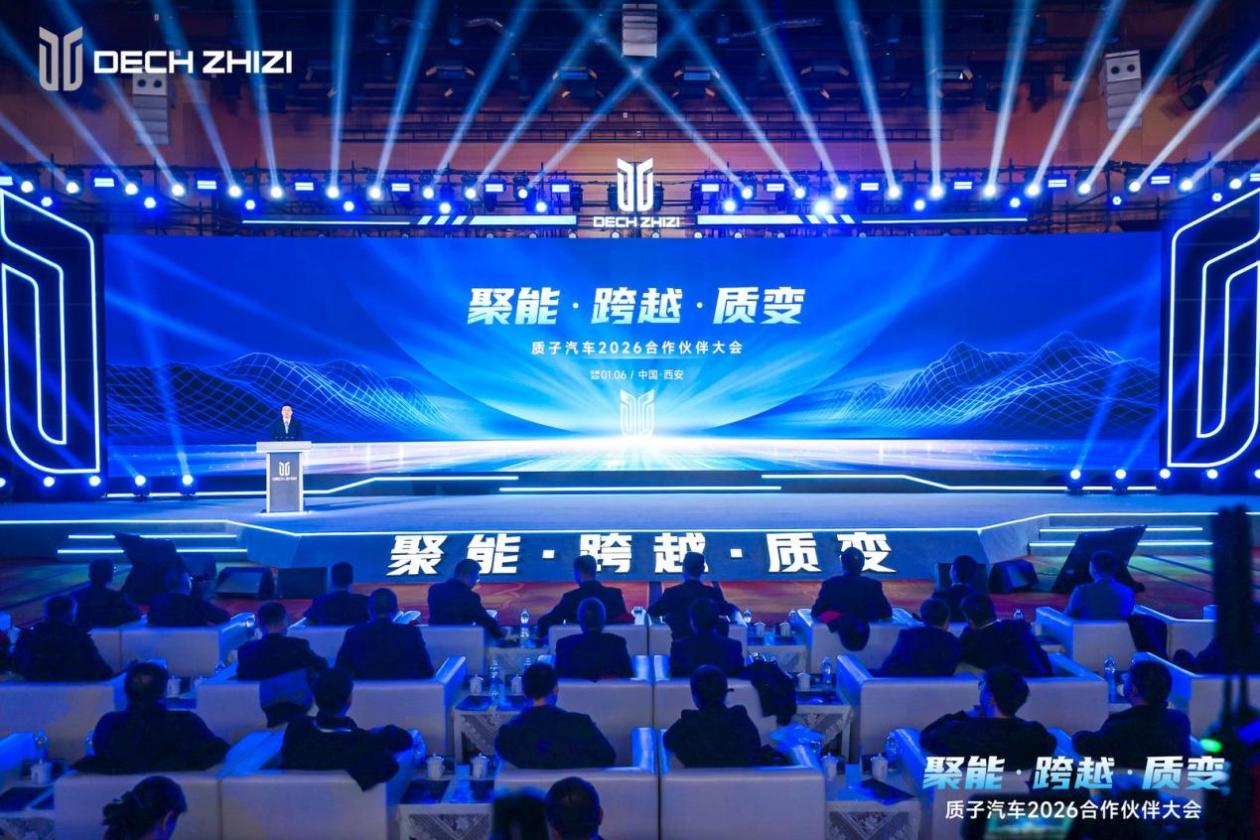
Core Insights - The Proton Automotive Partner Conference 2026, themed "Energy Gathering, Crossing, and Quality Change," was held in Xi'an, attracting over 600 partners to witness the company's development in the new energy sector [1] - Proton Automotive achieved over 8,000 vehicle sales last year, surpassing its initial target of 6,000, with a quarterly sales growth of 294%, and celebrated the delivery of its 10,000th vehicle [3] Strategic Transformation - Proton Automotive, established less than four years ago, has successfully transitioned from a "price war" to a "value war," focusing on the entire lifecycle of products [4][6] - The company has expanded its domestic sales regions from 9 to 14, enhancing its sales force and dealer network for refined market operations [6] - Proton is advancing its hydrogen technology, which, once matured, will significantly enhance the operational radius of hydrogen-powered heavy trucks [6] Long-term Vision - Proton Automotive emphasizes long-term strategies, focusing on "Best Asset Returns" (BAR) to improve energy efficiency and reduce operational costs for customers [8] - The company has made significant improvements in product reliability, with a notable decrease in failure rates from 2022 to 2023, and is investing in self-developed intelligent driving systems for enhanced vehicle safety [8] - Proton is also developing high-capacity hydrogen tanks and high-power fuel cell systems to support long-haul applications, aiming to lead the industry in hydrogen technology [8] Innovation and Ecosystem - Proton Automotive is redefining its role in the industry by focusing on customer lifecycle value and creating an open, efficient innovation ecosystem [9] - The company is concentrating on high-value components and has developed proprietary technologies in fuel cells, intelligent cockpits, and solid-state chassis to ensure product evolution and compatibility [9] - Proton aims to attract quality dealers through product quality and customer value rather than relying on price competition, thereby fostering stable partnerships [9] Industry Impact - Proton Automotive's transformation journey offers a model for the Chinese commercial vehicle industry, transitioning from scale expansion to high-quality development through innovations in intelligence and hydrogen technology [10]
合众远景成立客户代表团——以共识为导向,夯实长期价值基础
Jiang Nan Shi Bao· 2026-01-12 08:36
Core Viewpoint - The establishment of the Customer Representative Council by the company marks a significant step towards enhancing customer relationship governance, ecosystem co-creation, and long-term development in the context of a rapidly evolving digital economy and globalization [1] Group 1: Upgrade from "Users" to "Co-builders" - The company believes that sustainable platform development is driven not just by technology but by a community of individuals who resonate with the platform's philosophy and are willing to grow alongside it [2] - The Customer Representative Council transforms "important customers" and "core participants" from traditional service recipients into active participants, communicators, and co-builders of the platform ecosystem [2] - The council aims to create a more efficient, transparent, and empathetic communication mechanism to ensure real needs are heard, rational suggestions are absorbed, and trust is built through long-term interactions [2] Group 2: Authorization Mechanism - The Customer Representative Council is an official collaborative mechanism established within clear legal boundaries and compliance frameworks, rather than a mere honorary title [3] - Each representative is formally authorized to engage in customer communication, feedback, service experience optimization, community engagement, and market information transmission [3] - This mechanism ensures the authority and professionalism of representatives while maintaining the platform's overall operational stability and compliance [3] Group 3: Building a Trust-based Ecosystem - The company adheres to a core principle of countering short-term fluctuations with long-term value in a market filled with short-term emotions and rapid changes [4] - The establishment of the Customer Representative Council embodies a practice of long-termism, involving individuals who truly understand and are committed to the platform's ecosystem [5] - This trust-based collaboration mechanism is expected to enhance information transmission efficiency, reduce misunderstandings, and promote rational and stable development in complex environments [5] Group 4: Future Growth Driven by Consensus - The company plans to continuously improve the Customer Representative Council mechanism, gradually forming a multi-tiered, multi-regional, and sustainable customer collaboration system [6] - The council serves not only as a communication bridge but also as an amplifier of consensus and a connector of value within the company's ecosystem [7] - The company believes that a truly vibrant platform is one that collaboratively forms clear value consensus with users over a longer time horizon, moving towards a certain future together [7] Group 5: Trust and Consensus - Trust is viewed as a structural element rather than just a slogan [8] - Consensus is seen as a long-term choice rather than a short-term trend [9] - The establishment of the Customer Representative Council is a serious response to the concept of "long-term companionship" and a prudent bet on the future [9]