
低利率环境

Search documents
拥有100万存款是什么水平?能否站在财富“金字塔”上层?
Nan Fang Du Shi Bao· 2025-07-01 08:02
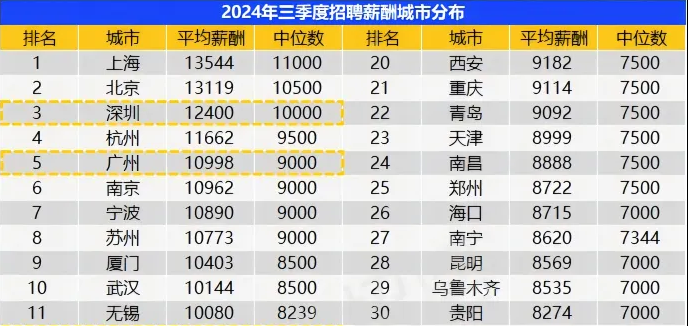
Core Viewpoint - The article discusses the perception and reality of having a million yuan in savings in China, highlighting the challenges of low interest rates and the socio-economic implications of reaching this financial milestone [1][4][12]. Group 1: Financial Reality of Million Yuan Savings - Achieving a savings of 1 million yuan is considered difficult, with over 90% of bank clients not reaching this threshold [4][8]. - In Shenzhen, a city known for its high cost of living, the average salary is around 10,000 yuan, making it challenging for many to accumulate 1 million yuan in savings [4][6]. - The average monthly salary in Shenzhen is reported at 12,400 yuan, ranking third in the country, which reflects the competitive financial landscape [6]. Group 2: Wealth Distribution and Class Structure - The proportion of individuals with savings exceeding 1 million yuan is estimated to be around 2% based on data from major banks [8][11]. - According to the 2024 Hurun Wealth Report, only about 1% of Chinese households have assets exceeding 6 million yuan, indicating that million-yuan savers are part of a small elite [11][12]. - The article notes the "olive-shaped effect" in wealth distribution, where middle-aged individuals hold a significant portion of wealth, while younger and older demographics lag behind [12]. Group 3: Banking Services and Client Segmentation - Banks categorize clients based on their asset levels, with "platinum" services typically starting at 500,000 yuan, indicating a tiered approach to wealth management [7][9]. - The criteria for becoming a "platinum" client vary among banks, with some requiring a minimum of 100,000 yuan in average financial assets [9][10]. - The article emphasizes the importance of financial planning and the potential benefits that come with higher savings, such as access to exclusive banking services [12].

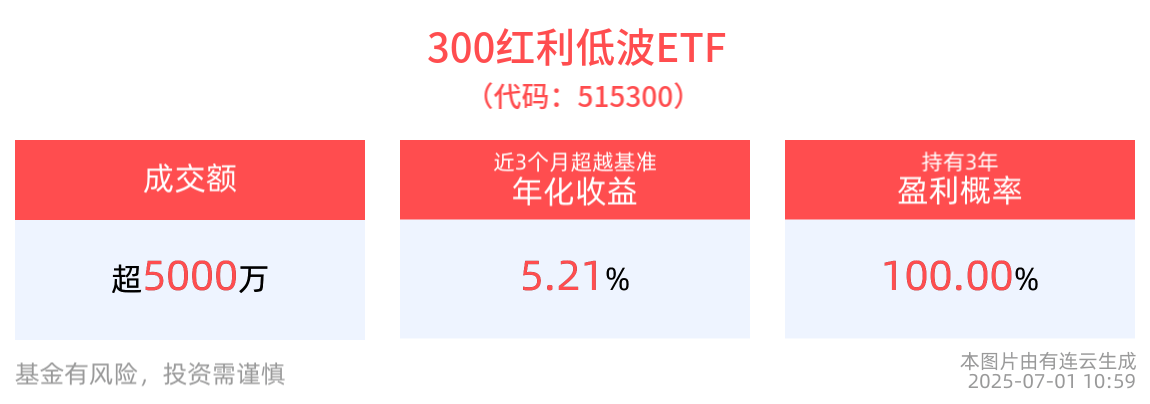
低利率环境有望持续,300红利低波ETF(515300)红盘蓄势,机构:以红利为底,兼顾弹性
Sou Hu Cai Jing· 2025-07-01 03:42
Group 1 - The core viewpoint highlights the performance and liquidity of the 300 Dividend Low Volatility ETF, which has seen a recent trading volume of 1.02% and a total transaction value of 56.05 million yuan [3] - As of June 30, the 300 Dividend Low Volatility ETF has a total scale of 5.462 billion yuan and has achieved a net value increase of 80.94% over the past five years, ranking 38th out of 991 index equity funds, placing it in the top 3.83% [3] - The ETF's highest monthly return since inception is 13.89%, with the longest consecutive monthly gains being five months and the longest gain percentage being 14.56%, averaging a monthly return of 3.66% during up months [3] Group 2 - The top ten weighted stocks in the CSI 300 Dividend Low Volatility Index include China Shenhua, Gree Electric, Sinopec, and others, collectively accounting for 35.21% of the index [3] - Market analysts suggest that the recent adjustments in the equity market are normal due to the approaching tariff deadline on July 9 and the previous popularity of dividend strategies, indicating that dividend assets hold an advantage in uncertain environments [5] - The report from Ping An Securities indicates that the banking sector remains attractive in a persistently ample liquidity environment, with low interest rates expected to continue, suggesting a focus on dividend strategies while considering flexibility [6]
股指期货2025年中策略报告:稳中有进,开启慢牛-20250627
Yin He Qi Huo· 2025-06-27 05:15
银河研究 金融期货研发报告 金融期货年报 2025 年 6 月 27 日 稳中有进 开启慢牛 ——股指期货 2025 年中策略报告 报告摘要: 2025 上半年市场两次经受住了考验,分别在政策预期、资金支撑下实现探底反弹,形 成快跌慢涨的慢牛走势,底部不断抬高。 一行一局一会两度联合新闻发布会,坚强有力的表态表明管理层稳定股市的信心和决 心,下半年政策环境持续稳定,股指也将表现稳定。 市场利率不断下行,理财资金不断转向高股息资产为股市营造良好的市场环境,推动中 长期资金入市的政策指向使保险资金股票投资不断提速,汇金等央企增持又使市场增添信 心,资金面整体稳中有增。 宏观经济数据和上市公司业绩同样保持平稳,进而使估值下有支撑,股指慢牛表现即有 基本面又有资金面的助力,预计下半年将继续震荡上行。 股指期货成交持仓略有增长,受多方因素影响贴水有所加大,为期指多头带来较好的投 资机会,在风险合理控制的情况下,可能为投资者取得超额收益。 风险因素:国内经济增长不及预期,地缘政治因素 研究员:孙锋 期货从业证号: F0211891 投资咨询从业证号: Z000567 :sunfeng@chinastock.com.cn ...
银行存单要卖爆了?
表舅是养基大户· 2025-06-26 14:27
Group 1 - The article discusses the recent excitement in the bond market due to a trainee from the idol group SNH48 interning at a currency intermediary, leading to a humorous nickname "NCD48 bottom" for the bond market's short-term turning point [2][10] - The Hong Kong stock market experienced a notable decline, influenced by three main negative factors, including the triggering of the weak-side convertibility undertaking for the Hong Kong dollar, which led to a liquidity withdrawal of approximately 9.4 billion [10][11] - The stock of Guojun International, which surged nearly 200% due to stablecoin license news, faced a significant drop the following day, highlighting the speculative nature of the brokerage sector [12][14][15] Group 2 - The biotech sector in Hong Kong faced pressure due to two negative events: a significant discount placement by Innovent Biologics and a disappointing cash flow situation for Rongchang Biopharmaceuticals, leading to a drop of over 10% in their stock prices [17][18] - The article emphasizes the importance of a "bull market" mindset, suggesting that investors should focus on structural opportunities rather than being deterred by macroeconomic challenges [21][28] - It highlights two main investment themes: high-dividend monopolistic sectors in a low-interest-rate environment and industry leaders with core competitiveness and reasonable valuations [24][25]

陈卫东:以差异化竞争为导向优化金融监管考核
Zhong Guo Fa Zhan Wang· 2025-06-26 08:37
Core Viewpoint - The low interest rate environment poses significant challenges for the banking industry, particularly in terms of net interest margin compression, which directly impacts profitability [1][2]. Group 1: Challenges and Strategies - The banking sector faces pressure on profitability due to declining net interest margins, which are a primary source of earnings [1]. - Banks are encouraged to diversify operations and expand non-interest income to mitigate the impact of low interest rates [1]. - Adjusting business models is essential, including optimizing asset-liability structures and controlling funding costs to enhance asset pricing capabilities [2]. Group 2: Risk Management and Business Expansion - Banks should focus on precise customer targeting and business segmentation to improve profitability rather than solely relying on increasing credit and deposits [2]. - Enhancing risk management capabilities and appropriately allocating short-term and long-term assets is crucial, with a focus on emerging sectors like technology and green finance that still have growth potential in a low interest rate environment [2]. - Financial institutions must actively expand comprehensive business operations and diversify income sources beyond traditional lending, including bond underwriting, investment, wealth management, and foreign exchange markets [2]. Group 3: Regulatory Considerations - Regulatory policies and assessment mechanisms should emphasize differentiated competition among financial institutions, recognizing the unique challenges and advantages of various types and sizes of institutions [3]. - Tailoring regulatory and assessment indicators based on the characteristics and strengths of different institutions can facilitate specialized development in niche markets [3]. - Allowing market-based pricing for certain services can enhance the efficiency of financial institutions and strengthen the resilience of the financial system [3].
中意人寿换帅 直面“产融结合”+“低利率”挑战
Zhong Guo Jing Ying Bao· 2025-06-21 19:30
Core Viewpoint - China-Italy Life Insurance Co., Ltd. (中意人寿) has undergone a change in leadership with Tong Tianxi appointed as the new chairman, amid a significant decline in investment performance in Q1 2025 [1][2][10]. Company Overview - China-Italy Life Insurance was established in 2002 as a joint venture between China National Petroleum Corporation (中石油) and Italy's CNP Assurances, with each holding a 50% stake [1][2]. - The company has maintained its shareholder structure since its inception, with the chairman position traditionally filled by representatives from 中石油 [2]. Financial Performance - As of Q1 2025, China-Italy Life reported an investment return rate of 0.67% and a comprehensive investment return rate of -0.1%, a significant decline from 1.34% and 3.64% in Q1 2024, respectively [1][10]. - The net cash flow dropped from 1.271 billion yuan at the end of Q4 2024 to -266,890 yuan in Q1 2025, and net assets fell over 45% year-on-year to 4.8 billion yuan [1][10]. - The company achieved insurance business revenue of 14.59 billion yuan in Q1 2025, a year-on-year growth of 1%, with a premium growth rate of 0.28% [7]. Strategic Direction - The company has historically focused on dividend insurance products, which have gained popularity as traditional insurance products lose appeal due to declining interest rates [6][7]. - In response to the declining new business premiums in the industry, China-Italy Life has introduced several traditional insurance products to boost cash flow [7][8]. - The management faces a strategic decision on whether to continue promoting dividend insurance or shift focus to traditional insurance to maintain premium scale and cash flow [8]. Leadership and Management - Tong Tianxi, the new chairman, has extensive financial experience within the 中石油 system and aims to leverage insurance funds for long-term financial services in the energy sector [3][4]. - Key executives in financial and asset management roles at China-Italy Life predominantly come from the 中石油 system, indicating a strong influence from the parent company [4][5]. Market Challenges - The insurance industry is experiencing a downturn, with new single premiums dropping significantly, impacting China-Italy Life's new business growth [6][7]. - The company is also facing challenges related to net asset and investment return declines, exacerbated by changes in accounting standards and a low-interest-rate environment [10][11].
A股分红率冲高!挖到一只近3年收益同类排名第1的绩优基金
私募排排网· 2025-06-20 03:51
Core Viewpoint - The article emphasizes the importance of identifying undervalued investment opportunities in a low-interest-rate environment, highlighting the appeal of high-dividend, low-volatility assets as a potential "fortress of returns" for investors [3]. Interest Rate Trends - The 10-year government bond yield has significantly decreased from 3.37% in 2020 to 1.65% as of June 17, 2025, indicating a clear downward trend in interest rates [3]. - Major state-owned banks have collectively lowered the one-year fixed deposit rates to around 0.95%, with many banks dropping below 1% as of May 20 [5]. Dividend Strategies - The overall dividend yield of the A-share market reached 38.08% in April 2025, the highest level since 2014, driven by policies encouraging higher dividends from listed companies [6]. - The "New National Nine Articles" policy has established clear standards for dividends, promoting a culture of cash dividends among companies [6][7]. Investment Focus - The China Securities Dividend Index is currently undervalued, making it an attractive option for investors seeking long-term returns [7]. - The Dongzheng Dividend Low Volatility Index has shown strong performance over the past three years, with higher cumulative returns and lower maximum drawdowns compared to other dividend indices [8][9]. Index Selection - The Dongzheng Dividend Low Volatility Index selects 100 stable, high-dividend, and low-volatility stocks from the A-share market, aiming to reflect quality dividend-paying companies [10]. - This index not only focuses on high expected dividend yields but also filters out companies with unstable ROE to enhance profitability quality [11]. Fund Performance - The Dongzheng Dividend Low Volatility Index Fund has achieved a net asset growth rate of 46.71% since its inception, outperforming its benchmark of 37.55% [16]. - The fund has ranked first in its category over the past three years, indicating strong performance relative to peers [21]. Investment Recommendation - For investors looking to capitalize on the dividend trend, the Dongzheng Dividend Low Volatility Index Fund is presented as a convenient investment vehicle [15][23].

贺博生:6.18黄金原油晚间行情涨跌趋势分析及欧美盘最新多空操作建议
Sou Hu Cai Jing· 2025-06-18 10:34
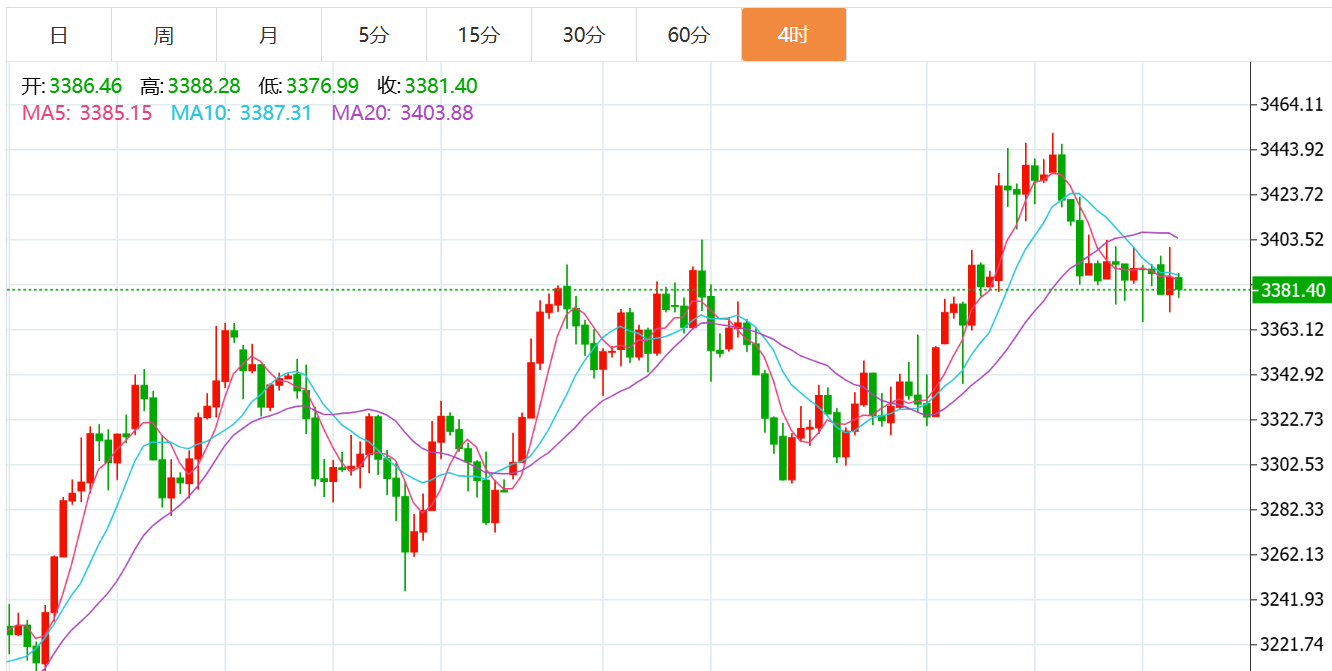
Group 1: Gold Market Analysis - The current gold price is around $3381 per ounce, showing a mild downward trend as it awaits the Federal Reserve's decision for clearer direction [2] - Geopolitical tensions in the Middle East, particularly between Israel and Iran, are influencing gold prices, with a focus on the Federal Reserve's policy announcement expected to cause significant volatility [2] - The key resistance level for gold is identified at $3405, with a breakthrough indicating a potential bullish trend, while prices below this level suggest a bearish outlook [3][5] Group 2: Oil Market Analysis - Oil prices have stabilized after a significant increase, with Brent crude previously rising by 4.4% and nearing $76 per barrel, while WTI approached $75 [6] - The geopolitical situation in the Middle East, particularly regarding Iran, is a major factor affecting oil prices, with potential for further increases if conflicts escalate [6] - The technical outlook for oil indicates a bullish trend, with the price testing new highs and showing strong upward momentum, suggesting a focus on buying on dips [7]
狂揽400亿,低利率时代港股红利资产成“避风港新宠”
Jin Rong Jie· 2025-06-18 02:26
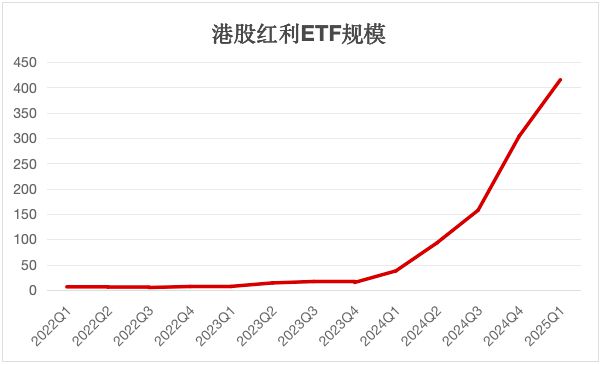
Group 1 - The core viewpoint highlights the strong performance and increasing popularity of the Hong Kong Dividend Low Volatility ETF (520550), which has reached historical highs multiple times since 2025, with a net inflow exceeding 20 million on June 17 and a total inflow of 533.3 million over the past five days, bringing its total scale to over 500 million [1] - The Hong Kong dividend assets have been consistently favored by investors, with the total scale of the Hong Kong Dividend ETF exceeding 40 billion, and an inflow of 10.7 billion in 2025, representing a growth of 40% [1][3] - Southbound funds have shown a continuous inflow into high-dividend sectors such as banks and public utilities, with net purchases of bank stocks exceeding 200 billion over the past year, indicating a strong preference for high-dividend, low-valuation assets [3][4] Group 2 - In the current low interest rate environment, dividend assets exhibit relatively stable profitability and high dividends, making them attractive compared to one-year and three-year deposit rates [4][5] - The Hang Seng Hong Kong Stock Connect High Dividend Low Volatility Index has a dividend yield of 8.1%, significantly higher than the China Securities Bank Index at 5.75% and the CSI 300 Index at 3.39% [5][8] - The index currently has a PE (TTM) of 7 times and a PB of 0.6 times, indicating a lower valuation compared to similar indices and a higher safety margin [9][10] Group 3 - The Hong Kong Dividend Low Volatility ETF (520550) implements monthly dividend assessments, currently distributing 0.04 yuan per ten shares, with a dividend ratio of approximately 0.37% [12] - The ETF has a management fee of 0.2%, the lowest among similar products in the market, making it a cost-effective long-term investment option [12]
险企年内新推出403款寿险产品 分红险占比37%
Zheng Quan Ri Bao· 2025-06-15 15:56
Core Insights - The insurance industry is increasingly focusing on dividend insurance products, with 151 new dividend insurance products launched in 2023, accounting for 37% of all new life insurance products, a 9 percentage point increase from 2024 [1][2] - The demand for dividend insurance is rising due to a low interest rate environment and regulatory support, making it an attractive option for consumers seeking a balance of guaranteed and potential returns [2][4] - Major insurance companies are transforming their product offerings to emphasize dividend insurance, with a notable shift towards 10-year dividend sales [3][4] Industry Trends - The trend towards dividend insurance is seen as a response to declining long-term interest rates, with companies expected to promote dividend-type products such as increasing benefit whole life insurance and annuities [4][5] - Regulatory changes, including a reduction in the maximum preset interest rates for traditional and dividend insurance products, are providing insurance companies with more flexibility to manage liabilities [2][4] - The appeal of dividend insurance lies in its dual function of providing both protection and savings, enhancing consumer interest in these products amid a persistently low interest rate environment [4][5]