以旧换新政策

Search documents
崔东树:10月全国汽车市场总体走势较强 商用车市场现结构性增长
智通财经网· 2025-11-15 11:46
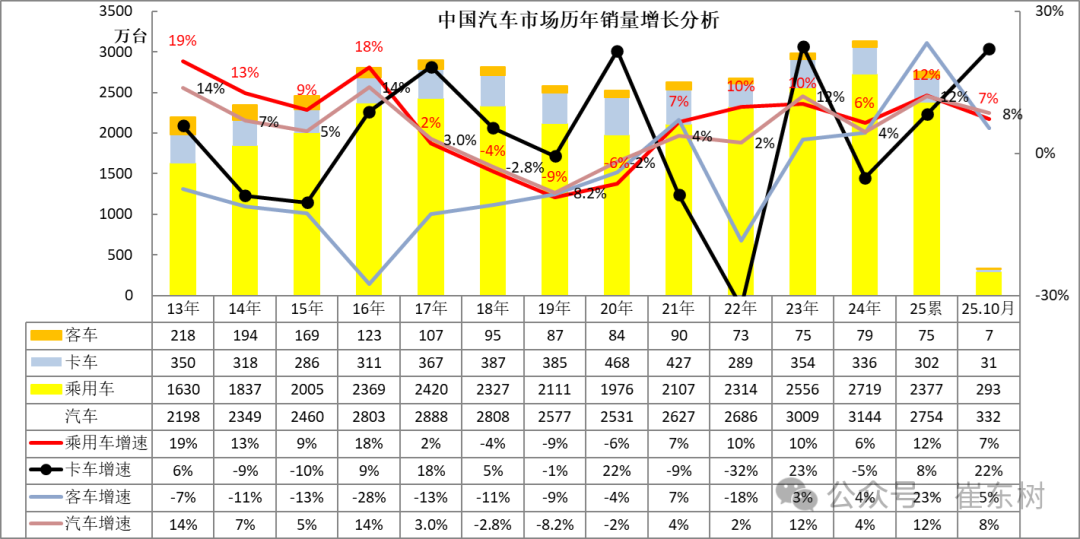
Core Insights - The automotive market in China is experiencing strong growth driven by government policies promoting consumption, with significant recovery observed in both truck and passenger vehicle markets in October [1] - Retail sales of passenger vehicles showed negative growth in October due to slower wholesale transmission, while manufacturer sales remained strong due to exports and inventory increases [1] - The new energy vehicle (NEV) segment is performing well, with structural growth in the commercial vehicle market driven by electrification [1] Group 1: Market Trends - The automotive market is expected to see a divergence in trends between passenger and commercial vehicles by 2025, with passenger vehicle growth projected at 13% due to policy support [2][4] - In the first ten months of 2025, total automotive sales reached 27.52 million units, with a cumulative growth rate of 12% [6] - October 2025 saw total automotive sales of 3.32 million units, a year-on-year increase of 9% [6] Group 2: Company Performance - There is a significant performance divergence among major automotive groups, with state-owned enterprises facing challenges while companies like BYD and Chery are performing well [9][12] - In October, manufacturers like Geely and BYD showed strong month-on-month performance, while SAIC Volkswagen faced substantial year-on-year adjustments [15] - The market is witnessing a shift where private enterprises are increasingly replacing state-owned enterprises as industry leaders, with companies like Geely, BYD, and Chery maintaining high growth rates [12][13] Group 3: New Energy Vehicles - In the first ten months of 2025, new energy passenger vehicle sales reached 12.07 million units, reflecting a year-on-year increase of 30% [25] - October 2025 saw new energy passenger vehicle sales of 1.62 million units, a year-on-year increase of 18% [25] - The growth in new energy vehicles is supported by scrappage subsidies, manufacturer price reductions, and the introduction of new models [25] Group 4: Traditional Vehicles - Traditional fuel passenger vehicle sales in 2023 remained stable at 16.66 million units compared to 2022, but are projected to decline by 10% in 2024 [30] - The market for traditional vehicles is under pressure due to ongoing declines, although there has been some recent recovery from June to October [30] Group 5: Commercial Vehicles - In 2023, total truck sales reached 3.54 million units, with a cumulative growth rate of 19% [39] - October 2025 saw truck sales of 310,000 units, a year-on-year increase of 22% [39] - The commercial vehicle market is experiencing strong performance from leading manufacturers, particularly in the electric truck segment [41]



核心CPI向上 物价拐点何时到来
Jing Ji Guan Cha Wang· 2025-11-15 06:19
Group 1 - The core viewpoint of the articles indicates that China's economic growth is facing challenges, with a decline in social retail sales and an increase in core CPI, suggesting a complex economic environment [2][3][12] - In October, the social retail sales total increased by 2.9% year-on-year, marking a continuous decline for five months, while the core CPI rose by 1.2%, indicating a potential turning point in consumer demand [2][8] - Experts highlight a "supply-demand imbalance" in the economy, emphasizing the need for enhanced consumer demand to address the declining retail sales growth [2][12] Group 2 - The increase in core CPI is attributed to factors such as the consumption stimulus from the National Day and Mid-Autumn Festival holidays, as well as rising gold prices, with service prices also showing a recovery [7][8] - The core CPI's growth reflects improvements in terminal consumer demand, but it also indicates underlying pressures on food and energy prices, which remain low [13][14] - The overall CPI has been operating at low levels, with experts suggesting that while the core CPI's increase is a positive sign, it is not sufficient to confirm a definitive turning point in the economy [11][12]

“真金白银”惠民生
Sou Hu Cai Jing· 2025-11-13 01:43
Data Summary - In the first three quarters of this year, the total retail sales of consumer goods reached 365,877 billion yuan, with a year-on-year growth of 4.5%, accelerating by 1.2 and 1.0 percentage points compared to the same period last year and the entire previous year respectively [1] - The "old-for-new" policy has shown significant effects, with retail sales of furniture increasing by 21.3%, and home appliances and audio-visual equipment, as well as cultural and office supplies, growing by 25.3% and 19.9% respectively, indicating a notable acceleration compared to the previous year [1] - As of September 10, over 8.3 million applications for the "old-for-new" car policy have been submitted nationwide, averaging over 30,000 applications per day [1] Case Study - In a Beijing auto dealership, various cars displayed prominent subsidy tags, attracting many customers. A customer noted that the combination of new energy vehicle subsidies and "old-for-new" incentives resulted in a total discount of 20,000 yuan [2] - The fourth quarter has seen the allocation of 69 billion yuan in national subsidies, completing the distribution of 300 billion yuan in central funds for the "old-for-new" policy this year, which supports the upcoming "Double Eleven" shopping festival [2] - The combination of "old-for-new" and national subsidies has significantly stimulated consumer enthusiasm, leading to a vibrant consumption market and an optimization of consumption structure, with high-efficiency and smart home appliances seeing sustained high growth in retail sales [2] Expert Commentary - According to an expert from the Chinese Academy of Social Sciences, 330 million people have applied for the "old-for-new" policy from January to August, driving related sales exceeding 2 trillion yuan and supporting a 4.5% growth in retail sales of consumer goods [3] - The policy has notably promoted the upgrade of consumer goods, invigorating the market and improving residents' quality of life, while also accelerating product and capital turnover for enterprises [3] - The current period is crucial for achieving socialist modernization, with an emphasis on enhancing consumer capacity and demand, necessitating local governments to implement measures to stimulate consumption and optimize policies across various dimensions [3]
首超新车总销量50% 10月新能源汽车卖了171.5万辆
Zhong Guo Zheng Quan Bao· 2025-11-11 20:09
● 本报记者 李嫒嫒 陈士华表示,明年是"十五五"开局之年,提振消费依然是重点工作之一。自去年下半年以来,汽车"以 旧换新"政策带动效果显著,建议明年继续优化实施相关政策,并尽早发布实施细则,稳定市场预期, 助力行业平稳运行。 中汽协副秘书长陈士华表示,10月,车企抢抓年底政策切换窗口期,生产供给保持较快节奏。企业新品 继续密集上市、行业综合治理工作稳步推进,汽车市场延续良好发展态势,月度产销创同期新高。其 中,乘用车市场稳健增长,商用车市场持续向好,新能源汽车较快增长,对外贸易呈现较好韧性。 今年以来,我国新能源汽车产销量保持快速增长态势。1至10月,新能源汽车产销累计完成1301.5万辆 和1294.3万辆,同比分别增长33.1%和32.7%。 总体来看,1至10月,汽车产销累计完成2769.2万辆和2768.7万辆,同比分别增长13.2%和12.4%。 "今年前十个月汽车产销总体增长速度超出年初预期,'两新'政策对市场的拉动作用非常明显。预计, 今年汽车产销量均会超过3400万辆,达到历史新高。"陈士华说。 11月11日,中汽协发布数据显示,2025年10月份,我国新能源汽车产销同比保持快速增长,新能源 ...
氪星晚报|中兴通讯完成IMT-2020(5G)推进组5G-A低空通信关键技术测试;软银与OpenAI达成修订协议,涉及增加投资225亿美元;央行:做好逆...
3 6 Ke· 2025-11-11 12:02
Group 1 - China National Petroleum Engineering has won a contract worth $424 million for an ethane and propane pipeline project in Kazakhstan, with a planned construction period of 36 months [1] - Anthropic is projected to achieve profitability by 2027, with expected revenues of up to $70 billion and cash flow of $17 billion by 2028, contrasting with OpenAI's anticipated losses of $14 billion next year [2] - Adani Group plans to build a multi-billion dollar battery storage system in India, with a capacity of 1,126 MW, aiming to complete the project by March 2026 [2] Group 2 - ZTE has completed key technology tests for low-altitude communication under the IMT-2020 (5G) promotion group, marking a significant advancement in 5G-A technology [2] - Shopee's 11.11 shopping event saw a remarkable increase in cross-border sales, with sales up 11 times in the first two hours, indicating strong growth in various seller categories [3] - Tesla is preparing to expand its Texas Gigafactory to produce 10 million units of the Optimus humanoid robot annually, with mass production expected to start in 2027 [4] Group 3 - SoftBank has revised its agreement with OpenAI to increase its investment by $22.5 billion, with a total expected investment of $30 billion after accounting for loans to co-investors [5] - Google plans to invest several billion euros in Germany, focusing on innovative technologies, AI, and climate-neutral transformation [5] - Tongxing Technology has signed a framework agreement to invest approximately 3.2 billion yuan in a project to produce 100,000 tons of sodium-ion battery anode materials and 6 GWh of battery cells [5] Group 4 - The automotive industry is experiencing a return to rational pricing and improved market order, with a reported profit margin recovery to 4.5% in the first nine months of 2025 [6] - The National Development and Reform Commission held a meeting to gather opinions on the development of the service industry during the 14th Five-Year Plan period [7] - The People's Bank of China aims to enhance macroeconomic governance effectiveness and maintain stable growth, employment, and expectations through improved monetary policy and financial reforms [8]



氪星晚报|中兴通讯完成IMT-2020(5G)推进组5G-A低空通信关键技术测试;软银与OpenAI达成修订协议,涉及增加投资225亿美元;央行:做好逆周期和跨周期调节,提升宏观经济治理效能,持续稳增长、稳就业、稳预期
3 6 Ke· 2025-11-11 11:53
Group 1: Major Companies - China National Petroleum Engineering has won a $424 million contract for an ethane and propane pipeline project in Kazakhstan, with a planned construction period of 36 months [1] - Anthropic expects to achieve profitability by 2027, projecting revenues of up to $70 billion and cash flow of $17 billion by 2028, contrasting with OpenAI's anticipated losses of $14 billion next year [2] - Adani Group plans to build a multi-billion dollar battery storage system in India, with a capacity of 1,126 MW, set to be completed by March 2026 [2] - ZTE has completed key technology tests for low-altitude communication under the IMT-2020 (5G) initiative, marking a significant advancement in 5G-A technology [2] - Tesla is preparing to expand its Texas Gigafactory to achieve an annual production capacity of 10 million Optimus humanoid robots, with mass production expected to start in 2027 [4] Group 2: New Products - Apple has launched a new accessory, the iPhone Pocket, designed in collaboration with Issey Miyake, priced starting at 1,299 yuan [5] Group 3: Industry Insights - The Chinese central bank emphasizes the need for effective macroeconomic governance to maintain growth, employment, and expectations, while balancing various economic factors [8]
崔东树:国家以旧换新政策效果突出 内卷降价现象明显减弱 行业运行压力改善
Xin Hua Cai Jing· 2025-11-11 09:52
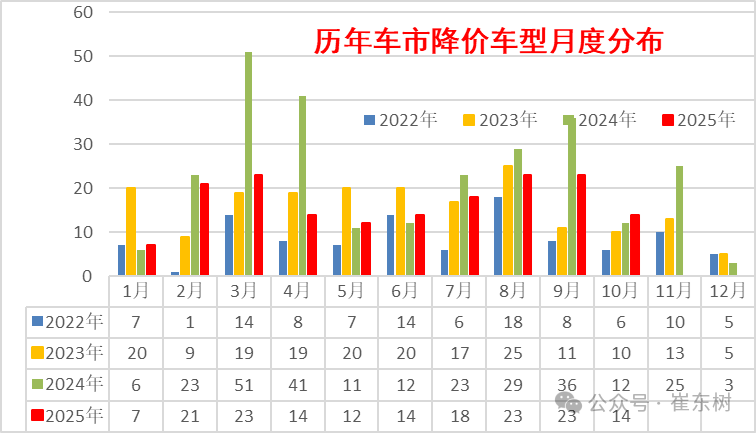
(文章来源:新华财经) 新华财经北京11月11日电乘联分会崔东树发文指出,2025年乘用车行业促销与降级均回归理性,市场秩 序明显改善。2025年1-10月的新车降156款的规模相对温和。目前的价格竞争主要是新车推出直接突破 原有价格的下限,而不是增配不降价的模式。10月直接降价的车型没有,而新车增配降价是提升性价比 的方式较好。国家以旧换新政策效果突出,市场销量增长,内卷降价现象明显减弱,行业运行压力改 善,1-9月的汽车行业利润率回升到4.5%的中低位,这也是行业规模上升和价格促销趋稳的良好表现。 ...
崔东树:乘用车市场内卷降价现象明显减弱 行业运行压力改善
智通财经网· 2025-11-11 09:49
智通财经APP获悉,11月11日,崔东树发布2025年10月乘用车市场降价促销分析。2025年乘用车行业促销与降级均回归理性,市场秩序明显改善。2025年 1-10月的新车降156款的规模相对温和。目前的价格竞争主要是新车推出直接突破原有价格的下限,而不是增配不降价的模式。10月直接降价的车型没 有,而新车增配降价是提升性价比的方式较好。 2025年10月降价规模14款,较9月较少9款,较同期增2款。其中燃油车4款,较2024年10月的3款的规模多1款;混合动力燃油车无;插混车3款,较同期少2 款;增程式车型1款;纯电动车型6款,较2024年10月增4款。 2025年1~10月份,新能源车新车降价车型的降价力度算术平均达到2.1万元,降价力度达到10.8%。10月份,新能源车新车降价车型的降价力度算术平均达 到1.8万元,降价力度达到11.1%的正常水平。2025年1~10月份,常规燃油车新车降价车型的降价力度算术平均达到1.4万元,降价力度达到8.4%。10月 份,常规燃油车新车降价车型的降价力度算术平均达到1.2万元,降价力度达到11.1%。2025年1~10月份,总体乘用车市场新车降价车型的降价力度算术 ...
研报掘金丨东方证券:维持甬金股份“买入”评级,目标价26.26元
Ge Long Hui A P P· 2025-11-10 05:39
Core Viewpoint - Dongfang Securities' report indicates that Yongjin Co., Ltd. has experienced a decline in net profit for the first three quarters of 2025, but there is optimism regarding future performance due to demand recovery and new material developments [1] Financial Performance - For the first three quarters of 2025, Yongjin Co., Ltd. achieved a net profit attributable to shareholders of approximately 450 million yuan, representing a year-on-year decrease of 27.98% [1] - In Q3 2025 alone, the company reported a net profit of about 147 million yuan, which is a year-on-year decline of 6.01% and a quarter-on-quarter decline of 26.5% [1] Future Outlook - The company is expected to benefit from the recovery in demand for its products, particularly in the home appliance and daily necessities sectors, driven by the ongoing "old-for-new" policy [1] - The orderly advancement of the new materials sector, including titanium materials and cylindrical battery shells, is anticipated to provide new profit growth points for the company [1] - The company has maintained a mid-year dividend, indicating a commitment to returning value to the market, and is expected to stabilize its mid-term performance and continue generating stable profits [1] Valuation - Based on comparable companies' 2026 PE valuation of 13X, the target price for Yongjin Co., Ltd. is set at 26.26 yuan, with a maintained "buy" rating [1]


爱玛科技系列三-三季报点评:2025年三季度利润同比小幅提升,高端品牌有望打开向上空间【国信汽车】
车中旭霞· 2025-11-09 10:36
Core Viewpoint - The electric two-wheeler industry is approaching a high prosperity turning point due to policy support and market structure optimization, with companies like Aima Technology expected to benefit from improved profit margins and enhanced product and channel strategies [2]. Financial Performance - Aima Technology achieved revenue of 21.09 billion yuan in Q1-Q3 2025, a year-on-year increase of 20.8%, and a net profit of 1.91 billion yuan, up 22.8% year-on-year. In Q3 2025, revenue reached 8.06 billion yuan, growing 17.3% year-on-year and 18.6% quarter-on-quarter, while net profit was 700 million yuan, up 15.2% year-on-year and 14.3% quarter-on-quarter [3][12]. - The company's gross margin for Q1-Q3 2025 was 18.8%, an increase of 1.4 percentage points year-on-year, while the net margin was 9.2%, up 0.2 percentage points year-on-year. However, in Q3 2025, gross margin decreased to 18.0%, down 0.9 percentage points quarter-on-quarter, and net margin fell to 8.8%, down 0.3 percentage points quarter-on-quarter, primarily due to reduced subsidies from the old-for-new policy and the impact of new national standards [5][13]. Market Dynamics - The price war in the industry has eased, and the old-for-new policy has stimulated demand, contributing to improved profitability [4][13]. - Aima Technology's electric three-wheeler business is expected to become a new growth point, with sales projected to reach 550,000 units in 2024, representing a year-on-year increase of 28.9% [9][24]. Product and Channel Strategy - The company has launched various product lines, including those targeting women, technology, commercial vehicles, and high-end three-wheelers, to meet diverse consumer needs. Notable products include the Aima Metaverse and Aima Q5 for women, and the A7Plus for technology enthusiasts [7][18]. - Aima Technology is actively expanding its terminal store network, increasing from 20,000 stores in 2021 to over 30,000 in 2023, a growth of 50%. This expansion aims to enhance sales efficiency and market reach [22]. High-End Brand Development - The launch of the high-end brand "Zero" on October 28, 2025, marks Aima's entry into the high-end electric motorcycle market, with the first product, X7, set to debut in December 2025. This brand aims to attract younger consumers and those seeking high performance [20].