美元贬值

Search documents
新兴国家股市迎来走出“寒冬”良机
日经中文网· 2025-12-13 00:33
Core Viewpoint - Emerging market stocks are expected to outperform developed market stocks for the first time in five years, driven by a weaker dollar and high valuations in the U.S. stock market, leading to renewed interest in these markets [2][4][6]. Group 1: Market Performance - As of the end of November, the MSCI Emerging Markets Index rose 27% in USD terms and 25% in local currency terms, outperforming the MSCI Developed Markets Index, which increased by 19% and 16% respectively [4]. - The Bovespa Index in Brazil and the FTSE/JSE Top 40 Index in South Africa both saw a 50% increase in 2025, highlighting significant gains in emerging markets [6]. - The South Korean Composite Stock Price Index increased by 60% when converted to USD, despite the KRW/USD exchange rate remaining stable [6]. Group 2: Investment Trends - Investors are becoming sensitive to their low holdings in emerging market stocks and are beginning to shift funds towards these markets [8]. - Technology stocks are driving the rise in emerging market equities, with significant gains seen in companies like China's Zhongji Xuchuang, which increased over fourfold due to its products being used in NVIDIA's GPU servers [8]. - Other notable performers include SK Hynix in South Korea and PT Dian Swastatika Sentosa Tbk in Indonesia, which tripled in value amid rising energy demands [8]. Group 3: Economic Outlook - The monetary easing policies across various countries are expected to positively impact economies and corporate performance in the future, with diversification into U.S. assets being a mid-term theme [9]. - Emerging market companies account for over 30% of global corporate revenues, indicating significant growth potential despite their representation in global indices being only about 10% [9]. - Analysts suggest that undervalued small-cap stocks in emerging markets, which have lower correlation with developed markets, present attractive diversification opportunities [9].

德意志银行、高盛认为美联储降息将重启美元跌势
Xin Lang Cai Jing· 2025-12-12 10:31
Core Viewpoint - Major Wall Street investment banks, including Deutsche Bank and Goldman Sachs, predict that the US dollar will resume its downward trend next year as the Federal Reserve continues to lower interest rates [1][5]. Group 1: Dollar Weakness Predictions - The dollar experienced its largest decline since the early 1970s in the first half of this year due to market turmoil caused by President Trump's trade war, but has stabilized over the past six months [1]. - Strategists expect the dollar to weaken again by 2026, driven by the Fed's continued implementation of loose monetary policy while other major central banks maintain or gradually increase interest rates [1][6]. - A consensus forecast compiled by Bloomberg predicts that a widely tracked dollar index will depreciate by approximately 3% by the end of 2026 [1]. Group 2: Economic Implications - The anticipated decline in the dollar is expected to have a chain reaction on the overall economy, leading to increased import costs, higher value of overseas profits for companies, and a boost in exports [6]. - The weakening dollar may be welcomed by the Trump administration, which has consistently complained about the US trade deficit [6]. Group 3: Emerging Markets and Currency Trends - The flow of funds into emerging markets for higher yields has led to the largest returns from carry trades since 2009, with JPMorgan and Bank of America optimistic about further appreciation of emerging market currencies [7]. - Analysts from Goldman Sachs noted that as economic data from multiple countries improves, market expectations for currencies like the Canadian dollar and Australian dollar are being revised upward [7]. Group 4: Diverging Economic Outlooks - Some contrarian investors believe the dollar may appreciate against certain major currencies, citing the strong performance of the US economy, particularly driven by the AI boom [7]. - Citigroup and Standard Chartered analysts suggest that the growth in the US economy will attract significant investment inflows, potentially boosting the dollar's value [7]. Group 5: Federal Reserve's Policy Impact - The Federal Reserve has raised its economic growth forecast for 2026, indicating a potentially better-than-expected economic outlook, despite announcing a 25 basis point rate cut and plans for another cut next year [8]. - Fed Chair Jerome Powell alleviated market concerns about a shift towards tightening monetary policy, emphasizing the focus on the weak labor market and inflation above target levels [8].


12.12黄金爆发大涨80美元 再闯4300关口
Sou Hu Cai Jing· 2025-12-12 07:08
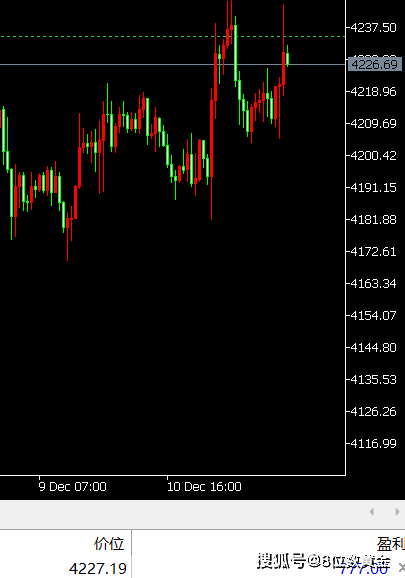
直接直线上涨,最高4286遇阻小幅调整。 面临4300关口,进入短期调整。 黄金横盘整理,围绕4200多空激战后,多头大爆发,直接坐火箭起飞,终于突破。一路狂飙80美金,强 势归来,再战4300的关口。 昨天4235附近,再次空获利。 今天的走势 昨晚多头搏击,涨破4264阻力。 昨天主要因素: 一方面,鲍威尔给市场情绪降温,特别是通胀和资本市场的过热现象,持续模糊谨慎表态,淡化美联储 未来的利率的路径。更重要的是11月数据集体缺失,明年降息降温,黄金冲高回落调整。 另外一方面,美联储继续扩表,特别是降息25基点,又开启了宽松。更重要的是美失业金与上周反差极 大,创单周最大增幅,意外显示美经济疲软的迹象,美元持续贬值跳水,利好黄金上演大幅反弹。 下方可调整空间,看回踩4250的位置。 此位置支撑有效,再次反弹,继续看涨为主。 上方再次破高,看向4300的关口,或一度续涨,看4380的历史高位。 当然了,高位流动的真空区域。 特别是急涨之下,随着调整持续,可调整空间加大,下方再次跌破了4250,下方继续看向4220的支撑。 黄金11月收官后,12月深陷100美金,连续2周的横盘整理后。再次上破,多头爆发,强势不 ...
铝:重心上移,氧化铝:供需过剩未改,铸造铝合金:跟随电解铝
Guo Tai Jun An Qi Huo· 2025-12-12 02:54
| | | | T | T-1 | T-5 | T-22 | T-66 | | --- | --- | --- | --- | --- | --- | --- | --- | | | | 沪铝主力合约收盘价 | 21970 | રૂટ | -90 | ર૦ર | 1435 | | | | 沪铝主力合约夜盘收盘价 | 22175 | ー | ー | ー | l | | | | LME铝3M收盘价 | 2895 | 33 | 8 | 30 | 318 | | | | 沪铝主力合约成交量 | 189881 | 30018 | | -21799 | 61713 | | | | 沪铝主力合约持仓量 | 294576 | 108770 | -56485 50119 | 38415 | 66548 | | | 电解铝 | | | | | | | | | | LME铝3M成交量 | 20441 | 4531 | -4657 | -3440 | ર્ 185 | | | | LME注销仓单占比 | 6. 43% | -0. 37% | -2. 14% | -1. 83% | 3.50% | | | | LME 铝cash-3M ...
国泰君安期货商品研究晨报:贵金属及基本金属-20251212
Guo Tai Jun An Qi Huo· 2025-12-12 02:30
Report Industry Investment Rating No relevant content provided. Core Viewpoints of the Report - Gold experienced an expected interest rate cut, and silver reached a new high, breaking through 60. Copper prices rose as the U.S. dollar declined, and zinc showed a volatile upward trend. Lead prices were under pressure due to increased domestic inventories, and tin supply was disrupted again. Aluminum's center of gravity shifted upward, while the alumina market remained in oversupply. Cast aluminum alloy followed the trend of electrolytic aluminum. Platinum started to catch up in price, and attention was paid to whether it could break through the previous high. Palladium showed a volatile upward trend. Nickel's structural surplus situation changed, but the contradiction in the game remained unchanged. Stainless steel's supply and demand continued to be weak, and the cost - support logic strengthened [2]. Summary by Related Catalogs Gold - **Price and Trading Volume**: The closing price of Shanghai Gold 2512 was 957.90, with a daily increase of 0.16%, and the night - session closing price was 969.80, with a night - session increase of 1.24%. The trading volume of Shanghai Gold 2512 was 242,710, an increase of 20,101 compared to the previous day, and the position was 192,178, a decrease of 481 [4]. - **Inventory**: The inventory of Shanghai Gold was 91,302 kilograms, an increase of 3 kilograms [4]. - **Trend Intensity**: The trend intensity of gold was 1 [6]. Silver - **Price and Trading Volume**: The closing price of Shanghai Silver 2512 was 14,488, with a daily increase of 0.85%, and the night - session closing price was 15,008.00, with a night - session increase of 4.56%. The trading volume of Shanghai Silver 2512 was 1,633,505, a decrease of 181,337 compared to the previous day, and the position was 423,172, a decrease of 27,385 [4]. - **Inventory**: The inventory of Shanghai Silver was 780,600 kilograms, an increase of 38,755 kilograms [4]. - **Trend Intensity**: The trend intensity of silver was 1 [6]. Copper - **Price and Trading Volume**: The closing price of the Shanghai Copper main contract was 92,210, with a daily increase of 0.39%, and the night - session closing price was 94,080, with a night - session increase of 2.03%. The trading volume of the Shanghai Copper index was 341,163, a decrease of 3,257 compared to the previous day, and the position was 631,193, a decrease of 2,622 [8]. - **Inventory**: The inventory of Shanghai Copper was 31,461 tons, an increase of 2,530 tons [8]. - **Trend Intensity**: The trend intensity of copper was 2 [10]. Zinc - **Price and Trading Volume**: The closing price of the Shanghai Zinc main contract was 22,995, with a decrease of 0.35%. The trading volume of the Shanghai Zinc main contract was 93,062, a decrease of 25,138 compared to the previous day, and the position was 88,499, a decrease of 4,680 [11]. - **Inventory**: The inventory of Shanghai Zinc futures was 52,802 tons, a decrease of 1,968 tons [11]. - **Trend Intensity**: The trend intensity of zinc was 1 [13]. Lead - **Price and Trading Volume**: The closing price of the Shanghai Lead main contract was 17,155, with an increase of 0.23%. The trading volume of the Shanghai Lead main contract was 34,885, a decrease of 1,564 compared to the previous day, and the position was 35,754, a decrease of 3,561 [14]. - **Inventory**: The inventory of Shanghai Lead futures was 17,711 tons, an increase of 2,282 tons [14]. - **Trend Intensity**: The trend intensity of lead was 0 [15]. Tin - **Price and Trading Volume**: The closing price of the Shanghai Tin main contract was 320,600, with a decrease of 0.63%, and the night - session closing price was 331,910, with a night - session increase of 4.20%. The trading volume of the Shanghai Tin main contract was 226,914, an increase of 15,806 compared to the previous day, and the position was 42,785, a decrease of 4,714 [17]. - **Inventory**: The inventory of Shanghai Tin was 7,024 tons, a decrease of 127 tons [17]. - **Trend Intensity**: The trend intensity of tin was 0 [19]. Aluminum, Alumina, and Cast Aluminum Alloy - **Aluminum**: The closing price of the Shanghai Aluminum main contract was 21,970, and the night - session closing price was 22,175. The trading volume of the Shanghai Aluminum main contract was 189,881, and the position was 294,576 [20]. - **Alumina**: The closing price of the Shanghai Alumina main contract was 2,469, and the night - session closing price was 2,441. The trading volume of the Shanghai Alumina main contract was 242,299, and the position was 257,111 [20]. - **Cast Aluminum Alloy**: The closing price of the aluminum alloy main contract was 20,965, and the night - session closing price was 21,130. The trading volume of the aluminum alloy main contract was 3,506, and the position was 17,569 [20]. - **Trend Intensity**: The trend intensity of aluminum was 1, that of alumina was - 1, and that of aluminum alloy was 1 [22]. Platinum and Palladium - **Platinum**: The closing price of platinum futures 2606 was 442.40, with a decrease of 0.46%. The trading volume of Shanghai Platinum was 7,771, a decrease of 2,916 compared to the previous day, and the position was 12,351, an increase of 190 [24]. - **Palladium**: The closing price of palladium futures 2606 was 385.25, with a decrease of 0.62%. The trading volume of Shanghai Palladium was 4,506, a decrease of 1,404 compared to the previous day, and the position was 3,629, an increase of 123 [24]. - **Trend Intensity**: The trend intensity of platinum was 1, and that of palladium was 1 [27]. Nickel and Stainless Steel - **Nickel**: The closing price of the Shanghai Nickel main contract was 115,870, a decrease of 1,220. The trading volume of the Shanghai Nickel main contract was 106,815, a decrease of 13,204 compared to the previous day [29]. - **Stainless Steel**: The closing price of the stainless - steel main contract was 12,500, a decrease of 55. The trading volume of the stainless - steel main contract was 163,110, an increase of 314 compared to the previous day [29]. - **Trend Intensity**: The trend intensity of nickel was 0, and that of stainless steel was 0 [33].
高盛:美联储决议偏鸽,美欧政策分化或致美元贬值
Sou Hu Cai Jing· 2025-12-11 14:13
For hexun.com 【12月11日高盛研报:美联储决议现鸽派基调,欧美政策分化或影响汇率】12月11日,高盛分析师 Privorotsky在最新研报中指出,虽市场因鲍威尔对中性利率审慎表态及会议多张反对票滋生鹰派预期, 但本次决议实际传递鸽派基调。 与之对比,欧洲央行官员明确称不会密切关注美联储降息。法国央行 行长维勒鲁瓦·德加豪近日表示,认为欧央行会跟随美联储是误解,还指出欧洲货币政策立场比美国更 宽松。 高盛分析强调,政策分化核心影响预计通过汇率渠道显现。若美联储后续持续降息,其他主要 央行维持紧缩倾向,市场将聚焦美元面临的持续性贬值压力。 本文由 AI 算法生成,仅作参考,不涉投资建议,使用风险自担 和讯财经 和而不同 迅达天下 扫码查看原文 ...
当美联储“独自降息”,其他央行甚至开始加息,美元贬值将成为2026年焦点
美股IPO· 2025-12-11 13:00
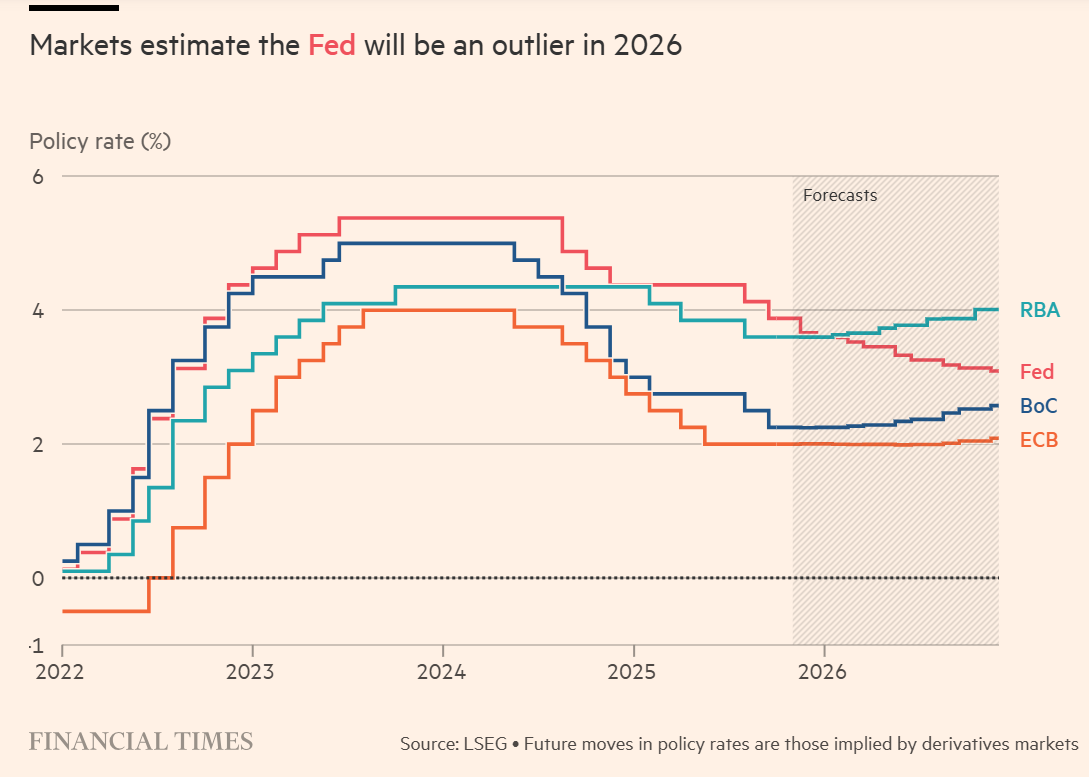
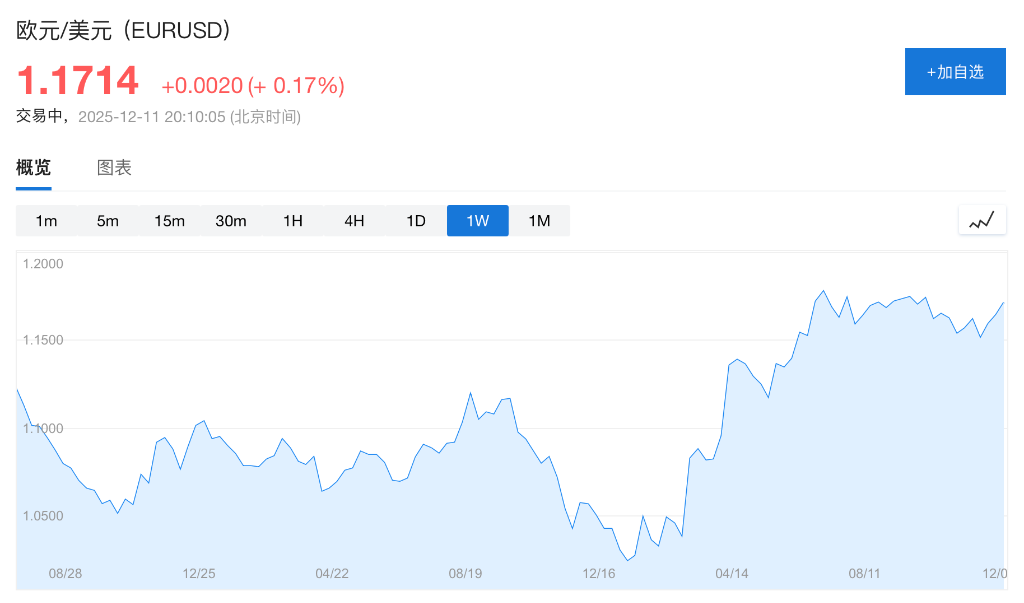
Core Viewpoint - The Federal Reserve has lowered interest rates by 25 basis points, and the market widely expects the Fed to maintain an accommodative policy next year, while other central banks like those in Europe, Canada, Japan, Australia, and New Zealand are generally maintaining a tightening stance [1][3]. Group 1: Federal Reserve Actions - The Federal Reserve's recent decision to lower rates by 25 basis points aligns with market expectations, indicating a dovish tone despite some hawkish signals from Fed officials [3][4]. - Major Wall Street banks, including Morgan Stanley and Citigroup, predict further rate cuts in January, with expectations of a continued easing cycle [4][5]. Group 2: Global Central Bank Divergence - There is a noticeable divergence in monetary policy among global central banks, with the Fed continuing to lower rates while others, like the European Central Bank (ECB), maintain a tightening approach [3][7]. - ECB officials have emphasized their independence from the Fed's actions, indicating that they will not necessarily follow the Fed's lead in monetary policy adjustments [7][10]. Group 3: Impact of Currency Fluctuations - The anticipated divergence in monetary policy is expected to manifest through currency markets, with the dollar facing depreciation pressure, which could influence the ECB's policy decisions [3][10]. - The ECB's chief economist noted that a 10% appreciation of the euro could significantly suppress inflation, with the most pronounced effects occurring within the first year [9][10]. Group 4: Inflation Projections - The ECB has revised its inflation forecast for 2026 down to 1.7%, below its 2% target, indicating potential challenges if the Fed's rate cuts lead to further euro appreciation [10][11]. - The ECB's policy decisions may be constrained by the transmission effects of exchange rate fluctuations on inflation, despite their stated commitment to policy independence [10][11].
当美联储“独自降息”,其他央行甚至开始加息,美元贬值将成为2026年焦点
Hua Er Jie Jian Wen· 2025-12-11 12:47
Core Viewpoint - The divergence in global central bank policies is accelerating, with the Federal Reserve continuing its rate-cutting path while other central banks, including those in Europe, Canada, Japan, Australia, and New Zealand, maintain a tightening stance or even enter a rate-hiking phase. This divergence is expected to significantly impact the currency markets by 2026, with the potential for sustained depreciation of the US dollar becoming a focal point for market participants, influencing the European Central Bank's policy direction [1]. Group 1 - The Federal Reserve is expected to lower interest rates by 25 basis points, signaling a dovish tone despite some hawkish expectations in the market [1]. - European Central Bank officials assert their independence from the Federal Reserve's actions, with the French central bank governor stating that the ECB's policy stance is already more accommodative than that of the US [1]. - Goldman Sachs emphasizes that if the Fed continues to cut rates while other major central banks maintain a tightening approach, the market will focus on the persistent depreciation pressure on the US dollar [1]. Group 2 - Major Wall Street banks, including Morgan Stanley and Citigroup, predict further rate cuts by the Federal Reserve in January, indicating that the easing cycle is not yet over [2]. - Goldman Sachs, Wells Fargo, and Barclays anticipate that the rate-cutting window will open in March, with a potential second cut in June [3]. Group 3 - ECB officials emphasize their monetary policy independence, with the French central bank governor stating that the ECB should retain the option to cut rates without being influenced by the Fed [4]. - The ECB's current key interest rate is 2%, significantly lower than the Fed's range of 3.5%-3.75%, highlighting structural differences in policy space and inflation conditions [4]. - The ECB's short-term likelihood of following the Fed's rate cuts is low, as past instances of policy divergence have not led to significant market volatility [4]. Group 4 - The ECB's chief economist notes that the exchange rate has a significant impact on inflation, with a 10% appreciation of the euro expected to suppress inflation by 0.6 percentage points in the first year [7]. - The ECB's latest forecast has lowered the 2026 inflation rate to 1.7%, below its 2% target, indicating potential pressure on inflation if the Fed's rate cuts lead to further euro appreciation [8]. - A potential transmission chain is identified: Fed rate cuts → weaker dollar → stronger euro → further pressure on eurozone inflation → possible ECB rate cuts, suggesting that exchange rates and inflation could constrain ECB decisions despite claims of independence [8].
海外宏观周报:美国就业持续走弱-20251209
China Post Securities· 2025-12-09 10:03
Economic Indicators - In November, the US ADP employment data showed a decrease of 32,000 jobs, indicating a weakening labor market[1] - The ISM manufacturing PMI for November was 48.2, below the threshold of 50, indicating contraction, while the services PMI was 52.6, showing slight improvement[10] - Consumer confidence rebounded to 53.3 in December, but remains low, with inflation expectations decreasing from 4.5% to 4.1% for the one-year outlook[10] Market Outlook - The US dollar is expected to face depreciation pressure due to fiscal easing from the OBBBA Act and ongoing interest rate cuts[1] - The potential for a rise in the Japanese yen is noted, as it is currently undervalued against the US dollar, with market concerns about Japan's fiscal situation[2] - Market pricing indicates one more interest rate cut in 2025 and two cuts in 2026, reflecting expectations of a softer monetary policy[23] Risks - If the US economy proves more resilient than expected, stronger employment data could lead to a reassessment of interest rate paths, supporting a stronger dollar[3] - Delays in the Bank of Japan's interest rate hikes or renewed fiscal concerns could undermine the logic for yen appreciation[3]
全球央行鹰派抬头,美联储或成异类,美元贬值压力加剧!
Jin Shi Shu Ju· 2025-12-09 06:32
AI播客:换个方式听新闻 下载mp3 音频由扣子空间生成 投资者加大了对欧元区明年可能加息的押注,而预计美国则将继续降低借贷成本,这一转变可能进一步拖累本已疲软的美元。 互换市场定价目前显示,欧洲央行2026年加息的可能性高于降息。相比之下,普遍被认为在周三下次会议上几乎肯定会降息的美联储,明年预计还将再降息 至少两次。 投资者还押注,随着经济好转,澳洲联储和加拿大央行明年将加息,而英国央行则被广泛预期将在明年夏天前结束降息周期。 道明证券(TD Securities)的普贾·库姆拉(Pooja Kumra)将明年描述为欧洲央行、加拿大央行和澳洲联储的潜在"转折点",并补充道:"鹰派声音愈发响 亮。" 尽管这一转变可能会缩小美国与其他国家的利差,但借贷成本的相反走势可能会加剧美元的下跌——美元今年以来兑一篮子货币已下跌逾8%。 目前,欧元区和其他几个主要经济体的利率低于美国,部分原因是它们的经济增长更为缓慢。 但欧洲央行和其他央行的政策制定者似乎不太可能进一步降息以刺激增长,因特朗普的贸易战对美国贸易伙伴的损害已被证明低于此前预期。 互换市场定价目前显示,到明年年底,欧洲央行平均将加息0.08个百分点。相比之 ...