
供给侧结构性改革

Search documents
宏观政策系列二:四中全会时间确定,新型政策性金融工具落地
Hua Tai Qi Huo· 2025-09-30 01:35
Report Industry Investment Rating - Not provided Core Views - The date of the Fourth Plenary Session of the 20th Central Committee has been set, which is from October 20th to 23rd, and it will review the "Proposal of the Central Committee of the Communist Party of China on Formulating the 15th Five - Year Plan for National Economic and Social Development". Market expectations continue to improve, and the impact of macro - policies is gradually shifting from "removal" on the supply - side to "stability", with the incremental demand on the demand - side being the focus for the future [3]. - The National Development and Reform Commission announced 500 billion yuan of new policy - based financial instruments. Based on the project capital ratio of 20% and the new policy - based financial instrument ratio of 50%, it can drive investment projects worth 5 trillion yuan. Attention should be paid to the stabilization and recovery of the economic cycle in the fourth quarter. There are differences between internal and external expectations, with external negative impacts on global total demand rising and internal positive impacts on the economy rising [4]. Summary by Related Content Event Information - The Political Bureau of the CPC Central Committee decided on September 29th that the Fourth Plenary Session of the 20th Central Committee will be held from October 20th to 23rd in Beijing. The National Development and Reform Commission announced on September 29th that the scale of new policy - based financial instruments is 500 billion yuan, all used to supplement project capital [2]. Policy Background and Impact - The new policy - based financial instruments were first proposed at the Political Bureau meeting on April 25th, 2025, aiming to solve the problem of insufficient project capital and supporting funds, with the direction of "supporting scientific and technological innovation, expanding consumption, stabilizing foreign trade, etc." [4].
深耕“全球南方”: 中国企业南向出海的高质量发展路径
Jin Rong Shi Bao· 2025-09-29 02:13
Core Viewpoint - The strategic importance of developing countries in China's economic development and security is increasing, transitioning from a supplementary "flank" market to a crucial "main stage" for China's globalization strategy [1] Group 1: Historical Phases of China's Outbound Investment - The outbound investment of Chinese enterprises in developing countries is closely linked to China's economic transformation and changes in the international environment, evolving through three distinct phases: initial exploration (1978-2000), deepening expansion (2001-2012), and transformation and upgrading (2013-present) [2][3][4] Initial Exploration Phase (1978-2000) - During this period, the focus was primarily on "bringing in" rather than "going out," with limited foreign exchange reserves and experience in international markets. State-owned foreign trade companies and a few large state-owned enterprises led the way in overseas investments [2] Deepening Expansion Phase (2001-2012) - The "going out" strategy was formally included in the national economic plan, coinciding with China's accession to the WTO. This led to a significant increase in Chinese enterprises entering developing markets, with a 28.1% annual growth rate in new contracts for foreign engineering projects from 2002 to 2007, totaling over $200 billion [3] Transformation and Upgrading Phase (2013-present) - The Belt and Road Initiative has elevated economic cooperation with developing countries, with trade reaching $26 trillion and investments exceeding $500 billion from 2013 to 2024. Chinese enterprises have adopted a model of "Chinese capital + Chinese standards + Chinese construction," focusing on infrastructure modernization in developing countries [4] Group 2: Strategic and Practical Logic for Accelerating Outbound Investment - The current international and domestic environments necessitate that Chinese enterprises accelerate their outbound investments in developing countries as a survival and sustainable development strategy [5] National Perspective - Outbound investment in developing countries supports supply-side structural reforms and the construction of a new development pattern, optimizing resource allocation and upgrading industrial structures [6][7] Enterprise Perspective - Outbound investment serves as a crucial response to international decoupling and domestic competition pressures, allowing companies to establish production bases in developing countries to mitigate risks and enhance supply chain resilience [9][10] Developing Country Perspective - Chinese enterprises' outbound investments provide unprecedented opportunities for developing countries to achieve industrialization and self-sufficiency, filling gaps in capital, technology, and industrial capabilities [11][12] Group 3: Strategies for High-Quality Outbound Investment - To adapt to complex international conditions and domestic economic transformations, Chinese enterprises should focus on upgrading their outbound investment strategies [13] Deepening Localization - Enterprises should transition from merely "going out" to "integrating in" by deeply embedding themselves in the economic and social structures of developing countries, enhancing local employment and supply chain integration [13][14] Promoting Soft and Hard Integration - In addition to hardware exports, there should be a focus on transferring technology and management expertise to enhance the self-development capabilities of developing countries [14] Building a Collaborative Outbound Ecosystem - A multi-party collaborative system involving government guidance, enterprise leadership, financial support, and professional services is essential for addressing systemic challenges in outbound investments [15]
“两新”政策持续释放扩内需效能
Sou Hu Cai Jing· 2025-09-28 01:09
Core Insights - The focus of China's policy this year is to expand domestic demand, with the implementation of the third batch of consumer goods replacement policies aimed at stimulating consumer demand and driving sales growth in related products [1][2] - The "Two New" policies initiated in 2024 and expanded in 2025 have effectively unleashed domestic consumption potential and investment momentum, promoting a virtuous cycle of supply and demand, industrial upgrading, and green development [1][2] Policy Implementation Effects - The expansion of domestic demand has led to explosive growth in key consumption categories such as automobiles and home appliances, with sales in categories like home appliances and furniture achieving monthly year-on-year growth rates exceeding 20% [2] - The consumer goods replacement policy has stimulated over 2 trillion yuan in related product consumption since its implementation [2] - Equipment updates supported by long-term special government bonds have led to investments exceeding 1 trillion yuan, with approximately 8,400 projects initiated [2] Economic Circulation and Resource Utilization - The government has allocated long-term special bond funds to support high-level circular economy projects, promoting a "reverse invoicing" system to reduce tax burdens on recycling companies [3] - The establishment of over 14,000 new intelligent community recycling facilities has significantly increased the volume of scrapped vehicles and improved the recycling of old household appliances [3] Mechanism Innovation and Implementation Pathways - Various measures have been introduced to amplify the effects of the "Two New" policies, including the establishment of a project screening mechanism and financial support for equipment updates [4][5] - The introduction of the "reverse invoicing" system addresses tax deduction challenges for resource recovery companies, while local governments enhance policy coordination and financial support for consumer subsidies [5] Economic Recovery and Growth - The series of policies represented by the "Two New" initiatives have contributed to a sustained recovery in China's economy, enhancing the internal driving force and reliability of the national economic cycle [6] Unified Market and Efficiency Improvement - The establishment of a unified circulation standard system aims to optimize logistics and reduce costs for durable consumer goods and second-hand equipment [7] - The integration of data across departments and the application of artificial intelligence technologies are expected to streamline processes and enhance regulatory oversight [7] Resource Recycling and Service Enhancement - Efforts are being made to improve the entire process of product equipment recycling, disposal, trading, and reuse, promoting the development of a one-stop recycling service system [7]
“文博热”靠什么走向长红
Jing Ji Ri Bao· 2025-09-26 21:52
Core Insights - The "cultural heritage fever" is on the rise, with popular institutions like the Palace Museum experiencing ticket shortages as the National Cultural Heritage Administration reports a record 304 million visitors to museums nationwide during the summer of 2025 [1][2] - The Ministry of Commerce and nine other departments have introduced policies to encourage cultural institutions to extend operating hours, open collections, and innovate exhibition methods, aiming to accelerate the transformation of cultural resources [1][3] - The growth of cultural consumption is linked to the deep integration of related industries and brand building, emphasizing the need for collaboration between cultural heritage and tourism, education, and technology [3][4] Group 1: Innovation in Cultural Supply - Enhancing the attractiveness of cultural institutions relies on innovative supply and resource activation, utilizing technologies like digitalization and virtual reality to create immersive experiences [2][3] - Institutions should open their collections and collaborate with social creativity and capital to develop culturally rich and practical cultural products [2][3] - Encouraging exhibitions to extend beyond traditional venues into public spaces can make cultural experiences more accessible [2][3] Group 2: Improving Visitor Experience - A good visitor experience is essential for maintaining public interest, necessitating flexible adjustments to operating hours to align with modern lifestyles [2][3] - Optimizing appointment management systems to be more user-friendly can reduce hidden costs for visitors [2][3] - Enhancing supporting facilities and professional services is crucial for creating a welcoming and culturally rich environment [2][3] Group 3: Expanding Cultural Coverage - The expansion of cultural consumption is associated with the integration of cultural heritage with tourism, education, and technology, creating distinctive cultural tourism routes and educational projects [3][4] - Exploring new business models through technology can break spatial limitations and broaden audience reach [3][4] - Developing influential cultural consumption brands requires cross-industry collaboration to extend the industry chain [3][4] Group 4: Reform and Vitality - Reforms are necessary to overcome institutional barriers, including improving internal incentive mechanisms and simplifying approval processes [3][4] - Encouraging social participation in the development and utilization of cultural resources can create a sustainable development framework [3][4] - The ongoing prosperity of cultural consumption reflects enhanced cultural confidence and is vital for driving high-quality economic development [3][4]
赵义良:深刻理解运用“五个必须统筹”
Jing Ji Ri Bao· 2025-09-25 23:56
Group 1: Economic Stability and Challenges - The overall operation of the economy is stable and shows strong vitality and resilience, but it faces several risks and challenges [1] - Emphasis on the need to balance effective markets and proactive government roles, total supply and total demand, and the cultivation of new and the updating of old driving forces [1][2] Group 2: Market and Government Relationship - The relationship between government and market is a core issue in economic reform, requiring a balance that allows for both market efficiency and government oversight [2] - The market's role in resource allocation is crucial, and the government must address market failures while maintaining order [2][3] Group 3: Supply and Demand Dynamics - Total supply and total demand must be in dynamic balance for a healthy socialist market economy, with a focus on both sides working together to enhance economic growth [4][5] - Demand-side management focuses on short-term adjustments, while supply-side management aims to improve structural issues [4] Group 4: New and Old Driving Forces - The cultivation of new driving forces and the updating of old ones are interconnected, with technology innovation leading the way for new industries while upgrading traditional sectors [7][8] - The process of transitioning from old to new driving forces requires a careful balance and integration of both [7][8] Group 5: Resource Optimization - The relationship between optimizing new resources and revitalizing existing ones is essential for improving resource allocation efficiency [9][10] - Revitalizing existing resources can create opportunities for new investments, enhancing overall economic development [10] Group 6: Quality and Quantity in Economic Development - The relationship between enhancing quality and expanding total economic volume is a dialectical unity, where both aspects are necessary for sustainable growth [11][12] - Economic development must focus on both quantity and quality to meet the higher demands of modernized socialist construction [12][13]
深刻理解运用“五个必须统筹”
Jing Ji Ri Bao· 2025-09-25 22:14
Group 1: Economic Stability and Challenges - The overall operation of the economy is stable and shows strong vitality and resilience, but it faces several risks and challenges [1] - Emphasis on the importance of balancing various economic relationships, including effective market and proactive government, total supply and total demand, and new and old driving forces [1] Group 2: Market and Government Relationship - The relationship between government and market is a core issue in economic reform, with a focus on achieving a balance that allows for both market efficiency and government oversight [2] - The market's role in resource allocation is crucial, and the government must address market failures while ensuring a well-functioning market system [2][3] Group 3: Supply and Demand Dynamics - Total supply and total demand are interrelated aspects of market economy, and their dynamic balance is essential for healthy economic operation [4] - Effective economic management requires coordinated efforts from both supply and demand sides to ensure strong interaction and balance [4][5] Group 4: New and Old Driving Forces - The cultivation of new driving forces and the updating of old driving forces are interconnected, with new forces emerging from technological innovation and old forces needing transformation [7][8] - Emphasis on the importance of integrating technological advancements into traditional industries to facilitate a smooth transition between new and old driving forces [8] Group 5: Resource Optimization - The relationship between optimizing new resources and revitalizing existing resources is crucial for improving resource allocation efficiency [9][10] - Revitalizing existing resources can create opportunities for new resource optimization, leading to enhanced economic development [10] Group 6: Quality and Quantity in Economic Development - The relationship between enhancing quality and expanding total quantity is a dynamic process essential for modernizing the economy [11][12] - Quality improvements provide the necessary drive for quantity growth, while quantity accumulation lays the foundation for quality enhancement [12][13]
2025,一直“在线”!
申万宏源宏观· 2025-09-23 16:04
Core Viewpoint - The article emphasizes the importance of continuous research and iteration in approaching the truth, highlighting the commitment to independent and valuable research outcomes in the evolving landscape of 2025 [2][26]. Group 1: Research Framework and Goals - The team is undergoing a comprehensive upgrade in 2025, focusing on restructuring the research framework and systematically presenting research results [2]. - The guiding principle is "research with reason, grounded in reality," aiming to provide genuinely valuable independent research [2]. Group 2: Economic Insights - The article discusses the shift in the economic "three drivers" from manufacturing to services, indicating that as GDP per capita reaches $10,000 to $30,000 and urbanization hits 70%, service demand will accelerate [28]. - It notes that new consumption policies emphasize long-term strategies for domestic demand expansion rather than short-term stimuli, with ongoing support for manufacturing to counter tariff impacts [29]. Group 3: Structural Reforms - The concept of "anti-involution" is presented as a new phase of supply-side structural reform, with increased government and industry focus, broader coverage, and stronger coordination among policies and market mechanisms [31].

中金:工企利润修复路径探究
Hua Er Jie Jian Wen· 2025-09-23 13:09
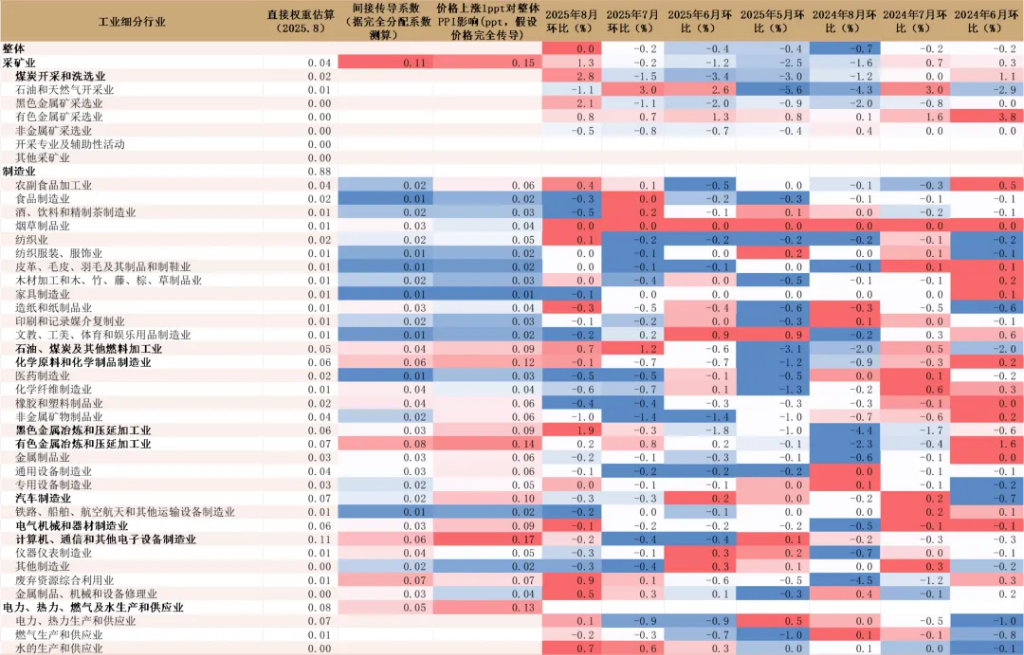
Core Viewpoint - The government has initiated comprehensive rectification of excessive competition across multiple industries since the second half of last year, aiming to promote the recovery of industrial product prices, restore industry profitability, and optimize industrial structure. In August, the PPI (Producer Price Index) showed signs of stabilization, but investment and commodity consumption have significantly slowed, indicating weak growth momentum in terminal demand [1][2]. Group 1: Supply-Side Dynamics - The current capacity governance emphasizes legal compliance and is characterized by a steady pace of capacity reduction, with a focus on exiting excess low-end outdated capacities in industries such as coal, steel, and photovoltaics. Policies are dense in these sectors, which directly influence the sustainability of price recovery [4][5]. - Approximately 60% of industries are currently at historical profit margins below the 40th percentile, indicating a need for improvement in asset turnover and overall revenue growth to enhance asset return rates [4][6]. - The PPI's fluctuation is significantly influenced by industries such as mining, non-ferrous and ferrous metal smelting, and chemical manufacturing, with notable price increases in coal and water supply sectors [3][4]. Group 2: Demand-Side Challenges - Economic momentum weakened in August, and the effectiveness of stimulus policies on consumer goods is uncertain, particularly as the replacement cycle for durable goods is long, which may diminish the impact of such policies [5][6]. - Real estate and infrastructure investments remain crucial for growth, but both sectors have shown negative year-on-year changes, with real estate down by 12.9% and infrastructure up by only 5.4% in the first eight months of the year [6][8]. - The recovery in the real estate market is expected to take time, and the effectiveness of existing PPP projects and new financial tools will be critical for stabilizing infrastructure investment in the fourth quarter [6][8]. Group 3: Price Transmission and Industry Specifics - The price transmission from upstream to downstream industries is contingent on terminal demand conditions, with structural demand in specific sectors like steel and photovoltaics showing potential for marginal recovery [5][9]. - The analysis of price transmission in the black building materials chain indicates significant price declines in raw materials, while the photovoltaic sector has experienced varied price movements, reflecting the complexities of market dynamics [9][10].
三部门印发方案,部署15项任务:更好发挥轻工业稳增长作用
Ren Min Ri Bao Hai Wai Ban· 2025-09-23 04:00
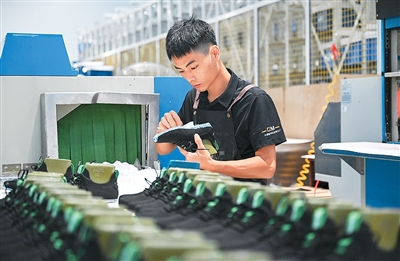
Core Viewpoint - The Ministry of Industry and Information Technology, along with other departments, has issued the "Light Industry Stabilization Growth Work Plan (2025-2026)", emphasizing the role of light industry in stabilizing growth, promoting consumption, and benefiting people's livelihoods in the coming years [1][2]. Group 1: Industry Overview - Light industry is a key sector in China's economy, contributing significantly to consumption, exports, and employment, with 140,000 enterprises generating revenues of 23.2 trillion yuan and profits of 1.5 trillion yuan in 2024 [2]. - The light industry accounted for 27.4% of the scale of manufacturing enterprises, 16.7% of total profits, and employed 1,792 million people, highlighting its importance in the national economy [2]. Group 2: Development Goals and Strategies - The "Work Plan" aims for stable growth in key industries and the basic stability of enterprise operating efficiency from 2025 to 2026, with a focus on emerging sectors such as smart home products and sports fashion [2]. - The plan includes the promotion of 300 upgraded and innovative products and the cultivation of 10 specialized industrial zones, each exceeding 100 billion yuan in scale [2]. Group 3: Supply-Side Structural Reforms - The plan integrates supply-side structural reforms with strategies to expand domestic demand, outlining 15 tasks to enhance supply, promote consumption, stabilize exports, and improve ecological sustainability [2][3]. - Specific measures include accelerating product innovation, enhancing quality assurance, and strengthening brand cultivation to address issues like supply structure imbalance and quality concerns [3]. Group 4: Export Strategies - The light industry has a significant export volume, nearing 1 trillion USD, representing over 30% of the global market share, but faces challenges due to global economic slowdowns and trade environment deterioration [3]. - The "Work Plan" proposes measures to optimize trade structure, support brand globalization, and develop new foreign trade models, including cross-border e-commerce [5]. - It emphasizes the importance of public services, such as establishing comprehensive service ports and enhancing international trade compliance to support enterprises in navigating global markets [5].
畅通退出机制 让“劣币”尽快出清,“良币”充分发展
Xiao Fei Ri Bao Wang· 2025-09-23 02:43
Group 1 - The core viewpoint emphasizes the necessity of revising the bankruptcy law to enhance the market exit mechanism, which is essential for fostering fair competition and optimizing resource allocation [1][2][3] - The current bankruptcy law, in effect since 2007, has played a crucial role in facilitating orderly exits of enterprises, promoting debt resolution, and protecting creditor rights, but it has become inadequate due to evolving economic conditions and industry structures [1][2] - The revision aims to address issues such as lengthy procedures, high costs, and limited coverage, which hinder the timely exit of failing enterprises, particularly "zombie companies" that occupy resources and stifle the growth of emerging industries [1][2] Group 2 - A well-functioning exit mechanism is deemed a necessary condition for fair competition, allowing for a healthy cycle of market entry and exit, which is vital for innovation and economic vitality [2][3] - The revision of the bankruptcy law is expected to provide a framework that balances the interests of creditors, investors, employees, and public welfare, preventing adverse chain reactions from abrupt bankruptcies [3] - The updated law will support the ongoing supply-side structural reforms and high-quality economic development by facilitating the clearance of "zombie companies" and reallocating resources to more dynamic sectors [3]