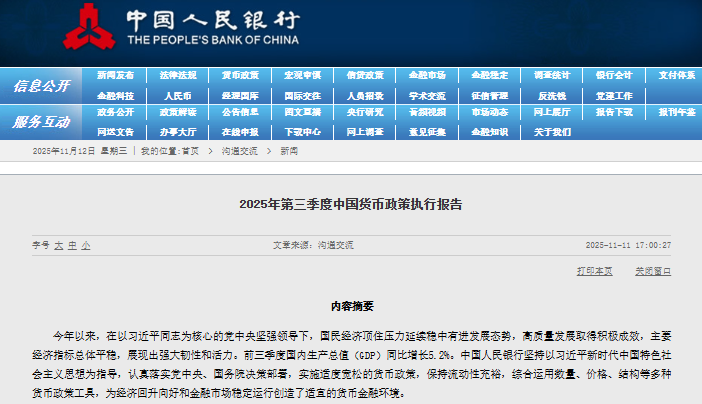
适度宽松货币政策

Search documents
宏观数据观察:东海观察10月经济增速继续放缓且低于预期
Dong Hai Qi Huo· 2025-11-14 07:30
1. Report Industry Investment Rating - No information provided in the given content 2. Core View of the Report - In October, China's economic growth continued to slow down and was lower than expected. The overall domestic demand economic data in October continued to slow down, with the decline in investment continuing to widen and falling short of market expectations, the consumption growth rate continuing to decline but slightly higher than market expectations, and industrial production significantly slowing down in the short term. The short - term investment side continued to slow down. The real estate market continued to slow down and bottom out, infrastructure investment continued to slow down, and manufacturing investment also faced challenges. The short - term domestic commodity supply - demand side showed weak demand and relatively abundant supply. The released data was significantly lower than market expectations, which was short - term negative for the domestic demand - type commodity market. In the medium - to - long term, the "anti - involution" work entering the substantial promotion stage was positive for the recovery of the domestic market. Overseas, the prices of external demand - type commodities such as non - ferrous metals and energy oscillated, and the support for precious metals increased due to the resurgence of safe - haven demand [3][5]. 3. Summary by Relevant Catalogs 3.1 Industrial Production - In October, the year - on - year growth rate of the added value of large - scale industrial enterprises was 4.9%, with an expected 5.5% and a previous value of 6.5%, a significant decline from the previous value and far lower than market expectations. This was mainly due to holiday factors and the slowdown in external demand orders, which led to a slowdown in the increase of industrial enterprise operating rates. Among the three major categories, the added value of the mining industry increased by 4.5% year - on - year, the manufacturing industry by 4.9%, and the production and supply of electricity, heat, gas, and water by 5.4%. High - end manufacturing such as the automobile manufacturing, railway, ship, aerospace, and other transportation equipment manufacturing, and computer, communication, and other electronic equipment manufacturing industries still had relatively fast growth rates. In the fourth quarter, with the gradual weakening of the US replenishment demand, the overall growth rate of domestic industrial production might decline but was expected to remain at a relatively high level [3][4]. 3.2 Consumption - In October, the year - on - year growth rate of total retail sales of consumer goods was 2.9%, with an expected 2.7% and a previous value of 3.0%, a 0.1 - percentage - point decline from the previous value but slightly higher than market expectations. The slowdown was due to the withdrawal of the consumer goods trade - in policy, the high base of categories such as automobiles, and weak holiday consumption. The growth rate of total retail sales of consumer goods further slowed down under the influence of the trade - in policy withdrawal. The retail sales of consumer goods such as household appliances, furniture, automobiles, and communication equipment showed significant slowdowns, while service - related consumption growth accelerated with policy support. In the short term, the growth rate of commodity consumption was expected to continue to decline, but in the later stage, with the implementation of service consumption stimulus policies and the recovery of residents' wealth effect, domestic consumption would continue to recover [4]. 3.3 Fixed - Asset Investment - From January to October, fixed - asset investment decreased by 1.7%, with an expected - 0.8% and a previous value of - 0.5%, and the decline widened by 1.2% and was far lower than expected. The decline rates of manufacturing, infrastructure, and real estate investment all further widened [3][4]. - **Real Estate**: In October, the year - on - year growth rate of real estate development investment was - 23.2%, with a 1.9 - percentage - point increase in the decline from the previous month. The year - on - year growth rates of the floor area of commercial housing sold and sales volume were - 19.6% and - 25.1% respectively, with significant increases in the decline rates from the previous values. This was mainly due to the high - base effect of the "9.24 real estate new policy" last year and the mild real estate stimulus policies this year. The real estate market continued to adjust and bottom out, with the transaction activity in the housing market decreasing, and the investment side remaining weak. The year - on - year growth rate of real estate development funds in October was - 21.4%, with a 10.4 - percentage - point increase in the decline. The floor area of newly started construction, construction, and completion of real estate all faced challenges [4]. - **Infrastructure**: In October, the year - on - year growth rate of infrastructure investment was - 8.9%, with a 4.3 - percentage - point increase in the decline from the previous value. Considering the continuous decline after the end of the photovoltaic rush - to - install market and the constraints of local debt resolution on project reserves and funds for traditional infrastructure, the growth rate of infrastructure investment continued to decline [4][5]. - **Manufacturing**: The year - on - year growth rate of manufacturing investment in October was - 6.7%, with a 4.8 - percentage - point increase in the decline from the previous value. It continued to slow down due to the high - base effect last year and the decline in investment willingness caused by "anti - involution". High - tech industries maintained a high level of prosperity, but factors such as tariff uncertainty, the marginal decline in policy funds for large - scale equipment renewal and transformation, and the slowdown in US replenishment demand in the fourth quarter affected manufacturing investment. However, with the support of 500 billion yuan in new policy - based financial instruments and the implementation of relevant policies, there might be some support for manufacturing investment in the future [4][5]. 3.4 Impact on Commodities - On the demand side, the short - term investment side continued to slow down, and domestic commodity demand as a whole slowed down and was lower than market expectations. On the supply side, industrial production slowed down due to factors such as the decline in foreign demand orders and the slowdown in the increase of industrial enterprise operating rates. The short - term domestic commodity supply - demand side showed weak demand and relatively abundant supply. The "anti - involution" policy had a certain supporting effect on the prices of domestic demand - type commodities. The released data was significantly lower than market expectations, which was short - term negative for the domestic demand - type commodity market. In the medium - to - long term, the "anti - involution" work entering the substantial promotion stage was positive for the recovery of the domestic market. Overseas, due to the overall easing of US trade policies, the impact on the economy weakened, but the short - term government shutdown affected the economy. The prices of external demand - type commodities such as non - ferrous metals and energy oscillated and showed significant differentiation, and the support for precious metals increased due to the resurgence of safe - haven demand [3][5].
中泰期货晨会纪要-20251114
Zhong Tai Qi Huo· 2025-11-14 02:25
1. Report Industry Investment Ratings No information provided in the given content about the report industry investment ratings. 2. Core Views of the Report - The overall market is influenced by various factors including macro - economic events, policy changes, and supply - demand dynamics in different sectors. Different commodities have different outlooks based on their specific fundamentals [13][16][24]. - In the macro - economic aspect, the US government "stop - work" has ended, and China's social financing scale and related monetary indicators show certain trends. The global trade situation, especially regarding US - China trade in soybeans and China's rare - earth export policy, is also under the spotlight [9][10]. 3. Summary by Relevant Catalogs 3.1 Macro - Information - Trump signed a federal government temporary appropriation bill, ending a 43 - day government "stop - work". The US government's "stop - work" was estimated to have cost $1.5 trillion [9]. - Japan's Prime Minister made remarks about the Taiwan issue, and China warned that any Japanese military intervention in the Taiwan Strait would be regarded as an act of aggression [9]. - China agreed to buy about 12 million tons of US soybeans in November and December and at least 25 million tons per year for the next three years. China is designing a new rare - earth export licensing system [9]. - China's social financing scale increment in the first ten months was 30.9 trillion yuan, 3.83 trillion yuan more than the previous year. At the end of October, the year - on - year growth of social financing stock was 8.5%, and M2 was 8.2%, both down 0.2 percentage points month - on - month [10]. - The new energy vehicle purchase tax exemption policy is ending, and 17 mainstream car brands have launched purchase tax subsidy programs [10]. - The US failed to release the October CPI report, and the IMF predicted that the US Q4 GDP growth would be lower than the previous forecast of 1.9% [10]. - Fed officials had different views on interest - rate policies, with some opposing further rate cuts and others advocating maintaining the current rate [11]. 3.2 Macro - Finance 3.2.1 Stock Index Futures - Adopt a volatile mindset and stay on the sidelines for now. The A - share market opened lower and closed higher, with the Shanghai Composite Index rising 0.73% to 4029.5 points. Some pension insurance companies are adjusting their investment portfolios, and the CSRC will deepen investment - financing reforms [13]. 3.2.2 Treasury Bond Futures - Monetary policy implementation is in the process of being fulfilled, and bonds still have upward momentum. Pay attention to the rhythm. The money market is loose, and the bond market is affected by the strong performance of the equity market and the release of social financing data [14]. 3.3 Black Commodities - The black commodity market is likely to return to fundamental trading in the short - to - medium - term. The overall demand for building materials is weak, while the demand for coils is relatively stable. Steel mills' profits are low, and iron - water production is expected to decline. The prices of black commodities are likely to fluctuate at the bottom [16]. - Iron ore supply is expected to increase, and the price is expected to face downward pressure [17]. - Coking coal and coke prices may continue to decline in the short - term, affected by production policies and downstream demand [18]. - For ferroalloys, in the long - term, it is advisable to take a short - position approach when prices are high, and in the short - term, it is recommended to stay on the sidelines [19]. - For soda ash and glass, it is advisable to stay on the sidelines for now. Soda ash production and inventory have declined slightly, and some enterprises have raised prices. Glass inventory has increased slightly, and the market is waiting for demand improvement [22]. 3.4 Non - Ferrous Metals and New Materials - For zinc, it is recommended to hold short positions at high prices. The domestic zinc inventory has decreased, and the price has been fluctuating at a high level recently [24]. - For lithium carbonate, the short - term fundamentals are good, but the demand may weaken in Q1 next year. It is advisable to wait for price corrections to buy [25]. - For industrial silicon, the supply - demand contradiction is not prominent, and it is expected to fluctuate within a range [26]. - For polysilicon, the market is waiting for policy changes, and the price is expected to continue to fluctuate [27][28]. 3.5 Agricultural Products - Cotton is expected to fluctuate at a low level due to supply pressure and weak demand, but high costs provide some support [29]. - Sugar supply is expected to be in surplus globally, and domestic sugar prices are affected by import costs and production increases. It is advisable to stay on the sidelines before new sugar floods the market [31]. - For eggs, it is recommended to take a short - position approach for near - month contracts. The supply pressure is large, and the spot price is weak, but the long - term outlook is positive due to "capacity reduction" [33]. - Apples are expected to fluctuate strongly. The inventory is low, and the price is high. Future consumption trends will be the key factor [35]. - Corn prices may face pressure above. The spot price has rebounded, but the new - grain supply pressure is still accumulating [36]. - For jujubes, it is advisable to stay on the sidelines for now. The spot price in the sales area is weak, dragging down the futures price [37]. 3.6 Energy and Chemicals - Crude oil prices are expected to decline in the long - term due to supply surplus, and in the short - term, they will fluctuate weakly [39]. - Fuel oil prices will follow the trend of oil prices, with a supply - abundant and demand - flat situation [41]. - Plastics are expected to fluctuate weakly due to supply pressure, but production losses may provide some support [42]. - Rubber is expected to fluctuate strongly in the short - term, with support at the bottom and pressure at the top [42]. - Synthetic rubber prices may stop falling and rebound in the short - term, but it is still necessary to be cautious when going long [44]. - Methanol prices are expected to fluctuate weakly in the near - term and may rise in the far - term after a rebound driver appears [45]. - Caustic soda prices are expected to be stable at a low level, and it is advisable to take a long - position approach at a low valuation [46]. - Asphalt prices are expected to have a larger fluctuation range, and the focus will be on the price bottom after the "winter storage" game [47]. - The polyester industry chain is expected to be strong in the short - term due to positive export policies [48]. - LPG is expected to be strong in the short - term due to the approaching civil - use peak season, but bearish in the long - term due to abundant supply [49]. - Pulp is expected to fluctuate widely, with limited upward space [50]. - Logs are expected to be weak in the short - term, with the price under pressure [50]. - For urea, it is advisable to stay on the sidelines due to strong export - policy uncertainties [51].
资讯早班车-2025-11-14-20251114
Bao Cheng Qi Huo· 2025-11-14 01:17
1. Report Industry Investment Rating No relevant content found. 2. Core Viewpoints of the Report - The macro - economic data shows a mixed picture, with some indicators like GDP growth and consumption having positive trends, while others such as exports face challenges. The monetary policy has space but its marginal efficiency is declining, and there is a need to shift the macro - control approach from over - reliance on investment to promoting consumption and benefiting people's livelihoods. The bond market may have opportunities from December this year to early next year, and the stock market shows certain upward momentum [1][2][16][29]. 3. Summary According to Relevant Catalogs 3.1 Macro Data - In September 2025, GDP growth at constant prices was 4.8% year - on - year, down from 5.2% in the previous quarter but up from 4.6% in the same period last year. In October 2025, the manufacturing PMI was 49%, lower than the previous value of 49.8% and the same - period value of 50.1%. The non - manufacturing PMI for business activities was 50.1%, slightly up from 50% in the previous period but down from 50.2% last year. Social financing scale increment in October was 814.9 billion yuan, significantly lower than 3529.6 billion yuan in the previous month but higher than 1412 billion yuan in the same period last year [1]. 3.2 Commodity Investment Reference 3.2.1 Comprehensive - The cumulative social financing scale increment in the first ten months was 30.9 trillion yuan, an increase of 3.83 trillion yuan compared to the same period last year. At the end of October, the year - on - year growth rates of social financing stock and M2 were 8.5% and 8.2% respectively, both down 0.2 percentage points month - on - month. The 10 - month economic data indicates that offline consumption, infrastructure construction, and industrial production are showing positive trends [2]. 3.2.2 Metals - On November 13, international precious metal futures generally fell. Uncertainty about economic data and the Fed's policy stance affected the market. Gold futures had a large inflow of funds, and the trading volume increased significantly. The inventory of some metals changed, with zinc and aluminum inventories increasing, and lead and copper inventories decreasing [4][5]. 3.2.3 Coal, Coke, Steel, and Minerals - In Liaodong, a large - scale gold deposit, the Dadonggou Gold Mine, was discovered, with a proven gold metal content of 1444.49 tons [8]. 3.2.4 Energy and Chemicals - The "Management Measures" aim to rationalize the investment and construction mechanism of oil and gas pipeline infrastructure. On November 13, the price of US crude oil futures rose. The IEA raised the forecast for global crude oil demand growth in 2025, and concerns about supply tightening also supported the price [9]. 3.2.5 Agricultural Products - In October, the US soybean crushing volume reached a record high, while Brazil's coffee exports decreased. China plans to purchase US soybeans, and Indonesia's palm oil exports may decline in 2026 due to the B50 plan [12][13]. 3.3 Financial News Compilation 3.3.1 Open Market - On November 13, the central bank conducted 190 billion yuan of 7 - day reverse repurchase operations, with a net investment of 9.72 billion yuan [15]. 3.3.2 Key News - The social financing scale and M2 growth rates decreased month - on - month. The US government ended its 43 - day shutdown. China's economic fundamentals are solid, with consumption showing a good trend, especially in lower - tier cities. Some companies have bond - related issues, and overseas credit ratings of some companies have changed [16][18][22]. 3.3.3 Bond Market Summary - The Chinese bond market weakened, with most bond yields rising slightly. The yields of US and European bonds also increased. Some institutions issued bonds, and their yields and subscription multiples are provided [23][27]. 3.3.4 Foreign Exchange Market - The on - shore RMB against the US dollar rose, and the US dollar index fell. Non - US currencies mostly rose [28]. 3.3.5 Research Report Highlights - Different research institutions have different views on the bond market. CICC believes that the social financing scale may continue to decline, and bond allocation is favorable for interest rate decline. Yangtze River believes that the probability of a comprehensive reserve requirement ratio cut is low, and the interest rate cut window may open from the fourth quarter of this year to the first quarter of next year. Xingzheng suggests a defensive strategy for US bonds [29]. 3.4 Stock Market Key News - The China Securities Regulatory Commission's chairman exchanged views on capital market cooperation with French and Brazilian regulatory authorities. A - shares and the Hong Kong stock market rose, with different sectors performing differently [32][33].
瑞达期货国债期货日报-20251113
Rui Da Qi Huo· 2025-11-13 09:30
Report Summary 1. Industry Investment Rating No industry investment rating was provided in the report. 2. Core View - The central bank will maintain a moderately loose monetary policy, with limited room for further monetary easing this year. The market is in a policy vacuum, and interest rates are expected to fluctuate within a narrow range. It is recommended to wait and see for now. Also, be vigilant about the potential suppression of long - term interest rates due to the recovery of risk appetite [2]. 3. Summary by Relevant Catalogs 3.1 Futures Market - **Futures Prices and Volumes**: T, TF, TS, and TL main contract closing prices decreased by 0.1%, 0.08%, 0.01%, and 0.26% respectively. T and TF main contract volumes increased by 15,298 and 18,123 respectively, while TS and TL main contract volumes decreased by 969 and 6,059 respectively [2]. - **Futures Spreads**: Most spreads showed a downward trend, but some spreads such as T12 - TL12, TF12 - T12, TS12 - T12, and TS12 - TF12 increased [2]. - **Futures Positions**: The main contract positions of T, TF, TS, and TL all decreased, and the net short positions of the top 20 in each contract also decreased to varying degrees [2]. 3.2 Bond Market - **CTD Bonds**: The net prices of several CTD bonds decreased, such as 220017.IB, 220019.IB, etc. [2]. - **Active Treasury Bonds**: The yields of 1 - year active treasury bonds increased by 0.50bp, while the yields of 3 - year, 5 - year, 7 - year, and 10 - year active treasury bonds decreased by 0.05bp, 0.70bp, 0.75bp, and 0.30bp respectively [2]. 3.3 Interest Rates - **Short - term Interest Rates**: Most short - term interest rates decreased, such as silver - pledged overnight, 7 - day, and 14 - day rates, while Shibor 7 - day and 14 - day rates remained unchanged [2]. - **LPR Rates**: Both 1 - year and 5 - year LPR rates remained unchanged [2]. 3.4 Open Market Operations - The issuance scale of reverse repurchase was 190 billion yuan, the maturity scale was 92.8 billion yuan, and the interest rate was 1.4% for 7 days. The net investment was 97.2 billion yuan [2]. 3.5 Industry News - The central bank will implement a moderately loose monetary policy and continue to improve the monetary policy framework [2]. - Chinese and US officials expressed the need to promote the stable development of Sino - US economic and trade relations [2]. - The US federal government's shutdown ended after 43 days, but there may be a lack of employment and inflation data in October [2]. 3.6 Market Situation - On Thursday, most yields of treasury bonds increased, and treasury bond futures weakened. Domestically, economic data in October was mixed, with inflation improving but export and PMI indicators declining. Overseas, the US government shutdown ended, but there are concerns about employment and inflation, and the prospect of a Fed rate cut in December is unclear [2].

权威专家:货币政策虽有空间但边际效率下降 适度宽松货币政策要把握好力度和节奏
Zheng Quan Shi Bao Wang· 2025-11-13 09:25
Core Insights - The People's Bank of China reported that the cumulative increase in social financing scale for the first ten months of 2025 reached 30.9 trillion yuan, an increase of 3.83 trillion yuan compared to the same period last year [1] - The year-on-year growth rate of social financing stock was 8.5% at the end of October, while the growth rate of broad money (M2) was 8.2%, both showing a decrease of 0.2 percentage points month-on-month [1] - The central bank plans to implement a moderately accommodative monetary policy to promote reasonable price recovery, with a focus on maintaining prices at a reasonable level [1] Monetary Policy and Economic Indicators - Major price indicators have shown signs of stabilization and recovery, with the Consumer Price Index (CPI) turning from decline to an increase of 0.2% year-on-year in October, and the core CPI rising by 1.2%, marking the highest increase since March 2024 [1] - The Producer Price Index (PPI) decreased by 2.1% year-on-year, but the rate of decline has narrowed for three consecutive months [1] - Experts suggest that the current monetary policy stance is supportive, creating a conducive monetary environment for promoting reasonable price recovery, while also noting that the effectiveness of monetary policy may have diminishing returns [2] Structural Adjustments and Policy Recommendations - The current low price levels are attributed to various factors from both supply and demand sides, necessitating a shift in macroeconomic regulation towards promoting consumption and improving livelihoods [3] - On the supply side, efforts should focus on building a unified national market and improving supply structure, while on the demand side, fiscal spending should prioritize social welfare and low-income groups to enhance consumer capacity and willingness [3]
固收点评:债市的两点预期差
Tianfeng Securities· 2025-11-13 08:44
Report Industry Investment Rating The provided content does not include information about the report industry investment rating. Core Viewpoints - The Q3 monetary policy report affirms the economic achievements in the first three quarters but emphasizes the need to "strengthen and consolidate" the domestic economy due to potential challenges such as a slowdown in economic growth momentum and the complexity of the overseas environment [1][6]. - Monetary policy maintains the general tone of "moderate easing," with the focus potentially shifting towards "stabilizing growth." However, there is still uncertainty regarding the full opening of broad - money space due to factors like the cross - cycle perspective and bank net interest margin pressure [1][10][11]. - There may be two expected differences in the bond market. One is related to the impact of changes in the social financing scale structure on bond supply and demand, and the other is about the relationship between guiding the decline of real - economy financing costs and bond market interest rates [2][16]. Summary by Directory 1. "Moderate Easing" Re - understood 1.1 Economic Stability and Policy Reinforcement - The Q3 report acknowledges the economic achievements in the first three quarters, with the removal of the statement about "striving to achieve the annual economic and social development goals," indicating a reduced sense of urgency. However, it points out that the domestic economy needs "strengthening and consolidation" due to a slowdown in growth momentum and the complexity of the overseas environment [6]. - The report adds "cross - cycle adjustment" to be equally important as "counter - cycle adjustment," aiming to balance short - term growth and long - term goals [7]. 1.2 The "Next Step" of Monetary Policy - Monetary policy continues the general tone of "moderate easing," with the description changing from "implementing in detail" in Q2 to "implementing well" in Q3, which may affirm the effectiveness of the monetary policy implementation since the first half of the year [10]. - The constraints on preventing capital idling have weakened marginally, and the pressure to stabilize the exchange rate has been significantly relieved. The focus of monetary policy may gradually shift to "stabilizing growth," but there is still uncertainty about the full opening of broad - money space [10][11]. - The exchange rate statement in the Q3 report has changed, and the mention of preventing capital idling has been removed, suggesting a potential shift in policy focus towards stabilizing growth while still maintaining some attention on the balance between supporting the real economy and the health of the banking system [11]. - From the perspective of macro - narrative logic and bank interest margins, the space for broad - money needs further expansion. Currently, it is necessary to "keep social financing conditions relatively loose" and give full play to the dual functions of monetary policy tools in terms of quantity and structure [11][12]. 2. Possible Expected Differences in the Bond Market - Regarding the capital side, although there is uncertainty in the use of aggregate tools, there is no need to worry too much as long as liquidity is kept reasonably abundant. Since the second quarter of this year, the capital side has been in a relatively stable and balanced state, and this trend is expected to continue [2][15]. - There are two possible expected differences in the bond market: - First, the current high level of the domestic social financing scale stock and the changing internal structure seem to be beneficial to bond assets in the short term. However, in the long run, there are expected differences. The decline in credit investment may affect the bank's credit creation ability and the demand for bond allocation, while the bond supply may maintain a certain expansion rhythm [2][16][17]. - Second, guiding the decline of real - economy financing costs does not directly lead to a decline in bond market interest rates. The key to guiding the decline of real - economy financing costs lies in structural tools, and the core of the requirement not to issue loans with after - tax interest rates lower than the same - term treasury bond yields is to enhance the linkage between the asset and liability sides of banks and support banks in stabilizing their net interest margins [18][19].
前三季度养老产业贷款同比增长58.2%
Ren Min Ri Bao· 2025-11-12 23:58
Core Insights - The People's Bank of China (PBOC) has reported that the moderately accommodative monetary policy has been effective in supporting key sectors and economic transformation in 2023 [1] Monetary Policy Implementation - The PBOC has utilized various monetary policy tools, including quantity, price, and structure, to create a favorable financial environment for economic recovery and market stability [1] - As of the end of September, the balance of structural monetary policy tools aimed at supporting the "five major tasks" in finance reached 3.9 trillion yuan [1] Loan Growth by Sector - As of September, loans in several key areas showed significant year-on-year growth: - Technology loans increased by 11.8% - Green loans rose by 22.9% - Inclusive loans grew by 11.2% - Loans for the elderly care industry surged by 58.2% - Digital economy loans expanded by 12.9% - All these growth rates exceeded the overall loan growth rate [1] Future Policy Directions - The report emphasizes the need to continue implementing a moderately accommodative monetary policy, maintaining relatively loose social financing conditions, and enhancing the monetary policy framework [1] - The goal is to ensure that the growth of social financing and money supply aligns with economic growth and price level expectations [1]
瑞达期货集运指数(欧线)期货日报-20251112
Rui Da Qi Huo· 2025-11-12 09:00
Report Summary 1. Report Industry Investment Rating - Not provided in the given content 2. Core Viewpoints - On Wednesday, the freight index (European line) futures prices declined collectively. The main contract EC2512 closed down 3.42%, and the far - month contracts closed down between 1 - 5%. The current freight rate market is highly influenced by news, and the futures prices are expected to fluctuate more sharply. Investors are advised to be cautious, pay attention to the operation rhythm and risk control, and track geopolitical, shipping capacity and cargo volume data in a timely manner [2] 3. Summary by Relevant Catalogs 3.1 Futures盘面 (Futures Market) - EC main contract closing price decreased by 61.9 to 1749.400, and the second - main contract closing price decreased by 56.8 to 1636.6. The EC2512 - EC2602 spread increased by 57.20 to 112.80, and the EC2512 - EC2604 spread increased by 19.10 to 577.40. The EC contract basis increased by 292.79 to - 244.60. The main contract EC2512's open interest decreased by 4048 to 21157 [2] 3.2 Spot Price - SCFIS (European line) (weekly) increased by 296.09 to 1504.80, SCFIS (US West line) (weekly) increased by 62.56 to 1327.91. SCFI (composite index) (weekly) decreased by 55.60 to 1495.10, and container ship capacity (in ten thousand TEUs) increased by 0.12 to 1227.97. CCFI (composite index) (weekly) increased by 36.78 to 1058.17, CCFI (European line) (weekly) increased by 43.04 to 1366.85. The Baltic Dry Index (daily) increased by 12.00 to 2072.00, the Panamax freight index (daily) increased by 0.00, the average charter price of Panamax ships was 17564.00, and the average charter price of Capesize ships decreased by 20.00 to 28080.00 [2] 3.3 Industry News - The US announced a one - year suspension of the implementation of the export control penetration rule from November 10, 2025, to November 9, 2026. The Chinese Ministry of Commerce responded that this is an important measure for the US to implement the consensus of the China - US economic and trade consultations in Kuala Lumpur. The arrangement after the one - year suspension will be further discussed [2] - At the seminar on implementing the spirit of the Fourth Plenary Session of the 20th CPC Central Committee, Minister of Commerce Wang Wentao said that more detailed measures will be introduced in areas such as boosting consumption, expanding institutional opening - up, promoting trade innovation, and high - quality construction of the Belt and Road Initiative [2] - The US Senate passed the Continuing Appropriations and Extension Act, which will provide funds for the federal government until January 30 next year, revoke some lay - off measures during the "shutdown", and temporarily prevent further lay - offs. The US House of Representatives plans to vote on the bill on Wednesday [2] - The central bank's Q3 monetary policy report stated that it will implement a moderately loose monetary policy, keep social financing conditions relatively loose, and improve the monetary policy framework [2] 3.4 Key Points to Watch - November 13: US October unadjusted CPI annual rate (to be determined), US initial jobless claims for the week ending November 8 (in ten thousand people) (to be determined), French Q3 ILO unemployment rate at 14:30, UK Q3 GDP annual rate preliminary value at 15:00, UK September manufacturing output monthly rate at 15:00, Eurozone September industrial output monthly rate at 18:00 [2]
博时市场点评11月12日:两市走势震荡,沪指险守4000点
Xin Lang Ji Jin· 2025-11-12 08:13
【博时市场点评11月12日】两市走势震荡,沪指险守4000点 每日观点 今日沪深三大指数延续震荡,沪指险守4000点,两市成交继续缩量至不足2万亿。昨日央行发布三季度 货币政策执行报告,报告整体延续了前期表述及"十五五"规划建议稿的要求,延续了"适度宽松"基调, 强调"国内经济回升向好基础仍需加力巩固",但同时突出了跨周期设计与结构性导向。通过强调"金融 总量增速下降是自然的",传递了不再单纯追求信贷高增长的信号,而是更注重质量与效率。同时,报 告多次提到"合理的利率比价关系",说明正通过价格型调控优化资源配置。目前距离年底重要会议时间 较近,明年货币政策基调或将等待年底会议的部署,因此此次三季度央行货币政策报告更多是延续,当 前仍然是处于政策和预期相对真空的阶段,从国内权益市场的维度看,或仍维持震荡整固,配置上建议 均衡为主。 消息面 11月11日,中国人民银行发布2025年第三季度中国货币政策执行报告。报告指出,下一步要实施好适度 宽松的货币政策,保持社会融资条件相对宽松,同时继续完善货币政策框架,强化货币政策的执行和传 导。报告通过专栏指出,与银行贷款相比,社会融资规模和货币供应量等总量指标更为全面、合 ...
央行定调:适度宽松扩内需 加大消费金融供给
Huan Qiu Wang· 2025-11-12 07:06
【环球网财经综合报道】中国人民银行11月11日发布的《2025年第三季度中国货币政策执行报告》指 出,我国国民经济稳中有进,实现全年预期目标具备坚实基础。对于下一阶段货币政策,央行明确将实 施好适度宽松的货币政策,保持社会融资条件相对宽松,并特别强调要强化金融对扩大和提振消费的支 持作用,通过扩大消费领域金融供给、研究支持个人修复信用等政策,挖掘释放消费潜力。 报告分析认为,当前全球经济增长动能依然不足,通胀走势分化,外部环境仍存不确定性。展望国内, 随着提振消费的宏观调控思路不断落地,对物价合理回升有积极影响。基于此,央行提出将强化宏观政 策取向一致性,做好跨周期和逆周期调节,综合运用多种货币政策工具,保持流动性充裕,持续营造适 宜的货币金融环境。 在金融支持实体经济方面,报告提出将研究健全民营中小企业增信制度,助力其融资发展。针对消费领 域,政策力度显著加大,明确要扩大金融供给,并研究实施支持个人修复信用的政策措施,旨在有效激 发内需潜力。此外,央行还将防范汇率超调风险,保持人民币汇率在合理均衡水平上的基本稳定,并进 一步扩大人民币在跨境贸易投资中的使用。 随着我国经济转向高质量发展,应科学看待金融总量指 ...