新旧动能转换

Search documents
济南卫星产业发展集团首批订单本月投产 预计2030年将年产百颗卫星
Jing Ji Guan Cha Wang· 2025-12-03 06:58
Core Insights - The Jinan Satellite Manufacturing Base has entered trial production as of September 2025, following the installation and debugging of large-scale manufacturing and testing equipment since March 2023 [2] - Jinan Satellite, established on June 21, 2023, with a registered capital of 50 million RMB, is a key player in the aerospace industry under Jinan Steel Group, focusing on satellite research, manufacturing, and data applications [2] - The base represents a significant investment of 450 million RMB and is the first flexible and intelligent satellite AIT base in Shandong Province, capable of assembling 10 satellites simultaneously [3] Company Development - Jinan Steel Group transitioned from being the seventh largest steel manufacturer in China to focusing on aerospace, including satellite manufacturing, rocket production, and low-altitude economy [2] - The satellite manufacturing base is designed to produce 20 satellites under 500 kg annually by 2027, with a target of 100 satellites by 2030 [3] - The satellites will cater to various sectors such as agriculture, natural resources, urban governance, and emergency management, utilizing a combination of remote sensing and drone inspections [3] Industry Context - The market for commercial satellites in China is expected to experience significant growth around 2028 [4] - Jinan High-tech Zone has established a fund to attract upstream and downstream satellite manufacturing enterprises, creating a comprehensive satellite industry chain [4] - The Shandong Provincial Government's development plan aims to enhance the competitiveness of the aerospace industry, positioning Shandong as a strong player in aerospace manufacturing by 2035 [5]


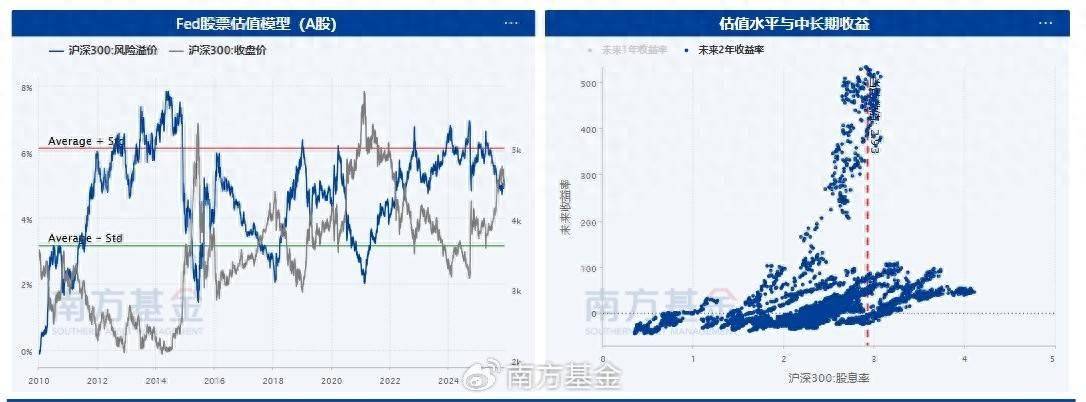
南方基金:2025即将收官,2026年大类资产如何配置?
Sou Hu Cai Jing· 2025-12-03 02:28
Group 1: Domestic Macro Economic Analysis - The domestic macroeconomic outlook for 2026 is expected to start smoothly, with significant achievements in high-quality development. The economic growth target is anticipated to remain around 5% [3] - The fiscal policy is likely to maintain a proactive tone, with a projected government budget deficit rate of 4% and new special bond issuance of 4.4-5 trillion yuan [4] - Monetary policy is expected to continue a supportive stance, with potential for 1-2 reserve requirement ratio cuts and 1-2 interest rate cuts of 10-20 basis points [4] Group 2: International Macro Economic Analysis - The U.S. economy is projected to stabilize in 2026, supported by a resumption of fiscal expansion, with the deficit rate expected to return to 6.5% [5] - The Federal Reserve is anticipated to lower interest rates 2-3 times in 2026, despite inflation remaining sticky [5] Group 3: Market Outlook - The A-share market is viewed positively, with macro factors such as market valuation, fundamental recovery, and supportive policies likely to strengthen A-shares [6] - The growth style is currently overvalued, but opportunities remain in the technology manufacturing sector driven by the AI wave [6] - Focus on high-prosperity sectors such as the technology industry and materials with improved supply-demand dynamics is recommended [6] Group 4: Bond Market and Commodity Outlook - The bond market is expected to have limited overall odds, with yields likely to remain in a low volatility range [8] - Commodities like copper and gold are anticipated to rise, supported by resilient U.S. demand and domestic policy measures [8]
华泰证券:2026年宏观政策有望聚焦三大主线
Di Yi Cai Jing· 2025-12-03 01:04
Core Viewpoint - The macro policy has entered a critical window of "tuning - starting" with a GDP growth target expected to remain around 5% until 2026, emphasizing price factors and nominal growth [1] Group 1: Macro Policy Focus - The macro policy is expected to focus on three main lines: firstly, to emphasize "starting well," with a more proactive and timely macro policy [1] - Secondly, there will be a focus on "expanding domestic demand," shifting the consumption drive from goods to service consumption, with a need for stronger real estate policies and a recovery in infrastructure investment [1] - Thirdly, the technology focus will remain unchanged, accelerating the transition between old and new growth drivers [1] Group 2: Market Attention Areas - The strength and direction of policies aimed at stabilizing the real estate market, promoting consumption, and "reducing competition" will be key areas of market attention [1]

李迅雷最新分享:我不认为AI是一个泡沫
Xin Lang Cai Jing· 2025-12-02 14:14
Core Viewpoint - The analysis by Li Xunlei highlights potential investment opportunities arising from the "14th Five-Year Plan" and significant upcoming anniversaries, including the 105th anniversary of the founding of the Communist Party in 2026, the 100th anniversary of the founding of the People's Liberation Army in 2027, and the 80th anniversary of the founding of the People's Republic of China in 2029 [1][48]. Group 1: Highlights of the "14th Five-Year Plan" - The first highlight is the acceleration of technological self-reliance, with a focus on changing investment directions and targets in the manufacturing sector [41][22]. - The second highlight emphasizes the construction of a strong domestic market and the need to enhance consumption, particularly aligning with the preferences of the younger generation [42][66]. - The third highlight involves the establishment of a unified national market, aimed at removing policy and institutional barriers to facilitate resource flow and market efficiency [43][73]. Group 2: Economic Outlook - The economic growth target for 2026 is projected to be around 5%, with a general budget deficit rate of approximately 4.5% and a broad fiscal deficit expected to rise from 8.4% this year to 9% [45][79]. - Fiscal policy is anticipated to remain proactive, while monetary policy may have limited space due to the need for stability in the banking sector's net interest margin [80][81]. - The potential for structural investment opportunities is highlighted, particularly in high-tech sectors and the ongoing development of AI, which is viewed as having significant growth potential rather than being a bubble [86][85].
M2026年中国经济展望:挑战超乎表面所见(英文版)
Sou Hu Cai Jing· 2025-12-02 09:09
Core Insights - The 2026 economic outlook for China indicates that challenges are more profound than they appear, with a complex external environment and internal structural adjustments leading to moderate growth [1][3] Global Macro Backdrop - The global economic landscape for 2026 presents various scenarios, with persistent inflation and interest rate pressures, alongside trade constraints impacting growth [1][7] - US-China trade tensions remain a significant external variable, with tariffs increasing and uncertainty affecting bilateral trade and investment [1][13] Internal Policy Adjustments - Since September 2024, China has adopted a "three arrows" approach focusing on structural rebalancing, fiscal stimulus, and monetary easing, with policies adapting to economic data [2][38] - The 15th Five-Year Plan emphasizes high-quality development, prioritizing high-end manufacturing, technological self-sufficiency, and expanding domestic demand [2][40] Economic Performance Projections - China's GDP is projected to grow by 4.4% in 2026, with contributions from consumption, investment, and net exports, although domestic demand remains weak [2][38] - The recovery across industries is uneven, with high-end manufacturing and new energy vehicles performing well, while the real estate sector continues to face challenges [2][38] Trade and External Accounts - Exports show resilience, particularly in high-tech products, and the current account is expected to maintain a surplus, with the RMB fluctuating within a reasonable range [2][38] - The transition to a new economic model is ongoing, with new economic drivers gradually contributing more to growth, despite structural contradictions and short-term pressures [2][38] Fiscal and Monetary Policy - The fiscal deficit is expected to remain around 4% of GDP, with ongoing efforts to enhance consumption support and improve fund allocation efficiency [2][38] - Monetary policy is expected to remain prudent, with adjustments to policy rates and reserve requirements to manage liquidity, although net interest margin pressures limit the scope for rate cuts [2][38]

2026年中国经济怎么看、怎么干?刘世锦、李扬、蔡昉、杨瑞龙最新发声
证券时报· 2025-12-01 14:16
Core Insights - The article discusses key recommendations from prominent economists at the China Macro Economic Forum (CMF) regarding China's economic development during the "14th Five-Year Plan" period and beyond, emphasizing the importance of structural reforms and innovation to stimulate domestic vitality [1][2]. Group 1: Economic Growth and Consumption - Liu Shijun advocates for increasing the consumption share of GDP by 1 percentage point annually during the "14th Five-Year Plan" period, highlighting the need to stabilize and expand terminal demand to boost investment [6][8]. - The report presented by Liu Xiaoguang suggests setting cross-cycle targets for economic growth, including a real GDP growth target of 4.5%-5% and a CPI target of 1%-3% for 2026 [2]. Group 2: Financial Factors and Market Opportunities - Li Yang identifies four major financial factors influencing economic operations from 2026 onwards: changes in social financing structure, declining interest rates, new opportunities in capital markets, and a new paradigm for monetary policy [4]. - The phenomenon of "disintermediation" is noted as a positive trend, with funds flowing out of the banking system, which could create better conditions for capital market development [3][4]. Group 3: Employment and Income Distribution - Cai Fang emphasizes the need for a coordinated approach to promote employment, increase income, and stabilize expectations, proposing a framework of "five combinations" to address these issues [10][11]. - The focus on increasing per capita income and improving income distribution is critical, with suggestions to enhance labor remuneration and expand public services to reduce disparities [12][13]. Group 4: Long-term Economic Strategy - Yang Ruilong stresses the importance of addressing short-term economic challenges with a long-term perspective, advocating for the modernization of the industrial system and the integration of technological innovation [14][15]. - The article concludes that despite current pressures, the fundamental trend of China's economy remains positive, with potential for sustainable growth through structural reforms and innovation [1][15].

“十五五”中国经济将保持中高速增长,面临哪些机遇和挑战
Di Yi Cai Jing· 2025-12-01 12:25
Core Viewpoint - The long-term positive trend of the Chinese economy remains unchanged despite short-term challenges, with a projected GDP growth of around 5% in 2025 due to supportive fiscal and monetary policies, strong industrial resilience, and unexpected export growth [1][2] Group 1: Economic Outlook - The 2025 economic growth is expected to be around 5%, with a "front high and back low" trend, indicating strong growth in the first three quarters but potential internal demand issues [2][4] - The report predicts that the economic growth will maintain a medium-high pace over the next five years, but challenges such as declining exports, slowing investments, and real estate risks may arise [1][3] Group 2: Policy Recommendations - The report suggests setting cross-cycle composite goals for the "15th Five-Year Plan" period, including a GDP growth target of 4.5% to 5%, a CPI target of 1% to 3%, and a nominal GDP growth target of over 5% [4] - Emphasis is placed on enhancing consumer spending, particularly among low- and middle-income groups, to drive economic growth [5][6] Group 3: Structural Challenges - The current economic constraints have shifted from supply to demand, with insufficient terminal demand identified as a core issue, particularly in service consumption related to basic public services [6][7] - The report highlights the need to address the dual structure of urban and rural economies, which contributes to income disparities and limits consumption growth [6][7] Group 4: Income and Employment - Increasing income is crucial for boosting consumption, with recommendations to enhance employment rates and stabilize business expectations as key strategies [7] - The report advocates for fiscal policies that focus on increasing income for low- and middle-income groups and improving the distribution of resources to enhance public services [7]
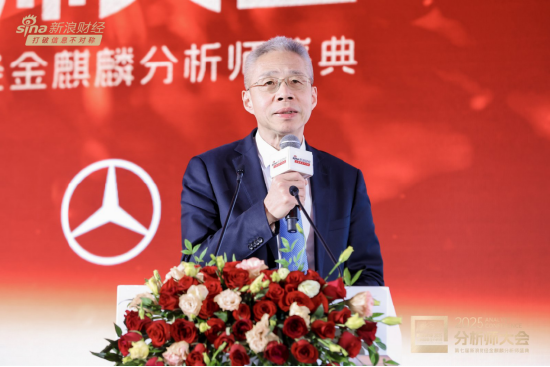
中泰国际李迅雷:AI不是泡沫,但中国企业崛起需靠应用落地
Xin Lang Zheng Quan· 2025-12-01 09:32
Group 1 - The 2025 Analyst Conference highlighted the theme of high-quality development in China's upcoming "14th Five-Year Plan," focusing on technological self-reliance, boosting consumption, and building a unified national market [1] - Li Xunlei, Chief Economist at Zhongtai International, emphasized the importance of structural opportunities arising from the transition of old and new driving forces and the robust development of high-tech industries [3] - The conference participants included experts, scholars, and leaders from brokerage firms, funds, and private equity, all seeking investment insights to navigate through economic cycles [1] Group 2 - Li Xunlei projected that AI is not a bubble and its development is in full swing, indicating a bright future for the technology [3] - The current focus should be on the application of AI technology and the rise of potential enterprises, which should be a key area for analysts to study [3]
深耕“头号工程”!济宁这五年工业和信息化发展破局起势
Qi Lu Wan Bao· 2025-12-01 07:19
齐鲁晚报·齐鲁壹点 孔茜 11月28日,市政府新闻办召开"实干绘就'十四五'答卷 凝心续写发展新篇"主题系列新闻发布(第11 场),专题介绍济宁市"十四五"期间加力推进新型工业化,着力塑造发展新优势有关情况。 会上获悉,"十四五"以来,全市工信系统坚定不移实施工业经济"头号工程",加快推进新型工业化,积 极培育新质生产力,全市工业和信息化发展取得一系列新成就。 这五年,济宁坚持科技赋能激活产业创新引擎,融合发展新动能进一步激发。推动科技创新与产业创新 深度融合,加强创新主体培育,累计建成省级工业企业"一企一技术"研发中心206家、省级质量标杆39 家,山东省煤基新材料绿色制造业创新中心通过省级认定,实现了济宁省级制造业创新中心零的突破。 推动先进制造业与现代服务业深度融合,积极引导产业链"链主"企业建设国家、省级工业设计中心,充 分发挥工业设计中心的带动作用和溢出效应,累计培育省级以上工业设计中心52家、服务型制造示范企 业(平台)40家,获评国家服务型制造示范城市。突出赛事引领驱动,高标准举办"市长杯"工业设计大 赛,评选奖励作品170件,展示出济宁工业设计创新成果。加强企业家队伍建设和技能人才培养,五年 ...
国泰海通 · 晨报1201|宏观、机械、军工
国泰海通证券研究· 2025-11-30 14:19
【宏观】 外需修复,推升供给——2025年11月PMI数据点评 新出口订单指数反弹,带动供给边际改善。 2025 年 11 月份,新出口订单指数为 47.6% ,边际回升 1.7 个百分点,创下半年以来的最大涨幅。在外需的支 撑下,生产指数升至临界点,但是表现不及近年同期平均水平,且涨幅弱于季节性。企业生产的积极性进一步提升还要内需的推动。从行业看,农副食品加 工、有色金属冶炼及压延加工等行业产需较为活跃,而石油煤炭及其他燃料加工、化学纤维及橡胶塑料制品等行业产需景气水平偏低。同时,原材料采购价格 总体水平加快上涨,反映"反内卷"治理效果持续释放。出厂价格指数虽然边际回升,但是仍处于收缩区间。在内需的疲软之下,制造业企业对原材料的扩大采 购较为谨慎。 建筑业景气指数边际回升,但是仍需提振。 在非制造业,服务业景气度边际回落,降幅强于季节性。究其原因,除了假期效应消退的影响,还与房地产供需 加快调整后,相关行业市场活跃度偏弱有关。建筑业景气指数边际回升,涨幅强于季节性。究其原因,或与四季度新型政策性金融工具落地、部分地方债结存 限额的投放有关。值得一提的是,财政部将提前下达 2026 年新增地方政府债务限额,支 ...