
美元信用

Search documents
抛抛抛!美债持仓量一降再降,美财长迫不及待喊话中国,好话说尽
Sou Hu Cai Jing· 2025-07-09 13:40
Group 1 - China has reduced its holdings of US Treasury bonds for eight consecutive months, decreasing by over $550 billion from its peak, with a notable reduction of $18.9 billion in March alone [1][5][7] - The US Treasury Secretary has expressed a desire for constructive dialogue with China, highlighting the broad common interests in economic and global affairs [3][5] - The timing of the US's conciliatory approach towards China coincides with China's strategic shift away from US debt, indicating a growing concern in the US regarding its reliance on Chinese investment [5][9] Group 2 - The reduction in US Treasury holdings is part of a systematic strategic adjustment by China, aimed at decreasing dependence on dollar assets while increasing gold reserves, which reached 73.9 million ounces by the end of June [5][11] - The US's rising fiscal deficit and national debt, exceeding $36 trillion, coupled with the Federal Reserve's reluctance to lower interest rates, have led to concerns about the stability of US debt [7][13] - China's actions are seen as a rational judgment for national financial security, recognizing the risks associated with holding US debt amid potential sanctions and asset freezes [7][11] Group 3 - The US is anxious about the potential market impact of China's continued reduction of US Treasury holdings, as it could trigger a chain reaction among other countries, leading to a significant drop in bond prices and increased borrowing costs for the US government [9][15] - China's long-term strategy includes reducing reliance on the dollar and establishing a self-directed financial framework, influenced by past experiences with US financial sanctions [11][15] - Future high-level talks between the US and China are anticipated, covering sensitive topics such as trade, the Russia-Ukraine situation, and US debt trends [13][15]

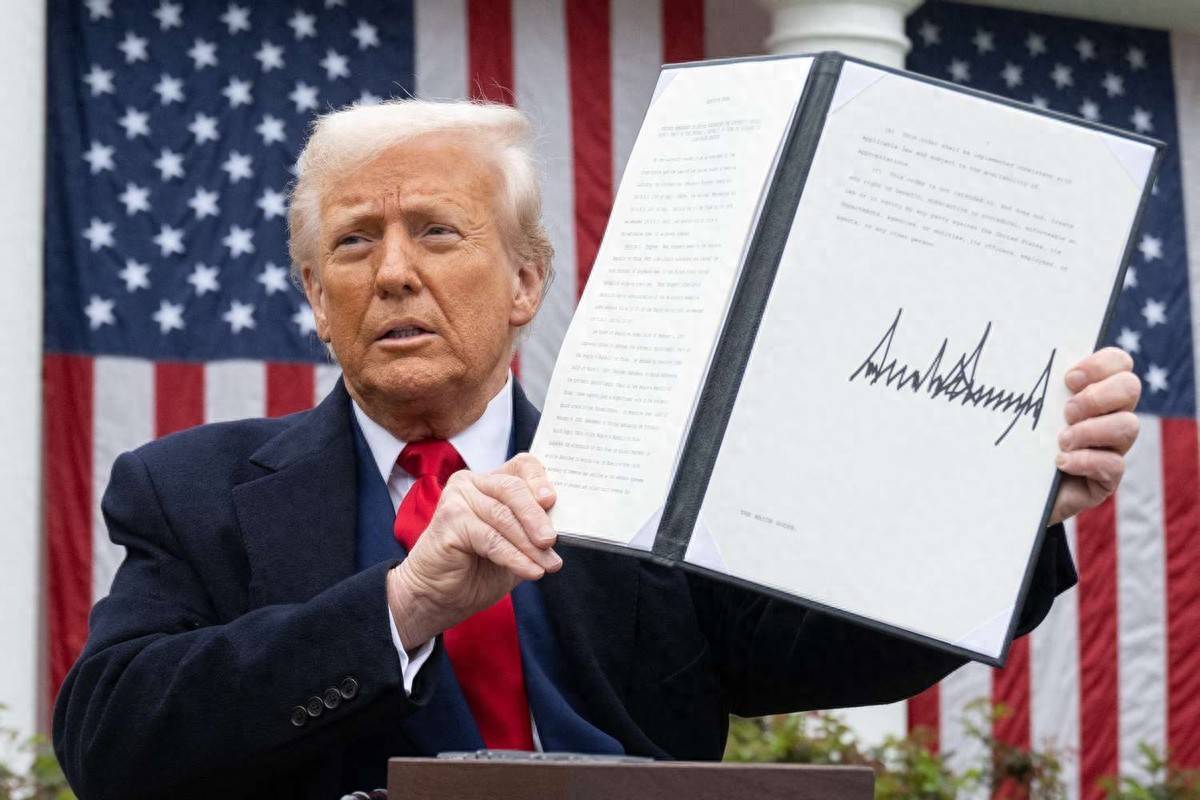
美国再现“股债双杀”:美政府施压14国促谈,一手加税一手延期
2 1 Shi Ji Jing Ji Bao Dao· 2025-07-08 12:08
Core Viewpoint - The U.S. is extending the implementation of "reciprocal tariffs" from July 9 to August 1, imposing tariffs ranging from 25% to 40% on imports from 14 countries, including Japan and South Korea, which has led to market volatility and concerns over trade tensions [1][2][3]. Tariff Details - Japan, South Korea, Malaysia, and Tunisia will face a 25% tariff, South Africa and Bosnia will see a 30% tariff, Indonesia will incur a 32% tariff, Serbia and Bangladesh will face a 35% tariff, Thailand and Cambodia will be subject to a 36% tariff, and Laos and Myanmar will face tariffs as high as 40% [2]. Market Reactions - Following the announcement of new tariffs, U.S. markets experienced a "double hit" with declines in both stocks and bonds. The Dow Jones fell by 0.94%, the S&P 500 dropped by 0.79%, and the Nasdaq decreased by 0.91% on July 7 [3][4]. Economic Impact - The tariffs are expected to increase consumer prices in the U.S., particularly affecting imports from Japan and South Korea, which include automobiles, semiconductors, and pharmaceuticals. The total value of goods exported to the U.S. from Japan and South Korea was $280 billion last year [3]. Investor Sentiment - Concerns over escalating trade tensions are leading to fears of a repeat of earlier market turmoil, with investors worried about the potential for increased inflation and delayed interest rate cuts by the Federal Reserve [5]. Currency and Debt Market - The U.S. dollar saw a slight rebound amid concerns over emerging market currencies, while U.S. Treasury yields rose across all maturities, indicating increased attractiveness of dollar-denominated assets [4][6]. Long-term Outlook - Despite the short-term rebound in the dollar, long-term prospects remain uncertain due to ongoing trade tensions and concerns over U.S. economic sustainability, which could lead to a shift in investment away from the dollar [6][7].
美国的“兴奋剂” 全球的危险品
Jing Ji Ri Bao· 2025-07-07 22:15
"大而美"法案的支持者声称,法案将通过企业回流与投资增长重塑美国经济竞争力。不过,当减税红利 被关税成本抵消,企业实际承担的合规成本与供应链中断损失,可能远超税收优惠。更关键的是,以邻 为壑的政策必然引发反制——欧盟已酝酿针对性关税,新兴市场则在加速"去美元化"布局。这种对抗性 循环一旦形成,全球经济增长的整体蛋糕将持续萎缩,最终反噬美国企业的海外利润根基。 本届美国政府就职以来推出的种种争议政策,反映出美国国内经济治理失序的困境。这种政策变动正对 世界经济带来多重冲击。 首先,多边贸易体系遭遇信任危机。当美国以国内法案为由单方面调整关税,其行为违背了世界贸易组 织(WTO)框架下的互惠原则。欧盟、日本等传统盟友被迫重新评估与美国的贸易关系,新兴经济体 则加速推进区域自贸协定以规避系统性风险。全球供应链从效率优先转向安全优先的重构进程,因美国 政策不可预测性而显著提速。 其次,美元信用基础面临持续侵蚀。法案再度提升债务上限,虽然暂时避免债务违约,却让美国国债规 模突破40万亿美元。当财政纪律让位于政治周期,各国央行对美元资产的长期信心必然受损。历史表 明,主权货币的全球地位不仅依赖市场,更需要货币发行国的财政 ...
深度 | 稳定币浪潮,如何影响汇率?【陈兴团队·财通宏观】
陈兴宏观研究· 2025-07-06 14:46
Group 1 - The core viewpoint of the article is that the recent regulatory developments in stablecoins in the US and Hong Kong have made them a market focus, with the top five stablecoins experiencing a 45% increase in market capitalization over the past year, raising questions about their impact on exchange rates [1][4][11] Group 2 - Stablecoins transmit their value stability through asset anchoring, primarily including off-chain asset-backed, on-chain asset-backed, and algorithmic types, with USDT and USDC being the most prominent [1][4][6] - The issuance mechanism of USDT involves customers depositing USD, after which an equivalent amount of USDT is issued, with the cash used to purchase high liquidity assets to ensure redemption [1][4][6] - The demand for USD stablecoins reduces transaction costs and increases demand for USD, supporting the USD index, while potentially leading to depreciation and capital outflow in weaker currency countries [1][6][9] Group 3 - Stablecoins act as a "shot in the arm" for local currencies by lowering transaction costs, with the average cost of remitting $200 globally being 6.4%, compared to 0.5%-3% for stablecoins, thus increasing demand for USD in trade settlements [2][11] - However, stablecoins do not resolve the fundamental issues of the USD system and carry underlying asset risks, with the potential for being replaced by central bank digital currencies (CBDCs) [2][11][14] Group 4 - For developing countries, stablecoins pegged to major currencies like the USD may replace local currencies, leading to a loss of monetary sovereignty, as approximately 70% of stablecoin users prefer not to hold local currency [3][16][18] - The depreciation of local currencies, such as Argentina and Brazil, has led to increased reliance on cryptocurrencies, with significant currency devaluations of 9.5% and 12.2% respectively in early 2024 [3][16] Group 5 - The global landscape for digital currencies is evolving with a dual approach, where stablecoins are increasingly regulated while CBDCs are still in pilot phases, with China promoting the digital RMB [21][23] - Hong Kong has taken the lead in establishing a regulatory framework for stablecoins, which may serve as a policy testing ground for their development [24]

宏观专题研究:黄金价格波动的底层逻辑
Guohai Securities· 2025-07-04 09:33
Group 1: Gold Price Trends - Gold prices have shown a significant upward trend, surpassing $1,000 per ounce in March 2008, $2,000 in August 2020, and reaching over $3,000 in March 2025[2][18] - The average production cost of gold increased by 45% from $1,003 per ounce in Q4 2020 to $1,456 in Q3 2024, while gold prices rose by 32% during the same period[6][30] - Investment demand for gold reached 42.1% of total demand in Q1 2025, up from an average of 29.1% from 2010 to 2024[4][22] Group 2: Demand Sources - The four main sources of gold demand are jewelry (43.7%), central bank purchases (23.6%), investment (25.7%), and technology (7.1%) as of 2024[4][19] - Central banks have consistently purchased over 1,000 tons of gold annually from 2022 to 2024, accounting for nearly 30% of global mine production[4][24] - Gold jewelry demand averaged 49.6% of total demand from 2010 to 2024, making it the largest source of gold consumption[4][19] Group 3: Economic Influences - Actual interest rates are a key driver of gold price fluctuations; as rates rise, gold becomes less attractive compared to interest-bearing assets[7][35] - The U.S. Federal Reserve raised interest rates 11 times from March 2022 to July 2023, totaling 525 basis points, which pressured gold prices down from $2,050 to $1,820 per ounce[7][35] - Global debt levels reached approximately $324 trillion in Q1 2025, with a $7.5 trillion increase in just three months, raising concerns about economic stability and boosting gold's appeal as a safe haven[10][50] Group 4: Market Dynamics - Market liquidity significantly impacts gold prices; increased liquidity typically raises gold demand, while tightening liquidity can lead to price declines[8][40] - In August 2020, gold prices exceeded $2,000 per ounce due to the Federal Reserve's quantitative easing measures during the pandemic[8][40] - A survey indicated that 95% of central banks plan to increase their gold reserves in the next 12 months, the highest level since 2019, reflecting a growing trend towards gold accumulation[11][54]
杨晓磊+彭悦:黄金后市怎么看?
Mei Ri Jing Ji Xin Wen· 2025-07-02 01:24
Core Viewpoint - Recent fluctuations in gold prices are driven by geopolitical tensions and the Federal Reserve's monetary policy, indicating a shift in the traditional analysis framework that relied on U.S. real interest rates [1][2] Geopolitical Factors - Short-term geopolitical conflicts can rapidly increase market demand for safe-haven assets, pushing gold prices higher, but as tensions ease, demand may decline, leading to a return to average prices [2] - Long-term geopolitical instability could undermine the U.S. dollar's credibility, potentially establishing a foundation for sustained increases in gold prices [2] Economic and Monetary Policy Influences - The U.S. economic and fiscal conditions significantly impact the credibility of the dollar; a strong U.S. economy typically strengthens the dollar, leading to lower gold prices [1] - The Federal Reserve's decision to maintain the federal funds rate target range at 4.25%-4.5% during the June 2025 FOMC meeting, along with a neutral to hawkish stance, suggests that any future market expectations of rate cuts could positively influence gold prices [1][2] Central Bank Actions - The People's Bank of China has increased its gold reserves for seven consecutive months, reflecting a global trend of central banks diversifying away from the dollar, which supports the long-term demand for gold [2] - Since the onset of the Russia-Ukraine conflict in 2022, central banks worldwide have accelerated gold purchases to mitigate risks associated with dollar assets, providing a solid long-term support for gold prices [2] Investment Strategy - Gold remains a valuable asset for hedging against dollar credit risk, with long-term investment potential; however, current high prices suggest caution against chasing prices, favoring accumulation during price corrections [3] - Investors can consider gold ETFs for direct exposure to physical gold or opt for gold stock ETFs for higher volatility and potential returns, depending on their risk tolerance [3]
流动性进一步宽松,贵金属板块展望
2025-07-02 01:24
流动性进一步宽松,贵金属板块展望 20250701 摘要 特朗普政府关税威胁及非农数据下滑曾引发市场波动,推动金价上涨, 但贸易紧张局势缓解后金价高位横盘。关注 2025 年下半年,预计流动 性宽松和风险偏好上行将继续支撑金价。 大美丽法案预计未来十年增加 2.4 万亿美元财政赤字,短期内加剧债务 压力并削弱美元信用,利好黄金等贵金属。美国国会预算办公室预测该 法案将显著增加财政支出,进一步加剧美元信用担忧。 短期投资建议关注受益于流动性宽松和风险偏好上行的贵金属与工业金 属组合,如黄金与铜或白银组合,并关注中报可能业绩超预期的标的, 如山东黄金等公司。 调降银行资本杠杆率(SLR)以刺激银行购买美债的空间有限。即使放 松监管,每年增加的购债规模也远小于未来几年的巨额财政支出,化债 效果可能不明显。 稳定币与美债需求绑定,可能带来短期限国库券购买需求,但长期美债 需求仍是重点。新增需求可能被高估,实际效果有待观察。渣打银行预 测到 2028 年稳定币规模可达 2 万亿美元。 Q&A 2025 年上半年贵金属市场的表现如何?主要驱动因素是什么? 2025 年上半年,黄金价格上涨了 24%,在 4 月 22 日达 ...
美国人真狡猾,想用比特币化解36万亿国债,网友:美国佬没别的招只能骗了!
Sou Hu Cai Jing· 2025-06-30 21:16
Group 1 - The article discusses the U.S. government's consideration of using Bitcoin as a means to address its $36 trillion debt, highlighting the absurdity of this approach [1][3] - It emphasizes skepticism regarding Bitcoin's legitimacy as a currency or asset for debt repayment, noting that its value is largely driven by speculative trading rather than intrinsic worth [3][5] - The article critiques the concept of stablecoins, arguing that despite their claims of being dollar-pegged, they lack the necessary backing to effectively address the massive debt burden [5][7] Group 2 - The underlying issue is identified as the declining trust in the U.S. dollar, with concerns that if this trend continues, it could lead to a significant financial crisis [7][9] - The article contrasts the U.S. approach to digital currencies with China's strategy of developing a stable digital yuan, suggesting a more cautious and grounded approach to financial innovation [7][9] - It concludes that while the U.S. may attempt to use financial gimmicks to delay addressing its debt crisis, the fundamental economic realities cannot be ignored indefinitely [9]

张津镭:非农提前引爆波动,黄金短线择高进空。
Sou Hu Cai Jing· 2025-06-30 04:51
上周中东和平谈判加上美联储降息概率降低,黄金主要偏向回落,最低是到了3255美元一线,周线收于 2连阴。本周是非农周,不过周五提前休市,数据集中于周四公布,望各位金友注意。其他就是关注美 联储官员讲话和中东问题了。 周一(6月30日)早间黄金开盘直接一波跳水至3247美元,随后快速收回失地并反弹至3280上方。主要 地缘局势担忧仍吸引逢低买盘支撑金价,因特朗普称将考虑再次轰炸伊朗,放弃解除制裁计划。但总体 上是呈现一个震荡偏弱的走势格局,目前市场在多重因素影响下进入关键抉择期。 待定欧洲央行举行中央银行论坛 张津镭:非农提前引爆波动,黄金短线择高进空。 另外,尽管市场已降低对美联储降息的预期,但政策转向的可能性仍然存在。特别需要关注的是美联储 主席鲍威尔可能辞职的传闻,以及特朗普表示将在"三四人中选出下任美联储主席"的表态。这类政治不 确定性可能导致美元信用短期动摇,黄金波动加剧。 从技术上来看,上周五黄金刺破3250后有所止跌,本周初黄金借此支撑有一定的回弹也是可以理解的, 但是对于回弹不能有过大的期待,上方可着重关注3300-10一带的争夺,如果本周黄金站稳3300上方, 那么短线趋势可能会有变数。但若持 ...
【环球财经】美股上半年上演“深V”反转,下半年走势如何?
Sou Hu Cai Jing· 2025-06-27 09:10
Group 1 - The core viewpoint of the articles indicates that the U.S. stock market has experienced significant volatility in 2025, with the S&P 500 index and Nasdaq index showing substantial declines from their peaks, but rebounding strongly since mid-April due to reduced policy uncertainty and expectations of a shift towards looser monetary policy by the Federal Reserve [1][2][4] - The rebound in the U.S. stock market is primarily driven by retail investors and liquidity, with a noted increase in risk appetite as the most pessimistic phase appears to have passed [1][4] - Analysts suggest that the volatility in the U.S. stock market is influenced by the performance of technology stocks, ongoing fiscal and trade deficits, and fluctuating tariff policies, which have all contributed to increased market uncertainty [2][3] Group 2 - The U.S. fiscal deficit for the fiscal year 2025 has reached $1.05 trillion, a year-on-year increase of 13%, raising concerns about the sustainability of U.S. government debt and challenging the high valuations of U.S. stocks [2][3] - The earnings growth of S&P 500 companies has shown resilience, with an expected earnings per share (EPS) growth of 7.5% for 2025, despite downward revisions in profit forecasts [5][6] - Current valuations of U.S. stocks are considered high, with the price-to-earnings (PE) ratio returning to levels seen in early March, indicating limited potential for further valuation increases [6]