量化宽松

Search documents
美国人对AI警告充耳不闻,或将面临比2008年更严重的危机
财富FORTUNE· 2025-11-28 13:52
Core Viewpoint - The article discusses the views of Albert Edwards, a global strategist and extreme bear market advocate, who warns of a potential bubble in the U.S. stock market driven by high valuations in technology and AI stocks, suggesting that the current market conditions may lead to a more severe economic downturn than previous cycles [3][5][10]. Group 1: Market Conditions and Predictions - Asian stock markets are down, European markets are flat, but U.S. investors are optimistic about a potential interest rate cut by the Federal Reserve in December, leading to a rise in major stock indices [2]. - The probability of a December rate cut by the Federal Reserve has increased to 75.5%, according to speculators, despite previous predictions suggesting a delay until January [3]. - Edwards believes that the current market is in a dangerous bubble, similar to the late 1990s, but with key differences that could lead to a more severe outcome [5][10]. Group 2: Economic Risks and Concerns - Edwards highlights the absence of a typical catalyst for bubble bursts, such as tightening monetary policy, as the Fed is expected to lower rates instead [6][10]. - He warns that the lack of hawkish policies could lead to further inflation of the bubble, making the eventual collapse more destructive [7]. - The concentration of wealth among the top 20% of the population, who significantly influence consumer spending, raises concerns about the broader economic impact if the market experiences a significant downturn [8][10]. Group 3: Historical Context and Comparisons - Edwards draws parallels between the current market and the tech bubble of the late 1990s, noting that high valuations are supported by compelling growth narratives [5]. - He recalls his past accurate predictions of market downturns, including the internet bubble, while also acknowledging some of his more extreme forecasts that did not materialize [4][9]. - The article discusses the long-term inflation risks driven by fiscal irresponsibility in the West, suggesting that the U.S. may be entering a prolonged period of economic stagnation similar to Japan's experience [10][11]. Group 4: Investment Strategies and Advice - Edwards advises investors to remain cautious and to be aware of potential warning signs, suggesting a balanced approach to investing during uncertain times [13]. - He emphasizes the importance of being prepared for market corrections, indicating that significant downturns of 30% or even 50% are plausible [8][12].


有色金属周度报告-20251128
Xin Ji Yuan Qi Huo· 2025-11-28 11:21
Report Summary 1. Report Industry Investment Rating - Not provided in the content 2. Report Core Views - The overall macro - sentiment is warming up, and different non - ferrous metals have different market trends and investment suggestions based on their own supply - demand fundamentals. For aluminum, copper, and lithium carbonate, short - and long - term investment strategies are proposed according to their market conditions [44][47][50] 3. Summary by Relevant Catalogs 3.1 Domestic Main Metal Spot Price Trends - Copper: The futures主力合约 (CU2601) rose from 85,660 yuan to 87,430 yuan, a weekly increase of 2.07%. The average price of 1 copper in Shanghai spot rose from 85,870 yuan to 87,340 yuan, a 1.71% increase [4] - Aluminum: The futures主力合约 (AL2601) rose from 21,340 yuan to 21,610 yuan, a 1.27% increase. The average price of A00 aluminum in Shanghai spot rose from 21,370 yuan to 21,440 yuan, a 0.33% increase [4] - Zinc: The futures主力合约 (ZN2601) rose slightly from 22,390 yuan to 22,425 yuan, a 0.16% increase. The average price of 0 zinc in Shanghai spot fell from 22,430 yuan to 22,370 yuan, a 0.27% decrease [4] - Lead: The futures主力合约 (PB2601) fell from 17,165 yuan to 17,090 yuan, a 0.44% decrease. The average price of 1 lead ingot fell from 17,075 yuan to 16,975 yuan, a 0.59% decrease [4] - Nickel: The futures主力合约 (NI2601) rose from 114,050 yuan to 117,080 yuan, a 2.66% increase. The average price of 1 electrolytic nickel rose from 116,700 yuan to 119,500 yuan, a 2.40% increase [4] - Alumina: The futures主力合约 (AO2601) fell from 2,713 yuan to 2,707 yuan, a 0.22% decrease. The alumina price in Foshan spot fell from 2,880 yuan to 2,870 yuan, a 0.35% decrease [4] - Industrial Silicon: The futures主力合约 (SI2601) rose from 8,960 yuan to 9,130 yuan, a 1.90% increase. The average price of 553 silicon remained unchanged at 9,600 yuan [4] - Lithium Carbonate: The futures主力合约 (LC2605) rose from 91,960 yuan to 96,420 yuan, a 4.85% increase. The average price of battery - grade lithium carbonate (99.5%) rose from 91,800 yuan to 92,500 yuan, a 0.76% increase [4] - Polysilicon: The futures主力合约 (PS2601) rose from 53,360 yuan to 56,425 yuan, a 5.74% increase. The price of N - type polysilicon material remained unchanged at 52,300 yuan [4] 3.2 Metal Inventory Changes - **Copper**: As of November 28, SHFE copper inventory was 97,900 tons, a decrease of 12,700 tons (- 11.48%) from last week; LME copper inventory was 157,200 tons, a decrease of 700 tons (- 0.44%); COMEX copper inventory was 417,700 tons, an increase of 19,200 tons (+ 4.82%) [11][12] - **Zinc**: As of November 28, LME zinc inventory was 50,800 tons, an increase of 4,700 tons (+ 10.20%); SHFE zinc inventory was 67,600 tons, a decrease of 5,300 tons (- 7.27%) [21] - **Aluminum**: As of November 28, LME aluminum inventory was 541,100 tons, a decrease of 7,000 tons; SHFE aluminum inventory was 115,300 tons, a decrease of 8,400 tons; COMEX aluminum inventory was 5,669 tons, a decrease of 402 tons. Overall, electrolytic aluminum inventory showed a destocking trend [35] 3.3 Metal Ore Processing Fees and Indexes - Copper concentrate processing fees are at a historical low. As of November 27, the copper concentrate spot TC was - 42.15 dollars/ton, and the RC was - 4.21 cents/pound, with a tight supply expectation [13][15] - The lithium spodumene concentrate (CIF China) index rose by 61 dollars/ton to 1,150 dollars/ton as of November 28 [17] - Zinc concentrate processing fees remained high. As of November 21, the zinc concentrate main port TC was 90 dollars/ton, a decrease of 10 dollars from November 14 [19][22] 3.4 Aluminum Supply - side Situation - **Raw materials**: As of November 21, the bauxite port inventory was 28.0236 million tons, a decrease of 498,700 tons from last week. As of the end of October, the bauxite inventory of alumina plants was 24.53 million tons, at a historical high [28] - **Alumina supply**: As of November 28, the weekly operating rate of alumina enterprises was 86.06%, slightly increased; the weekly output was 1.858 million tons, also increased. The total inventory was 4.942 million tons, an increase of 59,000 tons from last week [30] - **Electrolytic aluminum supply**: As of the end of October, China's primary aluminum output was 3.766 million tons, imports were 248,400 tons, and inventory was 618,000 tons. The electrolytic aluminum industry operating rate was 98.24%, remaining at a high level [33] 3.5 Non - ferrous Metal Demand - side Situation - **Automobile**: In October 2025, automobile production and sales were 3.359 million and 3.322 million vehicles respectively, with month - on - month growth of 2.5% and 3%, and year - on - year growth of 12.1% and 8.8%. From January to October 2025, automobile production and sales were 27.692 million and 27.687 million vehicles respectively, with year - on - year growth of 13.2% and 12.4% [37] - **New energy vehicles**: In October 2025, new energy vehicle production and sales were 1.772 million and 1.715 million vehicles respectively, with year - on - year growth of 21.1% and 20%. From January to October 2025, new energy vehicle production and sales were 13.015 million and 12.943 million vehicles respectively, with year - on - year growth of 33.1% and 32.7% [38] - **Real estate**: From January to October, the housing construction area of real estate development enterprises was 6.52939 billion square meters, a year - on - year decrease of 9.4%. The new housing start area was 490.61 million square meters, a decrease of 19.8%. The housing completion area was 348.61 million square meters, a decrease of 16.9% [40] - **Power generation**: As of the end of October, the cumulative installed power generation capacity was 3.75 billion kilowatts, a year - on - year increase of 17.3%. The solar power installed capacity was 1.14 billion kilowatts, a year - on - year increase of 43.8%. In October, the new photovoltaic installed capacity was 12.6 GW, a 30.4% increase from September [42] 3.6 Strategy Recommendations - **Aluminum**: Short - term: Alumina is expected to oscillate weakly, and it is recommended to go long on SHFE aluminum at low prices. Long - term: Under the quantitative easing environment, SHFE aluminum is expected to oscillate strongly, and alumina will oscillate weakly without large - scale production cuts [44][45] - **Copper**: Short - term: The game between long and short positions intensifies, and the price will oscillate in a high - level range. Long - term: There is long - term positive demand support, and it is recommended to go long in the medium - to - long - term [47][48] - **Lithium Carbonate**: Short - term: The price may oscillate repeatedly at a high level, and attention should be paid to the resumption progress of mines. Long - term: Energy storage provides strong demand support, and it is recommended to allocate long positions [50][51][52]
央行的边界正在松动:欧洲央行官员为何选择在政治领域发声?
智通财经网· 2025-11-28 07:40
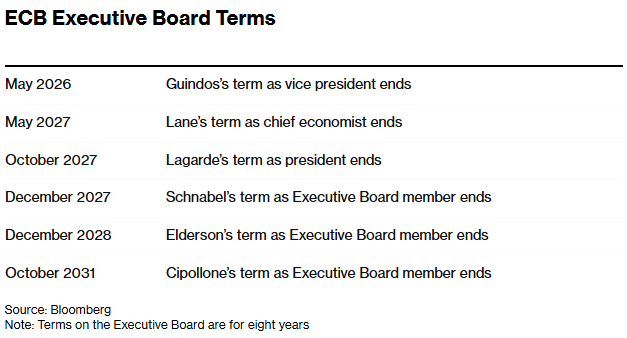
动机各有不同。一些人认为有必要在民粹主义者搅浑经济舆论时重掌话语权。随着通胀率回到2%附 近,另一些人则更自由地参与更广泛的讨论——这既是遗产建设的一部分,也是为欧洲央行领导层改组 进行布局。 智通财经APP注意到,欧洲央行官员正超越其作为物价稳定守护者的传统角色。欧洲央行行长拉加德和 德国央行行长纳格尔等人,正在国防和欧盟决策机制改革等问题上发声——这些高风险议题曾被视为技 术官僚的禁区。 但面对俄乌冲突,以及政治领导人难以对中美日益激烈的竞争做出令人信服的回应,许多政策制定者认 为他们有责任发声。 最新的焦点是联合债务,维勒鲁瓦最近重提此事,将其作为加强欧洲资本市场和欧元全球地位的一种途 径。拉加德曾详细谈论地缘政治格局的变化,她在纳格尔之后一周内也表示附和。 他们必须谨慎行事。尽管一些国家央行在财政政策等问题上有发表意见的空间,但越界可能招致政府以 牙还牙——从而危及央行独立性。这种独立性在20世纪下半叶才成为标准,而且在美国已经受到冲击。 PGIM首席欧洲经济学家凯瑟琳·奈斯说:"在如此关键的时刻,央行官员很难保持沉默。但这也是非常 棘手的平衡之举,因为他们不想冒破坏独立性的风险。" 德国央行行长纳格 ...
美联储降息路径及黄金行情展望
2025-11-28 01:42
Summary of Key Points from Conference Call Records Industry Overview - The records primarily discuss the **gold market** and the **monetary policy** of the **Federal Reserve** in the context of the U.S. economy and global financial conditions [1][21]. Core Insights and Arguments 1. **Federal Reserve's Interest Rate Expectations**: - The market's expectation for a rate cut by the Federal Reserve fluctuated significantly, dropping from a 100% expectation in early October to 29.6% by November 19, before rising again to 80% [5]. - There is notable internal disagreement within the Federal Reserve regarding the timing of rate cuts, with 5 out of 12 voting members supporting a pause, 4 favoring a cut, and 3 being neutral [5]. 2. **Impact of Employment Data**: - Mixed signals from U.S. employment data have created market uncertainty, with private sector data indicating deterioration and a rise in unemployment rates [6]. - The expectation for poor employment data in Q4 adds to market unpredictability [6]. 3. **Long-term Monetary Policy Outlook**: - The market anticipates that by the end of 2026, the Federal Reserve will lower interest rates to between 2.75% and 3%, indicating a sustained likelihood of loose monetary policy [8]. 4. **U.S. Fiscal Situation**: - The U.S. fiscal deficit is projected to be historically high, with expenditures exceeding revenues by 1.34 times, leading to increased pressure for rate cuts to alleviate fiscal burdens [13][14]. - The total U.S. national debt exceeds $38 trillion, constituting 125% of GDP, which raises concerns about fiscal sustainability and supports gold prices [13][14]. 5. **Global Central Bank Policies**: - Central banks worldwide are expected to maintain accommodative monetary policies to address high debt levels, which may enhance the appeal of gold as a safe-haven asset [21]. 6. **Gold Demand Dynamics**: - Gold demand remains robust, with total demand increasing by 44% year-over-year, driven primarily by investment demand from central banks and private investors [22]. - Tether, a major stablecoin issuer, has significantly increased its physical gold holdings, further supporting gold demand [24]. 7. **Geopolitical and Economic Risks**: - The potential for a U.S. government shutdown poses risks to market liquidity and could increase demand for safe-haven assets like gold [15]. - The upcoming 2026 midterm elections may influence U.S. domestic policies and external trade relations, impacting market conditions [18]. Other Important but Potentially Overlooked Content 1. **Inflation Data Uncertainty**: - The reliability of inflation data is compromised due to government shutdowns, complicating the assessment of the Federal Reserve's rate adjustment decisions [7]. 2. **Shadow Chairperson Influence**: - The concept of a "shadow chairperson" could impact market expectations and monetary policy direction, especially if the current chair's term ends before 2026 [12]. 3. **Central Bank Gold Purchases**: - Despite some countries reducing gold holdings, the overall trend among central banks remains one of increasing gold reserves, with 95% of surveyed banks indicating plans to continue purchasing gold [25][26]. 4. **China's Gold Accumulation Strategy**: - China has consistently increased its gold reserves over the past year, reflecting a strategic commitment to gold accumulation despite rising prices [27]. 5. **Silver Market Volatility**: - The silver market exhibits significant volatility, influenced by macroeconomic conditions, with historical patterns suggesting potential price adjustments following substantial increases [30]. This comprehensive summary encapsulates the key points from the conference call records, highlighting the dynamics of the gold market and the implications of U.S. monetary policy.
市场分析:日本“债务幻觉”堪忧 人为低利率恐引爆货币危机
Sou Hu Cai Jing· 2025-11-27 00:57
Core Viewpoint - Japan's massive government debt, while perceived as manageable due to low bond yields, poses a significant risk as the reality of this debt is being overlooked [1] Group 1: Debt Situation - Japan's government debt has remained at astronomical levels for a long time, yet bond yields have largely stayed low over the past decade [1] - The low interest rates have created a dangerous illusion that the enormous debt is not a problem [1] Group 2: Recent Policy Actions - The new Prime Minister, Fumio Kishida, recently announced a fiscal stimulus plan intended to showcase a departure from previous policies [1] - This plan inadvertently exemplifies the dangerous illusion regarding Japan's debt situation [1] Group 3: Monetary Policy and Economic Environment - The Bank of Japan has suppressed interest rates through large-scale bond purchases and previously implemented yield curve control policies [1] - The mechanism of suppressing yields was sustainable before the COVID-19 pandemic, but the subsequent inflation wave has led to global central banks raising interest rates [1] - The end of the pandemic has marked the conclusion of Japan's interest rate suppression experiment, transitioning the world into a high-interest rate equilibrium [1] - Continuing to suppress rates in this new environment could lead to a severe depreciation cycle of the currency [1]
美联储即将停止缩表原因,未来将开启量化宽松政策?|国际
清华金融评论· 2025-11-26 09:51
Core Viewpoint - The Federal Reserve will stop balance sheet reduction on December 1, 2025, primarily due to increasing liquidity pressure in the U.S. market and escalating fiscal burdens. This move may provide short-term relief for global dollar liquidity but could amplify volatility in emerging markets in the medium to long term [1]. Group 1: Reasons for Stopping Balance Sheet Reduction - U.S. market liquidity is nearing a warning threshold, with bank reserves dropping to $2.93 trillion (approximately 9% of GDP), close to the "money shortage" threshold of $2.5 trillion to $3 trillion observed in 2019. Overnight rates, such as SOFR, have exceeded the target range, and the usage of the Standing Repo Facility (SRF) has surged to over $10 billion in a single day, indicating heightened financing pressures [3]. - Fiscal pressures are forcing a policy shift, as U.S. federal debt has surpassed $38 trillion, with net interest payments approaching defense budget levels. Continued balance sheet reduction raises government financing costs and exacerbates debt risks, leading to repeated calls from the White House for the Fed to lower interest rates, challenging the Fed's policy independence [3]. - Economic data shows weakness, with the unemployment rate rising to 4.4% in September 2025, indicating a cooling job market. Although inflation has decreased to 3%, it remains above the 2% target [3]. Group 2: Impact of Stopping Balance Sheet Reduction - In the short term, this decision is favorable as it improves liquidity, alleviates dollar financing costs, reduces repo rate volatility, and supports U.S. equity and bond markets. Emerging market capital is expected to flow back, leading to a weaker dollar (recently fluctuating between 99-100), with increased northbound capital inflows into A-shares and high-dividend assets in Hong Kong. The attractiveness of RMB assets is rising, supported by improved China-U.S. interest rate differentials and a peak season for exporters' currency conversion, enhancing the long-term appreciation expectations for the RMB [5]. - In the medium to long term, risks may arise, including increased volatility in emerging markets and potential local bubbles or debt risks due to cross-border capital "tidal effects," reminiscent of the turmoil in emerging markets following the end of balance sheet reduction in 2019. There are also inflationary concerns; if economic resilience exceeds expectations, inflation rebound could limit the Fed's capacity to lower interest rates [5]. Group 3: Future Policy Direction - Future policy may involve technical operations rather than quantitative easing (QE). The Fed may reinvest maturing MBS funds into short-term Treasury bonds to shorten asset duration. The New York Fed has indicated that if reserves fall to a critical point of $2.7 trillion, structural balance sheet expansion may be initiated, such as purchasing short-term Treasury bonds. However, QE is not expected to be implemented in the short term, as the current federal funds rate is between 3.75% and 4.0%, well above the zero lower bound, and conventional rate-cutting tools remain effective [7]. Group 4: Capital Market Considerations - There are opportunities for RMB asset allocation, particularly in high-dividend sectors of A-shares (banking, power, coal) with dividend yields reaching 3.8%, significantly higher than the U.S. stock market's 1.6%. The trend of foreign capital allocation is clear, supported by easing U.S. monetary policy and a narrowing decline in Chinese exports to the U.S. [9]. - Market volatility risks should be monitored, as U.S. tech stock valuations are at historical highs, with the NASDAQ's PE-TTM at 36.95 times, indicating ongoing short-term adjustment pressures. The lagging effects of Fed policy may impact corporate bonds, especially those with low ratings [9]. - It is important to note that the Fed's current policy shift is a passive adjustment under debt constraints rather than an active stimulus. Investors should focus on defensive strategies, increasing allocations to high-dividend assets, and pay attention to liquidity expectations adjustments in the upcoming December meeting. China's economy may benefit from improved external demand and capital inflows, but caution is warranted regarding cross-border volatility triggered by mixed signals from the Fed [9].

Inflation fears are a ‘mirage,' says Fed governor
Youtube· 2025-11-25 16:30
Core Viewpoint - Investors are closely monitoring the upcoming Federal Reserve meeting for potential interest rate cuts, with expectations for a third consecutive cut of at least 25 basis points, driven by positive inflation and economic data [1] Group 1: Interest Rate Cuts - Federal Reserve Governor Steven Myron advocates for larger interest rate cuts, suggesting that the economy requires swift adjustments to reach neutral monetary policy [3][5] - The current monetary policy is seen as restrictive, contributing to a gradual increase in unemployment, which is deemed inappropriate given the economic outlook [4][12] - Myron believes that recent labor market data should encourage the committee to consider further rate cuts [5] Group 2: Economic Outlook and AI Impact - The potential impact of AI on the labor market is discussed, with concerns that job displacement could lead to disinflationary pressures and hinder employment goals [6][9] - Myron expresses optimism for the economy in 2026, citing factors such as deregulation, tax policy benefits, and trade deals that could stimulate growth [11][50] - However, he warns that tight monetary policy could undermine these positive developments and hinder labor market recovery [12][52] Group 3: Federal Reserve Balance Sheet Management - The Federal Reserve is transitioning from quantitative tightening to a neutral balance sheet, with plans to replace maturing mortgages with Treasury securities to maintain market stability [25][27] - Myron emphasizes the importance of a smaller balance sheet to reduce credit and interest rate risk, advocating for a focus on Treasury bills [29] - The size of the Fed's balance sheet is influenced by regulatory requirements, which dictate the minimum reserves banks must hold [31][33] Group 4: Housing Market Dynamics - Myron acknowledges that while lower interest rates could facilitate housing supply, the primary constraints are regulatory challenges at various government levels [35][36] - The influx of new residents due to immigration is identified as a factor driving up housing prices and rents, complicating supply issues [37][39] Group 5: Future Federal Reserve Sentiment - The sentiment of the Federal Reserve regarding rate cuts may shift with the appointment of a new chairman, but Myron stresses the need for continued cuts to support economic recovery [60]

全球宽松预期升温,上海这类资产有望率先反弹
华尔街见闻· 2025-11-25 06:50
Group 1 - The article emphasizes that a new cycle is quietly brewing amidst global monetary and fiscal easing, with smart capital positioning itself to seize opportunities in this new phase [1][3] - The Hong Kong luxury property market is showing signs of rebound and recovery, indicating strong signals from smart money that is strategically investing [2][6] - The current year is identified as the first year of "dual easing" in China, with key financial indicators like M1 gradually recovering, leading to a resurgence in property transactions in major cities [6][11] Group 2 - Data shows that in the first ten months, Shanghai accounted for 60% of luxury home transactions in China, highlighting its dominance in the high-end residential market [25] - The article notes that the core assets in major cities, particularly in Shanghai, are becoming increasingly scarce, which is driving smart capital to invest in these high-value properties [10][34] - The investment logic of high-net-worth individuals is based on the belief that core urban properties are valuable and worth holding, as they tend to appreciate over time [9][14] Group 3 - Historical data indicates that core urban properties have consistently outperformed overall market trends, with significant price increases observed in cities like London, Paris, and New York over the past decades [15][20] - The article highlights that despite economic fluctuations, core assets in major cities remain attractive to investors due to their inherent scarcity and high value [12][24] - The focus on prime locations is reiterated, with the article stating that only properties with unique, non-replicable attributes can withstand economic cycles and continue to appreciate [14][23] Group 4 - The article discusses the specific appeal of the Xuhui area in Shanghai, which is seen as a prime investment location due to its commercial vibrancy and concentration of high-net-worth individuals [26][29] - It mentions that the luxury market in Shanghai is characterized by intense competition, with developers investing significantly in product quality to attract discerning buyers [34][31] - The article concludes that smart capital is making informed decisions based on historical trends and current market conditions, positioning itself for future gains [35][36]


法兴银行预警:AI狂热将迎来大清算,结局或比2008年更惨烈!
Sou Hu Cai Jing· 2025-11-24 12:41
来源:金十数据 法国兴业银行的全球策略师阿尔伯特·爱德华兹(Albert Edwards),这位自称"永远的大空头"的重量级 人物,坚信当前由科技和人工智能(AI)狂热驱动的美国股市,正深陷一场危险的泡沫之中。 爱德华兹近日警告,尽管历史总是相似,但这次泡沫破裂的"善后"环境与过往根本不同,其对经济和普 通投资者的清算将更深、更痛。 "我总认为存在泡沫,现在依然,"爱德华兹在彭博播客中表示。他指出,每个周期都充斥着"一个非常 合理、极具诱惑力的叙事"。但他结论坚定:"结局只会是一地鸡毛,这一点毋庸置疑。" 来源:市场资讯 "AI泡沫更让人担忧的是,"爱德华兹说,"整个经济对这个主题的依赖程度高得惊人,"而且高收入阶层 (前五分之一)的消费增长在整体消费中占据了远超正常比例的主导地位。他解释,这些在股市中重仓 的富人主导了太多消费,经济比1987年股灾时更脆弱。股市一旦回调25%或更高,消费支出势必"遭受 重创"。 爱德华兹对散户的广泛参与感到忧虑,他们被"逢低买入"的理念裹挟入市。他警告,"股市永不下跌"的 信念极其危险,股市暴跌30%甚至50%并非不可能。他指出,美国财富分配不均,高收入人群的财富 被"股市 ...
高盛:2026年投资展望报告:在复杂环境中捕捉新契机(英文版)
Sou Hu Cai Jing· 2025-11-24 04:33
Core Insights - The 2026 investment outlook emphasizes the importance of proactive decision-making and diversified portfolios due to a complex environment shaped by central bank policies, trade dynamics, fiscal risks, geopolitical shifts, and advancements in AI [1][8] Group 1: Economic and Market Conditions - The investment landscape for 2026 will be influenced by multiple factors, including central bank actions, a new trade order, fiscal risks, and geopolitical shifts [8][20] - In 2025, many G10 countries implemented interest rate cuts, while the US faced high effective tariff rates and a significant increase in global government debt, surpassing $100 trillion [1][21] - The US labor market's performance will be crucial for the Federal Reserve's rate-cutting decisions, with potential implications for inflation and economic growth [21][48] Group 2: Market Structure and Investment Opportunities - The US stock market is highly concentrated, with the top 10 companies accounting for nearly 40% of the S&P 500's market capitalization, driven by AI-related enthusiasm [2][26] - The credit market remains stable despite recent volatility, with overall corporate credit metrics indicating a mid-cycle environment rather than a late-cycle one [2][27] - Investment catalysts include a favorable environment for small-cap stocks and bonds due to anticipated rate cuts, as well as ongoing AI capital expenditures driving growth in sectors like semiconductors and software [2][31] Group 3: Private Market Dynamics - Private equity valuations are high, but quality assets remain attractive, with significant differences in returns based on investment timing [2][34] - The real estate market is expected to recover, with a divergence in performance between core assets and office properties [2][39] - Infrastructure investments are focusing on power grid upgrades and renewable energy, alongside opportunities in the circular economy and logistics transformation [2][38] Group 4: Portfolio Construction Strategies - Active ETFs and alpha-enhanced strategies are gaining traction, providing flexibility and transparency in portfolio management [3][38] - Tail-risk hedging and increased allocation to alternative assets are essential for enhancing portfolio resilience [3][38] Group 5: Thematic Trends and Future Outlook - The themes of economic security and power demand growth are expected to drive significant capital deployment in defense, energy, and infrastructure sectors [38][39] - AI capital expenditures are projected to continue exceeding expectations, with a broadening investment landscape as companies seek to leverage AI for competitive advantage [33][68] - The revival of global deal-making activity is anticipated to extend into 2026, with increased M&A activity and interest in private equity financing [34][37]