
中美关系

Search documents
学习快评|让中美关系这艘大船平稳前行
Xin Hua She· 2025-10-31 07:27
0:00 "面对风浪和挑战,两国元首作为掌舵人,应当把握好方向、驾驭住大局,让中美关系这艘大船平稳前 行。"当地时间10月30日,国家主席习近平在釜山同美国总统特朗普举行会晤。关键时刻的重要会晤, 备受世界瞩目。习近平主席鉴往知来,直面中美关系发展的分歧挑战,为两国关系长远发展把舵领航。 中美关系牵动世界走向,一个健康、稳定、可持续的双边关系符合两国长远利益,也是国际社会共同期 待。"两国做伙伴、做朋友""中美两国完全可以相互成就、共同繁荣",这是基于历史启示与现实需要的 必然选择;"继续本着平等、尊重、互惠的原则谈下去,不断压缩问题清单,拉长合作清单",这是解决 经贸问题的有效路径;"携手多办一些有利于两国和世界的大事、实事、好事",这是展现大国担当的应 有之义。习近平主席的一系列重要立场主张,贯穿着相互尊重、和平共处、合作共赢的一贯原则,向世 界展现了中国从中美两国和全球各国共同利益出发稳定中美关系的积极态度。 大国要有大国的样子,要有大国的胸怀和担当。作为世界前两大经济体,中美有责任,也有可能找到一 条正确相处之道。携手合作才能互利共赢。只要双方不折不扣落实两国元首达成的重要共识,多算大 账,多看合作带 ...
董军与美国国防部长会谈
券商中国· 2025-10-31 06:44
Core Viewpoint - The meeting between Chinese Defense Minister Dong Jun and U.S. Defense Secretary Lloyd Austin emphasizes the importance of strategic communication and cooperation between the two nations' defense departments to ensure stable development of China-U.S. relations [1] Group 1: Strategic Communication - Dong Jun highlighted the need for practical actions to implement the consensus reached by the leaders of China and the U.S., aiming to enhance policy-level communication and build trust [1] - The focus is on fostering positive interactions between military personnel and encouraging academic and strategic communities to contribute to a constructive military relationship [1] Group 2: Taiwan Issue - Dong Jun reiterated that the unification of Taiwan and the mainland is an unstoppable historical trend, urging the U.S. to be cautious and clear in its stance against "Taiwan independence" [1] - He emphasized China's commitment to peaceful development while firmly safeguarding national security interests and responding calmly to provocations [1] Group 3: Regional and Global Stability - The Chinese side hopes the U.S. will translate its statements of not containing China and avoiding conflict into concrete actions, working together to inject positive energy into regional and global peace and security [1]


中美元首100分钟会晤透露哪些信息
第一财经· 2025-10-31 06:35
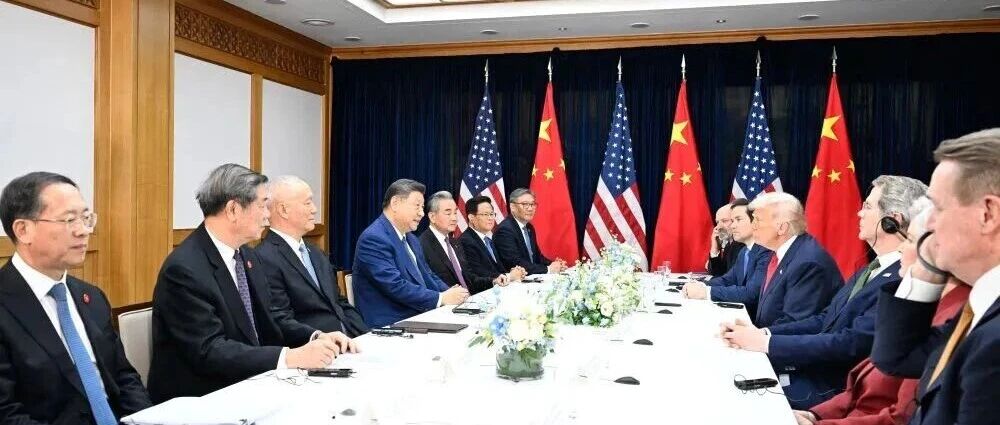
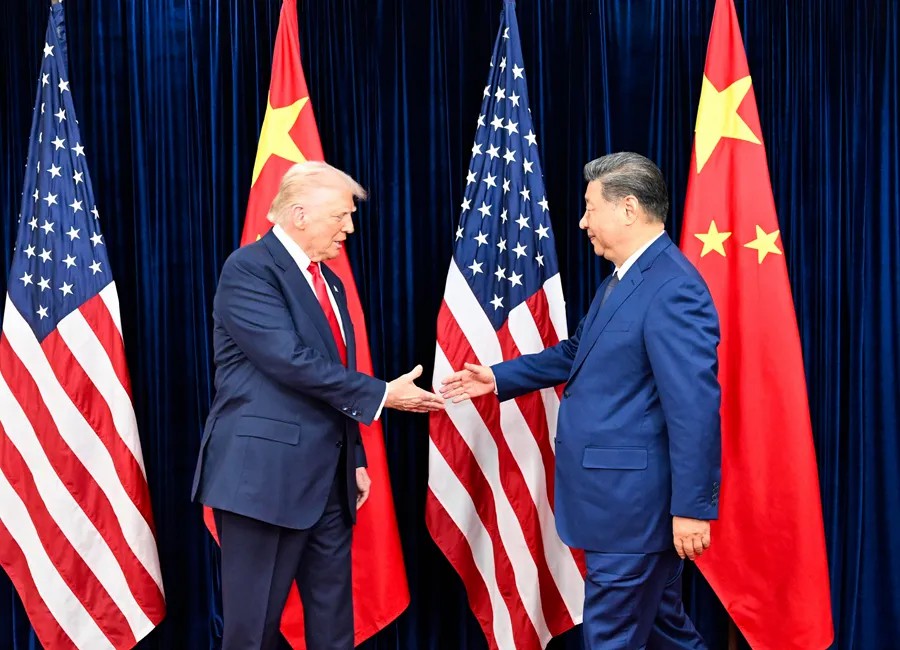
阳光透过玻璃门洒满门厅,中美两国国旗并排而立。面带微笑,习近平主席健步走来。 "很高兴又见面了。""很高兴再次见到你。"看到习近平主席,特朗普总统伸出手来,两位领导人握手合影。 10月30日,韩国釜山金海国际机场蓝屋贵宾室。 这是习近平主席同特朗普总统时隔6年再度见面,也是特朗普总统新任期内中美元首首次会 晤。 举世瞩目,全球期待——近年来,无论中美还是世界,都发生了很多重要变化。百年变局加速演进,国际形势变乱交织,国际社会比以往任何 时候都更需要一个稳定的中美关系。 元首外交对中美关系发挥着不可替代的战略引领作用。今年以来,习近平主席同特朗普总统3次通话、多次互致信函,保持密切联系。 "中美关系在我们共同引领下,保持总体稳定。"习近平主席在晤谈开始时指出。 几天前,中美经贸团队在吉隆坡举行了新一轮磋商,就解决各自当前的主要关切达成基本共识,也为两国元首釜山会晤提供了必要条件。 贵宾室会见厅,一张白色长桌摆放在中央。习近平主席同特朗普总统相对而坐。特朗普总统说:"很荣幸同习近平主席会面。中国是伟大国 家,习主席是受人尊敬的伟大领导人。" 当地时间10月30日,国家主席习近平在釜山同美国总统特朗普举行会晤。图片 ...
(近观中国)中美元首釜山会晤:一次期待已久的握手
Zhong Guo Xin Wen Wang· 2025-10-31 06:22
(近观中国)中美元首釜山会晤:一次期待已久的握手 中新社韩国釜山10月30日电 题:中美元首釜山会晤:一次期待已久的握手 中新社记者 黄钰钦 郭金超 "很高兴再次见到你。" "我也是。" 当地时间10月30日,韩国釜山金海国际机场贵宾室,见证全球瞩目的中美元首会晤。 0:00 视频:习近平同美国总统在釜山举行会晤 来源:央视新闻客户端 深蓝色幕布前,中美两国国旗交错摆放。美国总统特朗普提前抵达会晤现场,中国国家主席习近平随后到达。 双方在国旗前站定,握手、问候、合影,现场快门声响成一片。世界最大发展中国家和最大发达国家之间这场互动,聚焦全球 目光。 这是一次期待已久的握手。 当地时间10月30日,国家主席习近平在釜山同美国总统特朗普举行会晤。 新华社记者 申宏 摄 中美关系是全球最重要的双边关系,国际社会期待两国关系稳下来、向前走。当中美关系进入重要时刻,这次握手也成为两国 元首釜山会晤中令人印象深刻的一幕。 元首外交,在国之交的厚重史册里,一直是最有力的篇章。这些年来,庄园会晤、瀛台夜话、白宫秋叙、西湖长谈,中美元首 的每一次会面、每一回深谈,都标注出两国关系的重要节点。 "面对风浪和挑战,两国元首作为掌舵 ...
时政微纪录丨习主席的韩国APEC时间:第一集 中美元首釜山会晤
Yang Shi Xin Wen· 2025-10-31 05:17
Core Points - President Xi Jinping arrived in South Korea to attend the APEC informal leaders' meeting and conduct a state visit, invited by President Lee Jae-myung [1] - A significant meeting between Xi Jinping and U.S. President Trump lasted approximately 100 minutes, emphasizing the importance of partnership and friendship between China and the U.S. [1] - Xi Jinping highlighted the potential for mutual success and shared prosperity between the two nations, urging both sides to consider the bigger picture for stable relations [1] Summary by Categories Political Context - Xi Jinping's visit to South Korea is part of a broader diplomatic engagement, reflecting the importance of APEC in fostering regional cooperation [1] - The meeting with Trump signifies a critical moment in U.S.-China relations, with both leaders discussing the need for collaboration [1] Economic Implications - The emphasis on mutual prosperity suggests potential economic opportunities for both nations, indicating a willingness to engage in trade and investment discussions [1] - Xi's call to "count the big account" implies a focus on long-term economic strategies rather than short-term gains [1]
中美峰会落幕,长谈100分钟,特朗普心满意足,承诺降低10%关税
Sou Hu Cai Jing· 2025-10-31 04:28
中美峰会终于圆满结束,这次会晤在韩国举行,持续了近一小时40分钟,气氛既务实又友好,世界各国也都松了一口气。而且,这是第一次看到特朗普表现 得如此客气。 10月30日中午,当地时间,中美两国领导人在韩国釜山进行了会晤,这是自2019年以来中美首次面对面的会谈。双方进行了一个多小时的交流,讨论了多个 重要议题,氛围友好且充满务实精神。 会后,特朗普对这次会晤给予了高度评价,并表示希望与中国保持良好的关系。特朗普面带微笑,看起来对这次见面的结果非常满意。这次会谈的重要性不 仅在于中美将继续推进贸易谈判,更在于双方能够达成此次会面,这标志着中美关系的实质性进展。 特朗普上台不到一年,在此次出访中与中方在第三国进行会晤,成功打破了中美关系的僵局。上一次中美会谈还是在2023年11月,距今已有两年多的时间。 在如今复杂的全球格局下,高层之间的沟通显得尤为重要,有助于加深双方的理解,避免误判风险,特别是在当前中美因贸易等问题产生摩擦的背景下,减 少冲突升级的可能性。 尽管美国一直将中国视为竞争对手,但如果继续与中国对抗,最终只会增加美国与世界其他国家的风险,甚至可能导致全球局势的紧张,市场也可能因此陷 入恐慌。这是特朗普 ...
学习快评:让中美关系这艘大船平稳前行
Xin Hua She· 2025-10-31 03:25
Core Viewpoint - The meeting between Chinese President Xi Jinping and U.S. President Donald Trump on October 30 is crucial for the future of China-U.S. relations, emphasizing the need for stability and cooperation between the two nations [1][2] Group 1: Key Points from the Meeting - Xi Jinping highlighted the importance of navigating the challenges in China-U.S. relations, advocating for a stable and sustainable bilateral relationship that aligns with the long-term interests of both countries [1] - The principle of mutual respect, peaceful coexistence, and win-win cooperation is central to Xi's approach, aiming to address economic and trade issues through dialogue and collaboration [1] - The call for both nations to act as partners and friends reflects a historical understanding and a necessity for mutual prosperity [1] Group 2: Responsibilities of Major Powers - As the world's two largest economies, China and the U.S. have a responsibility to find a correct path for coexistence, emphasizing the importance of cooperation for mutual benefit [2] - The commitment to implement the important consensus reached by the two leaders is essential for establishing a solid foundation for China-U.S. relations and fostering a positive environment for development [2] - Continuous dialogue and cooperation across multiple fields are necessary to resolve differences and contribute positively to global stability [2]
外媒关注中美元首会晤:释放缓和信号 推动关系稳定发展
Zhong Guo Xin Wen Wang· 2025-10-31 03:05
俄罗斯卫星通讯社援引专家观点称,此次会晤为近期动荡的中美关系起到关键领航定向作用。美方已意 识到遏制中国难以奏效。双方求同存异是必由之路,和平共处是必然结果。 路透社、美联社、法新社等媒体对中美元首会晤进行密集报道。路透社称,此次会晤为中美贸易紧张局 势降温。报道援引专家观点称,预计此次会晤将为两国间更深入的贸易和经济对话铺平道路。美国有线 电视新闻网评价,这是一次历史性会晤。 美国《政治报》网站刊文指出,此前,持续数月的贸易紧张局势阻碍了美中两国的经贸往来,此次会晤 有助于缓和局势。 英国广播公司报道称,中美双方就重要经贸问题形成共识,同意在经贸、能源等领域加强合作并保持经 常性交往。 中新社北京10月30日电 综合消息:当地时间10月30日,中国国家主席习近平在韩国釜山同美国总统特 朗普举行会晤。外媒对此高度关注,认为此次会晤有助于缓和中美贸易紧张局势,推动双边关系稳定发 展。 印度《汉斯印度报》评价称,此次会晤是缓和中美紧张关系的关键一步,并将影响中美关系的下一阶 段,双方将在贸易、技术和全球挑战方面寻求共同点。 据彭博社、英国广播公司报道,特朗普当天在返美途中接受采访时称,此次会晤非常成功,双方在很多 ...
时政新闻眼丨中美元首釜山会晤,这些重点值得关注
Yang Shi Xin Wen· 2025-10-31 02:41
Group 1 - Xi Jinping's visit to South Korea marks his first trip abroad after the Fourth Plenary Session, highlighting its significant political implications [4][6][8] - The visit includes participation in the APEC informal leaders' meeting, where Xi is expected to propose new initiatives for Asia-Pacific cooperation [6][8] - The last visit by Xi to South Korea was 11 years ago, emphasizing the importance of strengthening bilateral relations [8] Group 2 - The first activity upon Xi's arrival was a meeting with U.S. President Donald Trump, indicating the global attention on U.S.-China relations [10][17] - The meeting lasted approximately 1 hour and 40 minutes, focusing on enhancing cooperation in trade, energy, and cultural exchanges [18][22] - Both leaders expressed a desire for continued dialogue and collaboration, with Trump inviting Xi to visit the U.S. [18][29] Group 3 - Xi emphasized the need for both nations to navigate their differences and work towards a stable relationship, which is crucial for global economic stability [21][22] - The recent economic data from China shows a 5.2% growth rate in the first three quarters, reflecting resilience amid challenges [25][26] - Xi highlighted China's commitment to focusing on its development while sharing opportunities with the world, reinforcing China's role in global affairs [27][28]
建信期货铜期货日报-20251031
Jian Xin Qi Huo· 2025-10-31 02:07
Group 1: General Information - Report Title: Copper Futures Daily Report [1] - Date: October 31, 2025 [2] - Researchers: Zhang Ping, Yu Feifei, Peng Jinglin [3] Group 2: Market Review and Operation Suggestions - Market Performance: Shanghai copper first rose to a record high of 89,270 but then fell. After the Fed cut interest rates by 25BP and Chairman Powell hinted it might be the last cut this year, and due to the Sino - US meeting in Busan, the market's selling sentiment increased. The spot price rose 300 to 88,065, the spot discount narrowed to 55, the social inventory decreased by 0.19 tons this week, and the spot import loss was 880 with the import window closed [10]. - Strategy: The short - term market has priced in the positive news of Sino - US relations and Fed rate cuts. Considering the tight copper supply at the end of the year and the initiative of the CSPT group, investors can still buy on dips [10]. Group 3: Industry News - Anglo American's Collahuasi Mine: The mine in Chile is facing ore quality decline, which will limit next year's production. It is expected to return to normal production in 2027 with an output of about 600,000 tons [11]. - ENAMI's New Copper Smelter: ENAMI has obtained environmental approval for a new $1.7 billion copper smelter. It will process up to 850,000 tons of copper concentrate and produce up to 240,000 tons of cathode copper annually [11]