中美贸易摩擦

Search documents
大越期货玻璃早报-20251014
Da Yue Qi Huo· 2025-10-14 01:30
交易咨询业务资格:证监许可【2012】1091号 大越期货投资咨询部 胡毓秀 从业资格证号:F03105325 投资咨询证号:Z0021337 联系方式:0575-85226759 重要提示:本报告非期货交易咨询业务项下服务,其中的观点和信息仅作参考之用,不构成对任何人的投资建议 。 我司不会因为关注、收到或阅读本报告内容而视相关人员为客户;市场有风险,投资需谨慎。 玻璃早报 2025-10-14 每日观点 玻璃: 1、基本面:中美贸易摩擦或升温;近期沙河地区"煤改气"等反内卷、环保政策利好情绪有所升 温,供应端扰动因素较多;下游深加工订单整体偏弱,不及往年同期,地产终端需求疲弱;偏空 2、基差:浮法玻璃河北沙河大板现货1148元/吨,FG2601收盘价为1179元/吨,基差为-31元,期 货升水现货;偏空 3、库存:全国浮法玻璃企业库存6282.40万重量箱,较前一周增加5.84%,库存在5年均值上方运 行;偏空 4、盘面:价格在20日线下方运行,20日线向下;偏空 5、主力持仓:主力持仓净空,空减;偏空 6、预期:宏观利空叠加玻璃基本面偏弱,短期预计震荡偏弱运行为主。 影响因素总结 2、风险点: "反内卷 ...
有色金属日报-20251014
Wu Kuang Qi Huo· 2025-10-14 01:28
Group 1: Report Industry Investment Rating - No relevant content provided Group 2: Core Views of the Report - The market's concerns about the Sino-US trade situation have eased, with precious metal prices hitting new highs and copper prices significantly rebounding. Aluminum prices are expected to fluctuate strongly, while lead and zinc prices are expected to oscillate at low levels with increased risk volatility. Tin prices may maintain high-level oscillations, and nickel prices may have limited downside space in the medium to long term. Lithium carbonate prices are likely to oscillate weakly, and alumina prices suggest waiting and seeing. Stainless steel market trends are expected to be weak, and cast aluminum alloy prices are under pressure above [2][3][6][9][12][14][17][20][24][26][29] Group 3: Summary by Metals Copper - **Market Information**: LME 3M copper rose 4.13% to $10,802/ton, and SHFE copper closed at 86,520 yuan/ton. LME copper inventory decreased by 50 tons, and domestic social inventory increased. The spot premium in Shanghai was 80 yuan/ton, and the import loss was about 800 yuan/ton [2] - **Strategy View**: Overseas copper mine production cuts and reduced domestic refined copper output tighten supply, supporting prices. If the trade situation escalates in the short term, copper prices may remain strong. The SHFE copper main contract is expected to trade between 85,800 - 87,500 yuan/ton, and LME 3M copper between $10,700 - $10,900/ton [3] Aluminum - **Market Information**: LME 3M aluminum rose 0.4% to $2,757/ton, and SHFE aluminum closed at 20,975 yuan/ton. SHFE weighted contract positions decreased, and futures warehouse receipts increased. Domestic inventory increased, and the spot discount in East China remained at 50 yuan/ton [5] - **Strategy View**: With increased domestic aluminum water ratio, seasonal consumption recovery, and resilient exports, aluminum prices are expected to oscillate strongly. The SHFE aluminum main contract is expected to trade between 20,800 - 21,200 yuan/ton, and LME 3M aluminum between $2,730 - $2,790/ton [6] Lead - **Market Information**: SHFE lead index fell 0.23% to 17,102 yuan/ton, and LME 3S lead fell to $2,010.5/ton. SMM1 lead ingot average price was 16,925 yuan/ton, and domestic social inventory remained unchanged at 3.58 tons [8] - **Strategy View**: Lead ore inventory rose slightly, and primary lead smelting started at a high level. Recycled lead smelting started at a low level, and lead ingot factory inventory increased. After the large-scale cancellation of LME lead warehouse receipts, structural risks increased. Short-term SHFE lead is expected to oscillate at low levels with increased risk volatility [9] Zinc - **Market Information**: SHFE zinc index fell 0.05% to 22,277 yuan/ton, and LME 3S zinc rose to $3,019.5/ton. SMM0 zinc ingot average price was 22,200 yuan/ton, and domestic social inventory increased slightly to 16.31 tons [10] - **Strategy View**: During the holiday, domestic zinc smelters continued production, and most downstream enterprises maintained normal operations. LME zinc registered warehouse receipts are at a low level, with structural risks remaining. Short-term SHFE zinc is expected to oscillate at low levels with increased risk volatility [11][12] Tin - **Market Information**: On October 13, 2025, SHFE tin main contract closed at 282,100 yuan/ton, down 1.48%. Domestic futures registered warehouse receipts decreased by 64 tons. Supply from Myanmar and Indonesia is tight, and the smelting start rate in Yunnan and Jiangxi decreased slightly. Downstream new energy and AI are booming, but traditional electronics and photovoltaic are weak. The "Golden September and Silver October" season has improved consumption marginally [13] - **Strategy View**: Short-term Sino-US trade friction may lower market risk appetite, but tin supply and demand are in a tight balance, and prices may maintain high-level oscillations. It is recommended to wait and see. The domestic main contract is expected to trade between 270,000 - 290,000 yuan/ton, and LME tin between $34,000 - $36,000/ton [14] Nickel - **Market Information**: On Monday, nickel prices oscillated. SHFE nickel main contract closed at 121,410 yuan/ton, down 0.63%. Spot market transactions were average, and nickel ore and nickel iron prices were stable. MHP coefficient prices were high due to increased downstream demand [15][16] - **Strategy View**: Short-term Sino-US trade friction may lower market risk appetite, but nickel prices were less affected due to limited previous increases. Recently, nickel iron prices weakened, and refined nickel inventory pressure was significant. In the medium to long term, US easing expectations and domestic policies will support nickel prices, and new RKAB approvals may be positive. Short-term, it is recommended to wait and see, and consider buying on dips if prices fall enough. SHFE nickel main contract is expected to trade between 115,000 - 128,000 yuan/ton, and LME 3M nickel between $14,500 - $16,500/ton [17] Lithium Carbonate - **Market Information**: MMLC lithium carbonate spot index closed at 73,011 yuan, unchanged from the previous day. LC2511 contract closed at 72,280 yuan, down 0.63%. The average spot premium was -150 yuan [19] - **Strategy View**: Affected by external macro news, commodities are generally weak. Lithium carbonate is in the consumption peak season, and social inventory is decreasing, supporting prices. However, the resumption of Zangge Lithium's production eases supply concerns, suppressing price rebounds. Prices are likely to oscillate weakly. The LC2511 contract is expected to trade between 70,600 - 74,000 yuan/ton [20] Alumina - **Market Information**: On October 13, 2025, the alumina index fell 1.19% to 2,827 yuan/ton. Positions increased by 1.8 million hands. Shandong spot price fell to 2,86 yuan/ton, with a premium of 66 yuan/ton. Overseas FOB price was $324/ton, and the import profit was 4 yuan/ton. Futures warehouse receipts increased by 2.11 tons [22] - **Strategy View**: Ore prices are supported in the short term but may be under pressure after the rainy season. Alumina smelting capacity is in surplus, and inventory is accumulating. The opening of the import window may exacerbate the surplus. Fed rate cut expectations may drive the non-ferrous sector up. It is recommended to wait and see. The domestic main contract AO2601 is expected to trade between 2,600 - 3,000 yuan/ton, focusing on supply policies, Guinea's ore policy, and Fed monetary policy [23][24] Stainless Steel - **Market Information**: On Monday, the stainless steel main contract closed at 12,655 yuan/ton, down 0.98%. Spot prices in Foshan and Wuxi decreased, and social inventory increased by 7.97% to 105.36 tons, with 300-series inventory increasing by 5.09% to 64.85 tons [26] - **Strategy View**: After the holiday, social inventory increased significantly, but terminal consumption was flat, lacking the "Golden September and Silver October" peak season characteristics. Spot prices led by Qing Shan decreased, and market sentiment was weak. The market trend is expected to be weak [26] Cast Aluminum Alloy - **Market Information**: AD2511 contract fell 0.64% to 20,335 yuan/ton. Positions and trading volume increased, and warehouse receipts increased. The price of domestic ADC12 decreased slightly, and downstream was cautious. Imported ADC12 price decreased, and domestic inventory decreased slightly [28] - **Strategy View**: Market sentiment recovery drove aluminum prices up, stabilizing alloy prices. However, increasing warehouse receipts put pressure on near-month contracts [29]
大越期货纯碱早报-20251014
Da Yue Qi Huo· 2025-10-14 01:20
交易咨询业务资格:证监许可【2012】1091号 纯碱早报 2025-10-14 大越期货投资咨询部 金泽彬 从业资格证号:F3048432 投资咨询证号: Z0015557 联系方式:0575-85226759 重要提示:本报告非期货交易咨询业务项下服务,其中的观点和信息仅作参考之用,不构成对任何人的投 资建议。 我司不会因为关注、收到或阅读本报告内容而视相关人员为客户;市场有风险,投资需谨慎。 每日观点 纯碱: 1、基本面:中美贸易摩擦或升温;碱厂检修量不及预期,远兴二期年前预期投产,整体供给处于 高位;下游浮法玻璃供给扰动较多,光伏日熔量延续下滑趋势,纯碱厂库处于历史同期高位;偏空 2、基差:河北沙河重质纯碱现货价1170元/吨,SA2601收盘价为1247元/吨,基差为-77元,期货升 水现货;偏空 3、库存:全国纯碱厂内库存165.98万吨,较前一周增加0.50%,库存在5年均值上方运行;偏空 4、盘面:价格在20日线下方运行,20日线向下;偏空 5、主力持仓:主力持仓净空,空减;偏空 6、预期:宏观利空叠加纯碱基本面疲弱,短期预计震荡偏弱运行为主。 影响因素总结 利多: 1、年内检修高峰期,产量预 ...
资讯早班车-2025-10-14-20251014
Bao Cheng Qi Huo· 2025-10-14 01:14
1. Report Industry Investment Rating No relevant content provided. 2. Core Viewpoints of the Report - China's foreign trade shows resilience with steady growth in imports and exports in the first three quarters of 2025, and the growth rate accelerates quarter - by - quarter [19] - Gold prices reach new highs, and institutions predict further price increases in the future [5][6] - The U.S. economic growth forecast is raised, but employment growth is expected to remain weak [3] - The price of refined oil is reduced, and the probability of the next adjustment being downward is high [11] - The price of live - hog futures hits a record low, and the pork market is in a "peak - season but low - price" situation [15] 3. Summary by Directory 3.1 Macro Data Overview - GDP growth rate in Q2 2025 is 5.2% year - on - year, slightly lower than the previous quarter [1] - In September 2025, the manufacturing PMI is 49.8%, and the non - manufacturing PMI business activity index is 50.0% [1] - In August 2025, the year - on - year growth rate of M1 is 6.0%, showing an upward trend [1] - In September 2025, the year - on - year growth rates of exports and imports are 8.3% and 7.4% respectively, showing a significant increase [1] 3.2 Commodity Investment Reference 3.2.1 Comprehensive - In the first three quarters of 2025, China's total goods trade imports and exports are 33.61 trillion yuan, with exports growing by 7.1% and imports decreasing by 0.2% [2] - Hong Kong Exchanges and Clearing Limited establishes a new subsidiary in Dubai to expand commodity business and promote connectivity between China and the Middle East [3] - Economists raise the growth forecast of the U.S. economy for this year and next year, but expect employment growth to be weak [3] - On October 13, the Baltic Dry Index rises by 10.74% to 2144 points [4] 3.2.2 Metals - On October 14, the price of New York gold futures hits a record high of $4150 per ounce, and spot gold also reaches a new high [5] - The silver market experiences a rare short - squeeze, and the price of spot silver breaks through $52 per ounce [6] - The ILZSG predicts that the global lead and zinc supply and demand situation will change in 2025 and 2026 [6] 3.2.3 Coal, Coke, Steel, and Minerals - Zangge Mining's subsidiary resumes lithium resource development and utilization activities [9] - In September 2025, China's imports of soybeans, iron ore, and coal reach record or near - record highs [9] - Rio Tinto's Q3 2025 production of bauxite, alumina, and aluminum is announced [10] 3.2.4 Energy and Chemicals - Since October 13, 2025, domestic gasoline and diesel prices are reduced, and the probability of the next adjustment being downward is high [11] - China Petrochemical Beijing Petroleum Company promotes the transformation of traditional gas stations into comprehensive energy stations [11] - Saudi Aramco's CEO expects strong global oil demand in the next two years [12] - OPEC's September 2025 crude oil production data is released [12][13] 3.2.5 Agricultural Products - The live - hog futures price hits a record low, and the spot price of pork also shows a continuous downward trend [15] - The Chinese government arranges "Sanqiu" production work to ensure autumn grain harvest [16] 3.3 Financial News Compilation 3.3.1 Open Market - On October 13, the central bank conducts 1378 billion yuan of 7 - day reverse repurchase operations, with a net investment of 1378 billion yuan [17] 3.3.2 Important News - China starts to collect special port fees on U.S. ships [18] - Trump hints at canceling new tariffs on China [18] - The 2025 Financial Street Forum Annual Meeting will be held from October 27 to 30 [20] - The issuance of ultra - long - term special treasury bonds in 2025 is completed [20] - The 9 - month non - standard trust market shows a significant divergence in volume and price [20] - Hong Kong Securities and Futures Commission launches a "real estate fund hotline" [21] - China's real estate - related special bonds increase significantly in the first three quarters of 2025 [21] - Vanke's board chairman changes [21] 3.3.3 Bond Market Summary - The yields of major interest - rate bonds in the inter - bank market rebound, and the prices of Vanke and Shenzhen Metro bonds generally fall [24] - The CSI Convertible Bond Index closes down, and the prices of some convertible bonds fluctuate significantly [25] 3.3.4 Foreign Exchange Market Express - The on - shore RMB against the US dollar closes down, and the US dollar index rises [29] 3.3.5 Research Report Highlights - Shenwan Fixed - Income believes that the issuance and net financing of local bonds will decline [30] - Guoxin Fixed - Income suggests not being overly aggressive in the convertible bond market due to increased uncertainties [31] - CITIC Construction Investment believes that the short - term bond market has a high probability of winning but not to over - chase the rise [31] 3.4 Stock Market Important News - The A - share market opens lower and rebounds, with some sectors rising and some falling [35] - The Hong Kong stock market closes down, and the net inflow of southbound funds is significant [35][36] - Foreign capital continues to be optimistic about Chinese core assets and increases their allocation [36] - Insurance funds are optimistic about the A - share market in Q4 and focus on two investment lines [36] - The issuance of new funds is hot, and equity funds are the main force [36]
关税冲击如何影响国内市场
Jin Rong Shi Bao· 2025-10-14 01:12
Group 1 - The U.S. will impose an additional 100% tariff on all goods imported from China starting November 1, 2025, and will implement export controls on "all critical software" [1][2] - Following the announcement, global risk assets experienced a widespread decline, with the Shanghai Composite Index falling below 3900 points on October 10 [1][3] - The A-share market is expected to face potential index-level adjustments, but the extent is manageable, and the impact on the bond market is relatively limited [2][4] Group 2 - Analysts believe the recent escalation in U.S.-China trade tensions is primarily due to unreasonable sanctions on China's shipbuilding industry imposed by the U.S. in early October [2][4] - The A-share market showed significant volatility, with the ChiNext Index and the Sci-Tech Innovation 50 Index dropping 4.55% and 5.61% respectively on October 10 [3][4] - Market sentiment is expected to remain focused on the upcoming APEC summit, with investors drawing on experiences from previous tariff announcements to gauge potential market reactions [3][4] Group 3 - The bond market's response to the current tariff escalation is expected to be weaker than in April, with analysts predicting that the 10-year government bond yield will fluctuate between 1.7% and 1.75% [6][7] - The current market environment is characterized by a learning effect from previous tariff experiences, leading to more rational investor behavior and shorter emotional impacts [6][7] - The upcoming changes in domestic policies, such as the fund redemption fee reform, are anticipated to be key variables influencing the bond market in the fourth quarter [7]
国际金价大幅上涨突破4100美元,避险需求推升黄金价值
Huan Qiu Wang· 2025-10-14 01:05
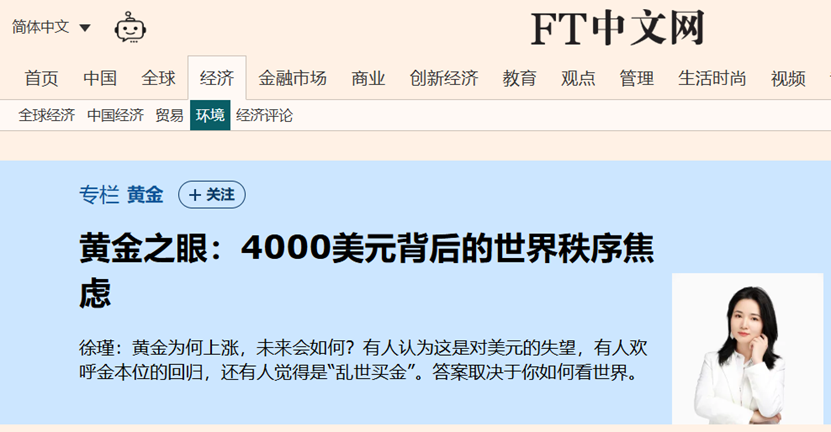
Group 1 - The core viewpoint of the articles highlights a significant increase in international precious metal futures, particularly gold and silver, driven by escalating US-China trade tensions, rising expectations of Federal Reserve interest rate cuts, and heightened geopolitical risks that boost safe-haven demand [1][3] - COMEX gold futures rose by 3.24% to $4,130 per ounce, while COMEX silver futures increased by 7.47% to $50.775 per ounce, indicating a strong market reaction to current economic uncertainties [1] - The Financial Times discusses that the surge in gold prices, surpassing $4,000, reflects disappointment in the US dollar and concerns over global order uncertainty, positioning gold as a measure of confidence in future stability since the decoupling from the dollar in 1971 [1] Group 2 - The article from Japan's 47 News attributes the rise in gold prices to increased buying driven by Western investors through ETFs and derivatives, contrasting with the previously active Chinese retail investors, indicating a shift in market dynamics [3] - Concerns regarding the US economy are identified as a primary motivation for investment in gold, with different age demographics having varying strategies; retirees may view gold as a hedge against downturns, while younger investors might pursue more aggressive investment strategies [3]

贝森特称对华关税不一定要发生,分析人士:中国面对美国有牌打且敢打牌
Sou Hu Cai Jing· 2025-10-14 00:51
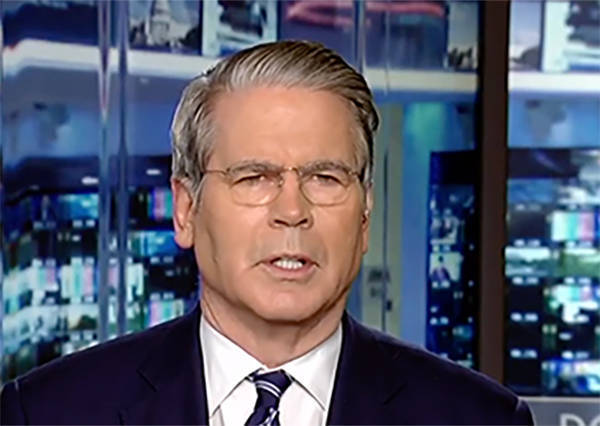
【文/观察者网 王一】在中国上周放出一连串"反制重锤"后,美国政府又企图用"关税大棒"讹诈,却只 换来华尔街的一片哀嚎。于是,当地时间10月13日,在美国总统特朗普、美国副总统万斯以及美国贸易 代表贾米森·格里尔之后,美国财政部长斯科特·贝森特在接受福克斯商业频道采访时也放软了语调,称 刚过去的周末中美双方进行了"实质性沟通",100%关税不一定要发生。 复旦大学国际问题研究院院长吴心伯指出,美方态度的转变显示出中国手中有牌打、敢打牌,也能让美 国切身感受到痛楚,"我们现在看清了特朗普,也完全摸透了他的底牌"。中国人民大学国际关系学院教 授王义桅也认为,最近的中美贸易摩擦本质上是"以斗促和"的过程,"中国的回应更像是一种反制,警 告美国不要再制造麻烦,因为华盛顿从中得不到任何好处"。 贝森特预计,双方将举行更多会谈,并且特朗普已表示关税在11月1日前将不会生效。 贝森特还称,本周美国和中国将进行工作级别会谈,"100%的关税不一定要发生,尽管上周宣布了这一 消息,但双方关系仍保持良好。沟通渠道已重新开放,所以我们将拭目以待"。 同时,贝森特还试图继续给中国泼脏水,声称"中国的举动具有挑衅性",他还嘴硬地表示, ...
商务部回应美国加征100%关税,9月进出口增速超预期 | 财经日日评
吴晓波频道· 2025-10-14 00:30
Group 1: Trade Relations and Policies - The Chinese Ministry of Commerce responded to the U.S. announcement of a 100% tariff increase, labeling it as a typical "double standard" and emphasizing that China does not wish to engage in a trade war but is not afraid to do so if necessary [2] - Recent measures by China to tighten export controls on rare earths are seen as a retaliatory action against the U.S., indicating a potential escalation in trade tensions [2][3] - The uncertainty in U.S.-China trade policies is affecting global multinational companies, leading to diminished business confidence [3] Group 2: Trade Data and Economic Indicators - In September, China's exports grew by 8.3% year-on-year, reaching a six-month high, while imports increased by 7.4%, the highest in 17 months, indicating resilience in trade performance [4] - The total value of China's goods trade in the first three quarters reached 33.61 trillion yuan, a year-on-year increase of 4%, with exports maintaining growth for eight consecutive quarters [4] - Despite the positive trade data, challenges remain, including the impact of U.S. tariffs on re-exported goods and a shift towards processing trade, which may continue to pressure China's export outlook [5] Group 3: Real Estate Market Trends - Major cities like Beijing, Shanghai, and Shenzhen have seen an increase in real estate transaction volumes, with September data showing significant growth in both new and second-hand housing sales [6] - The overall real estate market remains under pressure, with limited recovery in supply-demand dynamics, indicating a buyer's market [7] Group 4: Corporate Developments - The Dutch government has imposed restrictions on China's Wingtech Technology's subsidiary, Anshi Semiconductor, leading to asset freezes and management changes, highlighting the political risks faced by Chinese companies abroad [8] - Vanke's chairman, Xin Jie, resigned for personal reasons, raising concerns about the company's stability amid liquidity challenges [9][10] Group 5: Aviation and Tourism Industry - Post-holiday, air ticket prices have significantly dropped, with some routes seeing reductions of up to 80%, reflecting a decrease in travel demand following the peak holiday season [13][14] - The entire tourism industry is facing profitability challenges, with airlines struggling to maintain margins as ticket prices align with or fall below high-speed rail costs [14] Group 6: Market Performance - On October 13, the stock market experienced fluctuations, with the Shanghai Composite Index closing down 0.19%, amid ongoing trade tensions between the U.S. and China [15][16] - The market's response to trade policy changes indicates a reduction in panic compared to previous instances, although overall trading volume has decreased, reflecting a cautious investor sentiment [15][16]



中信建投:短期债市胜率较高,但建议见好就收
Xin Lang Cai Jing· 2025-10-14 00:03
Core Viewpoint - The short-term bond market is primarily focused on two key aspects: the sustainability of the recovery sentiment since late September and the impact of escalating China-U.S. trade tensions [1] Group 1: Market Recovery - Since September 25, the bond market has experienced a recovery, with the 10-year government bond yield declining by 9 basis points from its peak over the past 8 trading days [1] - The recovery has been substantial, indicating a significant adjustment in market sentiment [1] Group 2: Trade Tensions - The intensification of China-U.S. trade tensions is viewed as a tactical move rather than a long-term trend, with the ongoing decoupling between the two economies being a broader concern [1] - The bond market's reaction to these tensions has been limited, as it has adapted to the ongoing trade conflict since its escalation in April [1] Group 3: Investment Strategy - While the bond market shows a higher probability of favorable outcomes in the short term, caution is advised against excessive chasing of gains [1]

China is learning to live without us, says Jim Cramer
Youtube· 2025-10-13 23:58
Core Viewpoint - The recent volatility in the market was triggered by the U.S. President's threat of a 100% tariff on Chinese goods, which was later softened, leading to a significant market recovery [1][2][3]. Market Reaction - Following the President's initial threat, the market experienced a sharp decline, but rebounded strongly with the Dow gaining 588 points, S&P climbing 1.56%, and NASDAQ jumping 2.21% after the President reassured that talks with China were back on [2]. Trade Dynamics - China's exports to countries other than the U.S. increased by nearly 15%, while exports to the U.S. fell by 27%. Despite this decline, China's total exports rose by 8% in September, indicating a potential adaptation to reduced U.S. trade [4][5]. Political Rhetoric - The President's softened rhetoric over the weekend suggested a more optimistic outlook on U.S.-China relations, contrasting sharply with the earlier threats of tariffs [5][6].