
全球资产配置

Search documents
聘请境外投资顾问 公募出海拓展“朋友圈”
Shang Hai Zheng Quan Bao· 2025-06-04 19:18
Core Viewpoint - Public funds are actively hiring foreign investment advisors to enhance investment management for QDII funds, driven by the growing demand for diversified asset allocation as residents' wealth continues to increase [1] Group 1: Hiring Foreign Advisors - Penghua Fund announced the hiring of Italy's Eurizon Capital Asset Management as a foreign investment advisor for its global high-yield bond fund and US real estate fund, with Eurizon managing €390.5 billion as of last September [2] - Other public funds are also bringing in foreign advisors, with many having over 15 years of experience in the securities industry, aligning well with the investment directions of the respective QDII funds [2][3] - Notable foreign advisors include Steven Angeli from Wellington Management with over 30 years of experience, and Cai Defeng and Yang Bo from Amundi Asset Management, both with over 16 years of experience [3] Group 2: Expanding Investment Directions - The hiring of foreign advisors reflects support from foreign shareholders and the sharing of investment expertise, which is crucial for navigating complex overseas markets [4] - Public funds are increasingly focusing on global asset allocation capabilities, with a rich lineup of QDII funds covering various international markets, including the US, France, Japan, and more [4] - The popularity of certain QDII funds is evident, as seen with the招商利安新兴亚洲精选ETF reaching its fundraising cap of 1 billion yuan in just one day [4] Group 3: New Fund Offerings - The mutual recognition fund shelf has seen new additions this year, with Morgan Asset Management reporting three new mutual recognition fund products [5] - Multi-asset allocation capabilities are gaining importance, with FOF (Fund of Funds) becoming a key vehicle for diversification, emphasizing the need for familiarity with different asset classes [6]
华侨银行刘洋:美元跌8%背后的贸易战与全球资产配置
Sou Hu Cai Jing· 2025-06-04 09:19
在美国关税2.0、地缘政治博弈加剧与全球经济格局重构的多重背景下,全球资本市场正经历一场前所 未有的资产价格重估。 会议上,刘洋近一步剖析黄金、美债与新兴市场机遇。"黄金的上涨既反映了对财政货币化(MMT)的 担忧,也体现其作为货币替代品的属性。"他指出,长期看,全球债务扩张与地缘政治风险将继续支撑 金价。短期的关税利好驱动的风险偏好回升,可能导致黄金价格的回调,每次回调便是更好的建仓时 机。 对于10年期美债收益率反弹突破4.5%的现象,刘洋分析,这源于通胀预期上调与供需矛盾的双重驱 动。他同时提到,日本央行结束收益率曲线控制(YCC)政策后,日债收益率上升削弱了美债的比较 优势,部分资金回流日本市场。 欧元与欧洲股市方面,刘洋观察到,欧元年内上涨6%,欧洲斯托克50指数涨幅超10%,这一表现与德 国通过重大财政变革以及欧元区经济软着陆预期相关。他建议,投资者可关注欧元计价资产的对冲价 值。 近日,华侨银行中国于上海举办"联动东盟,解锁新机遇"行业观点媒体沟通会,副行长兼环球金融市场 部总经理刘洋深度剖析美元指数年内8%跌幅背后的逻辑,并就美债收益率异动、黄金配置价值、比特 币资本流动效应等市场焦点问题展开 ...


逆全球化重构与“对等关税”冲击下的全球资产配置新范式|财富与资管
清华金融评论· 2025-05-31 10:13
文/中央财经大学绿色金融国际研究院首席经济学家 刘锋 本 文 聚 焦 2 0 2 5 年 全 球 贸 易 格 局大变 革 背景 下, 逆 全球 化 与 " 对 等 关 税"政策对全球资产配置的深远影响。通过剖析传统资产配置理论面 临的挑战,基于"三重框架+五维穿透"理论体系,深入探讨资产配置 新逻辑,从多维度阐述全球资产配置范式重构、投资者应对策略及 未来资产价格驱动逻辑变革,为投资者在复杂多变的市场环境中提 供理论指引与实践参考。 在全球化进程中,全球资产配置曾是投资者获取稳定收益、分散风险的重要手段。然而近年来, 逆全球化趋势加剧,美国的"对等关税"举措给全球经济和金融市场带来巨大冲击,对华加征关税 的"对等报复"措施成为全球产业链、价值链重构的关键催化剂。这一举措不仅是贸易政策的重大 单边转向,更使得全球经济环境变得错综复杂。 在此背景下,传统资产配置理论遭遇前所未有的挑战,原有的风险评估、收益预期和资产定价逻 辑亟待更新。深入研究逆全球化重构与"对等关税"冲击下的全球资产配置新范式,对于投资者规 避风险、实现资产保值增值,以及金融市场的稳定发展具有重要的理论与现实意义。本文基 于"三重框架+五维穿透" ...

美元弱势周期下的全球资产配置新逻辑|财富与资管
清华金融评论· 2025-05-31 10:13
Core Viewpoint - The article discusses the ongoing weakening of the US dollar, which has fallen below the critical level of 100, and its implications for global asset allocation, particularly in Asia [3]. Group 1: Dollar Weakness and Global Impact - The US dollar is in a weak cycle due to the Federal Reserve's policy shifts, increasing fiscal deficits, and a global trend towards de-dollarization [3]. - There have been five instances of simultaneous declines in stocks, bonds, and the dollar this year, indicating deepening economic contradictions in the US [3]. - Asian currencies are experiencing collective appreciation, with the Japanese yen rising by 10%, the New Taiwan dollar by 9%, and other major Asian currencies increasing by 3%-7% [3]. Group 2: Hong Kong Market Dynamics - The Hong Kong dollar has seen significant liquidity injections from the Monetary Authority, with interbank borrowing rates dropping from 4% to 0.6%, encouraging leveraged investments in stocks and real estate [5]. - The influx of talent is evident as local universities expand enrollment, with the University of Hong Kong's business school increasing its master's program from 300 to 5,000 students annually [5]. - The IPO market in Hong Kong is recovering, with 70 new listings in Q1 2023, and expectations for the total IPO scale to exceed HKD 400 billion for the year [7]. Group 3: Global Asset Allocation Strategy - The S&P 500's forward P/E ratio remains high at 29, with tech giants at historical valuation premiums, suggesting a need to reduce exposure to US equities [9]. - The 10-year US Treasury yield has rebounded to 4.5%, with significant rollover pressures from maturing debt, leading to a recommendation to avoid short-term volatility risks in US Treasuries [9]. - Japanese assets are being revalued, with a 60% increase in core Tokyo property prices over three years, and a high employment rate among graduates attracting middle-class families [9]. Group 4: Investment Strategy Recommendations - In the current transition period, the recommended asset allocation includes 15% in insurance products, 5.2% yield Asian dollar bonds, and a focus on equities with 40% in Hong Kong stocks, 25% in Japanese stocks, and 20% in high-dividend A-shares [11]. - Alternative assets should include 10% in gold and 5% in Bitcoin, with a strategy to increase holdings in the Chinese yuan and yen while reducing US dollar exposure to below 30% [11].

美元霸权松动黄金需求创新高,全球资产配置格局迎来重大转变
Sou Hu Cai Jing· 2025-05-30 14:29
Group 1 - The traditional trust in the US dollar is gradually eroding, leading to a significant shift in global asset allocation towards gold as a safe-haven asset [1][3] - As of the end of 2024, the US dollar's share in global foreign exchange reserves is projected to drop to 57.8%, a decrease of 0.6 percentage points from the end of 2023, marking the lowest level since 1995 [3] - Major credit rating agencies have downgraded the US credit rating, with Moody's lowering it from Aaa to Aa1, citing deteriorating long-term fiscal conditions as a key factor [3] Group 2 - Gold is re-establishing its core position in the global financial system, with global gold demand expected to reach 4,974 tons in 2024, a 1.5% increase from 4,899 tons in 2023, driven by strong central bank purchases and rising investment demand [4] - Goldman Sachs predicts that central bank demand for gold will continue for at least two more years, potentially pushing gold prices to $4,000 per ounce [4] - A survey by Kitco indicates that 58% of retail investors expect gold prices to exceed $3,000 per ounce by 2025, reflecting strong market confidence in gold's long-term value [4] Group 3 - Global capital is increasingly flowing into safe-haven assets like gold, with a notable reduction in investment in US assets, which have decreased from over 90% to approximately 79% in recent years [5] - The allocation towards currencies such as the renminbi, euro, and yen has increased as investors seek opportunities outside the US [5]

王健林甩卖48座万达广场!这些富人把钱用哪去了呢?
Sou Hu Cai Jing· 2025-05-29 19:18
Group 1 - Wang Jianlin is selling 48 Wanda Plazas to a consortium including Taikang Zhuhai, Gaohe Fengde, Tencent, JD Pinduoduo, and Sunshine Insurance, indicating a significant asset divestment [1] - The rental yield of Wanda Plazas has decreased from 8.3% in 2015 to 5.1% in 2024, reflecting the downturn in China's commercial real estate market and the impact of e-commerce [3] - High-net-worth individuals are diversifying their investments away from domestic real estate, with a shift towards global asset allocation, as highlighted by the increasing overseas asset allocation ratio reaching 28% in 2024, up 12 percentage points from previous years [9][7] Group 2 - Tencent's involvement in acquiring Wanda Plazas through its affiliated companies suggests a strategic move to integrate offline retail with online platforms, emphasizing the value of foot traffic in physical stores [5] - The trend among wealthy individuals is moving towards flexible and globally diversified assets, moving away from traditional real estate investments [7] - The focus on tax planning is increasing among high-net-worth individuals, with investment immigration becoming a popular method for optimizing global tax structures [11] Group 3 - The demand for investment immigration is rising, with a 47% year-on-year increase in applications, primarily driven by concerns for children's education and family safety [13] - The sale of Wanda Plazas reflects a broader reassessment of wealth transfer strategies among China's affluent, as the next generations face global competition [15]

Derek Yan:中国资产重估与AI产业链重构下,全球配置呈现新逻辑|直击华尔街
2 1 Shi Ji Jing Ji Bao Dao· 2025-05-26 05:38
Core Insights - Investor sentiment towards Chinese assets is gradually improving, particularly in sectors like internet and artificial intelligence, leading to a noticeable rebound in certain Chinese stocks and related thematic funds since the beginning of the year [1][3] - Institutional investors are reassessing the weight of Chinese assets in their global allocations, especially in the context of high valuations in the US stock market, sustained high interest rates, and ongoing geopolitical risks [1][3] - The rise of artificial intelligence is reshaping the global investment landscape, with a rapid expansion of the AI industry chain driving a new round of capital reallocation [1][8] Company Overview - KraneShares was founded approximately 12 years ago by Jonathan Krane, who aimed to educate global institutional investors about investing in China [2] Performance of KWEB - KWEB, a flagship ETF of KraneShares, has seen a 20% increase since the beginning of the year, attributed to the recognition of undervalued Chinese assets and renewed confidence in China's growth prospects [3][4] - Major contributors to KWEB's performance include leading companies like Alibaba, Tencent, and NetEase, with recovery in gaming and advertising sectors, as well as strong AI-related spending [4] Misconceptions about Chinese Investments - A significant misconception among US investors is the neglect of investment opportunities in China due to market volatility over the past three years [5] - Hedge funds have been among the first to recognize the potential in the Chinese market, contrasting with pension funds that may still be influenced by political factors [5] Risks of Chinese Stocks - The risk of delisting for Chinese stocks has been a topic of discussion for years, but ongoing cooperation in audit regulation has strengthened global investor confidence [7] - KraneShares has proactively managed risks by shifting most of KWEB's holdings to the Hong Kong market, which has seen improving liquidity and investor recognition [7] AI-Themed Investment Strategy - KraneShares has launched an AI-themed ETF, AGIX, which focuses on identifying core companies in the AI industry and includes investments in both public and private companies [8][9] - AGIX aims to provide a comprehensive investment channel in the AI sector, with about 50% of its holdings being quality stocks not included in the Nasdaq 100 index [8][9] Global Investor Sentiment - Global institutional investors are increasingly considering risk diversification in their portfolios, moving away from a heavy concentration in US stocks [12] - There is a trend towards reallocating investments within the US market to achieve diversification while maintaining focus on AI growth [12] Emerging Markets for AI - While the US remains a primary focus for AI investments, other regions like Germany, the Netherlands, and Canada are also emerging as significant players in the AI space [13][14] - Many promising AI companies outside the Nasdaq 100 index are being integrated into investment portfolios, highlighting the need for detailed selection of future trend representatives [14]
论坛活动报名|欢迎来到全球利率“剪刀差”时代,家族财富该如何“稳得住、传得下”?
Sou Hu Cai Jing· 2025-05-26 04:07
Core Viewpoint - The global capital markets are experiencing significant shifts in interest rates, with various central banks adopting different monetary policies, leading to a complex environment for high-net-worth families and their asset allocation strategies [3]. Group 1: Interest Rate Changes by Country - China has initiated a new round of interest rate cuts, lowering the one-year Loan Prime Rate (LPR) by 10 basis points to 3.0% and the five-year LPR by 10 basis points to 3.5%, marking the first reduction since October 2024 [4]. - The U.S. Federal Reserve has maintained its federal funds rate target range at 4.25% to 4.5%, prioritizing inflation control despite some easing in inflation rates [5]. - The Bank of England has cut its benchmark rate by 25 basis points to 4.25%, the first reduction since 2023, amidst internal disagreements on the extent of the cut [7]. - Australia has also reduced its cash rate by 25 basis points to 3.85%, the lowest since May 2023, in response to slowing economic growth and inflation returning to target [8]. Group 2: Implications for Family Offices - The divergence in global interest rates poses dual challenges of currency fluctuations and interest rate differentials for family asset allocation strategies [9]. - Traditional asset allocation frameworks, heavily reliant on a stable interest rate environment, are being reassessed as families consider the impact of rapidly declining rates on cash flow predictions and investment returns [10]. - There is a growing interest in alternative assets such as gold, strategic resource funds, and sovereign digital currencies as families seek to hedge against inflation and geopolitical risks [11]. Group 3: Future Considerations for Wealth Management - Family offices are shifting their focus from maximizing returns to ensuring structural stability and resilience across economic cycles, prompting a reevaluation of their asset structures [12]. - The need for a robust "asset immune system" is emphasized, as families aim to navigate the complexities of fluctuating interest rates and geopolitical tensions [13].
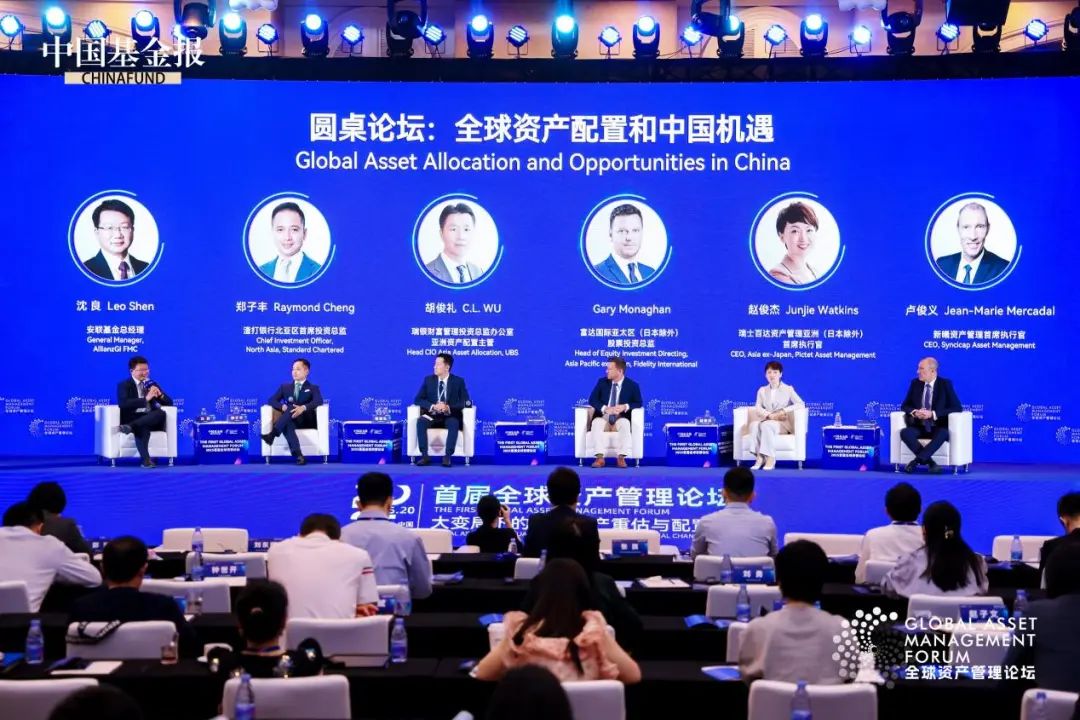
全球顶尖投资机构集体发声!共话“全球资产配置与中国机遇”
Zhong Guo Ji Jin Bao· 2025-05-25 04:47
Group 1 - The global economic landscape is undergoing profound changes, and the complexity of geopolitical issues is increasing, making effective asset allocation and seizing unique opportunities in the Chinese market a focal point for investors [1][3] - The first Global Asset Management Forum, hosted by China Fund News, took place in Shenzhen, focusing on "Global Asset Allocation and Chinese Opportunities," with discussions led by top investment research experts and asset management leaders [1][3] Group 2 - Experts believe that despite the complex global environment, there are opportunities, particularly in the Chinese market, which requires a long-term perspective to navigate market volatility and ignore "noise" [3][15] - Tariffs pose challenges to the global investment environment, but companies with strong domestic supply chains and pricing power can turn these challenges into opportunities [3][19] Group 3 - Allianz Fund's General Manager suggests that mutual recognition funds, ETF connectivity, and QDII funds are good tools for diversifying portfolios for mainland investors [5] - Standard Chartered Bank's Chief Investment Officer encourages overseas clients to focus on specific opportunities in China, such as undervalued state-owned enterprises listed in Hong Kong that offer high dividends [7] Group 4 - UBS Wealth Management emphasizes the importance of global investment diversification, including investments in China, noting that the renminbi is one of the most stable currencies among emerging markets [9] - Fidelity International highlights the attractiveness of the Chinese market due to relatively low valuations, stabilization in real estate and consumption, and significant dividend and earnings growth potential in certain stocks [11] Group 5 - The CEO of Swiss Partners Asset Management observes a gradual trend of diversifying assets away from the U.S., with European investors particularly affected by U.S. policies, leading them to consider opportunities outside the U.S. [13] - New trends, including advancements in AI and technology, present significant potential for economies like China, which requires a long-term perspective to navigate volatility [15][17] Group 6 - The discussion on supply chain adjustments highlights the need for companies to diversify their end markets and adapt to tariff-related uncertainties, with regional logistics companies showing recovery in demand [18][19] - Recommendations for asset allocation include distinguishing between short-term liquidity needs and long-term investment strategies, emphasizing the importance of diversification [20] Group 7 - The current environment presents a favorable time to invest in Chinese stocks, which are relatively undervalued with a PE ratio of approximately 12, and international investors are currently underweight in Chinese equities [21][24] - The trend of capital flowing from U.S. assets to non-U.S. assets is influenced by multiple factors, including the performance of the dollar and U.S. assets [22][23] Group 8 - The Greater Bay Area is recognized as a crucial engine for China's economic development, providing global investors with a window to access the Chinese market [25][26] - The mutual recognition mechanism and cross-border wealth management initiatives are seen as significant opportunities for investors to optimize their asset allocations [25][26] Group 9 - Common misconceptions among global clients regarding the Chinese market include concerns about consumption recovery and the sustainability of government stimulus measures [27][29] - The importance of corporate governance and environmental considerations in Chinese companies has improved, aligning more closely with international standards [28][29]
“赴港卖险”新现象说明了什么
Zheng Quan Ri Bao· 2025-05-22 15:45
Core Insights - The trend of mainland insurance agents moving to Hong Kong is driven by the strong demand from mainland residents for global asset allocation and the unique insurance products available in Hong Kong [1][5][6] Group 1: Market Dynamics - The demand for Hong Kong insurance products from mainland residents is significant, with new life insurance premiums reaching HKD 59 billion in 2023, a year-on-year increase of over 27 times [5] - The insurance market in Hong Kong is characterized by high penetration rates, with the total gross premium expected to reach HKD 637.8 billion in 2024, making it the highest globally in terms of insurance depth [6] - The regulatory environment in Hong Kong is robust, ensuring that all insurance salespersons are licensed and adhere to ethical standards, which enhances market confidence [6][7] Group 2: Talent Migration - Many mainland agents, like Hu Rongping, have successfully transitioned to the Hong Kong insurance market, often through talent schemes that facilitate residency and professional licensing [2][3] - The influx of high-educated talent from mainland China has been encouraged by policies such as the High Talent Scheme, which has attracted skilled professionals to the Hong Kong insurance sector [2][3] Group 3: Product Preferences - High-net-worth individuals are particularly attracted to two types of insurance products in Hong Kong: savings and dividend insurance, which offer advantages in interest rates and inheritance, and critical illness insurance, which provides better coverage and claim conditions [5] - The diverse backgrounds of insurance agents in Hong Kong contribute to a rich service offering, catering to various client needs [3] Group 4: Regulatory Developments - Recent initiatives by regulatory bodies aim to facilitate cross-border insurance business, enhancing service levels for both mainland and Hong Kong residents [8] - The Hong Kong Insurance Authority has introduced guidelines to regulate the demonstration of dividend policy returns, aiming to prevent overly optimistic sales practices that could mislead consumers [9]