地缘政治风险
Search documents
刚果配额落地对钴产业链的影响
2025-10-15 14:57
Summary of Key Points from the Conference Call on Cobalt Industry Industry Overview - The conference call discusses the impact of new cobalt export policies in the Democratic Republic of the Congo (DRC) on the cobalt supply chain and market dynamics [1][2][9]. Core Insights and Arguments - **Logistics and Supply Chain Impact**: The new export policy has significantly extended the logistics cycle to approximately four months due to prepayment fees, customs documentation, and sample inspections, leading to a sharp decline in cobalt imports to China by May 2025 [1][2][3]. - **Cobalt Export Quota**: The DRC's strategic cobalt export quota is set at 9,600 tons, accounting for nearly 10% of total exports. The distribution of this quota remains uncertain, with expectations that it will not be directly allocated to the U.S. due to the DRC's need to maintain fiscal revenue [1][6]. - **Supply Increase from New Smelter**: The new smelter by Huayou Cobalt in the DRC is expected to add 5,000 tons of electrolytic cobalt annually, but stricter controls on semi-finished product exports may hinder global cobalt circulation [1][7]. - **U.S. Strategic Reserves**: The U.S. plans to stockpile 1,500 tons of cobalt annually starting in 2026, with approximately 77,000 tons of nickel-cobalt materials imported in the first half of the year, indicating a strategic reserve intention [1][7][10]. - **Chinese Market Dynamics**: China's cobalt inventory is being consumed, with expectations of reduced consumption due to import disruptions starting in September, potentially lasting until the end of Q1 2026 [1][7][12]. - **Indonesian Supply Limitations**: While the MHP project in Indonesia will increase supply, it is expected to only contribute about 90,000 tons by 2028, leaving a monthly shortfall of 1,000 to 2,000 tons, exacerbating inventory reduction pressures in China [1][12]. - **Price Projections**: Short-term cobalt prices may reach peak levels seen in 2022, with conservative estimates around 400,000 CNY/ton and aggressive predictions up to 500,000 CNY/ton, although excessively high prices could lead to material substitution [2][14][22][23]. Additional Important Insights - **Regulatory Compliance Challenges**: New regulations require companies to prepay fees and submit extensive documentation, increasing operational difficulties for Chinese enterprises [3][4][5]. - **Market Sentiment and Risks**: The current market is characterized by tight supply and strong demand, with potential price volatility due to speculative trading and profit-taking behaviors [25]. - **Long-term Supply Outlook**: The global cobalt market is expected to remain in a state of tight balance or shortage over the next few years, with an estimated annual shortfall of at least 20,000 tons [24]. This summary encapsulates the critical aspects of the cobalt industry as discussed in the conference call, highlighting the implications of regulatory changes, market dynamics, and future projections.
原油&燃料油数据日报-20251015
Guo Mao Qi Huo· 2025-10-15 08:29
1. Report Industry Investment Rating - No relevant content provided 2. Core Viewpoints - International oil prices continue to show a weak downward trend due to uncertainties in China-US trade tariffs, which still disrupt global crude oil demand. The crude oil supply-demand situation remains loose. OPEC+ continues its production increase policy and has reached a principled agreement to slightly increase production again in November. From September, crude oil consumption gradually declines, with the end of the US consumption peak season marked by Labor Day in early September. Global crude oil consumption in the off - season drops by 1 - 3 million barrels per day compared to the peak season. Geopolitical tensions have eased, reducing geopolitical risks and allowing more crude oil to enter the market. Short - term oil prices are expected to remain weak. The recommended short - term operation strategy is to wait and see [3]. - The fuel oil market is under pressure from lukewarm demand and sufficient supply. Although Singapore's fuel oil inventory decreased in the week ending October 8, it is expected that the inventory will rise in October due to large supplies received in Asia in September. The spot price difference of fuel oil has increased slightly, but the near - month contract of 0.5% low - sulfur fuel oil still maintains a positive price difference structure, indicating abundant immediate supply. With the expected weak performance of international oil prices, fuel oil lacks strong driving forces. The recommended short - term operation strategy is to wait and see [3]. 3. Summary by Relevant Catalogs 3.1 Futures Disk - **Domestic Market**: SC crude oil closed at 448.6 yuan/barrel, down 5.1 yuan or 1.12% from the previous value; FU high - sulfur fuel oil closed at 2700 yuan/ton, down 37 yuan or 1.35%; LU low - sulfur fuel oil closed at 3203 yuan/ton, down 29 yuan or 0.90% [3]. - **Foreign Market**: WTI crude oil closed at $59.56 per barrel, unchanged; Brent crude oil closed at $63.39 per barrel, unchanged; Nymex gasoline closed at $1.8015 per gallon, unchanged; ICE diesel closed at $659.50 per ton, unchanged; Nymex natural gas closed at $3.101 per mmBtu, unchanged [3]. 3.2 Spread Data - **Crude Oil Spread**: SC - WTI spread was 3.60 yuan/barrel, down 0.73 yuan or 16.86%; SC - Brent spread was - 0.23 yuan/barrel, down 0.73 yuan or 144.66%; Brent - WTI spread was $3.83 per barrel, unchanged; SC monthly spread was - $1.00 per barrel, up $0.30 or - 23.08%; WTI monthly spread was $0.42 per barrel, unchanged; Brent monthly spread was $0.39 per barrel, unchanged [3]. - **Fuel Oil Spread**: FU monthly spread was 17 yuan/ton, down 2 yuan or 10.53%; LU monthly spread was 7 yuan/ton, up 1 yuan or 16.67%; FU - SC spread was - 33 yuan/ton, down 1 yuan or 1.82%; LU - SC spread was 44 yuan/ton, up 1 yuan or 1.47%; LU - FU spread was 503 yuan/ton, up 8 yuan or 1.62% [3][4]. 3.3 Spot Prices - **Crude Oil**: Oman crude oil was at $65.6 per barrel, down $1.35 or 2.02%; Russian ESPO was at $60.43 per barrel, down $0.89 or 1.45%; Brent Dtd was at $67.67 per barrel, down $2.62 or 3.87% [4]. - **Fuel Oil**: Singapore high - sulfur fuel oil was at $377 per ton, down $8 or 2.08%; Singapore low - sulfur fuel oil was at $452.5 per ton, down $10 or 2.21% [4]. 3.4 Fundamental Data - **US EIA Data**: Crude oil commercial inventory was 420,261 thousand barrels, up 3,715 thousand barrels or 0.89%; gasoline inventory was 219,093 thousand barrels, down 1,601 thousand barrels or 0.73%; distillate oil inventory was 121,559 thousand barrels, down 2,018 thousand barrels or 1.63%; US production was 13,629 thousand barrels per day, up 124 thousand barrels per day or 0.92%; refined oil inventory was 44,540 thousand barrels, down 141 thousand barrels or 0.32% [4]. - **Singapore ESG Data**: Fuel oil inventory was 23,699 thousand barrels, up 314 thousand barrels or 1.34% [4]. - **Exchange Warehouse Receipts**: SC crude oil warehouse receipts were 5,401,000, unchanged; FU fuel oil warehouse receipts were 45,800, unchanged; LU fuel oil warehouse receipts were 13,080, unchanged [4]. 3.5 Macro and Shipping Data - **Macro Data**: The US dollar index was 99.2595, up 0.4372 or 0.44%; the US 10 - year Treasury yield was 4.05%; the RMB/US dollar exchange rate was 7.2545, unchanged; the Baltic BDI was 2,144, up 208 or 10.74% [4]. - **Shipping Data**: The crude oil freight rate BDTI was 1,141, up 22 or 1.97%; the refined oil freight rate BCTI was 551, down 9 or 1.61% [4].
央行连续第11个月增持,黄金为何仍是金融安全的“稳定器”?
Di Yi Cai Jing· 2025-10-15 08:18
Core Viewpoint - In recent years, gold has gained increasing attention as a financial asset in China, reflecting a shift in asset allocation focus from "dollars" and "U.S. Treasuries" to gold, driven by factors such as monetary credit, geopolitical tensions, and global risks [1][2]. Group 1: Central Bank's Logic for Increasing Gold Reserves - The continuous increase in gold reserves by the central bank is a strategic consideration aimed at enhancing financial security and reducing dependence on U.S. dollar assets, thereby mitigating the influence of dollar hegemony [2][3]. - Gold's strong value preservation attributes make it an effective hedge against inflation and asset depreciation, especially in the context of global monetary expansion and persistent inflationary pressures [2][3]. Group 2: Historical Price Evolution of Gold - Gold has historically been used as currency, with its value stability primarily determined by its scarcity, peaking during the gold standard era in the 19th century [4]. - The price of gold experienced significant fluctuations post-1971, particularly during the 1970s oil crisis and the 2000s financial crises, highlighting its role as a crisis hedge [5][6]. Group 3: Current "Gold Rush" and Future Implications - The recent trend of increasing gold reserves by central banks, including China, reflects a broader global demand for asset safety and diversification amid a complex international political and economic environment [7][8]. - The ongoing geopolitical conflicts and rising inflation expectations are likely to sustain upward pressure on gold prices, as investors seek refuge in gold during times of uncertainty [7][8]. Group 4: Structural Differences in the Current Gold Market - Unlike previous gold bull markets, the current "gold rush" is characterized by collective buying from multiple central banks, including Russia and India, indicating a systemic hedge against dollar credit [8]. - The rapid transformation of the financial system, driven by the rise of digital currencies and blockchain technology, is reshaping the traditional monetary landscape and enhancing gold's value proposition [8].
近两月金价涨超20% 金价仍有继续走强可能
Xin Lang Cai Jing· 2025-10-15 04:14
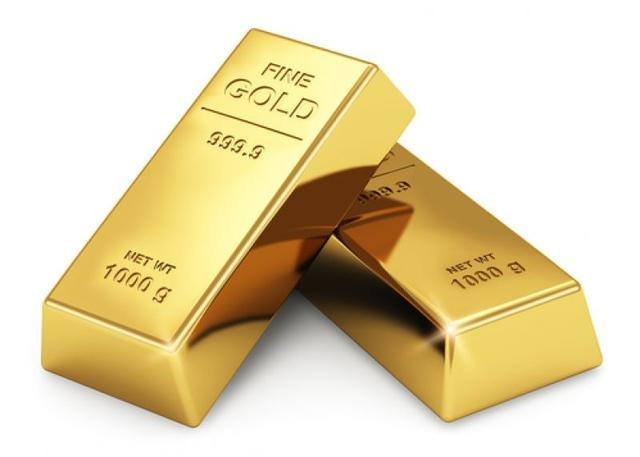
Core Viewpoint - International gold prices have surpassed $4,100 per ounce for the first time, marking a year-to-date increase of over 50%, making it one of the best-performing assets globally [1] Group 1: Price Movement - The recent surge in gold prices began in late August, with London spot gold prices rising more than 23.2% from August 21 to October 14 [1] Group 2: Driving Factors - Increased global risk aversion and declining confidence in the US dollar are the main drivers behind the current rise in gold prices [1] - The expectation of further interest rate cuts by the Federal Reserve, the US government shutdown, and geopolitical tensions have catalyzed safe-haven trading [1] - Continuous gold purchases by central banks worldwide have also been a key factor in driving up gold prices [1] Group 3: Market Outlook - Most market institutions predict that gold prices may continue to strengthen, supported by potential further rate cuts by the Federal Reserve, high US government debt burdens, and increasing geopolitical risks [1] - According to the World Gold Council, global official gold reserves increased by 166 tons in the second quarter, reaching historical highs [1]
避险需求推动日元走强 政治不确定性抑制上涨空间
Jin Tou Wang· 2025-10-15 03:20
Group 1 - The market is experiencing increased risk aversion due to rising trade concerns and geopolitical tensions, leading to a decline in the USD/JPY exchange rate below 151.50, with a focus on whether the 151.20 support level will hold [1] - Asian countries have announced special port fees on US vessels and tightened export controls, exacerbating fears of a deteriorating global trade environment, while President Trump threatens to impose tariffs up to 100% on goods from Asian countries [1] - The US government shutdown has entered its third week, with a temporary funding bill pushed by Republicans failing to pass, contributing to ongoing fiscal deadlock [1] Group 2 - The recent dissolution of the ruling coalition in Japan has created political uncertainty, leading to expectations that the Bank of Japan may delay its planned interest rate hikes, which could limit the appreciation of the yen [2] - Technical analysis indicates that after a strong upward trend, the USD/JPY exchange rate has paused, with a long bearish candle suggesting a potential reversal, which may lead to a rebound in the yen [3] - Key observation points for the USD/JPY exchange rate include 152.10 as a significant level, with support at 151.00, which is the high from August 1 and the low of the recent bearish candle [3]
宝城期货贵金属有色早报(2025年10月15日)-20251015
Bao Cheng Qi Huo· 2025-10-15 01:35
Group 1: Report's Industry Investment Ratings - No industry investment ratings are provided in the report [1][3][4] Group 2: Report's Core Views - Gold is expected to be strong in the long - term, with short - term and medium - term upward trends and an intraday view of being oscillatingly strong. The driving factors include global monetary policy shifts, geopolitical risk, and structural demand changes [1][3] - Copper is also considered strong in the long - term, with short - term and medium - term upward trends and an intraday view of rising. Although it has experienced short - term fluctuations, it is expected to remain relatively strong [1][4] Group 3: Summaries by Related Catalogs Gold - **Price Performance**: International gold prices have been rising, with New York gold approaching $4200 and Shanghai gold approaching 960 yuan [3] - **Driving Factors**: Global monetary policy shift (especially market expectations of Fed rate cuts), geopolitical risks (Sino - US trade friction, Ukraine crisis, US government debt concerns), and structural demand changes (central bank gold purchases and high enthusiasm of institutional and individual investors) [3] - **Short - term Outlook**: Sino - US trade friction accelerates price increase, gold may be stronger than silver, and the gold - silver ratio may rise. Use the 5 - day moving average as the short - term strength dividing line [3] Copper - **Price Performance**: The copper price dropped by over 2000 yuan/ton in the afternoon yesterday and rebounded at night [4] - **Driving Factors**: Short - term fluctuations are mainly due to Sino - US tariff news and strong willingness of short - term long - position holders to close positions at high prices. After the market digests trade disturbances, copper is in a context of macro - easing and demand contraction [4] - **Short - term Outlook**: Expected to remain relatively strong, pay attention to the technical pressure at the post - holiday high. If gold and silver weaken, copper prices may decline [4]
白银年内涨幅超80% 后市预期开始现分歧
Sou Hu Cai Jing· 2025-10-15 00:30
Core Insights - The precious metals market has seen significant gains this year, with silver emerging as a standout performer, reaching a peak of $53.579 per ounce on October 14, marking a new historical high since 1980, before settling at $51.98 per ounce, reflecting a cumulative increase of over 12% for the month [1] - Gold also performed well, surpassing $4,179 per ounce, with a year-to-date increase of over $1,500 per ounce [1] - Year-to-date, silver has risen over 81%, outpacing gold's 57% increase, with a notable surge of over 35% since the end of August [1] Market Drivers - The recent surge in silver prices is attributed to both its financial and industrial properties. Financially, the onset of a Federal Reserve rate cut cycle and ongoing geopolitical risks have enhanced silver's appeal as a currency and safe-haven asset [1] - On the industrial side, the explosive growth of the solar energy sector has significantly increased demand for photovoltaic silver paste, while a persistent shortage in global physical silver supply has widened the supply-demand gap [1] Market Liquidity and Trends - The liquidity issues in the London market have further exacerbated the rise in silver prices. As the global physical silver trading hub, London has experienced tightening liquidity, with silver stocks in London vaults dropping to 24,581 tons by the end of September, a decrease of 0.3% from August and at a multi-year low [2] - The surge in silver prices has led to a historic short squeeze in the London market, resulting in a significant reduction in market liquidity and an increased price spread between London and New York silver markets [2] Future Outlook - Market opinions on the future of precious metals are divided. Some analysts believe that the overall strength of the precious metals market will continue due to evolving global dynamics and loose monetary policies, with silver's future performance being closely watched. Although there may be short-term pullback risks, prices are expected to rise further next year [2] - Conversely, Goldman Sachs has advised caution regarding silver's rise, noting that the silver market is only about one-tenth the size of the gold market and lacks structural support from central banks. The volatility of silver is significantly higher than that of gold, and any short-term outflow of investment funds could lead to substantial price fluctuations, highlighting the short-term downside risks [2]
金价突破4100美元,饰金站上1200元,疯狂涨势还能持续多久?
Sou Hu Cai Jing· 2025-10-14 17:04
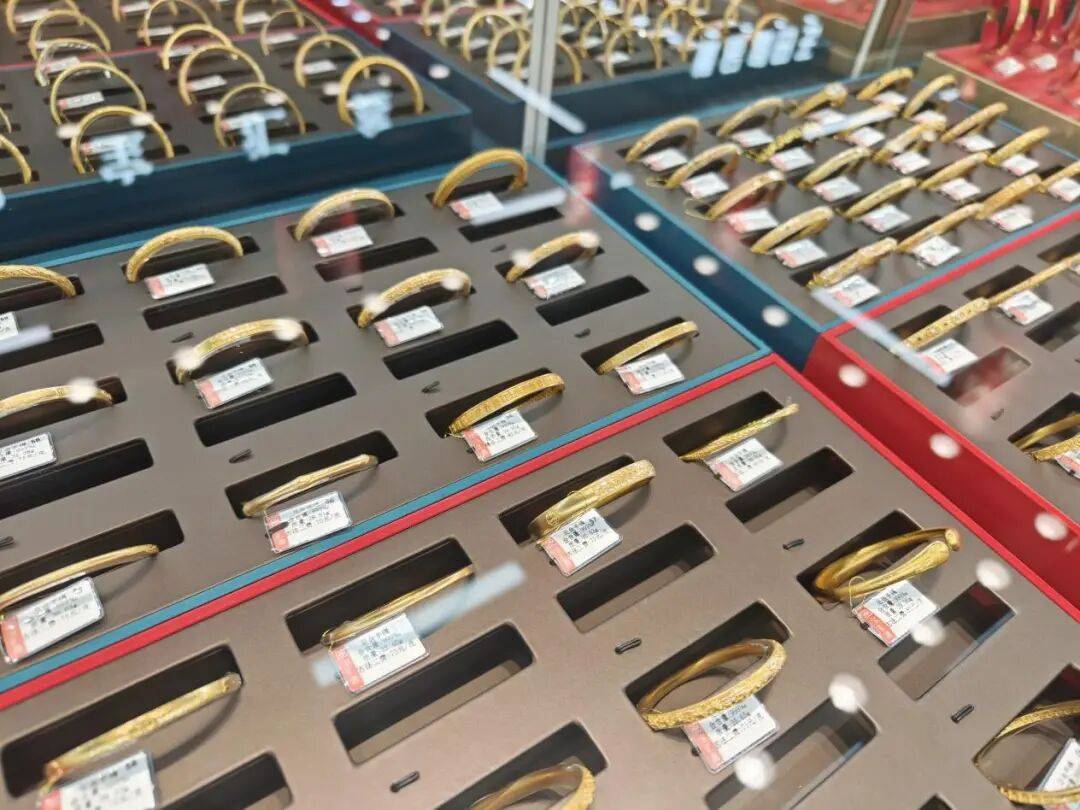
Core Insights - The price of gold has surged significantly, with domestic gold jewelry prices exceeding 1200 yuan per gram, reflecting a broader trend of rising international gold prices, which reached a historical high of 4179.33 USD per ounce [1][3] - Central banks globally are increasing their gold reserves, with a reported value of 4.64 trillion USD as of October 2025, marking a 52.9% increase from the previous year [4] - Goldman Sachs has raised its gold price forecast for the end of 2026 from 4300 USD to 4900 USD, driven by strong demand from central banks and private sector diversification [5] Gold Market Dynamics - The international gold price has increased by over 52% since the beginning of 2025, outperforming both the stock market and Bitcoin, making it the strongest asset since 1979 [3] - The expectation of further interest rate cuts by the Federal Reserve has heightened investor interest in gold, as lower rates reduce the holding costs of non-yielding assets [6] - Geopolitical tensions, including U.S. government shutdowns and conflicts in the Middle East, have intensified the demand for gold as a safe-haven asset [6] Consumer Behavior and Investment Trends - There is a notable shift in consumer behavior in China, with individuals moving from real estate investments to gold as a means of wealth preservation and risk mitigation [8][11] - Investment vehicles such as gold ETFs and accumulation gold products are gaining popularity among ordinary investors, providing more flexible options for gold investment [8][9] - Despite high gold prices, demand remains strong in traditional markets like China and India, as consumers continue to view gold as a vital asset for value retention [8] Market Volatility and Risks - Recent fluctuations in gold prices indicate increased market volatility, with significant daily price movements becoming more common [12] - Analysts caution that the current optimism in the gold market may be excessive, given the stable dollar and rising yields on inflation-protected securities [12]
连续两个跌停,闻泰科技市值蒸发超百亿元!律师:一旦“荷兰模式”被复制,将显著增加中资不确定性
Mei Ri Jing Ji Xin Wen· 2025-10-14 16:33
去年底以来,闻泰科技持续推进出售集成业务资产,并全面聚焦半导体业务。而在今年七八月份,公司管理层刚刚经历了一轮"换血",来自安世半导体的 多名管理层进入闻泰科技决策层,其中包括现任董事长杨沐。 颇具戏剧性的是,早在2022年11月,闻泰科技实控人张学政还曾与安世半导体多位外籍高管共同阐述发展战略。而如今,其中一位当时参与的外籍高管, 却成为此次"发难"的当事人之一。 截至10月14日收盘,闻泰科技股价连续两日跌停,市值蒸发超百亿元。 闻泰科技(SH600745,股价37.65元,市值468.60亿元)核心子公司——安世半导体遭遇荷兰当地政府干预事件持续升级。 10月13日,外交部发言人在例行记者会上就此回应;10月14日,中国半导体行业协会官微发布声明声援闻泰科技;10月14日,安世半导体官网发布声明 称,4日,中国商务部发布出口管制通知,禁止公司及其分包商出口在中国制造的特定成品和组件。 合作伙伴时隔三年反目 此次风波的核心正是安世半导体。2019年,闻泰科技先取得对安世半导体的控制权;至2020年,进一步完成剩余股权的收购,最终实现对安世半导体 100%控股。 随后,闻泰科技逐步介入安世半导体的治理架构。 ...
君諾金融:黄金从高点回落 是获利了结还是风险偏好回升所致?
Sou Hu Cai Jing· 2025-10-14 09:51
市场目前已完全计入美联储10月降息25个基点的预期,并认为12月再次降息的概率高达90%。这种鸽派预期继续支撑无收益资产黄金的吸引力,并为其延续 上行趋势提供依据。尽管美元维持在自8月初以来的高位附近,但并未明显削弱黄金的整体看涨情绪,因此黄金的"上行通道"仍被视为主导方向。 君諾金融技术面分析:回调或成买入机会,金价支撑区域明确 不过,美元多头似乎不愿进行大规模押注,因市场普遍认为美联储(Fed)今年将降息两次。此外,美国政府长期停摆带来的经济不确定性、重新升温的中 美贸易紧张局势以及地缘政治风险,仍为黄金提供避险支撑,这意味着看空黄金的交易者仍需保持谨慎。 市场动态:风险偏好升温下,黄金多头转趋谨慎 美国政府停摆问题仍未解决,僵局已持续进入第三周。自10月1日停摆以来,民主党与共和党仍在互相指责,参议院计划周二再次就预算方案进行表决,但 此前七次投票均未能达到通过所需的60票门槛。 上周五,特朗普再次挑起贸易紧张关系,威胁自11月1日起对所有中国商品征收100%的关税,以报复中国加强稀土出口管制的措施。这标志着全球两大经济 体间的贸易摩擦进一步升级,推高了黄金的避险吸引力。 然而,特朗普在周日于"真相社交 ...