
新旧动能转换

Search documents
国信证券首席经济学家荀玉根:牛市远未结束
Jing Ji Guan Cha Wang· 2025-11-28 01:01
Group 1 - The current bull market is still in its early stages, with characteristics of a late bull market, such as a surge of new investors and complacency among old investors, not yet observed [1] - Historical reference to the "5.19 market" indicates that bull markets typically last 1-2 years, and the current cycle has only lasted one year, suggesting further potential for growth [1] - The macroeconomic environment is challenging, with the stock market performing strongly despite economic difficulties, reminiscent of the period from 1998 to 2000 [2] Group 2 - The key to resolving economic issues lies in halting the decline in asset prices, similar to the policy interventions seen in 1999 that spurred market growth [3] - The external environment is favorable for China, as the Federal Reserve is entering a rate-cutting cycle, which could provide room for domestic policy easing [3] - The emergence of new economic sectors, particularly in intelligent manufacturing, is expected to drive industrial upgrades and surpass the old economy's dominance [4] Group 3 - Intelligent manufacturing is gaining traction, with significant advancements such as the DeepSeek-R1 model achieving performance comparable to OpenAI's models at a lower cost [4] - The cost advantages of Chinese intelligent manufacturing are highlighted by the large number of engineering graduates, which supports the sector's growth [4] - The successful transition from old to new economic drivers is anticipated, with intelligent manufacturing expected to play a crucial role in this transformation [4]

稳投资促消费政策全面加力 经济“收官战”积蓄增长动能
Di Yi Cai Jing· 2025-11-27 21:31
Core Viewpoint - The macroeconomic environment faces increasing pressure and challenges due to external demand slowdown and weakened domestic demand, but positive factors are accumulating, indicating that the annual economic growth target remains achievable [1] Economic Performance - From January to October, profits of industrial enterprises above designated size increased by 1.9% year-on-year, with cumulative growth maintained for three consecutive months since August [1][2] - The revenue of industrial enterprises above designated size grew by 1.8% year-on-year, creating favorable conditions for profit recovery [2] - High-tech and equipment manufacturing sectors are the main driving forces, with profits in the equipment manufacturing sector rising by 7.8% and high-tech manufacturing profits increasing by 8.0% [2] Industrial Profit Trends - In specific sectors, profits in graphite and carbon products manufacturing, biochemical pesticides, and cultural information chemicals manufacturing saw significant increases of 77.7%, 73.4%, and 19.1% respectively [3] - The report from Guotai Junan Securities suggests that sustained profit improvement requires ongoing supply-side structural optimization and effective demand expansion policies [3] Physical Indicators - Social electricity consumption reached 857.2 billion kWh in October, a year-on-year increase of 10.4%, marking the highest monthly growth rate this year [4] - Railway freight volume reached a historical high of 3.378 billion tons from January to October, with a year-on-year growth of 3% [5] - The express delivery business volume grew by 16.1% year-on-year, reaching 162.68 billion pieces in the first ten months [5] - Excavator sales increased by 17% year-on-year, with domestic sales up by 19.6% and exports up by 14.4% [5][6] Policy Support - The "Two Heavy" construction initiative is a key focus for expanding effective investment and fostering new productive forces, with significant funding allocated for major projects [7][8] - The National Development and Reform Commission is promoting the expansion of infrastructure REITs, covering various sectors including logistics, public utilities, and clean energy [9] - New policy financial tools have been fully deployed, supporting over 2,300 projects with a total investment of approximately 7 trillion yuan, focusing on digital economy and urban renewal [10]
前10个月工业企业利润实现稳定增长 传统产业提质升级成效显现
Zhong Guo Jing Ying Bao· 2025-11-27 14:13
Core Viewpoint - The data released by the National Bureau of Statistics indicates that from January to October, the profits of industrial enterprises above designated size increased by 1.9% year-on-year, marking three consecutive months of growth since August. However, in October, profits decreased by 5.5% year-on-year [1]. Group 1: Industrial Profit Trends - From January to October, the profits of high-tech manufacturing industries increased by 8.0%, surpassing the average growth rate of all industrial enterprises by 6.1 percentage points [1]. - The decline in profits in October is attributed to a higher base from the previous year and a rapid increase in financial costs [1]. Group 2: Performance of Specific Industries - The intelligent electronic manufacturing sector showed positive growth, with profits from the manufacturing of intelligent unmanned aerial vehicles and intelligent vehicle-mounted equipment increasing by 116.1% and 114.9% year-on-year, respectively [1]. - The semiconductor manufacturing sector also experienced significant profit growth, with integrated circuit manufacturing, electronic special materials manufacturing, and semiconductor discrete device manufacturing seeing year-on-year profit increases of 89.2%, 86.0%, and 17.4%, respectively [1]. - In the precision instrument manufacturing sector, profits from optical instrument manufacturing and specialized instrument manufacturing grew by 38.2% and 14.1% year-on-year [1]. Group 3: Traditional Industry Upgrades - The traditional industries are showing significant improvements in quality and efficiency, with profits in the chemical and building materials sectors, such as graphite and carbon products manufacturing, increasing by 77.7%, and biochemical pesticides and microbial pesticides manufacturing by 73.4% [2]. - The bio-based chemical fiber manufacturing and recycled rubber manufacturing sectors also reported profit increases of 61.2% and 15.4%, respectively, both exceeding the average profit growth of their respective categories [2]. - The structural adjustments and upgrades in traditional industries reflect positive progress, with a shift towards high value-added segments through technological innovation and green transformation [2]. Group 4: Future Outlook - The combination of policy support and industrial upgrades is expected to lead to stable profit growth for industrial enterprises in the future, although external environmental changes may impact export-oriented companies [2]. - The profit trends for industrial enterprises are likely to show continued improvement in traditional industries through technological upgrades, sustained rapid growth in high-tech manufacturing and equipment manufacturing, and a gradual recovery in market demand due to ongoing growth stabilization policies [2].
从长期业绩看布局方向:富国基金解锁价值、稳健与海外机遇
Sou Hu Cai Jing· 2025-11-26 07:55
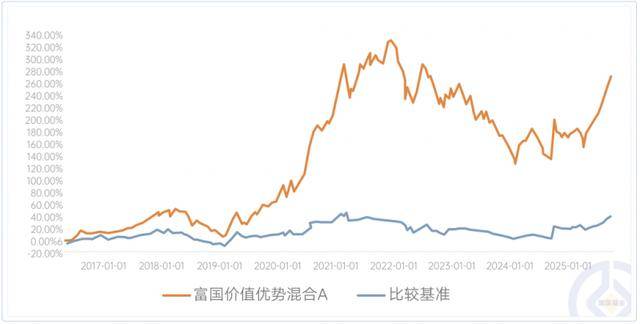
Core Insights - The A-share market is currently in a consolidation phase around the 4000-point mark, presenting a critical window for investment planning towards 2026 [1] - Senior fund managers from Fuguo Fund shared insights on value investing, stable allocation, and overseas opportunities during the quarterly forum, attracting significant attention [1] Value Investment - Fuguo Value Advantage Fund Manager Sun Bin emphasizes a balanced industry allocation, avoiding high-valuation sectors, and focusing on companies with reasonable valuations and continuous EPS growth potential [1] - The fund's performance is notable, with a net value growth rate of 270.45% since inception, significantly outperforming its benchmark [1][3] Manufacturing Sector - China's manufacturing industry is highlighted as one of the most competitive sectors, with opportunities for investment in companies that can expand overseas, particularly in line with the Belt and Road Initiative [4] - The recent market rally is attributed to a resurgence of confidence in the Chinese equity market, with various sectors experiencing strong performance [4] Investment Philosophy - Fuguo Insight Value Fund Manager Bai Bingyang focuses on selecting undervalued assets to achieve superior risk-return ratios over the medium to long term, favoring left-side allocations [5] - The fund's net value growth rate stands at 65.74%, outperforming its benchmark [6] Stable Investment - Fuguo Xinxiang Return Fund Manager Yi Zhiquan aims to control risk and strive for absolute returns, with a focus on high-quality gold and resource companies [10] - The fund has achieved a net value growth rate of 27.03% since inception, also outperforming its benchmark [10][12] Overseas Opportunities - Fuguo Hong Kong and Shanghai Industry Selection Fund Manager Wang Menghai adopts a bottom-up approach, focusing on companies with clear growth potential over the next 3-5 years [14] - The fund has shown strong performance with a net value growth rate of 86.45% since inception, significantly exceeding its benchmark [15][17] Market Dynamics - The transition from old to new economic drivers in China is crucial, with a shift towards technology innovation and efficiency improvements as the new growth cycle [18] - Increased foreign interest in Chinese assets is noted, with potential for long-term allocation by Asia-Pacific investors if the performance of Chinese assets continues to improve [18]

A股收评:创业板指涨超2%,医药商业、零售股大涨
Ge Long Hui· 2025-11-26 07:33
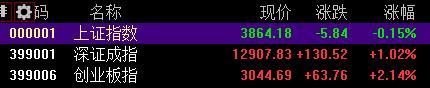
Market Overview - The A-share market showed mixed results with the Shanghai Composite Index down by 0.15% closing at 3864 points, while the Shenzhen Component Index rose by 1.02% and the ChiNext Index increased by 2.14% [1][2] - The total market turnover was 1.8 trillion yuan, a decrease of 29 billion yuan compared to the previous trading day, with nearly 3600 stocks declining [1] Sector Performance - The pharmaceutical retail sector saw significant gains, with stocks like Huaren Health and Ruikang Pharmaceutical hitting the daily limit [2][4] - The CPO concept stocks were active, with Yongding Co. and Zhongji Xuchuang reaching their daily limit, while other related stocks also saw substantial increases [2][6] - Retail stocks surged, with companies such as Dongbai Group and Guoguang Chain hitting the daily limit, and Guofang Group rising over 9% [8] Notable Stocks - In the pharmaceutical sector, stocks like Guangdong Wannianqing and Huaren Health saw increases of 20% and 20% respectively, while Haiwang Biological and Taida Co. also performed well [5][4] - CPO concept stocks like Changguang Huaxin and Saiwei Electronics saw increases of 20% and over 16% respectively [6][7] - Retail stocks such as Dongbai Group and Guoguang Chain experienced gains of 10% [9] Industry Trends - The flu-related stocks have shown a notable increase in interest, with a reported over 500% increase in the number of buyers for antiviral drugs [5] - The Ministry of Industry and Information Technology announced a commercial trial for satellite IoT services, which is expected to enhance market supply and stimulate industry growth [10] Future Outlook - Analysts suggest that the A-share market may see upward momentum in 2026, driven by policy support and high earnings growth in certain sectors [14] - Key investment opportunities are identified in sectors undergoing "new and old kinetic energy" transitions and those focusing on domestic demand and consumption [14]

资本市场赋能山东高质量发展 “十四五”交出亮眼答卷
Sou Hu Cai Jing· 2025-11-26 03:43
Core Insights - The capital market in Shandong has significantly contributed to the province's high-quality economic and social development during the "14th Five-Year Plan" period, showcasing strong performance in various areas such as market system improvement and promoting industrial-financial integration [1][4] Group 1: Capital Market Development - Shandong has seen a continuous increase in the number of listed companies, with 84 new companies added, over 90% of which are strategic emerging, high-tech, or specialized enterprises, indicating a notable improvement in both quality and quantity of listings [1] - By the end of October 2025, the total number of listed companies in Shandong is expected to reach 311, with 85 companies having a market capitalization exceeding 10 billion yuan, reflecting a 36% increase in total market value compared to the end of the "13th Five-Year Plan" [1] Group 2: Financing and Investment - The bond market and private equity market have both expanded, with the bond balance surpassing 1 trillion yuan and social financing in Shandong exceeding 25 trillion yuan, contributing to a comprehensive financing system [2] - Private equity investments in Shandong have reached 3,699 billion yuan across 4,806 projects, providing essential growth capital for early-stage technology companies [2] Group 3: Corporate Performance and Innovation - In 2024, Shandong's listed companies achieved a revenue of 2.96 trillion yuan and a net profit of 180.3 billion yuan, marking increases of 29% and 22% respectively since 2020, indicating improved profitability and growth quality [3] - Research and development spending by companies during the "14th Five-Year Plan" reached 382.1 billion yuan, a 76.5% increase from the previous five years, highlighting significant advancements in key technologies and domestic alternatives [3] Group 4: Regulatory Environment and Policy Support - The Shandong provincial government has issued policies to promote high-quality capital market development, enhancing collaboration between central and local authorities and focusing on key sectors such as green economy and private enterprises [4] - Regulatory bodies have intensified efforts to combat financial fraud and insider trading, ensuring investor protection and maintaining a stable market environment [4]
中国银河证券:建筑行业新旧动能加速切换 聚焦城市更新与新赛道机遇
Zhi Tong Cai Jing· 2025-11-26 02:37
Core Viewpoint - The construction industry in China is seeking structural growth opportunities amid traditional demand pressures, driven by national strategic infrastructure projects and emerging trends in urban renewal [1][3]. Group 1: Industry Overview - In the first three quarters of 2025, 152 listed companies in the construction sector reported a total revenue of 5.84 trillion yuan, a year-on-year decrease of 5.14%. The net profit attributable to shareholders was 123.62 billion yuan, down 9.76% [2]. - The urban development is shifting towards improving existing stock, with urban renewal actions expected to create a market worth trillions, particularly in underground pipeline investments exceeding 5 trillion yuan during the 14th Five-Year Plan [3]. Group 2: Major Projects and Trends - Significant projects such as the Yaxi Hydropower and the Sichuan-Tibet Railway are highlighted, with the Yaxi Hydropower project alone having an investment of 1.2 trillion yuan and the Sichuan-Tibet Railway segment costing approximately 319.8 billion yuan [4]. - The regulatory environment is becoming more favorable for mergers and acquisitions, which will benefit construction companies [4]. Group 3: Investment Recommendations - Investment focus areas include major projects like Yaxi Hydropower and Sichuan-Tibet Railway, with recommended companies such as China Power Construction and China Railway Construction [6]. - Urban renewal, high dividend stocks, and overseas expansion are also key investment themes, with companies like China State Construction and Shanghai Construction recommended [6]. - Growth sectors include low-altitude economy, welding robots, and computing infrastructure, with suggested companies like China Communications Construction and Shanghai Institute of Building Science [6]. - The coal chemical industry in Xinjiang and nuclear power projects are highlighted as areas of improvement, with recommendations for companies like China Chemical and China Nuclear Engineering [6].

中国经济正在积蓄新的发展动能!阳光保险集团首席经济学家邱晓华最新发声
Zheng Quan Shi Bao Wang· 2025-11-25 10:22
Core Insights - The Chinese economy has demonstrated resilience amidst complex external pressures and internal transformation, achieving a GDP growth target of around 5% for the year [1][2] - Key factors contributing to this performance include proactive macro policies, ongoing reforms and opening up, strong consumer spending, and the buffering effect of external shocks on trade [1][3] Economic Cycle Perspective - The current economic situation is viewed as the "fourth adjustment" cycle, characterized by the interplay of external changes, the COVID-19 pandemic, and internal transformation challenges [2][3] - Despite these challenges, the economy has maintained a growth rate of approximately 5%, showcasing significant systemic resilience [2] Transition and Reform - Signs indicate that the current economic adjustment is nearing a resolution, with the real estate market's impact expected to lessen and substantial progress in the transition from old to new economic drivers [3] - Emerging industries such as artificial intelligence, biomedicine, and low-altitude economy are becoming significant growth engines [3][4] Technological Revolution Perspective - The ongoing technological revolution presents unprecedented strategic opportunities for China, marking a shift from being a passive observer to an active participant and leader in various sectors [4][5] - The government's strategic focus includes building a modern industrial system and promoting the transformation of traditional industries towards smarter and greener practices [5][6] Infrastructure Development - Significant investments are being made in both traditional and new infrastructure, including renewable energy and storage, to support the ongoing industrial transformation [6] - Major national projects and infrastructure developments are expected to provide robust support for this profound industrial change [6] Geopolitical Context - The evolving geopolitical landscape, particularly the dynamics of Sino-American relations, is a critical factor influencing China's economic future [7][8] - A complex relationship characterized by both competition and cooperation is anticipated, with a focus on addressing global challenges while managing core security and technology issues [8] Conclusion - The outlook for the Chinese economy is optimistic, with a recognition that while the path may be challenging, the potential for growth and development remains strong [8]
氟硅材料:从“单点突破”到“集群发展”
Zhong Guo Hua Gong Bao· 2025-11-25 07:04
Core Viewpoint - Shandong Province is transforming its chemical industry towards "specialized, refined, distinctive, and innovative" sectors, focusing on green, low-carbon, and high-quality development, particularly in new energy and new materials [1] Group 1: Project Developments - Shandong Feiyuan Special Materials Co., Ltd. is constructing a project with an annual production capacity of 4,000 tons of trifluoroacetic acid ethyl ester, expected to be completed by the end of December [1] - Shandong Aofan New Materials Co., Ltd. is working on a project with an annual capacity of 247,000 tons of fourth-generation fluorine-containing functional new materials, also expected to enter trial production by the end of December [2] Group 2: Industry Chain and Capacity - Zibo's fluorosilicon industry has a complete chain from fluorite mining to downstream products, with a total capacity exceeding 2 million tons per year, making it a leader in domestic production of polytetrafluoroethylene and other fluorinated materials [2] - The city has implemented an industrial chain leader system to promote the fluorosilicon materials industry, with key parks like Dongyue Fluorosilicon Material Industrial Park and Gaoqing Chemical Industrial Park being established [2] Group 3: Key Companies and Products - Zibo Feiyuan Chemical Co., Ltd. specializes in products like anhydrous hydrogen fluoride and fluorinated fine chemicals, while its subsidiary focuses on fluorinated electronic chemicals and intermediates for pharmaceuticals and pesticides [3] - Dongyue Fluorosilicon Technology Group has diversified into seven strategic emerging industries, including fluorine, silicon, and hydrogen, with various companies under its umbrella producing a wide range of fluorinated and silicon-based products [4][5] Group 4: Market Expansion and Investment - The East Yue Group has established a strong presence in the organic silicon industry, with an annual production capacity of 600,000 tons of organic silicon monomers and over 300 product varieties [5] - The industrial scale of the fluorosilicon industry in Shandong is projected to exceed 30 billion yuan, driven by investments in downstream processing and hydrogen energy projects [5]
2026年年度展望丨革故鼎新:修复式增长下的再平衡与新动力
2025-11-25 01:19
Summary of Key Points from the Conference Call Industry and Economic Outlook - **Industry Focus**: The report emphasizes the shift towards emerging industries, particularly AI and AR technologies, while traditional sectors like real estate are expected to decline in importance [1][2][6][24]. - **Economic Growth**: China's nominal GDP growth is projected to recover from 4% in 2025 to around 5% in 2026, driven by improvements in PPI and consumer spending [1][2][24]. - **Macroeconomic Policy**: The Chinese government is expected to focus more on demand-side policies to stimulate consumer spending and address weak corporate loan demand, with a fiscal deficit rate projected to remain around 4% [1][24][25]. Key Economic Indicators - **GDP Growth Target**: The GDP growth target for 2026 is set at approximately 5%, with expectations of continued positive export growth and a potential easing of US-China trade tensions [1][2][13][14]. - **Investment Trends**: Fixed asset investment growth has seen a significant decline, with a projected 10% drop in real estate investment, while manufacturing investment may improve due to better corporate profits [16][24]. Market Strategy and Performance - **Equity Market Strategy**: The strategy for 2026 should shift from a focus on extreme growth stocks to a more balanced approach, reflecting changes in the economic environment and expectations for the Shanghai Composite Index [7][19][24]. - **Investor Focus**: Investors are advised to concentrate on emerging industries that are likely to receive more policy support, as traditional sectors lose their financial attributes [6][24]. Currency and Trade Dynamics - **RMB Exchange Rate**: The RMB is expected to continue appreciating, supported by strong export growth and increased willingness of foreign trade enterprises to convert foreign exchange [3][18][22][25]. - **Impact of US-China Relations**: The easing of trade tensions is anticipated to positively influence China's export competitiveness, despite ongoing uncertainties in US domestic politics [14][24]. Additional Insights - **Inflation and Monetary Policy**: The report indicates that inflation pressures remain low, with a need for continued supportive fiscal and monetary policies to sustain economic recovery [4][8][17][24]. - **Sectoral Performance**: Emerging sectors like wind power, components, batteries, and medical services are showing signs of improvement, while traditional sectors are still in a recovery phase [9][10][24]. Conclusion - The overall outlook for China's economy in 2026 is cautiously optimistic, with a focus on emerging industries and a balanced approach to market strategies. Continuous monitoring of macroeconomic indicators and policy changes will be essential for investors to navigate the evolving landscape [24][25].
