
电动化

Search documents
九号公司CEO王野:做增量不做存量,未来聚焦智能化、电动化和全球化
Xin Lang Cai Jing· 2025-12-23 13:41
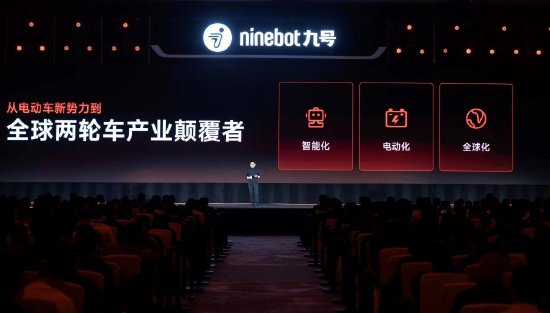
Core Insights - The core theme of the news is the strategic direction of Ninebot Company, focusing on becoming a global disruptor in the two-wheeler industry through innovation and smart technology [2][5]. Group 1: Strategic Focus - Ninebot's future strategy is centered on three pillars: smart technology, electrification, and globalization [2][5]. - The company aims to lead the electric vehicle industry and innovate the motorcycle sector by leveraging a dual-brand strategy with "Ninebot" and "Segway" to cater to diverse global user preferences [2][5]. Group 2: Technological Advancements - In 2026, all new Ninebot products will feature a smart driving system and the proprietary Nimble OS operating system [2][5]. - The company emphasizes that the transition from gasoline to electric vehicles is an irreversible trend, addressing user concerns about range anxiety through advancements in battery technology and a rapidly developing 30-minute fast-charging network [2][5]. Group 3: Market Expansion - Ninebot is targeting markets in Europe, North America, Southeast Asia, Japan, South Korea, and Latin America, indicating a strong focus on global market penetration [2][5]. - The company plans to enhance its production capacity significantly by operating dual bases in East and South China in 2026 [2][5]. Group 4: User Experience and Service - Ninebot's electric vehicle division aims to democratize advanced technology, ensuring that it is accessible to a broader audience [6]. - The company will launch the "Oasis Campaign" to improve user experience, transitioning from a focus on user needs to user satisfaction, and standardizing management across sales and service [6].

九号公司:2026年将全面铺开快速补能网络 华东、华南双基地将同步运营
Zheng Quan Ri Bao Wang· 2025-12-23 06:10
Core Insights - Ninebot Limited (referred to as "the company") held its 2026 dealer conference in Changzhou, Jiangsu, attracting over a thousand dealers nationwide. The CEO, Wang Ye, and other executives shared the company's achievements and a strategic blueprint for the next decade focusing on intelligence, electrification, and globalization [1][2]. Group 1: Strategic Focus - The company aims to transform from a new player in the electric vehicle sector to a global disruptor in the two-wheeler industry, emphasizing a development philosophy of "creating new value, not competing for existing value" [1]. - The future strategy is anchored on three pillars: intelligence, electrification, and globalization, with a vision described as "vast as the starry sea" [1][2]. Group 2: Electrification Initiatives - Wang Ye highlighted that the shift from gasoline to electric is an irreversible trend, with the company planning to leverage advanced battery technology and a rapidly developing 30-minute fast-charging network to alleviate user range anxiety [2]. - The company aims to replace internal combustion engine two-wheelers with electric alternatives, showcasing the potential of electric two-wheelers in global markets [2]. Group 3: Global Expansion - The company is targeting significant markets in Europe, Southeast Asia, Japan, South Korea, and Latin America, aligning the need for global environmental improvement with the demand for electrification [2]. - A dual-brand strategy will be implemented, utilizing "Ninebot" and "Segway" to cater to diverse global user preferences, facilitating a comprehensive entry into international markets [2]. Group 4: Charging Network Development - In 2026, the company plans to establish a fast-charging network supported by over 8,000 stores, enabling smart interaction between users, vehicles, and charging stations through an app [3]. - Charging speeds will significantly exceed those of public charging outlets, with lithium battery models achieving five times faster charging and lead-acid models three times faster, addressing range anxiety effectively [3]. Group 5: Safety and Compliance - The company is responding to new national standards with innovations in safety, launching the Fz series that emphasizes "armor-level safety" and exceeds industry standards, balancing compliance with high-quality user experience [3].
九号公司:2026年新品将全系标配智驾系统
Ge Long Hui· 2025-12-23 04:28
Core Insights - The core strategy of the company focuses on intelligence, electrification, and globalization [1] - The product plan for 2026 includes equipping all new products with an intelligent driving system and the self-developed Nimble OS operating system [1] - By September 2025, the cumulative shipment of the company's electric vehicles in the Chinese market is expected to exceed 9 million units [1] - The company announced the launch of a dual-brand synergy strategy with "Ninebot" and "Segway," with plans for simultaneous operation of its East China and South China bases in 2026 [1]
九号 2026 智驾系统全系普及,定义两轮智能出行新标杆
Jing Ji Guan Cha Bao· 2025-12-23 04:21
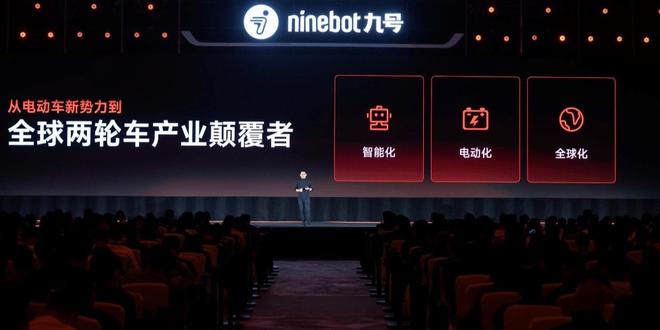
Core Insights - Ninebot Company held its 2026 Dealer Conference in Changzhou, Jiangsu, showcasing significant achievements and a strategic blueprint for the next decade focused on smart technology, electrification, and globalization [2][3] Group 1: Strategic Vision - CEO Wang Ye emphasized the company's commitment to "incremental growth, not stockpiling; innovation, not internal competition," positioning Ninebot as a disruptor in the two-wheeler industry [3] - The future vision includes three strategic pillars: smart technology, electrification, and globalization, with a focus on expanding into large markets such as Europe, Southeast Asia, Japan, South Korea, and Latin America [5][6] Group 2: Technological Advancements - Ninebot aims to lead the industry into a "universal smart driving" era by equipping all new products with advanced driving systems and the proprietary Nimble OS by 2026 [5] - The company plans to address user range anxiety through advanced battery technology and a rapidly developing fast-charging network, allowing for a significant reduction in charging times [5][9] Group 3: Market Performance - Ninebot's cumulative sales in the Chinese market surpassed 9 million units by September 2025, reflecting strong consumer trust in its technology [6] - The company holds a dominant position in the smart two-wheeler market, with 70% of sales in 2025 attributed to Ninebot [11] Group 4: User Engagement and Safety Initiatives - Ninebot is actively engaging with younger demographics through various initiatives, including collaborations with brand ambassadors and community events [11][14] - The establishment of the "Ninebot Safe Driving Academy" aims to enhance safety awareness and proactive driving skills among users, marking a shift from reactive to preventive safety measures [13][14]
12月23日证券之星午间消息汇总:400万亿元!A股见证历史
Sou Hu Cai Jing· 2025-12-23 03:42
Macro News - A-shares have set a new record with total annual trading volume exceeding 405 trillion yuan, marking the first time it has surpassed 400 trillion yuan in history. The average turnover rate for the year is close to 1.74%, potentially reaching a new high since 2016. Notably, 19 stocks have recorded annual trading volumes exceeding 1 trillion yuan, with companies like Zhongji Xuchuang and Dongfang Caifu exceeding 2 trillion yuan [1] - The Loan Prime Rate (LPR) has remained unchanged for seven consecutive months, with the one-year LPR at 3.0% and the five-year LPR at 3.5%. Analysts suggest that the stability in policy rates and slight increases in market financing costs have led to a lack of motivation for banks to lower LPR quotes [1] - Economic growth may face downward pressure in Q1 2026 due to changes in growth momentum and high base effects from the previous year. Monetary policy is expected to enter a more active phase, with potential interest rate cuts anticipated to stimulate financing demand [2] - According to CME's "Fed Watch," there is an 80.1% probability that the Federal Reserve will maintain interest rates in January 2024, with a 19.9% chance of a 25 basis point cut [3] Industry News - Shanghai aims to achieve significant breakthroughs in synthetic biological food creation by 2027, enhancing the digital manufacturing level of food. The plan includes developing 3-5 new food raw materials and establishing a standard system for food industry development [4] - The National Development and Reform Commission and the National Energy Administration have set a target for solar thermal power generation to reach a total installed capacity of approximately 15 million kilowatts by 2030, with costs comparable to coal power. The industry aims for international leadership and self-sufficiency [5] - Research on quantum error correction has made significant progress, bringing practical quantum computing closer. This achievement is a key milestone in validating the transition from prototype to practical quantum computing systems [6][7] Sector Insights - CITIC Securities reports that liquid cooling solutions are becoming the mainstream technology for energy-saving in data centers, with the global liquid cooling market expected to reach $21.8 billion by 2027. Domestic manufacturers are poised to benefit from the growing demand for AI data center liquid cooling [8] - Dongxing Securities notes that the domestic automotive market is experiencing accelerated electrification and the rise of independent brands, with a shift in competition towards intelligent features. Leading companies in data training and intelligent driving ecosystems are expected to capture more market share [8] - Guotai Junan Securities anticipates that precious metals will experience upward fluctuations due to the Federal Reserve's interest rate cuts, with expectations of continued liquidity in the market leading to stable price increases for precious metals [8]
未来十年聚焦三大战略 九号公司发布Fz系列新国标电动车
Zhong Zheng Wang· 2025-12-23 03:16
Core Viewpoint - The company aims to focus on smart, electric, and global development over the next decade, emphasizing innovation and market expansion rather than competition in existing markets [1] Group 1: Strategic Direction - The company will concentrate on three strategic pillars: smart technology, electrification, and globalization, with a goal to lead the electric vehicle industry and innovate the motorcycle sector [1] - The dual-brand strategy of "Ninebot" and "Segway" will target different user groups and facilitate entry into global markets [1] Group 2: Operational Expansion - By 2026, the company plans to operate dual bases in East and South China, significantly increasing total production capacity [1] - The company will implement a rapid charging network across over 8,000 stores, enabling intelligent interaction between people, vehicles, and charging stations [1] Group 3: Product Launch - The company has launched the Fz series of new national standard electric vehicles, including models Fz1, Fz2, and Fz3, which have seen strong demand with over 10,000 reservations since mid-December [1]
车圈俩月换了6个CEO,29家企业327名高管变动,掀起年终人事巨变
3 6 Ke· 2025-12-22 23:18
Core Insights - The automotive industry is experiencing a significant wave of executive changes, with over 327 high-level personnel adjustments reported in the last two months, including six CEOs [2][3][4] - The restructuring reflects a strategic shift among companies as they prepare for intensified competition in 2026, focusing on leadership renewal, efficiency, and core business enhancement [4][5][6] Group 1: Executive Changes in State-Owned Enterprises - Major state-owned automotive groups such as Dongfeng, Changan, GAC, and BAIC have undergone frequent personnel changes, aiming for younger and more professional decision-making teams [5][6][7] - GAC has appointed its first "post-70s" general manager, indicating a move towards clearer internal responsibilities and optimized decision-making [7] - Dongfeng has brought in external talent to drive its smart transformation, while Changan has filled its long-vacant president position, reflecting a commitment to leadership stability [11][13][15] Group 2: Executive Departures in Private Enterprises - Private automakers like BYD, Geely, and Great Wall have seen significant executive turnover, with key figures leaving amid fierce market competition [17][19] - Chery has emerged as an active talent poacher, recruiting from competitors to enhance its marketing and technology capabilities [19][21] Group 3: New Forces in the Automotive Sector - New energy vehicle companies are making urgent personnel adjustments to tackle pressing challenges, with Li Xiang of Li Auto taking direct control of human resources to streamline operations [22][24] - Xiaomi's automotive division is focusing on sales growth, with top executives taking on additional responsibilities to drive performance [26][28] - XPeng Motors is enhancing its technical capabilities by hiring AI experts, indicating a strategic focus on core technology development [29] Group 4: Changes in Foreign and Joint Venture Brands - Major foreign automotive companies, including GM and Tesla, are undergoing significant executive changes, with GM's software and AI teams experiencing notable turnover [32][34][36] - German luxury brands are also reshuffling their leadership, with key executives transitioning to new roles to align with future strategic goals [38][40][42] Group 5: Supply Chain and Component Manufacturers - The supply chain sector is also witnessing high-frequency personnel changes, with Huawei's Yu Chengdong taking on additional leadership roles to strengthen its market position [46][49] - Traditional component manufacturers like Continental and ZF are focusing on efficiency and business concentration through their leadership adjustments [51][52] Conclusion - The recent wave of personnel changes in the automotive industry signifies a critical reassessment of survival strategies amid the ongoing transition towards electrification and intelligence [53]




松绑“燃油车禁令”让欧洲分裂
Huan Qiu Shi Bao· 2025-12-22 22:41
Core Viewpoint - The European Union's plan to relax the ban on fuel vehicles has faced opposition from Stellantis, which argues that the revised policy lacks a clear growth roadmap for the automotive industry [1] Group 1: Stellantis' Position - Stellantis CEO, Carlos Tavares, criticized the EU's proposal, stating it does not provide necessary measures for the automotive industry to return to growth [1] - Tavares emphasized that without growth, it is difficult to consider additional investments, which are crucial for building a resilient supply chain vital for European employment and prosperity [1] Group 2: EU's Proposal Details - The EU Commission proposed to adjust the 2035 "ban on fuel vehicles" by changing the new car "zero emissions" target to a "90% reduction" from 2021 levels, allowing a 10% reduction gap to be compensated through low-carbon steel and sustainable fuels [1] - The proposal allows manufacturers to continue emitting 10% of 2021 levels and to sell some fuel and hybrid vehicles, but concerns have been raised about the feasibility and cost of these measures for automakers [1] Group 3: Industry Reactions - The response from the European automotive industry is divided, with Renault welcoming the proposal while the German automotive industry association described it as "disastrous" due to excessive implementation barriers [2] - EU officials maintain that the new emissions offset mechanism preserves the ambition of the original 2035 ban, asserting that the automotive industry is not questioning its climate goals [2] - German Finance Minister Lars Kleinbai warned manufacturers against relying on internal combustion engines, urging a faster transition to electric vehicles as the future of mobility [2]

赛力斯旗下海外品牌DFSK进军埃及 发布E5 PLUS等战略车型
Ge Long Hui· 2025-12-22 12:44
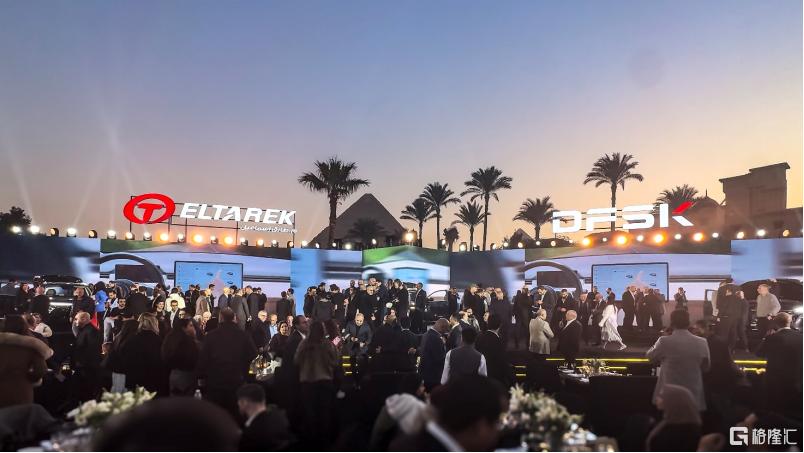
12月20日,赛力斯旗下海外品牌DFSK在埃及开罗成功举办发布会,携战略车型E5 Plus及两款全新产品进入埃及市 场。此次发布不仅标志着DFSK首度登陆埃及市场,更成为赛力斯深耕海外二十载后,全面迈向新能源化、智能化 转型的关键里程碑。 E5 PLUS?集"设计、空间、智能、性能、安全"五大升级于一体。该车型在保持高性价比的同时,搭载智能语音系 统、舒适娱乐座舱及高效能电池管理技术,旨在为更多用户带来兼具科技感与实用性的电动出行体验。 此次DFSK登陆埃及,不仅是赛力斯全球战略布局的重要落子,更是其对"全心全意为用户服务"宗旨的践行。自 2005年赛力斯开启国际化征程以来,历经二十载深耕,已覆盖70个国家和地区,并建立起超1000个销售网点,在 海外市场树立起坚实可靠的口碑。面对全球汽车产业向电动化、智能化转型的浪潮,赛力斯持续以用户为中心, 以技术创新为驱动,重塑绿色智慧出行新生态,推动品牌与产品在本地化进程中持续进化。 ...

自建充电站将停止运营?保时捷中国回应
Zhong Guo Xin Wen Wang· 2025-12-22 12:30
保时捷中国称,保时捷持续性地对充电网络进行优化。依托实时数据,深入分析不同场景下用户的充电 偏好与各类设施的使用效率。基于网络覆盖与用户体验等维度综合评估,决定以更务实的态度将保时捷 充电网络从自建转向覆盖更广、效率更高的开放生态整合,推动保时捷充电服务体系与用户真实使用习 惯的融合。 中新网12月22日电(记者 吴家驹)12月22日,有媒体报道称,保时捷中国自建充电网络将于2026年3月1日 起停止运营,引起广泛关注。 12月22日,保时捷中国回应中新网称,此次调整只针对保时捷尊享充电场景,其他充电场景仍正常运 营,例如:安装于保时捷经销商店内的充电站,保时捷目的地充电站及集成到保时捷充电地图的三方品 牌充电站。 保时捷中国称,对中国市场和电动化的承诺不会变。中国的新能源车型拓展迅速,充电基础设施已非常 成熟,将加大与优质第三方资源的深度合作,从而以更高的效率,为客户提供一个覆盖更广、选择更多 的充电网络。(完) ...