美联储货币政策
Search documents
黄金要涨到5000?基民该如何借基金布局?一文看懂
Sou Hu Cai Jing· 2025-09-27 09:47
Core Viewpoint - Recent gold prices have surpassed $3,800 per ounce, reaching a historical high with an annual increase of over 38% [1] Group 1: Institutional Outlook on Gold Prices - Multiple authoritative institutions remain bullish on gold prices, with Goldman Sachs suggesting that in extreme scenarios, gold could reach $5,000 per ounce [1][3] - Other institutions like JPMorgan and UBS also expect gold prices to stabilize above $4,000 in the medium to long term [1][3] Group 2: Reasons for Bullish Sentiment - Central banks are continuing to purchase gold, with plans to increase gold holdings while reducing dollar reserves over the next five years [3] - Market expectations indicate a shift in the Federal Reserve's monetary policy towards interest rate cuts, which typically depresses the dollar's value and bond yields, thereby boosting gold prices [3] - Concerns regarding the independence of the Federal Reserve could lead to increased inflation expectations and a loss of dollar credibility, prompting a shift of funds from dollar assets to gold [3] - Geopolitical tensions and economic uncertainties enhance gold's appeal as a safe-haven asset [3] - Technical analysis shows that gold has broken through significant resistance levels, entering an upward trend [3] Group 3: Investment Options in Gold - Gold ETFs provide a convenient investment channel, allowing investors to trade gold spot contracts on stock exchanges with T+0 trading efficiency [4] - Gold ETF linked funds are suitable for investors who prefer not to engage in direct stock market transactions, available through banks and third-party platforms [4] - Gold-themed funds invest in gold-related stocks, offering higher potential returns but also higher risks due to the volatility of mining companies [5] - Gold QDII funds focus on overseas gold markets, suitable for investors looking to diversify risk, though they may involve currency risks [6] Group 4: Considerations for Choosing Gold Funds - Investors should align their investment goals and risk tolerance when selecting gold funds, with options ranging from gold ETFs for tracking gold prices to gold-themed funds for higher returns [6] - Cost differences are significant, with on-exchange gold ETFs generally having lower trading costs [7] - Liquidity and convenience are important factors, as gold ETFs support high liquidity with T+0 trading, while linked funds have lower liquidity but do not require a securities account [7] - Fund size and tracking error are critical indicators when selecting specific products, with larger funds typically offering better liquidity and stability [7]
全球经济观察第14期:政府关门迫在眉睫
CAITONG SECURITIES· 2025-09-27 07:24
Global Asset Prices - Gold prices continue to rise, with WTI crude oil and Brent crude oil increasing by 2.7% and 2.5% respectively this week[6] - The S&P 500, Dow Jones, and Nasdaq indices fell by 0.9%, 0.8%, and 0.7% respectively[6] - The 10-year U.S. Treasury yield increased by 6 basis points (bp) this week[6] Major Central Bank Policies - Federal Reserve officials express differing views on monetary policy, with concerns about inflation from some members and calls for quicker rate cuts from others[8] - Powell indicated that recent data shows economic growth is slowing and employment risks are increasing, but maintains a neutral stance on future policy[8] U.S. Economic Dynamics - New home sales surged by 20.5% month-over-month in August, the largest increase since August 2022, attributed to lower mortgage rates and increased sales incentives[12] - The U.S. GDP growth for Q2 was revised up to 3.8%, primarily due to a significant increase in personal consumption expenditures[12] - The PCE price index rose by 0.1 percentage points to 2.7% year-over-year in August, indicating stable inflation pressures[13] Other Regional Economic Dynamics - Eurozone manufacturing PMI fell to 49.5%, while the services PMI rose to 51.4%, indicating a mixed economic outlook[27] - Japan's manufacturing PMI dropped to 48.4%, the lowest since March, while the services PMI remained robust at 53%[27] Upcoming Focus - Key upcoming data includes the U.S. ADP employment report and non-farm payrolls for September[34]
鲍威尔为何给美股牛市预期泼冷水
2 1 Shi Ji Jing Ji Bao Dao· 2025-09-27 02:25
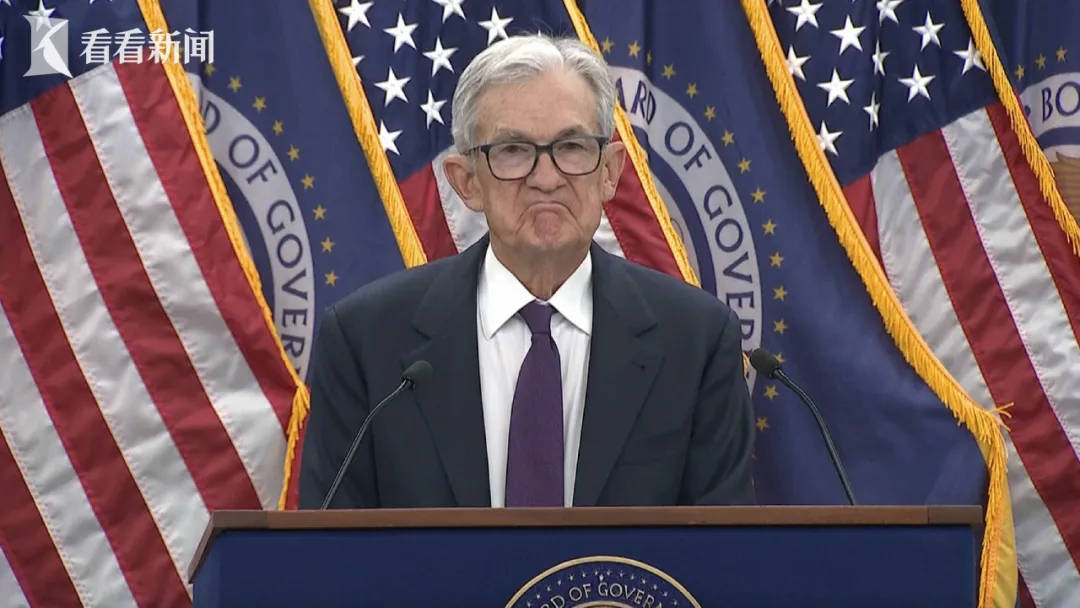
Group 1 - The Federal Reserve's interest rate cuts are becoming a significant factor in the pricing of the U.S. equity market, with expectations of a bull market rising among investors [1][2] - Following comments from Fed Chairman Jerome Powell regarding high stock indices, major U.S. stock indices experienced a decline, with the S&P 500, Nasdaq, and Dow Jones Industrial Average averaging a drop of 79 basis points over three trading days [1] - The Fed's monetary policy challenges are highlighted by the potential for a declining dollar index if interest rate cut expectations are reinforced, which could lead to reduced capital inflows into the U.S. and subsequent economic downturns [1][2] Group 2 - The U.S. government's increasing debt, which exceeds 123% of GDP, complicates the Fed's ability to manage monetary policy effectively while addressing inflation concerns [3] - The Fed's strategy may involve small adjustments to interest rates to gauge market reactions, balancing the need for economic growth against inflation control [3][4] - The challenge for the Fed lies in preventing a consensus on market expectations regarding interest rate cuts, which could lead to frequent re-pricing of these expectations [4]
鲍威尔为何给美股牛市预期泼冷水
21世纪经济报道· 2025-09-27 02:21
Group 1 - The article discusses the impact of the Federal Reserve's interest rate decisions on the U.S. equity market, highlighting that abundant liquidity is becoming a decisive factor in market pricing, with expectations of a bull market in U.S. stocks [1][2] - Following comments from Fed Chair Powell regarding high stock indices, major U.S. stock indices experienced a decline, with the S&P 500, Nasdaq, and Dow Jones Industrial Average dropping an average of 79 basis points over three trading days [1] - The article suggests that Powell's remarks may be aimed at guiding market expectations regarding future rate cuts, as a stronger expectation of rate cuts could lead to a decline in the dollar index and reduced capital inflow into the U.S. [2][4] Group 2 - The article notes that the U.S. debt-to-GDP ratio has exceeded 123%, significantly above the IMF's warning threshold of 90%, which may explain the ongoing decline in the dollar index and increased sensitivity of overseas bond markets to U.S. economic data [3][4] - It emphasizes the challenge for the Federal Reserve to balance economic growth and inflation control, particularly in light of the government's tariff policies, which complicate the task of maintaining a stable economic environment [4] - The article concludes that a decrease in the federal funds rate is likely, but the Fed faces the challenge of preventing the market from forming a one-sided consensus on future rate expectations [4]
中概股大跌,金山云跌超11%,黄金白银全线飘红
2 1 Shi Ji Jing Ji Bao Dao· 2025-09-26 15:51
Market Overview - The U.S. stock market opened higher on September 26, with the Dow Jones up 0.49%, S&P 500 up 0.26%, and Nasdaq down 0.02% [1] - The Nasdaq Golden Dragon China Index fell by 1.72% [2] Stock Performance - Major U.S. indices showed mixed results, with the Dow Jones at 46,174.23 (+226.91, +0.49%), S&P 500 at 6,622.17 (+17.45, +0.26%), and Nasdaq at 22,380.21 (-4.49, -0.02%) [3] - Chinese concept stocks experienced a downturn, with notable declines: Kingsoft Cloud down over 11%, Daqo New Energy down over 8%, Bilibili down over 5%, and NIO down over 6% [3] Technology Giants - Among the tech giants, Tesla rose by 0.43% to $425.215, Amazon increased by 0.37% to $218.960, while Nvidia fell by 0.90% to $176.091 [4] Precious Metals - Gold prices surged, reaching $3,780 per ounce, with a rise of approximately 0.8% [6] - Deutsche Bank noted that gold prices are driven by risk aversion, with predictions of gold potentially reaching $4,000 to $5,000 per ounce by 2026 under various scenarios [9] - Analysts suggest that despite recent price increases, gold remains a favorable long-term investment due to potential monetary policy changes and ongoing market risks [9]
中概股大跌,金山云跌超11%,黄金白银全线飘红
21世纪经济报道· 2025-09-26 15:46
Market Overview - The U.S. stock market opened higher on September 26, with the Dow Jones up 0.49% and the S&P 500 up 0.26%, while the Nasdaq experienced a slight decline of 0.02% [1] - The Nasdaq China Golden Dragon Index fell by 1.72%, indicating a general pullback in Chinese concept stocks [2] Key Stock Movements - Major Chinese concept stocks saw significant declines, with Kingsoft Cloud down over 11%, Daqo New Energy down more than 8%, Bilibili down over 5%, and NIO down over 6% [2] - Among the tech giants, Tesla rose by 0.43%, Amazon by 0.37%, while Nvidia fell by 0.9% [3] Gold and Silver Market - Gold prices surged, reaching approximately $3,780 per ounce, with a rise of about 0.8%. By 23:00, London gold was up 0.79% at $3,778.475 per ounce, and silver increased by over 1% [3] - Deutsche Bank noted that gold prices reached record highs due to heightened risk aversion among investors, who are concerned about significant downside risks in the stock market [5] - Goldman Sachs projected that gold prices could soar to $4,000 per ounce by 2026 under baseline scenarios, and potentially reach $4,500 per ounce in tail risk scenarios. If just 1% of U.S. Treasury holdings were to flow into gold, prices could approach $5,000 per ounce [5] Long-term Outlook for Gold - Analysts from Huatai Securities indicated that despite short-term pressures from interest rate cuts, the long-term trend for gold prices remains bullish due to potential shifts in U.S. monetary policy after the current Fed Chair's term ends [5]
非农数据公布!金盛贵金属解读通胀与就业数据,引贵金属投资方向!
Sou Hu Cai Jing· 2025-09-26 15:13
Group 1 - The core influence of non-farm payroll data on gold prices is significant, especially in the context of inflation and employment data in 2025, where strong non-farm data may lead to concerns about inflation and a stronger dollar, thus suppressing gold prices [3][4] - Non-farm payroll data serves as a key indicator for the Federal Reserve's assessment of inflation trends, with market expectations adjusting based on whether employment numbers exceed or fall short of forecasts [3][4] - For instance, in September 2025, if the actual non-farm employment number is below 180,000, gold prices may rise above $3,780 per ounce, while exceeding 220,000 could lead to a drop to $3,700 [3] Group 2 - Jinsheng Precious Metals provides three core supports for navigating the uncertainties of non-farm data impacts: real-time market updates, immediate analyst interpretations, and flexible trading settings [4] - The platform updates gold and silver prices in milliseconds following non-farm data releases, which is crucial for short-term investors to capitalize on price movements [4] - Analysts from Jinsheng Precious Metals offer insights within 30 minutes post-release, clarifying the implications of the data on inflation expectations and Federal Reserve policies [4] Group 3 - Investors are advised to align their strategies with the broader context of inflation and employment data, with conservative investors encouraged to view short-term volatility as an opportunity for long-term asset accumulation [5] - Aggressive investors may focus on capturing short-term gains in silver following non-farm data releases, but should practice strategies using simulated trading accounts [5] - The company emphasizes the importance of using compliant platforms and professional analyses to navigate the potential shifts in gold prices following each non-farm data release in 2025 [5]
贵金属有色金属产业日报-20250926
Dong Ya Qi Huo· 2025-09-26 11:42
1. Report Industry Investment Rating No relevant content provided. 2. Core Views of the Report - **Precious Metals**: Affected by the divergence in Fed policy expectations, geopolitical risks, and changes in gold ETF holdings, the medium - to long - term outlook for gold is supported by the Fed's potential interest rate cuts and declining real interest rates [3]. - **Copper**: The impact of the Freeport copper mine incident exceeded expectations, causing short - term over - appreciation of copper prices [19]. - **Aluminum**: After the September interest rate cut, the macro - driving force subsided. The trading of Shanghai aluminum may focus on fundamentals, and short - term prices may fluctuate with a slight upward trend [37]. - **Zinc**: The supply side is in a surplus state, and the demand side shows no signs of a peak season. In the short term, zinc prices will likely move in a range, and the current trading strategy is mainly based on the long - domestic and short - overseas logic [67]. - **Nickel**: Concerns about the stability of nickel ore supply have increased, and prices of MHP and nickel salts may continue to rise. Nickel iron prices are restricted by stainless steel demand, and stainless steel prices are expected to fluctuate with a slight upward trend [82]. - **Tin**: With the Fed's interest rate decision settled, the macro impact on tin prices has diminished. In the short term, due to tight supply and weak demand, tin prices are likely to move in a range [97]. - **Lithium Carbonate**: As the National Day approaches, the market's expectation of a shutdown on September 30 has decreased significantly. Before the National Day holiday, lithium carbonate futures prices are expected to fluctuate and consolidate [108]. - **Silicon**: Before the National Day, the willingness to stock up has declined. The industrial silicon market will continue the pattern of "strong expectation, weak reality." Polysilicon prices fluctuate sharply, and investors are advised to be cautious [117]. 3. Summaries by Relevant Catalogs Precious Metals - **Price Influence Factors**: Fed policy expectations, geopolitical risks, and changes in gold ETF holdings affect gold prices. The upward revision of the US Q2 GDP restrains short - term interest rate cut expectations, while geopolitical risks and increased domestic gold ETF holdings provide support [3]. - **Price Charts**: Include SHFE gold and silver futures prices, COMEX gold prices and gold - silver ratios, and the relationship between gold and US Treasury real interest rates [4][9]. Copper - **Market Situation**: The impact of the Freeport copper mine incident was longer than expected, leading to short - term over - appreciation of copper prices [19]. - **Price Data**: Spot and futures prices showed different changes. For example, Shanghai Non - ferrous 1 copper decreased by 0.02%, while Guangdong Southern Storage increased by 0.22%. In the futures market, the Shanghai copper main contract decreased by 0.29% [22][23]. - **Inventory and Import Data**: Copper inventories in various regions changed, and copper imports showed a significant increase in losses [34][28]. Aluminum - **Aluminum**: The core factors affecting aluminum prices are macro - policy expectations and peak - season fundamentals. After the September interest rate cut, the focus shifted to fundamentals, and short - term prices may fluctuate with a slight upward trend [37]. - **Alumina**: The contradiction in bauxite lies in the tight domestic supply and low shipments from Guinea, while the inventory is at a high level. Alumina supply is in surplus, and short - term prices are likely to be weak [38]. - **Cast Aluminum Alloy**: After the macro - driving force subsided, the market focused on fundamentals. With mixed long and short factors, short - term prices are expected to remain high and fluctuate [39]. - **Price and Spread Data**: Provided prices of aluminum, alumina, and cast aluminum alloy, as well as various spreads and basis data [40][44][52]. - **Inventory Data**: Aluminum and alumina inventories in different regions changed, and the impact on prices needs to be monitored [61]. Zinc - **Market Situation**: The supply side is in a surplus state, and the demand side shows no signs of a peak season. LME inventories are decreasing, showing an external - strong and internal - weak pattern. Short - term prices are likely to move in a range [67]. - **Price Data**: Zinc futures and spot prices showed different changes, and various spreads and basis data were provided [68][73]. - **Inventory Data**: Shanghai zinc and LME zinc inventories changed, and the impact on prices needs to be observed [78]. Nickel - **Market Situation**: Concerns about the stability of nickel ore supply have increased, and prices of MHP and nickel salts may continue to rise. Nickel iron prices are restricted by stainless steel demand, and stainless steel prices are expected to fluctuate with a slight upward trend [82]. - **Price and Inventory Data**: Provided prices of nickel, nickel iron, and stainless steel, as well as inventory data [83]. Tin - **Market Situation**: After the Fed's interest rate decision, the macro impact on tin prices has diminished. In the short term, due to tight supply and weak demand, tin prices are likely to move in a range [97]. - **Price and Inventory Data**: Provided tin futures and spot prices, as well as inventory data [98][104]. Lithium Carbonate - **Market Situation**: As the National Day approaches, the market's expectation of a shutdown on September 30 has decreased significantly. Before the National Day holiday, lithium carbonate futures prices are expected to fluctuate and consolidate [108]. - **Price and Inventory Data**: Provided lithium carbonate futures and spot prices, as well as inventory data [109][111][115]. Silicon - **Market Situation**: Before the National Day, the willingness to stock up has declined. The industrial silicon market will continue the pattern of "strong expectation, weak reality." Polysilicon prices fluctuate sharply, and investors are advised to be cautious [117]. - **Price and Inventory Data**: Provided prices of industrial silicon, polysilicon, and other products, as well as inventory data [118][119][146].
TMGM外汇平台:欧元兑美元仍受困于低点附近,市场关注美国通胀
Sou Hu Cai Jing· 2025-09-26 11:04
Group 1 - The euro has rebounded from a three-week low but remains constrained below 1.1690, with a slight increase observed on Friday after hitting a daily low of 1.1645, although it is expected to see a weekly decline of 0.55% [1] - Strong U.S. GDP growth and a decrease in initial jobless claims have alleviated concerns about the U.S. economy, boosting the dollar and reducing expectations for Federal Reserve rate cuts [1][3] - The U.S. second-quarter GDP growth rate was revised up to 3.8%, exceeding the previous estimate of 3.3%, driven by strong consumer spending, although weak export activity partially offset this growth [3] Group 2 - President Trump announced new tariffs on heavy trucks, brand-name drugs, and cabinets, raising concerns about global trade uncertainty and negatively impacting risk appetite in Asian markets [2][4] - The market is closely watching the upcoming Personal Consumption Expenditures (PCE) price index report for insights into the Federal Reserve's monetary policy direction, with expectations of a modest rise in overall PCE inflation to 2.7% [2][4] - Following the release of positive economic data, investors have reduced bets on Federal Reserve easing, with the probability of a rate cut in October dropping from over 90% to 87% [3]
铜冠金源期货商品日报-20250926
Tong Guan Jin Yuan Qi Huo· 2025-09-26 07:11
1. Report Industry Investment Rating No relevant information provided. 2. Core Views of the Report - The US second - quarter GDP was revised upwards, with inflation pressure remaining stubborn. The domestic anti - involution in various industries continued to advance. The A - share market was expected to maintain high - level fluctuations, and the bond market remained weak [2][3]. - Precious metals: Silver prices reached a new 14 - year high, and gold prices were oscillating at a high level. The uncertainty of the Fed's future monetary policy increased, and attention was paid to the PCE data [4]. - Copper: With the approaching of concentrate supply and the decline in domestic refined copper production expectations, copper prices were expected to maintain an oscillating upward trend in the short term [6][7]. - Aluminum: The reduction of the US economic growth rate and initial jobless claims limited the Fed's interest - rate cut expectations. The pre - holiday stocking boosted consumption, and aluminum prices were expected to remain stable and oscillate [8][9]. - Alumina: The pre - holiday stocking demand of downstream electrolytic aluminum plants increased, and the futures price was temporarily supported, but it was still expected to operate bearishly [10]. - Zinc: The weekly inventory reduction was obvious, and zinc prices had support at the bottom, but they lacked upward drive and were expected to continue low - level consolidation [11]. - Lead: The social inventory decreased significantly, which supported lead prices, but there was a risk of adjustment after high - level oscillation due to the recovery of supply and the decline of demand [12][13]. - Tin: Supported by the optimistic sentiment brought by the rise in copper prices and the low LME inventory, tin prices were oscillating at a high level [14]. - Lithium carbonate: The upstream production was active, and the downstream was in the seasonal peak season, but the spot performance was average, and lithium prices were oscillating [15]. - Nickel: The strong US economic data in the second quarter boosted nickel prices. Attention was paid to the intensity of typhoon disturbances, and nickel prices were oscillating [16][17]. - Soda ash and glass: The anti - involution policy was initially implemented in the glass industry, and the supply - demand of soda ash improved. Prices might still have the possibility of rising under policy drive [19][20]. - Steel: The steel inventory turned to reduction, and the futures price was expected to oscillate [21]. - Iron ore: The supply was stable, and the demand was supported by the pre - holiday replenishment. However, attention should be paid to the risk of high - level adjustment of futures prices [22][23]. 3. Summary According to Related Catalogs 3.1 Metal Main Varieties Yesterday's Trading Data - The report provided the closing data of major futures markets for various metal contracts, including closing prices, price changes, price change percentages, total trading volumes, total open interests, and price units [24]. 3.2 Industrial Data Perspective - For copper, the SHFE copper price increased, the LME copper price decreased slightly, and the inventory and other data changed [25]. - For nickel, the SHFE nickel price rose, the LME nickel price fell, and the inventory data was provided [25]. - For zinc, the SHFE zinc price increased, the LME zinc price was flat, and inventory and other data changed [28]. - For lead, the SHFE lead price rose slightly, the LME lead price increased, and inventory and other data changed [28]. - For aluminum, the SHFE aluminum price increased, the LME aluminum price rose, and inventory and other data changed [28]. - For alumina, the SHFE alumina price increased, and the national average spot price decreased slightly [28]. - For tin, the SHFE tin price increased, the LME tin price rose, and inventory and other data changed [28]. - For precious metals, the prices of gold and silver in different markets were provided, and the gold - silver ratio and inventory data were also given [28]. - For rebar, the futures price increased slightly, and data such as spot prices, basis, and price differences were provided [30]. - For iron ore, the futures price increased slightly, and data such as spot prices, basis, and freight rates were provided [30]. - For coke, the futures price increased, and data such as spot prices and price differences were provided [30]. - For coking coal, the futures price increased, and data such as spot prices and basis were provided [30]. - For lithium carbonate, the futures price increased, and data such as spot prices and price differences were provided [30]. - For industrial silicon, the futures price increased, and data such as spot prices were provided [30]. - For soybeans and meal, the prices of CBOT soybeans, soybean meal, and rapeseed meal changed, and data such as import prices and spot prices were provided [30][32].