
PPI

Search documents
“猪油”共振的可能性推演:2026年CPI和PPI展望
CMS· 2025-11-28 09:02
Group 1: Pork Price Outlook - Pork prices are expected to improve quarter-on-quarter in Q2 2026, with a significant year-on-year increase anticipated in Q3 2026[1] - As of the end of Q3 2025, the breeding sow inventory stands at 40.35 million, with a target of reducing to 39 million, indicating a necessary monthly reduction of 280,000 sows[1] - The year-on-year decline in breeding sow inventory is projected to reach -1.62%, -2.50%, and -3.20% for October, November, and December 2025 respectively[1] Group 2: Oil Price Outlook - OPEC+ has a total remaining production capacity of 3.4 million barrels per day, with Saudi Arabia holding 2.13 million barrels per day, indicating limited short-term production increase capabilities[2] - The WTI oil price is expected to stabilize around $65 per barrel, with geopolitical risks potentially pushing this higher[2] - U.S. shale oil production is anticipated to face reduction pressures, with capital expenditures and rig counts declining, leading to a production bottleneck by the end of 2025[2] Group 3: CPI and PPI Projections - Under neutral conditions, CPI is projected to be around 0.5% for 2026, with pork prices averaging 19, 20, 21, and 22 CNY/kg across the quarters[3] - In a positive scenario, CPI could rise to approximately 0.7% due to stronger domestic demand and consumption policies[4] - PPI is expected to turn positive around Q3 2026, with a year-on-year growth rate of about 0.2% in Q3 and maintaining around 0.5% in Q4[4]
2026年度债市策略 - “慢熊”与“分岔”中的“相对价值”
2025-11-28 01:42
Summary of Key Points from Conference Call Industry Overview - The focus is on the bond market strategy for 2026, characterized by a "slow bear" and "divergence" in "relative value" [1] - The real estate industry is expected to bottom out in Q2 2026, with sales, inventory, and new construction growth rates having reached their lowest points [1][6] Core Insights and Arguments - The projected upper limit for interest rates in 2026 is 2.25%, driven primarily by nominal GDP recovery, which is expected to exceed 5% [1][3] - The current policy framework emphasizes stability to address uncertainties and structural challenges, avoiding large-scale stimulus while supporting emerging industries [1][7] - The CPI is forecasted to center around 0.8% next year, while PPI is expected to recover to above -1%, influenced by monetary activation and the bottoming out of real estate investment [1][8] - The market's focus on the lower limit of interest rates is determined by the cost of bank liabilities, which is currently stable at around 1.6% [1][9] Important but Overlooked Content - The phenomenon of monetary activation is reflected in the M1-M2 differential, which has decreased from over 8% to 1%-2% recently, indicating a shift from time deposits to demand deposits [4][5] - The real estate sector is currently experiencing negative growth across all metrics, but improvements are expected as investment growth bottoms out [6] - The sales regulations are aimed at protecting investors and promoting long-term holding, which has led to behavioral changes in the market [21][22] - Non-bank institutions are facing challenges due to new sales regulations and valuation adjustments, leading to potential liquidity opportunities [14] - The macro trading strategy for 2026 will focus on the expected recovery of fundamentals and the panic caused by new redemption fee regulations [15] Market Dynamics - The bond market in 2026 will be characterized by "trading," with structural gaming opportunities arising from the rotation between interest rates and credit [20] - The current monetary policy is expected to have limited room for rate cuts, with only 1-2 potential cuts anticipated [11] - The anticipated rise in funding prices for 2026 is expected to be around 1.5%, slightly higher than the current levels [12] Conclusion - The bond market strategy for 2026 will require a focus on trading and structural opportunities, with an emphasis on liquidity and the impact of regulatory changes on market behavior [20][21]
“美联储传声筒”:美联储最青睐的通胀指标或将基本持平
Jin Shi Shu Ju· 2025-11-26 00:25
Group 1 - The core point of the articles highlights that despite rising energy and food costs in September, the Producer Price Index (PPI) data indicates that the inflation measure preferred by the Federal Reserve may remain stable compared to recent months [1][2] - The PPI increased by 0.3% month-over-month in September, aligning with economists' expectations, following a 0.1% decrease in August [1] - The core PPI, excluding food and energy, rose by 2.6% year-over-year, marking the mildest increase since July 2024 [1] Group 2 - Citigroup economists estimate that the core Personal Consumption Expenditures (PCE) index, excluding volatile food and energy prices, is expected to rise by 0.19% month-over-month in September, slightly lower than the core Consumer Price Index (CPI) increase of 0.23% [2] - Omar Sharif, an inflation forecaster, predicts that if the core PCE rises by 0.2% month-over-month, the year-over-year increase will drop from 2.9% in August to 2.8% in September [2] Group 3 - The official PCE inflation report is scheduled for release on December 5, which will provide the latest official inflation data for policymakers ahead of the Federal Reserve's meeting on December 9-10 [3] - There is a division among Federal Reserve officials regarding the approach to interest rates, with options including a third consecutive 25 basis point cut or maintaining rates to address persistent inflation [3]
中短期宏观研判:国内外经济态势与财政货币政策走向
Mei Ri Jing Ji Xin Wen· 2025-11-25 14:29
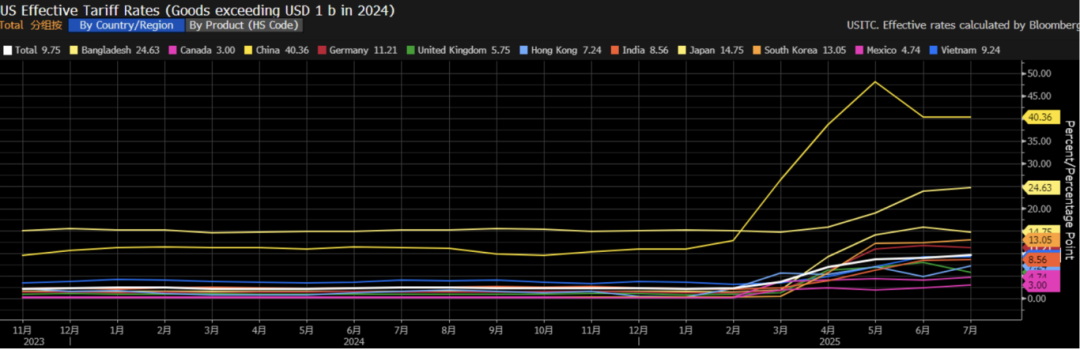
Economic Overview - The US economy is experiencing a slow downward trend, with overall inflation remaining stable and limited transmission effects from tariffs on inflation [1] - Recent data from Harvard's Pricing Lab indicates that the price increase of Chinese goods imported to the US has been limited, even after tariff hikes [1] - The US has recently reduced tariffs on Chinese imports by 10%, further diminishing the impact of tariffs on inflation [1] - There is a potential concern regarding rising electricity prices due to significant investments in the AI industry, which may affect the US CPI [1] Labor Market Insights - The US is currently in a government shutdown, leading to a lack of official economic data, with reliance on private statistics like the ADP report [2] - The latest ADP data shows a rebound in job creation to over 40,000 in October, but this is still below the previous average of over 100,000, indicating a weak labor market [2] - The stable inflation and weakening labor market create conditions for potential monetary policy easing, with expectations for a rate cut by the Federal Reserve in December [2] China-US Trade Relations - Despite the recent reduction of tariffs on Chinese goods, China still faces significant tariff pressures, with its goods having the highest tariff rates among countries exporting to the US as of July [3] Domestic Economic Conditions - China's economy is showing a diverging trend compared to the US, with stable high growth in exports, social financing, and industrial value added, while retail sales and fixed asset investment face uncertainties [5] - The GDP growth rate for the fourth quarter is expected to decline further, potentially falling between 4.4% and 4.6% [5] - The impact of previous economic stimulus measures is leading to a decline in consumer purchasing power, with some sectors experiencing negative sales growth [5] Inflation and Price Trends - The fourth quarter is expected to see a "bottoming out and recovery" in inflation, influenced by base effects, with gold's rising weight in the CPI contributing to this trend [6] - Gold's weight in the CPI has increased to 4%, indicating its significant impact on overall inflation metrics [6] - Core CPI is projected to remain stable between 0.5% and 1.6% [6] Social Financing Trends - Social financing growth is expected to gradually decline towards the end of the year due to a lack of large-scale debt issuance compared to the previous year [7] - The recent discussions from the Fourth Plenary Session indicate a cautious approach to economic policy, with no expectation of large-scale stimulus measures [7] Fiscal and Monetary Policy Developments - There has been a noticeable decrease in fiscal bond issuance in October, with expectations for a potential rebound in November or December [8] - The government has implemented incremental policies to address the economic downturn, including the issuance of local government bonds [8] - Policy-oriented financial tools have been fully utilized to counter economic pressures, with a focus on supporting key sectors [9] Market Outlook - The bond market is expected to experience a narrow fluctuation pattern, with potential for policy-driven movements in early next year [10] - The ten-year government bond is highlighted as a stable investment option, suitable for both long-term allocation and short-term trading strategies [10]

美国9月PPI同比 2.7%,预期 2.6%,前值 2.6%
Hua Er Jie Jian Wen· 2025-11-25 13:30
Core Insights - The article discusses the recent financial performance of a specific company, highlighting significant revenue growth and strategic initiatives that have contributed to its success [1] Financial Performance - The company reported a revenue increase of 25% year-over-year, reaching $2.5 billion in the last quarter [1] - Net income rose to $300 million, reflecting a 15% increase compared to the previous year [1] Strategic Initiatives - The company has implemented a new digital transformation strategy aimed at enhancing operational efficiency and customer engagement [1] - Investments in technology and innovation have been prioritized, with a budget allocation of $150 million for the upcoming fiscal year [1] Market Position - The company has strengthened its market position, capturing an additional 5% market share in its sector [1] - Competitive analysis indicates that the company is well-positioned against its main rivals, with a focus on sustainable growth [1]
汇添富基金劳杰男:“自上而下”和“自下而上”相结合,让投资做得更从容
Sou Hu Cai Jing· 2025-11-24 10:26
Core Insights - The A-share market has seen effective "barbell" asset allocation strategies, focusing on both dividend-yielding assets and high-growth assets, largely influenced by changes in China's macroeconomic environment [1] Economic Environment and Asset Allocation - The economic cycle can be analyzed using the "Merrill Lynch Investment Clock," which links economic growth and inflation to asset allocation choices, suggesting that in a rising GDP and CPI environment, commodities outperform stocks, cash, and bonds, while in a declining GDP and CPI environment, bonds outperform cash, stocks, and commodities [2] - The performance of core assets in the A-share market has significantly declined over the past two years, with the Producer Price Index (PPI) showing a notable drop from a high of 13.5% in October 2021 to -1.3% in October 2022, remaining negative for 37 consecutive months [2] Industry Performance - From October 2021 to October 2025, the communication sector has increased by 149.5%, while the media sector has risen by 35.8%. In contrast, the beauty and personal care sector has decreased by 41.8%, and the food and beverage sector has fallen by 32.6% [2] - Recent data indicates that the PPI turned positive at 0.1% in October 2025, leading to noticeable increases in the chemical and food and beverage sectors [3] Investment Strategies - The importance of top-down analysis in investment decisions is increasing, as global macroeconomic changes and the growth of passive, style, and quantitative funds amplify this impact [4] - The combination of top-down and bottom-up approaches in investment practices is emphasized for a more comprehensive strategy [4] Future Considerations - The ongoing negative PPI trend necessitates close monitoring of potential changes and their implications for asset allocation strategies, particularly regarding the performance of "middle assets" over the next two years [5] - The complexity of macroeconomic operations suggests that factors such as confidence and expectations play significant roles, with "anti-involution" being identified as a potential positive trigger for changes in the domestic PPI [5]
经观月度观察|“稳中求进”基调不变 重点转向激发内需与修复工业品价格
Jing Ji Guan Cha Bao· 2025-11-21 14:49
Core Insights - The macroeconomic data for October indicates a short-term increase in economic downward pressure, with a focus on stimulating domestic demand and repairing industrial product prices while maintaining the overall principle of "seeking progress while maintaining stability" [1] CPI - The Consumer Price Index (CPI) rose to 0.2% in October from -0.3% in the previous month, marking a 0.5 percentage point increase [2] - The month-on-month increase was 0.2%, up 0.1 percentage points from the previous month, driven by rising prices of fruits and vegetables [2] PPI - The Producer Price Index (PPI) decreased by 2.1% year-on-year in October, improving from a decline of 2.3% in September, with the mining sector providing significant support [3] - The prices of production materials increased by 0.1%, with mining prices up by 1% [3] PMI - The Manufacturing Purchasing Managers' Index (PMI) fell to 49% in October from 49.8% in September, indicating a contraction in manufacturing activity [4] - The decline in PMI is attributed to high inventory levels, a weakening demand structure, and reduced investment demand due to accelerated debt repayment [5] Fixed Asset Investment - Fixed asset investment (FAI) decreased by 1.7% year-on-year in October, worsening from a decline of 0.5% in September [6] - The decline in infrastructure investment is influenced by multiple factors, including accelerated debt repayment and insufficient project reserves [6] Credit - New credit issuance in October was 220 billion yuan, a decrease of 280 billion yuan compared to the same period last year [7] - The total social financing (TSF) increased by 815 billion yuan, but the growth rate has slowed down [7] M2 - The M2 money supply grew by 8.2% year-on-year in October, down from 8.4% in September, influenced by a rebound in fiscal deposits [8] - The central government allocated 500 billion yuan to local governments to support effective investment and address existing debt issues [9]
申万宏源“研选”说——CPI、PPI新鲜出炉,传统消费何时起?
申万宏源证券上海北京西路营业部· 2025-11-21 02:08
Core Viewpoint - The recent CPI and PPI data indicate a potential recovery in traditional consumption, with slight positive changes in both indices suggesting an improving economic environment [2][3]. CPI and PPI Analysis - In October, the CPI showed a year-on-year increase of 0.2%, compared to a previous value of -0.3%, and a month-on-month increase of 0.2%. The PPI, on the other hand, recorded a year-on-year decrease of -2.1%, an improvement from -2.3%, with a month-on-month increase of 0.1% [2]. - PPI serves as a leading indicator reflecting changes in the costs of upstream raw materials and intermediate goods, while CPI is a lagging indicator that reflects changes in the prices of consumer goods and services [2]. Economic Implications - A positive trend in PPI, especially if it turns positive on a month-on-month basis, indicates a recovery in industrial product prices and an improvement in corporate profit margins, which could lead to better financial reports for companies [2]. - Conversely, a negative CPI often signals deflation, while a positive CPI suggests inflation. Continuous positive month-on-month growth in CPI indicates a likely recovery in consumer demand [2]. Investment Opportunities - The slight positive changes in both PPI and CPI can be viewed as signals of economic improvement, with moderate inflation being beneficial for investors, potentially leading to increased corporate profits and stock price appreciation [3]. - The performance of the Shenwan Consumption Industry Index shows that the overall consumption sector has underperformed compared to the CSI 300 index, with some sub-sectors being relatively undervalued [4]. Sector Performance - As of November 7, 2025, the performance of various sectors is as follows: - CSI 300: +18.90% - Agriculture, Forestry, Animal Husbandry, and Fishery: +17.35% - Home Appliances: +7.23% - Food and Beverage: -6.05% - Textile and Apparel: +11.97% - Light Industry Manufacturing: +14.34% - Retail: +4.20% - Social Services: +9.12% [3][4]. Recommendations - It is suggested to consider tracking ETFs related to consumption, food and beverage, agriculture, and home appliances, as these sectors may experience growth in the near future [4].
德国10月PPI环比增长0.1%,预估0%,前值下降0.1%
Mei Ri Jing Ji Xin Wen· 2025-11-20 07:14
每经AI快讯,11月20日消息,德国10月PPI环比增长0.1%,预估0%,前值下降0.1%。 ...
资金抢筹防御型资产,自由现金流ETF(159201)近9天连续“吸金”,合计达14.95亿元
Mei Ri Jing Ji Xin Wen· 2025-11-20 06:03
Group 1 - The A-share market opened high but closed lower, with the Guozheng Free Cash Flow Index experiencing a decline of approximately 0.2%. Leading stocks included Lianfa Co., Xiamen International Trade, and Weichai Power [1] - The largest free cash flow ETF (159201) has seen continuous net inflows over the past nine days, totaling 1.495 billion yuan [1] - Dongwu Securities analysis indicates that since July, top-level design against "involution" has been introduced, with a clearer policy path and increasing demand-side policies. This is expected to improve PPI and drive profit recovery, enhancing economic expectations [1] Group 2 - Free cash flow serves as the foundation for dividend distribution, focusing on a company's internal growth capabilities, while dividend strategies emphasize the results of dividend distribution. These strategies typically complement each other in industry distribution [1] - The free cash flow strategy may act as a foundational tool for balancing growth stock investments. The free cash flow ETF (159201) and its linked funds (A: 023917; C: 023918) closely track the Guozheng Free Cash Flow Index, with management fees at 0.15% and custody fees at 0.05%, both being the lowest in the market [1]