
关税冲突

Search documents
精彩回顾|LSEG投行业务线下研讨会(上海场)
Refinitiv路孚特· 2025-08-12 06:18
Core Insights - The article discusses the opportunities and challenges for Chinese enterprises in overseas mergers and acquisitions (M&A) by 2025, highlighting the significant changes in global trade dynamics and the need for compliance, financing, and transaction structuring considerations [1][5][11]. Group 1: M&A Market Overview - As of June 2025, M&A transactions involving Chinese mainland companies accounted for 13% of the global market share, totaling $252 billion, a 130% increase year-over-year, with transaction numbers up by 13% [6]. - The number of mega-deals (over $5 billion) globally increased by 67% compared to the previous year, while transactions over $1 billion involving Chinese mainland companies surged by 440% [6]. - However, cross-border transactions involving Chinese mainland companies totaled $7.4 billion, a decrease of 32% from the previous year, with Sino-American cross-border M&A down by 30% [6]. Group 2: Regional Insights and Trends - Southeast Asia has seen nearly $500 billion in cross-border M&A over the past decade, primarily in high-tech, finance, and industrial sectors, with Singapore, Indonesia, Vietnam, and Malaysia being popular target countries [6]. - Indonesia is highlighted as a growing market with a young workforce and a projected economy ranking seventh globally by 2030, attracting more companies for investment [12]. Group 3: Risks and Challenges - The article outlines the risks and challenges of entering the Indonesian market, including significant changes in economic trends and industry distributions, particularly in infrastructure and public construction [12]. - Legal considerations for investments in Indonesia are emphasized, including requirements for LLCs and specific industry regulations [12]. Group 4: Strategic Insights - The article notes that Chinese enterprises are increasingly adopting strategies such as nearshoring and brand acquisitions to navigate global tariff challenges, with examples of companies successfully leveraging local production to reduce costs [19]. - The importance of risk management tools is highlighted, with companies utilizing geopolitical due diligence and digital tools to monitor tariff policies and streamline decision-making processes [19].

地缘风险"明缓暗升"格局 贵金属多空拉锯方向待明
Jin Tou Wang· 2025-08-07 08:04
Market Overview - The US dollar index declined by 0.56%, closing at 98.17, influenced by expectations of interest rate cuts following comments from Federal Reserve officials [1][2] - Spot gold prices fell by 0.35%, ending at $3368.97 per ounce after reaching a near two-week high, marking the end of a four-day rally [1][2] - Spot silver remained relatively stable, closing up 0.05% at $37.809 per ounce [1][2] Geopolitical and Economic Factors - The geopolitical tension between the US and Russia is intensifying, with President Trump indicating a potential three-party summit next week, while Senator Rubio warned of possible secondary sanctions against Russia within 24-36 hours, creating a mixed risk environment that raises safe-haven premiums [3] - Discrepancies in Federal Reserve policy are increasing, with Kashkari advocating for two interest rate cuts this year, which reinforces easing expectations, while Trump's potential appointment of a temporary Fed board member poses risks to the credibility of monetary policy [3] Commodity Trading Insights - Precious metals are expected to maintain a volatile trading pattern in the short term, with gold's safe-haven premium strengthening [4] - A strong support level for gold is identified around $3400, while a resistance level is seen near $3450, which may present a breakthrough opportunity [4] - Silver, despite facing pressure from tariffs affecting industrial demand, could see a rebound if it holds above the critical support level of $37, with potential to challenge the $38 mark [4]
又一家美国巨头因关税压力涨价!多家美国消费品公司称涨价不可避免
Di Yi Cai Jing· 2025-08-01 03:58
Group 1 - Procter & Gamble reported a net sales of $84.284 billion for fiscal year 2025, a year-on-year increase of 0.29%, and a net profit of $16.065 billion, up 7.29% year-on-year [1] - The company indicated that the overall sales volume remained stable due to price increases driven by cost pressures from tariffs and other factors [1][2] - Procter & Gamble's CFO noted that despite significant investments in local production, some materials still need to be imported, leading to ongoing tariff pressures [1] Group 2 - Procter & Gamble plans to raise prices on about 25% of its products in the U.S. by approximately 5% starting in August to offset new tariff costs [2] - Other consumer goods companies, such as Hasbro, have also acknowledged the inevitability of price increases due to tariff-related costs, with potential profit reductions of $60 million to $180 million [3] - Nike has already increased prices on certain footwear and apparel due to tariffs, while Skechers warned that high tariffs could significantly impact its business operations and lead to price hikes and reduced sales [4] Group 3 - Adidas expects to see an increase in product costs by €200 million in the U.S. due to tariffs, reflecting the broader impact of tariff policies on the industry [4]

加拿大降息预期分歧 白银td走势震荡拉升
Jin Tou Wang· 2025-07-30 07:17
Group 1 - Canadian Prime Minister Mark Carney is negotiating with the Trump administration to resolve tariff conflicts, with a deadline set for August 1 [1] - Major Canadian exports such as steel, aluminum, and automobiles face high tariff threats, but approximately 80% of exports to the U.S. meet the USMCA's duty-free standards [1] - Economists predict that even if a new agreement is reached, it may not completely eliminate Canada's tariff burdens [1] Group 2 - National Bank Financial's economist Ethan Currie suggests that the new agreement is unlikely to fully relieve Canada's tariff pressures, predicting that the Bank of Canada may cut interest rates up to two more times due to ongoing trade uncertainties [1] - Conversely, Royal Bank of Canada's economist Claire Fan believes that the Bank of Canada will not further lower interest rates, arguing that the effects of previous rate cuts have not fully transmitted to the economy [1] - Fan also indicates that the upcoming fall budget from the Liberal government may allocate hundreds of billions of Canadian dollars in new spending to mitigate the impact of tariffs on the manufacturing-driven economy [1][2]
沪银期货周报-20250722
Guo Jin Qi Huo· 2025-07-22 13:16
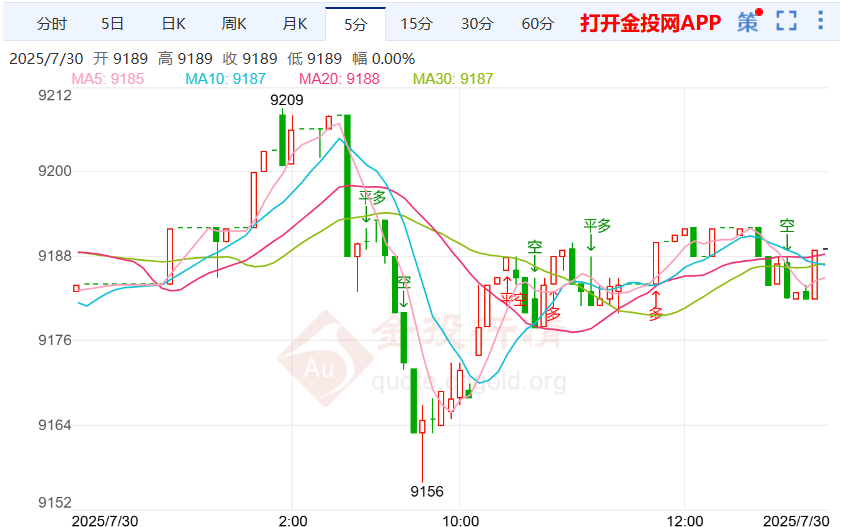
Report Summary 1. Report Industry Investment Rating No investment rating for the industry is provided in the report. 2. Core View This week, the precious metals market was affected by the Fed's interest - rate cut expectations and Trump's tariffs, with increased market volatility, and the silver price fluctuated more significantly. The Shanghai Silver market continued its strong trend, and market activity increased significantly [2]. 3. Summary by Relevant Catalogs 3.1 Market Overview and Market Review - **Overall Market Performance**: From July 14 - 18, 2025, the price difference between the near - month contract 2508 and the main contract 2509 of Shanghai Silver futures was 16 points, and the overall market volatility was not large. The closing price of Shanghai Silver 2508 was 9246, up 123 points or 1.35%, with a trading volume of 90514 and an amplitude of 2.05%, and a position of 136900. The closing price of Shanghai Silver 2509 was 9262, up 129 points or 1.41%, with a trading volume of 14917, an amplitude of 2.01%, and a position of 35200 [3]. 3.2 Influence Factor Analysis - **International Aspect**: On the 18th local time, US President Trump urged Fed Chairman Powell to cut interest rates on social media. Recently, Trump has repeatedly pressured Powell to cut interest rates. On July 15, Trump said that the Fed should cut interest rates by 3 percentage points, which could save one trillion dollars a year [9][10]. - **Data Aspect**: In June, the US PPI was flat month - on - month, and the May data was revised up to a 0.3% increase. It was the mildest annual increase since last September, up 2.3% year - on - year. The core PPI, excluding food, energy, and trade services, was also flat, up 2.5% year - on - year, the smallest increase since the end of 2023. The previously released CPI increased by 0.3% monthly [10]. - **Tariff Aspect**: The current breakthrough in the market may be driven by the intensification of tariff conflicts. After Trump announced a 30% tariff increase on Mexico and the EU, Mexico quickly condemned it as "unfair treatment" and launched an anti - dumping investigation on caustic soda, with the possibility of further escalation of policy confrontation [10]. 3.3 Conclusion and Outlook Trump's renewed pressure on Powell to cut interest rates soon boosted the silver price to a certain extent. However, the good economic data released by the US last week cooled the expectations of interest - rate cuts, and the US dollar rebounded. In the short - term, the silver price will fluctuate with a slightly upward trend [11].
特朗普致函李在明,宣布加征25%关税,外媒:强调不许韩国反制
Sou Hu Cai Jing· 2025-07-10 06:18
Core Viewpoint - The recent announcement by Trump to impose a 25% tariff on South Korean products poses significant challenges for the newly elected President Lee Jae-myung, complicating his efforts to address domestic issues while facing external pressures [4][6]. Group 1: Tariff Impact on South Korea - The 25% tariff is a strategic pressure tactic by the U.S., with South Korea serving as a demonstration target for other nations [6]. - If implemented, the automotive industry in South Korea will be severely affected, with annual exports to the U.S. amounting to $34.7 billion, nearly half of its total automotive exports [10]. - The cost per vehicle for Hyundai could increase by approximately $3,800, leading to a profit margin reduction of over 30% [10]. Group 2: South Korea's Response - The South Korean government is attempting to frame the tariff threat as a temporary measure and has committed to urgent negotiations before August 1 [12]. - A domestic industry rescue fund of 30 trillion won has been initiated to mitigate the impact of the tariffs [12]. - Despite having a 40% share in the global memory chip market and a quarter of the U.S. electric vehicle battery market, South Korea's leverage is limited due to its military and financial dependence on the U.S. [12][14]. Group 3: Diplomatic and Economic Context - The recent tariff conflict reflects deeper issues in the U.S.-South Korea alliance, with South Korea's trade deficit with the U.S. reaching $66 billion in 2024, primarily in the automotive sector [15]. - The exclusion of South Korea from tariff exemptions, while other countries like the UK and Vietnam were granted such exemptions, has sparked significant domestic outrage [15]. - International reactions include criticism from Brazil and the EU, with potential retaliatory measures being discussed by other nations, indicating a broader economic impact [15].
东方红益鑫纯债债券型证券投资基金2025年第2季度报告
Zheng Quan Zhi Xing· 2025-07-10 02:33
Group 1 - The report covers the performance of the Dongfanghong Yixin Pure Bond Fund for the second quarter of 2025, highlighting its investment strategy and financial indicators [1][2][3]. - The fund aims for long-term stable returns through effective allocation of bond portfolios based on various market factors [3][4]. - The fund's total share at the end of the reporting period was approximately 1.6 billion shares [3]. Group 2 - The fund's net value growth rates for different classes during the reporting period were: A class at 0.95%, C class at 0.91%, and E class at 0.90%, with the benchmark return at 1.06% [17]. - The fund's investment strategy focuses on investment-grade credit bonds, adjusting the duration significantly in response to market conditions [15][16]. - The fund's total assets in bonds amounted to approximately 1.84 billion yuan, representing 98.97% of the total fund assets [18]. Group 3 - The fund management company, Shanghai Dongfang Securities Asset Management Co., Ltd., emphasizes compliance with relevant laws and regulations while managing the fund [14]. - The fund has not engaged in any stock investments, maintaining a pure bond investment strategy [18][19]. - The report indicates that there were no significant trading anomalies or regulatory issues affecting the fund during the reporting period [14][20].
沥青供需格局有望延续,市场矛盾不突出
Hua Tai Qi Huo· 2025-07-06 12:48
1. Report Industry Investment Rating No relevant content provided. 2. Core Views of the Report - The asphalt market currently shows a pattern of weak supply and demand, with low inventory and a lower-than-seasonal inventory accumulation rate in the first half of the year. Supply pressure and market contradictions are limited, providing support for spot prices but lacking upward momentum. - Looking ahead to the second half of the year, there are no significant expected changes in the supply and demand of asphalt. The seasonal recovery of terminal demand and the marginal improvement of refinery tax pressure are insufficient to form a new trend. With weak fundamental drivers in the asphalt market, the futures price will be more affected by crude oil price fluctuations. - Based on the analysis of the oil market fundamentals, if there are no major geopolitical or macro - events, the asphalt price center may show a short - term oscillation and a medium - term slow downward trend. Notably, the downward elasticity of asphalt is weaker than that of crude oil, and the crack spread may be continuously supported in the future. - Strategy: Unilateral trading is expected to be oscillatory, with short - term support and a medium - term potential to follow the downward shift of the oil price center. There are no specific strategies for inter - delivery, inter - commodity, spot - futures, or options trading [5]. 3. Summary According to the Table of Contents 3.1 Crude Oil: Current Fundamentals are Fair but Expectations are Weak, and the Cost Center May Further Decline in the Fourth Quarter - In the first half of this year, international oil prices fluctuated repeatedly without a sustained trend, mainly due to increased geopolitical and macro - level disturbances and significantly higher market volatility. - At the beginning of the year, due to increased US sanctions on Russia, the market worried about a decline in Russian oil supply, and crude oil prices rose rapidly, with Brent once breaking through the $80/barrel mark. However, subsequent data verified that Russian exports remained resilient, and the refinery maintenance season led to a decline in raw material procurement demand, causing oil prices to gradually fall from the high point in late January. - After Trump took office as the new US president, the market started to trade the impact of his policies, including expectations of easing the Russia - Ukraine conflict, tariff increases, pushing OPEC to increase production, canceling new energy support policies, accelerating LNG project export approvals, and exerting extreme pressure on Iran. These policies had both positive and negative impacts on the oil market, but the negative effects were more prominent. - In April, Trump officially announced his reciprocal tariff policy, which exceeded market expectations in terms of scope and magnitude and led to counter - measures from trading partners, including China. If fully implemented, it would significantly impact global economic trade and oil consumption. Coupled with OPEC's decision to gradually increase production quotas, oil prices accelerated their decline, with Brent once falling below the $60/barrel mark. - Subsequently, there were signs of marginal improvement in the tariff conflict. The US postponed tariffs for most trading partners until July 9, and on May 12, China and the US reached an important consensus and issued a joint statement, reducing the tariff increase from 125% to 10% (with a 3 - month suspension for another 24%), leading to a rebound in oil prices. - In June, the crude oil market was disturbed by geopolitical conflicts, and volatility increased significantly. The Israel - Iran conflict led to concerns about oil supply disruptions, causing a sharp short - term increase in international oil prices, with Brent approaching the $80/barrel mark. After the cease - fire was announced, oil prices quickly fell back [12][13][14]. 3.2 In the First Half of 2025, the Asphalt Market Maintained a Pattern of Weak Supply and Demand, and the Crack Spread Rose Significantly - In the first half of 2025, the domestic asphalt market generally maintained a pattern of weak supply and demand with relatively few market contradictions. Low refinery operating rates and production, combined with low inventory levels, provided strong support for the spot market. However, weak terminal demand restricted the upward movement of the market. - From January to June, the main contract of BU fluctuated in the range of 3200 - 3900 yuan/ton, with a higher price center compared to last year. Geopolitical and macro - factors increased crude oil price volatility, which in turn affected asphalt futures prices. - In terms of the crack spread, asphalt was more resilient than crude oil. As the oil price center declined, the crack spread of BU to Brent rose from - 348 yuan/ton at the beginning of the year to - 4 yuan/ton at the end of June, once entering positive territory [23]. 3.3 In the Second Half of 2025, There are No Significant Variables in the Asphalt Market, and Contradictions are Relatively Minor - The terminal demand for asphalt still lacks growth drivers. In the first five months of this year, the total actual demand for domestic asphalt was 1197000 tons, a year - on - year decrease of 2.1%. Road asphalt consumption was 871000 tons, a year - on - year increase of 1.5%. Other downstream sectors had minor changes. - Looking ahead to the second half of the year, road asphalt demand still lacks clear growth expectations. The lagging impact of suspended infrastructure projects last year and the focus on "new infrastructure" in fiscal policies limit the growth space and momentum of domestic asphalt demand. However, there is seasonal improvement potential in the third quarter after the end of the rainy season in the South [27]. 3.4 The Consumption Tax Deduction Ratio of Some Local Refineries has been Increased, but the Supply Growth of Asphalt Refineries is Still Restricted - Since the beginning of this year, the theoretical production profit of asphalt refineries has been in the negative range due to weak terminal demand, tight overseas heavy crude oil supply, and increased costs of sanctioned oil. After the consumption tax deduction ratio was reduced from full to 50% - 70%, the cost of using fuel oil as a processing raw material for refineries without crude oil quotas and limited device adjustment capabilities increased significantly. - The operating rate of the asphalt industry has been suppressed at a low level. Since the beginning of this year, the domestic asphalt device operating rate has been around 30%, similar to last year's level. - In the second half of the year, there is no strong motivation for a large - scale release of asphalt refinery supply, but marginal changes are worth noting. Some refineries have increased production due to a 25% increase in the consumption tax deduction ratio, but this only applies to refineries with crude oil quotas. - In the long - term, the over - capacity of asphalt is the core factor suppressing production profits. As of now, the national asphalt production capacity is expected to reach 79.21 million tons/year, far exceeding the consumption level of over 30 million tons. The government has proposed to promote the withdrawal of backward production capacity, and the asphalt supply will continue to be restricted [40][41][43]. 3.5 The US Revoked Venezuelan Oil Licenses, and the Discount of Diluted Asphalt is Running at a High Level - Trump revoked the oil licenses of companies such as Chevron in Venezuela. If future negotiations do not progress and US policies do not change, Venezuelan oil production may decline significantly in the medium - term, but it may be diverted from the US to Asia in the short - term. - As OPEC gradually relaxes production cuts, Middle Eastern oil - producing countries may increase the supply of medium - heavy crude oil, alleviating the tight supply of overseas heavy oil to some extent. - After the expansion of the Canadian TMX pipeline last year, it can transport heavy crude oil to the west coast for export, mainly to the US West Coast, the US Gulf Coast, and the Asia - Pacific market, becoming a new source of heavy crude oil supply for China and restricting the upward space of the diluted asphalt discount [52]. 3.6 The Asphalt Market has Limited Contradictions and Support at the Lower Level - The asphalt market currently shows a pattern of weak supply and demand, with low inventory and limited supply pressure and market contradictions. Spot prices are supported but lack upward momentum. - In the second half of the year, there are no significant expected changes in supply and demand. The asphalt price center may show a short - term oscillation and a medium - term slow downward trend, and the crack spread may be continuously supported [63].
讨论关税影响,关注货币政策,美欧日英韩央行“掌门人”齐聚葡萄牙
Huan Qiu Shi Bao· 2025-07-01 22:46
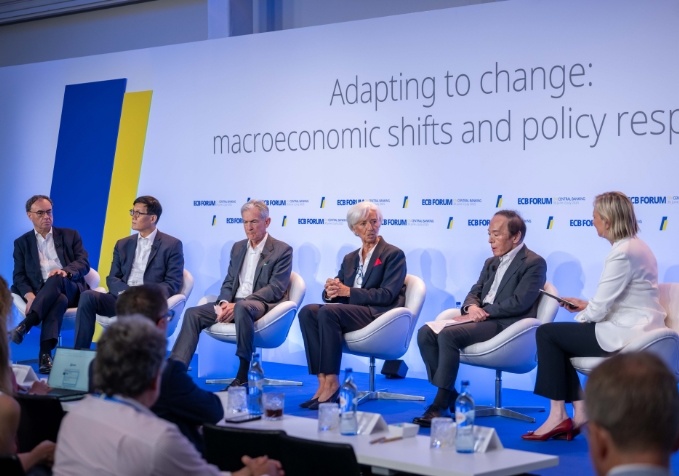
Group 1 - The central theme of the 2025 European Central Bank Forum is "Adapting to Change: Macroeconomic Transformation and Policy Responses," focusing on the impact of U.S. trade conflicts on the global economy [1] - ECB President Lagarde emphasized that uncertainty will continue to be a key characteristic of the global economy, potentially leading to increased inflation volatility [3] - A report from the Bank for International Settlements (BIS) indicated that U.S. tariffs have pushed economic uncertainty to "crisis-levels," with risks to consumer prices, public finances, and the financial system [3] Group 2 - Despite similar geopolitical and trade challenges, central bank leaders have differing policy stances, with the ECB considering multiple rate cuts while the Fed maintains its current rate range [4] - The eurozone's inflation rate slightly increased to 2% in June, aligning with the ECB's inflation target, indicating the completion of the previous monetary policy intervention cycle [5] - Lagarde is positioned to strengthen the euro's status amid the dollar's decline, aiming to establish the euro as a stable currency during uncertain times [5] Group 3 - During a panel discussion, Fed Chair Powell noted that U.S. inflation is performing as expected, but tariff impacts may appear in future data, suggesting a cautious approach to monetary policy [6] - Lagarde stated that the ECB is prepared to respond to complex economic situations but refrained from committing to future interest rate directions [6] - The Bank of England's Bailey highlighted the negative impact of fragmentation on global economic activity, advocating for a return to multilateral order [6]
美国通胀还会继续不及预期吗?
2025-06-15 16:03
Summary of Key Points from the Conference Call Industry Overview - The discussion primarily revolves around the **U.S. economy**, focusing on inflation trends, consumer confidence, and the impact of tariffs on economic activity. Core Insights and Arguments - **Inflation Data**: In May, the Consumer Price Index (CPI) increased by 0.13% month-over-month, which was below the expected 0.2%. The core CPI rose by 0.3%, also falling short of expectations. This indicates a weak inflation environment despite some positive sentiment in soft data like consumer confidence indices [1][6][15]. - **Impact of Tariffs**: High tariffs have negatively impacted the U.S. economy, acting like a tax increase on residents. This has led to a decline in labor income and reduced transfer payments, which in turn has constrained consumer spending and increased living costs [5][9]. - **Consumer Confidence vs. Hard Data**: There is a divergence between soft data (like small business and consumer confidence indices) showing recovery and hard data (like unemployment claims and inflation metrics) indicating weakness. This discrepancy is largely attributed to the adverse effects of tariff conflicts [2][7][8]. - **Service Sector Trends**: The service sector has seen a decline in inflation, with rental prices unexpectedly dropping, reflecting a trend of consumers opting for cheaper options due to budget constraints [4][12]. - **Future CPI Predictions**: It is anticipated that the CPI will begin to rise from May onwards, potentially reaching a year-end level of around 3%. However, the month-over-month growth is expected to remain lower than market predictions [15]. Additional Important Insights - **Automobile Market Dynamics**: The U.S. automobile market is experiencing mixed signals, with new car prices negatively contributing to inflation due to weak demand and high interest rates, while parts prices have surged due to tariffs [11]. - **Import Price Changes**: Since April 2, prices of imported goods, particularly from China, have risen, with a monthly increase of 0.7%. In contrast, imports from Canada and Mexico have shown deflationary trends [10]. - **Federal Reserve Interest Rate Outlook**: Given the economic data indicating a marginal recession, there is a strong expectation for the Federal Reserve to implement two interest rate cuts in September and December [16]. - **Geopolitical Factors**: Geopolitical events are highlighted as significant sources of market uncertainty, potentially overshadowing economic data like CPI [20]. This summary encapsulates the critical points discussed in the conference call, providing insights into the current state of the U.S. economy and the factors influencing it.