关税加征

Search documents
美国拟自2027年起对中国半导体产业加征关税,外交部回应:坚决反对美方滥施关税、无理打压中国产业
Ge Long Hui· 2025-12-24 08:01
Core Viewpoint - The Chinese government firmly opposes the U.S. imposition of tariffs on its semiconductor industry, arguing that such actions disrupt global supply chains and hinder the development of the semiconductor sector worldwide [1] Group 1: U.S. Tariff Proposal - The U.S. Trade Representative's investigation claims that China has implemented unfair measures to dominate the semiconductor industry [1] - The U.S. plans to impose tariffs on China's semiconductor industry starting in 2027 [1] Group 2: China's Response - The Chinese government urges the U.S. to correct its erroneous actions and resolve concerns through dialogue based on equality, respect, and mutual benefit [1] - China emphasizes the importance of maintaining stable and healthy development of U.S.-China relations [1] - If the U.S. continues its unilateral actions, China will take necessary measures to protect its legitimate rights and interests [1]
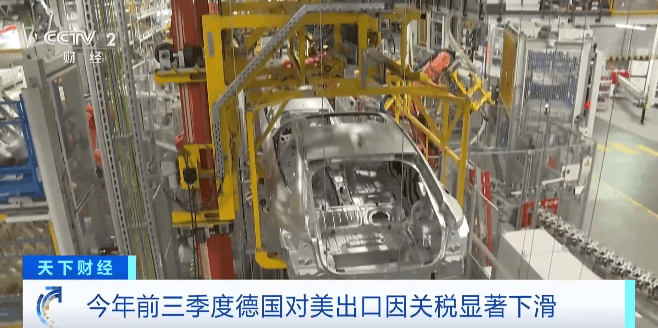
今年前三季度德国对美出口因关税显著下滑
Sou Hu Cai Jing· 2025-12-23 11:02
Group 1 - The core viewpoint of the report indicates that Germany's exports to the United States are expected to decline by nearly 8% year-on-year in the first three quarters of 2025, falling below the levels of 2022 due to U.S. tariffs [1][3]. - Exports of automobiles and parts to the U.S. have decreased by approximately 15%, while the machinery manufacturing and chemical products sectors have seen declines of nearly 10% each [3]. - Historically, from 2016 to 2024, Germany's exports to the U.S. maintained an average annual growth rate of about 5% [3]. Group 2 - The high tariffs imposed by the U.S. on steel, aluminum, and related products, reaching up to 50%, have significantly increased the export costs for German machinery manufacturers, contributing to the decline in exports [5]. - In addition to tariff impacts, high domestic energy prices in Germany have led to reduced production in the chemical industry, further affecting export volumes [5]. - Experts suggest that Germany should reduce its reliance on the U.S. market and accelerate the exploration of new markets in South America, India, and Indonesia, while also working to eliminate trade barriers within the EU and enhance the international competitiveness of its domestic industries [7].

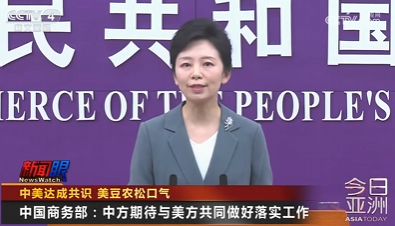
中国传来好消息,美国豆农松了口气!美豆积压严重,一座混凝土仓库被挤塌
Mei Ri Jing Ji Xin Wen· 2025-11-02 13:46
Group 1 - The core viewpoint of the article highlights the recent consensus reached between China and the U.S. regarding the expansion of agricultural trade, which has relieved American soybean farmers [2][11] - The U.S. government previously imposed a 10% tariff on all Chinese imports citing fentanyl concerns, leading to a reciprocal 10% tariff on U.S. soybeans and pork by China starting March 10, 2025 [3][11] - Following the tariff increases, China's import tariff on U.S. soybeans surged from 3% to 97%, significantly impacting U.S. soybean exports to China [11][13] Group 2 - Despite a temporary agreement in May to suspend certain tariffs, U.S. soybean exports to China have not improved, with reports indicating that China has ceased purchasing U.S. soybeans since then [11][13] - In 2024, China imported approximately 105 million tons of soybeans, with only 22.13 million tons sourced from the U.S., contrasting sharply with Mexico's imports of less than 6 million tons [13] - The U.S. soybean inventory has exceeded expectations, with a total of 1.008 billion bushels reported as of June 1, 2023, marking a 3.9% increase year-on-year [13][15] Group 3 - The American Soybean Association has expressed significant financial pressure on farmers due to tariffs, reduced sales, and rising costs, urging the government to adjust policies and negotiate new trade agreements with China [15][17] - The total value of U.S. soybean exports in 2024 is projected to be around $24.5 billion, with over $12.5 billion attributed to orders from China [17]
加拿大总理向特朗普致歉
券商中国· 2025-11-02 07:33
Core Viewpoint - The article discusses the recent tensions between Canada and the United States regarding trade, particularly focusing on a controversial advertisement that led to diplomatic apologies and threats of increased tariffs from the U.S. side [1][3][4]. Group 1: Advertisement Controversy - A one-minute advertisement aired in the U.S. criticized high tariffs, featuring images of American families and workers, along with a narration from former President Reagan [2]. - The advertisement was produced in Ontario and sparked a strong reaction from President Trump, who criticized it and announced the suspension of trade negotiations with Canada [3]. Group 2: Trade Negotiations and Tariffs - Canadian Prime Minister Justin Trudeau expressed readiness to resume trade talks with the U.S. but noted that Canada cannot control U.S. trade policies [3]. - Following the advertisement's airing, Trump threatened to impose an additional 10% tariff on Canadian imports if the ad was not taken down promptly [3]. - The advertisement was eventually removed on October 27, 2023, amidst escalating tensions [4]. Group 3: Current Tariff Rates - The U.S. currently imposes a 35% tariff on all Canadian goods not covered by existing trade agreements, a 50% tariff on steel and aluminum, and a 25% tariff on automobiles [4].
加拿大,宣布降息
Sou Hu Cai Jing· 2025-10-29 15:34
Group 1 - The Bank of Canada has decided to lower the policy interest rate by 25 basis points to 2.25% due to ongoing economic weakness and rising unemployment influenced by U.S. tariffs [1] - The Consumer Price Index (CPI) in Canada increased by 2.4% year-on-year in September, driven by rising prices of food, daily necessities, and rent [1] - Canadian Prime Minister Carney and U.S. President Trump had a positive discussion in South Korea, marking their first face-to-face meeting since trade negotiations were halted [1] Group 2 - President Trump announced the suspension of trade talks with Canada due to dissatisfaction with an advertisement sponsored by the Ontario government [1] - Trump accused Canada of misleadingly claiming that former President Reagan opposed tariffs and indicated plans to impose an additional 10% tariff on Canadian imports [1]
聚焦双方关切,缓解紧张局势,中美经贸磋商将在马来西亚举行
Huan Qiu Shi Bao· 2025-10-23 22:59
Core Points - The Chinese Vice Premier He Lifeng will lead a delegation to Malaysia for economic and trade consultations with the U.S. from October 24 to 27, focusing on key issues in U.S.-China economic relations [1] - U.S. Treasury Secretary Becerra and Trade Representative Tai will represent the U.S. side, aiming to ease tensions over recent trade issues [1][2] - Key topics expected to be discussed include U.S. technology export controls, tariffs on Chinese goods, and China's rare earth exports [1][2] Group 1 - The U.S. government is under pressure from domestic soybean farmers due to a significant drop in orders from China, which has led to calls for China to resume purchasing U.S. agricultural products [2] - Both Becerra and Tai expressed a desire to avoid decoupling from China and to find a "new balance" in trade, indicating a willingness to engage in dialogue [2][3] - Recent U.S. measures against China, including export controls and proposed tariffs, have disrupted the temporary stability in U.S.-China relations [2][3] Group 2 - The Chinese Ministry of Commerce has criticized the U.S. for threatening new restrictions while seeking negotiations, highlighting the tension in the relationship [3] - Following the U.S. listing of thousands of Chinese companies on an entity list, China's export controls on rare earths have intensified, potentially impacting the U.S. economy [3][4] - The U.S. is considering restrictions on products containing American software exported to China as a response to China's rare earth export controls, although this measure may not be fully implemented [3][4]
不到24小时,特朗普又改口了:中美如果谈不拢,对华关税升至155%
Sou Hu Cai Jing· 2025-10-23 09:36
Group 1 - Trump expressed confidence in reaching a fair trade agreement with China, mentioning a planned visit to China and a meeting with the Chinese leader in South Korea, but reiterated that tariffs would increase to 155% if no agreement is reached [1] - The stock market showed a slight rebound, with the Dow Jones increasing by 0.5%, as companies began to assess the impact of ongoing trade tensions, particularly in the electronics and automotive sectors that rely heavily on Chinese components [1] - The Federal Reserve Chairman indicated that policy remains tight, but data is unclear due to government shutdowns, with market expectations for a 25 basis point rate cut in October rising to 77% [1] Group 2 - The U.S.-China trade conflict began in 2018 when Trump imposed tariffs on Chinese imports, initially starting at 10% and escalating to an average of around 25% by 2019, affecting a wide range of goods [3] - In response to U.S. tariffs, China imposed retaliatory tariffs on U.S. agricultural and energy products, leading to a prolonged negotiation period that resulted in a first-phase trade agreement in 2020 [3] - The trade tensions have led to significant disruptions in global supply chains, with many companies relocating factories from China to countries like Vietnam and India [3] Group 3 - China announced a large-scale export control on rare earth materials starting November 1, citing national security and resource protection, which directly impacts the U.S. high-tech industry that relies on these materials [5] - Trump's immediate reaction to China's export control was to threaten a 100% tariff on all Chinese imports, raising the total tariff rate to 155%, which caused a significant drop in the stock market [5] - Following a brief period of optimism regarding trade negotiations, Trump reiterated his hardline stance, listing specific demands from China, including easing rare earth export controls and increasing purchases of U.S. soybeans [7] Group 4 - China's response emphasized that cooperation should be based on mutual respect and that high tariffs are not a constructive approach, highlighting the negative impact of pressure tactics on both countries' businesses and citizens [9] - The Chinese government stated that it would not back down from protecting its interests and criticized the U.S. for its continuous imposition of restrictions [9] - The Chinese yuan experienced slight fluctuations following the U.S. threats, but there was no significant market disruption [9]
股市缩量震荡,债市发酵换券
Zhong Xin Qi Huo· 2025-10-17 01:58
1. Report Industry Investment Rating No relevant information provided. 2. Core Views of the Report - The stock index futures market is experiencing a period of low - volume consolidation, waiting for policy - related catalysts. The strategy is to hold long positions in IM and wait for policy - driven market movements [1][6]. - The stock index options market maintains a medium - term optimistic sentiment. The operation strategy is to continue with covered calls or intraday double - selling [2][7]. - In the treasury bond futures market, there is an expectation of an active bond switch for 25 Special Bond 6. The short - term trend of the long - end of the bond market is likely to be volatile [3][7]. 3. Summary by Relevant Catalogs 3.1 Market Views 3.1.1 Stock Index Futures - The market is in a low - volume consolidation state. The base spreads and inter - period spreads of IF, IH, IC, and IM have changed compared to the previous trading day, and their positions have also changed. The market shows a dumbbell - shaped structure, with the dividend index rising for six consecutive days. The impact of tariff increases on the stock market has weakened. As an important meeting approaches next week, there is an expectation of policy intensification. The recommended operation is to hold long positions in IM [1][6]. 3.1.2 Stock Index Options - The underlying market's optimistic sentiment continues but is somewhat differentiated, with small and medium - cap stocks underperforming large - cap stocks. The trading volume of the options market decreased by 14.01% compared to the previous day, while the liquidity of 50 and 300 - related varieties increased. The call trading on 50ETF and 300ETF was relatively active, but the out - of - the - money degree of call trading decreased. The seller's sentiment in large - cap varieties continued to recover. The recommended operations are covered calls or intraday double - selling [2][7]. 3.1.3 Treasury Bond Futures - The closing performance of treasury bond futures was differentiated. The 30 - year main contract rose by 0.42%, the 10 - year main contract rose by 0.06%, and the 5 - year and 2 - year main contracts fell by 0.01%. The central bank's open - market operation led to a net withdrawal of 376 billion yuan, but the capital market remained relatively loose. The low - volume consolidation of the equity market and the decrease in risk appetite supported the long - end of the bond market. There was an expectation of an active bond switch for 25 Special Bond 6, but it remains to be seen. The short - term trend of the long - end of the bond market is likely to be volatile. Recommended strategies include trend trading with a volatile outlook, short - hedging when the basis is low, long - end arbitrage, and paying attention to the steepening of the yield curve [3][7][8]. 3.2 Economic Calendar - China's export annual rate in September was 8.3% (expected 7.1%, previous 4%); PPI annual rate was - 2.3% (expected - 2.3%, previous - 2.9%); and the social financing scale from the beginning of the year to September was 30.09 trillion yuan (expected 29.91 trillion yuan, previous 26.56 trillion yuan). The data for the US non - farm payrolls in September is yet to be released [9]. 3.3 Important Information and News Tracking - Two new policies: With the implementation of large - scale equipment renewal and consumer goods trade - in policies, the equipment renewal of industrial enterprises in China has accelerated in the first three quarters of this year. The procurement of mechanical equipment by industrial enterprises increased by 9.4% year - on - year, with high - tech manufacturing and the power, heat, gas, and water production and supply industries showing growth rates of 14% and 10.5% respectively [10]. - US employment: The US job market has shown a significant change. Enterprises are neither hiring nor firing, and there are many applicants for each position. Labor demand and supply are shrinking at the same rate, and productivity seems to be increasing, which may offset some cost pressures. Consumers are still spending but are making choices due to less abundant funds [10].
沪铜产业日报-20251013
Rui Da Qi Huo· 2025-10-13 09:05
1. Report Industry Investment Rating No relevant content provided. 2. Core View of the Report - The main contract of Shanghai copper first declined and then rose, with a decrease in open interest, a spot discount, and a weakening basis. Fundamentally, the TC fee has been running in the negative range, and the supply of copper ore has been tightened due to the shutdown of overseas mining areas. On the supply side, smelter production capacity is expected to be limited, and domestic refined copper supply may decrease. On the demand side, downstream enterprises will gradually resume work after the double festivals, but the purchase intention in the spot market is cautious. In the options market, the sentiment is bullish, and the implied volatility has slightly decreased. Technically, the 60 - minute MACD shows that the two lines are above the 0 - axis and the green bar has slightly converged. The operation suggestion is to conduct short - term long trades at low prices with a light position and pay attention to controlling the rhythm and trading risks [2]. 3. Summary by Relevant Catalogs 3.1 Futures Market - The closing price of the main futures contract of Shanghai copper was 85,120 yuan/ton, a decrease of 790 yuan; the price of LME 3 - month copper was 10,596 dollars/ton, an increase of 78 dollars. The open interest of the main Shanghai copper contract decreased by 14,285 hands to 201,830 hands. The inventory of LME copper decreased by 75 tons to 139,400 tons, and the LME copper cancelled warrants decreased by 75 tons to 8,350 tons. The inventory of cathode copper in the Shanghai Futures Exchange increased by 14,656 tons to 109,690 tons, and the warehouse receipts decreased by 2,856 tons to 32,890 tons [2]. 3.2现货市场 - The price of SMM 1 copper spot was 85,045 yuan/ton, a decrease of 1,635 yuan; the price of Yangtze River Non - ferrous Market 1 copper spot was 85,105 yuan/ton, a decrease of 1,605 yuan. The CIF (bill of lading) price of Shanghai electrolytic copper was 54 dollars/ton, unchanged; the average premium of Yangshan copper was 48 dollars/ton, unchanged. The basis of the CU main contract was - 75 yuan/ton, a decrease of 845 yuan; the LME copper spread (0 - 3) was - 31.19 dollars/ton, a decrease of 6.29 dollars [2]. 3.3 Upstream Situation - The import volume of copper ore and concentrates was 275.93 million tons, an increase of 19.92 million tons. The production of refined copper was 130.10 million tons, an increase of 3.10 million tons. The import volume of unwrought copper and copper products was 485,000 tons, an increase of 55,000 tons. The price of copper concentrate in Jiangxi was 75,380 yuan/metal ton, a decrease of 1,590 yuan; in Yunnan, it was 76,080 yuan/metal ton, a decrease of 1,590 yuan. The processing fee of crude copper in the south increased by 200 yuan to 1,000 yuan/ton, and in the north, it remained unchanged at 700 yuan/ton [2]. 3.4产业情况 - The social inventory of copper increased by 0.43 million tons to 41.82 million tons. The price of 1 bright copper wire in Shanghai increased by 500 yuan to 59,590 yuan/ton; the price of 2 copper (94 - 96%) in Shanghai increased by 850 yuan to 73,300 yuan/ton. The ex - factory price of sulfuric acid (98%) of Jiangxi Copper increased by 30 yuan to 510 yuan/ton [2]. 3.5下游及应用 - The production of copper products was 222.19 million tons, an increase of 5.26 million tons. The cumulative completed investment in power grid infrastructure was 379.576 billion yuan, an increase of 48.079 billion yuan. The cumulative completed investment in real estate development was 6,030.919 billion yuan, an increase of 672.942 billion yuan. The monthly production of integrated circuits decreased by 438,933.60 million pieces to 4,250,287.10 million pieces [2]. 3.6 Option Situation - The 20 - day historical volatility of Shanghai copper increased by 0.49 percentage points to 21.39%, and the 40 - day historical volatility increased by 0.26 percentage points to 15.92%. The implied volatility of the current - month at - the - money IV decreased by 0.0035 percentage points to 21.67%. The put - call ratio of at - the - money options increased by 0.03 to 1.35 [2]. 3.7行业消息 - The Fed's September meeting minutes showed that officials were willing to cut interest rates further this year but were cautious due to inflation concerns. Most participants thought further policy easing might be appropriate, but most also emphasized the upside risk of inflation expectations. The Ministry of Commerce responded to the US's plan to impose a 100% tariff on China, stating that it would take corresponding measures to safeguard its legitimate rights and interests. In September, the retail sales of the national passenger car market were 2.239 million vehicles, a year - on - year increase of 6% and a month - on - month increase of 11%. The retail sales of new energy passenger vehicles were 1.307 million vehicles, a year - on - year increase of 16% and a month - on - month increase of 17%, with a penetration rate of 58.5%. The China Logistics and Purchasing Federation reported that the logistics industry prosperity index in September was 51.2%, up 0.3 percentage points from the previous month. The University of Michigan survey showed that the preliminary consumer confidence index in the US in October decreased slightly to 55. The China Automobile Dealers Association expected the car sales in October to exceed those in September [2].
银行板块发力上扬 浦发银行、南京银行等走高
Zheng Quan Shi Bao Wang· 2025-10-13 07:04
Core Viewpoint - The banking sector experienced a significant rise on October 13, with notable increases in stock prices for several banks, amidst concerns over new tariffs imposed by the U.S. on Chinese products starting November 1 [1] Group 1: Market Reaction - Shanghai Pudong Development Bank saw a stock increase of over 6%, while Nanjing Bank and Chongqing Rural Commercial Bank rose by more than 4%, and other banks like Shanghai Bank and Qilu Bank increased by approximately 3% [1] Group 2: Tariff Impact Analysis - The new tariffs, announced by U.S. President Trump, could have a controllable overall impact on banks, but regional banks in export-oriented areas may face heightened risks [1] - Major state-owned banks with global operations have an average of 10.5% of their revenue coming from overseas as of June 2025, indicating potential vulnerability to tariff-related uncertainties [1] - Regions with high export-to-GDP ratios, such as the Yangtze River Delta and Pearl River Delta, may experience significant impacts, affecting financing needs of export-related industries and potentially leading to pressure on local banks' corporate and retail lending as well as asset quality [1] Group 3: Investment Opportunities - The uncertainty surrounding tariffs may increase global asset price volatility, creating a demand for defensive asset allocations, which could present opportunities for banks [1] - The banking sector's stable dividends, combined with a recent price correction, have improved the attractiveness of dividend yields, likely drawing in risk-averse capital [1]