
品牌老化

Search documents
85度C北京仅剩一家门店 公司:接连闭店系“汰换择优”,年前将新增加盟店
Mei Ri Jing Ji Xin Wen· 2025-10-20 13:20
Core Insights - 85°C is undergoing significant store closures in mainland China, with over 40 locations expected to shut down this year, marking the largest operational adjustment in five years due to a sales decline exceeding 20% and ongoing losses [4][9][10] - The closures reflect deeper challenges of brand aging and lack of innovation, as the company struggles to compete with emerging brands in the bakery market [4][10] - The company plans to open new franchise stores by the end of the year, indicating a strategy of "elimination and selection" to improve overall performance [4][8] Company Overview - 85°C, a well-known chain brand originating from Taiwan, specializes in coffee, cakes, and baked goods, and has expanded rapidly since its establishment in 2003 [4][9] - The brand's name is derived from the ideal brewing temperature for coffee, emphasizing its commitment to quality at affordable prices [4] Market Challenges - The bakery industry is facing systemic challenges, including complex supply chains and severe product homogenization, which hinder national expansion and lead to regional brand dominance [10] - The low entry barriers in the industry have resulted in intense price competition, forcing many brands to rely heavily on marketing rather than product differentiation [10] Financial Performance - In 2024, 85°C's sales in mainland China are projected to drop to approximately 18.8 billion RMB, a decline of over 20% from the previous year, with its market contribution falling from 51% to 42% [9] - The company has reported significant losses since the second half of 2023, with losses reaching approximately 460 million RMB in the first half of 2025 [9][10]

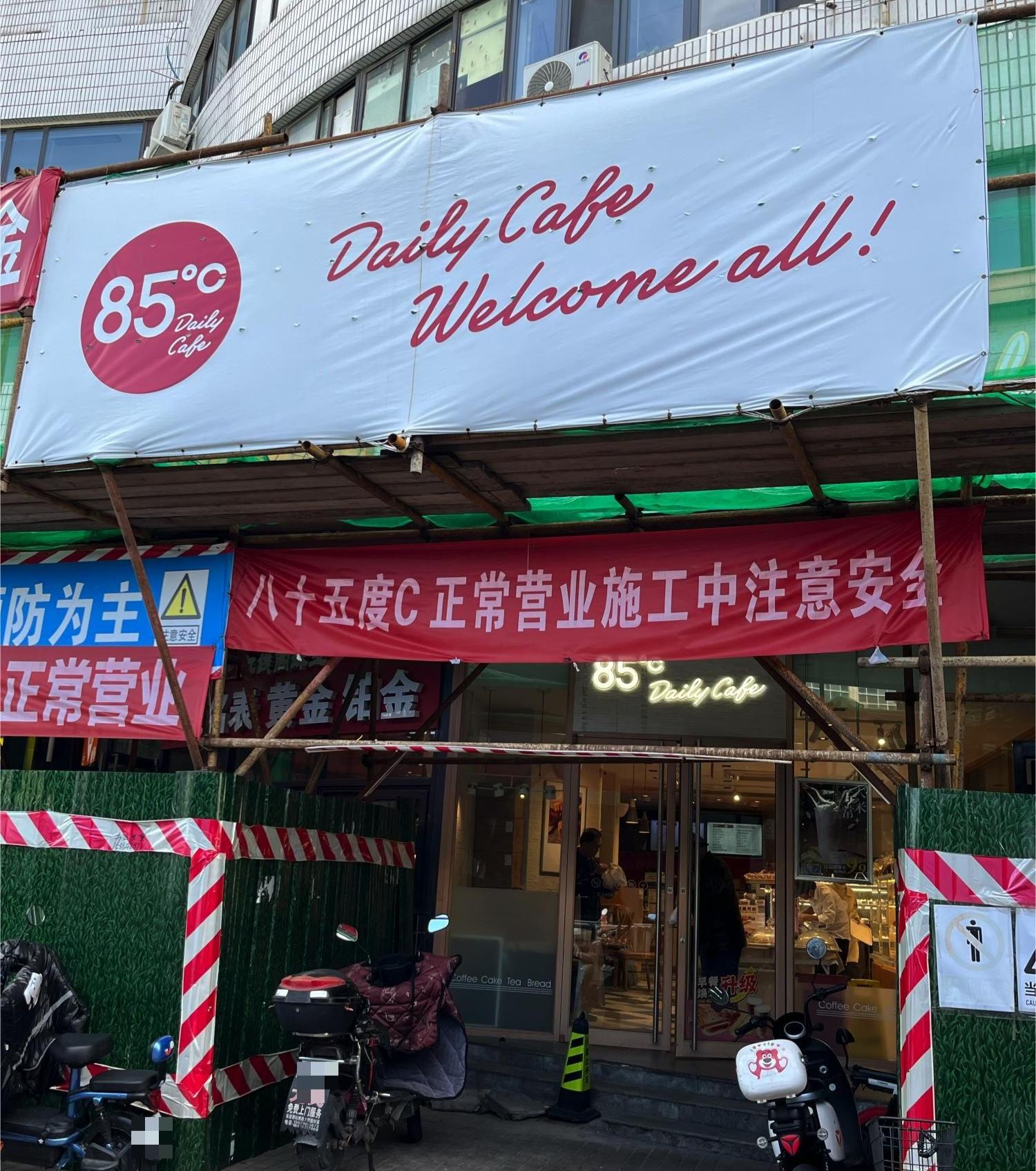
收入持续下降,将大幅关闭门店?85度C回应:仍对中国大陆市场抱有信心
Sou Hu Cai Jing· 2025-10-14 14:45
Core Viewpoint - 85度C's parent company, 美食-KY, announced a strategic adjustment in its operations in mainland China, focusing on optimizing its operational scale by closing underperforming stores in specific regions [1][3][4]. Group 1: Operational Adjustments - 美食-KY plans to terminate operations in specific areas and stores in mainland China where profitability has consistently fallen below expectations [3][4]. - The company aims to enhance resource allocation in production, logistics, and operational support to improve overall efficiency and shareholder value in the long term [3][4]. Group 2: Store Closures and Market Impact - The current adjustment represents the largest scale of closures in nearly five years, with over 40 stores expected to close in mainland China [4]. - As of September 16, 2025, the number of operating stores in mainland China has decreased to 386, down from 467 in October 2024, indicating a reduction of 81 stores [4]. Group 3: Financial Performance - 美食-KY reported a revenue of approximately 137.7 billion New Taiwan Dollars (NTD) for the first three quarters of this year, a decrease of about 2% compared to the same period last year [6]. - In the first half of this year, revenue from mainland China fell by 11.08% to 35.22 billion NTD (approximately 8.22 billion RMB), while overall revenue increased by 1.32% to 94.53 billion NTD [6]. Group 4: Brand and Competitive Challenges - The decline in revenue in mainland China is attributed to brand aging and a decrease in product competitiveness, leading to a significant drop in store performance [8][9]. - The lack of appealing new products and a declining brand presence have contributed to the challenges faced by 85度C in the competitive landscape [8][9].
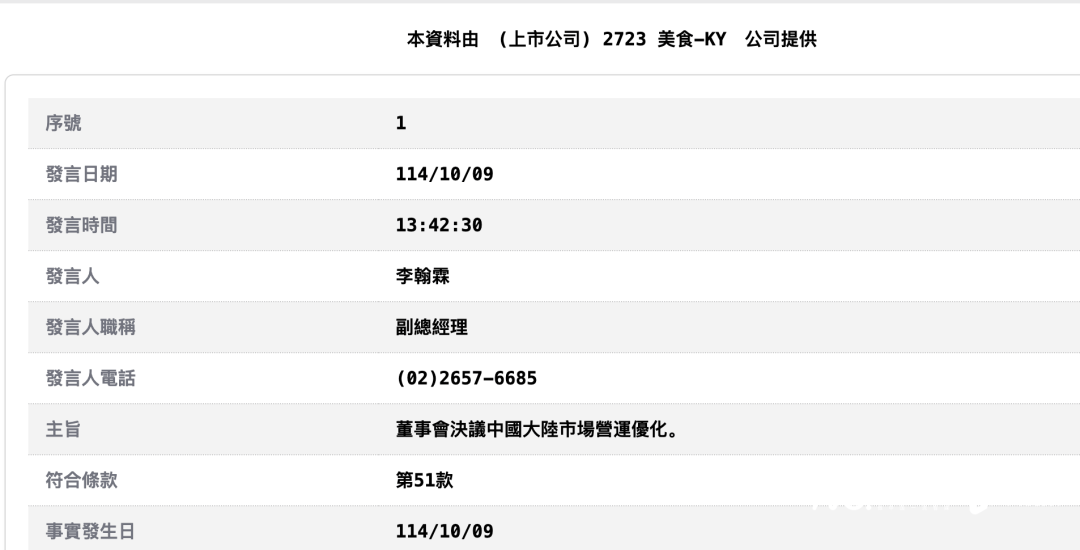
将大幅关闭门店?85度C回应:仍对中国大陆市场抱有信心
Nan Fang Du Shi Bao· 2025-10-14 03:59
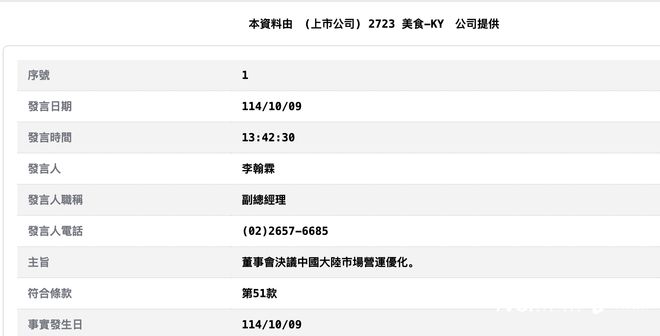
Core Viewpoint - 85°C, a subsidiary of Meishi-KY, is adjusting its operational strategy in mainland China by closing underperforming stores, with an expectation to close over 40 stores this year, while maintaining confidence in the market [1][2][3]. Group 1: Operational Adjustments - The board of Meishi-KY has decided to optimize its operational scale in mainland China, terminating operations in specific regions and stores where profitability has consistently fallen below expectations [2][3]. - The company aims to enhance resource allocation in production, logistics, and operational support alongside the store closures, which is expected to improve overall resource efficiency and shareholder value in the medium to long term [2][3]. Group 2: Financial Performance - 85°C has experienced a significant decline in revenue in mainland China, with a reported 11.08% decrease in revenue to approximately 35.22 billion New Taiwan Dollars (about 8.22 billion RMB) in the first half of the year [6]. - The overall revenue for Meishi-KY in the first three quarters was approximately 137.7 billion New Taiwan Dollars, reflecting a 2% decrease compared to the previous year [6]. - In 2024, revenue from mainland China is projected to drop by 22.19% to 80.53 billion New Taiwan Dollars, following a 0.25% decline in 2023 [6]. Group 3: Market Dynamics - 85°C's store count in mainland China has decreased from 467 to 386, a reduction of 81 stores, with a significant concentration in the East China market, particularly in Jiangsu, Shanghai, and Fujian [4][5]. - The brand is facing challenges due to aging brand perception and declining product competitiveness, leading to a lack of appealing new products and ultimately resulting in decreased store performance [8][9]. - The competitive landscape in the bakery sector is characterized by regional traits, which complicates supply chain management and may increase operational costs due to reduced scale effects from store closures [9].
雅诗兰黛业绩下滑 外资巨头面临挑战
Zhong Guo Jing Ying Bao· 2025-08-29 14:46
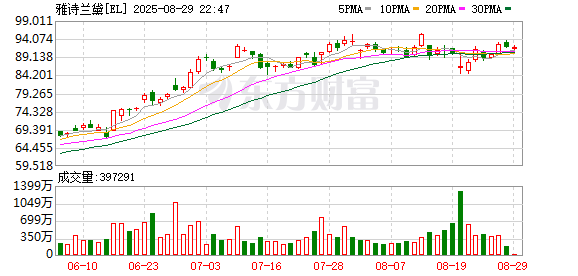
Core Insights - Estée Lauder reported an 8% year-over-year decline in organic net sales for the fiscal year 2025, with a loss of $785 million in operating profit [2][3] - The decline in the Chinese market was 6%, attributed to increased competition from local mid-to-high-end beauty brands and a failure to engage younger consumers [2][4] Financial Performance - For fiscal year 2025, Estée Lauder achieved organic net sales of $14.326 billion, down 8% from the previous year [2] - In mainland China, organic net sales were $2.741 billion, reflecting a 6% decline [3] - The company experienced a significant drop in net sales in previous fiscal years, with a 10.3% decrease in fiscal year 2023 and a 58% drop in net profit [3] Market Dynamics - The decline in sales is largely due to a downturn in global travel retail, which constitutes a significant portion of Estée Lauder's business [3][5] - The high-end beauty market is expected to grow by 2% to 3% in fiscal year 2026, with a recovery in travel retail anticipated [3] Competitive Landscape - Estée Lauder faces challenges from emerging local brands that are innovating in product concepts and marketing strategies, appealing to younger consumers [5][6] - The company has been criticized for its slow product innovation and lower R&D investment compared to competitors like L'Oréal [4][6] Strategic Challenges - Estée Lauder's reliance on travel retail channels and its slower product innovation cycle are seen as weaknesses in a rapidly changing market [6] - The company is also facing difficulties in adapting to the unique characteristics of the Chinese market, where online channels dominate and price competition is fierce [7] Future Outlook - The Chinese market is crucial for Estée Lauder, accounting for about 20% of its business, but the company must evolve its brand image and engage with younger consumers to avoid further declines [7] - Analysts suggest that the golden era for foreign mid-to-high-end brands in China may be over, with local brands increasingly taking the lead [7]

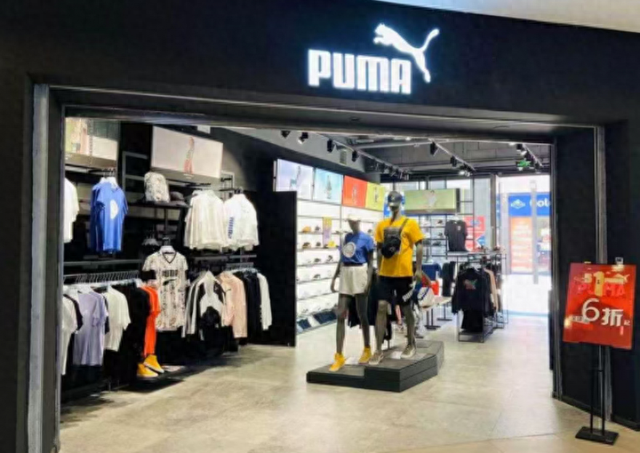
彪马出售疑云:经营不佳,品牌落伍,到底谁会接盘?
Hua Xia Shi Bao· 2025-08-27 13:57
Core Viewpoint - Puma's market value has nearly halved over the past year, and its performance continues to decline, leading to speculation about a potential sale of shares by major shareholder Pinault family [2][4] Company Situation - Puma's major shareholder, the Pinault family, is evaluating strategic options, including the potential sale of shares, but has not confirmed any transactions [2][4] - Puma's stock price surged by 20% following the sale rumors, marking the largest single-day increase since October 2001, with a current market value of approximately €3.2 billion [4] - Puma's revenue for 2024 is projected to grow by 4.4% to €8.817 billion, while net profit is expected to decline by 7.6% to €282 million [9] - In 2023, Puma's sales increased by 6.6% to €8.6017 billion, but net profit fell by 13.7% to €304.9 million [9] Market Competition - The sportswear market is highly competitive, with brands like Adidas and Nike dominating, while Puma struggles with brand aging and lack of differentiation [5][10] - Puma's marketing efforts have been weak, leading to a lack of brand presence in the market [10] - The shift in consumer preferences towards comfort and innovation in sportswear poses challenges for Puma, which has not adapted effectively [11] Potential Buyers - Potential buyers mentioned include Anta and Li Ning, but experts believe the likelihood of acquisition is low due to overlapping brand positioning and strategic focuses [7][8] - Anta is currently focused on integrating recent acquisitions, making it less likely to pursue Puma [7] - Li Ning's commitment to a single-brand strategy may hinder its ability to successfully integrate another brand like Puma [7][8] Brand Positioning - Puma's brand has been criticized for lacking clarity in its market positioning, with a failure to resonate with evolving consumer demands [10] - The brand's reliance on recycled materials has not improved product perception, leading to concerns about durability and appeal [10]
曾经批发商抢着要,如今业绩连年下滑,这个男装巨头迎“中年危机”
Sou Hu Cai Jing· 2025-06-16 01:06
1968年的夏天,在香港九龙的一间老式裁缝铺里,曾宪梓用一把剪刀剪出了第一条金利来领带。 从广东初到香港的曾宪梓,白天在舅舅的领带店打工,夜间摆摊卖自己亲手做的领带。他用6000港元租下的小作坊,最终做出了一个知名男装品牌。巅峰 时期,金利来在全国有超过3000家店,编织出一个"男人的世界"。曾宪梓也收获了"领带大王"的称号。 在70后、80后眼中,金利来是成功男人的"符号",也是年轻时代的"西装启蒙"。很多人进入职场的第一套正装、第一条领带,便印着金利来的LOGO。 1992年,金利来以远超同期行业的市盈率登陆港交所,成为最早一批上市的中国服装企业之一。33年后,市场早已今非昔比,金利来在年轻人中褪色 成"父辈的衣柜",最近一次进入公众视野的是一场"退市风波"。 二代曾智明发起的"私有化"要约因小股东否决而搁浅。目前,金利来股价不足1港元,市值不到10亿。 表面来看,金利来私有化失败是传统家族企业与现代资本市场的矛盾,争议焦点在于资产价值未被合理评估,中小股东对利益分配不满;但更深处的矛盾 或许在于,金利来伴随着20世纪正装文化鼎盛期上升,但随着消费需求变化,品牌定位逐渐迷茫。 走出历史光环的"领带大王", ...

屡罚不改!旺旺营销再翻车,贩卖情怀难“逆袭”
Ge Long Hui· 2025-06-02 01:52
Core Viewpoint - Wangwang, a well-known national brand, is struggling to keep up with the evolving market and consumer preferences, facing challenges from emerging food brands and a decline in its traditional product appeal [1][9]. Group 1: Marketing Issues - Wangwang has been penalized for false advertising, with a recent fine of 15,300 yuan for misleading claims about its high-calcium milk product [3][5]. - The company has a history of marketing failures, including past violations of advertising laws and misleading claims about product ingredients [6][7]. - Marketing strategies have not resonated with modern consumers, leading to ineffective campaigns that fail to attract new customer interest [10][12]. Group 2: Product and Innovation Challenges - Wangwang's flagship products, such as Wangzai milk, have not seen innovation in years, resulting in declining sales as consumer preferences shift towards healthier options [9][14]. - Despite attempts to launch new brands and products targeting different demographics, the reception has been lukewarm, indicating a lack of genuine innovation [10][12]. - The company has struggled to adapt to the online sales environment, missing out on significant e-commerce opportunities [11][12]. Group 3: Financial Performance - Recent financial results show a decline in revenue and profit, with a 4.83% drop in revenue to 10.833 billion yuan and a 23.6% decrease in net profit to 1.596 billion yuan for the first half of the 2022 fiscal year [13][14]. - The gross profit margin has been on a downward trend, falling from 48.05% in 2019 to 42.82% in the first half of 2022 [14]. - Analysts have expressed concerns about Wangwang's future performance, with several institutions lowering their target prices and profit forecasts due to challenging sales prospects [15].


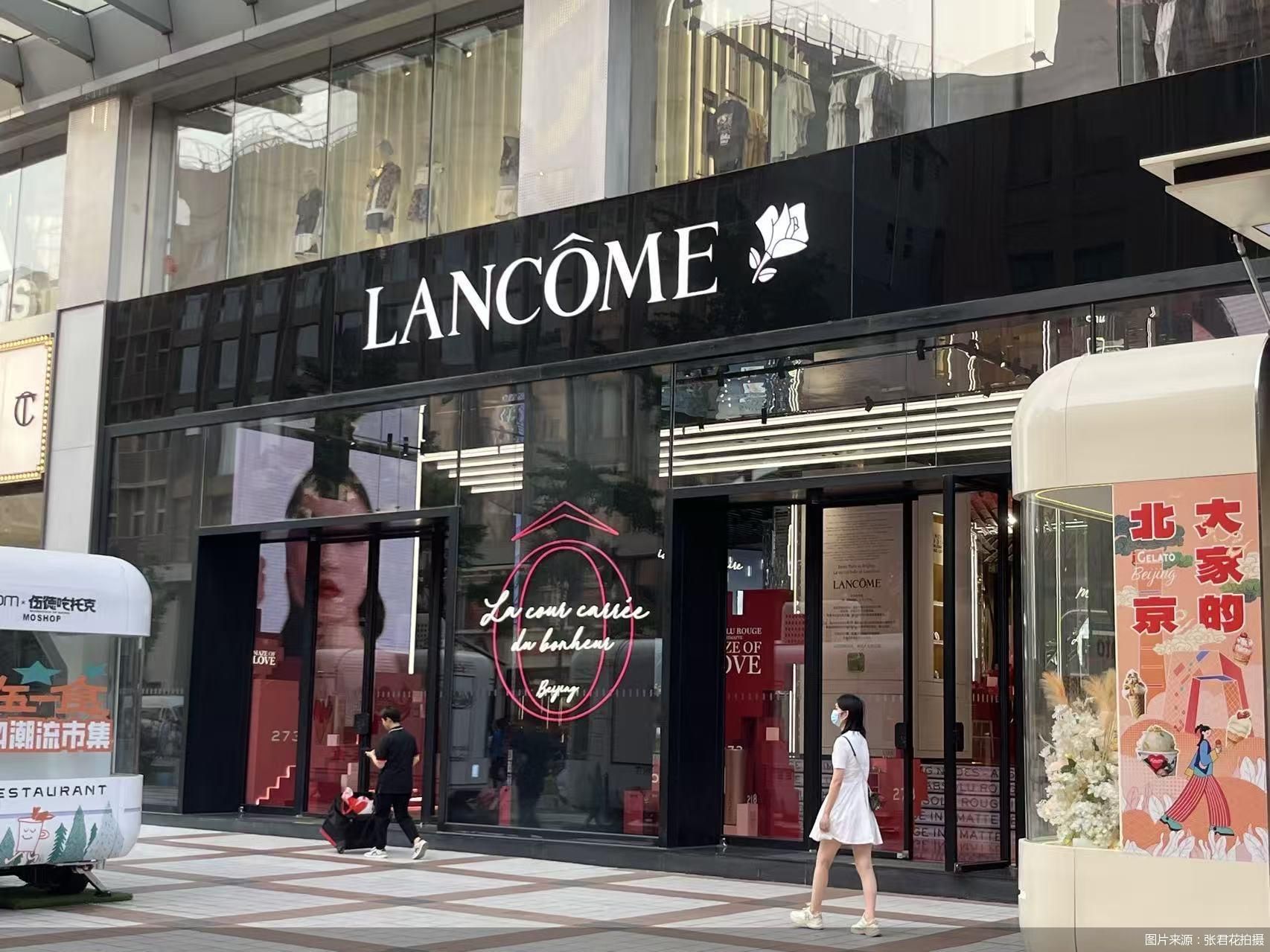
兰蔻换帅,欧莱雅“救火”
Bei Jing Shang Bao· 2025-05-27 12:41
Core Viewpoint - The appointment of Vania Lacascade as the new president of Lancôme is seen as a strategic move by L'Oréal to address the slowdown in growth within its high-end cosmetics division, which has been underperforming in recent years [1][4][5]. Group 1: Management Changes - Françoise Lehmann, the current global brand president of Lancôme, will step down, with Vania Lacascade taking over the role [3]. - This change is part of a broader restructuring within L'Oréal, which has seen multiple management adjustments over the past year, indicating a significant overhaul of the leadership team [3][4]. - Other notable changes include Richard Pinabel moving to Armani Beauty and Vincent Boinay becoming the North Asia President and CEO for China [3]. Group 2: Financial Performance - Lancôme is a key brand within L'Oréal's high-end cosmetics division, projected to achieve global sales of €2.36 billion in 2024, contributing approximately 30%-40% of the division's revenue [4]. - The high-end cosmetics division has faced challenges, particularly in the Chinese market, where sales have declined, with a reported drop of "negative double digits" in recent quarters [5][6]. - L'Oréal's overall performance has also slowed, with a noted decrease in consumer willingness to pay premium prices and increased competition from domestic brands [6]. Group 3: Strategic Importance of New Leadership - Vania Lacascade has a strong background in the beauty industry, having previously led the successful transformation of the skincare brand Vichy, achieving double-digit sales growth during her tenure [4][6]. - The leadership change is expected to inject new energy and perspectives into Lancôme, which is crucial for maintaining competitiveness in the global market [7]. - Lacascade's experience as L'Oréal's Chief Innovation Officer will aid in aligning Lancôme with the company's broader innovation strategies [7].

美邦服饰2024年由盈转亏 品牌老化与现金流危机下的经营困局
Xin Lang Zheng Quan· 2025-04-30 07:27
Core Insights - In 2024, the company reported disappointing financial results, with revenue of 681 million yuan, a year-on-year decline of 49.8%, and a net loss of 195 million yuan, a staggering year-on-year decrease of 715.4% [1] - The company faces multiple challenges, including brand aging, intensified market competition, and obstacles in strategic transformation, necessitating urgent brand upgrades and channel adjustments to find new growth points [1] Group 1: Core Business Weaknesses - The core business, particularly the casual wear segment, is suffering from brand aging and intensified market competition [2] - The company's brand positioning has become unclear, failing to keep pace with rapidly changing consumer preferences, leading to a loss of market share as some franchisees shift to other brands [2] - The gross margin is continuously declining due to the loss of pricing strategy and product differentiation, forcing the company to resort to discount promotions, which further erodes profitability [2] Group 2: Cash Flow Crisis and Strategic Challenges - The company is experiencing a persistent negative cash flow, with the net cash flow from operating activities being negative and the gap widening year-on-year, indicating poor sales collection efficiency [3] - Franchisee attrition and heavy short-term debt pressure are significant risks, with the company's debt-to-asset ratio far exceeding the industry average, raising concerns about financial safety [3] - Despite attempts to implement a "5.0 new retail" model, the high costs associated with promoting this new model hinder its short-term effectiveness [3] Group 3: Path to Recovery - To turn around its fortunes, the company must focus on product innovation through increased R&D investment to enhance product value [4] - Strengthening franchisee cooperation and optimizing channel structure are essential for improving business performance [4] - A deepened brand upgrade and a redefined brand positioning are crucial to meet the dual demands of young consumers for fashion and quality [4]

关税风暴下,雅诗兰黛迎来“凛冬时刻”
2 1 Shi Ji Jing Ji Bao Dao· 2025-04-24 12:34
作为老牌全球美妆巨头,雅诗兰黛的生产地分布在全球范围内,在中国销售的产品主要生产于英国、日 本、加拿大等生产基地,以确保最大程度保证产品供应的灵活。但据国药监进口化妆品注册信息显示, 雅诗兰黛仍有不少产品原产地为美国,比如专研光透焕白精华素、倩碧卓效祛痘凝胶等产品,以及一部 分第5代小棕瓶眼霜、智妍胶原霜等热销产品。 关税政策下,雅诗兰黛部分产品的原材料成本压力陡增。如果将关税成本转嫁至终端,其售价涨幅只高 不低。尽管当前雅诗兰黛的全球供应链布局能够在一定程度削减关税带来的成本上涨,但这些产品仍或 因产线单一,短期内难以转移生产,导致陷入"涨价失销量、不涨损利润"的两难困境。 21世纪经济报道记者易佳颖实习生林耀康上海报道 外资市场风起云涌。 据新华社报道,北京时间4月11日,中方宣布对原产于美国的进口商品加征关税税率提高至125%。国务 院关税税则委员会在公告中明确指出,"鉴于在目前关税水平下,美国输华商品已无市场接受可能性"。 具体到化妆品行业,雅诗兰黛、宝洁、高露洁等多家美国化妆品巨头,面对关税政策的波动,股价和市 值都有较大影响。据中国医药保健品进出口商会统计数据,2024年,美国对华化妆品出口额17 ...