
宏观经济形势

Search documents
东方企控集团(00018.HK)预计中期净利润不超200万港元 同比降92%
Ge Long Hui· 2025-11-13 10:56
Core Viewpoint - The company anticipates a significant decline in unaudited consolidated profit attributable to owners for the six months ending September 30, 2025, projecting a profit of no more than HKD 2 million compared to approximately HKD 25.01 million in the same period last year [1] Financial Performance - The expected unaudited consolidated profit attributable to owners is projected to be no more than HKD 2 million for the reporting period [1] - The previous year's unaudited consolidated profit attributable to owners was approximately HKD 25.01 million [1] Reasons for Decline - The decline in profit is primarily attributed to: - Adverse macroeconomic conditions leading to a decrease in revenue from the group's media and loan businesses [1] - Provisions for expected credit losses amounting to approximately HKD 6.144 million due to a decline in the value of collateral for certain loans [1]
东方企控集团发盈警 预期中期股东应占溢利不多于200万港元
Zhi Tong Cai Jing· 2025-11-13 10:56
Core Viewpoint - Oriental Enterprise Holdings (00018) anticipates a significant decline in unaudited consolidated profit attributable to owners for the six months ending September 30, 2025, projecting no more than HKD 2 million compared to approximately HKD 25.098 million in the same period last year [1] Financial Performance - The company expects unaudited consolidated profit attributable to owners to decrease from approximately HKD 25.098 million to no more than HKD 2 million [1] - The anticipated decline in profit is attributed to adverse macroeconomic conditions leading to decreased revenue from the group's media and loan businesses [1] Provisions and Losses - The company has made a provision for expected credit losses of approximately HKD 6.144 million due to a decline in the value of collateral for certain loans and related settlement arrangements [1]
国家发展改革委副主任周海兵会见乌拉圭外交部副部长苏卡西
Zheng Quan Shi Bao Wang· 2025-10-30 13:10
Core Viewpoint - The meeting between China's National Development and Reform Commission Vice Chairman Zhou Haibing and Uruguay's Deputy Foreign Minister Sukasi highlights the strengthening of bilateral relations and cooperation under the Belt and Road Initiative, emphasizing mutual benefits for both nations [1] Economic Cooperation - Zhou Haibing stated that China's economy is continuously improving and increasing its openness, which will create more opportunities for global economic development [1] - The Belt and Road Initiative has shown significant results in recent years, with fruitful pragmatic cooperation between China and Uruguay [1] Areas of Collaboration - Both parties expressed a desire to enhance communication and leverage their respective advantages to further strengthen cooperation across various fields [1] - Sukasi indicated Uruguay's active support for the Belt and Road Initiative and willingness to maintain institutionalized exchanges to promote practical cooperation in areas such as food, energy, green low-carbon initiatives, and digital economy [1]
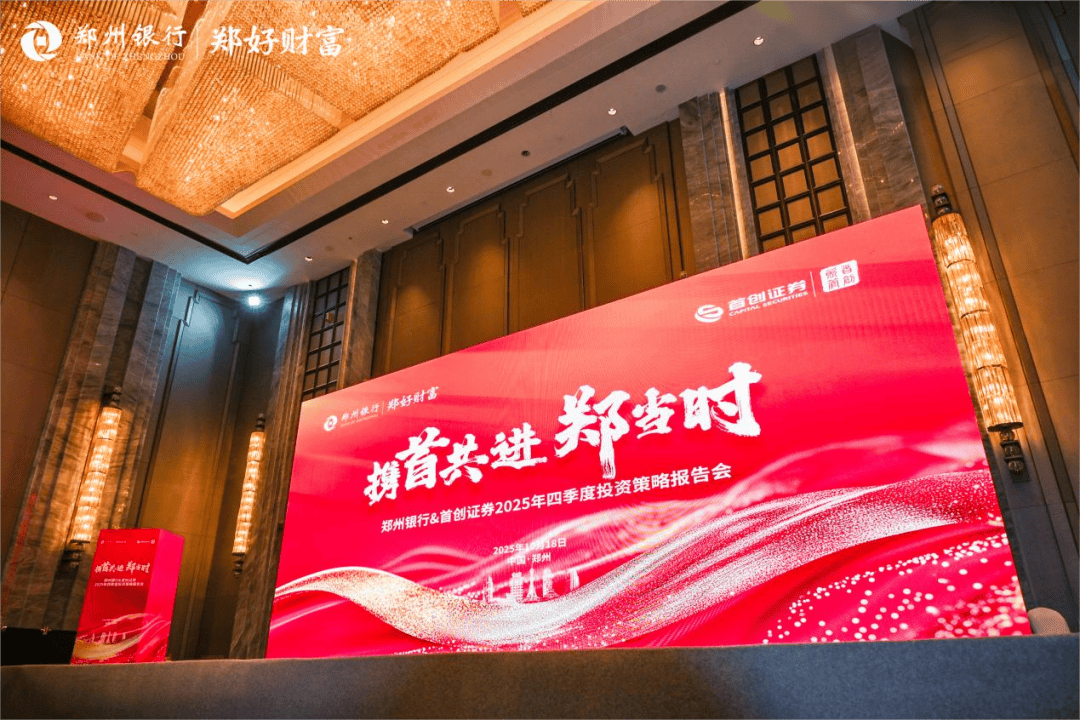
郑州银行:携“首”共进,“郑”当时——2025年四季度投资策略报告会圆满落幕
Sou Hu Cai Jing· 2025-10-27 06:40
Core Insights - The investment strategy report meeting hosted by Zhengzhou Bank focused on macroeconomic trends and asset allocation opportunities for the fourth quarter of 2025 [1][8] - The event gathered industry experts and valued clients to discuss the current economic environment and investment strategies [1][3] Group 1: Opening Remarks - The opening speech was delivered by Sun Runhua, Vice President of Zhengzhou Bank, emphasizing the bank's commitment to being a "professional wealth manager" amidst a complex economic landscape [3] - The bank aims to protect value and guide clients through market cycles, fostering a collaborative approach to wealth management [3] Group 2: Macroeconomic Insights - The first keynote address was presented by Dr. Chen Hui, Assistant President of the Asset Management Division at Shichuang Securities, who analyzed the macroeconomic situation and capital market outlook during the economic transformation cycle [4] - This analysis provided valuable references for investors' strategic planning [4] Group 3: Investment Strategies - Dr. Sun Min, an investment manager at Shichuang Securities, discussed investment opportunities in equity markets and fixed-income products, advocating for a "steady progress and dynamic balance" allocation strategy [6] - This presentation aimed to create a clear investment roadmap for the fourth quarter [6] Group 4: Interactive Session - The event featured an interactive Q&A session where attendees engaged with experts on asset allocation and industry opportunities for the fourth quarter [7] - The expert team provided detailed and insightful answers, enhancing participants' investment confidence and creating a lively atmosphere [7] Group 5: Future Outlook - The report meeting concluded with a reaffirmation of Zhengzhou Bank's commitment to client-centric services and collaboration with top partners to deliver professional market insights and customized wealth management solutions [8] - The bank aims to be a trusted wealth manager, helping clients seize timely investment opportunities [8]

2024年债券市场分析研究报告-CCDC
Sou Hu Cai Jing· 2025-10-26 10:44
Core Insights - The Chinese bond market demonstrated steady growth in 2024, expanding in scale and continuing product innovation while enhancing institutional frameworks and increasing openness to foreign participation, thereby supporting the real economy [1][2]. Economic Overview - The international economy showed a divergent recovery, with the US economy exceeding expectations while Europe faced recession. Global inflation gradually receded but remained uneven across major economies, leading to differentiated monetary policies [1][2]. - China's GDP grew by 5.0% year-on-year, with stable recovery in consumption and investment, providing a solid foundation for the bond market's development [1][2]. Bond Market Performance - The overall bond market operated smoothly, with issuance reaching 48.45 trillion yuan, a year-on-year increase of 6.83%, and total outstanding bonds growing to 156.56 trillion yuan. The yield on 10-year government bonds fell to 1.68% by year-end [1][2]. - Trading volumes increased, with cash settlement volumes at 416.38 trillion yuan and repurchase settlement volumes at 2,190.66 trillion yuan [1]. Product Innovation - The bond market saw significant product innovations, including the launch of green bonds and new debt financing tools, as well as the successful introduction of TLAC non-capital bonds [2]. Market Structure and Regulation - Continuous improvement in market regulations included enhancements in special bond management, risk prevention, and information disclosure mechanisms, alongside strengthened unified management of credit rating agencies [2]. Foreign Participation and Open Market - The bond market's openness progressed steadily, with optimized channels for foreign institutional participation and record issuance of panda bonds. Mechanisms like "Bond Connect" and "Swap Connect" were further refined [2]. Future Outlook - The bond market is expected to benefit from more proactive fiscal policies and moderately loose monetary policies, with continued growth in issuance anticipated. However, external risks such as global debt issues and trade protectionism remain concerns [2].

每日核心期货品种分析-20251020
Guan Tong Qi Huo· 2025-10-20 09:40
Report Summary 1. Report Industry Investment Rating No relevant information provided. 2. Core Views - Domestic futures contracts showed mixed performance on October 20th, with some rising and others falling. Different commodities have different market trends and influencing factors, and overall, the market is affected by a combination of macro - economic, supply - demand, and geopolitical factors [5]. - For most commodities, market uncertainties such as upcoming Sino - US economic and trade consultations, major domestic conferences, and geopolitical situations will impact their prices, and in some cases, it is recommended to stay on the sidelines and observe [10][13][14]. 3. Summary by Commodity Metals - **Copper**: The price of copper is affected by factors such as overseas interest rate cuts, supply disruptions at mines, and high domestic prices being resisted. It is expected to have a strong performance in the short - term, with the focus on the impact of major domestic conferences on market sentiment [8][10]. - **Silver**: The main contract of Shanghai silver fell nearly 4% on October 20th [5]. - **Gold**: The main contract of Shanghai gold (2512) had a capital outflow of 5.713 billion yuan as of October 20, 15:23 [6]. - **PVC**: The supply is relatively high, the downstream recovery is limited, the export expectation is weak, and the inventory pressure is large. It is recommended to stay on the sidelines and observe [19]. - **Coke and Coking Coal**: Coking coal prices rose, with domestic mine production increasing and demand from coking enterprises weakening. The market is affected by factors such as steel mill profits and coke price increases [20][21]. Chemicals - **Carbonate Lithium**: It shows a pattern of tight supply and demand, with prices rising. The supply has growth potential, and downstream demand is strong during the peak season [11]. - **Crude Oil**: The supply pressure in the fourth quarter is increasing, demand is weakening, and geopolitical risks are decreasing. It is expected to fluctuate weakly in the medium to long - term, and it is recommended to stay on the sidelines and observe [12][13]. - **Asphalt**: The supply is at a high level, demand is affected by factors such as weather and funds, and it is recommended to stay on the sidelines and observe due to potential oil price fluctuations [14]. - **PP**: The downstream start - up rate is low, supply is increasing, and demand during the peak season is less than expected. It is expected to fluctuate weakly [15][16]. - **Plastic**: The start - up rate is at a medium level, downstream demand during the peak season is less than expected, and it is expected to fluctuate weakly [17]. - **Urea**: The cost is rising, demand is weakening as autumn fertilizers end, and the market is expected to stabilize after a decline [22]. Agricultural Products - **Pork**: The main contract of live pigs rose nearly 3% on October 20th [5]. - **Apples**: The main contract of apples rose more than 2% on October 20th [5]. - **Soybeans**: The main contract of soybeans (No. 1) rose more than 1% on October 20th [5]. Financial Futures - **Stock Index Futures**: The main contracts of CSI 300, SSE 50, CSI 500, and CSI 1000 stock index futures all rose on October 20th [5][6]. - **Treasury Bond Futures**: The main contracts of 2 - year, 5 - year, 10 - year, and 30 - year treasury bond futures all fell on October 20th [6].
Investors are underpricing tariff risks, says Raymond James' Sunaina Sinha Haldea
Youtube· 2025-10-14 21:28
Core Insights - The private credit market has seen significant inflows, becoming a mainstream borrowing option, but this rapid growth brings inherent risks, as evidenced by recent bankruptcies [2] - Corporate balance sheets remain resilient, with strong fundamentals, but there is an expectation of more headlines related to financial distress in the coming quarters [3][4] - Investors are underestimating tariff risks, which have led to inventory stockpiling by companies, and now those without pricing power are beginning to pass costs onto consumers [6][7] Group 1: Private Credit Market - The private credit market has become a significant option for borrowing, but risks are emerging as not all financial instruments are underwritten properly [2] - Recent bankruptcies indicate potential issues within the private credit space, although they may not lead to systemic risks due to the resilience of corporate balance sheets [2][3] Group 2: Tariff Impacts - Companies have been stockpiling inventory in anticipation of tariffs, but as these inventories are depleted, the costs are starting to be passed on to consumers, particularly affecting those without pricing power [6][8] - The US dollar's low index is exacerbating import costs, creating additional challenges for companies dealing with tariffs [7] Group 3: Federal Reserve Considerations - The Federal Reserve faces a delicate balancing act in managing interest rates amid labor market softening and potential inflationary pressures from tariff impacts [10][11] - There is uncertainty regarding the Fed's future actions, especially in light of the evolving economic landscape and the potential for further interest rate cuts [10][11]
供应扰动再起,铜价延续强势
Da Yue Qi Huo· 2025-10-14 05:46
Report Title - Supply Disturbance Resumes, Copper Prices Remain Strong [1] Report Industry Investment Rating - Not provided Core Viewpoints - In 2025, the copper market may experience a slight surplus, and the supply and demand will remain in a tight - balance. Copper price fluctuations are mainly driven by macro - sentiment. Affected by the mudslide incident in the Freeport Indonesia mining area and the peak consumption season in October, copper prices are expected to be strong, and it is advisable to buy on dips. Copper prices may reach a record high [85]. Summary by Directory 1. Previous Review - Not provided in the content 2. Macroeconomic Aspect - US CPI has rebounded from a low level, with the CPI in May at 2.9% [14] 3. Fundamental Aspect - **Supply - Demand Balance**: The International Copper Study Group (ICSG) indicates that the global copper market will have a slight surplus in 2024 and may be in a tight - balance in 2025 [20] - **Supply - Mine Output**: The new output of various mines from 2024 - 2026 is provided in a table, with a total new output of 559 thousand tons in 2024, 665 thousand tons in 2025, and 557 thousand tons in 2026 [28] - **Supply - Domestic Refined Copper Output**: Not elaborated in detail - **Supply - Processing Fees**: Processing fees have reached a new low [35] - **Downstream Copper Consumption**: In SMM China's terminal industries, the power industry has the highest copper consumption at 31080 thousand tons (45.77%), followed by home appliances at 10080 thousand tons (14.84%), transportation at 7850 thousand tons (11.56%), other industries at 6960 thousand tons (10.25%), mechanical electronics at 6030 thousand tons (8.88%), and construction at 5910 thousand tons (8.7%) [38] - **Demand - Domestic Power Grid**: As of the first 8 months of 2025, the demand has increased by 13.99% year - on - year, with a cumulative demand of 379.5 billion. Equipment replacement in 2025 will drive grid demand, and policies provide some support [48] - **Demand - Real Estate**: As of the first 8 months of 2025, the cumulative sales area of commercial housing was 573.03 million square meters, a year - on - year decrease of 4.7%; the new construction area was 398.01 million square meters, a year - on - year decrease of 19.5%; and real estate investment was 603.09 billion, a year - on - year decrease of 12.9%. Despite policy relaxation, the real estate market is unlikely to perform well in 2025 [50] - **Demand - Air Conditioners**: As of the first 8 months of 2025, the air - conditioner production increased by 5.8% year - on - year, with a production of 199.64 million units. In 2025, domestic equipment replacement may drive growth, but exports face pressure [52] - **Demand - Automobiles**: As of the first 8 months of 2025, the cumulative automobile production was 21.05 million, a year - on - year increase of 12.7%. In 2025, traditional automobile consumption faces great pressure, and the growth rate of new - energy vehicles may also slow down [56] 4. Futures Market Structure - **Inventory**: Data on LME, SHFE, Comex, and bonded - area inventories from 2021 - 2025 are presented in graphs [63][64] - **Premium and Discount**: Information on the spot premium status at home and abroad is provided [71] - **CFTC**: Not elaborated in detail - **Domestic Funds**: The long - and short - position rankings of domestic futures companies are presented in a table [76] - **Open Interest**: Not elaborated in detail - **Technical Aspect**: The weekly chart of Shanghai copper is mentioned [79] 5. Outlook - **Indonesia Grabber Block Cave Mine Incident**: A mudslide on September 8, 2025, led to the suspension of mining operations. It is estimated to cause a production reduction of 200 thousand tons in 2025 (0.8% of the global total) and 300 thousand tons in 2026 (1.2% of the global total). In the futures market, it may stimulate copper prices to rise, and in the stock market, it is beneficial for the profit growth of copper - mining enterprises [84] - **Summary and Outlook**: In 2025, there will still be disturbances in the mining end, and demand is difficult to release rapidly. The supply and demand will remain in a tight - balance, and copper price fluctuations are mainly due to macro - sentiment. Copper prices are expected to be strong [85]
管涛:宏观经济形势与人民币汇率走势前瞻
Sou Hu Cai Jing· 2025-09-24 11:45
Economic Outlook - The biggest uncertainty facing China's economy this year is the extreme pressure from external tariffs, but the first half of the year showed three positive aspects: actual GDP growth of 5.3%, new achievements in technology and consumption, and proactive government measures to mitigate potential shocks [2] - The growth in the first half was primarily driven by resilient external demand, contributing an additional 1 percentage point to GDP growth, while consumption and investment saw declines of 0.3 and 0.4 percentage points respectively [3] - The second half of the year will depend on whether domestic demand can effectively take over, as investment, consumption, and external demand all showed signs of slowing down in August [4] Consumer Behavior and Debt Levels - The decline in household leverage is attributed to multiple factors, including structural changes in consumption behavior due to the pandemic, uncertainties in Sino-US trade relations, and fluctuations in asset prices affecting borrowing demand [5] - The ongoing deleveraging process among households poses challenges for traditional methods of stimulating consumption through increased leverage [5] Policy Recommendations - There is a need for stronger coordination between fiscal and monetary policies, focusing on enhancing the effectiveness of policies aimed at boosting consumption and investment [7] - Continuous monitoring of domestic and international economic conditions is essential to ensure timely policy responses, avoiding delays that could exacerbate economic downturns [7] - Policies should be carefully evaluated for consistency, especially those that may restrict consumption, to avoid counterproductive effects on economic stimulus [8] Currency Exchange Rate Dynamics - The RMB has shown resilience against the USD despite external pressures, with a cumulative appreciation of about 1% as of September 19, 2025, attributed to a combination of internal and external factors [10] - The RMB's exchange rate is influenced by various factors, including the depreciation of the USD and improvements in China's economic fundamentals, suggesting that the RMB is not significantly overvalued [11][12] - The ongoing trade surplus indicates upward pressure on the RMB, while domestic economic conditions suggest that it may be slightly overvalued relative to internal equilibrium levels [12] Market Sentiment and Future Outlook - Despite a net outflow of RMB in cross-border transactions, the overall market does not indicate significant concerns regarding the RMB's valuation [13] - Factors that could positively influence the RMB include potential interest rate cuts by the Federal Reserve and progress in Sino-US trade negotiations [14] - However, uncertainties remain regarding the pace of Fed rate cuts, future trade negotiations, and the impact of domestic economic conditions on consumer demand [14][16]

聚焦数字金融与绿色金融融合发展 深圳香蜜湖国金院2025秋季会议即将启幕
Zheng Quan Shi Bao Wang· 2025-09-19 14:31
Group 1 - The conference titled "Xiangmi Lake National Financial Institute 2025 Autumn Conference" will be held from September 20 to 21 in Shenzhen, focusing on the integration of digital finance and green finance, as well as macroeconomic trends [1][2] - Notable attendees include former officials from the China Securities Regulatory Commission, Shanghai Jiao Tong University, and China Construction Bank, who will discuss current hot topics in the economic and financial sectors [1][2] - The conference consists of a public meeting and a closed-door meeting, with the public session addressing challenges and pathways for the integration of digital and green finance, while the closed session will analyze macroeconomic conditions for the first half of the year [2] Group 2 - The public meeting aims to provide strategic insights and suggestions for the high-quality development of green finance and macroeconomics, addressing current economic challenges [2] - The closed-door meeting will feature authoritative interpretations and in-depth discussions on macroeconomic performance, with participants sharing professional insights and recommendations [2]