消费转型

Search documents
社零总额连续下降,北京消费乏力了? 专家:商品消费、服务消费综合性指标 更全面反映消费市场变化
Bei Jing Shang Bao· 2025-07-17 13:21
Core Insights - Beijing's service consumption is active, but the total retail sales of consumer goods (社零总额) are declining, with a year-on-year decrease of 3.8% in the first half of 2023 [1][5][4] - The overall market consumption in Beijing grew by 0.9% year-on-year, driven by a 4.7% increase in service consumption in sectors like information, transportation, and cultural entertainment [1][7] Consumption Trends - The total retail sales reached 673.42 billion yuan, with a decline in both goods retail (606.16 billion yuan, down 3.8%) and catering revenue (67.26 billion yuan, down 3.6%) [5][6] - Basic living and fashion goods performed well, with sales increases of 13.9% for grain and oil, 36.1% for gold and jewelry, 9.3% for sports and entertainment products, and 7.6% for cosmetics [5][6] - The "old-for-new" consumption policy positively impacted sales in home appliances and cultural office supplies, with increases of 4.6% and 3.1% respectively [5] Consumer Spending - Despite the decline in total retail sales, residents' per capita consumption expenditure grew by 2.8%, with urban residents at 2.6% and rural residents at 4.3% [5][6] - The increase in service consumption is significant, with per capita service expenditure rising by 5.2%, accounting for 58.9% of total consumption expenditure [7] Emerging Consumption Patterns - The "it economy" is experiencing rapid growth, with pet-related consumption reaching 77.375 billion yuan, a year-on-year increase of 8.84% [8] - The popularity of niche brands is rising, with 79% of consumers in mainland China accepting these brands, particularly in beauty, fashion, and home goods [8] Policy and Structural Changes - The "Beijing Action Plan for Deepening Reform to Boost Consumption" aims to create an international consumption experience zone and support the establishment of flagship stores and local fashion brands [9] - The market is undergoing a structural adjustment, with service and cultural consumption growing faster than traditional goods consumption, indicating a shift towards a more experience-driven economy [13][14]

天风证券晨会集萃-20250714
Tianfeng Securities· 2025-07-13 23:45
Group 1 - The report highlights that China is transitioning from high-speed growth to high-quality growth, with economic indicators resembling the later stages of Japan's third consumption society and the brand consumption phase in the US [1] - For essential consumption, the investment strategy focuses on low-valuation, high-quality growth stocks with high dividend yields, particularly in the food and beverage and textile sectors [1] - In the optional consumption sector, there are signs of improvement in macroeconomic data, suggesting a potential turning point, with recommendations to select companies showing operational improvements based on financial reports [1] Group 2 - The report indicates that the A-share market has shown a breakthrough in indices, with a shift in style, where mid-cap indices performed strongly while large-cap indices lagged [3] - Domestic economic indicators such as CPI and PPI are showing mixed signals, with CPI returning to positive growth while PPI's decline is widening, indicating a complex economic environment [3][29] - The report suggests focusing on sectors like real estate, steel, and non-bank financials, which have been characterized as "cold" industries but are currently leading the market [3] Group 3 - The report emphasizes the importance of the banking sector, noting that policy support and increased asset allocation from insurance companies could enhance the attractiveness of bank stocks [8] - The report identifies specific banks for investment, including Chengdu Bank and Agricultural Bank of China, based on their potential for improved asset quality and profitability [8] Group 4 - The report discusses the robotics industry, particularly the application of cycloidal reducers in humanoid robots, highlighting their advantages in torque and shock resistance [10] - Companies like Double Ring Transmission are collaborating with Tesla on developing small RV reducers, indicating a growing interest in this technology [10] Group 5 - The scientific instruments industry is characterized by a significant presence of foreign brands, with domestic brands still underrepresented, indicating a strong potential for domestic substitution [11] - The report notes that the mass spectrometry market in China is valued at 16.712 billion yuan, with foreign companies holding over 90% of the global market share, highlighting the need for domestic innovation [11]
策略专题:新思考:海外消费转型的宏观与中观映射
Tianfeng Securities· 2025-07-11 07:26
Group 1 - The core conclusion of the report indicates that the current consolidation in the consumer sector is a pause rather than an end, drawing parallels from the long transformation processes in the US and Japan [1][10]. - The report identifies a common trend in consumer behavior shifting from family-oriented consumption to individual-focused consumption, with a transition from optional consumption in urban lifestyles to personal spiritual consumption, often accompanied by a decline in GDP growth rates [2][4]. - It is noted that China is currently transitioning from high-speed growth to high-quality growth, with economic indicators resembling the later stages of Japan's third consumption society and the latter half of the US brand consumption phase [4][26]. Group 2 - For essential consumption, the investment strategy is based on a "bottom warehouse" thinking, focusing on undervalued quality growth stocks with high dividend yields, particularly in the food and beverage and textile sectors [5][40]. - The report emphasizes that the essential consumption sector is largely in a mature stage, characterized by stable low growth, and suggests that the investment approach should prioritize low valuation and high ROE [5][40]. - In the optional consumption sector, the report suggests that the configuration strategy should focus on operational improvement indicators from financial reports, aligning investments with macroeconomic data improvements [6][51]. Group 3 - The report highlights that the current consumer data may indicate a fundamental turning point, with macroeconomic data showing positive signals, particularly in the optional consumption sector [6][51]. - It is suggested that the configuration strategy for optional consumption should involve selecting companies with operational improvements based on financial reports and macroeconomic data trends [6][51]. - Specific sectors to focus on include motorcycles and home appliances, with an emphasis on identifying companies that show marginal improvements in ROE and profit growth [6][51].
新思考:海外消费转型的宏观与中观映射
Tianfeng Securities· 2025-07-11 00:12
Group 1 - The core conclusion of the report indicates that the current consolidation in the consumer sector is a pause rather than an end, drawing parallels from the long transformation processes in the US and Japan [1][9] - The report identifies a common trend in consumer behavior shifting from family-oriented consumption to individual-oriented consumption, with a focus on spiritual consumption, often accompanied by a decline in GDP growth rates [2][10] - It is noted that China is transitioning from high-speed growth to high-quality growth, with economic indicators resembling the later stages of Japan's third consumption society and the latter half of the US brand consumption phase [2][25] Group 2 - For essential consumption, the investment strategy is based on a "bottom warehouse" thinking, focusing on undervalued quality growth stocks with high dividend yields, particularly in the food and beverage and textile sectors [3][33] - The essential consumption sector is characterized by low growth and moderate to low valuations compared to other mature industries, indicating a defensive attribute [3][39] - The optional consumption strategy emphasizes identifying companies with operational improvements, leveraging macroeconomic data to guide investment decisions, particularly in the motorcycle and home appliance sectors [4][40]
非标商业的海南实践:主理人经济的破局与嵌合
Hai Nan Ri Bao· 2025-07-02 01:18
Core Insights - The transformation of China's consumer market reflects a shift from basic survival needs to a focus on self-fulfillment, quality, and meaning, with service consumption projected to account for 46.1% of per capita spending in 2024 [3][7] - Hainan is emerging as a testing ground for innovative non-standard commercial models, driven by a combination of policy support and local cultural elements [4][10] Group 1: Non-Standard Commercial Models - Non-standard commercial models are characterized by unique, open-space layouts and personalized branding, catering to the emotional and social needs of consumers [4][5] - Hainan's non-standard commercial landscape showcases a diverse array of businesses, from themed cafes to cultural bookstores, which serve as emotional connection points rather than traditional retail outlets [5][6] - The rise of non-standard business practices is reshaping the consumer experience in Hainan, moving away from standardized products to a focus on emotional resonance and local culture [6][9] Group 2: Consumption Structure in Hainan - Hainan's consumption structure is defined by a dynamic interplay between duty-free shopping, taxable commercial activities, and non-standard business models, creating a complementary ecosystem [7][8] - Duty-free shopping is a key driver of Hainan's consumer market, with sales expected to reach 47 billion yuan in 2024, attracting over 10 million shoppers [8] - Non-standard businesses play a crucial role in bridging the gap between high-end and basic consumer needs, enhancing the overall value proposition of Hainan's market [8][9] Group 3: Future Development and Innovation - The evolution of non-standard commercial practices in Hainan requires systematic development and support, including legislative measures and the establishment of associations to facilitate collaboration among business owners [10][11] - Cultural integration is essential for the success of non-standard businesses, with a focus on transforming local heritage into marketable experiences [10] - Scene innovation is vital for redefining consumer interactions, with non-standard businesses encouraged to create multifunctional spaces that foster community engagement [11]

基于LMDI因子分解与美日经验的政策启示:从生产国到消费国的跨越:中国内需扩张路径
NORTHEAST SECURITIES· 2025-07-02 01:03
1. Report Industry Investment Rating No relevant content provided. 2. Core Views of the Report - China's past economic growth model relying on investment and exports is unstable, and it is necessary to switch to a consumption - driven model for sustainable development. The current actual consumption rate is at least 15% lower than the optimal level, and there is a large room for improvement [3][11][14][114]. - Since 2010, China's household consumption rate has shown an upward trend after hitting the bottom. Currently, the household consumption propensity dominates the trend of the household consumption rate. How to improve the household consumption propensity is the core focus of subsequent policies [3][25][44]. - The United States and Japan have successfully transformed into consumer - driven economies through different paths, providing valuable references for China. However, China faces problems such as premature population aging, relatively lagging urbanization, and relatively insufficient income growth, so the consumption transformation may be more difficult. It is estimated that China needs about 15 years to become a consumer - driven country [4][46][114][115]. - The core constraints on China's household consumption rate are the systematic pressure on the consumption propensity on the demand side and the structural imbalance between supply and demand of service consumption on the supply side. Policies should focus on multiple dimensions such as increasing property income, improving the social security system, optimizing the population structure, building a consumption culture, and increasing the supply of high - quality service consumption [5][75][116]. 3. Summary According to the Table of Contents 3.1.大国发展引擎转变:消费转型是中国持续发展的必经之路 - The structure of investment, exports, and consumption determines the medium - and long - term development quality of the economy. China's export - oriented and investment - driven models have limitations, while the consumption - driven model is more stable, long - lasting, and sustainable [11]. - China's final consumption expenditure as a percentage of GDP is lower than the global average, and the capital formation as a percentage of GDP is significantly higher than that of international mainstream economies, showing an obvious investment - driven characteristic [14][15]. - By constructing a dynamic analysis framework of the optimal and actual consumption rates, it is found that China's actual household consumption rate has been lower than the optimal level since 1990. After 2010, the consumption gap began to narrow, and there is still at least a 15% room for improvement [21]. - An increase in interest rates leads to a decrease in the optimal household consumption rate, indicating that the substitution effect dominates the consumption - savings decision in China, and a lower interest rate is conducive to the recovery of consumption [21]. 3.2.消费率演变三阶段:基于LMDI因子分解探寻低消费原因 - Since the reform and opening - up, China's household consumption rate has gone through three stages: an initial up - and - down stage from 1978 - 2000, a continuous decline stage from 2000 - 2010, and a recovery stage since 2010 [25]. - Using the LMDI model to decompose the change in the household consumption rate, it is found that the consumption propensity and primary distribution mainly dominate the long - term trend of China's household consumption rate. After 2005, the consumption propensity became the core variable explaining household consumption [32]. - In different stages, different factors affected the consumption rate. From 1978 - 2000, inflation risks and government policies led to a decline in the consumption rate; from 2000 - 2010, the substitution of external demand for domestic demand and the imbalance in primary distribution led to a continuous decline in the consumption rate; since 2010, the household consumption propensity has dominated the trend of the household consumption rate, and the COVID - 19 pandemic has had an impact on the consumption rate [35][41][44]. 3.3.美日转型启示录 3.3.1.美国经验:人口红利+消费信贷创新 - After World War II, the United States achieved an economic transformation from a production - and - export - driven model to a consumption - oriented society. This transformation required government intervention in multiple aspects [47]. - The release of the population dividend, the improvement of urbanization, and the continuous growth of disposable income provided a foundation for the expansion of domestic demand in the United States. The government also promoted the development of consumption through credit innovation and the improvement of the social security system [47][51]. 3.3.2.日本经验:国民收入倍增计划 - In the 1970s, Japan transformed from a production - oriented economy to a consumption - oriented economy under the pressure of external environment deterioration. Although Japan faced problems such as premature population aging, the "National Income Doubling Plan" increased residents' purchasing power, and the improvement of the social security system and financial services promoted consumption [53][57][66]. 3.3.3.中国启示:城镇化、收入增收仍有空间 - China faces problems such as premature population aging, relatively lagging urbanization, and relatively insufficient income growth compared with the United States and Japan during their transformation periods. There is still potential for urbanization and income growth in China [71]. 3.4.政策工具箱:多维消费驱动战略 3.4.1.提升财产性收入:从利息依赖到权益赋能 - China's labor compensation ratio is comparable to that of major global economies, but the property income structure shows an extreme differentiation of "interest dependence and equity absence", which suppresses the consumption propensity. Policies should focus on capital market reform to increase the proportion of equity dividends and activate property income [76][78]. 3.4.2.社保制度迭代:从普惠性覆盖到质量提升 - China's social security system has problems such as incomplete coverage and significant differences in pension levels between urban and rural areas, which restrict the release of consumption momentum. Future policies should focus on improving the inclusiveness and quality of the social security system [80][89]. 3.4.3.人口结构优化:释放短中长期消费潜力 - China's low fertility rate and increasing dependency ratio put pressure on consumption. Fertility support policies can directly increase consumption in the short term and release the consumption potential of the youth group in the long term. The silver economy also has great potential [95][100]. 3.4.4.观念革新:消费文化构建 - The formation of a consumption - oriented society requires the construction of a consumption culture. Currently, Chinese residents' consumption concepts are still relatively conservative, and policies should balance the traditional thrift concept and the demand for consumption - driven transformation [103][107]. 3.4.5.增加优质服务消费供给 - China's service consumption has problems such as a low proportion of service industry added value in GDP and a low proportion of service - related expenditures in total consumption. Policies should focus on expanding the opening - up of the service industry, building a cross - border service trade promotion system, and increasing the supply of high - quality service consumption [109][112]. 3.5.总结与展望 - China needs to switch to a consumption - driven growth model. The consumption transformation may be more difficult than that of the United States and Japan, and it is estimated to take about 15 years. - Future policies should focus on improving the household consumption propensity from four dimensions: income, population structure, social security, and cultural construction, and increase the supply of high - quality service consumption on the supply side [114][115][116].
社会服务新消费研究之茶饮行业研究框架
Changjiang Securities· 2025-07-01 01:16
Investment Rating - The report maintains a "Positive" investment rating for the tea beverage industry [6]. Core Insights - The tea beverage industry has evolved into a trillion-yuan new consumption sector, driven by product cycles and changing consumer demands [20][24]. - The industry is experiencing a shift from basic functional needs to more complex demands, including product, experience, social, and brand needs [24]. - There is significant growth potential in both domestic and international markets, particularly in lower-tier cities and Southeast Asia [31][45]. Summary by Sections 01 Consumption: A Product of Economic and Demographic Cycles - The report outlines the correlation between economic cycles and consumer spending, highlighting that per capita GDP growth has shifted from 14% during the reform era to 7% in the high-quality development era [13]. - It identifies key factors influencing consumption, including income expectations, demographic structure, and economic conditions [16]. 02 Tea Beverage Industry: Space, Structure, and Barriers - The current market for ready-to-drink tea has reached a scale of over 100 billion yuan, with a compound annual growth rate (CAGR) of 27% from 2015 to 2018 [21]. - The demand for tea beverages has evolved, with consumers now seeking products that fulfill multiple needs beyond basic functionality [24]. - The report predicts that by 2030, the number of tea beverage stores could reach between 42,800 to 94,400, depending on market conditions, with a five-year CAGR of 11% to 21% [37]. - The competitive landscape shows that lower-priced products are gaining market share, with the average price point for tea beverages narrowing [49]. 03 Investment Recommendations - The report suggests focusing on tea beverage companies that have growth potential, a favorable competitive landscape, and operational barriers, as the industry is expected to maintain a high level of consumer interest [62].

华泰证券:消费提振政策持续发力,龙头价值重估与结构性增长机遇并存
news flash· 2025-06-25 23:34
Group 1 - The core viewpoint is that Huatai Securities analyzes the consumer goods sector's industry trends, highlights, and investment themes, maintaining a positive outlook on the transformation of China's economic growth engine towards consumption [1] - In the context of global trade frictions and international disturbances, the consumer sector, driven by domestic demand, exhibits notable defensiveness and certainty, particularly by 2025 [1] - Since 2024, a series of consumption-promoting policies have been introduced, leading to a U-shaped recovery in retail sales growth and consumer confidence index, with expectations for continued policy support in the second half of the year [1] Group 2 - On a micro level, most food and beverage companies have completed channel inventory destocking and are driving revenue and profit growth through category expansion, channel innovation, and efficiency improvements [1] - Huatai Securities believes that there are both value reassessment opportunities for leading companies in the consumer goods sector and structural growth prospects [1]

高端白酒格局生变?新禁酒令难撼贵州茅台“供不应求”基本盘
Sou Hu Cai Jing· 2025-06-15 16:40
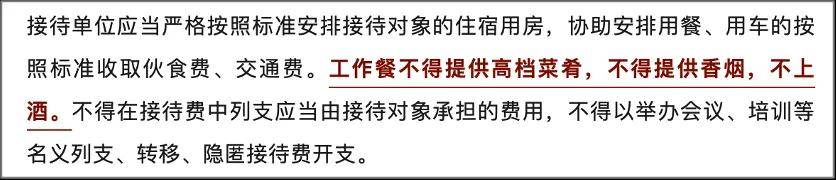
Group 1 - The revised regulation on public reception prohibits high-end dishes, cigarettes, and alcohol, which is considered the strictest "ban on alcohol" in history [1][2] - The previous ban on alcohol in 2012 led Guizhou Moutai to shift its consumer base from public consumption to private enterprises and the general public, reducing the proportion of public consumption from over 30% to 1% [3] - The new policy will have some impact on Guizhou Moutai, but it is expected to be less severe than the 2012 regulations [3] Group 2 - The white liquor industry has seen a decline in annual sales volume since 2015, with projections for 2024 indicating sales of 4.15 million kiloliters, less than half of the 2015 figures [4] - Despite the decline in overall consumption, the demand for high-quality liquor is increasing, which is favorable for high-end brands like Guizhou Moutai [4] - Guizhou Moutai's revenue and net profit have significantly increased over the past decade, with projected revenues of 174.144 billion yuan and net profits of 86.228 billion yuan in 2024, representing 5.2 times and 5.6 times the figures from 2015, respectively [6] - The company's gross profit margin has consistently remained above 90%, significantly higher than other companies in the industry [7] Group 3 - The current ban on alcohol is expected to have a limited impact on Guizhou Moutai, as it will accelerate the exit of companies heavily reliant on government consumption, leading to increased industry consolidation [9] - Guizhou Moutai's production capacity is constrained by geographical and biological factors, with a designed capacity of 46,412 tons per year, resulting in a supply-demand imbalance in the market [10]

茅台跌破两千,禁酒令是更大危机,国酒只有走入民间才能涅槃重生
Sou Hu Cai Jing· 2025-06-12 21:44
Core Viewpoint - The article discusses the decline in the price and popularity of Moutai, once considered "liquid gold," and explores the reasons behind this trend, questioning whether it can experience a revival in the future. Group 1: The Rise of Moutai - From 2018 to 2023, Moutai created a myth in the Chinese consumer market, with its official price of 1499 yuan often exceeding 3000 yuan in retail [3] - During its peak, Moutai was seen as a wealth-generating tool, with distributors reporting profits of over 2000 yuan per bottle, leading to a distorted industry chain [3] - Moutai's stock price reached over 2600 yuan in 2021, marking its financial peak and transforming it into a financial derivative [5] Group 2: The Burst of the Bubble - Starting in 2024, Moutai's pricing system began to collapse, with wholesale prices dropping below 1800 yuan by June 2025, a 50% decrease from peak values [8] - The younger generation (under 25) has reduced their consumption of Moutai by 47%, favoring lower-alcohol beverages instead [10] - A new "ban on alcohol" policy in 2024 led to a 70% reduction in government alcohol spending, significantly impacting Moutai's sales [10] Group 3: The Struggle for Survival - In 2025, Moutai initiated a transformation to return to its roots, focusing on making the product more accessible and relevant to consumers [14] - The introduction of smaller bottle sizes and lower-alcohol options has seen a 300% increase in orders for Moutai as wedding wine [16] - Moutai is also working to eliminate intermediaries, with its direct sales platform controlling 76% of traffic, significantly reducing distributor profit margins [16] Group 4: Cultural and Market Transformation - Moutai is attempting to reshape its cultural identity by promoting itself as a family heritage product and creating new consumption scenarios [18] - The company aims to transition from being a symbol of power to a beloved consumer product, emphasizing quality over scarcity [18] - The historical context suggests that Moutai has previously adapted to market changes, indicating a potential path forward through innovation and consumer engagement [18]