
生成式AI

Search documents
一年一度最值得关注的AI榜单来啦!申报即日启动
量子位· 2026-03-27 07:00
Core Insights - The article discusses the evolution of generative AI in China, highlighting its transition from a "new technology" to an essential tool for businesses, impacting content production, R&D efficiency, marketing methods, team collaboration, and decision-making processes [1]. Group 1: Event Overview - The Fourth China AIGC Industry Summit will take place in May 2026, where Quantum Bit will announce the results of its evaluation of generative AI companies and products based on their performance and feedback over the past year [1][2]. - The summit aims to invite millions of industry practitioners to witness the recognition of outstanding companies [2]. Group 2: Evaluation Criteria for Companies - The evaluation will focus on companies that are either based in China or have their main business operations in China, with a primary focus on generative AI or extensive AI application in their core business [7]. - Companies must have demonstrated outstanding performance in technology, product development, or commercialization over the past year [7]. Group 3: Evaluation Dimensions for Companies - The evaluation will consider several dimensions: 1. **Technical Dimension**: Assessing the company's technical strength, R&D capabilities, and innovation [12]. 2. **Product Dimension**: Evaluating the innovation, market adaptability, and user experience of core products [12]. 3. **Market Dimension**: Analyzing the company's market performance and growth opportunities [12]. 4. **Potential Dimension**: Focusing on the core team's strength and brand potential [12]. Group 4: Evaluation Criteria for Products - The evaluation will focus on products that are based on generative AI capabilities, have mature technology, and have been launched in the market with a certain user base [13]. - Products must have significant technological innovations or functional iterations in the past year that promote the application of AI technology and have a certain impact on the industry [13]. Group 5: Evaluation Dimensions for Products - The evaluation will consider several dimensions for products: 1. **Product Technical Strength**: Assessing the advanced nature, maturity, and efficiency of the product's technology [13]. 2. **Product Innovation**: Evaluating the uniqueness and innovation in functionality, experience, and application scenarios [13]. 3. **Product Performance**: Analyzing user feedback and market performance, including user scale and retention [13]. 4. **Product Potential**: Focusing on future development and market expansion potential [13]. Group 6: Registration Information - Registration for the evaluation is open now and will close on April 27, with the final results to be announced at the May summit [14]. - Companies can register through specified contact methods, including WeChat and email [14].


商汤-W:2025年报点评:多模态融合筑壁垒,经营造血夯根基-20260327
GUOTAI HAITONG SECURITIES· 2026-03-27 02:50
Investment Rating - The report maintains a "Buy" rating for SenseTime-W (00020.HK) and raises the target price to HKD 2.72 [1][10]. Core Insights - SenseTime reported a revenue exceeding RMB 5 billion for 2025, with a year-on-year growth of 33%. The company achieved positive EBITDA and operating cash flow in the second half of the year, marking a significant transition towards profitability [2][10]. - The core growth driver is generative AI, which saw a remarkable 51% increase in revenue to RMB 3.6 billion, accounting for 72% of total revenue, indicating a successful strategic shift towards generative AI [10]. - The NEO architecture is leading breakthroughs in multimodal technology, creating a competitive edge that is difficult to replicate. The architecture requires only 1/10 of the data and computing power compared to industry standards to achieve state-of-the-art performance [10]. Financial Summary - For 2025, the company reported total revenue of RMB 5,015 million, with projections of RMB 6,506 million for 2026, RMB 8,107 million for 2027, and RMB 9,867 million for 2028, reflecting growth rates of 33%, 30%, 25%, and 22% respectively [5][12]. - The net profit attributable to the parent company is projected to improve from a loss of RMB 1,766 million in 2025 to a profit of RMB 172 million by 2028, indicating a significant turnaround [5][12]. - The report highlights a narrowing of net losses by 58.6% year-on-year and an 85% reduction in EBITDA losses to RMB 470 million, with the company achieving its first positive EBITDA of RMB 380 million in the second half of 2025 [10]. Business Segmentation - Revenue from generative AI is expected to grow from RMB 3,629.5 million in 2025 to RMB 8,257.11 million by 2028, with a growth rate of 50.98% in 2026 and 40% in 2027 [13]. - Visual AI revenue is projected to grow modestly, while the X innovation business is expected to decline slightly over the forecast period [13]. - The overall gross margin is expected to decrease from 41.01% in 2026 to 38.92% in 2028, reflecting the competitive landscape and cost pressures [13].
商汤-W(00020):2025年报点评:多模态融合筑壁垒,经营造血夯根基
GUOTAI HAITONG SECURITIES· 2026-03-27 02:17
Investment Rating - The report maintains a "Buy" rating for SenseTime-W (0020.HK) and raises the target price to HKD 2.72 [1][10]. Core Insights - SenseTime reported a revenue of RMB 5.015 billion for 2025, marking a historical high with a year-on-year growth of 33%. The generative AI business surged by 51% to RMB 3.6 billion, accounting for 72% of total revenue, indicating significant progress in the strategic shift towards generative AI [2][10]. - The company achieved a notable improvement in profitability, with net losses narrowing by 58.6% and EBITDA losses reducing by 85% to RMB 470 million. The second half of 2025 saw the company achieve its first positive EBITDA of RMB 380 million and positive operating cash flow, marking a critical transition from a technology investment phase to a commercial harvesting phase [10]. - The NEO architecture is leading multi-modal integration, establishing a competitive edge that is difficult to replicate. The Q4 2025 release of the Neo native multi-modal architecture achieved state-of-the-art performance using only 10% of the data and computing power compared to industry standards [10]. - The company's three-in-one strategy is transitioning AI applications from technical validation to large-scale commercial realization, with significant breakthroughs in generative AI applications. The "Little Raccoon" family has served over 15 million users, and the Vimi platform supports the continuous generation of short dramas [10]. Financial Summary - For 2025, the company forecasts revenues of RMB 6.506 billion in 2026, RMB 8.107 billion in 2027, and RMB 9.867 billion in 2028, with growth rates of 30%, 25%, and 22% respectively [5][12]. - The net profit attributable to the parent company is projected to improve from a loss of RMB 1.766 billion in 2025 to a profit of RMB 172 million by 2028, reflecting a significant turnaround [5][12]. - The report highlights a projected EBITDA of RMB 1.568 billion by 2028, indicating a strong recovery in operational performance [12].
腾讯研究院AI速递 20260327
腾讯研究院· 2026-03-26 16:06
Group 1: Google TurboQuant Algorithm - Google released the TurboQuant algorithm, which compresses KV cache to 3-bit, reducing memory usage by 6 times and increasing inference speed by 8 times [1] - The algorithm does not require retraining or calibration data, achieving performance close to full precision models in five long-context benchmark tests, and passing the "needle in a haystack" test perfectly at 100,000 tokens [1] - The news caused a collective decline in the storage chip sector, with major companies like Micron and Western Digital seeing stock price drops, although the industry believes that the Jevons Paradox will lead to an actual increase in memory demand [1] Group 2: Google Lyria 3 Pro - Google launched Lyria 3 Pro, capable of generating complete songs up to 3 minutes long, with structured arrangements for verses, choruses, and precise control over rhythm and lyrics timeline [2] - The AI Studio introduced a Composer mode for segment adjustment, with upgraded photo-to-music composition features, and is fully accessible through multiple platforms including Gemini App and API [2] - OpenAI shut down Sora due to cost pressures, earning only $2.1 million in six months, while Google opted to embed generative capabilities into its existing product ecosystem [2] Group 3: Nvidia AVO - Nvidia introduced the AVO autonomous evolution operator, which replaces traditional evolutionary search methods with autonomous coding agents, running continuously for 7 days on Blackwell B200 GPUs without human intervention [3] - The attention kernel generated by AVO achieved 1668 TFLOPS at BF16 precision, surpassing Nvidia's official cuDNN by 3.5% and FlashAttention-4 by 10.5% [3] - This optimization can be transferred to grouped query attention, requiring only 30 minutes for autonomous adaptation to achieve significant performance improvements, with researchers claiming "blind programming is the future of software engineering" [3] Group 4: Meta's HYPERAGENTS - Meta proposed the HYPERAGENTS concept, combining Gödel machine ideas with Darwinian open algorithms, allowing agents to not only complete tasks but also optimize their underlying logic for meta-learning [4] - Performance on SWE-bench improved from 20% to 50% automatically, and agents optimized for specific models maintained performance improvements when switching to other models, demonstrating cross-domain transfer capabilities [4] - The paper further introduced the DGM-H superintelligent agent, integrating task agents with meta-agents into editable programs for meta-cognitive self-modification, accepted by ICLR 2026 [4] Group 5: NeurIPS New Regulations - NeurIPS introduced new regulations prohibiting submissions and peer review participation from institutions on the US OFAC sanctions list, affecting 873 Chinese entities including Huawei and SenseTime [6] - Several scholars publicly refused to serve as area chairs and reviewers, and the Chinese Computer Society issued a statement advocating for a suspension of submissions and reviews, considering moving NeurIPS out of recommended directories if necessary [6] - Chinese scholars have become a core force at NeurIPS, with Tsinghua University ranking first globally with 390 papers for NeurIPS 2025, leading to criticism that this move politicizes academic exchange [6] Group 6: AI Scientist - The AI Scientist system proposed by Sakana AI and others achieved full automation of the research process, autonomously generating research ideas, writing code, running experiments, drafting papers, and conducting peer reviews [7] - A paper generated by the system received a score of 6.33 in ICLR 2025 reviews, and had it not been for the "AI-generated" withdrawal protocol, it would likely have been accepted [7] - Research indicates that the quality of the system's output significantly improves with enhanced foundational model capabilities and computational resources, though limitations such as superficial creativity, coding errors, and citation hallucinations remain [7] Group 7: AI Trends in China - Gartner predicts that by 2030, 80% of local AI infrastructure in China will utilize domestic AI chips, up from the current 20%, driven by export restrictions that accelerate independent R&D and local market protection [10] - By 2028, cross-regional compliance and AI bias issues are expected to account for 50% of AI data management, requiring companies to address compliance risks from multi-regional model usage through data localization [10] - By 2029, 70% of Chinese enterprises are expected to implement formal AI security testing, with AI agents taking on over 40% of IT operations in large enterprises, marking a shift towards "agentified enterprises" as the next phase [11]





博鳌热议:AI给医疗健康带来“文艺复兴”,但风险如何避免?
第一财经· 2026-03-26 15:35
Core Viewpoint - The application and governance of AI in the healthcare sector are crucial topics, as AI is transforming the industry while also presenting various challenges that need to be addressed [2]. Group 1: AI's Impact on Healthcare - AI is enhancing various aspects of healthcare, including drug development, diagnostics, and personalized treatment plans, significantly improving efficiency and reducing costs [3][5]. - For instance, AI has increased the detection rate of cervical cancer screenings by 2-3 times in grassroots medical institutions and has reduced the time for predicting lung cancer gene mutations from weeks to just 1 minute [5]. - The traditional model of drug development, which typically takes 10 years and costs around $1 billion, is being transformed by AI, leading to faster and more effective drug discovery processes [5]. Group 2: Challenges and Risks of AI in Healthcare - Experts highlight that the risks associated with AI in healthcare primarily revolve around data flow, decision-making authority, and the reliability of AI systems [7]. - Data privacy is a significant concern, as healthcare data is highly sensitive, necessitating a balance between data security and accessibility [7]. - The complexity of obtaining original data for research poses challenges, as there are numerous policies and rules that practitioners must navigate [7]. Group 3: Reliability and Ethical Considerations - The reliability of AI systems is a pressing issue, particularly given the opaque nature of large models, which can produce unreliable outputs [8]. - There is a need for increased transparency in AI operations to ensure public trust and understanding of how AI systems function [8]. - The ethical implications of AI in healthcare are significant, as AI cannot fully replace human judgment, especially in complex moral situations [8].

商汤-W(00020):生成式AI业务驱动业绩超预期
HTSC· 2026-03-26 14:03
Investment Rating - The report maintains a "Buy" rating for the company with a target price of HKD 2.26 [6]. Core Insights - The company reported a revenue of HKD 50.15 billion for 2025, representing a year-over-year increase of 32.9%. The net loss was HKD 17.66 billion, significantly narrowing by 58.72% compared to the previous year. Adjusted net loss was HKD 19.56 billion, a reduction of 54.3%. Both revenue and net profit exceeded expectations, primarily driven by rapid growth in generative AI revenue [1][6]. - Generative AI has become the main driver of revenue growth, contributing HKD 36.30 billion, which is a 51.0% year-over-year increase and accounts for 72.4% of total revenue. Visual AI revenue was HKD 10.83 billion, growing by 3.4%, while innovative business revenue decreased by 5.9% to HKD 3.02 billion due to the impact of smart driving business [2]. - The company achieved positive EBITDA of HKD 3.76 billion for the first time since its listing in the second half of 2025, with operating cash flow significantly narrowing to a cash outflow of HKD 3.01 billion, compared to HKD 39.27 billion in the previous year. Trade receivables reached a record high of HKD 48.71 billion [3]. - The company's strategic focus on a "computing power - large model - application" framework has established a competitive advantage. As of March 24, the total computing power reached 40.4 PFLOPS, and the company has launched new models that require significantly less training data and computing power [4]. Financial Forecast and Valuation - The revenue forecast for 2026 and 2027 has been raised to HKD 64.45 billion and HKD 79.27 billion, respectively. However, the net profit forecast has been lowered to a loss of HKD 7.94 billion and HKD 2.51 billion for the same years. A new forecast for 2028 projects revenue of HKD 95.70 billion and a net profit of HKD 6.74 billion. The company is expected to experience rapid growth due to high demand for AI computing power, with a target price set at 12.5x PS for 2026 [5].
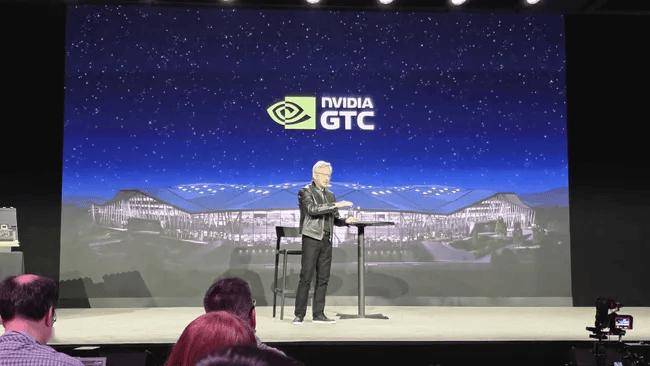
英伟达CEO黄仁勋:我自己也不喜欢“AI垃圾”
Sou Hu Cai Jing· 2026-03-26 12:01
Core Viewpoint - The controversy surrounding NVIDIA's DLSS 5, which utilizes generative AI for enhancing game visuals, has sparked widespread criticism from players and developers, prompting CEO Jensen Huang to respond publicly [1][3]. Group 1: Controversy and Criticism - Players and developers have criticized DLSS 5 for undermining artistic expression, labeling it as "garbage content" and coining the term "sloptracing" to mock its approach [3]. - Concerns focus on visual effects, where generative AI adds a layer of typical AI aesthetic, leading to over-enhanced character features and common AI generation errors, such as misinterpreting facial shadows [3][4]. - Huang acknowledged the validity of the criticism but insisted that DLSS 5 does not diminish creators' control, emphasizing that the technology operates based on game geometry and lighting data [3][4]. Group 2: Company Position and Technology - Huang maintained that DLSS 5 is guided by real structural data, asserting that artists define the geometry, and the technology faithfully presents each frame [4]. - Despite internal challenges regarding the reliance on 2D frame data rather than true 3D geometry and lighting information, Huang reiterated that DLSS 5 integrates controllability with generative AI tools for creators [3][4]. - Huang's responses during interviews and Q&A sessions reflect a firm stance that the technology is designed to enhance, not replace, the creative process of game developers [4].
在线等:如何优雅地分走鹅厂这600+万?
量子位· 2026-03-26 07:34
Core Viewpoint - The article discusses the shift in the AI industry towards unified modeling of recommendation systems, highlighting the need for a cohesive architecture to enhance efficiency and scalability in the context of AI advancements [6][7][32]. Group 1: Industry Trends - The AI industry has seen a surge in generative AI applications, particularly in AIGC, leading to noticeable increases in conversion rates [2][4]. - Major players like Meta, ByteDance, and Tencent are focusing on unified modeling for recommendation systems, marking a significant evolution in the field [7][27]. - The traditional fragmented approach to recommendation systems is becoming obsolete as the industry recognizes the need for a unified architecture to improve performance and resource utilization [8][25]. Group 2: Technical Challenges - The existing recommendation systems rely on disparate algorithms, leading to inefficiencies in GPU utilization and memory allocation [8][22]. - The shift from CPU to GPU infrastructure has exacerbated the limitations of heterogeneous architectures, resulting in low computational efficiency [21][23]. - The article emphasizes the importance of a single, homogeneous architecture to leverage the scaling laws observed in large language models, which have shown significant performance improvements [25][32]. Group 3: Competitive Landscape - Tencent is spearheading a significant upgrade in the advertising algorithm competition by partnering with KDD Cup 2026, aiming to attract top global talent to tackle the challenges of unified modeling [36][40]. - The competition's focus is on creating a unified recommendation block that integrates sequence modeling and feature interaction, addressing the core issues of traditional recommendation systems [44][50]. - The competition offers substantial financial incentives, with a total prize pool of $885,000, encouraging participation from both academic and industry professionals [58][60]. Group 4: Opportunities for Participants - Participants in the competition will have access to real-world data from Tencent's advertising services, providing a unique opportunity to test and validate their models [47][48]. - The competition serves as a platform for networking and potential job opportunities, with previous participants receiving job offers from Tencent [66][70]. - Innovative solutions that stand out will be recognized with special awards, further incentivizing creative approaches to the challenges presented [49][51].


峰瑞资本投了家智能硬件公司,做空间三维重建,创始人为前群核科技副总裁丨早起看早期
36氪· 2026-03-26 04:35
Core Viewpoint - The article discusses the emergence of Hangzhou Zhuma Innovation Technology Co., Ltd., which has completed a multi-million angel round financing to develop consumer-grade 3D reconstruction and spatial intelligence products, filling a market gap between expensive industrial-grade equipment and limited consumer applications [5][6]. Group 1: Company Overview - Zhuma Innovation was founded in November 2025 and focuses on consumer-grade 3D reconstruction and spatial intelligence products [5]. - The founder and CEO, Zhang Ji, has over 20 years of experience in the 3D graphics industry and has held significant roles in companies like Qunhe Technology and Glodon [5]. - The company aims to leverage three major trends: the drop in sensor costs due to the explosion of the smart automotive industry, breakthroughs in 3DGS technology for real-time high-quality 3D reconstruction, and the integration of spatial intelligence with generative AI [5][6]. Group 2: Market Opportunity - The consumer-grade 3D reconstruction market is currently a blank space, with industrial-grade equipment being too expensive and complex for widespread use, while mobile AR applications remain superficial [6]. - Zhuma Innovation's entry point is the market vacuum characterized by "industrial-grade too expensive, consumer-grade nonexistent" [6]. Group 3: Product Development - The first product, codenamed "Pebble," is a professional-grade 3DGS camera targeting overseas home designers, space designers, video producers, and independent game developers [6]. - Pebble is designed to be consumer-friendly, priced lower than traditional industrial-grade equipment (which averages over 50,000 yuan), and requires no high-performance computer for operation [6]. - The second product will be a "spatial memory camera" aimed at ordinary consumers, allowing them to capture and replay 3D memories of events like family gatherings and trips [6]. Group 4: Development Strategy - The company has a clear development path: short-term focus on the Pebble product, mid-term expansion into mainstream markets in Europe and the U.S., and long-term establishment of a "hardware + software + community" business loop around 3DGS technology [7]. - The goal is to make the 3DGS camera affordable for the average consumer, akin to the price of a regular camera [7]. Group 5: Investor Insights - Investors express confidence in Zhuma Innovation's potential, highlighting the team's strong technical background in multi-sensor fusion, 3DGS algorithms, and cloud optimization [9]. - The 3DGS technology is seen as a potential foundational technology that could democratize 3D spatial modeling capabilities for the consumer market [10].

中原证券:家电行业围绕股息友好等三大维度投资 推荐海尔智家(600690.SH)等
智通财经网· 2026-03-26 03:58
Group 1 - The core investment strategy for the home appliance industry includes three dimensions: dividend-friendly strategy, high-growth strategy, and overseas expansion strategy [1] - Major recommendations for high dividend and low valuation stocks include Haier Smart Home, Midea Group, and Gree Electric Appliances [1] - The market for smart home appliances is projected to reach approximately $147.5 billion by 2025, with a compound annual growth rate of 22% from 2016 to 2026 [1] Group 2 - The Chinese smart home appliance market has grown from 200 billion yuan in 2016 to 500 billion yuan in 2022, indicating significant growth potential [2] - By 2025, China's retail sales of smart home appliances are expected to reach approximately 450 billion yuan, accounting for 43.58% of the global market [3] - Chinese brands hold a shipment share of 38% to 40% in the global smart home appliance market, maintaining the leading position [3]



