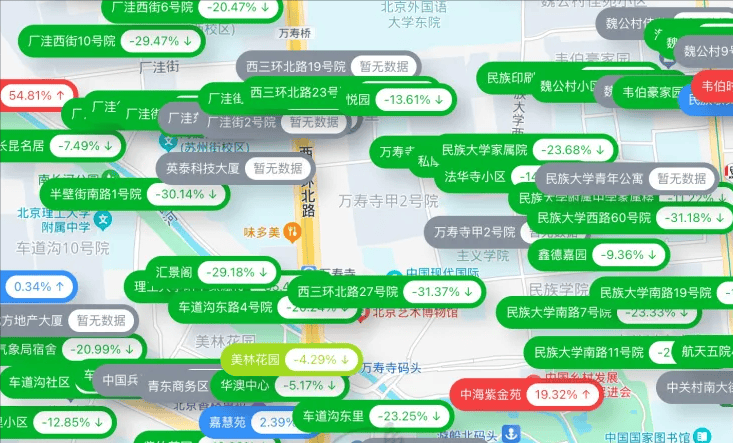
租售比

Search documents
香港楼市“触底”了?内地人已花近千亿在港买房
阿尔法工场研究院· 2025-11-05 00:07
Core Viewpoint - The future trajectory of the Hong Kong real estate market in the next six months may depend on the unemployment rate in Hong Kong, with indications of a market recovery observed recently [4][20]. Market Recovery Indicators - Real estate agents in Hong Kong report an increase in client activity and transactions, suggesting signs of recovery in the market [4][5]. - The CCL index from Centaline Property, which reflects Hong Kong property prices, has shown a recovery from a low of 135 points in May 2023 to 141 points currently [5][7]. - New home sales have increased significantly, with the third quarter of 2023 recording 5,530 transactions worth over 610 billion HKD, marking a 7.5% increase in volume and a 30.3% increase in sales value compared to the previous quarter [7]. Mainland Buyers' Influence - Mainland buyers have shown renewed interest in the Hong Kong property market, with nearly 1,000 billion HKD spent on properties in the first nine months of 2023 [7][9]. - In the third quarter, mainland buyers accounted for 38.7% of new home purchases, with a total expenditure of 500 billion HKD, nearing 70% of the half-year total [9][10]. - The trend indicates that over 80% of luxury properties sold in October were purchased by mainland buyers, highlighting their dominance in the high-end market [10][11]. Luxury Market Dynamics - The luxury property market is increasingly driven by younger mainland buyers, with many transactions occurring for properties priced over 50 million HKD [11][12]. - The "Tian Yu" project has been particularly popular among mainland buyers, with significant sales recorded in October [12][13]. - The shift in buyer demographics is attributed to local wealthy individuals being constrained by declining commercial property values, leading to a "blood transfusion" in the luxury market [15][16]. Economic Factors and Future Outlook - The overall sentiment in the market is optimistic, with expectations of continued rental price increases and a favorable rental yield attracting investors [18]. - The stock market's performance has positively influenced the real estate market, with the Hang Seng Index reaching new highs [19]. - However, there remains a divergence of opinions regarding whether the market has truly bottomed out, with some analysts suggesting that the unemployment rate will be a critical factor in determining future market conditions [20].


如何预测房价下行的大底
集思录· 2025-10-30 13:51
Core Viewpoints - The article discusses the current state of the real estate market, suggesting that the rental yield ratio at the bottom of the market should be around 5% optimistically and 7% pessimistically, while proposing a more dynamic formula for reasonable housing prices [1] - There is a prevailing sentiment that the era of real estate investment is over, with predictions of continuous price declines due to high inventory and decreasing population [3][4] - The article emphasizes that housing should be viewed more like a consumable good rather than a long-term investment, highlighting issues such as depreciation and liquidity [3] Group 1: Market Dynamics - The current inventory in both primary and secondary markets is substantial, and with a declining population, the demand for housing is expected to remain low [3] - The rental yield ratio is criticized as a misleading metric, as it does not account for the depreciation of property value over time [3] - The article suggests that housing prices are unlikely to rebound significantly due to demographic trends, with a specific example from Shenyang indicating a high ratio of available housing to the population [12][13] Group 2: Economic Indicators - The article references specific data from Shenyang, noting a total of 35-40 million housing units available against a population of over 9 million, with a significant portion being elderly [12] - It mentions that the birth rate is low and the death rate is high, further complicating the housing market dynamics [13] - The discussion includes the potential impact of property taxes and maintenance costs on housing demand, suggesting that these factors could further suppress buyer interest [15][16] Group 3: Future Outlook - The sentiment is that the real estate market may experience a prolonged period of decline, similar to Japan's experience in the 1990s [6][16] - There is a call for the real estate industry to focus on quality over quantity, especially during a downturn, to avoid producing subpar housing [17][18] - The article concludes that a true market bottom will only be confirmed after a period of stabilization and potential tax reforms [16]

今年不买房,5年后是买不起?还是随便挑?答案很明显了
Sou Hu Cai Jing· 2025-10-25 00:13
Group 1: Market Overview - The domestic real estate market is experiencing a complex situation with favorable policies on one hand and alarming market data on the other [1] - Major banks have significantly lowered down payment ratios for first-time and second homes, which has eased financial pressure for potential buyers [1] - Cities like Beijing, Shanghai, Guangzhou, and Shenzhen have implemented "recognizing house, not loan" policies, stimulating market enthusiasm and leading to increased transaction volumes [1] Group 2: Market Challenges - In August, 42 cities saw a month-on-month decline in new home prices, while 96 cities experienced a drop in second-hand home prices, indicating a potential oversupply and downward price pressure [2] - The number of second-hand homes listed for sale has surged, with Shanghai nearing 200,000 listings and Beijing close to 190,000, suggesting an oversupply in the market [2] Group 3: Future Price Predictions - There are two contrasting views on future housing prices: optimists believe that policy stimuli will lead to a rebound, while pessimists argue that the long-term adjustment trend will result in significant price drops [3] Group 4: Key Factors Influencing the Market - A significant decline in home-buying demand is noted, as many families face income reductions or unemployment, limiting their purchasing power despite favorable policies [6] - The rental-to-sale ratio indicates a substantial bubble in housing prices, with the average recovery period for landlords in China being 50-60 years, compared to the international standard of around 20 years [8] - The rising household debt limits further leverage opportunities, with 42% of families owning multiple properties and a total mortgage scale approaching 39 trillion [8] - The government is increasing the supply of affordable housing to meet the needs of low- and middle-income groups, which may alleviate pressure on the commodity housing market [9]
买房VS租房怎么选?这3个维度帮你理性决策
Sou Hu Cai Jing· 2025-10-23 13:51
Core Points - The article discusses the fundamental differences between buying and renting a home, emphasizing the importance of understanding these differences before making a decision [2][3][5] - It highlights the economic costs associated with both options, noting that renting may have lower initial costs but can lead to higher long-term expenses, while buying involves significant upfront costs but can build equity over time [7][8][11] - The article also examines the living experience, contrasting the stability of homeownership with the flexibility of renting, which is particularly beneficial for younger individuals or those with high job mobility [3][10][21] Economic Costs - Renting typically requires a smaller initial investment, such as a deposit and first month's rent, making it accessible for young individuals or those with limited cash flow [2][8] - In contrast, buying a home involves substantial upfront costs, including down payments, mortgage payments, and various fees, which can strain finances [8][11] - The article provides a hypothetical scenario comparing the financial outcomes of buying versus renting over ten years, illustrating how property appreciation can lead to significant asset growth for homeowners [17][18] Living Experience - Homeownership offers stability, which is crucial for families, especially those with children, as it provides a consistent living environment and access to educational resources [3][22] - Renting allows for greater flexibility, appealing to younger individuals or those in transient jobs, enabling them to adapt to changing circumstances without the burden of property ownership [3][10][21] - Data indicates that renters typically change residences every 2-3 years, while homeowners tend to stay for 8-10 years, highlighting the differences in stability and mobility [3][10] Advantages and Disadvantages - Buying a home is seen as a long-term investment with potential for asset appreciation, providing a sense of ownership and stability [7][8] - However, it also comes with high financial commitments and maintenance responsibilities, which can impact overall quality of life [8][19] - Renting offers financial flexibility and reduced maintenance responsibilities, but can lead to long-term costs that may exceed those of homeownership [9][11] Decision-Making Considerations - The article emphasizes the importance of assessing personal financial situations, lifestyle plans, and local real estate policies before deciding between buying and renting [28][29][30] - It suggests that young professionals may benefit from renting to save for a future home, while families may prioritize buying for stability [21][22] - Investors are advised to analyze rental yield ratios and market conditions to make informed decisions about property investments [15][24]
中金 • 联合研究 | 出口增速分化,股市涨势延续——香港经济金融季报
中金点睛· 2025-09-29 23:35
Economic Overview - In Q2 2025, Hong Kong's GDP grew by 3.1% year-on-year, an increase of 0.1 percentage points from Q1, and a quarter-on-quarter growth of 0.4% [3][5] - Private consumption expenditure rose by 1.9% year-on-year in Q2 2025, recovering by 3.1 percentage points compared to Q1 [3][5] - Local fixed capital formation increased by 2.8% year-on-year in Q2 2025, with machinery and equipment investment accelerating [3][5] Domestic Demand - Consumer spending showed signs of recovery, ending a four-quarter decline, supported by a recovering financial market and stabilizing real estate market [7] - Durable goods consumption fell by 6.2% year-on-year, while non-durable goods consumption increased by 3.1% [7][8] - Investment in machinery and equipment surged by 38.4% year-on-year in Q2 2025, reflecting a stable business environment [8] External Demand - Hong Kong's merchandise exports grew by 11.5% year-on-year in Q2 2025, with a notable increase in exports to emerging markets [9][10] - Service exports rose by 7.5% year-on-year, driven by a recovery in tourism services and sustained growth in financial services [10] Employment and Inflation - The unemployment rate in Hong Kong slightly increased to 3.5% in Q2 2025, with a further rise to 3.9% by August 2025 [12] - The overall consumer price index (CPI) increased by 1.8% year-on-year in Q2 2025, with a slight rise in private housing rent CPI [13] Financial Market - The Hong Kong dollar initially strengthened but later weakened in Q2 2025, influenced by increased trading activity and changes in interest rates [15][16] - The benchmark interest rate remained unchanged in Q2 2025, while HIBOR rates fluctuated significantly [16][21] - The stock market continued its upward trend, with the Hang Seng Index rising by 4.1% in Q2 2025 [21][25] Real Estate Market - Total transaction volume in Hong Kong's real estate market decreased by approximately 21% year-on-year in Q2 2025, but showed a quarter-on-quarter increase [26][28] - The average rent for private residential properties rose by 3.5% year-on-year in Q2 2025, indicating a potential increase in rental yield [28] - The number of new residential units completed in Q2 2025 was 4,577, reflecting a year-on-year increase of 116% due to a low base effect [33] Banking Sector - HIBOR rates declined significantly in Q2 2025, leading to a decrease in net interest margins for banks [4][51] - Customer deposits in the banking sector grew by 4.0% quarter-on-quarter, with a notable increase in foreign currency deposits [38][42] - The asset quality of banks showed slight improvement, with a decrease in the non-performing loan ratio to 2.13% [53]

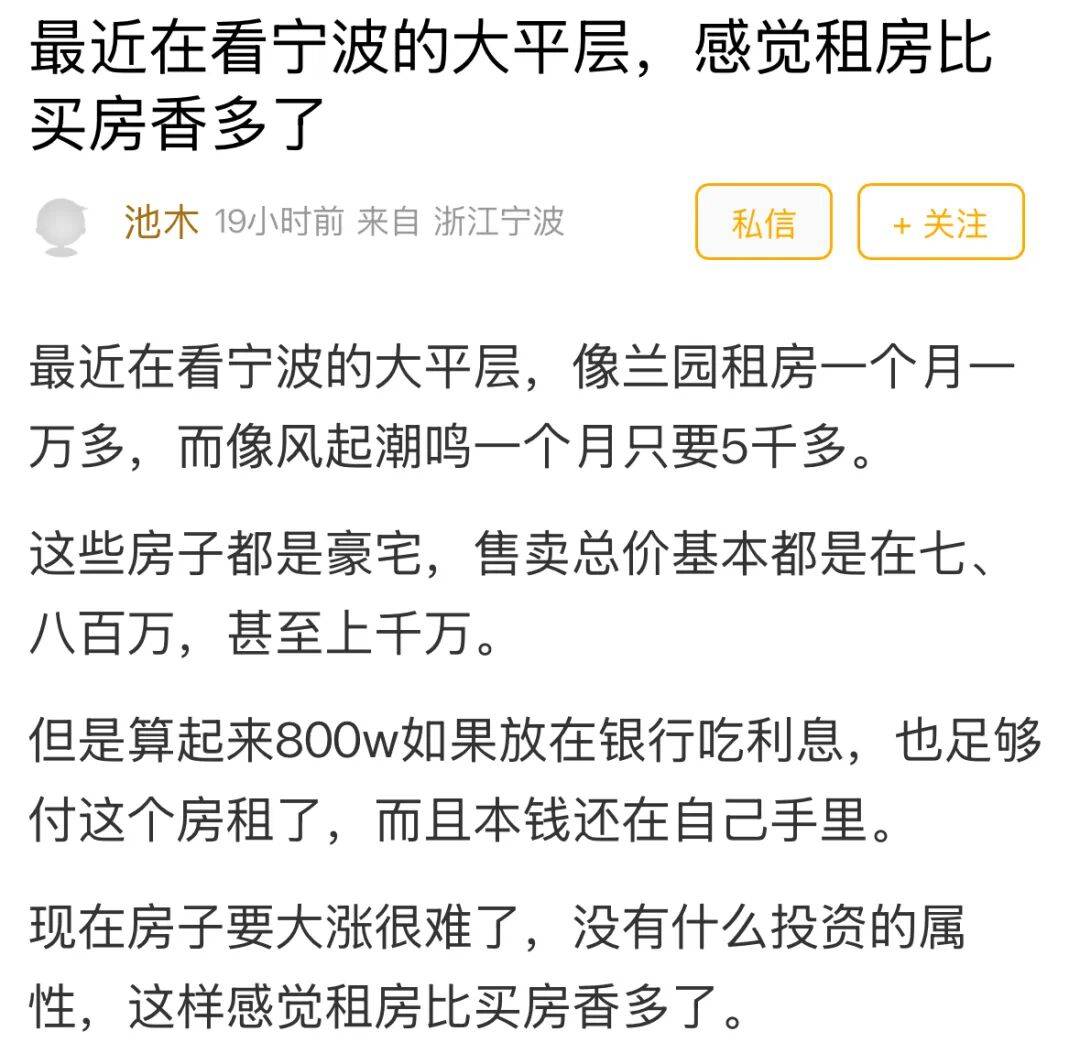
豪宅租金不及月供零头!宁波网友感慨如今租房比买房更“香”
Sou Hu Cai Jing· 2025-09-24 13:17
Core Viewpoint - The perception of real estate as a guaranteed investment is shifting, with many questioning whether buying or renting is more advantageous in the current market [1]. Group 1: Rental vs. Purchase Analysis - A user highlighted that renting in Ningbo appears more appealing than buying, particularly for luxury apartments [1]. - Examples of high-priced luxury apartments, such as Lan Garden and Fengqi Chaoming, have selling prices around 7 to 10 million [3]. - A financial comparison showed that investing 8 million in a bank at a 2.5% annual interest rate yields a monthly income of 20,000, which exceeds the rental cost of 5,000 for Fengqi Chaoming, while maintaining the principal [7]. Group 2: Market Sentiment - Some users believe that real estate has become a consumer product, depreciating immediately after purchase, similar to cars [7]. - There are opinions suggesting that current rental-to-price ratios indicate that property prices have not yet reached their lowest point [8]. - A perspective was shared that individuals who can afford luxury rentals are unlikely to leave 8 million in a bank for interest [9]. Group 3: Stability Considerations - Concerns were raised about the stability of renting, with some users noting that renting offers less residential stability compared to owning, although it may be acceptable for those who do not move frequently [10].
北京房子租售比1.6%合理吗?
集思录· 2025-09-15 14:10
Core Viewpoint - The rental market pricing is influenced by the supply-demand relationship, with rental prices being determined by those who cannot afford to buy homes, while home prices are set by wealthier individuals [1][2]. Group 1: Rental Market Dynamics - The rental market is considered to have higher pricing efficiency due to the immediate financial impact on landlords from vacancy, leading to more competitive pricing [2]. - The average rental yield in major international cities ranges from 4% to 6%, indicating a disparity with local rental yields [9]. - The rental prices are expected to decline further due to oversupply and economic conditions affecting demand [8][12]. Group 2: Investment Perspectives - Some investors find the current rental yields unreasonable, citing the instability of property values and the low returns compared to other investment opportunities [4][6]. - The perception of property as a negative asset is growing, with reports of significant declines in rental prices over recent years [11]. - The supply of new homes in cities like Beijing is significantly lower compared to other cities, which affects pricing dynamics [12].

资产的轮回,房价何处寻底?195个房价周期的大数规律
2025-09-10 14:35
Summary of Key Points from the Conference Call Industry Overview - The report focuses on the real estate industry, specifically analyzing global housing price cycles and their implications for the Chinese market [2][3]. Core Insights and Arguments - **Asset Price Perspective**: The analysis of housing prices should prioritize asset price perspectives over supply-demand dynamics, especially in large economies like China where financial cycles significantly impact housing prices [1][2]. - **Historical Data Importance**: The study emphasizes the importance of data from after 1970, as the modern monetary system has introduced new patterns in real estate cycles [5][6]. - **Classification of Housing Cycles**: The report categorizes global real estate cycles into three types: - Conventional cycles (decline < 20%) - Small bubbles (decline 20%-35%) - Large bubbles (decline > 35%) [10]. - **Independence of Price Movements**: Historical data indicates that the processes of price increases and decreases are largely independent, with no strong correlation between them [11]. - **Duration of Price Cycles**: - Conventional cycles rebound in about 2 years - Small bubbles take approximately 4.5 years - Large bubbles may take around 6 years [12]. - **Current Trends in China**: Since Q2 2021, Chinese housing prices have been declining. If this is a large bubble, prices could drop by about 40% by Q3 2027. If it is a small bubble, the decline may last until the end of 2025 [13][14]. Additional Important Insights - **Impact of Financial Policies**: The relationship between real estate cycles and financial systems is crucial, with significant differences observed before and after 1970 due to changes in monetary policy [5][7]. - **Limitations of Historical Cases**: The cases of Japan in 1990 and the U.S. in 2008 are deemed less relevant for current analyses due to their unique historical contexts and extreme conditions [6][7]. - **Use of Real vs. Nominal Prices**: The report advocates for the use of real housing price data, which excludes CPI growth, to better reflect asset value changes during economic crises [8]. - **Factors Influencing Recovery**: The recovery of housing prices in different economies is influenced by various factors, including fiscal and monetary policies, which can significantly alter the trajectory of real estate markets [16][20]. - **Indicators for Market Assessment**: The report suggests that nominal prices may indicate a stop in price decline earlier than real prices, but emphasizes the need for direct observation of actual price movements for accurate predictions [17][18]. Conclusion - The report provides a comprehensive analysis of the real estate market, highlighting the importance of understanding housing price cycles through an asset price lens, the implications of financial policies, and the need for careful consideration of historical data in predicting future trends.
房贷没有租金高,租房不如买房?
Sou Hu Cai Jing· 2025-08-20 20:05
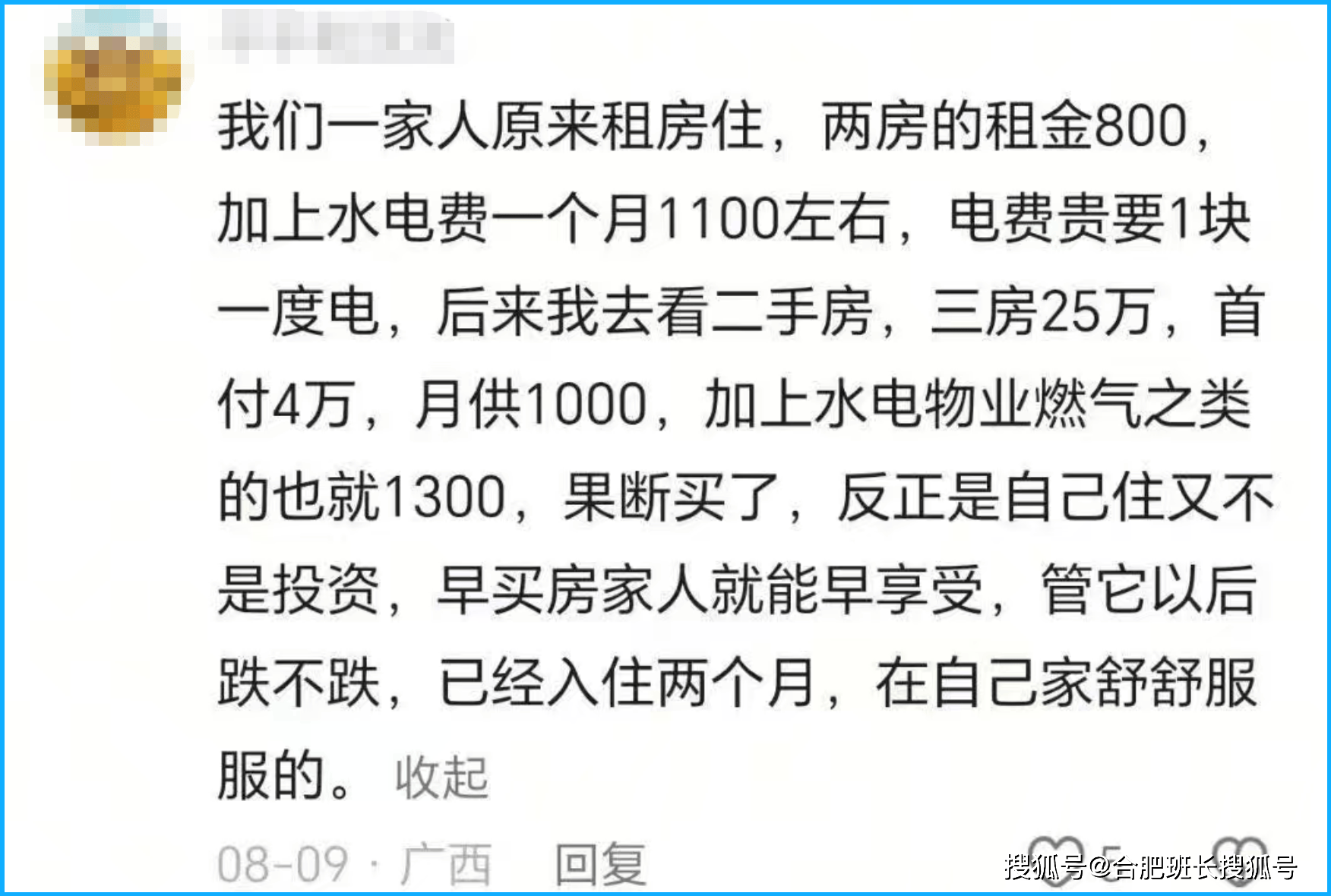
Core Viewpoint - The article discusses the financial implications of renting versus buying a home, highlighting a personal anecdote where a family transitioned from renting to owning a home, resulting in a slight increase in monthly expenses but a significant improvement in living conditions [1][3]. Summary by Sections Renting vs. Buying - A family previously paid approximately 1100 yuan per month for rent and utilities, and after purchasing a home with a 40,000 yuan down payment, their total monthly expenses increased to around 1300 yuan, allowing them to move from a two-bedroom to a three-bedroom home [1][3]. Market Analysis in Hefei - In Hefei, renting a three-bedroom apartment costs about 2000 yuan per month. With a mortgage rate of 3.0%, a loan of 480,000 yuan results in a monthly payment of approximately 2024 yuan, corresponding to a total property price of about 564,700 yuan, requiring a down payment of around 84,700 yuan [5][9]. Housing Market Concerns - The article raises concerns about potential declines in housing prices and the types of properties available within budget constraints. It notes that while owning a home provides a sense of security, the risk of depreciation remains a factor to consider [7][9]. Property Options - The analysis indicates that for a budget of 564,700 yuan, the available properties are primarily older homes or those in less desirable areas, which may not offer the same living quality as higher-rent options [8][9]. Rent vs. Buy Considerations - The decision to rent or buy should consider the rental yield and housing price trends. A higher rent-to-price ratio makes buying more attractive, while stable or slightly declining prices can also favor purchasing [15].
北京新房不断入市,海淀房价跌幅36%?
Sou Hu Cai Jing· 2025-08-11 23:22
Core Viewpoint - The real estate market in Beijing is experiencing a decline in prices for older properties, particularly those built before 2000, as new housing options become available, leading to increased selling pressure for homeowners [1][4][10]. Group 1: Market Trends - The prices of older properties in Beijing have significantly decreased, with examples showing reductions of approximately 36% from previous sale prices [1]. - The market is characterized by a high volume of unsold second-hand homes, particularly older apartments, which are increasingly being rejected by buyers [4][10]. - Newer properties built after 2000 are gaining market share, as they are preferred by buyers due to better amenities and living conditions [10][11]. Group 2: Seller Challenges - Homeowners who purchased properties for school districts are facing substantial losses, often exceeding 2 million yuan, making it difficult to sell even at reduced prices [3]. - Owners of properties built before 2000 are advised to sell quickly, even at a loss, as prices are expected to continue declining [6]. - The rental market for older properties has weakened, with many landlords unable to find tenants, leading to increased urgency to sell [14][18]. Group 3: Buyer Strategies - Buyers are encouraged to focus on areas without new housing competition to enhance liquidity and value retention of their investments [19]. - For those looking to upgrade, it is recommended to consider new properties that offer high value or have significant location advantages [20].