
稳预期

Search documents
明年货币政策或更重视稳预期目标
2 1 Shi Ji Jing Ji Bao Dao· 2025-12-11 23:07
Monetary Policy Overview - The central economic work conference held on December 10-11 maintained a policy tone of "moderate easing," emphasizing the efficiency and proactivity of policy tools like reserve requirement ratio (RRR) cuts and interest rate reductions [2] - The macro policy orientation shifted from "strengthening extraordinary counter-cyclical adjustments" to "increasing counter-cyclical and cross-cyclical adjustment efforts," indicating a focus on long-term economic cycle changes [2] Policy Implementation Characteristics - Throughout 2025, the monetary policy maintained a consistent moderate easing tone, with RRR cuts and interest rate reductions implemented to ensure stable funding rates [3] - Fiscal policy was notably proactive in 2025, with significant government bond issuance and increased fiscal spending in the first half of the year, aligning with the macro policy orientation [3] Core Objectives and Framework - The core objectives of monetary policy include enhancing expectations management, with increased flexibility in total monetary operations to address economic risks and uncertainties [4] - Coordination between monetary and fiscal policies is crucial, aiming to create a conducive environment for stable financial markets and successful government bond issuance [4] - A new policy interest rate transmission mechanism and liquidity management framework were established, focusing on reforming the monetary policy transmission mechanism [5] Future Outlook - For 2026, the focus will be on stabilizing growth and managing risks while emphasizing expectations management and fiscal coordination [5] - The first half of 2026 may see a need for total easing operations to lower social financing costs and stabilize expectations due to high growth base effects [5] - The central bank is expected to release approximately 1 trillion yuan in long-term funds through a 0.5 percentage point RRR cut in early 2026, alongside continued use of MLF and reverse repos for medium-term liquidity [6] Interest Rate Dynamics - The central bank's interest rate reduction space has opened up due to the Federal Reserve's continuous rate cuts, with expectations for a 10 basis point reduction in the policy rate in both the first and second halves of 2026 [7] - By the end of 2026, the 7-day reverse repo policy rate is projected to decrease to 1.2%, with the LPR also expected to follow suit [7]


锚定战略航向,凝聚行业合力 以期货力量赋能经济高质量发展
Xin Lang Cai Jing· 2025-12-11 13:53
Core Viewpoint - The Central Economic Work Conference held on December 10-11, 2025, outlined the economic work for 2026, setting a clear direction for the "14th Five-Year Plan" and injecting strong momentum into the high-quality development of the futures industry [1][6]. Group 1: Economic Context - The "14th Five-Year Plan" is nearing completion, with China successfully achieving major economic and social development goals despite complex international challenges [2][7]. - The futures industry has expanded significantly during this period, with continuous market growth, a more comprehensive futures and options product system, and improved risk management frameworks [2][7]. Group 2: Policy Implications - The conference emphasized stabilizing growth and expectations through a combination of proactive fiscal policies and moderately loose monetary policies, which will support macroeconomic stability and signal positive developments for financial markets, including the futures industry [3][8]. - Key tasks identified include domestic demand-led growth, innovation, reform, and green transformation, aligning closely with the futures industry's role in price discovery and risk management [3][8]. Group 3: Industry Development Strategy - The company aims to enhance its core mission of risk management and support for industrial development by focusing on its strengths in the mining sector and aligning with national priorities such as green and low-carbon industries [4][9]. - The company plans to develop an integrated service system that combines mining characteristics with comprehensive advantages, leveraging AI and technology to address service homogenization issues and enhance collaboration within the industry [4][9]. - The company is committed to compliance and creating value, fostering a positive industry ecosystem to enhance the recognition of the futures industry's value [4][9].

住建部原副部长仇保兴:只有稳资产价值和预期,才能真正稳消费
和讯· 2025-12-11 08:33
Group 1 - The relationship between real estate and consumption is clear; high real estate prices do not necessarily crowd out consumption [2] - A household's consumption ability is primarily determined by its asset level and future income expectations; current low consumption is due to the decline in real estate market affecting household assets and income confidence [2] - The long-term dangers of a real estate bubble burst must be recognized, as historical experiences indicate that it leads to prolonged declines in household balance sheets and sustained low consumption [2] Group 2 - The central government's emphasis on "stabilizing housing prices, land prices, and market expectations" is rooted in the need to stabilize asset values and market expectations to support consumption [3] - Local governments face constraints in policy execution due to historical debt burdens and limited fiscal space, which affects their ability to implement effective measures [3] - Local governments can leverage their substantial state-owned assets through professional operations and securitization to release liquidity for urban renewal and debt resolution [4] Group 3 - The market's expectations are partly affected by the lack of timely coordination of supporting policies; the handling of approximately 1.5 to 2 million unsold properties is currently too reliant on banks selling through market channels [4] - Establishing a government-led storage mechanism for unsold properties could convert them into affordable housing, helping banks mitigate financial risks while efficiently increasing the supply of affordable housing [4] - Despite demographic challenges, the annual demand for new housing in China remains reasonable at about 1.2 to 1.3 million units; however, actual supply is less than half of this level [4] - Urban renewal models such as "original demolition and reconstruction" are needed to rebuild reasonable scales and create a closed loop of risk-sharing among residents, financial institutions, and insurance companies to stabilize income expectations [4]

明年我国经济工作怎么干?关注这些重点工作
Sou Hu Cai Jing· 2025-12-09 01:36
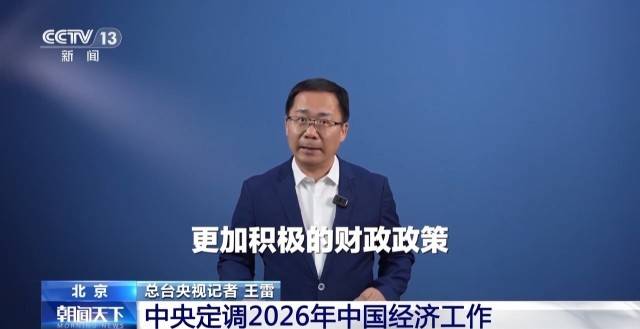
Group 1 - The core economic policy for 2026 emphasizes a more proactive fiscal policy combined with moderately loose monetary policy, continuing the approach from the previous year [1] - The meeting highlighted the importance of leveraging existing policies while also introducing new measures to address emerging issues, aiming for a synergistic effect to stabilize short-term fluctuations and lay a foundation for long-term development [3] - The focus on "domestic demand as the main driver" indicates that insufficient effective demand remains a key challenge, necessitating deeper efforts to build a strong domestic market and dismantle local protectionism and regional barriers [5] Group 2 - The meeting underscored the need for better coordination between domestic economic work and international trade dynamics, advocating for both openness and the protection of national interests in response to uncertainties [7] - The potential for the Chinese economy is expected to be further unleashed in the new year, presenting new development opportunities for both enterprises and individuals across various sectors [7]
蔡昉:不能让“灵活就业”“新就业形态”与“非正规就业”划等号
和讯· 2025-12-05 09:28
Core Viewpoint - The article emphasizes the importance of integrating "promoting employment, increasing income, and stabilizing expectations" as an inseparable whole, requiring a comprehensive approach to address these areas effectively [4]. Group 1: Five Combinations for a New Macroeconomic Paradigm - The first combination is between addressing cyclical shocks and maintaining long-term growth, suggesting that both short-term fluctuations and long-term trends should be analyzed together [5]. - The second combination involves integrating supply-side potential growth capabilities with demand-side driving forces, highlighting the need to consider both supply and demand factors in macroeconomic analysis [5]. - The third combination focuses on the integration of primary income distribution and redistribution, indicating that both areas require attention to reduce income disparities [5]. - The fourth combination stresses the need to combine "investment in physical assets" with "investment in human capital," recognizing the dual role of human investment in enhancing welfare and driving economic growth [6]. - The fifth combination advocates for the use of various policy tools in a coordinated manner, ensuring that different macroeconomic, social, and labor market policies work together effectively [7]. Group 2: Structural Focus on Employment - The article highlights the current structural changes in the employment landscape, noting a significant shift towards new employment forms such as gig economy and platform jobs, which now account for over 60% of urban employment [10][11]. - It discusses the "involution" of labor mobility, where the flow of labor is stagnating and becoming localized, leading to reduced productivity growth [12][13]. - The article identifies the "age duality" in employment challenges, focusing on the difficulties faced by both young job seekers and older workers, necessitating a comprehensive lifelong training system [14]. Group 3: Increasing Income - The article outlines the dual goals of increasing income: raising per capita income levels and improving income distribution structures, while acknowledging the natural deceleration of income growth [15]. - It points out the need for strong policy interventions to prevent widening income disparities, particularly in urban areas, despite improvements in rural income [16]. - The article emphasizes the potential for enhancing income redistribution through tax reforms and expanding social security systems to achieve more equitable income distribution [16]. Group 4: Stabilizing Expectations - The article asserts that stabilizing expectations hinges on institutional development, addressing uncertainties caused by technological impacts on employment and the challenges of an aging population [18]. - It suggests that while productivity growth can outpace aging population challenges, establishing a fair system for sharing productivity gains is crucial for stabilizing expectations [19].

稳经济稳预期关键在稳企业
Jing Ji Ri Bao· 2025-12-05 00:22
Core Viewpoint - Stabilizing enterprises is essential for maintaining economic growth and serves as the "foundation" for economic stability [1][2] Group 1: Economic Indicators - In November, the manufacturing Purchasing Managers' Index (PMI) showed signs of improvement, with the small enterprise PMI reaching a six-month high [1] - From January to October, the cumulative profit growth of industrial enterprises was 1.9%, indicating a recovery in the profitability of enterprises [2] Group 2: Employment and Consumption - Enterprises are crucial for job creation, with small and medium-sized enterprises providing over 80% of urban employment in China [2] - A stable enterprise environment leads to increased consumer confidence and spending, creating a positive cycle of "enterprise stability - employment stability - income stability - consumption growth" [2] Group 3: Market Confidence - The production and business activity expectation index in the November manufacturing PMI was 53.1%, reflecting increased confidence among manufacturers due to effective economic policies [3] - Positive expectations from enterprises can lead to increased investments, market expansion, and research and development efforts [3] Group 4: Challenges and Policy Recommendations - Despite positive signs, challenges such as insufficient demand, cost pressures, and weak expectations remain, necessitating continuous efforts to stabilize enterprises [4] - Future policies will focus on optimizing the business environment, ensuring fair competition, and supporting the development of small and medium-sized enterprises [4][5] - Addressing financing difficulties, high costs, and overdue payments is critical for alleviating burdens on enterprises [5] - Expanding domestic demand and improving the consumption environment are essential for creating a conducive market space for enterprises [5]
2026年中国经济怎么看、怎么干?刘世锦、李扬、蔡昉、杨瑞龙最新发声
Zheng Quan Shi Bao Wang· 2025-12-01 14:59
Core Insights - The annual China Macroeconomic Forum (CMF) highlighted key recommendations for China's economic and social development during the 14th Five-Year Plan period, emphasizing the need for structural reforms and innovation to stimulate domestic vitality [1][2][3] Group 1: Economic Growth and Policy Recommendations - Liu Shijun suggested that the consumption share of GDP should increase by 1 percentage point annually during the 14th Five-Year Plan, viewing this as a "hard task" for stabilizing growth [5][6] - The CMF report proposed a cross-cycle target for 2026, aiming for a real GDP growth of 4.5%-5%, a CPI target of 1%-3%, and a nominal GDP growth of over 5% [2] - Li Yang identified four financial factors influencing economic operations post-2026: changes in social financing structure, declining interest rates, new opportunities in capital markets, and a new paradigm in monetary policy [3][4] Group 2: Employment and Income Distribution - Cai Fang emphasized the need for a coordinated approach to promote employment, increase income, and stabilize expectations, proposing a "five combinations" strategy [7][8] - The report highlighted the importance of improving income distribution and increasing the proportion of labor remuneration in primary distribution, as well as enhancing public services [8][9] Group 3: Long-term Economic Outlook - Yang Ruilong noted that despite short-term economic pressures, the long-term positive trend of the Chinese economy remains unchanged, with potential growth driven by market-oriented technological innovation and deep urbanization [9][10] - The focus should be on both qualitative stability and reasonable quantitative growth, with an emphasis on building a modern industrial system through technological innovation and institutional reform [10]
2026年中国经济怎么看、怎么干?刘世锦、李扬、蔡昉、杨瑞龙最新发声
证券时报· 2025-12-01 14:16
Core Insights - The article discusses key recommendations from prominent economists at the China Macro Economic Forum (CMF) regarding China's economic development during the "14th Five-Year Plan" period and beyond, emphasizing the importance of structural reforms and innovation to stimulate domestic vitality [1][2]. Group 1: Economic Growth and Consumption - Liu Shijun advocates for increasing the consumption share of GDP by 1 percentage point annually during the "14th Five-Year Plan" period, highlighting the need to stabilize and expand terminal demand to boost investment [6][8]. - The report presented by Liu Xiaoguang suggests setting cross-cycle targets for economic growth, including a real GDP growth target of 4.5%-5% and a CPI target of 1%-3% for 2026 [2]. Group 2: Financial Factors and Market Opportunities - Li Yang identifies four major financial factors influencing economic operations from 2026 onwards: changes in social financing structure, declining interest rates, new opportunities in capital markets, and a new paradigm for monetary policy [4]. - The phenomenon of "disintermediation" is noted as a positive trend, with funds flowing out of the banking system, which could create better conditions for capital market development [3][4]. Group 3: Employment and Income Distribution - Cai Fang emphasizes the need for a coordinated approach to promote employment, increase income, and stabilize expectations, proposing a framework of "five combinations" to address these issues [10][11]. - The focus on increasing per capita income and improving income distribution is critical, with suggestions to enhance labor remuneration and expand public services to reduce disparities [12][13]. Group 4: Long-term Economic Strategy - Yang Ruilong stresses the importance of addressing short-term economic challenges with a long-term perspective, advocating for the modernization of the industrial system and the integration of technological innovation [14][15]. - The article concludes that despite current pressures, the fundamental trend of China's economy remains positive, with potential for sustainable growth through structural reforms and innovation [1][15].

武汉年底土拍大动作!24宗涉宅地块集中上架,释放哪些信号?
Sou Hu Cai Jing· 2025-11-25 09:50
Core Insights - Wuhan's natural resources and urban construction bureau announced the auction of 27 plots of land with a total starting price of 87.99 billion yuan, including 24 residential plots priced at approximately 83.53 billion yuan, set for online auction on December 9, 2025 [2][22] - This concentrated land supply is a strategic move to stabilize market expectations and boost confidence in the real estate sector during a period of significant adjustment [2][10] Land Supply Overview - The auction features a total of 27 plots, with 24 designated for residential use, accounting for 88.9% of the total [20] - The distribution of the plots spans across eight administrative districts in Wuhan, with New District and Jiangxia District each having 9 plots, while other districts have fewer [2][20] Regional Distribution - The land supply reflects a shift from a "single-core concentration" to a "multi-center radiation" model, with 20 plots located in suburban areas and only 6 in the main urban area, indicating a strategic focus on both population overflow and high-quality resource allocation [2][20] Key Plot Highlights - The auction includes notable plots such as: - Jianghan District P(2025) 172, with a floor price exceeding 10,000 yuan per square meter, indicating its premium location [4][20] - East Lake High-tech Zone P(2025) 170, which has the highest total starting price among the plots, suggesting its significance in the market [5][20] Pricing Structure - The floor prices for residential plots vary significantly, ranging from 2,040 yuan to 10,002 yuan per square meter, catering to different market segments and allowing for diverse investment strategies [9][20] - The pricing strategy emphasizes a "small area, high price" approach in urban areas, reflecting a refined management philosophy based on demand [9][20] Policy and Market Confidence - The auction is characterized by systematic institutional innovations, aiming to create a virtuous cycle in the "land-development-sales" framework, which is expected to instill confidence in the market [10][20] - The implementation of supportive policies, such as the "Han Nine Articles," aims to lower purchasing costs and stimulate demand, further enhancing market stability [14][20] Implications for Buyers - The concentrated supply of residential land signals a secure supply for new homes over the next 1-2 years, reducing the urgency for panic buying among potential homebuyers [11][20] - Buyers are encouraged to focus on high-end projects in the main urban areas, particularly in districts like Jianghan, Qiaokou, and Hanyang, where smaller plots are likely to be developed into premium offerings [11][20] Conclusion - The upcoming auction represents not just a land transaction but also a reflection of Wuhan's urban development strategy, addressing the demand for quality assets while adhering to the principle of "housing for living, not speculation" [12][20]

谋篇布局“十五五”•热点问答|如何激发消费新动能?
Zhong Guo Jing Ji Wang· 2025-11-25 05:28
Core Insights - The "Fifteen Five" plan emphasizes the integration of improving people's livelihoods and promoting consumption as a key strategy for economic growth [3][4] - Consumer spending is closely linked to income levels, employment rates, and public services, indicating that enhancing these factors is crucial for stimulating consumption [3][4][6] Group 1: Employment and Income - The plan advocates for multi-channel strategies to stabilize and expand employment, focusing on optimizing the policy environment for entrepreneurship and supporting key demographics in finding jobs [6] - It aims to promote reasonable growth in wage income and broaden channels for property income, thereby expanding the middle-income group [6] Group 2: Consumer Goods and Services - There is a focus on expanding the supply of quality consumer goods and services by easing market access, integrating business formats, and enhancing brand leadership and standards [5] - The initiative encourages the application of new technologies to upgrade product consumption and create new consumption scenarios with broad appeal [5] Group 3: Public Services and Support - The plan emphasizes the need for gradual equalization of basic public services, increasing support for childbirth and childcare, and strengthening education and healthcare systems [6] - It aims to enhance the capacity for medical and elderly care, ensuring the basic living standards of the population are met [6]
