货币体系重构

Search documents
机构看金市:11月14日
Xin Hua Cai Jing· 2025-11-14 03:23
Core Viewpoint - The long-term logic of precious metals remains unchanged, but the market is entering a data-dependent phase, leading to increased volatility and caution in investment timing [1]. Group 1: Market Analysis - The precious metals market experienced significant volatility, with a notable rise during Asian trading hours followed by a decline in U.S. trading hours, influenced by the simultaneous drop in U.S. stocks, bonds, and the dollar [1]. - The end of the U.S. government shutdown has led to uncertainty regarding economic data, with concerns that the upcoming non-farm payroll and inflation data may never be released, impacting market sentiment [2]. - The recent government shutdown has raised fears about potential weaknesses in U.S. economic and employment data, contributing to instability in risk assets and a simultaneous decline in both the dollar and gold prices [2]. Group 2: Future Outlook - The unsustainable growth of U.S. government debt is becoming a focal point for the precious metals market, with expectations that this political environment will favor hard assets like gold and silver [3]. - The recent surge in gold prices is attributed to structural changes globally rather than speculative frenzy or inflation fears, indicating that the rise is just the beginning of a longer trend [4]. - Long-term supporting factors for gold, such as sovereign debt, currency devaluation, geopolitical tensions, and the weaponization of the monetary system, are intensifying and remain unresolved [4].
智昇研究黄金分析:去美元化进程加快,黄金将长期受益
Sou Hu Cai Jing· 2025-11-12 08:38
Group 1 - The core viewpoint is that the dollar's share in global foreign exchange reserves has dropped to 56.32%, the lowest in 30 years, indicating an acceleration of the "de-dollarization" trend [2] - The U.S. national debt has surpassed $38 trillion, growing at a rate of over $60 billion per day, with annual interest payments exceeding $1.2 trillion, which has eroded global trust in the dollar [3] - The international monetary landscape is shifting from dollar dominance to a multipolar system, with the dollar's share in international payments at 47.79%, followed by the euro at 22.77% and the renminbi at 3.17%, which has seen a 15.53% increase [3] Group 2 - The price of gold has not risen in line with demand due to the issuance of paper gold by Western financial institutions, which suppresses physical gold prices [4] - The suppression of gold prices is driven by the need to maintain the dominance of fiat currencies and prevent a collapse of the Western financial system [4] - Central banks are increasingly purchasing gold to enhance their risk resilience amid global conflicts, indicating a shift in reliance on gold as a safe asset [4] Group 3 - Gold prices are expected to be influenced by Federal Reserve policies, with potential adjustments around $4,000, but the long-term upward trend remains intact [5] - The market may experience fluctuations between $3,850 and $4,150, with a potential short-term drop to $3,850 before a long-term breakout opportunity [5] - The current market conditions suggest a decrease in implied volatility, indicating a stable trading range for gold in the near term [5]


黄金价格再度狂飙:世界黄金协会爆买220吨,央行囤金背后藏着什么信号?
Sou Hu Cai Jing· 2025-10-31 03:32
Central Bank Gold Buying Trend - In Q3 2025, global central banks net purchased 220 tons of gold, a 28% increase quarter-on-quarter, marking the highest quarterly increase of the year [2] - Total gold purchases by central banks in the first three quarters of 2025 reached 634 tons, with China increasing its reserves to 7.406 million ounces (approximately 2303 tons), representing 4.3% of its foreign exchange reserves [2] - Emerging markets, particularly Brazil, India, and Turkey, are leading the gold purchases, with Brazil's central bank resuming gold buying after four years, adding 16 tons in a single quarter [2][3] Motivations Behind Gold Accumulation - The U.S. government's "shutdown" has led to liquidity issues in the U.S. Treasury market, prompting investors to sell U.S. bonds and invest in gold [3] - Geopolitical tensions, including conflicts in the Middle East and U.S.-China trade disputes, have increased gold's appeal as a safe-haven asset [3] - Central banks are increasing gold reserves to maintain monetary policy independence amid a Federal Reserve rate-cutting cycle [3] Gold Price Dynamics - The decline in real interest rates, with the Federal Reserve cutting rates by 150 basis points in 2025, has reduced the opportunity cost of holding gold [3] - Global gold ETF holdings surpassed 3,800 tons, with a net inflow of $26 billion in a single quarter, the highest since the onset of the Russia-Ukraine conflict [3] - The price of gold has seen a surge due to algorithmic trading triggered by breaking the $4,000 mark, with a 40% increase in CME gold futures open interest [3][4] Market Divergence - Investment demand for gold is soaring, with open interest in gold futures on the New York Mercantile Exchange exceeding 600,000 contracts, and speculative net long positions reaching 28% [5] - Conversely, consumer demand for gold jewelry has declined by 34% year-on-year, with major brands like Chow Tai Fook closing over 145 stores in a single quarter due to high gold prices [5] Global Monetary System Shift - Emerging markets are pushing for a new settlement system backed by gold, as seen in the BRICS nations' initiatives [6] - China's digital yuan is expanding its cross-border payment trials to 47 countries, providing a dual credit support system alongside gold reserves [7] Economic Power Shift - The share of gold reserves in emerging economies has increased from 3% in 2010 to 18%, narrowing the gap with developed countries [8] - Countries like Russia and Saudi Arabia are advocating for oil trade settlements in gold or renminbi, challenging the dollar-dominated pricing system [9] Future Outlook for Gold - In the short term (1-2 years), gold prices may experience volatility, potentially retreating to the $3,500-$3,800 range if U.S. inflation pressures the Federal Reserve to halt rate cuts [11] - In the medium to long term (3-5 years), the trend of central banks accumulating gold is expected to continue, with reserves projected to exceed 50,000 tons by 2030 [13] - If the dollar's share in global reserves falls below 40%, gold could become the second-largest reserve asset, surpassing the euro [14]
俄乌停火传闻引爆黄金暴跌:一场被误读的货币战争
Sou Hu Cai Jing· 2025-10-26 14:10
Group 1 - Gold futures experienced a significant drop of $377 within two hours, falling from a historical high of $4,398 to $4,021, coinciding with reports of a potential ceasefire in the Russia-Ukraine conflict [1] - The market's reaction to the ceasefire announcement suggests a decrease in safe-haven demand for gold, as analysts draw parallels to past market behaviors during geopolitical tensions [5][6] - Central banks have significantly increased their gold reserves, with the global share rising from 12.3% in 2020 to 21.7% in 2025, indicating a shift in investment strategies away from the US dollar [5][10] Group 2 - The US midterm elections are approaching, and aid to Ukraine has faced repeated obstacles in Congress, while the EU's energy reserves are projected to last only until January [6] - The Chicago Mercantile Exchange raised gold futures margin requirements by 5.5% just before the market drop, reminiscent of actions taken during the 2008 financial crisis [8] - The current geopolitical landscape has led to a decline in the US dollar's share of global foreign exchange reserves, dropping to 48.5%, the lowest since the Bretton Woods system ended [12][14] Group 3 - The US has invested $113 billion in Ukraine, yet the military situation remains stagnant, raising questions about the dollar's status as a safe-haven currency [13] - Emerging market central banks are increasing their gold holdings not out of fear of war, but due to concerns over the stability of the dollar system [15] - The narrative surrounding gold's price movements may be misinterpreted, as the real battle lies in central banks' strategies and their increasing gold reserves [18]
《时寒冰说:全球视野下的投资机会》:只有顺应趋势,才能站在风口
Sou Hu Cai Jing· 2025-10-12 09:02
Core Insights - The book "Investment Opportunities from a Global Perspective" by Shi Hanbing provides a comprehensive analysis of future investment trends amidst a backdrop of significant global uncertainties, including post-pandemic dynamics, geopolitical tensions, monetary policies, and resource transformations [1][3]. Group 1: Investment Trends - The author identifies key trends such as the rise of artificial intelligence, the new energy revolution, global industrial shifts, and the restructuring of monetary systems as critical areas for investment focus [3][5]. - The concept of "scarcity" is emphasized as a fundamental logic for high profitability in the future, where assets must possess intrinsic scarcity to maintain value and generate profits [5][6]. Group 2: Key Factors Influencing Trends - The movement of capital, resources, and population is highlighted as the primary determinant of future trends, necessitating a focus on these fundamental elements rather than superficial market indicators [8][9]. - The book discusses the implications of capital migration towards countries and industries that can attract population and resources, indicating potential investment hotspots [10]. Group 3: Strategic Investment Approaches - The author stresses the importance of understanding the timing and risk boundaries associated with trends, advocating for a disciplined approach to investing that respects the phases of trend development [11][12]. - Investors are advised to enter markets during the early stages of trends and to be cautious during peak periods to avoid losses [13][14]. Group 4: Long-term Perspective - The book encourages a long-term view of investment, suggesting that trends should be evaluated over a decade or more, rather than being swayed by short-term market fluctuations [17][18]. - It posits that recognizing and understanding underlying trends can enhance decision-making in investments and other life choices, emphasizing the need for patience and insight in navigating uncertainty [18].

黄金牛市:长期逻辑、短期触发与未来展望
Sou Hu Cai Jing· 2025-10-09 23:25
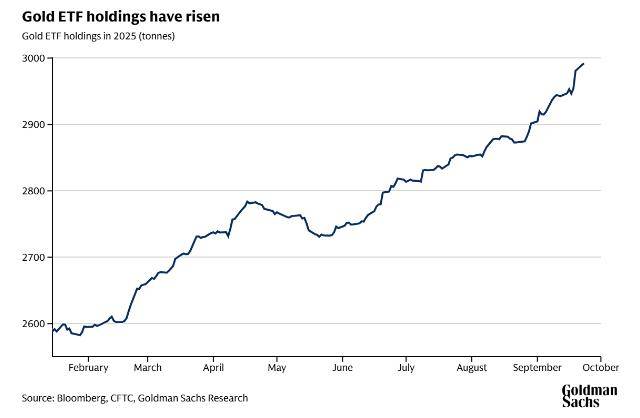
Core Viewpoint - Since September, gold prices have surged significantly, approaching $4000 per ounce by October 7, 2023, driven by a combination of long-term trends, short-term factors, and market sentiment [3][4][17] Long-term Logic for Gold Price Increase - The long-term narrative supporting gold's price increase is centered around the restructuring of the global monetary credit system, with gold acting as a "safe haven" asset during challenges to the dollar's credibility [3][4] - The trend of de-dollarization is accelerating, as more countries diversify their reserve assets, with gold becoming a key alternative, reflecting a shift from a purely dollar-based system to one resembling a "gold standard" [3][4] - Central banks globally are increasingly purchasing gold as a strategic move to stabilize economies during turbulent times, which has become a significant support for gold prices [3][4] Short-term Triggers for Gold Price Surge - The unexpected interest rate cuts by the Federal Reserve in September acted as a direct driver for gold prices, as lower interest rates typically boost gold's appeal [7][11] - Escalating geopolitical tensions and trade policy shifts have heightened market risk aversion, leading investors to seek refuge in gold [11][12] - The significant increase in gold ETF holdings, reaching 32.57 million ounces in September, indicates strong investor demand for gold amid rising risks [14][15] Future Outlook for Gold - The support system for gold remains robust, with long-term factors such as the restructuring of the global monetary system and ongoing central bank purchases likely to sustain a bullish trend for gold over the next 2-3 years [17] - Short-term dynamics, including the continuation of the Fed's easing cycle and persistent geopolitical risks, are expected to keep gold prices elevated and volatile [17]
国际金价首次突破4000美元 专家:货币体系重构的信号弹
Sou Hu Cai Jing· 2025-10-09 01:46
Core Insights - Recent surge in international gold prices, with spot gold surpassing $4,000 per ounce, reaching a historic high of $4,039.14 per ounce, indicates significant market shifts and potential investment opportunities [1][4]. Factors Behind Gold Price Increase - The rise in gold prices is attributed to a combination of short-term events, macroeconomic trends, and structural changes [4]. - Geopolitical tensions and policy uncertainties have acted as immediate catalysts for the increase in gold prices, with multiple global conflicts and the U.S. government shutdown contributing to heightened market risk aversion [5][10]. - A shift in monetary policy, particularly the Federal Reserve's interest rate cuts, has reduced the holding costs of gold, while the dollar index experienced an 11% drop in the first half of the year, marking the largest decline since 1973 [7][9]. Long-term Trends Supporting Gold Prices - Central banks globally are increasingly purchasing gold, with nearly half planning to increase their gold reserves in the next 12 months, reflecting a trend towards diversification away from the dollar [7][9]. - Concerns over the long-term value of the dollar, driven by high U.S. federal debt and fiscal sustainability challenges, are providing fundamental support for gold prices [9]. Impacts on Financial Markets - The increase in gold prices is expected to exacerbate financial market volatility and reshape asset allocation strategies, with significant growth observed in gold mining stocks and related commodities [10]. - The structural transformation of the global reserve system is underway, as non-U.S. countries' gold reserves now exceed their holdings of U.S. Treasury bonds, enhancing gold's status as a crisis currency [10]. Future Outlook - The future trajectory of gold prices is anticipated to be complex, characterized by both bullish and bearish factors, with strong upward momentum in the medium to long term, albeit with potential risks and variables [12].
近期黄金大涨快评:黄金牛市:长期逻辑、短期触发与未来展望
Guoxin Securities· 2025-10-08 04:53
Long-term Logic - The long-term price trend of gold is closely linked to the global macroeconomic landscape, monetary system evolution, and supply-demand changes[4] - The trend of de-dollarization is undermining the dollar's credit foundation, leading to increased gold purchases by central banks as a strategic move[4] - The accumulation of U.S. debt risks is heightening concerns over monetary credit, reinforcing gold's safe-haven attributes[5] Short-term Triggers - In September, gold prices surged by 11.6%, driven by unexpected interest rate cuts by the Federal Reserve, which initiated a rate reduction of 25 basis points[3][9] - Geopolitical tensions, particularly in the Middle East and Eurasia, have escalated, increasing market risk aversion and driving demand for gold as a safe asset[11] - The scale of gold ETFs expanded significantly, reaching 32.57 million ounces in September, marking the second-highest monthly increase since July 2022[13] Future Outlook - The support system for gold remains robust, with long-term trends in the global monetary credit system and ongoing central bank purchases expected to sustain gold's bullish trend over the next 2-3 years[17] - Short-term factors, including continued monetary easing and persistent geopolitical risks, are likely to keep gold prices elevated and volatile[17]
华尔街与东方智慧碰撞,黄金在货币危机中展现永恒魅力
Sou Hu Cai Jing· 2025-10-03 01:48
Core Insights - The article discusses the rising significance of gold in the global market, particularly in the context of increasing uncertainty and financial instability, highlighting a convergence of Eastern wisdom and Western financial analysis [1][4]. Group 1: Gold Price Trends - Gold prices have surged nearly 50% this year, surpassing $3,865 per ounce, and breaking through key resistance levels recently [4]. - The actual inflow of gold into ETFs in September reached 109 tons, significantly exceeding the predicted 17 tons, indicating a disconnect between traditional financial models and the realities of the gold market [4]. Group 2: Buyer Dynamics - A diverse group of buyers, including central banks, ETF investors, and individual collectors, is driving the gold market, with emerging market central banks increasing their purchases fivefold since the onset of the Russia-Ukraine conflict [5]. - A survey by the World Gold Council shows that 95% of central banks plan to continue increasing their gold holdings, approaching a statistical consensus [5]. Group 3: Market Sentiment and Predictions - Goldman Sachs predicts a potential target price of $5,000 per ounce for gold, reflecting a shift in market sentiment rather than a strict analytical forecast [6]. - The current gold market dynamics echo historical events, such as the collapse of the Bretton Woods system in 1971, suggesting a possible restructuring of the global monetary system [6]. Group 4: Cultural and Psychological Factors - The article emphasizes that gold's allure lies in its ability to meet both rational investment needs and deep-rooted cultural beliefs, acting as a "pressure valve" in the modern financial system [7]. - The collective behavior of various buyers, from individual consumers to central banks, illustrates a profound and instinctive trust in gold as a stable asset amidst financial uncertainty [7].
美联储降息撬动万亿资金杠杆,XBIT Wallet解析数字资产钱包行业发展
Sou Hu Cai Jing· 2025-09-18 08:44
Core Insights - The Federal Reserve's decision to cut interest rates by 25 basis points for the first time in nine months has triggered a significant shift in market dynamics, particularly in the digital asset sector [1] - Following the rate cut announcement, the digital asset market surged by $80 billion, indicating a fundamental change in institutional investment strategies rather than mere short-term price fluctuations [1] - Digital asset wallets are transitioning from being mere tools to becoming essential infrastructure for managing digital assets [1] Group 1: Interest Rate Cut Implications - The surface rationale for the rate cut is to address worsening employment data, with only 22,000 jobs added in August and an unemployment rate rising to 4.3% [2] - The deeper implication is the recognition of the limitations of traditional monetary policy tools in addressing structural economic issues, prompting capital to seek new value opportunities [2] - Institutional behavior post-announcement, such as a $112 million purchase of 25,000 ETH by an OTC trader within 90 minutes, reflects strategic asset reallocation based on the changing interest rate environment [2] Group 2: Demand for Digital Asset Wallets - There is a qualitative shift in institutional demand for wallet services, evolving from simple storage needs to a focus on control and autonomy over assets [3] - The significance of private keys in digital asset management is highlighted, as they provide absolute control and exclusivity, allowing institutions to bypass traditional financial intermediaries [2][3] Group 3: Regulatory Environment Changes - The simultaneous rate cut and changes in the regulatory landscape, such as the SEC approving expedited listing processes for ETPs, indicate a recognition of the systemic importance of digital assets [5] - Proposed legislation, like Senator Lummis's Bitcoin bill suggesting the government purchase 1 million bitcoins, reflects a strategic preparation for potential monetary system restructuring [5] - Digital asset wallet providers must enhance their compliance capabilities to navigate the evolving regulatory landscape while capitalizing on current policy advantages [5] Group 4: ETF Market Dynamics - Predictions of over 100 new crypto ETFs in the next 12 months suggest a structural change in institutional demand driven by excess liquidity and the need for new yield sources [7] - The emergence of numerous similar products may concentrate liquidity, increasing market risk during volatility, necessitating robust technical preparations from digital asset wallet providers [7] - Institutions are shifting from experimental allocations to core asset configurations, requiring advanced risk management tools from wallet services [7] Group 5: Evolution of Digital Asset Wallets - Market expectations indicate an 87.7% probability of further rate cuts by the Federal Reserve in October, suggesting a prolonged liquidity environment [9] - Digital asset wallets are evolving into critical infrastructure, taking on systemic functions akin to traditional banks, which raises concerns about stability and security [9] - The transition from peripheral tools to core infrastructure necessitates a balance between decentralization and centralized responsibilities, posing ongoing challenges for wallet providers [9]