
量化资金

Search documents
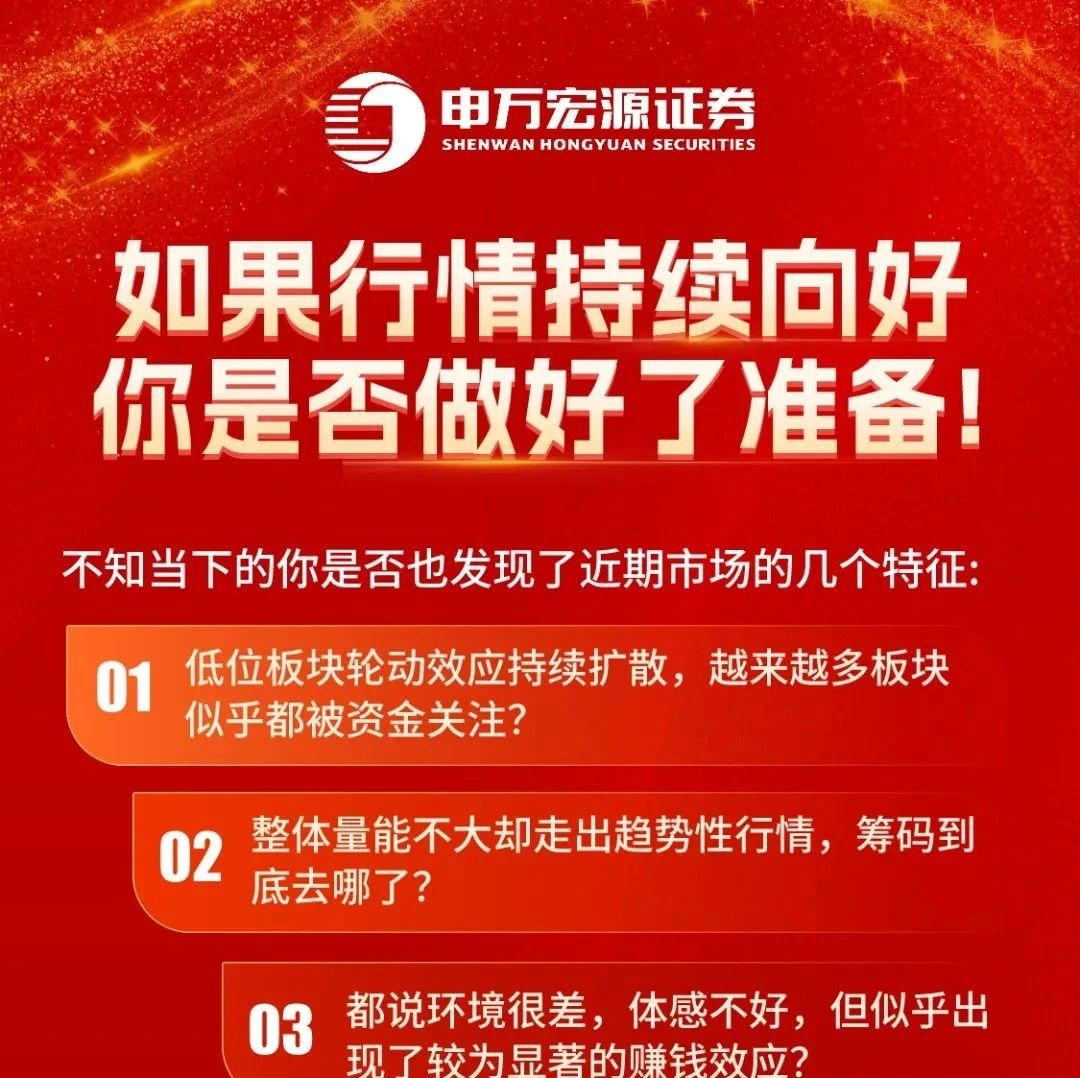
如果行情持续向好,你是否做好了准备!
申万宏源证券上海北京西路营业部· 2025-08-13 03:12
Core Viewpoint - The article discusses the current market characteristics, highlighting the rotation of low-position sectors, the apparent trend despite low overall volume, and the potential risk of missing out on opportunities due to market emotions [1][3]. Group 1: Market Characteristics - There is a continuous rotation effect among low-position sectors, attracting more capital attention [1]. - Despite a challenging environment, there is a notable profit-making effect, suggesting that the main risk may stem from missing out on opportunities [1]. - Investors are caught in a cycle of chasing hot stocks, getting trapped, cutting losses, and then chasing new trends, which can lead to repeated mistakes [3]. Group 2: Investment Strategies - Investors are advised to prioritize companies with strong fundamentals, good performance, and high industry sentiment, avoiding speculative stocks without earnings support [8]. - Patience is emphasized, encouraging investors to believe in trends and use pullbacks as opportunities to enter or increase positions in favored stocks [8]. - Strict execution of profit-taking and stop-loss strategies is crucial for preserving profits and controlling risks [8]. - Dynamic management of positions is recommended, gradually reducing overall exposure as market risks increase and maintaining cash reserves [8]. - Continuous learning and adaptation of strategies are essential as market conditions evolve [8]. Group 3: Expert Insights - Investment strategies should focus on structural opportunities in the current market environment, with an emphasis on quality stocks and policy-driven themes [12]. - A balanced approach is suggested, maintaining a core position in broad indices while tracking high-potential stocks [12]. - Investors should adhere to strict risk control measures, such as limiting individual stock losses to 10% and not exceeding 25% of total capital in a single stock [12]. - The importance of a disciplined trading system is highlighted, ensuring that actions align with established rules and market signals [12]. Group 4: Psychological Aspects - Investors are encouraged to avoid being swayed by market emotions and to stick to their investment systems and discipline [8]. - The article suggests that a long-term value investment approach, focusing on holding quality stocks, is more beneficial than frequent trading based on short-term market fluctuations [15]. - Maintaining a calm mindset and focusing on familiar sectors can help investors avoid the pitfalls of emotional trading [15].

帮主郑重:指数新高了,咱散户的钱包鼓了吗?
Sou Hu Cai Jing· 2025-08-11 17:38
Group 1 - The market is experiencing a significant rally, with the Shanghai Composite and Shenzhen Component indices reaching new highs, and the ChiNext Index rising by 1.96%, indicating strong market activity with over 4,100 stocks in the green and a trading volume of 1.83 trillion yuan [1] - Retail investors are struggling to keep up with rapid sector rotations, missing out on gains as sectors like lithium and AI surge while they are left holding underperforming stocks [3][5] - The anxiety of missing out on market gains is more distressing for retail investors than actual losses, as many new investors enter the market while others hesitate and miss opportunities [4] Group 2 - Despite the overall market rally, not all sectors are performing well, with banks and gold stocks lagging behind, highlighting that a rising index does not equate to widespread gains across all stocks [6] - Investors are advised to focus on sectors with strong policy support, such as lithium, photovoltaic capacity optimization, and technology independence, rather than getting caught up in the excitement of index highs [6] - A strategic approach is recommended, including maintaining a diversified portfolio with a focus on high-dividend stocks, policy-driven sectors, and holding cash for potential buying opportunities [8] Group 3 - The market rewards those who are prepared and have a clear strategy, emphasizing the importance of understanding market dynamics and having a plan rather than simply reacting to market movements [9]


年内“翻倍基”清一色创新药主题主动权益赢得业绩主题ETF赚足规模
Zheng Quan Shi Bao· 2025-08-03 21:37
Core Viewpoint - The article highlights the significant performance disparity between actively managed equity funds and thematic ETFs, particularly in the booming sectors of humanoid robots and innovative pharmaceuticals, with ETFs gaining substantial scale due to their advantages in capturing market trends [1][2]. Group 1: Performance of Funds - The innovative pharmaceutical sector has seen a strong market performance, leading to a total of 17 "doubling funds" in 2023, all of which are related to this theme, with 10 being actively managed equity funds and 7 being thematic ETFs [1]. - The top-performing innovative pharmaceutical funds include several actively managed funds and ETFs, with notable mentions such as Huatai-PB Hang Seng Innovative Pharmaceutical ETF and others [1]. - Despite the strong performance of actively managed funds, their scale growth has lagged behind that of ETFs, with the top 10 innovative pharmaceutical active funds having a total scale of only 9.4 billion yuan at the end of Q2, while the 7 ETFs increased their scale by 12.9 billion yuan to reach 28.4 billion yuan [2]. Group 2: Market Dynamics - The rapid growth of ETFs is attributed to their passive tracking mechanism, which allows them to effectively capture beta returns from high-growth sectors, making them more appealing to investors compared to actively managed funds [3]. - The expansion of ETFs has put pressure on actively managed equity funds, which are struggling to attract new investments despite their strong performance, as investors prefer the transparency and lower costs associated with ETFs [4]. - The management fees for ETFs are generally lower than those for actively managed funds, further enhancing their attractiveness to investors [4]. Group 3: Future Trends - The emergence of new ETFs focused on themes such as artificial intelligence and cloud computing indicates a shift in investor preference towards passive investment strategies, while the success of actively managed funds will increasingly depend on the historical performance of fund managers [5]. - The coexistence of passive and active investment strategies is essential, as both serve different investor needs and risk profiles, with active funds playing a crucial role in value discovery [5][6].
最高60%!适用10至50港元股票和衍生品 港股交易最低报价即将下调
Di Yi Cai Jing· 2025-07-31 03:30
Core Viewpoint - The Hong Kong Stock Exchange (HKEX) is set to reduce the minimum price fluctuation unit for securities trading, with a maximum reduction of 60%, aimed at enhancing market liquidity and trading efficiency [1][2][3] Summary by Relevant Sections Minimum Price Fluctuation Unit Adjustment - Starting from August 4, the minimum price fluctuation unit for securities will be adjusted in phases. For securities priced between HKD 10 and 20, the minimum fluctuation will decrease from HKD 0.02 to HKD 0.01 (a 50% reduction). For those priced between HKD 20 and 50, it will drop from HKD 0.05 to HKD 0.02 (a 60% reduction) [2][5] - This adjustment applies to stocks, Real Estate Investment Trusts (REITs), and equity warrants [2] Market Liquidity and Trading Efficiency - The HKEX aims to improve market liquidity through this adjustment, making it easier for orders to be executed at expected prices and aligning trading prices closer to the actual value of stocks [1][4] - The average daily trading volume in the Hong Kong stock market reached HKD 240.2 billion in the first half of 2025, reflecting a 118% increase compared to the same period last year [3] Impact on Market Participants - Industry experts believe that the reduction in the minimum price fluctuation unit will lower trading costs and enhance efficiency, potentially attracting more quantitative funds into the market [4] - However, there are concerns that traders relying on small price differences for arbitrage may exit the market due to reduced profit margins, which could negatively impact overall market liquidity [1][7] Future Phases of Adjustment - A second phase of adjustments is planned for securities priced between HKD 0.5 and 10, which will see a 50% reduction in the minimum price fluctuation unit, expected to be implemented next year [2][5]


金融业也要反内卷了?
表舅是养基大户· 2025-07-24 07:34
Core Viewpoint - The article discusses the recent surge in the stock market, highlighting the significant rise in stock prices and the ongoing "anti-involution" movement within the banking industry, particularly in Guangdong, where banks are addressing asymmetric interest rate competition and narrowing net interest margins [1][4]. Group 1: Banking Industry - The Guangdong Banking Association has initiated measures to combat "involution" in the banking sector, which is characterized by asymmetric declines in deposit and loan interest rates, leading to intensified market competition and a slowdown in net income growth [1][4]. - The phenomenon of extreme price competition is exemplified by a recent case where a bank issued 35 billion yuan in subordinated debt, with the lowest bid coming in at an astonishingly low rate, highlighting the severe competitive pressures within the industry [2][3][5]. - Industry insiders predict that more regions will join the anti-involution efforts, indicating a potential shift in the competitive landscape of the banking sector [1]. Group 2: Securities Market - The total annual underwriting scale for securities firms is projected to grow significantly from 5.16 trillion yuan in 2021 to 14.45 trillion yuan by 2024, while underwriting fees have decreased from 6.489 billion yuan to 3.084 billion yuan during the same period, reflecting a substantial decline in profitability despite increased activity [4]. - The trading volume in the market remains robust, with a total turnover of 1.9 trillion yuan, and the performance of brokerage-related ETFs has outpaced that of financial technology ETFs, indicating a strong focus on brokerage performance amid rising trading volumes [6][8]. - Recent data shows that the financing balance has reached 1.9222 trillion yuan, nearing its historical high, suggesting a highly enthusiastic market environment, although caution is advised as this could lead to potential market corrections [8][10].

外资狂买54亿!沪指四连阳创新高,中国资产香饽饽!
Sou Hu Cai Jing· 2025-07-21 13:47
Group 1 - The A-share index has reached a three-and-a-half-year high at 3534 points, but retail investors are struggling to make profits, with 82% of short-term traders reporting losses this month [1][2][4] - The market is characterized by rapid sector rotation, where different sectors take turns leading the market, making it difficult for retail investors to keep up [1][2] - Institutional investors and quantitative funds are dominating the market, focusing on large-cap stocks, while retail investors often chase smaller, less liquid stocks [2][5] Group 2 - Foreign investment in Chinese assets has surged, with South Korean investors buying $5.4 billion worth of A-shares and Hong Kong stocks this year, making China their second-largest overseas investment market [2][5] - Bridgewater Associates reported a 13.6% return on its China onshore fund in the first half of the year and plans to continue increasing its positions [4][5] - The attractiveness of Chinese assets is attributed to their lower valuations compared to U.S. stocks, with A-shares averaging a price-to-earnings ratio of 12, significantly lower than the S&P 500's 25 [5][6] Group 3 - The rare earth sector has seen a surge, with a 3% increase in prices and multiple stocks hitting the daily limit, driven by factors such as increased enforcement against smuggling and strong mid-year earnings forecasts [6][7] - The upcoming IPO of Yushutech, a company specializing in humanoid robots, is expected to attract significant market attention, with potential for high valuations [6][7] - Retail investors are advised to focus on leading stocks and avoid chasing smaller, less established companies, as institutional investors are primarily targeting large-cap stocks for their liquidity and stability [8][9]
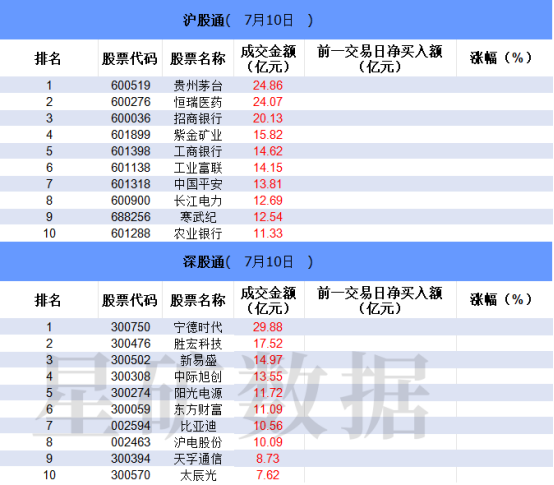
【数据看盘】机构、游资博弈京北方 量化资金活跃度持续提升
Xin Lang Cai Jing· 2025-07-10 09:58
Summary of Key Points Core Viewpoint - The trading volume of the Shanghai and Shenzhen Stock Connect reached a total of 202.64 billion, with Kweichow Moutai and CATL leading in individual stock trading volume. The non-bank financial sector saw the highest net inflow of funds, while the coal ETF experienced a significant increase in trading volume. Trading Volume - The total trading amount for the Shanghai Stock Connect was 1009.52 billion, and for the Shenzhen Stock Connect, it was 923.12 billion [2]. Top Trading Stocks - In the Shanghai Stock Connect, Kweichow Moutai ranked first with a trading volume of 24.86 billion, followed by Hengrui Medicine at 24.07 billion and China Merchants Bank at 20.13 billion [3]. - In the Shenzhen Stock Connect, CATL led with a trading volume of 29.88 billion, followed by Shenghong Technology at 17.52 billion and Xinyi Technology at 14.97 billion [4]. Sector Performance - The sectors with the highest net inflow of funds included: - Non-bank financial: 34.07 billion (3.97% net inflow rate) - Real estate: 22.61 billion (8.36% net inflow rate) - Securities: 22.28 billion (4.67% net inflow rate) [5]. - The sectors with the highest net outflow of funds included: - Electronics: -63.45 billion (-3.76% net outflow rate) - Computers: -40.40 billion (-2.58% net outflow rate) [6]. ETF Trading - The top ETF by trading volume was the Hong Kong Securities ETF with 207.00 billion, followed by the Hong Kong Innovative Drug ETF at 56.60 billion [8]. - The coal ETF saw a remarkable increase in trading volume, growing by 318% [9]. Futures Positioning - In the futures market, both long and short positions increased significantly, with the IF and IC contracts seeing a greater increase in long positions [10]. Institutional Activity - Institutional buying was notable in stocks like JA Solar, which saw a purchase of 1.32 billion, while New City faced a sell-off exceeding 500 million [11]. - The overall activity of institutional investors was relatively low, with significant selling in stocks like Honghe Technology [12]. Retail and Quantitative Trading - Retail investors showed a decline in activity, with significant buying in Xiexin Integration exceeding 1.2 billion, while stocks like BYD faced substantial selling [12]. - Quantitative trading was active, with notable purchases in Xinya Technology exceeding 1.2 billion [13].

收盘丨沪指窄幅震荡微涨0.02%,全市场超3200只个股上涨
Di Yi Cai Jing· 2025-07-07 07:22
Market Performance - The A-share market showed mixed results with the Shanghai Composite Index up by 0.02%, while the Shenzhen Component and ChiNext Index fell by 0.7% and 1.21% respectively, with over 3200 stocks rising overall [1][3] Sector Performance - The shipbuilding, electric power, real estate, and internet e-commerce sectors performed strongly, while the biopharmaceuticals, weight loss drugs, and AI mobile phone sectors saw significant declines [1][3] Notable Stocks - Real estate stocks surged, with companies like Yucheng Development, Shahe Shares, and Nanshan Holdings hitting the daily limit, while others like Haitai Development and JinDi Group also saw gains [3] - Electric power stocks experienced a notable rally, with nearly 10 stocks including Shaoneng Shares and Huayin Electric reaching the daily limit [3] Stock Price Movements - Significant stock price increases included: - Disen Shares (+18.56% to 7.09) - Nanguang Technology (+14.72% to 35.46) - Shaoneng Shares (+10.07% to 6.12) - Huayin Electric (+10.02% to 6.70) - Shimao Energy (+10.01% to 21.00) [4] Capital Flow - Main capital inflows were observed in the real estate and banking sectors, while education and engineering machinery sectors experienced net outflows [5] - Individual stocks with notable net inflows included Qingdao Kingking, Tianyu Digital Science, and Hailian Jinhui, attracting 642 million, 611 million, and 514 million respectively [6] - Stocks facing significant net outflows included Zhongji Xuchuang, Xinyi Sheng, and Dongfang Caifu, with outflows of 692 million, 496 million, and 378 million respectively [7] Institutional Insights - Citic Securities highlighted the mid-year reporting period as a critical window for identifying structural opportunities, emphasizing the importance of performance-driven investments in sectors like solid-state batteries, copper, aluminum, and pharmaceuticals [8] - Guo Cheng Investment noted that small-cap stocks are under pressure due to new regulations on algorithmic trading, which may lead to decreased liquidity in this segment [8] - Zhongxin Jian Investment pointed out that the Shanghai Composite Index reached a new high since 2025, driven by improvements in macroeconomic conditions, market sentiment, and positive mid-year earnings forecasts [8]







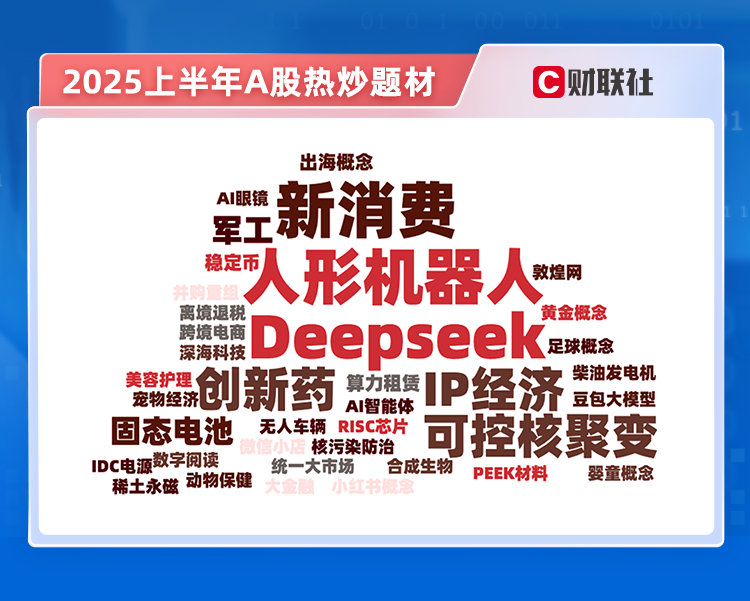
年中盘点|一图看懂2025年上半年A股热炒题材
news flash· 2025-06-27 09:28
Group 1 - The core viewpoint of the article highlights that despite a modest performance of the A-share market in 2025, with the Shanghai Composite Index showing a cumulative increase of only 2% and a maximum fluctuation of less than 500 points, the enthusiasm for thematic investments remains high [1] - The article notes a shift in investment style from last year's value-driven approach to a focus on growth themes, indicating a resurgence of growth-oriented investment strategies [1] - It emphasizes the increasing role of quantitative funds in daily trading volumes, leading to rapid rotation of thematic hotspots, showcasing a vibrant market environment similar to previous years [1] Group 2 - The article outlines various hot investment themes that have emerged in the first half of 2025, including technology trends such as Deepseek and humanoid robots, as well as sectors like new consumption and innovative pharmaceuticals that are experiencing significant upward trends [1] - It points out that the A-share market is influenced by cross-market interactions with Hong Kong and US stocks, along with resonance from news events, marking a new characteristic of the market in the first half of the year [1] - The article serves as a recap of the various hot topics and investment themes that have been prevalent in the A-share market during the first half of 2025 [1]
策略周观点:银行的上涨能否扩散到非银?-20250622
Xinda Securities· 2025-06-22 08:47
Core Insights - The core conclusion of the report indicates that the steady rise in bank stocks over the past two years is primarily due to high dividends. The decline in PB (Price-to-Book) ratio has outpaced the decline in ROE (Return on Equity) from 2021 to 2023, suggesting significant room for valuation recovery, similar to the situation in 2014 [2][9][10] - The report suggests that non-bank financials also exhibit similar undervaluation, with a notable decline in PB compared to ROE from 2021 to 2023. Q4 is identified as a critical time window for potential valuation recovery in non-bank financials [2][9][10] Group 1: Bank Sector Analysis - The essence of the bank market is characterized by being undervalued, allowing for price increases even without improvements in economic conditions. The contraction in the real estate sector has led to a significant reduction in high-yield assets related to real estate financing, while government bond yields have also decreased, prompting funds, especially from insurance, to seek alternative high-yield assets, which banks fulfill [10][12] - The report highlights that the decline in bank PB has been significantly faster than the decline in ROE since 2021, leading to an excessive undervaluation of bank stocks as of early 2024. This situation is a key reason for the recent valuation recovery in banks [12][14] - The report emphasizes that the rise in bank stocks may extend to the broader financial sector, driven by quantitative funds and public fund assessment regulations. The strong momentum in bank stocks could attract attention to financial stocks, especially if growth and consumption momentum weaken [14][21] Group 2: Non-Bank Financial Sector Insights - The report indicates that non-bank financials, particularly brokerage firms, are perceived as high Beta industries, often outperforming during market uptrends. However, the report cautions that the performance of non-bank financials can vary significantly across different bull markets [21][22] - It is suggested that the current bull market may yield greater excess returns for non-bank financials compared to the period from 2019 to 2021, with Q4 being a pivotal time for this potential [21][22] - The report notes that the valuation recovery for non-bank financials may depend on two key factors: the completion of index fluctuations and the search for momentum opportunities by speculative funds [13][21]