滞胀

Search documents
12只个股股价翻倍、主题ETF规模增1.3倍,黄金“疯”背后资金已有分歧
Di Yi Cai Jing Zi Xun· 2025-09-10 13:41
Core Viewpoint - The surge in gold prices has significantly boosted the performance of the gold sector, leading to a "gold rush" in both the stock and financial product markets [1][2]. Gold Price Performance - As of September 10, COMEX gold prices have increased by 38.73% year-to-date, with a notable rise of 9.08% in the last 15 trading days [1][2]. - The international gold price started at $2,625 per ounce and reached a historical high of over $3,700 per ounce [1]. Stock Market Performance - The SSH gold stock index has seen a year-to-date increase of over 73.18%, with a 23.09% rise from August 20 to September 11 [2]. - Individual stocks in the gold sector have performed exceptionally well, with 12 stocks doubling in price and companies like WanGuo Gold Group and China National Gold International seeing year-to-date increases exceeding 200% [2]. ETF Performance - Gold ETFs have experienced significant growth, with the total scale of 20 gold ETFs increasing by nearly 1.3 times, reaching approximately 165.79 billion yuan [3]. - Stock-type gold ETFs have outperformed, with an average increase of 74.89% year-to-date, while commodity-type gold ETFs have faced net outflows totaling over 10.5 billion yuan [3]. Investor Sentiment - There is a divide among investors regarding the sustainability of the current gold price surge, with some expressing uncertainty about future trends [4]. - Analysts suggest that the current macroeconomic environment, including concerns over U.S. Federal Reserve independence and inflation, is driving demand for gold as a safe-haven asset [5]. Future Outlook - Institutions generally maintain a "short-term volatility, long-term bullish" outlook for gold prices, with expectations of continued central bank purchases and a low allocation of gold in global reserves [6]. - UBS has raised its gold price targets for 2026, forecasting prices of $3,600 and $3,700 per ounce by March and June, respectively [6].


专访美银中国区行政总裁王伟:金价明年上半年冲击4000美元
Di Yi Cai Jing Zi Xun· 2025-09-10 08:30
Core Viewpoint - The global economic landscape is increasingly volatile, with geopolitical factors and trade tensions impacting recovery momentum, leading to a surge in gold prices to historical highs [2] Economic Outlook - Despite a complex global environment, the U.S. economy shows resilience, with stable growth expectations for 2025 at 1.8% and 2026 at 1.7% [3][5] - The labor market is showing signs of weakness, with August non-farm payrolls falling short of expectations, indicating a slowdown in both labor supply and demand [3][6] Inflation and Tariffs - Tariffs have created cost pressures but have limited overall impact on inflation, with a moderate price increase observed as companies do not fully pass costs to consumers [4][5] - Inflation is expected to rise moderately by the end of the year, with the core Personal Consumption Expenditures (PCE) index projected to exceed 3% [5] Federal Reserve Policy - The Federal Reserve is anticipated to cut rates by 25 basis points in September and December, with potential for further cuts if labor market conditions worsen [6][7] - The market is currently optimistic about a soft landing for the global economy, with 68% of fund managers expecting this outcome [6] Bond Market Insights - The yield curve is experiencing a bull steepening, driven by real interest rate compression, with nominal rates influenced by inflation expectations [7] - The focus on the debt ceiling may impact U.S. Treasury yields, with a dovish Fed stance likely to support mid-term inflation expectations [7] Gold Price Projections - Gold prices are projected to reach $3,750 per ounce by the end of 2025 and $4,000 per ounce by mid-2026, driven by fiscal conditions and potential rate cuts in a high inflation environment [8] Investment Strategy - The current market sentiment is optimistic, with a focus on dollar, cash, real estate investment trusts (REITs), and healthcare sectors, while being cautious on stocks and emerging markets [9] - Fixed income strategies are shifting towards longer-duration assets, with a positive outlook on agency MBS and investment-grade corporate bonds [10]


美联储陷入“双重风暴”:非农暴雷后通胀反扑?
Jin Shi Shu Ju· 2025-09-10 07:08
美国就业市场的坏消息,可能会促使美联储政策制定者在下周降息。眼下他们最不愿看到的,是通胀再 传坏消息——但或许已别无选择。 即将公布的两份关键物价报告预计将显示,随着美国高关税的影响渗透至经济,通胀仍在上升。8月生 产者价格指数(PPI)与消费者价格指数(CPI)的整体及核心通胀率,均预计出现高于平均水平的涨 幅。 与此同时,美国整体CPI年率可能从2.7%升至2.9%,触及年内高点;被视为"未来通胀更可靠预测指 标"的核心CPI年率则重返3%以上。 最新的坏消息来自一份报告:美国劳工统计局(BLS)高估了2024年4月至2025年3月期间的就业增长, 高估幅度达创纪录的91.1万人。而今年夏季的招聘节奏进一步放缓。 在拜登政府末期及特朗普第二任期初期,就业增长速度大幅放缓,这为美国经济勾勒出一幅截然不同的 图景——相比几个月前,当前经济更脆弱,也更易陷入衰退。 雪上加霜的是,美国正实施数十年来最高水平的关税。这些关税削弱了消费者信心,一定程度上冻结了 企业招聘与投资,还小幅推升了通胀。 定于周三公布的8月PPI预计将显示,整体通胀率与核心通胀率均环比上涨0.3%。该指数旨在捕捉批发 价格变化,即企业间原材料 ...
黄金ETF持仓量报告解读(2025-9-10)美债收益反弹 金价冲高回落
Sou Hu Cai Jing· 2025-09-10 06:27
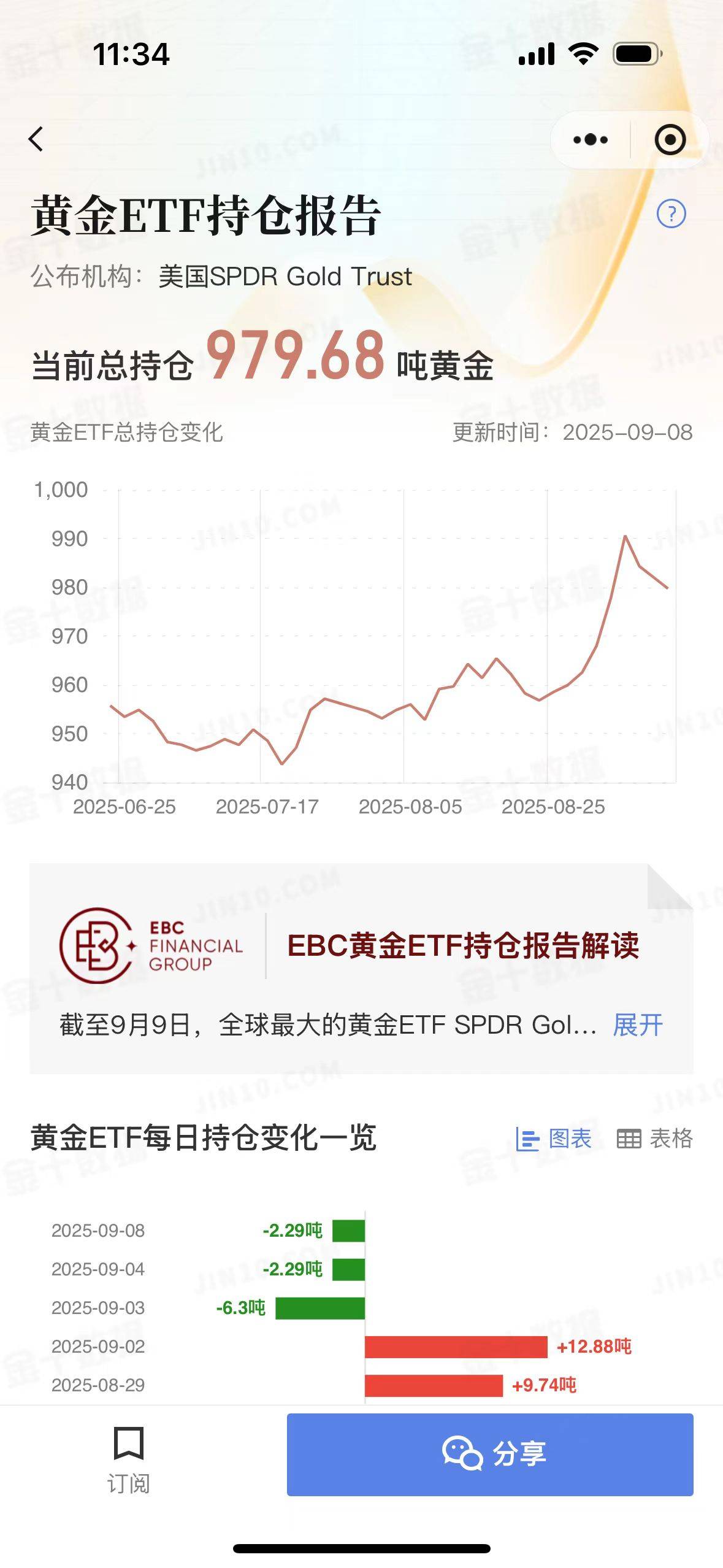
Group 1 - The current total holdings of the world's largest gold ETF, SPDR Gold Trust, stand at 979.68 tons, unchanged from the previous trading day [5] - On September 9, spot gold prices peaked at $3675.01 per ounce, marking a new historical high, before closing at $3626 per ounce, down $9.7 or 0.27% [5] - Geopolitical tensions, particularly involving Israel and Hamas, influenced gold prices, which initially surged before retreating due to rising U.S. Treasury yields [5] Group 2 - Recent economic data revealed a downward revision of 911,000 in U.S. non-farm payrolls, equivalent to a 0.6% decrease, marking the worst performance on record [5] - Analysts suggest that the downward revision of employment data strengthens the case for a Federal Reserve rate cut, with traders currently pricing in an 89.4% probability of a 25 basis point cut in September [6] - Technical analysis indicates that gold may face a correction, with potential support levels at $3600 and $3578, while resistance levels are seen at $3700 and $3750 [6]
陶冬:滞胀魅影浮现,鲍威尔又错了?
Di Yi Cai Jing· 2025-09-08 02:17
Group 1 - The core viewpoint is that the Federal Reserve is likely to cut interest rates in September, with the decision hinging on upcoming CPI data, and the potential for a significant cut of either 25 or 50 basis points [1][2] - The U.S. labor market showed disappointing performance in August, with non-farm payrolls increasing by only 22,000, significantly below the expected 75,000, and the unemployment rate rising to 4.3% [1][2] - The weak employment data suggests a high probability of economic recession, especially as the three-month average job growth is below 50,000, which historically indicates recession risks [1][2] Group 2 - The sectors most affected by poor employment performance include IT, financial services, manufacturing, and wholesale trade, with a notable impact on high-income white-collar jobs [2] - Despite the downturn, wage growth continues, and labor participation rates have increased, indicating some resilience in the labor market [2] - The Federal Reserve is expected to reassess economic risks due to the weak labor market, making employment a more critical focus in their dual mandate [2][3] Group 3 - The upcoming midterm elections in 2026 are anticipated to be heavily influenced by economic conditions, with the economy serving as a key factor in voter sentiment [3][4] - The major economic issues at stake include the "Build Back Better" plan and the tariff war, with their impacts on prices, employment, and income being crucial for electoral outcomes [4][5] - Republican strategies include redistricting efforts to gain an advantage in the House of Representatives, while Democrats face challenges in maintaining their traditional strongholds [5]
黄金新高后怎么看?
2025-09-07 16:19
Summary of Key Points from Conference Call Industry Overview - The focus is on the **gold market** and its price dynamics influenced by macroeconomic factors and geopolitical events [1][2][3]. Core Insights and Arguments - **Gold Price Trends**: After breaking the $3,500 per ounce mark at the end of August, market attention on gold has significantly increased, aligning with expectations that the price movements are driven by different factors in the first and second halves of the year [2][3]. - **Impact of Tariffs**: The conclusion of the China-US Geneva Agreement in May reduced tariff uncertainties, leading to a decrease in the political risk premium that previously supported gold prices [2][4]. - **US Labor Market Data**: A downward revision of US labor market data has raised concerns about economic performance, which in turn supports gold prices as it increases expectations for Federal Reserve rate cuts [2][5]. - **Geopolitical Factors**: The weakening of geopolitical pricing and a significant decline in global demand expectations have contributed to volatility in the commodity markets, including gold [3][4]. - **Federal Reserve Policy**: The potential for the Federal Reserve to cut rates without waiting for significant inflation decreases is a key factor influencing gold prices, with expectations of a terminal rate around 3% [8][9]. - **Inflation and Stagflation**: The current economic slowdown may support gold prices, with market concerns about stagflation, which typically benefits gold [8][9]. Important but Overlooked Content - **Long-term Debt Risks**: The resignation of Federal Reserve officials and increasing long-term debt risks have heightened market concerns about the independence of the Fed and the sustainability of developed countries' debt levels, contributing to rising gold prices [6][10]. - **Future Price Predictions**: For 2026, key factors to monitor include US labor data, global long-term debt risks, and geopolitical tensions, which will significantly impact gold prices [5][12]. - **Market Sentiment**: The upcoming US-China meetings may provide optimistic news, but the market has already priced in the easing of trade uncertainties, limiting the potential for significant gold price corrections [10][11]. Conclusion - The gold market is currently influenced by a complex interplay of economic data, geopolitical events, and Federal Reserve policies, with expectations of continued price support in the near term due to anticipated rate cuts and economic conditions. Future price movements will depend heavily on the evolution of these factors.
非农数据不佳 要求美联储加快降息脚步
Sou Hu Cai Jing· 2025-09-07 05:18
Group 1 - The core point of the article highlights the significant underperformance of the U.S. non-farm payroll data for August, which has led to increased expectations for interest rate cuts by the Federal Reserve [2][4] - The non-farm employment data showed an increase of only 22,000 jobs in August, far below the expected 75,000, with the unemployment rate rising to 4.3%, the highest level since 2021 [2] - Following the disappointing non-farm data, Barclays analysts now predict that the Federal Reserve will cut rates three times this year, each by 25 basis points, and two additional cuts in March and June 2026 [2] Group 2 - The article discusses the implications of potential stagflation in the U.S. economy, emphasizing the risks associated with high asset bubbles and the need for careful monetary policy [3][4] - It is noted that if employment continues to decline, the Federal Reserve may need to implement rate cuts of up to 100 basis points by early next year to prevent a rapid economic downturn [4] - The article warns that if financial risks escalate, the Federal Reserve might have to consider even larger cuts, potentially exceeding 150 basis points, to stabilize the financial markets [4]

美国芝加哥联储主席Goolsbee(2025年FOMC票委):我仍然没有决定是否在9月份支持FOMC降息。就业人口增速绝对低于
Sou Hu Cai Jing· 2025-09-05 18:13
Core Viewpoint - The Chicago Fed President Goolsbee has not yet decided whether to support a rate cut in September, indicating uncertainty in the economic outlook [1] Group 1: Employment and Economic Conditions - The growth rate of the employment population is significantly below the equilibrium level [1] - Immigration issues, particularly those related to border security, may lead to an "unnatural" decline in hiring [1] - There is a concern that if layoffs begin to occur, it could create anxiety in the labor market [1] Group 2: Inflation and Monetary Policy - The Fed is still considered to be in a state of full employment, but attention must also be paid to its responsibilities regarding inflation and price stability [1] - The independence of the Fed is deemed crucial if inflation is to be controlled [1] - A series of shocks are pushing the U.S. economy towards stagflation [1]
The Economy Is Starting To Weigh Heavily On Retail Forecasts
Forbes· 2025-09-05 13:50
Economic Overview - For the first time in four years, the number of job seekers is nearly equal to job openings, indicating a shift in the labor market dynamics [2] - The Federal Reserve faces a dilemma as rising unemployment could prompt interest rate cuts, but inflationary pressures from tariffs complicate this response [3][4][6] Retail Sector Implications - Stagnation in job creation and rising inflation could lead to stagflation, which makes consumers hesitant to spend, threatening retail sales forecasts for the fourth quarter [8][9] - The National Retail Federation forecasts holiday sales growth of 2.5%-3.5%, while Deloitte predicts 3.1% growth, and Circana's forecast ranges from 0%-2.5% [9] - Current forecasts do not account for inflation, suggesting that real growth could be zero or negative if employment does not improve [10] Consumer Behavior - Higher inflation and fewer job opportunities are leading to reluctant consumer spending, which could result in retailers having to offer discounts to clear unsold inventory [10][11] - Retailers are cautious with orders this year due to economic concerns, indicating a potential slowdown in retail activity [11][12] Future Outlook - The economic environment remains volatile, with the potential for improvement if stability is achieved, but uncertainty persists regarding the impact of tariffs and inflation [12][13]
美联储降息前的最后一份非农:市场会否措手不及?
Sou Hu Cai Jing· 2025-09-05 09:42
Group 1 - The core focus of the market is on the upcoming U.S. non-farm payroll report, with economists expecting an addition of 75,000 jobs in August, up from 73,000 in the previous month, but an increase in the unemployment rate to 4.3% indicates a further slowdown in the labor market [1] - The average job growth over the past three months has only been 35,000, marking one of the weakest periods since the recovery from the 2007-2009 financial crisis [3] - The July job openings fell to a 10-month low, with the number of unemployed surpassing job vacancies for the first time since the COVID-19 pandemic began, indicating a deteriorating labor market [5] Group 2 - Manufacturing employment has been consistently weak, with a cumulative loss of 36,000 jobs over the past three months, while government employment also decreased by 10,000 in July [8] - The tariff policies are expected to further reveal their negative impact on the hiring market and overall economy, with projections indicating a potential GDP growth reduction of 0.8-2.0 percentage points by 2025 due to tariffs [10] - The upcoming non-farm payroll data is critical for the Federal Reserve's decision on interest rate cuts, with differing opinions among officials regarding the state of the labor market and its implications for future monetary policy [10][12] Group 3 - If the non-farm payroll data meets expectations, it is unlikely to cause significant market volatility, maintaining the expectation of two rate cuts by the Federal Reserve by the end of the year [12] - A weaker-than-expected report could strengthen the market's expectation for a rate cut this month to over 95%, while a stronger-than-expected report may lead to a reassessment of the Fed's rate cut trajectory [12]