股债跷跷板

Search documents
公募基金泛固收指数跟踪周报(2025.08.11-2025.08.15):股债“跷跷板”持续演绎,债市显著承压-20250818
HWABAO SECURITIES· 2025-08-18 09:11
1. Report Industry Investment Rating There is no information about the report industry investment rating in the provided content. 2. Core Viewpoints of the Report - Last week (from August 11 to August 15, 2025), the bond market performed weakly, with yields of major bond types generally rising. The ChinaBond - Composite Wealth Index (CBA00201) dropped 0.33%, and the ChinaBond - Composite Full - Price Index (CBA00203) declined 0.38%. Yields of interest - rate bonds across all tenors generally increased, and those of credit bonds across all tenors and ratings were under upward pressure. Credit spreads showed a narrowing trend [2][10]. - The marginal convergence of the capital market was moderate, and the "see - saw" effect between stocks and bonds was prominent. The US bond market fluctuated within a narrow range, and the expectation of interest - rate cuts was inconsistent. The secondary market of REITs continued to adjust, and trading activity decreased [2]. - The Science and Technology Innovation Bond ETF continued to attract funds. As of August 15, 2025, the total scale of the first - batch Science and Technology Innovation Bond ETF products exceeded 110 billion yuan, reaching 116.124 billion yuan in total, with 8 products having a scale exceeding 10 billion yuan [3]. 3. Summary According to Relevant Catalogs 3.1. Pan - Fixed - Income Market Review and Observation - **Bond Market Review**: Last week, the bond market was weak. The ChinaBond - Composite Wealth Index and the ChinaBond - Composite Full - Price Index both declined. Yields of interest - rate bonds and credit bonds generally increased, and credit spreads narrowed. For example, the 1 - year, 3 - year, 5 - year, and 10 - year Treasury yields changed by 1.06bp, - 1.47bp, 3.14bp, and 5.02bp respectively compared to the previous week [2][10]. - **Market Observation**: The capital market marginally converged moderately, and the "see - saw" effect between stocks and bonds was obvious. The central bank's net withdrawal of funds led to a slight increase in capital interest rates. The US bond market fluctuated narrowly, and the expectation of interest - rate cuts was inconsistent. The secondary market of REITs continued to adjust, and trading activity decreased [11][12][13]. 3.2. Public Fund Market Dynamics - The Science and Technology Innovation Bond ETF continued to attract funds. As of August 15, 2025, the total scale of the first - batch products exceeded 110 billion yuan, with 8 products having a scale over 10 billion yuan. The total scale of the bond ETF market in the whole market reached 538.2 billion yuan, nearly tripling compared to the end of 2024. Multiple fund companies are preparing to apply for the second - batch Science and Technology Innovation Bond ETFs [3][14][15]. 3.3. Performance Tracking of Pan - Fixed - Income Fund Indexes - **Money Enhancement Index**: It rose 0.02% last week and has accumulated a return of 3.93% since its establishment [4]. - **Short - Term Bond Fund Optimal Selection**: It had a flat return of 0.00% last week and has accumulated a return of 4.12% since its establishment [4]. - **Medium - and Long - Term Bond Fund Optimal Selection**: It dropped 0.16% last week and has accumulated a return of 6.30% since its establishment [4]. - **Low - Volatility Fixed - Income + Fund Optimal Selection**: It rose 0.04% last week and has accumulated a return of 3.32% since its establishment [4]. - **Medium - Volatility Fixed - Income + Fund Optimal Selection**: It rose 0.51% last week and has accumulated a return of 3.62% since its establishment [4]. - **High - Volatility Fixed - Income + Fund Optimal Selection**: It rose 0.44% last week and has accumulated a return of 5.17% since its establishment [4]. - **Convertible Bond Fund Optimal Selection**: It rose 1.29% last week and has accumulated a return of 17.35% since its establishment [5]. - **QDII Bond Fund Optimal Selection**: It rose 0.14% last week and has accumulated a return of 9.06% since its establishment [5]. - **REITs Fund Optimal Selection**: It dropped 0.76% last week and has accumulated a return of 36.05% since its establishment [5].
【债市观察】A股“慢牛”预期加强 收益率曲线陡峭化上行
Xin Hua Cai Jing· 2025-08-18 05:33
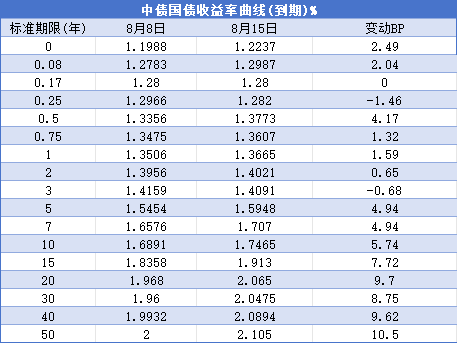
Core Viewpoint - The "stock-bond seesaw" effect has intensified, with the Shanghai Composite Index breaking through 3700 points, indicating a gradual emergence of a "slow bull" market. Meanwhile, the bond market is under pressure, with significant yield increases observed, particularly in long-term bonds [1]. Market Overview - The bond market experienced a significant decline, with the 10-year government bond yield rising over 5 basis points (BP) to approximately 1.75% during the week of August 11 to August 15, 2025. The 30-year bond yield increased by about 8 BP, while the short end saw limited upward movement due to a loose funding environment [1][2]. - The yield curve has shown a "bear steepening" pattern, indicating a more pronounced increase in long-term yields compared to short-term yields [1]. Monetary Policy Insights - The People's Bank of China (PBOC) has shifted its language in the second quarter monetary policy report from "implementing a moderately loose monetary policy" to "ensuring the implementation of a moderately loose monetary policy," suggesting a focus on execution rather than further easing in the short term [1][15]. - The market's expectations for broad monetary easing are already low, and if there are no significant policy changes in the third quarter, the anticipated impact on the market is expected to be manageable [1]. Bond Market Performance - The bond futures market saw a comprehensive decline, with the 30-year main contract dropping 1.48%, marking the lowest level since early April. The 10-year and 5-year contracts also fell by 0.29% and 0.15%, respectively [5]. - The China Bond Market saw a total issuance of 50 bonds amounting to 555.69 billion yuan, with government bonds accounting for 310.26 billion yuan of this total [7]. International Market Context - The U.S. Treasury yields rose overall, with the 10-year yield reaching 4.32%, an increase of 4 BP for the week. The 2-year yield remained stable at 3.76%, leading to a widening spread of 56 BP between the two [8]. - Recent U.S. inflation data showed a year-on-year Consumer Price Index (CPI) increase of 2.7%, which was below market expectations, while the core CPI rose to 3.1%, exceeding predictions and reinforcing market expectations for potential interest rate cuts by the Federal Reserve [8][10]. Institutional Perspectives - Financial institutions have noted that the bond market is currently facing adjustment pressures primarily due to the "stock-bond seesaw" effect. Strategies for equity markets should focus on significant trends rather than short-term fluctuations, while bond strategies should consider opportunities arising from market adjustments [16][17].

宁证期货今日早评-20250818
Ning Zheng Qi Huo· 2025-08-18 01:54
Report Summary 1. Industry Investment Ratings No industry investment ratings are provided in the reports. 2. Core Views - The current coal - coke market is oscillating due to cost support, emotional resilience, and a weak supply - demand balance. Without new negative factors, coal prices may continue to oscillate [1]. - After the US - Russia talks, the risk - aversion sentiment has cooled. Coupled with the Fed's interest - rate cut, gold is expected to be oscillating with a downward bias in the medium term [1]. - Due to the off - season of high temperature and heavy rain and the sluggish real estate market, the steel market's supply - demand pressure has increased in the short term, and steel prices may oscillate weakly. However, the supply - demand pressure may ease around late August and early September, and the price movement range may be limited [3]. - The supply of iron ore may increase, demand may slightly rise, and the inventory may slightly decrease. Therefore, iron ore prices are expected to oscillate [3]. - The significant increase in US sales data and PPI has led to a revision of the expected interest - rate cut, but the probability of a September rate cut remains above 80%. The falling US dollar index supports precious metals, and silver is expected to oscillate with an upward bias [4]. - The short - term supply of live pigs exceeds demand. It is recommended to go long at low prices and set stop - loss and take - profit levels. Pig farmers can choose to sell for hedging according to the slaughter schedule [4]. - The export of Malaysian palm oil has increased, and affected by the plantation investigation in Indonesia, palm oil prices have broken through previous highs. The domestic market shows high - level oscillation [5]. - The short - term spot price of soybean meal will experience a phased correction, while the medium - to - long - term price center will gradually rise [7]. - The domestic soda ash market price is oscillating at a low level, with high supply and tepid demand. The 01 contract is expected to oscillate in the short term [7]. - The domestic methanol market has high - level inventory accumulation. The 01 contract is expected to oscillate weakly in the short term [8]. - For short - term national bonds, it is recommended to go long on short - term bonds and short long - term bonds. National bonds are expected to oscillate with a downward bias [9]. - The polypropylene market is in weak consolidation, and the 01 contract is expected to oscillate in the short term [9]. - Crude oil has no upward momentum in the short term and should be treated with a downward - oscillating view [11]. - The supply - demand situation of PX has a marginal weakening. PX prices are expected to oscillate with a downward bias [12]. - The asphalt market's supply is stable, but demand cannot be effectively released due to rainfall and funding shortages. The overall fundamentals have weakened [12]. 3. Summary by Commodity Coal and Coke - **Coking Coal**: Independent coking enterprises' capacity utilization is 74.34% (+0.31%), daily coke output is 65.38 (+0.28), coke inventory is 62.51 (-7.22), coking coal total inventory is 976.88 (-11.04), and coking coal available days are 11.2 days (-0.18 days) [1]. Metals - **Rebar**: 247 steel mills' blast furnace operating rate is 83.59% (-0.16 ppts), blast furnace iron - making capacity utilization is 90.22% (+0.13 ppts), steel mill profitability is 65.8% (-2.60 ppts), and daily hot - metal output is 240.66 tons (+0.34 tons, +11.89 tons YoY) [3]. - **Iron Ore**: The total inventory of imported iron ore at 45 ports is 13819.27 tons (+107.00 tons), daily port clearance volume is 334.67 tons (+12.82 tons), and the number of ships at ports is 93 (-12) [3]. - **Silver**: US retail sales in July increased by 0.5% MoM, and the year - on - year increase reached 3.9%. After inflation adjustment, the real retail sales increased by 1.2% YoY, achieving positive growth for ten consecutive months [4]. Agricultural Products - **Live Pigs**: As of August 15, the average slaughter weight of live pigs is 123.23 kg (-0.09 kg), the weekly slaughter operating rate is 28.37% (+0.16%), the profit of purchasing piglets for breeding is - 204.05 yuan/pig (-17.142.97 yuan/pig), the profit of self - breeding and self - raising is 11.83 yuan/pig (-15.59 yuan/pig), and the price of piglets is 383.33 yuan/pig (-30.48 yuan/pig) [4]. - **Palm Oil**: From August 1 to 15, the export volume of Malaysian palm oil is expected to be 724191 tons, a 16.5% increase compared to the same period last month [5]. - **Soybean Meal**: As of August 15, the inventory days of soybean meal in domestic feed enterprises are 8.35 days (-0.02 days MoM, +9.21% YoY) [7]. Chemicals - **Soda Ash**: The national mainstream price of heavy - grade soda ash is 1326 yuan/ton, the weekly output is 76.13 tons (+2.24% WoW), the total inventory of soda ash manufacturers is 189.38 tons (+1.54% WoW), the operating rate of float glass is 75.34% (+0.15% WoW), the average price of national float glass is 1160 yuan/ton (-4 yuan/ton DoD), and the total inventory of national float glass sample enterprises is 6342.6 million heavy - boxes (+2.55% WoW) [7]. - **Methanol**: The port sample inventory of Chinese methanol is 102.18 tons (+9.63 tons WoW), the sample production enterprise inventory is 29.56 tons (+0.19 tons WoW), the sample enterprise orders to be delivered are 21.94 tons (-2.14 tons WoW), the market price of methanol in Jiangsu Taicang is 2325 yuan/ton (-25 yuan/ton), the methanol capacity utilization rate is 82.4% (+0.97% WoW), and the downstream total capacity utilization rate is 72.36% (-0.34% WoW) [8]. - **Polypropylene**: The mainstream price of East China stretch - grade polypropylene is 7051 yuan/ton (-5 yuan/ton), the polypropylene capacity utilization rate is 76.92% (-1.58% DoD), the average operating rate of downstream industries is 49.35% (+0.45 ppts WoW), the commercial inventory of polypropylene is 82.72 tons (-2.92 tons WoW), and the inventory of two major oil companies' polyolefins is 76.5 tons (-1 ton WoW) [9]. - **PX**: The load of the Chinese PX industry has increased by 3.2% to 84.3(+2.3)%, and the load of the Asian PX industry has increased by 0.2% to 73.6% [12]. - **Asphalt**: As of August 13, the operating rate of domestic asphalt sample enterprises is 32.9% (+1.2% WoW). As of August 15, the weekly inventory of domestic asphalt is 58.5 tons (+3 tons WoW), the sample factory inventory is 71.1 tons (+3.2 tons WoW), and the domestic social inventory of asphalt is 134.3 tons (-2.4 tons WoW) [12]. Energy - **Crude Oil**: As of August 15, the number of US online drilling oil wells is 412, an increase of 1 compared to the previous week and a decrease of 71 compared to the same period last year [11].
牛市旗手再起,上证创9.24以来新高丨周度量化观察
申万宏源证券上海北京西路营业部· 2025-08-18 01:50
Market Overview - A-shares continued to rise this week, reaching new highs in both index points and average daily trading volume, with trading amounts exceeding 2 trillion yuan for three consecutive days [2] - The Hang Seng Index also increased, but A-shares outperformed Hong Kong stocks overall [2] - The net inflow from the Hong Kong Stock Connect reached 35.876 billion yuan, indicating strong interest in Hong Kong assets [2] Bond Market - The bond market experienced a decline this week, with both interest rate bonds and credit bonds weakening, leading to negative returns for pure bond funds [2] - The funding environment remained balanced but slightly loose, which typically supports bond performance [2] - Basic economic data showed weak credit data and continued deflation, which could provide some support for bonds despite the market's limited pricing of fundamental data [2] Commodity Market - Gold prices saw a significant pullback this week, influenced by cautious Federal Reserve attitudes and unexpected PPI data [3] - The overall commodity index rose by 0.52%, with agricultural and non-ferrous metals performing well, while precious metals declined [35] Stock Market Insights - The strong performance of the stock market is attributed to good recent profit effects, a strong overall atmosphere, and reduced external uncertainties due to the 90-day delay in US-China tariffs [6] - The market is believed to have substantial structural opportunities, with a focus on sectors with high earnings certainty and potential for positive surprises [7] Industry Performance - In the industry performance, the communication, electronics, and non-bank financial sectors showed significant gains, with increases of 7.66%, 7.02%, and 6.48% respectively [23] - Conversely, the banking, steel, and textile sectors experienced declines [23] Economic Data - July economic data showed a 5.7% increase in industrial value added, with 35 out of 41 major industries reporting growth [31] - Social financing and M2 growth rates remained high, indicating continued liquidity in the economy [31] International Market - US stocks continued to rise, with the likelihood of a Federal Reserve rate cut in September increasing, which could present opportunities in US Treasury bonds [10] - The overall trend in global major economies is towards fiscal expansion, which may support fundamentals and risk appetite [10]

股债“跷跷板”又来了!资产如何更好配置?
Zhong Guo Zheng Quan Bao - Zhong Zheng Wang· 2025-08-18 01:19
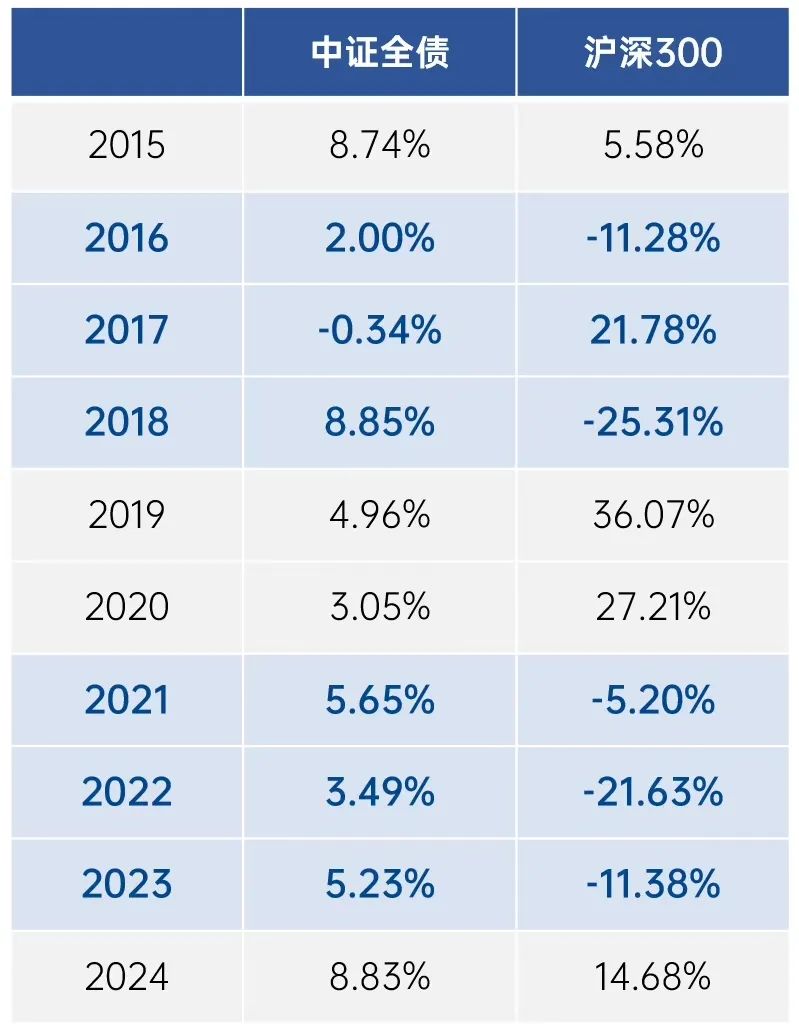
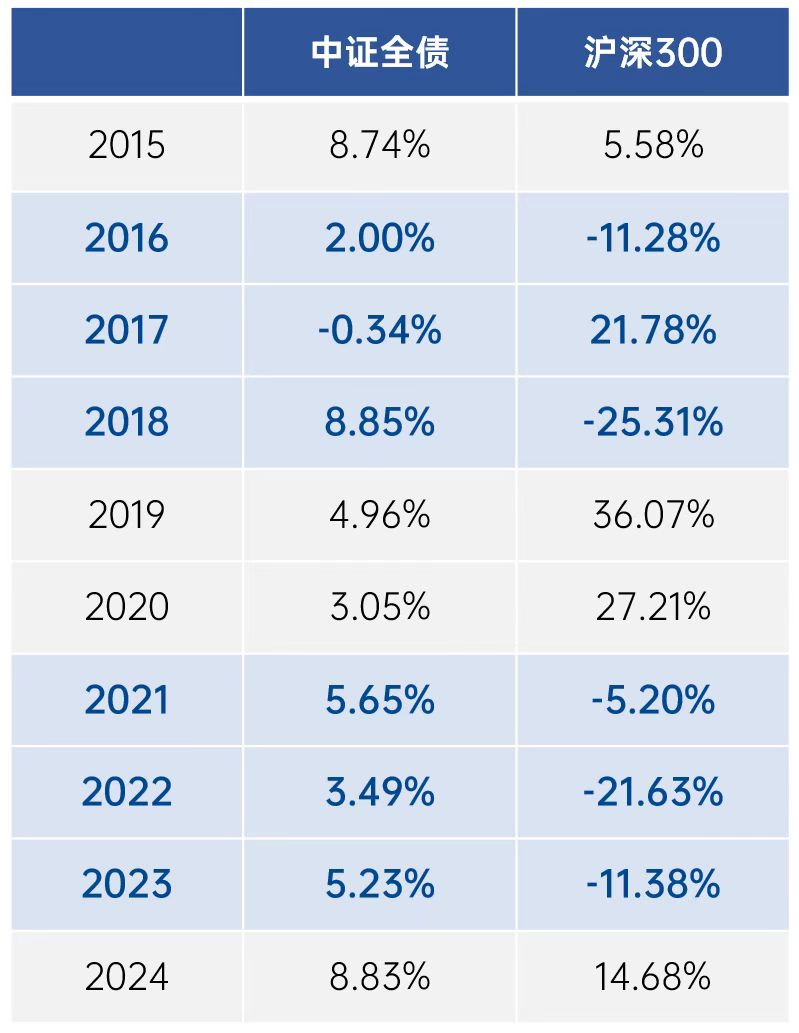
Core Viewpoint - The article discusses the recent fluctuations in the A-share market and the bond market, highlighting the "see-saw" effect between stocks and bonds, and suggests a balanced asset allocation strategy to mitigate risks and enhance returns [1][2]. Group 1: Market Performance - Since 2015, the performance of the stock index (CSI 300) and the bond index (CITIC All Bond) has shown significant fluctuations, with six periods of opposite performance noted [1]. - The annual performance data from 2015 to 2024 indicates that the bond index has outperformed the stock index in several years, with notable differences in percentage changes [1]. Group 2: Investment Strategy - Investors are advised against focusing solely on either stocks or bonds due to the cyclical nature of their performance, suggesting a mixed asset allocation approach [2][3]. - A proposed strategy involves primarily investing in bonds while allocating a smaller portion to stocks, which can help capture opportunities during stock market upswings while providing stability during downturns [2][3]. Group 3: Fund Performance - The article highlights the performance of mixed-asset funds, particularly those with a bond focus, which have shown better cumulative returns and lower volatility compared to the CSI 300 index over the past 20 years [3][4]. - Specific funds, such as the "Guofu Anyi Stable 6-Month Holding Period Mixed Fund," have demonstrated positive returns across various time frames, indicating effective risk management and performance consistency [6][7]. Group 4: Risk Management - The "Guofu Anyi Stable" fund has shown superior risk control metrics, including lower annualized volatility and maximum drawdown compared to its peers, suggesting a strong risk-adjusted performance [6][7]. - The fund's Sharpe and Calmar ratios also outperform the average of similar funds, indicating a favorable risk-return profile [6].
股市上涨会改变什么,不会改变什么?
GOLDEN SUN SECURITIES· 2025-08-17 13:43
Group 1: Report Summary - The report analyzes the impact of the stock market rally on the bond market, suggesting that while the stock market's rise suppresses the bond market, the bond market's adjustment space is limited [6][26]. Group 2: Market Performance - This week, the bond market declined significantly, especially long - term bonds. The yields of 10 - year and 30 - year treasury bonds rose by 5.7bps and 8.7bps to 1.75% and 2.05% respectively, reaching new highs since April this year. The short - end was relatively stable, with the 1 - year treasury bond yield rising slightly by 1.6bps to 1.37%, and the 1 - year AAA certificate of deposit yield rising slightly by 2.0bps to 1.64% [1][9]. - The stock market has been strong recently, rising 1.7% this week, closing near 3700 points on the 15th, with significantly enlarged trading volume [9]. Group 3: Reasons for Bond Market Decline - The decline in the bond market is mainly due to the increased risk appetite brought about by the stock market rally. The market's expectation of the continuous rise of the stock market has increased, leading to significant selling by trading desks with long - duration and heavy - position bond holdings, resulting in a market pullback [1][9]. Group 4: Factors Unaffected by the Stock Market - **Funding situation**: The current loose funding situation is determined by weak financing demand and the central bank's maintenance of abundant liquidity. The "anti - arbitrage" measure aims to improve credit quality rather than change the loose funding situation. If credit data remains low, funding may become even looser [2][16]. - **Banks' bond - buying power**: Although the stock market rally causes a shift in household deposits, total bank deposits remain unchanged, so the stock market rise does not affect banks' asset - allocation ability. Banks, especially small and medium - sized banks, face a large asset shortage gap and need to increase bond investments. Assuming a 20% year - on - year growth rate by the end of the year, banks need to increase bond holdings by 8.3 trillion yuan in the next five months, which is significantly larger than the remaining government bond supply, indicating a continued asset shortage [3][17]. - **Interest rate spread and bond yields**: The stock market rally does not change loan interest rates. The short - end interest rate remains stable due to loose funding, while the long - end interest rate is affected by market sentiment in the short term. In the long run, long - end interest rates are more in line with loan interest rates. Assuming the interest rate spread between the general loan weighted average rate and R007 in Q3 remains the same as in Q2 at 200bps, the corresponding 10 - year treasury bond yield is around 1.8% [4][21]. Group 5: Relationship between the Stock and Bond Markets - The stock - bond seesaw effect does not always hold. During the 2014 - 2015 bull market, bond yields remained stable. The stock market's net financing in 2024 was only about 2% of the bond market's, so the stock market's impact on the bond market's trend is limited [5][10]. Group 6: Investment Suggestions - Although the stock market rally suppresses the bond market, the bond market's adjustment space is limited. The 10 - year treasury bond's adjustment upper limit is estimated to be between 1.75% - 1.8%. Investors should pay attention to stock market changes and fund duration. When the stock market stops rising unilaterally or the fund duration drops to a low level, it may be a signal to increase bond positions [6][26].
从风偏交易到负债再平衡:债券连续调整,问题出在哪?
ZHONGTAI SECURITIES· 2025-08-17 12:00
Report Industry Investment Rating - The report maintains a cautious stance on the bond market. It suggests that if there is a significant adjustment, one can use a small position to bet on an oversold rebound (not for buying at high prices) [3][41]. Core Viewpoints - The bond market has experienced a steep decline this week despite weak fundamental data, and the problem lies in the bond itself, as it lacks the conditions to rise from both the asset and liability sides [3]. - The current trading main - line of the bond market may not be data, and single - month data may not confirm trends. The re - inflation trading brought by anti - involution may be in the first stage, with signs possibly appearing at the price level by the end of the year at the earliest [3][16]. - The view that the stock - bond seesaw causes the bond market to fall has logical flaws. The bond market's potential positives mainly rely on other assets and central bank actions, indicating insufficient internal positives [3][21]. - This year, the incremental funds of traditional bond market allocators such as banks and insurance in the bond market have significantly decreased, and it is hard to say that it is still an asset - shortage pattern [3][33]. - Mid - to long - term pure bond funds with shorter durations and earlier duration - reduction timings have achieved better returns this year [35]. Summary by Directory 1. Bond Market Weekly Review (2025.8.11 - 8.15) - This week, the bond market sentiment was suppressed by equities. Despite negative credit growth and economic data falling short of expectations, the bond market continued to be weak. By August 15, the 10Y Treasury yield rose 5.74BP to 1.75% compared to August 8, and the 30Y Treasury yield reached 2.05%. The 10Y - 1Y spread widened [6]. 2. Why Isn't There Weak - Data Trading Despite Weak Data? - There are differences in the bond market from multiple perspectives: - Inflation: There is a divergence between the limited price - pulling effect of anti - involution and the view that inflation has bottomed out. The bulls focus on the limited improvement in PPI and the time lag in price transmission, while the bears focus on the phased stabilization of PPI and the super - seasonal improvement of CPI. In July, PPI was - 3.6% year - on - year and - 0.2% month - on - month, with the month - on - month decline narrowing for the first time since March. CPI increased 0.4% month - on - month [3][9]. - Financial data: There are divergences between social financing and credit, and between negative credit growth and M1 growth. The bulls note that the rise in social financing is mainly driven by government bond financing, and credit was unexpectedly weak in July, with a rare negative growth of 50 billion yuan. The bears point out that M1 growth continued to rise to 5.60% in July, indicating active capital activation [3][11]. - Economic data: There is a divergence between trends and single - month fluctuations in production, investment, and consumption growth. The bulls see a slowdown in July's economic data, while the bears believe that the annual economic target is likely to be achieved, and consumption will support the economy in the second half of the year [3][13]. - The bond market's trading main - line may not be data, and single - month data may not confirm trends. The re - inflation trading brought by anti - involution may be in the first stage, with signs possibly appearing at the price level by the end of the year at the earliest [3][16]. 3. Did the Bond Market Fall Due to Anti - Involution and Stock Market Suppression? - Many market views believe that anti - involution and the stock market's suppression led to the bond market adjustment. However, this week, the commodity performance was average, and there were cases where stocks fell but bonds did not rise, accelerating market doubts about bond assets themselves [18][20]. - Using high - volatility assets to judge the trend of low - volatility assets has logical flaws. The view that the stock - bond seesaw causes the bond market to fall implies that the bond market's opportunities mainly rely on other assets' weakness, indicating limited long - term opportunities [3][21]. 4. The Problem of Bonds Lies in Themselves - Asset side: Since July, policies related to anti - involution have increased market expectations of rising inflation. At the same time, the good performance of the equity market has driven up market risk appetite. From the perspective of insurance institutions, the cost - effectiveness of bond assets is insufficient. The average net investment yield of five major insurance companies has declined from 5.35% in 2017 to 3.6% in 2024 [23][26]. - Liability side: The allocation funds of insurance and banks are limited. Insurance has shifted to equity assets, and the incremental funds for bond allocation have not increased significantly compared to last year. Banks' liability sides have suffered serious losses due to factors such as deposit rate cuts and resident deposit migration. In July, the growth of wealth management scale was weak, with a monthly incremental of only 26 billion yuan, far lower than the seasonal level of 1.8 trillion yuan in the past four years [3][29]. - Asset - shortage pattern: The incremental funds of banks and insurance in the bond market have significantly decreased this year. Banks' bond investment increments are close to zero, and insurance's incremental funds for bond investment have dropped to 66.98 billion yuan [33]. 5. Should Bond Market Investment "Focus on Trading"? - Mid - to long - term pure bond funds with better performance have shorter durations, around 3 - 4 years, while the median duration of mid - performance funds is around 4 - 5 years [35]. - The top - performing bond funds reduced their durations earlier. As of August 15, the median duration of mid - to long - term pure bond funds generally increased compared to the beginning of the year, but the duration of the bottom 20% of funds changed little. The median duration of top - performing funds reached its maximum in late April, and the duration reduction was more significant compared to other funds [35]. - Technically, the long - end varieties of Treasury bond futures have shown oversold signals. Attention can be paid to short - term oversold trading opportunities [37].
看好了!A股即将改变社会舆论!
Sou Hu Cai Jing· 2025-08-17 11:34
Group 1 - The Shanghai Composite Index has recently surpassed the 3700-point mark, leading to a significant shift in public sentiment towards the stock market, with expectations that it could reach 4000 points in the future [1] - The delay in tariffs has improved risk appetite among investors, reversing previous market pullbacks [2][3] - The geopolitical dynamics, particularly the recent handshake between the US and Russia in Alaska, have contributed to a resurgence in risk appetite and renewed buying activity in the market [6] Group 2 - The central bank is tightening monetary policy, indicating that the bond market has ended its bull run, with future performance dependent on the Federal Reserve's interest rate decisions [9][10] - The Hong Kong Monetary Authority has not tightened its monetary policy, leading to a decline in the HIBOR 3M rate, which may increase capital flows to overseas and mainland markets [16] Group 3 - The semiconductor sector is experiencing a resurgence, driven by market rotation and the performance of companies like Cambricon, which has sparked renewed interest in the sector [17][19] - The market is characterized by a rotation among different sectors, with the need for patience to capitalize on these movements [19] Group 4 - There are signs of narrowing divergence in capital flows, with margin financing reaching new highs and ETFs experiencing inflows, particularly in broad-based ETFs [21][24] - If ETF inflows continue to accelerate, it could lead to a faster market rally, although this may be followed by corrections and consolidation phases [24][25]
策略周报:股债跷跷板还能持续多久?-20250817
HWABAO SECURITIES· 2025-08-17 10:42
Group 1 - The report indicates that the probability of a significant decline in the bond market is low, suggesting opportunities for allocation at high interest rate levels. Historical patterns show that since 2016, prolonged bull markets in stocks and bear markets in bonds have only occurred three times, driven by economic recovery and tightening liquidity [3][18] - The report forecasts that the yield on 10-year government bonds will remain in the range of 1.65% to 1.75% in the short term, recommending gradual allocation above 1.72%, prioritizing credit bonds over interest rate bonds and convertible bonds [3][18] Group 2 - The stock market is currently experiencing strong sentiment, with incremental capital continuously entering the market. The report suggests a balanced allocation strategy, focusing on large and mid-cap industry leaders, particularly in technology, new energy, cyclical sectors, pharmaceuticals, and high-dividend themes [4][19] - The report notes that the market's "money-moving" logic is strengthening, and the market's profitability effect is expanding, indicating a high probability of short-term gains. However, it also warns that the potential for high valuations in low-tier sectors has been released, suggesting a need to optimize existing holdings rather than chase high prices [4][19] Group 3 - The report highlights that the U.S. stock market is expected to maintain its upward trend in the short term, driven by the market's pricing of the Federal Reserve's anticipated interest rate cuts. However, it also notes that any unexpected hawkish stance from the Fed could limit market buffer space [13][19] - The report emphasizes that the labor market in the U.S. is showing signs of weakness, which could heighten concerns about a "hard landing" for the economy, potentially disrupting the upward momentum of U.S. stocks [19][19] Group 4 - The report provides insights into the performance of domestic macro multi-asset models, indicating a year-to-date return of 7.77%, exceeding the benchmark by 4.33%. The Sharpe ratio for this model stands at 2.2550, significantly higher than the benchmark's ratio [26][27] - The global macro multi-asset model also shows a year-to-date return of 7.70%, with an excess return of 4.26% over the benchmark, and a Sharpe ratio of 1.8928, again surpassing the benchmark [26][27]
股债跷跷板又来了!资产要“搬家”吗?
Zhong Guo Ji Jin Bao· 2025-08-15 09:20
Core Viewpoint - The article discusses the cyclical nature of stock and bond markets, emphasizing the importance of a balanced asset allocation strategy to navigate the volatility between these two asset classes [1][3]. Group 1: Stock and Bond Market Dynamics - Since July, the A-share market has surged while the bond market has experienced turbulence, highlighting the contrasting performance of stocks and bonds [1]. - Historical data shows that from 2015 to 2024, there have been significant fluctuations in the performance of the CSI 300 and the China Bond Index, indicating a recurring pattern of stock and bond performance being inversely related [2]. Group 2: Asset Allocation Strategy - A recommended approach is to create a diversified asset allocation that primarily focuses on bonds with a smaller allocation to stocks, which can help mitigate risks associated with market volatility [3][4]. - The article suggests that mixed-asset funds, such as bond-enhanced strategy funds, can effectively balance the risks and returns of both stocks and bonds, providing a more stable investment experience [3][4]. Group 3: Fund Performance and Selection - The "Guofu Anyi Stable 6-Month Holding Mixed Fund" has shown positive performance across various time frames, indicating strong risk management and consistent returns [6][8]. - Key performance metrics for the fund, such as annualized volatility and maximum drawdown, demonstrate its superior risk control compared to similar funds, making it an attractive option for investors seeking stability [9].