即时零售

Search documents
361度(01361.HK):终端强增长韧性 超品店快速扩张
Ge Long Hui· 2026-01-13 22:24
Core Viewpoint - The company reported strong growth in retail sales for its main brand and children's clothing, with both segments achieving approximately 10% year-on-year growth in Q4 2025, while e-commerce sales saw high double-digit growth, indicating resilience in a fluctuating consumer environment [1][2]. Group 1: Retail Performance - The main brand and children's clothing retail sales in Q4 2025 grew by about 10% year-on-year, maintaining the same growth rate as Q3 2025 [1]. - E-commerce platform sales continued to outperform offline sales, with Q4 sales experiencing high double-digit year-on-year growth [1]. Group 2: Product Innovation - The company launched several new products in the running shoe category, including "Feiran 5" and "Feiran 5 FUTURE," as well as new models in training shoes and basketball shoes, showcasing ongoing product innovation [1]. - New products were also introduced in outdoor, women's fitness, cross-training, and children's categories [1]. Group 3: Brand Development and Market Expansion - The company announced a new strategic partnership with the Asian Olympic Council and showcased its products at the China International Import Expo, enhancing brand visibility [2]. - The company has accelerated its retail presence by integrating over 1,000 stores into Taobao Flash Purchase and opened its first overseas store in Cambodia, indicating a focus on international market expansion [2]. Group 4: Financial Projections - The company is expected to achieve revenue growth of 13.8%, 11.1%, and 10.1% from 2025 to 2027, reaching revenues of 11.47 billion, 12.74 billion, and 14.03 billion yuan respectively [2]. - Net profit attributable to the parent company is projected to grow by 11.6%, 15%, and 10.3% during the same period, reaching 1.28 billion, 1.47 billion, and 1.62 billion yuan respectively, with a valuation of 8, 7, and 7 times [2].
格隆汇2026“下注中国”十大核心资产之阿里巴巴
Ge Long Hui· 2026-01-13 08:51
Core Insights - Alibaba has been recognized as a core asset in the digital economy for 2026, reflecting its significant role in China's digital landscape and its potential to participate in the AI infrastructure wave [1] - The company has undergone a strategic organizational restructuring, focusing on two main pillars: "AI + Cloud" technology platform and "Shopping + Lifestyle Services" consumer platform, indicating a shift from a diversified expansion model to a more focused approach [1][4] - Alibaba's leadership has stabilized after multiple adjustments since 2021, with a clear governance structure and a younger executive team, transitioning from an "expansion-oriented platform" to a "focused technology and consumer group" [1][6] Organizational and Governance Changes - The restructuring aims to enhance efficiency by reducing complexity, with clear roles assigned to key leaders: Daniel Zhang as Group CEO, Wu Yongming overseeing technology and cloud, and Jiang Fan leading the core consumer business [4] - The number of partners in the organization has decreased from 26 to 17, marking a significant shift in management and a focus on execution and business results [6] - The business teams are being rejuvenated, with new leadership in key areas to optimize organizational structure and enhance collaboration between e-commerce and local services [6] E-commerce Fundamentals - E-commerce remains Alibaba's core revenue driver, contributing approximately 58.4% of total group revenue, with the Chinese e-commerce group accounting for 56.6% [9] - Customer Management Revenue (CMR) has shown an upward trend since FY25Q3, indicating a recovery in performance driven by improved take rates rather than just GMV growth [13] - The take rate is expected to increase from 4% to 4.6%, reflecting Alibaba's ability to restore profit margins even in a stable GMV environment [17] Instant Retail Strategy - Alibaba is investing in instant retail through platforms like Taobao Flash and Ele.me, which, while incurring short-term losses, are strategically important for long-term market positioning [18] - The company anticipates significant growth in the instant retail market, with projections indicating a potential market size of 3 trillion yuan by 2030 [20] AI and Cloud as Growth Engines - The AI and cloud segments are crucial for Alibaba's long-term valuation, with the global public cloud market expected to exceed $1 trillion by 2025, driven by AI demand [21] - Alibaba Cloud holds about one-third of the Chinese public cloud market, with AI becoming a key growth driver, as evidenced by triple-digit revenue growth over eight consecutive quarters [22] - The company is entering a new capital expenditure expansion phase, with plans to invest 380 billion yuan in AI infrastructure over the next three years [22] Redefining Core Asset Value - Alibaba is evolving from a pure e-commerce company to a hybrid enterprise with stable cash flows and high-growth technology businesses [24] - The company's overall valuation is projected to reach approximately 3.55 trillion yuan by 2026, with a potential stock price target of 200 HKD [27] - The strategic focus on AI infrastructure positions Alibaba as a key player in defining the digital economy in the AI era [27]



格隆汇2026“下注中国”十大核心资产之阿里巴巴
格隆汇APP· 2026-01-13 08:25
Core Insights - Alibaba has been selected as a core asset in the digital economy for 2026, reflecting its significant role in China's digital landscape and its potential in the AI infrastructure wave [2] - The company is undergoing a strategic transformation, focusing on two main pillars: "AI + Cloud" technology platform and "Shopping + Lifestyle Services" consumer platform [2][3] - Since 2021, Alibaba has made multiple organizational and executive adjustments, stabilizing its governance structure and strategic focus [4] Organizational and Governance Changes - The recent organizational restructuring aims to shift from a "complex and diverse" model to a "focused and efficient" execution model, centering around consumption and AI cloud [7] - Leadership roles have been clarified, with key figures like Daniel Zhang and Wu Yongming taking on specific responsibilities to enhance strategic execution [7][8] - The number of partners in the company has decreased from 26 to 17, marking a significant management transition and a new phase focused on execution efficiency [8][9] E-commerce Business Stability - E-commerce remains Alibaba's core pillar, contributing approximately 58.4% of total revenue as of FY26Q1, with the Chinese e-commerce group accounting for 56.6% [13] - Customer Management Revenue (CMR) has shown an upward trend since FY25Q3, indicating a recovery in the core cash flow engine [17] - The improvement in CMR is attributed to product and structural optimizations rather than simple price increases, with a focus on service value [18][19] Instant Retail Strategy - Alibaba is investing in instant retail through platforms like Taobao Flash and Ele.me, which has led to significant order growth despite short-term losses [24][25] - The strategic importance of instant retail is highlighted by its potential to drive e-commerce synergy and defend market share, with projections indicating a market size of 3 trillion yuan by 2030 [26] AI + Cloud as a Growth Engine - The "AI + Cloud" segment is crucial for Alibaba's long-term valuation, with the global public cloud market expected to exceed $1 trillion by 2025 [28] - Alibaba Cloud holds about one-third of the Chinese public cloud market, with AI becoming a key growth driver, evidenced by triple-digit growth in AI-related revenue over eight consecutive quarters [28][29] - The company is entering a new capital expenditure expansion cycle, with plans to invest 380 billion yuan in AI infrastructure over the next three years [28] Redefining Core Asset Value - Alibaba is evolving from a pure e-commerce company to a hybrid enterprise with stable cash flow and high-growth technology businesses [31] - The company's overall valuation is projected to reach approximately 3.55 trillion yuan by 2026, with potential stock price targets around 200 HKD [34] - The strategic focus and organizational restructuring position Alibaba as a key player in defining the digital infrastructure of the AI era in China [39]
拼多多内测“百亿超市”
财联社· 2026-01-13 06:15
Core Viewpoint - The article discusses Pinduoduo's new initiative called "Billion Supermarket," which aims to leverage its existing subsidy model to attract price-sensitive consumers in both lower-tier and first-tier cities, differentiating itself from traditional supermarkets and other e-commerce platforms [3][4]. Group 1: Pinduoduo's "Billion Supermarket" - Pinduoduo is quietly testing a new business called "Billion Supermarket" within its app, focusing on limited-time coupons and low-price subsidies [3]. - The core appeal of "Billion Supermarket" lies in its significant discounts and a wide range of products, including fruits, vegetables, snacks, and baby products, with weekly coupon events offering substantial savings [3][4]. - The initiative is not merely an expansion of product categories but aims to cover all consumer scenarios, replicating the successful subsidy model from electronics and beauty products to the supermarket sector [4]. Group 2: Competitive Landscape - Pinduoduo's entry into the supermarket sector faces competition from established players like JD.com, which aims to grow its user base from 300 million to 500 million by 2025, leveraging AI and a strong supply chain [6]. - JD's 7Fresh supermarket has shown impressive performance, with significant customer traffic and order volume growth, planning to expand further in major cities [6][7]. - Alibaba's ecosystem is also aggressively expanding, with Tmall Supermarket enhancing its instant retail services and Hema rapidly increasing its store count and revenue, targeting a GMV of over 100 billion yuan for the 2026 fiscal year [7][8]. Group 3: Market Challenges and Insights - Experts suggest that Pinduoduo's "Billion Supermarket" could strengthen its position in fast-moving consumer goods, but it faces challenges such as limited product variety and a lack of established consumer perception in the supermarket category [8]. - The competitive landscape has shifted from a focus on traffic subsidies to a comprehensive competition involving supply chain efficiency and service quality, with JD and Alibaba establishing strong barriers to entry [8].


红猫、红京之后,小红书种草直达与美团上线「红美计划」
Cai Jing Wang· 2026-01-13 05:27
Group 1 - The core idea of the news is the collaboration between Xiaohongshu and Meituan, allowing users to purchase medicine directly through Xiaohongshu's advertising notes, enhancing the efficiency of online medicine sales [1] - Xiaohongshu has launched the "Hongmei Plan" with Meituan, marking the first instant retail platform to join after similar agreements with Taobao and JD.com [1] - The "Hongmei Plan" has seen initial success with brands like "Kuaike," "Xiaokuihua," and "Fenbide," leading to a 42% increase in search volume on Xiaohongshu and a 33% reduction in order costs compared to industry averages [1] Group 2 - During the 2025 Double Eleven shopping festival, the number of brands participating in the "Zhongcao Direct" program doubled compared to the 618 shopping festival, with over 1,000 products achieving sales of over one million yuan on platforms like Taobao and JD.com [2] - The "Zhongcao Direct" feature, launched in September 2025, significantly improves the efficiency of brand advertising, with a 76% increase in store entry efficiency when combined with traditional advertising methods [1]

红猫、红京之后,小红书种草直达与美团上线“红美计划”
Xin Lang Cai Jing· 2026-01-13 03:37
Core Insights - Xiaohongshu has partnered with Meituan to launch the "Hongmei Plan," allowing Meituan merchants to advertise on Xiaohongshu with direct links for instant retail [1][2] - This initiative marks the first collaboration with an instant retail platform following partnerships with major e-commerce platforms like Taobao and JD.com [1][2] Group 1: Partnership Details - The first phase of the "Hongmei Plan" focuses on the Meituan Buy Medicine sector, enabling a seamless transition from Xiaohongshu advertisements to Meituan for purchasing [1][2] - Brands such as Kuaike, Xiaokuihua, and Fenbide are among the first to test this direct marketing approach in the pharmaceutical sector [1][2] Group 2: Performance Metrics - The "direct grass planting" feature has led to an average increase of 42% in search volume on Xiaohongshu for participating brands, with a significant reduction of over 33% in order costs compared to industry averages [1][2] - The efficiency of customer entry into stores has improved by 76% when combining traditional advertising with the "direct grass planting" feature [1][2] Group 3: Market Reach - Meituan currently supports instant retail services across nearly 3,000 urban and rural areas in China, with over 250,000 pharmacies on its platform, including more than 15,000 24-hour pharmacies [1][2] - During the 2025 Double 11 shopping festival, the number of brands utilizing the "direct grass planting" feature doubled compared to the 618 shopping festival, with over 1,000 products achieving sales exceeding one million yuan [1][2]
黄峥的新战场
Sou Hu Cai Jing· 2026-01-13 03:22
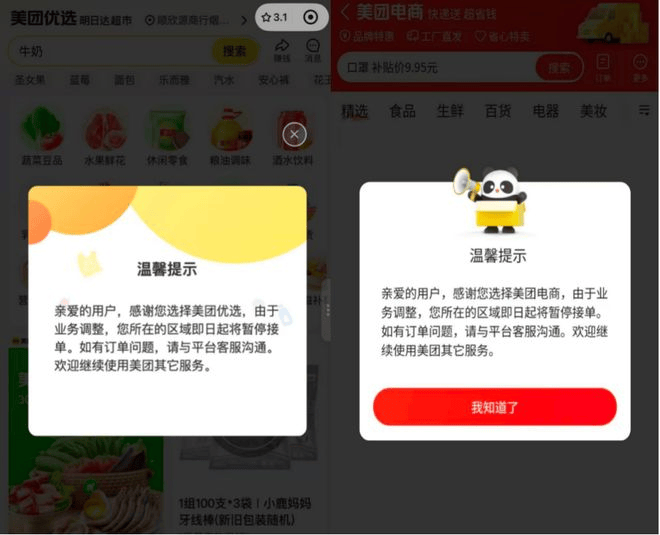
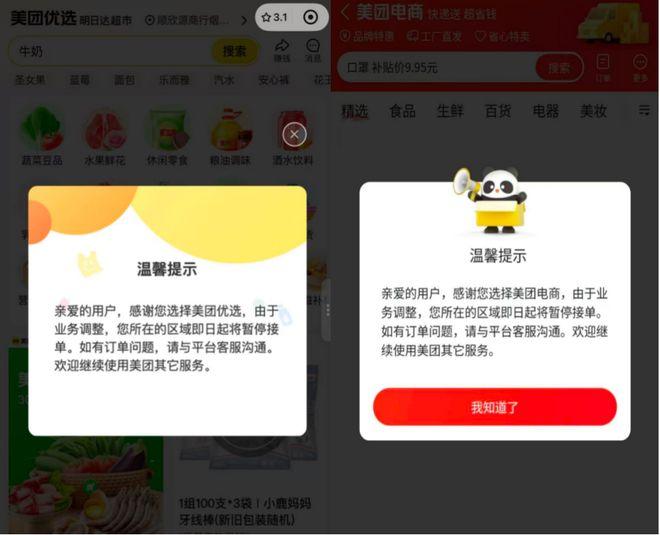
Core Insights - Pinduoduo is reportedly preparing to enter the instant retail market, with plans to establish urban warehouses in major cities, potentially launching in Q1 or by Q3 at the latest [1] - The competitive landscape for instant retail has shifted, creating a more favorable environment for Pinduoduo to enter this space [6][7] Group 1: Changes in Business Environment - The closure of Meituan's preferred services has allowed Pinduoduo to dominate the community group buying market, providing it with the resources to explore new business opportunities [13][17] - The increase in the supply of delivery riders due to competition among major players has made it easier for Pinduoduo to procure delivery services [24][25][32] Group 2: Strategic Focus - Pinduoduo's approach to instant retail will focus on non-food delivery, particularly fresh produce and competitively priced private label products, rather than entering the food delivery market [9][12][19] - The company aims to leverage its existing agricultural supply chain capabilities to enhance its instant retail offerings, particularly in fresh produce, which is a high-frequency necessity [44][53] Group 3: Market Position and Financials - Pinduoduo's market capitalization has decreased to half that of Alibaba, but its cash reserves have increased, providing it with financial flexibility to invest in new ventures [48][50] - The competitive landscape in e-commerce is intensifying, with other platforms like Douyin and Temu gaining traction, making Pinduoduo's entry into instant retail a strategic move to maintain user engagement [51][52]
拼多多离即时零售更近了
3 6 Ke· 2026-01-13 00:20
Core Viewpoint - Pinduoduo is planning to enter the instant retail market, with a focus on urban front warehouses in major cities, potentially launching in Q1 or by Q3 at the latest [2] Group 1: Business Environment Changes - The decision-making environment for Pinduoduo regarding instant retail has changed significantly over the past six months [6] - The closure of Meituan's preferred services has allowed Pinduoduo to dominate the community group buying market, providing it with the resources to explore new business opportunities [11] - The increase in the supply of delivery riders due to competition among major players has created a favorable condition for Pinduoduo to procure delivery services [15] Group 2: Strategic Focus - Pinduoduo's instant retail strategy will focus on non-food flash delivery, particularly fresh produce and competitively priced private label products [4][6] - The company aims to leverage its existing agricultural supply chain capabilities to enhance its instant retail offerings, especially in fresh produce, which is both a high-frequency necessity and a challenging category [19][21] Group 3: Market Position and Financials - Pinduoduo's market share in community group buying has increased significantly, enhancing its bargaining power with suppliers [12] - The company's market capitalization has decreased to half of Alibaba's, but its cash reserves are now higher, providing it with financial flexibility for future investments [23]
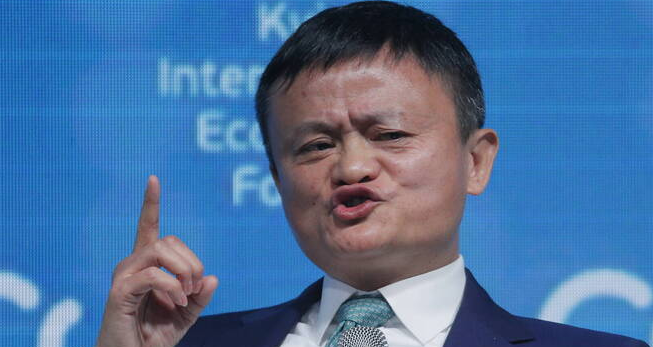
马云豪赌未来,淘宝闪购正在起飞
Xin Lang Cai Jing· 2026-01-12 12:32
Group 1 - Alibaba is intensifying its efforts in the instant retail sector, aiming to become the market leader by 2026 with a focus on high-frequency transactions and a complete overhaul of its business logic [2][3][34] - Taobao Flash Purchase has achieved significant milestones, including a daily order volume stabilizing at 10 million for non-food items, indicating strong growth and commitment to the business [5][36] - The integration of various platforms under Alibaba's ecosystem, such as Hema and Ele.me (now Taobao Flash Purchase), is enhancing operational efficiency and market presence [6][37] Group 2 - In Q1 of the 2026 fiscal year, Taobao Flash Purchase reached a peak daily order volume of 120 million, with a monthly active buyer count increasing by 200% since its launch [8][39] - Alibaba's Q2 fiscal report for 2026 showed revenues of approximately 247.8 billion, a 5% year-on-year increase, with a 15% increase when excluding divested businesses [10][41] - The company is investing heavily in instant retail, with a reported 60% year-on-year revenue growth in this segment, despite a significant drop in overall operating profit [13][45] Group 3 - The strategic restructuring of Alibaba's organizational framework aims to transition from an e-commerce platform to a comprehensive consumer platform, enhancing its competitive edge in instant retail [15][46] - The launch of a 50 billion subsidy plan for Taobao Flash Purchase demonstrates Alibaba's commitment to capturing market share in the instant retail space [24][55] - The potential market size for instant retail in China is projected to exceed 1 trillion by 2026, with expectations to double by 2030, highlighting the growth opportunities for Taobao Flash Purchase [30][60] Group 4 - Taobao Flash Purchase has attracted approximately 100 million new users, primarily from urban high-income demographics, which could lead to increased sales across various product categories [30][61] - The competitive landscape in instant retail is intensifying, with major players like Meituan and JD.com already established, necessitating Taobao Flash Purchase to leverage its ecosystem for differentiation [31][62] - The focus on optimizing delivery efficiency and cultivating consumer habits in instant purchasing remains critical for Taobao Flash Purchase's success in the competitive market [31][62]
观察 | 阿里双线作战:押注闪购与AI,不是左右互搏是大棋?
未可知人工智能研究院· 2026-01-12 05:02
Core Viewpoint - Alibaba is strategically focusing on both instant retail and AI, aiming to establish a strong user mindset and market position in the evolving landscape of consumer services [1][12][68]. Group 1: Market Positioning - Alibaba plans to invest heavily in instant retail, targeting to become the leader in this sector by 2026, indicating a rare assertive stance [1][12]. - The primary competition is not with Meituan or ByteDance, but rather in capturing user attention and decision-making processes [6][8]. - The instant retail market is projected to exceed 1 trillion by 2026 and reach 2 trillion by 2030, highlighting the significant growth potential [13]. Group 2: Strategic Resource Allocation - Alibaba's strategy involves concentrating resources on key areas during critical market phases, with over hundreds of billions allocated to instant retail in 2025 [19][20]. - The company is currently in a pivotal phase where its market share in instant retail has reached 42%, narrowing the gap with the leader [20][21]. - By focusing on instant retail, Alibaba aims to leverage this sector to enhance its overall local service ecosystem [23]. Group 3: Dual Focus on AI and Instant Retail - The simultaneous investment in AI is not a distraction but a strategic combination of short-term and long-term initiatives [30][41]. - AI is seen as a tool to reconstruct the consumer decision-making process, potentially increasing efficiency significantly [35][36]. - The integration of AI into various service scenarios aims to create a comprehensive ecosystem that connects shopping, delivery, and local services [40][62]. Group 4: Long-term Vision and Strategy - Alibaba's approach is to maintain a balance between immediate market needs and future technological advancements, avoiding a binary choice between focusing solely on instant retail or AI [45][68]. - The company is adopting a "rural encirclement of cities" strategy, starting with AI tools to capture users and gradually expanding into broader service areas [63]. - The success of Alibaba's strategy will be evident by 2026, depending on its ability to lead in instant retail and establish a strong user base for its AI initiatives [70].