
自主可控

Search documents
国际油价下跌,辛醇、草甘膦价格下跌 | 投研报告
Sou Hu Cai Jing· 2025-12-22 02:14
Core Viewpoint - The recent report from Zhongyin Securities highlights a decline in international oil prices and suggests focusing on undervalued leading companies in the chemical industry, the impact of "anti-involution" on supply in related sub-industries, and the importance of self-sufficiency in electronic materials and certain new energy materials companies amid rising prices [1][7]. Group 1: Oil Price Trends - International oil prices have decreased, with WTI crude oil futures closing at $56.52 per barrel, a weekly decline of 1.60%, and Brent crude oil futures at $59.82 per barrel, down 2.13% [3]. - U.S. crude oil production averaged 13.843 million barrels per day for the week ending December 12, a decrease of 10,000 barrels from the previous week but an increase of 239,000 barrels compared to the same period last year [3]. - U.S. oil demand averaged 20.573 million barrels per day, down 50,900 barrels from the previous week, with gasoline demand increasing by 62,200 barrels to 9.078 million barrels per day [3]. Group 2: Chemical Industry Price Movements - Among 100 tracked chemical products, 42 saw price increases, 37 experienced declines, and 21 remained stable during the week [2]. - The average price of isopropanol fell by 4.97% week-on-week to 6,612 yuan per ton, and the average price of glyphosate decreased by 1.58% to 24,901 yuan per ton [4][5]. Group 3: Investment Recommendations - The SW basic chemical sector's price-to-earnings ratio (TTM) is 24.74, at the 73.47% historical percentile, while the price-to-book ratio is 2.24, at the 55.99% historical percentile [7]. - Recommended investment themes include focusing on undervalued leading companies, the impact of "anti-involution" on supply, and the growth potential in semiconductor materials, OLED materials, and new energy materials [7]. - Specific companies recommended for investment include Wanhua Chemical, Hualu Hengsheng, and China Petroleum, among others [7][8].
化工行业周报20251221:国际油价下跌,辛醇、草甘膦价格下跌-20251222
Bank of China Securities· 2025-12-21 23:30
Investment Rating - The report rates the chemical industry as "Outperform" [2] Core Views - The report suggests focusing on undervalued leading companies in the industry, the impact of "anti-involution" on supply in related sub-industries, and companies in electronic materials and certain new energy materials amid rising prices [2][12] - The report highlights that the supply-side expansion peak has passed, and there is potential for recovery in industry prosperity [4] Industry Dynamics - The average price tracking 100 chemical products shows that 42 products increased in price, 37 decreased, and 21 remained stable during the week of December 15-21 [9][29] - International oil prices fell, with WTI crude oil futures closing at $56.52 per barrel, down 1.60%, and Brent crude oil futures at $59.82 per barrel, down 2.13% [30] - The report notes a decrease in the average price of isooctanol and glyphosate, with isooctanol averaging 6,612 CNY/ton, down 4.97% week-on-week, and glyphosate at 24,901 CNY/ton, down 1.58% week-on-week [31][32] Investment Recommendations - The report recommends focusing on leading companies with low valuations, such as Wanhua Chemical and Anji Technology, and suggests monitoring companies in emerging fields like semiconductor materials and new energy materials [12][19] - It emphasizes the potential for demand recovery supported by policies and the continuous optimization of the supply side, which could enhance the performance and valuation of leading companies [12][17]
“十五五”时期中国芯片三个着力点
Xin Lang Cai Jing· 2025-12-21 08:53
炒股就看金麒麟分析师研报,权威,专业,及时,全面,助您挖掘潜力主题机会! 安徽滁州市一家电子公 司内的集成电路封测生产线。图/IC | 销售收入增速 | 2014年-2018年 | 2018年-2024年 | 2014年-2024年 | | --- | --- | --- | --- | | 设计、制造、封测三业 | 21.3% | 14.1% | 16.9% | | 未合体设备业 | 32.2% | 37.2% | 35.2% | | 半导体材料业 | 16.5% | 19.1% | 18.1% | | 全行业总计 | 21.3% | 15.0% | 17.5% | | | 2014年 | 2018年 | 2024年 | | --- | --- | --- | --- | | 上市企业数量 | 20家 | 36家 | 超过 180家 | | 上市企业总市值 | 936亿元 | 2700亿元 | 超过30000亿元 | | 上市企业销售毛利率 | 26.2% | 29.1% | 32.6% | | 上市企业研发投入强度 | | 10.5% | 20.6% | 中国集成电路产业近十年的"自主可控"攻坚战已经取得 ...


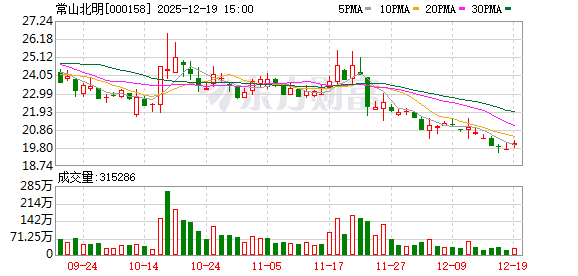
常山北明:公司已取得749项软件著作权和32项发明专利
Zheng Quan Ri Bao· 2025-12-19 08:11
Core Viewpoint - The company is actively engaging in domestic substitution and self-controllable technology, positioning itself as a core strategic partner of Huawei to develop AI industry ecosystems based on Huawei's Kunpeng and Ascend technologies [2] Group 1: Strategic Partnerships - The company collaborates with Huawei to build an AI industry ecosystem around Huawei's Kunpeng and Ascend technologies [2] - It has developed over a hundred joint solutions for various application scenarios involving Kunpeng, Ascend, and Huawei Cloud [2] Group 2: Technological Development - The company has established a development team for Huawei's HarmonyOS, with all members certified as advanced developers [2] - It has obtained 749 software copyrights and 32 invention patents, providing strong support for self-controllable technology [2]

调整时间快“熬到头了”!下行趋势中的反弹,还有哪些投资机会?
Sou Hu Cai Jing· 2025-12-19 07:54
Group 1 - The A-share market has limited valuation upside after two consecutive years of growth, with future index increases expected to come from earnings and the continuation of "anti-involution" policies, which may support profit growth due to a low base in the first half of the year [1] - Key sectors for investment include technology growth and high dividend strategies, focusing on domestic support policies under the backdrop of US-China competition, internet technology companies with independent growth, and high dividend low volatility sectors such as telecommunications, utilities, and banking [1] - The top five sectors for net inflow include new energy vehicles, auto parts, military industry, non-ferrous metals, and pharmaceuticals, while the top five concepts are state-owned enterprise reform, Belt and Road Initiative, energy storage, and free trade zones [1] Group 2 - The panel industry is expected to see a positive long-term outlook due to improved competition dynamics, with profit release logic shifting from price increases to value creation, driven by large-size demand, cost reduction through domestic production, and recovery of minority shareholder rights [3] - The aviation sector is facing capacity constraints due to low new aircraft introductions and maintenance issues, but there is a recovery in business travel demand, with expectations for profitability to return by 2025 [4] - The Federal Reserve is anticipated to lower interest rates by 25 basis points, with mixed opinions among policymakers regarding the impact on inflation and the labor market, while the macro environment remains favorable for gold [6] Group 3 - The Shanghai Composite Index has been fluctuating around 3900 points for an extended period, indicating a transition phase rather than a clear bull or bear market, with a focus on domestic economic circulation and sustainable growth [10] - The communication equipment industry is seeing increased demand due to the launch of satellite IoT business trials and advancements in technology, although current valuations are high, requiring sustained industry performance [10]

十大外资对2026年A股的建议
Sou Hu Cai Jing· 2025-12-18 15:36
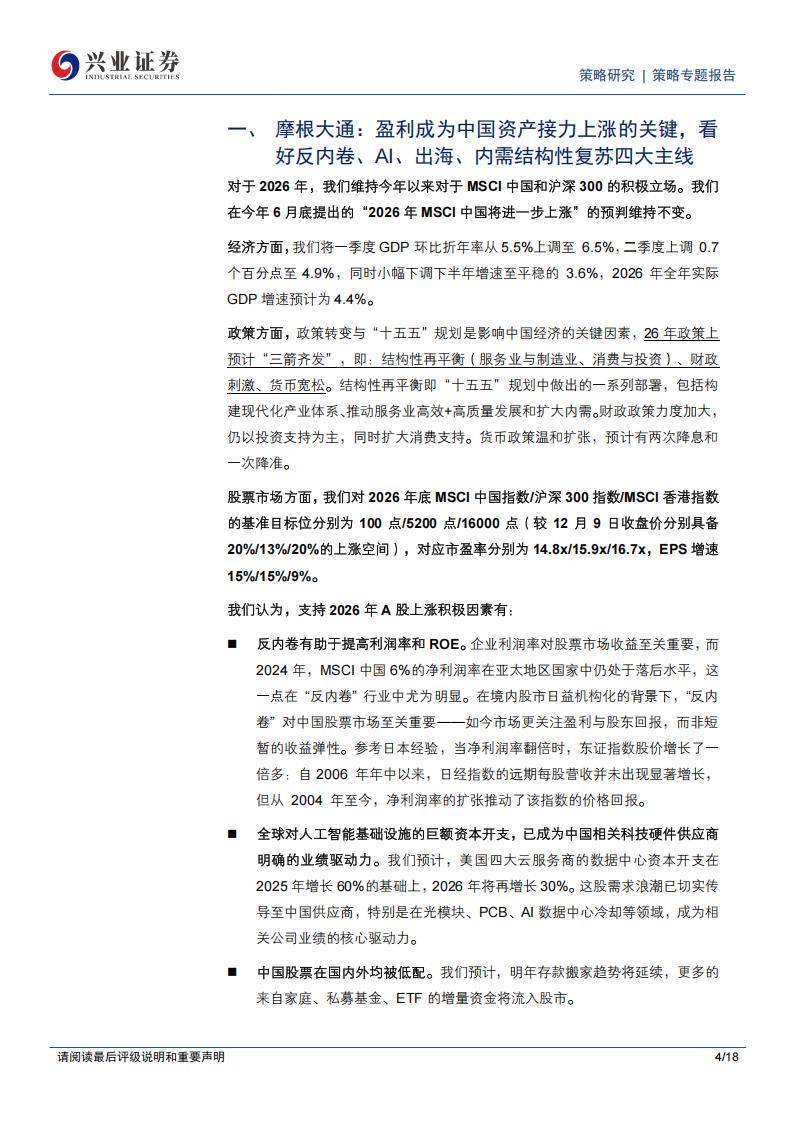
Group 1: Core Insights - The core viewpoint is that the ability of listed companies to achieve real profits will be the key driver for the rise of Chinese assets in 2026, shifting focus from valuation recovery to earnings realization [2][23]. - The predicted target for the CSI 300 index in 2026 is 5200 points, indicating a potential increase of approximately 13% from the closing price in December 2025, with an average market valuation of about 15.9 times earnings [2][24]. Group 2: Investment Themes - Morgan Stanley identifies four clear investment themes: curbing excessive competition, artificial intelligence (AI), global expansion, and a structural recovery in domestic demand [3][4]. - Goldman Sachs emphasizes five major investment themes: leading industry players, beneficiaries of the "14th Five-Year Plan," AI, global expansion, and curbing excessive competition [6][7]. - UBS highlights three main investment lines: self-sufficiency, curbing excessive competition, and global expansion, suggesting a focus on consumer sectors in the second half of the year [9][11]. Group 3: Earnings Growth Projections - Morgan Stanley forecasts a 6% earnings growth for listed companies in 2026, with an acceleration to 10% in 2027, driven by supportive policies and a narrowing decline in producer prices [13][41]. - Goldman Sachs expects the MSCI China index's earnings per share (EPS) growth to rise to 12% in 2026, significantly higher than previous cycles [5][29]. - UBS anticipates an increase in overall A-share earnings growth from 6% in 2025 to 8% in 2026, supported by nominal GDP growth and ongoing policy support [9][36]. Group 4: Sector-Specific Insights - The renewable energy sector is expected to benefit from policies aimed at restoring pricing power and healthy profit margins, particularly in the context of curbing excessive competition [3][8]. - The AI sector is projected to see a 30% increase in global capital expenditure for data centers in 2026, positively impacting related industries such as optical modules and power equipment [3][28]. - Consumer sectors, particularly essential goods and high-end luxury items, are expected to perform well, with the restaurant industry growing faster than overall retail [4][6]. Group 5: Policy and Economic Environment - The Chinese government is expected to implement a series of supportive fiscal and monetary policies, including increased fiscal deficits and continued monetary easing, to stimulate domestic demand and promote industrial upgrades [23][33]. - The anticipated fiscal policy for 2026 includes a budget deficit of around 4% and a significant increase in special government bonds, aimed at supporting consumption and infrastructure [33][34]. - The overall economic growth forecast for 2026 is set at 4.4%, with a gradual recovery in the real estate market expected to reduce its drag on the economy [23][41].




观察| 国产GPU四小龙,谁是“真龙”?
未可知人工智能研究院· 2025-12-18 10:02
Group 1 - The high valuation of Muxi is driven by a combination of technology, team expertise, market timing, and policy catalysts, rather than being coincidental [35] - The "Four Dragons of Domestic GPU" each have distinct strategies, indicating that competition is not merely homogeneous [25][32] - The recent wave of AI company IPOs signifies a shift in the industry from "storytelling" to "result verification" [33] - Current conditions present both opportunities and risks; stakeholders should understand the underlying logic of valuations and avoid being swayed by emotions [34] Group 2 - Muxi's market capitalization reached 332 billion, with a significant first-day price increase, reflecting investor enthusiasm [6][34] - The team behind Muxi, including founder Chen Weiliang and co-founders Peng Li and Yang Jian, possesses extensive experience in GPU design, which is crucial for the company's success [13][17] - The U.S. chip export restrictions have created a pressing demand for domestic GPU solutions, leading to a surge in orders for Muxi [22][23] Group 3 - The four domestic GPU companies—Muxi, Moer, Birran, and Suiruan—each focus on different market segments and technological approaches, akin to various martial arts styles [25][32] - The investment strategy of top-tier firms like Sequoia emphasizes "certainty" over mere potential, focusing on the team's track record rather than just the technology [28][29] - The current landscape of AI infrastructure investment reflects a growing recognition of the importance of foundational technologies over application-level innovations [33]

江苏展芯IPO:以自主创新助力军工电子产业链向高质量高水平发展
Zheng Quan Shi Bao Wang· 2025-12-18 07:12
Core Viewpoint - Jiangsu Zhanchip Semiconductor Technology Co., Ltd. has received approval for its IPO on the Shenzhen Stock Exchange, focusing on high-reliability analog chips and micro-module products to support the military electronics industry in achieving high-quality development [1][2]. Group 1: Company Overview - Jiangsu Zhanchip specializes in the research, design, testing, and sales of high-reliability analog chips, primarily power management chips, including DC/DC converters, linear voltage regulators (LDO), and load switches [1]. - The company is expanding its product line to include signal chain chips, having developed a range of products such as current detection chips, voltage reference chips, comparators, operational amplifiers, and timing chips [1][3]. Group 2: Industry Context - The military electronics industry in China is experiencing rapid growth due to strong national support for defense development and the strategic importance of domestically produced chips [2]. - The trend towards self-reliance in military electronics is accelerating, with Jiangsu Zhanchip contributing to the stability of the domestic supply chain and the modernization of national defense [2]. Group 3: Research and Development - Jiangsu Zhanchip has built a strong R&D team, holding 41 authorized invention patents, 5 utility model patents, and 46 integrated circuit design layout rights as of mid-2025 [3]. - The company has developed 15 core technologies related to chip design and packaging, leading to the creation of high-reliability analog chips and micro-modules with excellent performance parameters [3]. Group 4: Market Position and Client Base - Jiangsu Zhanchip has successfully supplied products to over 1,600 clients, including major groups such as China Electronics Technology Group and Aviation Industry Corporation of China, enhancing its market presence [4]. - The company’s established client relationships provide a foundation for promoting new product series and driving future business growth [4]. Group 5: Financial Performance - From 2022 to the first half of 2025, Jiangsu Zhanchip's revenue figures were 366.76 million yuan, 465.75 million yuan, 412.59 million yuan, and 340.16 million yuan, with an annualized revenue growth rate of 22.87% [5]. - The net profit attributable to shareholders, excluding non-recurring gains and losses, was 144.62 million yuan, 167.59 million yuan, 87.43 million yuan, and 123.27 million yuan during the same period, indicating a phase of rapid growth and innovation [5]. Group 6: Future Plans - The funds raised from the IPO will be invested in projects focused on high-reliability power management chips and signal chain chip R&D, as well as the construction of headquarters and testing centers [5]. - The investment strategy aims to enhance testing capabilities, upgrade the R&D system, accelerate new product industrialization, and support working capital, aligning with the company's future operational strategy [5].
沐曦上市首日暴涨568%,国产GPU“财报竞争”时代开启
Sou Hu Cai Jing· 2025-12-17 05:54
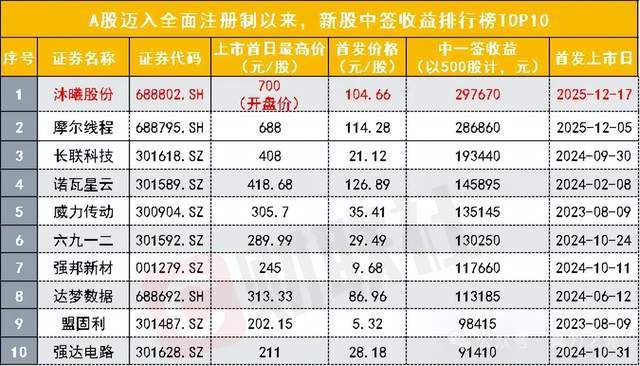
Core Viewpoint - Muxi Integrated Circuit (Shanghai) Co., Ltd. successfully listed on the STAR Market, with a remarkable opening performance, achieving a 568.8% increase in stock price, reaching 700 yuan, and a market capitalization exceeding 280 billion yuan, making it a popular new stock [1][2]. Company Overview - Muxi was established in September 2020 in Shanghai, with R&D centers in seven locations including Beijing, Nanjing, and Chengdu. The core team has an average of nearly 20 years of experience in GPU production, positioning the company as a leader in the domestic high-performance general-purpose GPU sector [3]. Product Development - Muxi follows a "one generation in production, one in research, one in planning" strategy. The company has successfully mass-produced the Xisi N100 (for inference) and Xiyun C500 (for training and inference), while the Xiyun C600 is in research and development, aiming to compete with NVIDIA's H100 [4]. Competitive Landscape - Muxi and Moore Threads represent two of the most watched domestic GPU companies, each adopting different technical routes and business models. Muxi focuses on general computing and AI, while Moore Threads pursues a full-feature GPU approach. Muxi's Xiyun C500 utilizes advanced packaging technology, claiming superior bandwidth compared to GDDR6 solutions, and has developed the MXMACA software stack for compatibility with mainstream CUDA applications [5]. Financial Performance - In the first half of 2025, Muxi reported revenue of 915 million yuan, surpassing its total revenue for 2024. The company has maintained a high R&D expense ratio of over 70%, emphasizing a high yield rate for its products. In comparison, Moore Threads reported approximately 700 million yuan in revenue during the same period [6]. Industry Trends - The successful listing of Muxi signifies a shift in the domestic GPU competition from "laboratory research" to "financial statement validation." Companies that can quickly achieve scale revenue and expand ecosystem compatibility are likely to attract capital market interest. The long-term success of these companies will depend on their ability to build a self-sustaining application ecosystem that breaks through CUDA barriers and secure stable high-end process capacity [7]. Market Dynamics - The capital landscape for domestic GPU companies is evolving, with Muxi's listing accelerating the capitalization processes of other leading firms. The market is increasingly driven by policies that emphasize domestic production, with orders concentrating on mature technologies and reliable products from leading enterprises [9].
概伦电子20251216
2025-12-17 02:27
Summary of Key Points from the Conference Call on Gaon Electronics Company Overview - Gaon Electronics focuses on EDA (Electronic Design Automation) software, particularly in the storage chip design sector, with deep collaborations with companies like Samsung. The company aims to become the first listed company in China to achieve deep synergy between EDA and IP (Intellectual Property) [2][3][13]. Financial Performance - The primary revenue source for Gaon Electronics comes from software licensing, accounting for 70%-80% of total revenue, with a gross margin maintained at around 90% [4][6]. - Despite fluctuations in profits due to increased R&D investments and stock incentives in 2023 and 2024, the company is expected to maintain a long-term stable growth trajectory [2][6]. - Revenue is projected to increase by 70%-80% following the successful acquisition of Ruicheng Chip Micro and Naneng Micro, with expected revenues of 7.3 billion yuan post-acquisition [15]. Industry Dynamics - The EDA industry is experiencing stable growth, with a projected compound annual growth rate (CAGR) of 9.21% from 2025 to 2034. The primary markets are the United States and the Asia-Pacific region [2][7]. - The industry faces challenges such as increasing technological complexity, high R&D costs, and international competition, particularly from the U.S. restrictions on China's semiconductor industry [8][10]. Competitive Landscape - Gaon Electronics holds a significant position in the global EDA market, competing with major players like Synopsys, Cadence, and Siemens, which dominate over 80% of the market share [3][10]. - The company has a leading edge in certain niche tools, especially in storage chip design, and has received certifications for its NanoSpace products from Samsung for 3nm and 4nm processes [3][11]. Acquisitions and Growth Strategy - The ongoing acquisitions of Ruicheng Chip Micro and Naneng Micro are expected to enhance Gaon Electronics' competitive edge and expand its market share internationally [13][15]. - The company has completed multiple acquisitions since 2012, with the latest ones aimed at strengthening its capabilities in physical IP and wired interface technologies [5][13]. Valuation and Risks - Gaon Electronics has a price-to-sales (PS) valuation of approximately 15-20 times, which is comparable to its U.S. counterparts, while its competitors like Huada Jiutian have higher valuations [4][16]. - Key risks include the need for continuous technological innovation and the substantial capital required for R&D, which has led to profit fluctuations in recent years [17]. Future Outlook - The overall outlook for Gaon Electronics is optimistic, with a strong growth potential and a reasonable valuation in the global EDA software market. The company is well-positioned to leverage its acquisitions and maintain its technological leadership [18].
