
降准降息

Search documents
央行新任货政司司长首度亮相:灵活高效运用降准降息等工具
Xin Lang Cai Jing· 2026-01-07 12:54
Core Viewpoint - The 2026 People's Bank of China (PBOC) work meeting outlines a clear roadmap for financial work, emphasizing the continuation of a moderately accommodative monetary policy to support high-quality economic development and financial market stability [2][13]. Monetary Policy Implementation - The meeting confirmed the continuation of a moderately accommodative monetary policy, focusing on promoting economic high-quality development and reasonable price recovery as key considerations [3][14]. - The PBOC will flexibly and efficiently utilize various monetary policy tools, including reserve requirement ratio (RRR) cuts and interest rate reductions, to maintain ample liquidity and align social financing growth with economic growth and price level expectations [3][14]. Leadership Changes - The meeting marked the first public appearance of Xie Guangqi as the new head of the PBOC's monetary policy department, succeeding six previous directors since its establishment in 1998 [4][15]. Policy Framework Transformation - The direction for transforming the monetary policy framework has been established, with ongoing assessments and improvements expected to be a significant focus for the monetary policy department [5][15]. Tool Utilization Strategy - The 2026 monetary policy will emphasize "flexible and efficient" use of tools, shifting from a focus on simple increases to enhancing the effectiveness of existing policies [6][16]. - The policy will now include the goal of maintaining a low and stable social financing cost, moving from a previous focus on merely reducing costs [7][17]. Risk Management and Financing Standards - The meeting highlighted the importance of maintaining liquidity while ensuring a balanced credit distribution, moving away from a "flood irrigation" approach to a more structured credit allocation [9][20]. - The PBOC will enhance its macro-prudential management and financial stability functions, improving monitoring systems and exploring macro-prudential management in financial markets [9][20]. Currency Management - The meeting emphasized maintaining the RMB exchange rate at a reasonable and balanced level, with recent data showing a recovery in the RMB's value against the USD [10][20]. - A new requirement was introduced to expand the coverage of explicit corporate loan financing costs, with a focus on internet loans [11][21].


央行预告开展11000亿元买断式逆回购
Feng Huang Wang· 2026-01-07 12:31
Group 1 - The central bank announced a 1.1 trillion yuan reverse repurchase operation on January 8 to maintain ample liquidity in the banking system, marking the third consecutive month of equal-scale operations [1] - The upcoming maturity of 1.1 trillion yuan in 3-month reverse repos on January 8 indicates a continuation of the policy tool without increasing the scale, reflecting the central bank's strategy to manage liquidity [1] - Market analysts expect the central bank to conduct another 6-month reverse repurchase operation in January, with a likelihood of increasing the scale due to the upcoming maturity of 600 billion yuan [1][4] Group 2 - Factors affecting the funding environment in January include credit demand, tax payments, government bond repayments, and cash withdrawals for the Spring Festival, which may tighten liquidity [2][3] - The anticipated issuance of local government bonds in January, following the early allocation of the 2026 debt limit, is expected to contribute to a tighter funding situation [4] - The first month of the year typically sees higher tax payments, which will further impact the liquidity landscape, as companies confirm and declare their previous year's income tax [4] Group 3 - Analysts predict that the central bank may increase its purchases of government bonds in January, with a possibility of a reserve requirement ratio (RRR) cut before the Spring Festival [6] - The overall expectation for the first quarter of 2026 includes potential interest rate cuts and reserve requirement reductions, with liquidity easing being a significant factor [5][6] - The central bank's approach in January is expected to be less aggressive in tightening liquidity compared to previous years, indicating a potential increase in government bond transactions and a higher likelihood of RRR cuts [6]
降准降息可期 中国央行明确今年工作重点
Sou Hu Cai Jing· 2026-01-07 06:57
汇丰银行环球投资研究大中华区首席经济学家刘晶表示,新型政策性金融工具或将继续发挥"准财政"工 具的作用,2026年或仍有继续降息20个基点的空间,并可能降准50个基点。 中新社北京1月7日电 (陶思阅)2026年中国人民银行工作会议近日召开,会议释放了一系列政策信号。中 国央行表示,2026年继续实施适度宽松的货币政策,加大逆周期和跨周期调节力度,提升金融服务实体 经济高质量发展质效。 围绕货币政策,会议作出一系列部署:把促进经济高质量发展、物价合理回升作为货币政策的重要考 量,灵活高效运用降准降息等多种货币政策工具,保持流动性充裕,保持社会融资条件相对宽松,引导 金融总量合理增长、信贷投放均衡,使社会融资规模、货币供应量增长同经济增长和价格总水平预期目 标相匹配。 在东方金诚首席宏观分析师王青看来,2026年中国央行或主要通过下调政策利率、结构性货币政策工具 利率和个人住房公积金贷款利率,来引导企业和居民贷款利率下行。 这意味着2026年居民房贷利率、消费贷利率和经营贷利率都有下调空间,政府和企业债券融资成本也会 跟进下调。王青预计,2026年中国央行或将降息两次,降息幅度在20至30个基点。 高盛近期的报 ...
(经济观察)降准降息可期 中国央行明确今年工作重点
Zhong Guo Xin Wen Wang· 2026-01-07 06:16
Group 1 - The People's Bank of China (PBOC) will continue to implement a moderately accommodative monetary policy in 2026, focusing on promoting high-quality economic development and reasonable price recovery [1] - The PBOC plans to use various monetary policy tools, including interest rate cuts and reserve requirement ratio (RRR) reductions, to maintain ample liquidity and support balanced credit growth [1][2] - Analysts expect the PBOC to lower policy interest rates, with potential reductions in mortgage, consumer, and business loan rates, indicating a downward trend in financing costs for both government and corporate bonds [1][2] Group 2 - Goldman Sachs predicts two interest rate cuts of 10 basis points each in 2026, while HSBC anticipates a possible 20 basis point cut and a 50 basis point RRR reduction [2] - The PBOC is expected to inject medium-term liquidity through Medium-term Lending Facility (MLF) and reverse repos, alongside long-term liquidity through government bond transactions and RRR cuts [2] - The meeting emphasized the importance of a smooth monetary policy transmission mechanism and maintaining the stability of the RMB exchange rate, indicating that the monetary policy will not undergo significant tightening or loosening in 2026 [2]
央行定调2026货币政策,降准降息“灵活高效”
Xin Lang Cai Jing· 2026-01-07 03:48
转自:北京日报客户端 《经济参考报》1月7日刊发记者向家莹采写的文章《央行定调2026货币政策 降准降息"灵活高效"》。 文章称,2026年中国人民银行工作会议1月5日至6日召开。根据会议释放的信号,央行将继续实施适度 宽松的货币政策,发挥增量政策和存量政策集成效应,加大逆周期和跨周期调节力度;灵活高效运用降 准降息等多种货币政策工具,保持流动性充裕;完善结构性货币政策工具体系,优化工具设计和管理, 加强对扩大内需、科技创新、中小微企业等重点领域的金融支持。 在适度宽松货币政策的实施路径上,会议指出,把促进经济高质量发展、物价合理回升作为货币政策的 重要考量,灵活高效运用降准降息等多种货币政策工具,保持流动性充裕,保持社会融资条件相对宽 松,引导金融总量合理增长、信贷投放均衡,使社会融资规模、货币供应量增长同经济增长和价格总水 平预期目标相匹配。畅通货币政策传导机制,发挥好政策利率引导作用,做好利率政策执行和监督,促 进社会综合融资成本低位运行。 东方金诚首席宏观分析师王青认为,围绕"五篇大文章"落地,2026年央行将优化用好各类结构性货币政 策工具,总体呈现"加量降价"态势——工具额度大概率稳步增加,操作利 ...
帮主郑重早间观察:降准降息在路上?A股十三连阳+开户爆增,中长线机会这样抓
Sou Hu Cai Jing· 2026-01-07 02:10
Market Overview - The Shanghai Composite Index has achieved its longest winning streak in 33 years with thirteen consecutive days of gains, and new account openings have surged to a nearly three-year high [1][3] - In 2025, over 27 million new accounts were opened, with institutional account openings increasing by 35% year-on-year, indicating a significant shift towards institutional investment [3] Monetary Policy and Economic Outlook - The People's Bank of China has included flexible use of reserve requirement ratio (RRR) cuts and interest rate reductions in its toolkit for 2026, alongside potential interest rate cuts from the Federal Reserve, which may lead to a mild appreciation of the RMB [3] - The market logic for 2026 is shifting from valuation-driven speculation to a focus on corporate earnings, providing a more solid foundation for medium to long-term investments [3] Investment Opportunities - Focus on medium to long-term investments rather than short-term speculative plays, avoiding sectors with low fundamental support [4] - Key sectors to watch include industrial resources aligned with AI and global manufacturing recovery, such as copper, aluminum, and lithium; equipment export chains like photovoltaics, lithium batteries, and engineering machinery; and consumer sectors benefiting from recovery, including aviation, hotels, and food and beverage [4] - The tightening of export controls on dual-use items to Japan and the potential tightening of rare earth export reviews highlight the strategic importance of these resources, making companies with core resources worth monitoring for long-term investment [4] Investment Strategy - Emphasize a long-term investment approach, akin to slow-cooking, rather than reacting to short-term market fluctuations [4] - Selecting the right sectors and holding fundamentally strong companies with growth potential is deemed more reliable than frequent trading based on market volatility [4]

和讯投顾高璐明:突发!要降息?今天还会涨吗?
Sou Hu Cai Jing· 2026-01-07 01:20
Group 1 - The central bank has signaled a clear intention for monetary easing, with expectations for interest rate cuts and reserve requirement ratio reductions, which are anticipated to lower financing costs and enhance market liquidity, positively impacting the overall market [1] - The rare earth and strategic resource sectors are expected to benefit from new policies prohibiting dual-use exports to Japan, which will catalyze growth in these sectors due to China's dominant position in the global rare earth supply chain [1] Group 2 - The market has shown strong upward momentum, with two consecutive trading days of gains, indicating a potential upward trend, but caution is advised as this phase may lead to a pullback [2] - Key indicators to monitor include the performance of major indices and core sectors such as brokerage and insurance, as well as technology stocks, which will determine if the market can maintain its upward trajectory [2] - Long-term trends suggest that short-term pullbacks do not alter the overall market direction, and investors are advised to consider selling high on overextended stocks and look for re-entry points after corrections [3]
降准降息可期!央行2026年政策定调;特朗普称委内瑞拉将向美国移交3000万至5000万桶石油;北欧五国外长就格陵兰岛问题发表联合声明|早报
Di Yi Cai Jing· 2026-01-07 00:26
Group 1 - The People's Bank of China emphasizes the importance of promoting high-quality economic development and reasonable price recovery as key considerations for monetary policy, indicating potential for interest rate cuts and reserve requirement ratio reductions in 2026 [2] - The Chinese government plans to implement a vehicle trade-in policy, expecting to replace 18.3 million cars, with nearly 60% being new energy vehicles, and aims to boost consumer spending by 3.92 trillion yuan, benefiting 494 million consumers [6] - The Ministry of Commerce of China announces strengthened export controls on dual-use items to Japan, prohibiting exports to military users and any entities enhancing Japan's military capabilities [5] Group 2 - The U.S. stock market sees significant gains, with the Dow Jones Industrial Average nearing 50,000 points, driven by optimism in the semiconductor sector and AI-related stocks, marking a historical high for the S&P 500 index [21] - NIO's CEO highlights that the biggest cost pressure in the automotive industry for 2026 will be the rising prices of memory chips, as the automotive sector competes with the AI industry for resources [20] - A report indicates that A-shares have experienced a continuous upward trend, achieving 13 consecutive days of gains, with a notable increase in new accounts opened by both individual and institutional investors [27]
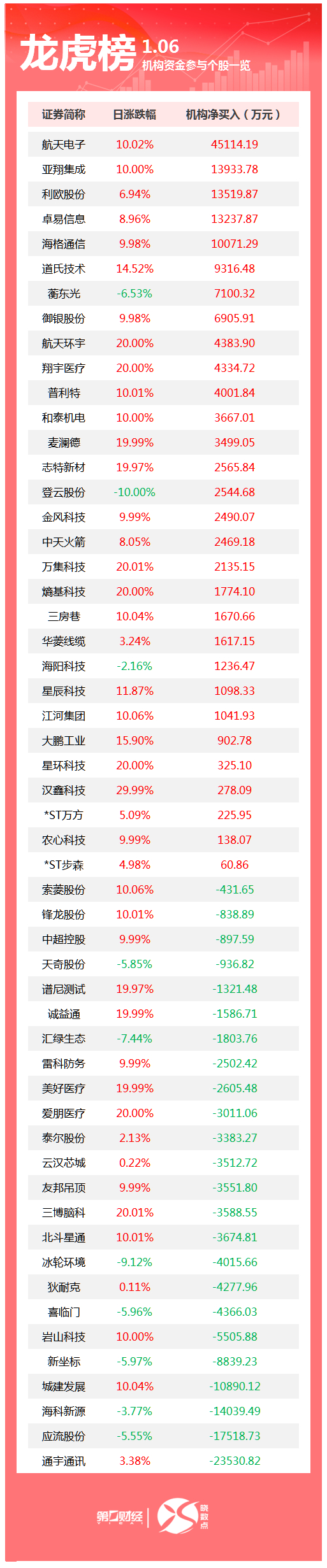
财经早报:降准降息可期!央行2026年政策定调,A股新开户数创近三年新高丨2026年1月7日
Xin Lang Cai Jing· 2026-01-06 23:39
Group 1 - The Ministry of Commerce of China has decided to strengthen export controls on dual-use items to Japan, prohibiting all dual-use items from being exported to military users and any end-users that could enhance Japan's military capabilities [2][45][46] - China is considering tightening the export license review for medium and heavy rare earth items to Japan, which will be implemented starting April 4, 2025, under the Export Control Law [3][47] - China's Foreign Ministry has warned that Japan's recent moves towards militarization, including revising security documents to increase defense spending and develop offensive military capabilities, pose a danger to regional peace [4][48] Group 2 - The People's Bank of China has outlined seven key priorities for 2026, emphasizing the importance of monetary policy in promoting high-quality economic development and price stability, with a flexible approach to using tools like interest rate cuts [8][51] - A significant increase in new A-share accounts was reported, with 2.74369 million new accounts opened in 2025, marking a 9.75% year-on-year growth and the highest annual figure since 2022 [9][52][53] - The Shanghai Composite Index achieved a record 13 consecutive positive trading days, marking the longest streak in its history, with a 1.5% increase on January 6 [9][53] Group 3 - Financial regulators are conducting research to address barriers to long-term capital entering the market, focusing on enhancing the investment scale and proportion of bank wealth management products in A-shares [10][54] - The commercial aerospace sector continues to show strong growth potential, with expectations of a turning point in the industry [16][60] - The lithium carbonate market is experiencing a significant price increase at the start of the year due to tight supply and demand conditions [16][60]


螺纹日报:增仓下跌-20260105
Guan Tong Qi Huo· 2026-01-05 11:18
Report Industry Investment Rating - Not provided in the content Core Viewpoints - The current seasonal weakening of rebar demand and the increase in production are putting downward pressure on prices, but the continuous inventory reduction and relatively low inventory levels provide support. In January, the inventory accumulation cycle begins, and attention should be paid to the arrival of the inventory accumulation inflection point in late January. The cost side is divergent (iron ore is strong, while coking coal and coke are weak). The real estate demand continues to decline, with limited incremental demand, restricting the upside potential. However, the anti - involution policy is expected to reduce production capacity, providing downside support. In the short term, affected by international geopolitical events, market sentiment is relatively cautious. The daily line on the disk has fallen below the 20 - day moving average, and it is expected to consolidate in a weak and volatile manner [4] Summary by Directory Market行情回顾 - The rebar futures main contract increased its open interest by 43,067 lots on Monday, with slightly higher trading volume than the previous trading day. The trading volume was 697,016 lots. During the day, it declined with increasing positions, reaching a low of 3097 yuan/ton, a high of 3135 yuan/ton, and closing at 3104 yuan/ton, down 23 yuan/ton or 0.74% [1] - The spot price of HRB400E 20mm rebar in the mainstream area was 3300 yuan/ton, remaining stable compared to the previous trading day [1] - The futures price was at a discount of 196 yuan/ton to the spot price, which provided some support for the futures price to a certain extent [1] Fundamental Data Supply - demand situation - Supply side: As of the week ending December 31, rebar production increased by 38,300 tons week - on - week to 1.8822 million tons, rising for three consecutive weeks. The blast furnace operating rate of 247 steel mills was 78.94%, up 0.62 percentage points week - on - week and 0.84% higher than the same period last year. The steel mill profitability rate was 38.1%, up 0.87 percentage points from the previous week. The daily average hot metal output increased by 85,000 tons week - on - week to 2.2743 million tons, 44,000 tons less than the same period last year. This week's production continued to rise due to the marginal improvement in steel mill profitability, reduced incentive to cut production, and the resumption of some blast furnaces. The supply contraction situation was marginally alleviated, and subsequent pressure emerged [2] - Demand side: The off - season effect deepened, and winter storage was cautious. As of the week ending December 31, the apparent consumption decreased by 22,400 tons week - on - week to 2.0044 million tons. Construction in the north had stopped, and projects in the south were nearing completion. The apparent demand had declined for two consecutive weeks. Traders lacked confidence in the future market, and the restocking pace was slow, mainly purchasing on demand. In the medium - to - long - term, demand was under pressure. The new construction area of real estate continued to decline, infrastructure provided some support but with limited increments, and steel consumption in the manufacturing industry was stable but could not change the overall weak situation [2] Inventory - Inventory continued to decline. As of the week ending December 31, the total inventory decreased by 122,200 tons week - on - week to 4.2203 million tons, declining for 9 consecutive weeks. Among them, the social inventory was 2.8266 million tons, down 115,300 tons week - on - week, declining for 12 consecutive weeks and reaching a three - year low. The steel mill inventory was 1.3937 million tons, slightly down 6900 tons, also at a three - year low, providing strong support. The inventory accumulation inflection point was expected to occur 1 - 2 weeks before the Spring Festival. The steel mill inventory changed from an increase to a decrease, and the social inventory continued to decline, indicating a reduction in inventory pressure in the circulation link [3] Macroeconomic - The Central Economic Work Conference proposed to flexibly and efficiently use various policy tools such as reserve requirement ratio cuts and interest rate cuts to maintain sufficient liquidity and smooth the monetary policy transmission mechanism. It focused on stabilizing the real estate market, implementing city - specific policies to control increments, reduce inventory, and optimize supply, and encouraging the acquisition of existing commercial housing for use as affordable housing. The Fed cut interest rates by 25 basis points in December as expected. The macroeconomic outlook was moderately positive. The 14th Five - Year Plan provided a transformation path for the steel industry, emphasizing "controlling production capacity, optimizing structure, promoting transformation, and improving quality." In general, incremental demand was relatively limited, but the loose cycle provided some support, and the upper limit of demand determined the pressure [3] Cost - The risk of raw material price fluctuations increased. Coke prices had been lowered in four rounds, weakening cost support. Iron ore prices were strong, but inventory levels were high. Scrap steel prices were relatively stable, providing support for electric furnace costs [3] Driving Factor Analysis - Bullish factors: Inventory at a three - year low with continued reduction, supply - side anti - involution production cuts, strict production capacity control, policy - supported demand, marginal improvement in post - holiday demand, and a loose macroeconomic outlook [4] - Bearish factors: Excessive post - Spring Festival inventory accumulation and slower inventory reduction, accelerated resumption of blast furnace production, cautious winter storage demand, continuous decline in real estate demand, a decline in iron ore prices from high levels, weakening cost support, restricted exports, and weak economic recovery [4]