国潮

Search documents
从借力国潮到技术升格 中国游戏双线突围
Bei Jing Shang Bao· 2025-05-25 14:33
Core Insights - In 2024, China's self-developed games achieved actual sales revenue of $18.557 billion in overseas markets, marking a 13.39% year-on-year growth, with the scale exceeding 100 billion yuan for five consecutive years [1] - The release of "Black Myth: Wukong" signifies a breakthrough for Chinese games, receiving multiple prestigious awards and nominations, and contributing to a 20.75% increase in overseas sales revenue for domestic games [4] - The global gaming market is expanding, with a total market size of 1,216.335 billion yuan in 2024, reflecting a 3.31% growth [9] Industry Performance - Tencent's international game revenue reached 58 billion yuan in 2024, a 9% increase, driven by strong performances from "PUBG MOBILE" and Supercell games [6] - 2024 Q3 saw China's gaming market revenue hit a record high of 91.766 billion yuan, an 8.95% increase, largely due to the impact of "Black Myth: Wukong" [4] Cultural Integration - Chinese games are leveraging cultural elements to enhance player engagement, with "Genshin Impact" and "Black Myth: Wukong" incorporating local cultural themes and narratives to resonate with international audiences [7] - Localization strategies, such as language adaptations and culturally relevant content, are crucial for the success of Chinese games in overseas markets [11] Marketing Strategies - Participation in international gaming exhibitions and events has been a key strategy for promoting Chinese games abroad, enhancing visibility and player interaction [8] - Tailored marketing approaches based on regional user characteristics and preferences are essential for increasing market share and profitability in foreign markets [11]




谢霆锋,香港的下一位商业大佬
创业邦· 2025-05-25 03:14
Core Viewpoint - The article highlights the entrepreneurial journey of Nicholas Tse, emphasizing his transition from a celebrity to a successful entrepreneur in the food industry, particularly through his brand "Feng Wei" and its impact on promoting Chinese cuisine globally [4][12][21]. Group 1: Nicholas Tse's Career Transition - Nicholas Tse began his career as a celebrity in 1996, facing skepticism but later evolved into a dual identity as an entertainer and entrepreneur [3][4]. - In 2011, Tse entered the culinary world, finding personal growth and stability through cooking, which became a therapeutic outlet for him [6][9]. - His cooking journey led to the creation of the culinary show "Twelve Flavors of Feng," aimed at promoting food culture and healing through cuisine [9][10]. Group 2: Business Development and Achievements - "Feng Wei" brand achieved significant milestones, with cumulative sales of its signature product, the juicy sausage, reaching 1.5 billion yuan, and becoming the top-selling product in the country for three consecutive years [12]. - The brand expanded its product line, with several items surpassing annual sales of 100 million yuan, and achieved a 65% customer repurchase rate within three months [12]. - By April 2025, "Feng Wei" had established a presence in over 160 cities and 15,000 stores across China, with plans for international expansion [12]. Group 3: Entrepreneurial Philosophy and Strategy - Tse's entrepreneurial approach is characterized by a commitment to quality and detail, ensuring that every product undergoes extensive testing and refinement before market release [10][18]. - He emphasizes the importance of creating sustainable social value through business, believing that successful entrepreneurship should contribute positively to society [14][20]. - Tse's experience in the entertainment industry has shaped his business strategies, focusing on finding the right talent and fostering a strong team culture [15][17]. Group 4: Cultural Impact and Vision - Tse aims to promote Chinese culinary culture globally, viewing food as a cultural symbol that can bridge East and West [21][23]. - His support for domestic brands, such as his investment in the Chinese sportswear brand Xtep, reflects his commitment to fostering local enterprises and contributing to the national economy [21][23]. - Tse's identity as a Chinese entrepreneur is reinforced by his decision to renounce his Canadian citizenship, further aligning his personal and professional values with his cultural heritage [23].

萧山:“百工灵”IP二创 传播阅读量破亿
Hang Zhou Ri Bao· 2025-05-23 02:18
Core Viewpoint - The "Bai Gong Ling" IP, developed by Hangzhou Kaiying Network Technology Co., integrates over 30 traditional handicraft projects listed in the "Intangible Cultural Heritage" directory, aiming to awaken traditional cultural memories among youth through engaging storytelling and interactive gameplay [1][2]. Group 1: Product Development and Engagement - The "Bai Gong Ling" IP includes games, animations, comics, novels, and cultural derivative products, with over 100 million views for secondary creation content and more than 60 million views for comics [1]. - The H5 mini-game allows players to create over 120 traditional handicrafts, combining cultural transmission with fun gameplay, while simplifying complex processes [1]. Group 2: Cultural Promotion and Community Engagement - In 2023, the company launched the "Kai Xin·Bai Gong Ling" intangible cultural heritage public welfare project, developing over ten sets of non-heritage handicraft courses and conducting public teaching activities in various minority-populated provinces [1]. - The project team has collaborated with institutions like the China Animation Museum and Zhejiang Provincial Intangible Cultural Heritage Foundation, hosting over 30 offline events across eight cities [2]. - The "Bai Gong Ling" IP will participate in the China International Animation Festival alongside another traditional culture IP, "Sui Shi Ling," which focuses on 17 traditional Chinese festivals and 24 solar terms [2].
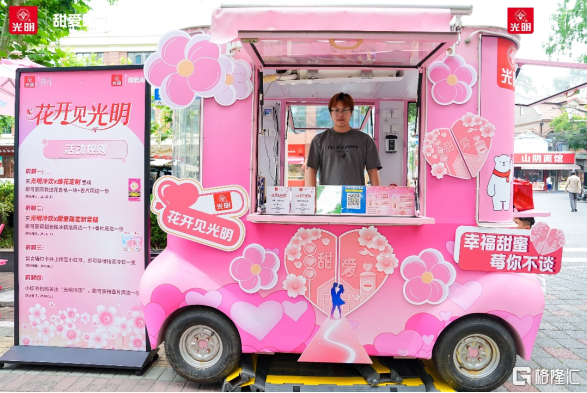
花开见光明丨光明冷饮与上海制皂携手打造甜爱路"国潮浪漫新地标"
Ge Long Hui· 2025-05-21 04:43
Core Viewpoint - The collaboration between Bright Dairy's ice cream and Shanghai Soap's Fenghua on May 20, 2025, marks a significant cross-industry partnership aimed at creating a unique cultural experience that blends urban memory with contemporary creativity [2][10]. Group 1: Event Overview - The event titled "Flower Blooms to See Brightness" takes place at the romantic landmark Sweet Love Road in Shanghai, showcasing a fusion of two iconic brands [2][5]. - The initiative aims to evoke emotional connections and social responsibility through immersive consumer experiences and cultural rituals [5][11]. Group 2: Creative Engagement - Three creative scenes at the event enhance consumer engagement, including a "Love Announcement Board" where participants can express their love messages, fostering social media interaction [7][11]. - The introduction of a unique "Cold Aroma Matrix" by Shanghai Soap allows consumers to experience a blend of ice cream and fragrance, enhancing brand memory and product experience [9][11]. Group 3: Brand Collaboration - The partnership represents a deep restructuring of the old brand ecosystem, focusing on customized products that cater to modern consumer experiences [11][13]. - The collaboration creates a closed-loop model of "IP empowerment - scene innovation - user sedimentation," enhancing market competitiveness for both brands [11][15]. Group 4: Cultural and Economic Impact - The cross-industry collaboration serves as a new practical example for revitalizing national brands, transforming historical heritage into experiential cultural symbols [13][15]. - The innovative approach of combining different product categories meets the demands of young consumers for personalized and engaging experiences [13][16]. Group 5: Future Directions - Bright Dairy plans to continue exploring the "national trend brand symbiosis" model, aiming to expand development opportunities for traditional brands [16].

大学生设计“国潮”太会了!这届时装周各高校拿出看家本事
Yang Shi Xin Wen· 2025-05-21 02:26
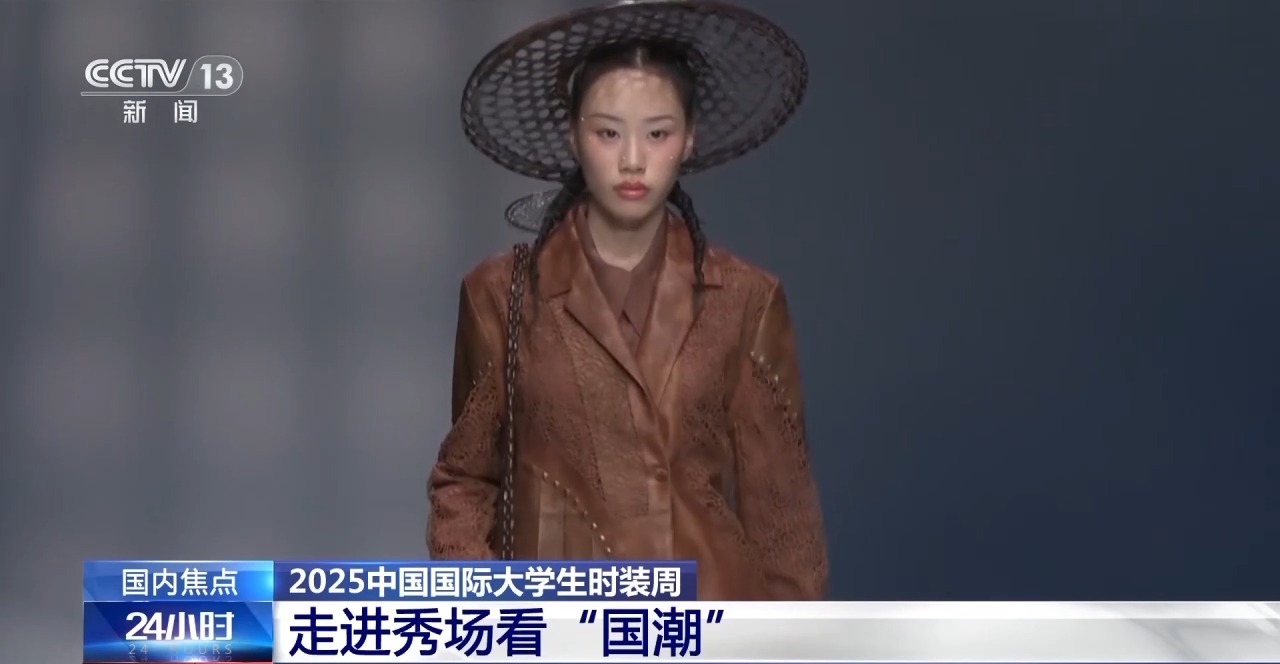
Group 1 - The 2025 China International College Student Fashion Week took place in Beijing from May 15 to 20, showcasing fashion designs from students of 63 universities across the country [1] - Nearly half of the participating students adopted the "Guochao" style, which merges traditional clothing with contemporary design [1] - Various universities presented unique designs inspired by regional cultures, such as the integration of Miao embroidery and Tibetan patterns with modern tailoring [1][5] Group 2 - Students from Fuzhou University of Foreign Languages and Trade transformed Fujian Tulou architecture into asymmetrical clothing structures, using digital printing to reflect the waves of the Maritime Silk Road [3] - The designs from Northeast Electric Power University drew inspiration from local culture, incorporating elements like Manchu paper-cutting and the dynamics of skiing into their fashion narratives [5] - The works from Kunming University and Yunnan Vocational College of Light Industry innovatively utilized traditional techniques such as embroidery and tie-dye to present the unique ethnic styles of Yunnan [6] Group 3 - The Vice Dean of Kunming University’s School of Fine Arts and Design emphasized the students' confidence in their cultural heritage, stating that cultural confidence is the foundation of all cultural innovation [8]
秀水街秀出国潮新活力
Bei Jing Qing Nian Bao· 2025-05-20 18:19
Core Insights - The article highlights the transformation of the Silk Street market in Beijing into a fashion design incubator and cultural tourism complex, aiming to enhance its role in the international consumer market [12][14] - The market has seen a significant increase in inbound tourist numbers and sales, with a 245% year-on-year growth in 2024 and total sales reaching 1.6 billion yuan, of which 70% came from foreign consumers [12][14] Group 1: Market Transformation - Silk Street has evolved from a traditional market to a modern fashion design hub, signing a partnership with China International Fashion Week to create an international fashion show venue in the CBD area by March 2025 [12][14] - The market has undergone 12 renovations over 20 years, adapting to the needs of a new generation of consumers and contributing to Beijing's status as an international consumption center [12][14] Group 2: Business Model and Services - The custom clothing store at Silk Street has gained popularity among foreign tourists due to its personalized service, quick turnaround times, and the ability to accommodate multiple currencies and credit cards [13] - The store offers a "rapid customization" service, allowing tourists to select styles and materials while they explore the city, with garments ready for pickup or delivery to their hotels [13] Group 3: Cultural Integration and Branding - The founders of the custom clothing brand, Bo Ren, have integrated traditional Chinese aesthetics into their designs, appealing to foreign customers by showcasing Chinese cultural elements [13][14] - Silk Street has positioned itself as a platform for promoting Chinese design and manufacturing, aiming to elevate local brands to an international stage through various initiatives, including fashion shows and collaborations with local designers [14] Group 4: Economic Impact and Future Prospects - The market's transformation reflects the resilience of the private sector and the supportive policies from the government, which have fostered a conducive business environment for growth [14] - By 2025, Silk Street aims to further enhance its international appeal, with projections of increased tourist visits and sales, particularly from European and American markets [14]
历峰集团:老铺黄金推动了全球珠宝市场的渴望度和活力
Huan Qiu Wang· 2025-05-19 06:11
Group 1 - Richemont reported a 4% increase in revenue to €21.4 billion for the fiscal year ending March 31, 2025, with operating profit declining by 1% to €3.76 billion, resulting in an operating margin of 20.9%, down 240 basis points year-on-year [1] - The Asia-Pacific market, particularly China, saw a significant revenue decline of 13%, with the Chinese market alone dropping by 23%, marking it as the only core market with double-digit decline [1] - CEO Nicolas Bos acknowledged the competitive threat from local brand Laopuhuang, emphasizing the importance of capturing market share from the non-branded segment in the jewelry market [1] Group 2 - Laopuhuang, established in 2009, is recognized as the leading brand in traditional gold craftsmanship in China and has been listed in the "Hurun Report" for three consecutive years since 2023 [3] - Morgan Stanley's report highlighted Laopuhuang's growing competitive threat to Cartier, which contributes over half of Richemont's sales and more than 70% of its profits, attributing the pressure on Cartier to the performance of Laopuhuang in the Chinese market [3] - Laopuhuang's single-store sales are projected to reach $45.5 million in 2024, surpassing Cartier, Van Cleef & Arpels, and Tiffany, indicating its potential to compete with international luxury brands [3] Group 3 - Laopuhuang's rapid growth is attributed to its precise positioning as a high-end brand and its cultural heritage, resonating with the rising "Guochao" cultural pride among local consumers [5] - Unlike European jewelry brands that primarily use K-gold, Laopuhuang's products are made of pure gold or gold-containing materials, making them more appealing to Chinese consumers [5] - Sales for Laopuhuang are projected to reach $3.3 billion by 2026, representing an 18-fold increase over five years [5]


奥飞娱乐(002292) - 2025年5月16日投资者关系活动记录表
2025-05-16 10:50
Group 1: Financial Performance - The company's net profit for 2024 saw a significant decline of 404.66%, primarily due to impairment losses on goodwill and long-term equity investments [4][10] - The adjusted net profit, excluding non-operating impairment losses, showed stable profitability in core business operations [10] - The company's non-recurring net profit for 2024 was -287 million CNY, representing a year-over-year decline of 610.72% [9][10] Group 2: Revenue Insights - The revenue from toy sales decreased significantly, largely impacted by the preschool toy "Super Wings" [2][3] - The company's animation and television media revenue growth rates were 13.54% and -87.84%, respectively, with the decline in television media attributed to the divestment of a subsidiary [10] Group 3: Strategic Initiatives - The company is actively expanding its production capacity in Thailand to mitigate the impact of U.S. tariffs on its supply chain [2] - In the潮玩 (trendy toys) sector, the company collaborates with major brands like MiHoYo and Tencent, with this segment currently contributing less than 10% to overall revenue [5] - The company is leveraging AI technology in its products, with a noticeable increase in demand for AI toy products compared to the previous year [6] Group 4: Market Position and Future Plans - The company aims to enhance its market competitiveness in the潮玩 sector by expanding product categories and improving product playability [5] - The company is committed to integrating traditional cultural elements into its IP content creation, focusing on storytelling that reflects Chinese heritage [5] - The company is embracing live streaming and short video marketing strategies to boost brand exposure and e-commerce conversion [8]

投资大家谈 | 景顺长城科技军团5月观点
点拾投资· 2025-05-16 04:28
Core Viewpoint - The article emphasizes the potential investment opportunities in China's technology sector, particularly in AI, domestic demand, and self-sufficiency, amidst ongoing geopolitical tensions and economic uncertainties [2][3][4]. Group 1: Investment Opportunities in Technology - The rise of China's technology industry has become a focal point in global capital markets, with significant advancements in AI boosting market confidence [2]. - The AI sector is expected to see substantial growth, with TSMC projecting a doubling of AI revenue by 2025 and a compound annual growth rate (CAGR) exceeding 45% from 2024 to 2029 [4]. - Companies involved in AI applications and related technologies are identified as having clear investment opportunities, particularly those focusing on supply chain security and domestic alternatives [5][6]. Group 2: Economic Policy and Market Dynamics - Strong policy support for consumption and high-quality development is anticipated, with a focus on stimulating domestic demand [3]. - The current A-share market is viewed as undervalued, suggesting that structural opportunities exist, particularly in sectors aligned with new productive forces [3]. - The article highlights the importance of monitoring policy responses to economic changes, indicating that strategic decisions by policymakers will be crucial for market direction [2]. Group 3: Specific Sectors of Interest - The automotive sector is highlighted for its rapid growth, with domestic brands increasing market share from 38% in 2015 to 61% in 2024, and exports rising significantly [16]. - The article notes that the semiconductor, advanced materials, and high-end equipment industries have reduced their reliance on foreign markets, indicating strong domestic growth potential [8]. - Investment opportunities are also identified in the healthcare sector, driven by an aging population and the increasing demand for innovative medical solutions [13]. Group 4: Market Resilience and Future Outlook - Despite uncertainties from U.S.-China trade tensions, China's economic resilience is noted to be stronger than during previous trade conflicts, with a shift towards high-end industries [18]. - The article suggests that the current market downturn presents favorable investment opportunities in high-quality companies within core industries [8]. - The focus on AI applications and infrastructure is expected to drive significant advancements and investment returns in the coming years [12].

金饰企业聚焦创意研发 布局国潮新品
Zhong Guo Zheng Quan Bao· 2025-05-15 21:18
Group 1: Gold Price Trends - Recent international gold prices have declined, with COMEX gold futures dropping from $3329.10 per ounce on May 9 to $3180.70 on May 14, a decrease of approximately 4.46% [2] - The decline in gold prices is attributed to reduced market risk aversion following unexpected progress in US-China trade negotiations, which has led to a potential drop in COMEX gold prices below $3000 per ounce [2][3] - Short-term outlook suggests a fluctuating trend for gold prices, while long-term support factors remain intact, including increased inflation risks in the US and strong central bank demand [3] Group 2: Consumer Behavior and Market Dynamics - Consumer interest in gold jewelry remains strong, with many brands offering significant discounts; for instance, some gold jewelry prices have been reduced to below 1000 yuan per gram [1] - The market for traditional gold jewelry is expanding, with the ancient method gold jewelry market in China growing from 13 billion yuan in 2018 to 157.3 billion yuan in 2023, reflecting a compound annual growth rate of 64.6% [4] - Companies are adapting to changing consumer preferences by enhancing product offerings, such as introducing unique designs and high-quality craftsmanship to attract customers [5][6] Group 3: Strategic Initiatives by Companies - Companies like Chow Tai Fook and others are focusing on high-end product strategies, optimizing product structures, and enhancing craftsmanship to stimulate demand in the premium gold jewelry market [6][7] - The introduction of culturally inspired product lines, such as the "Dunhuang" series by Luk Fook Jewelry, indicates a trend towards integrating cultural elements into product offerings [4] - Brands are increasingly targeting specific consumer segments with personalized and high-quality service, indicating a shift towards niche marketing strategies in the gold jewelry sector [7]