
红利资产

Search documents
券商密集召开秋季策略会 研判最新投资机遇
Zheng Quan Ri Bao· 2025-08-29 15:53
Group 1 - Multiple brokerages are holding autumn strategy meetings to provide insights on market trends and investment opportunities, indicating a generally optimistic outlook for the A-share market supported by various positive factors [1][2] - Key themes from the strategy meetings reflect confidence in the market, with titles such as "Planning for the Long Term" and "New Engines for Bull Markets," showcasing a strong belief in future growth [1] - Analysts emphasize the importance of these meetings in reducing information asymmetry, stabilizing market expectations, and enhancing rationality and resilience in the market [1] Group 2 - Analysts from various brokerages suggest that the A-share market is expected to continue its upward trajectory, with reasonable valuations and new positive factors emerging [2] - Investment focus areas include technology self-sufficiency, domestic consumption, and dividend stocks, with short-term attention on sectors poised for recovery [2][3] - The anticipated recovery in manufacturing and improvements in profitability are seen as key drivers for the market, with specific asset classes recommended for investment, including industrial metals and consumer-related sectors [3]




东海祥龙LOF: 东海祥龙灵活配置混合型证券投资基金(LOF)2025年中期报告
Zheng Quan Zhi Xing· 2025-08-29 10:04
Fund Overview - The fund is named Donghai Xianglong Flexible Allocation Mixed Securities Investment Fund (LOF) and is managed by Donghai Fund Management Co., Ltd. [3][12] - The fund's trustee is Industrial and Commercial Bank of China Limited [3][12]. - The fund was established on December 21, 2016, and its shares are listed on the Shenzhen Stock Exchange [3][12]. Investment Objectives and Strategies - The fund aims to achieve long-term stable appreciation of assets while strictly controlling risks [5]. - Investment strategies include asset allocation, stock investment, warrant investment, asset-backed securities investment, and private debt investment in small and medium enterprises [5]. Performance Metrics - As of June 30, 2025, the fund's net asset value (NAV) for Class A shares is 0.8605 RMB, with a net value growth rate of 3.51% [18][23]. - For Class C shares, the NAV is 0.8600 RMB, with a net value growth rate of 3.46% [18][23]. - The fund's performance benchmark is a combination of the CSI 300 Index return (50%) and the China Bond Composite Index return (50%) [5]. Financial Highlights - The total assets of the fund as of June 30, 2025, amount to 10,639,620.11 RMB, compared to 9,530,047.23 RMB at the end of the previous year [22][23]. - The fund reported total income of 406,280.48 RMB for the period from January 1, 2025, to June 30, 2025, compared to a loss of 1,073,432.69 RMB in the same period of the previous year [23]. - The fund's total expenses for the same period were 31,368.07 RMB, down from 42,961.51 RMB in the previous year [23]. Management and Governance - Donghai Fund Management Co., Ltd. emphasizes a commitment to investor interests and adheres to strict investment decision-making processes [15][17]. - The fund management has established a fair trading system and monitoring mechanisms to prevent conflicts of interest [16][17]. Market Outlook - The fund's management anticipates that the value of dividend assets will continue to be significant in the second half of 2025, with a focus on large-cap value stocks that provide stable cash flows and dividends [19]. - The strategy will continue to emphasize "dividend + cash flow + large-cap value" to optimize risk-return profiles for investors [19].

2025下半年红利展望:稳中求进,布局顺周期红利
Shenwan Hongyuan Securities· 2025-08-29 08:45
Group 1: Market Overview - The dividend assets are rapidly shrinking under the pressure of falling dividend yields and rising risk-free interest rates, raising questions about their allocation value and potential for absolute returns[3] - As of Q2 2025, the dividend yield of the CSI 300 index has decreased to 85 basis points above the 10-year government bond yield, indicating continued allocation value despite significant micro-level differentiation[3][26] - New insurance premium income reached CNY 3.73 trillion in H1 2025, a year-on-year increase of 5.3%, suggesting that insurance will remain a key channel for household asset allocation[3][9] Group 2: Investment Focus - In the A-share market, focus on cyclical and consumer sectors, with opportunities in coal, oil and gas, and consumer goods like liquor and air conditioning, which show stable performance and increased dividend ratios[3][47] - In the Hong Kong market, the dividend gap has narrowed, with the A-share dividend premium decreasing from 47.4% at the beginning of the year to 33.5% by August 26, 2025, indicating that Hong Kong dividend stocks remain 6-7% cheaper[3][34] - The insurance sector's equity holdings have steadily increased, reaching 21.4% of total insurance fund utilization, with a projected incremental investment of CNY 668.76 billion under a neutral scenario for 2025[6][8][20] Group 3: Risk Factors and Recommendations - Risks include rising risk-free interest rates and increased volatility, which could impact individual stock performance[3] - The report recommends a dual strategy for the second half of 2025: seek cyclical assets with potential for recovery and explore undervalued dividend opportunities in the Hong Kong market[3][47] - The report updates the A-share and Hong Kong dividend stock pools, emphasizing stocks with a dividend yield threshold of 4% and stable profitability[48]

红利资产契合中长期资金配置需求,国企红利ETF(159515)创近1月规模新高!
Sou Hu Cai Jing· 2025-08-29 06:22
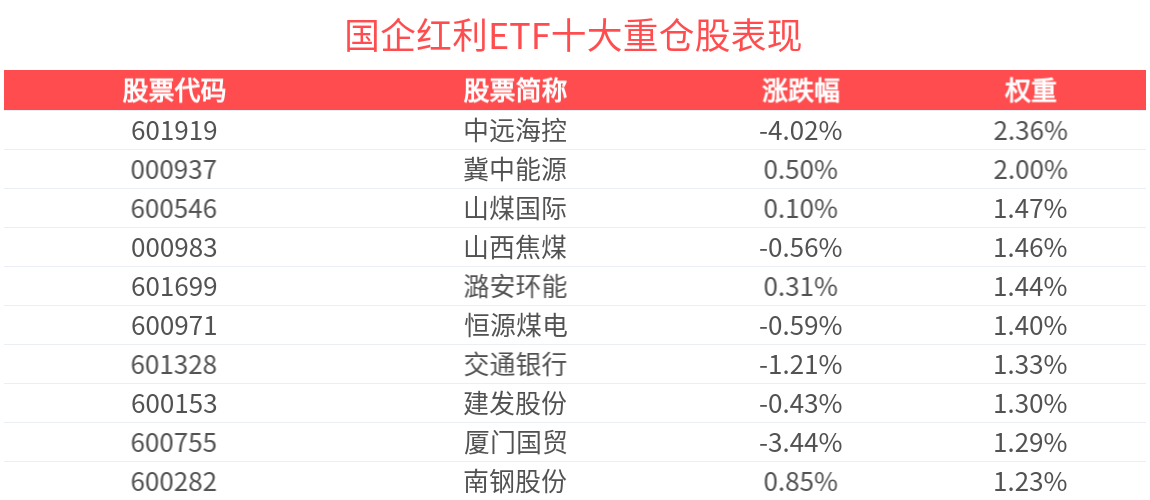
Group 1 - The China Securities State-Owned Enterprises Dividend Index (000824) experienced a slight decline of 0.08% as of August 29, 2025, with mixed performance among constituent stocks [1] - Leading gainers included Hualing Steel (000932) with an increase of 3.70%, Nanjing High-Tech (600064) up by 3.41%, and New Steel Co. (600782) rising by 3.05% [1] - Conversely, China COSCO Shipping Holdings (601919) led the decline with a drop of 4.02%, followed by Xiamen International Trade (600755) down 3.44%, and Anhui Expressway (600012) down 2.99% [1] Group 2 - The latest size of the State-Owned Enterprises Dividend ETF (159515) reached 51.0529 million yuan, marking a one-month high, with a recent increase of 5.4 million shares over the past week [1] - Market analysis indicates that in the current environment of increased short-term volatility and declining interest rates, there is a shift towards more stable investment preferences [1] - The constituent stocks of the State-Owned Enterprises Dividend Index not only possess high dividend potential but also focus on profitability quality and growth, providing dual protection of "dividends" and "growth" [1] Group 3 - The State-Owned Enterprises Dividend ETF closely tracks the China Securities State-Owned Enterprises Dividend Index, which selects 100 listed companies with high cash dividend yields, stable dividends, and certain scale and liquidity [2] - As of July 31, 2025, the top ten weighted stocks in the index included China COSCO Shipping Holdings (601919), Jizhong Energy (000937), and Lu'an Environmental Energy (601699), collectively accounting for 16.77% of the index [2]


险资“入市”动作不断,下半年投资风向是否生变?
Huan Qiu Wang· 2025-08-29 03:17
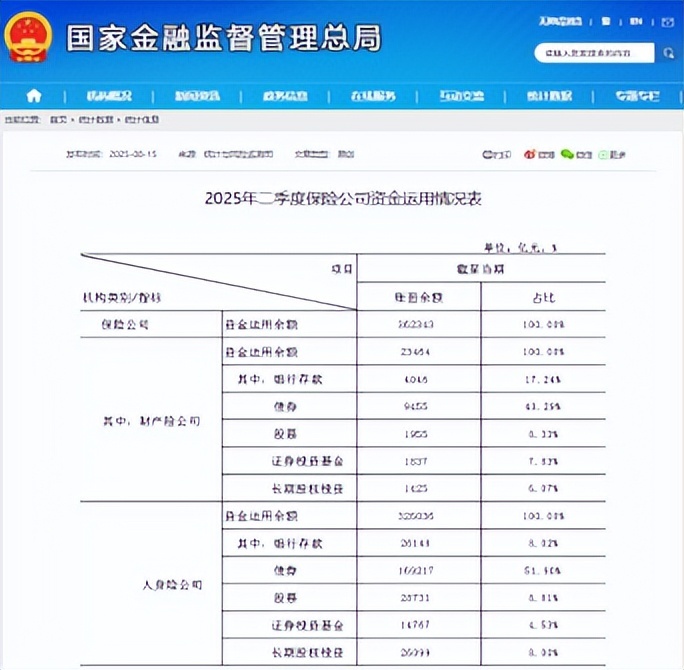
Core Viewpoint - The insurance industry is increasingly favoring high-dividend stocks as a key investment strategy, with significant growth in stock allocations and a notable shift in investment preferences towards equities over bonds [1][5][6]. Group 1: Investment Trends - As of June 2025, the stock investment scale of China Insurance has increased by 60.7% compared to the beginning of the year, outperforming the CSI 300 Dividend Index by 7.8 percentage points [1]. - By the end of Q2 2025, the total stock investment balance of property and life insurance companies reached 3.07 trillion yuan, a 26.3% increase from the end of 2024 [2]. - The proportion of stock investments in property insurance companies rose from 7.21% at the end of 2024 to 8.33% by Q2 2025, while life insurance companies saw an increase from 7.57% to 8.81% [1][2]. Group 2: Asset Allocation Strategy - The insurance sector is adopting a "barbell" strategy, balancing fixed income and equity investments to mitigate duration mismatch risks and enhance portfolio yield [3]. - The preference for stocks is driven by a low interest rate environment and a policy framework encouraging long-term investments, leading to a sustained demand for equity assets [5][6]. Group 3: Market Activity - In 2025, insurance capital has been a major source of incremental funds in the stock market, injecting over 600 billion yuan in the first half of the year [2]. - Insurance companies have engaged in 30 equity stakes this year, with a focus on banks and other sectors, indicating a resurgence in "stake acquisition" activities [4]. Group 4: Future Outlook - Insurance institutions expect to maintain their asset allocation ratios from early 2025, with a slight increase in stock and bond investments anticipated [5]. - The sectors expected to perform well include pharmaceuticals, electronics, banking, and defense, with a focus on high-dividend and innovative assets [6][7].

高波动、低利率时代,机构共议多元化挖掘收益
2 1 Shi Ji Jing Ji Bao Dao· 2025-08-28 06:11
Group 1: Conference Overview - The "2025 Asset Management Conference" was held in Shanghai, focusing on diverse asset allocation strategies in a low-interest-rate environment [1][3] - Experts from various asset management firms discussed key topics such as asset allocation strategies, stock and bond market trends, and the outlook for gold and dollar assets [3] Group 2: Low-Interest Rate Environment - The low-interest-rate environment has fundamentally altered investors' risk preferences and behavior, with the ten-year government bond yield fluctuating between 1.6% and 1.9% [4][5] - The policy support for the capital market since September 2022 has been significant, with long-term funds entering the market, enhancing market confidence [4][5] Group 3: Asset Allocation Strategies - The concept of "asset scarcity" has emerged as a major challenge, prompting innovative strategies such as "seeking returns internally" and "seeking returns externally" [7] - The focus on high-dividend assets reflects the demand for stable returns amid the ongoing asset scarcity [9] Group 4: Equity Market Insights - The equity market is characterized by structural differentiation, with technology and manufacturing sectors gaining attention [9][10] - High-dividend companies are expected to perform steadily, even if their overall returns may not be as impressive in the near term [10] Group 5: Gold and Dollar Dynamics - Gold remains a focal point for discussion, driven by long-term factors such as the weakening status of the dollar and central banks' increasing gold reserves [11][12] - The "fixed income + dollar" and "fixed income + gold" strategies have gained popularity, but caution is advised due to potential risks associated with currency exposure and market volatility [12]

红利低波100ETF(159307)近1周新增规模居同类产品第一,港股红利ETF博时(513690)备受资金关注,红利资产或仍具备一定的吸引力
Sou Hu Cai Jing· 2025-08-28 05:54
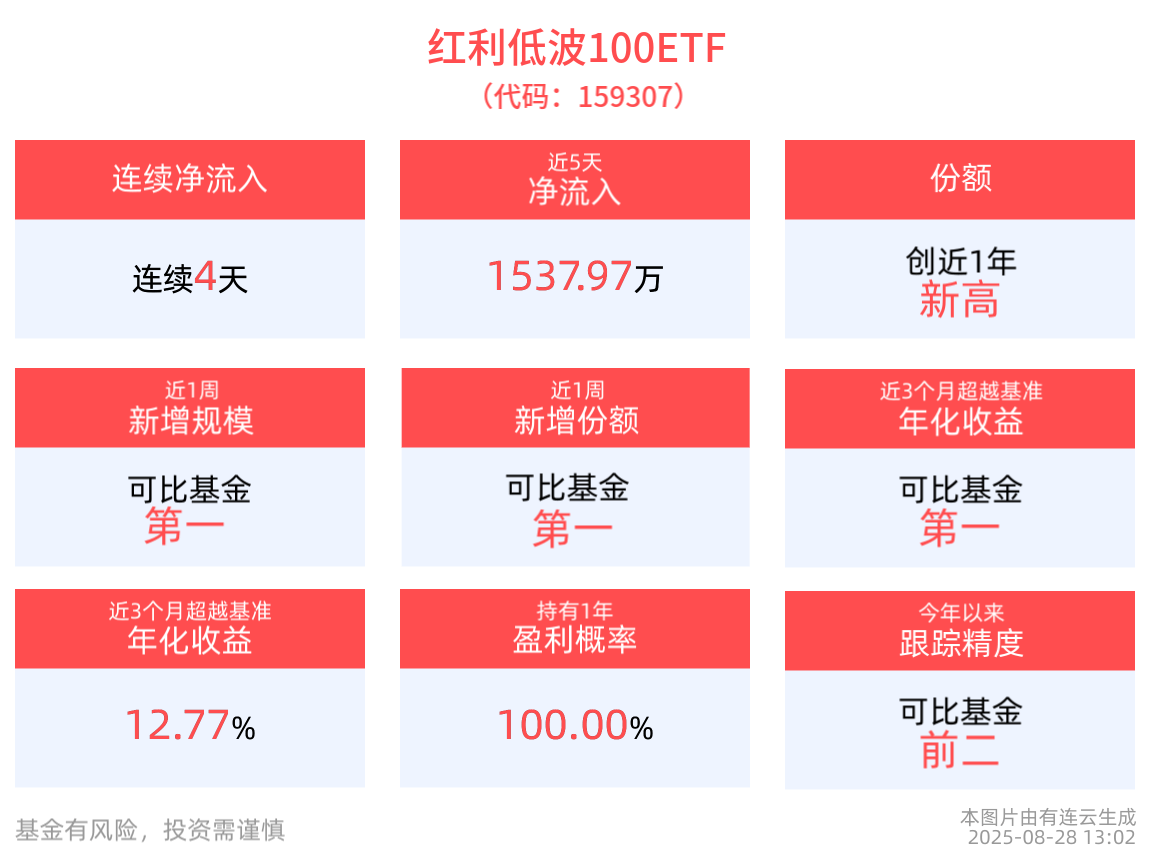
Core Viewpoint - The market experienced a collective decline on August 27, 2025, with significant drops in various indices, indicating a potential correction phase after previous gains [8][9][10]. Group 1: Market Performance - The CSI Dividend Low Volatility 100 Index fell by 0.36% as of August 28, 2025, with notable gainers including Solar Energy (up 3.95%) and Huayu Automotive (up 3.02%), while TianDi Technology led the decline (down 3.79%) [3]. - The Hang Seng High Dividend Yield Index rose by 0.33%, with China National Offshore Oil Corporation increasing by 4.29% [6]. - The CSI All Share Free Cash Flow Index decreased by 0.12%, with Jiejia Weichuang leading gains at 16.46% [7]. Group 2: Liquidity and Trading Activity - The trading volume for the CSI Dividend Low Volatility 100 ETF was 10.39 million yuan, with a turnover rate of 0.83% [3]. - The Hang Seng High Dividend ETF saw a trading volume of 121 million yuan, with a turnover rate of 2.55% [6]. - The CSI All Share Free Cash Flow ETF had a trading volume of 3.22 million yuan, indicating active market participation [7]. Group 3: Market Sentiment and Analysis - The recent market decline is attributed to profit-taking after significant prior gains, psychological factors related to high-profile stocks, and tightening regulatory measures [9][10][11][12]. - Analysts suggest that the core driving logic of the bull market remains intact, and the current adjustment may be beneficial for long-term market health [13]. - The market may shift from broad-based gains to a focus on fundamental verification and structural opportunities [13][14]. Group 4: Fund Performance and Metrics - The CSI Dividend Low Volatility 100 ETF has seen a net inflow of 15.38 million yuan over four days, with a recent net asset value increase of 21.00% over the past year [16][18]. - The Hang Seng High Dividend ETF has achieved a net value increase of 50.34% over the past two years, ranking in the top 11.66% among similar funds [22][23]. - The CSI All Share Free Cash Flow ETF has a maximum drawdown of 3.31% since inception, indicating relatively low risk compared to peers [25].
中证红利指数相对万得全A最新40日收益差刷新年内新低,中证红利ETF(515080)近十日“吸金”近3.66亿元
2 1 Shi Ji Jing Ji Bao Dao· 2025-08-28 02:12
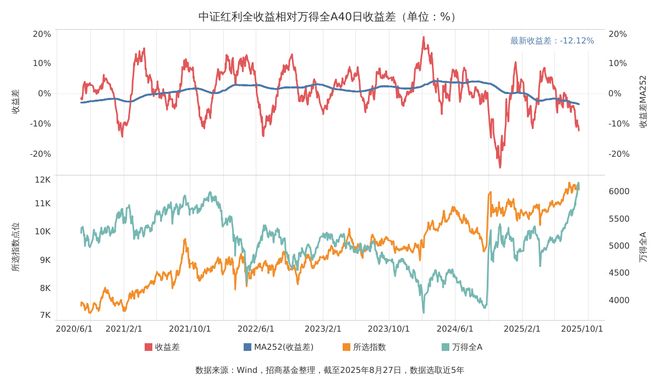
Core Viewpoint - The recent performance of the CSI Dividend Index has shown a significant underperformance compared to the Wind All A Index, with a 40-day return difference reaching a new low for the year at -12.12% as of August 27 [1][3]. Dividend Performance - A total of 14 constituent stocks of the CSI Dividend Index announced interim dividends, amounting to over 76.6 billion yuan, with notable contributions from China Petroleum (approximately 40.3 billion yuan), China Ping An (17.2 billion yuan), and China Sinopec (10.67 billion yuan) [3][4]. - The latest dividend yield for the CSI Dividend Index is reported at 4.84%, which is higher than the 1.80% yield of the 10-year government bonds [4][5]. Market Trends - The market has seen a recovery in risk appetite, with the A-share market breaking through the 3,800-point mark, indicating positive investor sentiment [6]. - The CSI Dividend ETF (515080) has experienced significant net inflows, with 57.43 million yuan in net subscriptions on August 27 and a cumulative net inflow of 196 million yuan over the past five days [6][7]. Valuation and Future Outlook - According to Shenwan Hongyuan Securities, the total dividend payout is expected to exceed 2.3 trillion yuan in 2024, with a payout ratio approaching 40%, suggesting continued attractiveness of dividend assets [5]. - The CSI Dividend Index is currently valued near historical averages, presenting a dual advantage of low valuation and high dividend yield [5].
电力及公用事业行业月报:七月单月用电量突破万亿千瓦时,红利资产仍具长期价值-20250827
Zhongyuan Securities· 2025-08-27 07:08
Investment Rating - The report maintains an "Outperform" rating for the electric power and utilities industry [1][7]. Core Insights - In July 2025, the total electricity consumption reached 10,226 billion kWh, marking an 8.6% year-on-year increase, with a growth rate improvement of 3.2 percentage points compared to June 2025 [4][21]. - The report highlights the long-term value of dividend assets, particularly large hydropower enterprises, suggesting a focus on their stable profitability for long-term investments [7]. Summary by Sections 1. Market Review - The electric power and utilities index underperformed the market in August 2025, with a 4.78% increase compared to a 9.66% rise in the CSI 300 index, resulting in a 4.88 percentage point lag [7][14]. - Among sub-industries, the rankings for August 2025 were led by heating or others (8.89%), environmental protection and water services (8.52%), and electric grid (7.91%) [14]. 2. Industry Supply and Demand 2.1. Electricity Consumption - In July 2025, the electricity consumption growth rate was 8.6%, with urban and rural residential electricity consumption growing by 18% [4][21]. - Cumulative electricity consumption from January to July 2025 was 58,633 billion kWh, reflecting a 4.5% year-on-year increase [4][21]. 2.2. Electricity Supply - The industrial electricity generation in July 2025 was 9,267 billion kWh, a 3.1% year-on-year increase, with growth accelerating by 1.4 percentage points compared to June 2025 [4][27]. - The report notes that the share of coal-fired power generation was 64.79%, while hydropower accounted for 12.63% of total industrial generation from January to July 2025 [28]. 2.3. Industry Chain Volume and Price - In July 2025, the output of industrial raw coal was 38 million tons, a decrease of 3.8% year-on-year, while coal imports fell by 22.9% [5][43]. - Coal prices have been recovering, with the northern port thermal coal price reaching 700 RMB/ton, a monthly increase of 7.69% [5][46]. 3. Henan Province Monthly Electricity Supply and Demand - In July 2025, Henan's total electricity consumption was 53.173 billion kWh, a year-on-year increase of 27.95% [68]. - The province's electricity generation also saw a significant increase of 33.12% year-on-year, with solar power generation rising by 70.21% [72][76]. 4. Industry and Company News - The report mentions that on August 4, 2025, Henan's total electricity load exceeded 90 million kW for the first time in history [78]. - On August 7, 2025, the State Grid Corporation successfully issued 10 billion RMB in offshore RMB bonds, marking a significant milestone for state-owned enterprises [84].
国信证券晨会纪要-20250827
Guoxin Securities· 2025-08-27 01:50
Macro and Strategy - The equity market is currently in an accelerating upward phase, prompting discussions on how to adjust positions to prepare for potential market fluctuations [8] - Investors are advised to consider right-side position reduction as a more reasonable choice, given the current market dynamics [8] - Historical data suggests that low-priced convertible bonds (priced between 110-115 yuan) tend to be more resilient during market downturns [8] Company and Industry Analysis - **Dengkang Dental (001328.SZ)**: The company reported a stable growth in Q2 2025, with revenue reaching 842 million yuan, a year-on-year increase of 19.72%, and a net profit of 85 million yuan, up 17.59% [10][11] - **Marubi Biotechnology (603983.SH)**: The company achieved a revenue of 1.769 billion yuan in H1 2025, a 30.83% increase year-on-year, while net profit grew by 5.21% to 186 million yuan [13][14] - **Haidi Lao (06862.HK)**: The company reported a revenue of 20.7 billion yuan in H1 2025, a decrease of 3.7%, with core operating profit down 14% [17][18] - **Green Tea Group (06831.HK)**: The company achieved a revenue of 2.29 billion yuan in H1 2025, a 23.1% increase, with adjusted net profit rising by 40% [19][20] - **Haisco Pharmaceutical (002653.SZ)**: The company reported a revenue of 2 billion yuan in H1 2025, an 18.6% increase, with anesthetic product revenue growing by 54% [22][23] - **Furui Co., Ltd. (300049.SZ)**: The company achieved a revenue of 713 million yuan in H1 2025, an 11.02% increase, while net profit was impacted by foreign exchange losses [26][27] - **Kaili Medical (300633.SZ)**: The company reported a revenue of 964 million yuan in H1 2025, a decrease of 4.78%, with net profit down 72.43% due to high initial investments in new product lines [29][30] - **Yuyue Medical (002223.SZ)**: The company reported a revenue of 4.659 billion yuan in H1 2025, an 8.2% increase, with net profit rising by 7.4% [31][32]