
电动化

Search documents
10月乘用车市场销量分析:新能源板块表现强势 转型步伐持续加速
Zhong Guo Zhi Liang Xin Wen Wang· 2025-11-25 08:05
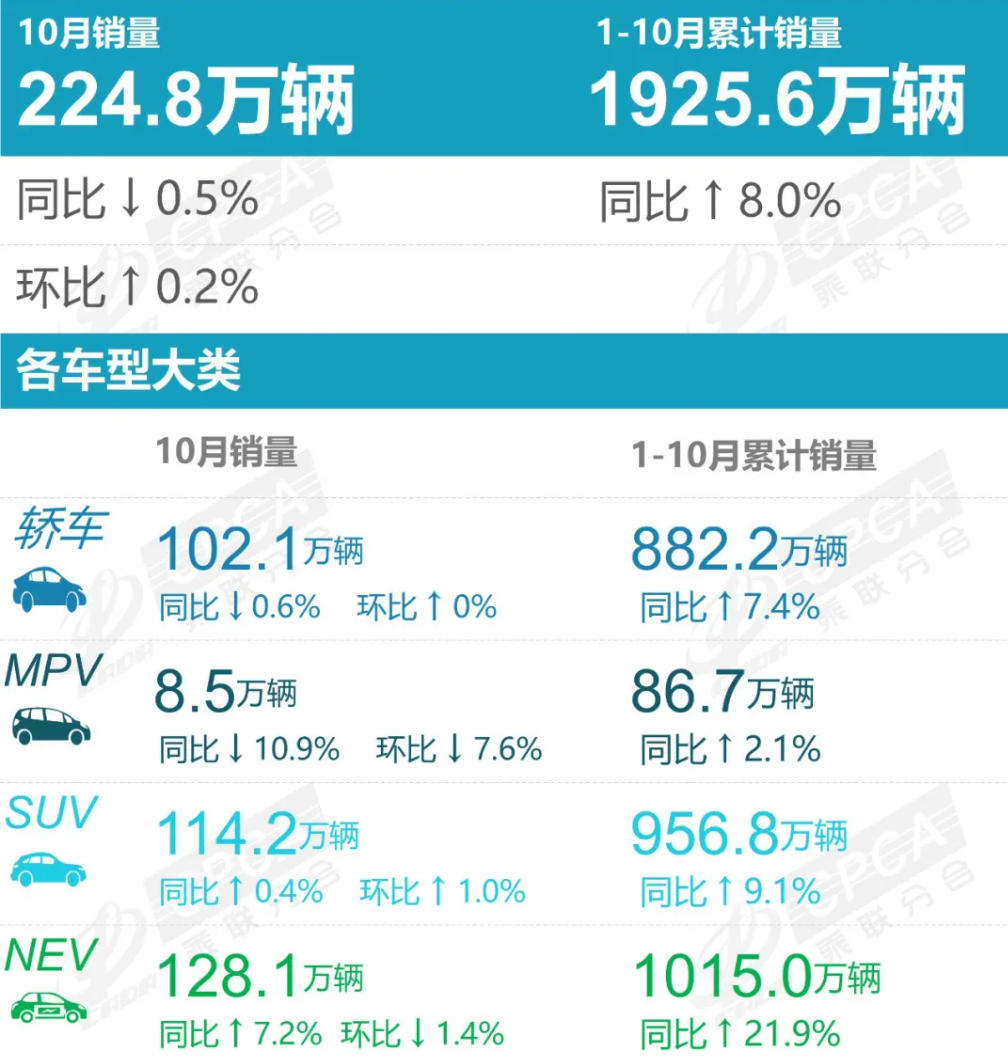
Core Insights - The domestic passenger car market experienced a retail sales volume of 2.248 million units in October 2025, reflecting a year-on-year decline of 0.5% but a month-on-month increase of 0.2% [1] - The market is undergoing a transformation, with strong performances from domestic brands and the new energy sector contrasting sharply with the pressures faced by joint venture brands [1][3] Market Performance - The SUV segment was the only category to achieve positive growth, with sales reaching 1.142 million units, up 0.4% year-on-year and 1.0% month-on-month [3] - New energy vehicle sales in October totaled 1.281 million units, showing a year-on-year increase of 7.2% despite a slight month-on-month decline of 1.4% [3] - The market share of domestic brands reached 68.7%, a year-on-year increase of 3 percentage points, with retail sales of 1.55 million units, up 4% year-on-year and 3% month-on-month [3][4] Brand Performance - Joint venture brands faced significant challenges, with retail sales of mainstream joint venture brands at 510,000 units, a year-on-year decline of 10% [4] - The luxury car market saw retail sales drop to 190,000 units, down 10% year-on-year and 23% month-on-month, with market share falling to 8.4% [4] - BYD led the sales ranking with 295,871 units sold, despite a year-on-year decline of 31.4%, marking the largest drop among the top ten manufacturers [5][4] Sales Rankings - Geely ranked second with 265,565 units sold, achieving a remarkable year-on-year increase of 36.8%, driven by the Geely Galaxy series [5][6] - Volkswagen ranked third with 136,002 units sold, but experienced a year-on-year decline of 3.9% [7] - Changan and Chery followed closely, with sales of 132,229 and 130,128 units respectively, both showing positive growth [7][6] New Energy Vehicle Market - BYD maintained its lead in the new energy vehicle market with a market share of 23.1%, despite a year-on-year decline of 31.4% [15] - Geely's new energy vehicle sales reached 164,256 units, with a year-on-year increase of 54.7%, narrowing the gap with BYD [15][17] - The new energy vehicle penetration rate surpassed 57%, indicating a deepening market acceptance [14][21] Future Outlook - The market is expected to see a release of consumer demand as tax incentives end, coupled with increased promotional efforts from manufacturers [21] - The ongoing trends of electrification and smart technology are anticipated to reshape the Chinese automotive market, with domestic and new energy brands likely to lead the next phase of industry transformation [21]



瞭望 | 筑牢汽车运行安全底线
Xin Hua She· 2025-11-25 03:12
Core Viewpoint - The recent draft of the national standard for "Motor Vehicle Operation Safety Technical Conditions" emphasizes that safety is a non-negotiable baseline for innovation in the automotive industry, particularly for electric and autonomous vehicles [1][2] Group 1: Safety Standards and Regulations - The new standards include critical technical indicators such as acceleration performance, door handles, rotating seats, and in-car displays, highlighting the urgent need for safety in the rapidly evolving automotive landscape [1] - The automotive industry has a long history of prioritizing safety, with innovations like three-point seat belts and ABS systems being foundational to vehicle design [1] Group 2: Industry Challenges and Responsibilities - The rise of electric vehicles and smart driving technologies presents new challenges, including battery safety, electronic control system reliability, and the stability of new body materials, making adherence to safety standards more crucial than ever [1] - The automotive sector must cultivate a safety-first culture, ensuring that safety considerations take precedence over cost in every aspect of design, material selection, testing, and production [2] Group 3: Consumer and Regulatory Roles - Consumers are encouraged to make rational choices and not to blindly pursue flashy features, which can pressure companies to prioritize safety [2] - Regulatory bodies need to enhance the standard system and strengthen market supervision to create a robust framework for automotive safety, ensuring that industry standards are forward-looking and responsive to new technological challenges [2]
2025广州车展 新能源车占比占比高达57.9%
Cai Jing Wang· 2025-11-25 01:29
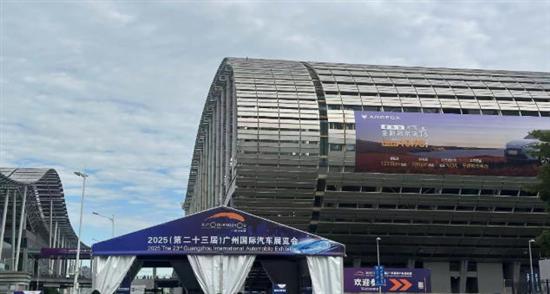
Group 1 - The 23rd Guangzhou International Auto Show, themed "New Technology? New Life," focuses on electrification, intelligence, and connectivity, showcasing a shift from single-function to systematic competition [1] - The exhibition covers an area of 220,000 square meters with a total of 1,085 vehicles on display, of which 629 are new energy vehicles, accounting for 57.9% [1] - The China Association of Automobile Manufacturers predicts that in 2024, China's automobile production and sales will exceed 31 million units, with new energy vehicles surpassing 10 million units for the first time [2] Group 2 - GAC Group and BYD are the two major exhibitors at the show, with GAC showcasing its "Panyu Action" achievements and new technology brands, including "Star Spirit Intelligent Driving" [3] - BYD presents various brands and technologies, including the first public appearance of the Yangwang U9 Xtreme and the CTC battery integration technology [5] - The show features a high concentration of domestic brands, with Huawei showcasing its automotive business and partnerships with various manufacturers [7] Group 3 - Several traditional luxury brands, including Jaguar Land Rover and Rolls-Royce, are absent from this year's exhibition, continuing a trend from the previous year [8] - The market share of traditional luxury brands has declined, with a reported 10.9% drop in cumulative sales for the first three quarters of 2025 [8] - Financial data for traditional luxury brands shows a significant decline, with many reporting over a 30% drop in net profit for the first half of 2025, attributed to fierce competition in the Chinese market [12]

上汽奥迪携全系车型亮相2025广州车展
Cai Jing Wang· 2025-11-24 13:53
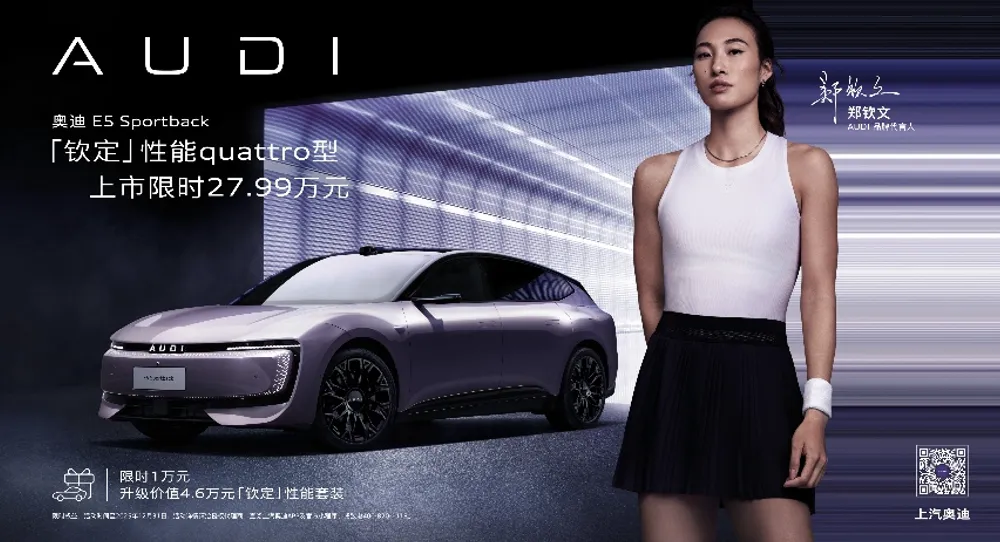
Core Insights - SAIC Audi showcased its full range of products at the 23rd Guangzhou International Auto Show, emphasizing its strategic focus on electrification and intelligence in the automotive sector [1][3] Product Launches - The Audi E5 Sportback Quattro model was officially launched with a limited-time price of 279,900 yuan, featuring significant upgrades in handling and luxury configurations [3][4] - The Audi E SUV concept car made its global debut, marking a step forward in the brand's family product system and targeting the luxury electric SUV market [6] Performance and Technology - The Audi E5 Sportback boasts a power output of 579 kW, a maximum range of 773 kilometers, and a rapid charging capability that allows for 380 kilometers of range in just 10 minutes [4] - The vehicle integrates the new AUDI OS operating system and advanced driver assistance technologies tailored for Chinese driving conditions [4][6] Market Strategy - SAIC Audi is expanding its presence in the luxury electric vehicle market while also enhancing the intelligence of its fuel vehicle offerings, such as the A5L Sportback, which features a maximum output of 200 kW and a unique MHEV plus system [7] - The company aims to establish over 240 full-function user centers across more than 100 cities by the end of the year, significantly enhancing its service network and customer experience [8]
从充电到电网升级,电动化投资热潮下,靠谱回报的关键逻辑是什么?
科尔尼管理咨询· 2025-11-24 11:29
Core Insights - Electrification is a decisive infrastructure challenge and opportunity in the 2020s, with global passenger electric vehicle sales expected to exceed 17 million in 2024 and 20 million by the end of 2025 [1] - The integration of transportation, energy, and digital technologies is reshaping the entire value chain, but profitability remains uncertain, particularly for early movers in electric vehicle infrastructure [1][5] - Investors face a fundamental dilemma in allocating capital to drive transformation while achieving reliable infrastructure-like returns [1][5] Investment Framework - Infrastructure investors typically categorize assets into core and core-enhanced assets, with electric vehicle infrastructure presenting unique challenges due to uncertain demand and evolving technology standards [5][9] - Public charging infrastructure is capital-intensive but faces low average utilization rates, with European public charging stations averaging below 15% [5][9] - The shift from public funding to private capital requires a change in investment logic, emphasizing profitability and cost discipline [9] Emerging Trends - The Electrification-as-a-Service (EaaS) model bundles vehicles, charging, and energy into long-term service agreements, reducing demand risk and aligning incentives among stakeholders [6][15] - The current electric vehicle market is rapidly developing but unevenly, with China leading at nearly 40% penetration, followed by Europe at around 25%, and the U.S. lagging below 10% [9][12] - The integration of oil giants, utility companies, OEMs, and digital solution providers is creating both competitive and collaborative opportunities within the value chain [10] Profitability and Total Cost of Ownership (TCO) - TCO plays a critical role in consumer purchasing decisions, with subsidies significantly influencing sales, as seen in Germany's sharp decline in sales after subsidy cuts [12][13] - For commercial operators, TCO parity has been achieved in some regions for light commercial vehicles, but overall economic viability remains uncertain due to various cost factors [12][13] - Fluctuations in electricity prices and the absence of long-term supply contracts can erode profit margins, complicating the investment landscape [13] Risk Factors - Utilization risk remains a significant concern, with many public charging assets underperforming, necessitating careful contract design to mitigate revenue erosion [17][19] - Technological and reliability risks are heightened due to rapid hardware standard evolution, impacting the long-term viability of assets [17][19] - Structural risks must be managed through diversified revenue streams and resilient project designs to ensure sustainable returns [19][23] Strategic Opportunities - The most attractive investment opportunities lie in areas that can ensure dedicated utilization, such as fleet-based charging and long-term service contracts [28] - A balanced investment strategy should combine current infrastructure-like returns with future growth potential, particularly through EaaS models [15][26] - Collaborations among various stakeholders can enhance resilience and economic viability, as demonstrated by successful projects in the UK bus electrification sector [21][24]
董扬 :“十五五”期间,以强国思维推进汽车创新
Zhong Guo Qi Che Bao Wang· 2025-11-24 07:10
Core Insights - During the "14th Five-Year Plan" period, China's automotive industry has transitioned from "catching up" to "running alongside" in the fields of electrification and intelligent networking, achieving a leading position globally [3][4] - The "15th Five-Year Plan" period will focus on broader innovation areas, including process and materials, foundational and common technology research, intelligent chassis, and internet technology applications [3][5] Group 1: Achievements and Innovations - The automotive industry has made significant advancements in high-strength steel for car bodies, leading to steep declines in costs through self-manufacturing and mass production [4] - Intelligent factories have transitioned from demonstration to widespread adoption, positioning China to lead globally in both quantity and quality of manufacturing in five years [4] - The industry has built a strong foundation for high-quality development through its large market scale, complete industrial chain, cost and efficiency advantages, and concentrated efforts [4] Group 2: Future Innovation Directions - The "15th Five-Year Plan" will continue to explore innovation in process and materials, foundational technology, and common technology research, with a focus on user experience and data integration [5][6] - Intelligent chassis innovations are expected to progress significantly, with new structures and products emerging, enhancing the market presence of technologies like active suspension and wheel-side motors [6] - Internet technology will deeply penetrate the entire automotive lifecycle, transforming design, usage, maintenance, and after-sales services, leading to new business models [6][7] Group 3: Battery and Chip Innovations - The development of high-performance chips for autonomous driving requires national and industry collaboration, leveraging China's advanced manufacturing capabilities [7] - Innovations in power batteries are ongoing, with a focus on safety, recycling, and lifecycle maintenance, addressing challenges such as unexpected power loss and safety in extreme conditions [8][9] - The integration of AI in battery design and manufacturing processes is anticipated to become a trend, emphasizing precise control over battery performance and safety [9][10] Group 4: Key Innovation Focus Areas - Future innovation directions will focus on addressing market application pain points, such as electric vehicle power loss and safety issues [10] - Leveraging China's large-scale market advantages will facilitate the widespread adoption of high-end technologies, reducing costs significantly [10] - The automotive industry will benefit from the integration of new technologies, particularly in artificial intelligence and internet applications, leading to innovative practices and solutions [10]

中产特供「大车」挤满广州车展,接下来还能卷什么?
Xin Lang Cai Jing· 2025-11-23 13:25
Core Insights - The Guangzhou Auto Show showcases the latest products and technologies from various automakers, marking the end of the year and setting trends for the next year [1] - The event featured 1,085 vehicles, with 93 new car launches, and 58% of the vehicles being new energy cars, indicating a significant shift towards electrification [1] - Traditional luxury brands are adapting to market trends by introducing electric models, while the demand for larger vehicles, particularly SUVs, is on the rise [2][4] Industry Trends - The market for new energy passenger vehicles in China saw a 24% year-on-year increase in sales for the first ten months of 2025, with a market penetration rate exceeding 52.9% [1] - The SUV market share reached 50.7% in October 2025, surpassing that of sedans, with a 9.1% year-on-year increase in retail sales for SUVs [4] - The demand for larger vehicles is driven by changing family structures and consumer preferences for space and comfort, particularly among families with multiple children [6][7] Company Strategies - Automakers are increasingly focusing on producing larger vehicles, as evidenced by the significant presence of large SUVs and MPVs at the auto show [4][5] - Companies like BYD and GAC Group are showcasing their ambitions with dedicated exhibition spaces, highlighting their commitment to innovation and market presence [1] - The profitability of larger vehicles is appealing to manufacturers, as they can accommodate more optional features, leading to higher profit margins [8][9] Consumer Behavior - The shift towards larger vehicles is influenced by a change in consumer mindset, where buyers prioritize space and comfort over basic transportation needs [6][7] - The age demographic of consumers purchasing larger vehicles is primarily between 35 and 45 years old, reflecting a trend towards family-oriented purchases [6] - The market is experiencing a "K-shaped" differentiation, where high-net-worth individuals are seeking premium vehicles, while average consumers focus on practicality [7] Future Outlook - The auto industry is facing challenges as the tax exemption for new energy vehicles is set to expire, potentially dampening demand for larger vehicles [11] - Companies must differentiate themselves in an increasingly homogeneous market, with a focus on unique features and technology to attract consumers [10] - The success of larger vehicles is contingent on brand strength, as weaker brands may struggle to gain consumer trust in producing high-quality larger models [11]
2025广州车展丨广汽、比亚迪包馆 新能源车型占比占比高达57.9%
Cai Jing Wang· 2025-11-23 13:12
Core Insights - The 23rd Guangzhou International Auto Show, themed "New Technology, New Life," focuses on electrification, intelligence, and connectivity, showcasing a shift from single-function technology to systematic competition [1] - The exhibition covers an area of 220,000 square meters with 1,085 vehicles on display, of which 629 are new energy vehicles, accounting for 57.9% of the total [1][3] - China's automotive production and sales are projected to exceed 31 million units in 2024, with new energy vehicles surpassing 10 million units for the first time [3] Group 1: Major Exhibitors and Innovations - GAC Group and BYD are the two main exhibitors, showcasing their advancements in electric and intelligent vehicles [4][6] - GAC Group introduced its new technology brand "Starry Intelligence" and various intelligent driving systems, highlighting its commitment to electrification and smart technology [4] - BYD presented multiple brands and models, including the first public appearance of the Yangwang U9 Xtreme and the debut of the Tengshi Z sports car, along with its "Megawatt Flash Charge" technology [6][8] Group 2: Market Trends and Challenges - The presence of traditional luxury brands has decreased, with notable absences from brands like Jaguar Land Rover and Rolls Royce, reflecting a broader trend of declining market share for luxury vehicles [9][10] - The market share of traditional luxury brands has dropped to 10.5%, with the German luxury trio's share falling below 40% [9][10] - Financial performance for many luxury brands has declined significantly, with net profits dropping over 30% year-on-year in the first half of 2025, attributed to fierce competition in the Chinese market [10]
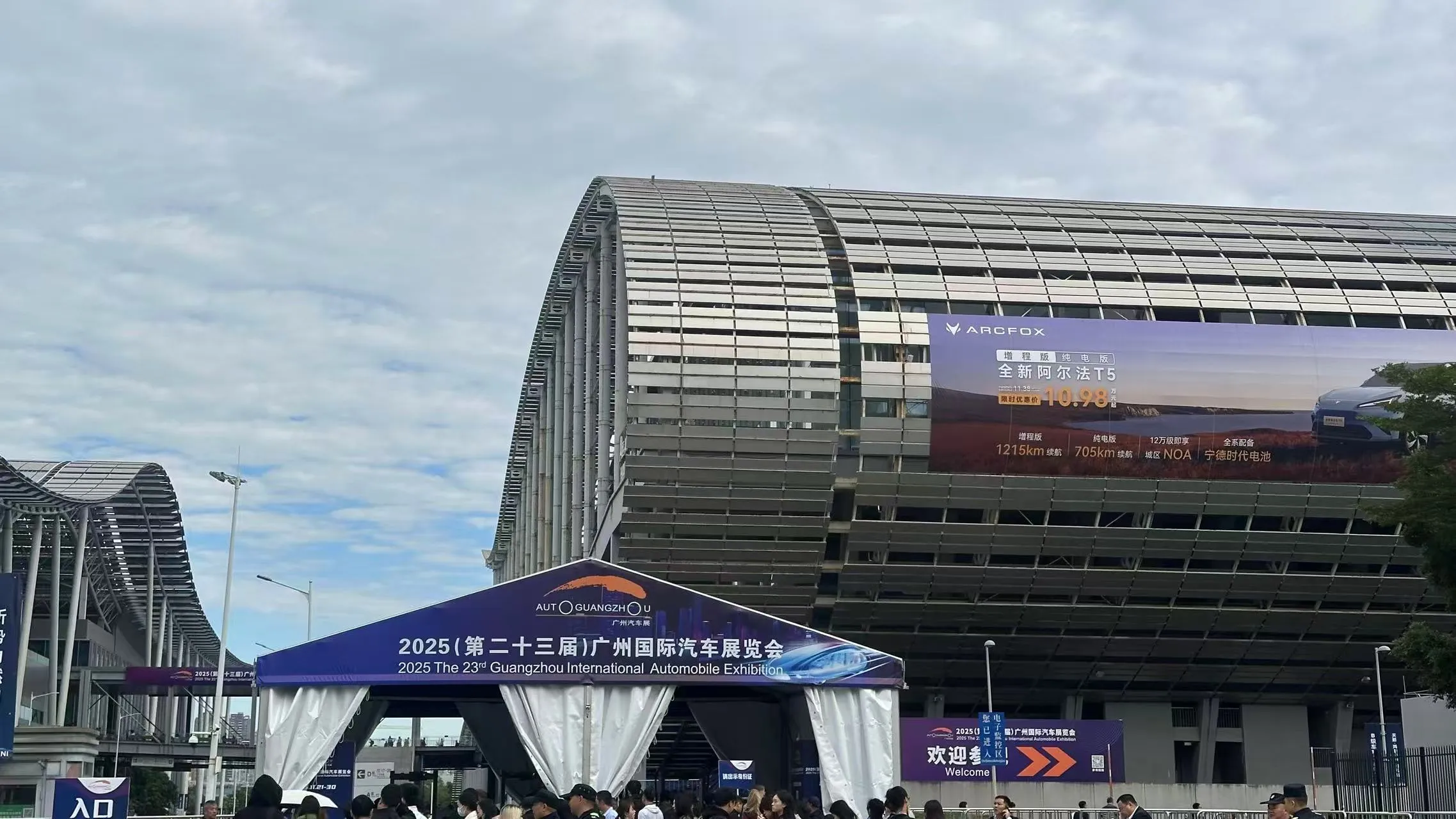
合资品牌寻求突破:本土化加速补位 智能电动赛道再争高下
Xin Lang Cai Jing· 2025-11-23 06:53
Group 1 - The core challenge for joint venture brands in China is to achieve breakthroughs in the face of strong competition from domestic brands, particularly in the areas of electrification and intelligence [1] - Volkswagen is leading the charge among joint venture brands in the transition to electric and intelligent vehicles, with plans to launch 21 new energy models in China by 2027, expanding to 31 by 2029 [1][2] - The new energy product series from Volkswagen, ID. ERA, will include multiple pure electric, hybrid, and range-extended products, with the first model being a high-end SUV [2] Group 2 - Buick's new flagship MPV, the Zhijing Shijia, features a pure electric range of 224 km and a comprehensive range of 1320 km, supporting fast charging technology [3] - Ford has introduced the "All-Terrain Camping SUV" with both range-extended and pure electric versions, equipped with advanced perception hardware and optimized for off-road conditions [3] - The retail penetration rate of new energy vehicles among mainstream joint venture brands was only 7% in October, while the overall penetration rate for new energy vehicles in the domestic passenger car market reached 57.2% [3] Group 3 - The shift in consumer preferences in China indicates that consumers are no longer solely attracted to foreign brands but are more focused on intelligent experiences, electric performance, and localized services [4] - The adjustments in product strategies by joint venture brands reflect a deep understanding of the changing consumer demands in the Chinese automotive market [4]
北交所策略专题报告:广州车展开幕聚焦智能电动化产业链机遇,润农节水拟定增8451万元
KAIYUAN SECURITIES· 2025-11-23 05:41
Group 1 - The Guangzhou International Auto Show is taking place from November 21 to 30, 2025, featuring 93 new car launches and a total of 1,085 vehicles on display, including 629 new energy vehicles [2][13][16] - The number of companies in the automotive industry chain on the North Exchange has reached 30, with a total market capitalization of 776.82 billion yuan as of November 21, 2025 [17][19] - Notable companies in the automotive sector include Dapeng Industrial, which achieved a revenue increase of 28.43% and a net profit increase of 60.77% in Q1-Q3 2025, and Lintai New Materials, which saw a revenue growth of 68.92% and a net profit growth of 131.19% in the same period [12][26][28] Group 2 - The average weekly decline for five major industries, including high-end equipment, information technology, chemical new materials, consumer services, and pharmaceutical biology, was recorded at -9.59%, -7.48%, -10.19%, -9.74%, and -11.73% respectively [3][32][44] - The median price-to-earnings (P/E) ratios for these industries have decreased, with high-end equipment at 36.3X, information technology at 66.7X, chemical new materials at 40.6X, consumer services at 51.9X, and pharmaceutical biology at 29.0X [3][32][44] Group 3 - In the technology sector, the median P/E ratio for 155 companies has dropped from 45.5X to 41.1X, with an overall market capitalization decline from 4,923.95 billion yuan to 4,487.67 billion yuan [4][49][50] - The automotive industry P/E ratio has decreased to 32.2X, while the electronic industry P/E ratio is now at 48.8X, and the information technology industry P/E ratio stands at 78.0X [4][65][69] Group 4 - Runong Water Saving plans to raise no more than 84.51 million yuan through a private placement to its controlling shareholder, Hubei Xiangtou Group, at an issue price of 6.26 yuan per share [5][71] - Hai Xi Communications has signed a procurement contract worth 401.88 million yuan for a 400MW/800MWh energy storage project [5][71]