
情感经济

Search documents
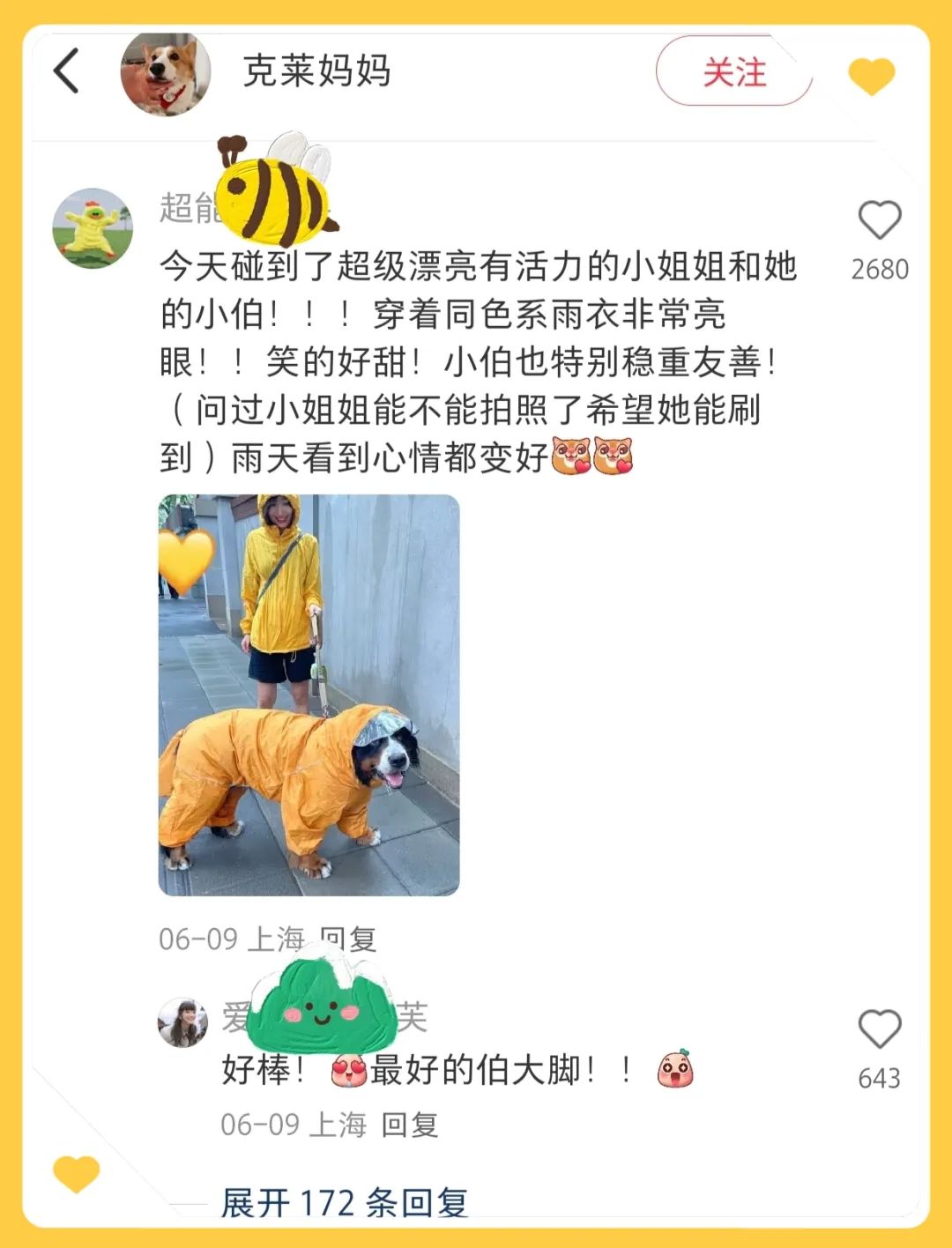
小狗雨衣,江浙沪梅雨季的硬通货
3 6 Ke· 2025-06-27 06:11
Group 1 - The article highlights the growing trend of pet apparel, particularly dog raincoats, during the rainy season in Shanghai, driven by consumer demand and emotional attachment to pets [1][3][6] - Sales data indicates that dog raincoats priced under 10 yuan have seen sales between 10,000 to 30,000 units, while those in the 30 to 50 yuan range have surged from 30,000 to 70,000 units, reflecting a strong market for quality pet products [3][4] - The pet economy in China is experiencing rapid growth, with a compound annual growth rate of 25.4%, increasing from 97.8 billion yuan in 2015 to an estimated 592.8 billion yuan in 2023, and projected to exceed 2 trillion yuan by 2030 [6][8] Group 2 - The article discusses the long-tail effect of seasonal pet products, noting that after the rainy season, demand for sun-protective pet clothing is expected to rise, with prices for some items reaching over 500 yuan [8] - Emotional spending on pets is a key driver of the pet economy, as more people view their pets as family members, leading to increased spending on various pet-related products and services [6][8] - The article mentions the rise of innovative pet products, such as automatic cat toys and pet language translators, which have seen significant sales growth, indicating a broader trend in the pet industry towards high-tech and premium offerings [6][8]

宠物经济爆火:“毛孩子”催热千亿赛道,多只概念股创新高,年轻人养猫一年花费5000元
Sou Hu Cai Jing· 2025-06-16 08:09
Group 1 - The core viewpoint of the article highlights the booming pet economy in China, driven by emotional connections between pet owners and their pets, with a market size expected to exceed 300 billion yuan in 2024 [13][12]. - The pet economy is characterized as a "emotional economy," where young individuals and the elderly are becoming the main consumers, reflecting a shift in spending priorities towards pets rather than traditional family structures [13][4]. - The report indicates that the pet food segment dominates the market, projected to reach 158.5 billion yuan in 2024, with domestic brands gaining traction [14][12]. Group 2 - The pet medical sector is facing high costs, with the market expected to reach 84.1 billion yuan in 2024, accounting for 28% of the total pet consumption market [17][12]. - Many pet owners are experiencing financial burdens due to expensive medical treatments, with some reporting costs as high as 20,000 yuan for serious conditions [17][12]. - The industry is witnessing a rapid increase in the number of pet hospitals, projected to exceed 30,000 by the end of 2024, but still faces challenges such as a shortage of qualified veterinarians and inconsistent treatment standards [25][12]. Group 3 - The emotional value associated with pets is leading to increased spending on pet care, with many owners willing to invest in their pets' health and well-being [26][12]. - The pet funeral service market is also expanding, with a projected growth rate of over 30%, indicating a shift towards more emotional and personalized services for pets [25][12]. - Analysts suggest that the pet economy is still in a phase of rapid growth but lacks innovation, indicating potential for new service offerings and market expansion [26][12].
白酒崩塌,新消费崛起:萧楠、张坤“跌倒”,农冰立、吴远怡“吃饱”
市值风云· 2025-06-13 10:04
Core Viewpoint - The resurgence of Pop Mart, a brand that started with "blind boxes," indicates a revolutionary shift in traditional consumer patterns, as evidenced by its significant revenue growth in both domestic and international markets [4][25]. Group 1: Company Performance - Pop Mart achieved impressive growth in Q1 2025, with revenue from China and overseas increasing by 95-100% and 475-480% year-on-year, respectively [2]. - The stock price of Pop Mart has rebounded over 10 times from its low point, with a more than 400% increase since the beginning of 2024 [17]. - The company has successfully transitioned from a period of significant decline to a strong recovery, driven by its IP vitality and expansion into overseas markets [16]. Group 2: Fund Manager Performance - Fund managers like Li Yaozhu, Nong Bingli, and Zhou Wenbo have excelled by capturing the new consumption wave, achieving net value growth in their funds despite overall pressure in the consumer sector [6][10]. - In contrast, prominent fund managers such as Xiao Nan, Zhang Kun, and Sun Wei, who previously focused on traditional consumer leaders like liquor and condiments, have seen their performance decline, indicating a shift in market dynamics [9][11]. Group 3: Market Trends - The consumer landscape is no longer dominated by traditional giants, as new entities are emerging rapidly, reflecting a change in consumer preferences towards more personalized and diversified products [10][25]. - The rise of new consumption brands like Pop Mart, Lao Pu Huang, and Mi Xue Group highlights a significant capital market trend, with their stock prices increasing by 160.1%, 275.9%, and 185.9% respectively in 2025 [25]. Group 4: Investment Insights - The success of funds heavily invested in Pop Mart, such as Invesco's Consumer Select 30, which reported a 34% return in the past year, underscores the potential of new consumption brands [44][50]. - The shift in consumer demographics, particularly the rise of the post-95 and post-00 generations, is driving a transformation in consumption habits, emphasizing emotional connection and unique experiences over traditional brand loyalty [27][33].


白酒崩塌,新消费崛起:萧楠、张坤“跌倒”,农冰立、吴远怡“吃饱”
市值风云· 2025-06-13 10:01
Core Viewpoint - The resurgence of Pop Mart, a brand that started with "blind boxes," indicates a revolutionary transformation in the traditional consumer landscape, as it achieved impressive growth in early 2025 with revenue increases of 95-100% in China and 475-480% overseas [2][4]. Group 1: Performance of Fund Managers - Fund managers like Li Yaozhu, Nong Bingli, and Zhou Wenbo have excelled by capturing the new consumption wave, with their funds showing significant net value increases despite overall pressure in the consumer sector [6]. - In contrast, star managers such as Xiao Nan, Zhang Kun, and Sun Wei, who previously thrived on traditional consumer staples like liquor and condiments, have seen their performance decline, indicating a shift in the consumer landscape [9][10]. Group 2: Market Dynamics - The consumer sector is no longer a unified front, as traditional giants face growth bottlenecks while new entities like Pop Mart emerge rapidly [10][11]. - The valuation of traditional consumer stocks, including white goods and beverages, has dropped significantly, with many leading companies at five-year lows in terms of price-to-earnings ratios [12][14]. Group 3: Investment Trends - The new consumption sector, led by companies like Pop Mart, Old Peking Gold, and Mixue Group, has dominated the Hong Kong market in 2025, with stock price increases of 160.1%, 275.9%, and 185.9% respectively [25]. - The changing consumer demographics, particularly the rise of the post-95 and post-00 generations, have shifted preferences towards personalized and diversified products, moving away from traditional brand loyalty [27][33]. Group 4: Fund Performance and Strategy - Funds that have invested in Pop Mart, such as Invesco's Consumer Select 30, have seen substantial returns, with the fund's performance ranking high among peers [23][44]. - Fund managers who have successfully pivoted towards new consumption brands, like Nong Bingli and Wu Yuanyi, have reaped significant rewards, highlighting the importance of understanding emotional and experiential value in consumer products [50].

8000亿“它”经济,运动品牌争“宠”
3 6 Ke· 2025-06-13 02:15
Core Insights - The Chinese pet economy is projected to exceed 811.4 billion yuan by 2025, with significant growth observed in the pet apparel sector, driven by changing consumer attitudes and increased spending on pet products [1][9][16] Industry Trends - Major sports brands like Adidas and Jordan are entering the pet products market, indicating a shift in focus towards the pet economy as a new battleground for the sports industry [1][6][9] - The rise of pet apparel has attracted 50.4% of consumers, highlighting the dual influence of functionality and social attributes in driving purchases [9] Consumer Behavior - The younger generation, particularly those born in the 1990s and 2000s, now constitutes nearly 70% of pet owners, viewing pets as family members rather than mere animals, which has transformed consumption patterns towards more personalized and emotional spending [9][16] - 83% of pet owners believe that having pets increases their physical activity, and 85% feel happier, reflecting the emotional connection and lifestyle integration of pets in their lives [6][9] Market Dynamics - The pet industry is characterized by a lack of dominant players, presenting a lucrative opportunity for brands to innovate and capture market share, especially in the functional pet apparel segment [11][14] - Traditional sports brands are facing challenges in growth, with some reporting declines, prompting them to explore the pet market as a potential area for recovery and innovation [11][16] Product Development - Brands are focusing on creating high-quality, personalized products that meet diverse consumer needs, with an emphasis on smart and eco-friendly solutions [8][9] - The introduction of specialized pet products, such as outdoor gear and apparel, is gaining traction, driven by the popularity of outdoor activities among pet owners [9][14]



当AI负责思考,营销人靠什么生存?
Hu Xiu· 2025-06-04 23:53
Group 1: Core Concepts of Emotional Economy - The rapid development of artificial intelligence (AI) is leading to a transformative shift towards an "emotional economy," where human emotions and empathy are elevated in importance [1] - Marketing professionals are increasingly required to develop "soft" skills, such as intuition and sensitivity, as AI takes over analytical tasks [1][3] - The concept of "professional capital" is introduced, emphasizing the unique role of marketers in leveraging their emotional intelligence and intuition in the marketing field [1][3] Group 2: Importance of Intuition and Sensitivity - Marketing decisions are akin to a tennis player's instinctive reactions, where intuition and "feel" play a crucial role in decision-making [2][3] - AI can provide data-driven insights, but the unique context of each marketing situation necessitates human intuition for effective decision-making [2][3] - The significance of marketers' intuition and sensitivity is heightened in the context of AI-driven marketing practices [3] Group 3: Marketing Revolution in the Age of AI - The emergence of generative AI technologies poses a potential threat to traditional marketing roles, as these technologies can automate content creation and marketing strategies [4][5] - Generative AI has proven effective in generating marketing content and creative ideas, leveraging historical data to enhance marketing efforts [4][5] - The focus of marketing has shifted towards emotional engagement, with AI capable of analyzing consumer behavior to create emotionally resonant content [5][6] Group 4: Role of Marketers in AI-Driven Marketing - Despite AI's capabilities, marketers remain essential for selecting, modifying, and executing AI-generated content, as they understand consumer emotions and market dynamics [15][18] - Marketers' experience and theoretical knowledge are critical in transforming AI-generated ideas into actionable marketing strategies [19][20] - The dynamic nature of marketing requires human intervention to adapt strategies based on real-time market changes, which AI alone cannot achieve [19][24] Group 5: Practical Theories and Experience - Practical theories, such as service-dominant logic, guide marketers in understanding consumer needs and avoiding short-sighted marketing strategies [20][22] - Marketers' accumulated experience enhances their intuition and decision-making capabilities, allowing them to navigate complex market environments effectively [23][24] - The interplay of experience and intuition is vital for marketers to maintain their relevance and effectiveness in an AI-driven landscape [23][26] Group 6: Future of Marketing in the Emotional Economy - The predictions made in "The Emotional Economy" regarding the impact of AI on work processes are applicable to the marketing sector, indicating that marketers cannot be fully replaced [25] - Companies are encouraged to cultivate their unique skills and knowledge to enhance their professional capital in the emotional economy [26]
〔读城〕开创“AI 婚恋”新天地:漫花婚恋,AI亦能传爱!
Sou Hu Cai Jing· 2025-06-02 07:41
Group 1: Core Industry Insights - The central leadership emphasized the strategic deployment of the flower industry, focusing on optimizing the entire industry chain from seed industry to market to transform it into a "happy industry" that benefits the people [1] - The "Manhua Garden" is creating unique consumption scenarios centered around flowers, particularly launching the "first assured marriage platform - Manhua Assured Marriage," aiming for high-quality integration of cultural tourism and marriage industries [3][4] Group 2: Manhua Marriage Concept and Goals - The core goal of Manhua Marriage is to revolutionize traditional marriage by initiating a new era of technology-enabled marriage civilization, focusing on emotional, psychological, and cognitive interactions [4] - The essence of Manhua Marriage is the perfect combination of intelligent algorithms and human warmth, providing personalized services for marriage [4][6] Group 3: Technology and Service System - The "AI Nine-Type Body" is an innovative technology in the Manhua Marriage model, combining traditional Chinese medicine and modern biomedicine to provide comprehensive matching for users [6] - Manhua Marriage emphasizes a comprehensive service system that operates year-round and covers all age groups, offering seamless guidance from marriage consultation to wedding planning [9] Group 4: Brand Advantages and Traffic Support - Manhua Garden, recognized as a top flower viewing destination, attracts thousands of visitors, especially during peak seasons, enhancing brand exposure through cultural festivals and brand activities [11] - The brand's online presence is significant, with over 500 million views on social media platforms like Douyin and Xiaohongshu, greatly increasing brand visibility [11] Group 5: Promotion and Marketing Strategies - Manhua Marriage employs an integrated online and offline promotion model, utilizing social media for brand promotion and creating rich offline experiences [14][15] - The "Five Ones" model includes various interactive elements that deepen brand influence and customer engagement [15] Group 6: Incremental Sharing and Cooperation Model - The "Hundred-Thousand Project" aims to collaborate with marriage institutions and personal studios, leveraging platform capabilities for industry growth [17] - This cooperation model allows partners to achieve business growth without additional investment, fostering a strong ecosystem for comprehensive and precise marriage services [17]

万创行研——AI玩具,下一代“亲密形态”的智能终端
3 6 Ke· 2025-05-28 02:31
Group 1 - The core concept of AI toys is evolving from traditional children's toys to intelligent interactive systems that cater to all age groups, providing companionship and emotional support [2][5] - AI toys are defined as products that integrate artificial intelligence to create interactive, personalized experiences, moving beyond simple entertainment [3][4] - The technology stack supporting AI toys includes voice recognition, natural language processing, computer vision, emotional computing, and continuous learning capabilities [20][21][24] Group 2 - AI toys are expanding their application scenarios from children's education to emotional companionship for adults and elderly care, reflecting a trend towards diverse user needs [7][11][14] - For children, AI toys focus on language development, behavior intervention, and emotional support, with a shift towards interactive and dynamic learning experiences [9][10] - For adults, AI toys serve as digital companions to alleviate loneliness and stress, with features that promote emotional interaction and relaxation [12][13] Group 3 - The competitive landscape for AI toys is characterized by a mix of tech giants and innovative startups, with a focus on cross-industry integration and ecosystem development [32][33] - In the global market, major tech companies are exploring AI toy capabilities through ecosystem partnerships, while startups emphasize emotional interaction and educational value [34][35] - The Chinese market is rapidly developing AI toys, driven by strong hardware manufacturing capabilities and a large consumer base, with a focus on content-driven innovation [37][38] Group 4 - Recent investment trends indicate a growing interest in AI toys as a potential application of AI technology, with over 40 financing events and a total of over $1 billion in funding in 2024 [47][48] - Investors are increasingly looking for projects that combine AI capabilities, user retention, and emotional value, reflecting a shift in evaluation criteria compared to traditional consumer electronics [52][68] - The future of AI toys is seen as a key entry point for AI technology into everyday life, with potential for significant market growth as technology and user understanding evolve [64][72]

首次上新、加大力度 游戏大厂“520”开启争流战
Bei Jing Shang Bao· 2025-05-20 07:50
Core Insights - The "520" marketing activities by major gaming companies have increased by nearly 10% compared to last year, with over ten companies participating this year [2] - "520" has evolved into an important romantic holiday and consumption node in China, leading to higher user engagement and discussions on social media [2][5] - The gaming industry is leveraging the "520" event to enhance brand loyalty and user stickiness through innovative marketing strategies [2][4] Group 1: Marketing Activities - Major gaming companies have launched diverse marketing activities for "520," including official lotteries, login rewards, limited-time skins, and gameplay [2] - Notable activities include "Wangzhe Rongyao" offering limited-time skin access and a collaboration with artist Alphonse Mucha for a special skin [2][3] - "Peace Elite" introduced a new character during "520," while "Lian Yu Zhi Zhi Ren" provided diamond gifts and special messages from characters [2] Group 2: Innovation and Engagement - This year's "520" activities have added new gameplay elements, such as "Wangzhe Rongyao" offering previously limited skins and "Jin Chan Chan Zhi Zhan" bringing back a special arena [3] - The intensity of marketing efforts has increased, with "Peace Elite" launching a new character and "Ni Shui Han" introducing themed costumes and a collectible pet [3][4] - Many "520" limited products require purchase, indicating a shift towards monetization strategies in marketing campaigns [3] Group 3: Revenue Impact - Sales from limited-time items, gift packs, and promotional recharge activities during "520" can significantly boost revenue and profits for popular games [4] - Historical data shows that gaming companies experience revenue spikes during key holidays like "520," Valentine's Day, and the Spring Festival [4] - The Chinese client game market saw a 3.62% quarter-on-quarter growth in early 2025, attributed to concentrated promotional activities during holidays [4]

Z世代重塑鲜花消费逻辑——河南繁花经济系列观察⑤
He Nan Ri Bao· 2025-05-06 23:19
Group 1: Market Trends - Generation Z is significantly influencing the floral market with their unique shopping perspectives and consumption behaviors, leading to the adoption of blind boxes and online shopping as key growth drivers in the industry [1] - The popularity of floral blind boxes, priced affordably (e.g., 13.9 yuan for 60 flowers), highlights the emotional consumption model that resonates with Generation Z, who seek the excitement of unboxing experiences [2] - The floral industry in Henan Province has adapted to these trends, with a reported planting area of 2.64 million acres and an annual output value exceeding 18 billion yuan, showcasing the economic vitality driven by younger consumers [4] Group 2: Consumer Behavior - Social media platforms like Xiaohongshu, Weibo, and Douyin play a crucial role in shaping consumption habits, as young consumers frequently share their floral blind box unboxing experiences, enhancing brand influence through user-generated content [2] - The rise of live-streaming e-commerce has created new sales channels for the floral industry, allowing consumers to engage with products in real-time and fostering a sense of community among viewers [3] - Cultural elements are increasingly integrated into floral products and marketing strategies, appealing to Generation Z's appreciation for traditional culture, as seen with the introduction of cultural-themed products related to flowers like the peony [4]