
流动性风险

Search documents
国投白银LOF暂停申购
Zheng Quan Ri Bao· 2026-01-27 16:16
本报记者 彭衍菘 "基金公司接连收紧申赎与提示风险,核心是防范溢价套利与流动性风险。"深圳市前海排排网基金销售有限责任公司研究 员梁宇飞对《证券日报》记者表示,LOF基金的场内价格与净值长期偏离,可能引发套利资金涌入,一旦市场情绪转向,高溢 价买入的投资者将面临净值回归与价格下跌的双重损失。 国投白银LOF的高波动与白银市场的迅猛走势相关。国投白银LOF基金经理赵建在2025年四季报中表示,2025年第四季 度,受多因素综合影响,银价走势显著领先于黄金价格。以伦敦银现为例,自2025年10月初突破历史高点,经历10月份后半段 短暂休整后,快速突破60美元/盎司、70美元/盎司、80美元/盎司等主要整数关口,季度涨幅达到53.4%,内盘表现略强于外 盘。同期,伦敦金现上涨约11.9%。 从业绩表现来看,Wind资讯数据显示,截至1月26日,国投白银LOF年内净值增长率已达46.13%,近一年涨幅达230.08%。 谈及白银暴涨的原因,招商期货金融组主管、黄金高级分析师徐世伟在接受《证券日报》记者采访时表示,一是结构性挤 仓现象突出,海外部分国家将白银列为"关键矿产",导致现货可流通库存枯竭,租赁利率飙升;二是需 ...
信托产品主要风险类型有哪些?
Sou Hu Cai Jing· 2026-01-25 07:33
Group 1: Core Risks in Trust Products - Credit risk is a core risk faced by trust products, arising when counterparties fail to fulfill contractual obligations, potentially leading to losses in trust assets. For instance, in financing trusts, if borrowers cannot repay on time or guarantors fail to meet their responsibilities, the safety of trust assets is directly impacted. The revised trust industry regulations for 2025 require trustees to conduct thorough due diligence and assess the credit status of counterparties to mitigate credit risk [1] - Market risk is an unavoidable systemic risk type for trust products, stemming from fluctuations in market price factors such as interest rates, exchange rates, stock prices, and commodity prices. Different types of trust products face varying levels of market risk: equity trust products are directly linked to stock market performance, while fixed-income trust products are sensitive to interest rate changes, and currency trust products are exposed to exchange rate volatility [1] Group 2: Liquidity and Operational Risks - Liquidity risk is a typical characteristic of trust products, as most have fixed durations during which investors cannot freely redeem or withdraw funds. Even if some products allow transfers, they may require specific conditions or face transfer discounts. If investors encounter urgent cash needs during the product's duration, they may struggle to liquidate their trust shares, leading to liquidity challenges. The 2025 revised trust regulations mandate that trustees clearly disclose liquidity limitation clauses in product documents to ensure investors are aware of related risks [2] - Operational risk arises from internal management failures during the operation of trust products, including flaws in internal processes, system failures, and human errors. For example, if a trustee has non-standard processes in investment decision-making, it may lead to investment mistakes. The 2025 internal control guidelines for trust companies require the establishment of a robust internal control system to standardize operational processes and prevent operational risks [2] Group 3: Legal, Policy, and Concentration Risks - Legal and policy risk refers to the impact on trust product operations due to changes in laws, regulations, or supervisory policies. The financial regulatory environment is dynamically adjusting, with the latest 2025 revisions to the Trust Law and related regulations introducing new requirements for the scope of trust business, information disclosure, and risk reserve calculations. If existing operational models of trust products do not align with new regulations, trustees may need to adjust products, potentially affecting returns or operational methods [3] - Concentration risk is often overlooked in trust products. If trust assets are overly concentrated in a specific industry, region, or counterparty, significant losses may occur if that industry enters a downturn, the regional economy cools, or the credit status of the counterparty deteriorates. The 2025 revised trust industry regulations require trustees to enhance the diversification management of trust assets and reasonably control the investment proportion in single projects or industries to reduce concentration risk [3]
固收-低利率环境下的稳健收益
2026-01-23 15:35
Summary of Conference Call Notes Industry Overview - The current economic recovery momentum is moderate, with monetary policy expected to remain accommodative, providing support for the bond market. However, the peak of government bond issuance in the first quarter may bring pressure, although the market has partially digested this expectation [1][2] - The equity market may experience short-term adjustments, but upcoming policy meetings are expected to boost market sentiment and redirect funds, limiting the downside for the bond market, which is anticipated to fluctuate between 1.8% and 1.9% [1][2] - In the medium term, fiscal efforts are expected to drive economic recovery, with improvements in industrial added value and fixed asset investment, which may exert pressure on the bond market due to rising core CPI. However, deleveraging and high financing costs will limit the extent of adjustments [1][2] - Long-term, China's economic transformation and aging population are expected to suppress inflation, providing support for the bond market, making it important to seize trading opportunities [1][2] Key Points on Bond Market - In a low-interest-rate environment, market volatility may increase, with credit bonds and high-quality interest rate bonds becoming hotspots. Progress in resolving debt risks has significantly reduced credit risks, suggesting a focus on short-duration bonds with some allocation to medium-duration bonds [1][4] - The credit bond market is expected to remain strong in 2026, but caution is advised due to structural differentiation. Significant progress in resolving debt risks has led to a substantial decrease in credit risks, particularly reflected in credit spreads [4][5] - The current market requires a flexible and diverse asset allocation strategy, adapting to specific market conditions to achieve sustained profitability [5] Real Estate Sector Insights - The valuation of credit bonds in the real estate sector is highly volatile. For example, Vanke experienced sell-offs post-extension, leading to valuation fluctuations. A nuanced approach is recommended, avoiding blanket strategies and focusing on the quality of bonds and their cash flow stability [9][10] - The real estate sector is still in an adjustment phase, with some private enterprises facing cash flow challenges. However, if supportive policies are implemented, the financing environment for quality real estate companies, especially state-owned enterprises, will improve [10] Infrastructure Investment - Since 2025, policy efforts have significantly boosted stable growth in infrastructure investment, providing stable orders for related companies and addressing accounts receivable issues through special bonds [11] Credit Risk Management - Credit risk and liquidity risk are closely related. Poor liquidity management by issuers can lead to credit issues. For instance, even well-rated companies can face liquidity crises if banks stop lending [6][12] - The credit risk of small and medium-sized financial institutions varies significantly, necessitating careful assessment of their asset quality and capital adequacy [12] Market Trends and Future Outlook - The 30-year government bond market is currently steepening due to a combination of short-term liquidity easing and long-term economic recovery expectations. Future trends may see upward pressure on long-term rates due to fiscal efforts and inflation expectations [13][14] - Both the stock and bond markets are expected to experience relative volatility in 2026, with neither offering absolute value. A diversified asset allocation approach is recommended to navigate this environment [15][18] - Investors should remain vigilant regarding macroeconomic data and policy changes, adjusting their investment strategies accordingly to balance risks and opportunities [24][29] Conclusion - The bond market is expected to remain resilient despite challenges, with a focus on quality assets and flexible strategies being crucial for navigating the evolving economic landscape. Investors should prioritize risk management and adaptability in their asset allocation to achieve stable returns in a fluctuating market environment [1][5][29]
日度策略参考-20260122
Guo Mao Qi Huo· 2026-01-22 03:17
1. Report Industry Investment Ratings No relevant content provided. 2. Core Views of the Report - With policies cooling the market's speculative sentiment, raising the proportion of margin trading funds, and Central Huijin selling a large amount of broad - based index ETFs, the stock index is in shock adjustment. The policy aims for a "slow - bull" market rather than suppressing it, and the short - term shock adjustment space is expected to be limited. Long - term bulls can choose the opportunity to layout [1]. - Asset shortage and weak economy are beneficial to bond futures, but the central bank has recently warned of interest - rate risks. Attention should be paid to the Bank of Japan's interest - rate decision [1]. - With the US postponing the tax on key minerals, the short - term concern about copper hoarding has eased, and the copper price is expected to fluctuate at a high level. The aluminum price has fallen from a high level due to limited industrial drivers and weakening macro sentiment. The domestic alumina market has strong supply and weak demand, and the price is under pressure but is expected to fluctuate around the cost line [1]. - The zinc price fluctuates in a range due to the stabilization of the cost center and the appearance of inventory pressure. The nickel supply is still tight despite the announced RKAB target in 2026, and the nickel price is expected to fluctuate at a high level in the short term, affected by the resonance of the non - ferrous metal sector. Stainless steel futures have risen significantly, and attention should be paid to the actual production of steel mills and the risk of short squeezes [1]. - The tin price has corrected due to the repeated macro sentiment, but there is still upward momentum due to the vulnerability of tin - ore supply. Precious metals are supported by geopolitical and trade uncertainties, but the silver price may be weaker than the gold price. Platinum and palladium are expected to fluctuate widely in the short term, and long - platinum and short - palladium arbitrage strategies can be considered in the medium - to - long term [1]. - For industrial silicon, there is an increase in production in the northwest and a decrease in the southwest, and the production schedules of polysilicon and organic silicon in December have declined. For new - energy vehicles, it is the off - season, while the energy - storage demand is strong, and there is a rush for exports. The rebar and iron - ore prices are under pressure, and the trading strategies are to leave the market for single - side long positions and participate in cash - and - carry arbitrage [1]. - The soda - ash price is under pressure as it follows the glass market and the medium - term supply - demand is more relaxed. The coking - coal and coke prices are bearish, and the previous low - long strategy may need to be changed [1]. - Palm oil is expected to fluctuate strongly, soybean oil is recommended to be over - allocated in the oil market, and rapeseed oil is recommended to be observed. The cotton market is currently in a situation of "having support but no driver", and attention should be paid to relevant policies and market conditions in the future. The sugar market is in a global surplus, and the short - term fundamentals lack continuous drivers [1]. - The corn price is expected to fluctuate in the short term, and the soybean price is expected to fluctuate weakly. The pulp price is recommended to be observed cautiously, and the log price is expected to fluctuate in the range of 760 - 790 yuan/m³. The live - pig market has stable spot prices, and the production capacity still needs to be further released [1]. - The fuel - oil and asphalt prices are affected by multiple factors such as OPEC+ policies and geopolitical situations. The BR rubber price is in a phased correction, and the PTA, MEG, short - fiber, and styrene prices are affected by supply - demand and cost factors [1]. - The urea price has limited upward space due to weak domestic demand but is supported by anti - involution and cost. The PF price is under supply pressure and affected by geopolitical factors. The PVC price is expected to trade based on fundamentals, and the LPG price is supported by import - gas costs and has a changing inventory situation [1]. - The container - shipping price on the European route is expected to peak in mid - January, and there is still pre - holiday replenishment demand [1]. 3. Summaries According to Related Catalogs Stock Index - Policy cools speculative sentiment, and the stock index is in shock adjustment. The short - term adjustment space is limited, and long - term bulls can layout [1]. Bond Futures - Asset shortage and weak economy are beneficial, but the central bank warns of interest - rate risks. Attention to the Bank of Japan's interest - rate decision [1]. Non - Ferrous Metals - Copper: The short - term concern about hoarding eases, and the price fluctuates at a high level [1]. - Aluminum: Falls from a high level due to limited industrial drivers and weakening macro sentiment [1]. - Alumina: Strong supply and weak demand, price under pressure, expected to fluctuate around the cost line [1]. - Zinc: Fluctuates in a range due to cost and inventory factors [1]. - Nickel: Supply remains tight, price fluctuates at a high level in the short term, affected by sector resonance [1]. - Stainless Steel: Futures rise significantly, attention to production and short - squeeze risks [1]. - Tin: Corrects due to macro sentiment, but has upward momentum due to supply vulnerability [1]. Precious Metals and New Energy - Precious Metals: Supported by geopolitical and trade uncertainties, silver may be weaker than gold [1]. - Platinum and Palladium: Fluctuate widely in the short term, long - platinum and short - palladium strategies can be considered in the medium - to - long term [1]. Industrial Silicon and New - Energy Vehicles - Industrial Silicon: Production changes in different regions, polysilicon and organic silicon production schedules decline [1]. - New - Energy Vehicles: Off - season, strong energy - storage demand, rush for exports [1]. Black Metals - Rebar: Price under pressure, single - side long positions leave the market, participate in cash - and - carry arbitrage [1]. - Iron Ore: Upward pressure is obvious, not recommended to chase long [1]. - Soda Ash: Follows glass, medium - term supply - demand is more relaxed, price under pressure [1]. - Coking Coal and Coke: Bearish, previous low - long strategy may change [1]. Agricultural Products - Palm Oil: Expected to fluctuate strongly [1]. - Soybean Oil: Recommended to be over - allocated [1]. - Rapeseed Oil: Observe due to complex factors [1]. - Cotton: "Having support but no driver", attention to future policies and conditions [1]. - Sugar: Global surplus, short - term fundamentals lack continuous drivers [1]. - Corn: Expected to fluctuate in the short term [1]. - Soybean: Expected to fluctuate weakly [1]. - Pulp: Observe cautiously due to market fluctuations [1]. - Log: Expected to fluctuate in the range of 760 - 790 yuan/m³ [1]. - Live Pig: Spot prices are stable, production capacity needs further release [1]. Energy and Chemicals - Fuel Oil: Affected by OPEC+ policies and geopolitical factors [1]. - Asphalt: Affected by multiple factors such as supply - demand and profit [1]. - BR Rubber: In a phased correction, affected by supply - demand and cost [1]. - PTA: Market has a sharp rise, supported by fundamentals and demand [1]. - MEG: Rebounds due to supply - side news, demand exceeds expectations [1]. - Short - Fiber: Price follows cost closely [1]. - Styrene: Futures price rebounds due to improved fundamentals [1]. - Urea: Limited upward space, supported by anti - involution and cost [1]. - PF: Under supply pressure, affected by geopolitical factors [1]. - PVC: Expected to trade based on fundamentals, price under pressure [1]. - LPG: Supported by import - gas costs, inventory situation changes [1]. Container Shipping - European route price expected to peak in mid - January, pre - holiday replenishment demand exists [1].
2026年约50万亿定期存款到期,“存款搬家”趋势下银行业将如何应对?
Jin Rong Jie· 2026-01-21 08:39
Core Viewpoint - The banking industry is facing a critical juncture in 2026 with approximately 50 trillion yuan of three-year or longer term deposits set to be repriced, presenting both significant opportunities and challenges for financial institutions [1][2]. Group 1: Market Dynamics - The decline in deposit interest rates and the emergence of a bullish trend in the capital market are key factors driving the reallocation of these deposits [1]. - As of now, the one-year deposit rate has fallen below 1%, and the three-year deposit rate is under 2%, leading to a decrease in the attractiveness of deposits [1]. - It is estimated that around 20% (approximately 10 trillion yuan) of the maturing deposits may exit the banking system, moving into capital markets and asset management products [1]. Group 2: Strategic Responses - Banks should seize the opportunity to expand wealth management services and enhance the distribution of third-party asset management products to increase non-interest income and optimize profit structures [2]. - Smaller banks with limited product offerings may face liquidity risks due to large deposit outflows and should adjust their asset-liability structures accordingly [2]. - There is a risk that small loans may be misused for capital market investments, which could lead to increased loan default rates and regulatory penalties, necessitating strict monitoring of loan purposes [2]. Group 3: Future Outlook - The 50 trillion yuan deposit repricing in 2026 represents a significant opportunity for the banking sector to transform and upgrade its operations [2]. - Financial institutions must balance the pursuit of wealth management opportunities with effective risk management to support the development of the real economy during the 14th Five-Year Plan period [2].
OEXN:期权偏斜预示比特币下行风险
Xin Lang Cai Jing· 2026-01-20 15:18
Core Viewpoint - The cryptocurrency market, particularly Bitcoin, is facing a potential valuation correction due to changing investor sentiment and geopolitical tensions, with a notable increase in the probability of Bitcoin dropping below $8,000 by June 2026 to 30% [1][3]. Group 1: Market Sentiment and Price Movements - Bitcoin reached a high of $9,500 but has since fallen below $9,100 due to renewed risk aversion in global financial markets, influenced by strong rhetoric regarding international trade tariffs, especially concerning Europe [1][3]. - The pricing data for options indicates a shift towards caution among investors, with a significant concentration of put options on decentralized trading platform Derive.xyz in the $7,500 to $8,000 range, suggesting traders are actively buying "insurance" against potential sharp declines [1][3]. Group 2: Technical Analysis and Volatility - The comparison of bullish and bearish forces is showing subtle changes, with the activity of put options significantly exceeding that of call options, indicating greater market concern about prices reverting to levels seen in April 2025, with only a 19% probability of rising to $12,000 [2][4]. - The volatility mechanism shift triggered by geopolitical factors has not yet been fully absorbed in the spot market, indicating that the current negative skew is not just a reflection of sentiment but also a warning of future liquidity risks [5]. Group 3: Investment Recommendations - Investors are advised to closely monitor changes in the options market, particularly positions with strike prices around $8,000, as the wide fluctuations in Bitcoin's price are likely to continue until macroeconomic uncertainties are resolved [5]. - Understanding the skew logic in the options market is deemed crucial for managing downside risks in digital asset portfolios during this sensitive period [5].


翻倍基“出现又离开”!港股基金突围
券商中国· 2026-01-13 10:48
Core Viewpoint - The Hong Kong stock market has been underperforming compared to the A-share market since Q4 2025, with liquidity issues and a lack of strong rebounds in key sectors like innovative drugs and technology being significant factors [1][2]. Group 1: Market Performance - The Hong Kong stock market has seen a correction trend since Q4 2025, with previously leading sectors like innovative drugs and technology struggling to rebound [1]. - By the end of last year, the Hang Seng Innovation Drug Index experienced a pullback, resulting in a lack of performance from related thematic funds, with only one fund, Huatai-PineBridge Hong Kong Advantage Selection, rising over 112% [2]. - The Hang Seng Technology Index also faced a high-level pullback, dropping approximately 15% in a single quarter, leading to an overall annual increase of only about 20% [2]. Group 2: Liquidity Issues - Liquidity has been identified as a core factor suppressing Hong Kong stock valuations, with many fundamentally strong stocks experiencing significant price drops due to low trading volumes [1][4]. - In 2025, the total fundraising amount from IPOs in Hong Kong reached approximately HKD 280 billion, with predictions of over HKD 300 billion in 2026, posing a challenge to market liquidity [4]. - The net inflow of southbound funds significantly slowed in December, with only HKD 23 billion entering the market, which is substantially lower than previous months [4]. Group 3: Investment Strategies - Fund managers emphasize the importance of prioritizing "win rate over odds" in Hong Kong stock investments, advocating for value investing and diversification to mitigate liquidity risks [7][8]. - Investors are advised to focus on the fundamentals and quality of companies, as historical integrity issues can significantly impact valuations [8]. - The current trend of RMB appreciation may provide a buffer against liquidity concerns, potentially attracting more capital into the Hong Kong market [6]. Group 4: Sector Focus - Fund managers are increasingly optimistic about the value proposition of Hong Kong stocks, particularly in technology and high-end manufacturing sectors, which are seen as having significant growth potential [9][10]. - There is a growing interest in consumer sectors, particularly in high-quality cultural products and competitive tea beverage companies, which are expected to achieve stable long-term growth [10].

如何加强证券公司融资类业务风险管理
Guo Ji Jin Rong Bao· 2026-01-12 14:41
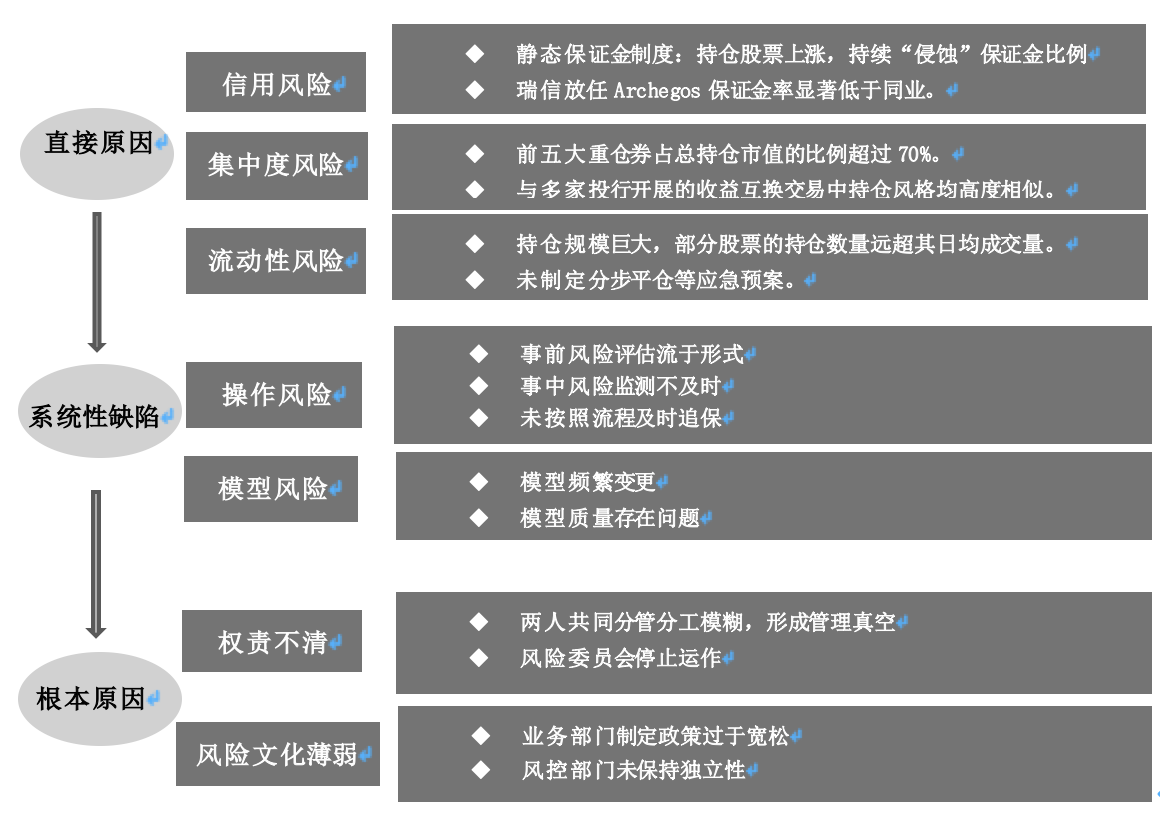
Core Viewpoint - The financing business is a crucial revenue source for securities firms, with the recent surge in A-share margin trading exceeding historical peaks, highlighting the importance of risk management in this area [1][10]. Group 1: Archegos Incident Overview - Archegos Capital Management, previously known as Tiger Asia, transformed into a family office after facing regulatory penalties and engaged in high-leverage transactions with Credit Suisse [3]. - The firm significantly reduced its initial margin requirements from 20% to 7.5%, leading to a dramatic increase in its exposure, with nominal principal rising to over $20 billion by the end of 2020 [3][4]. - The collapse of Archegos was triggered by a stock price drop of its major holdings, leading to a $5.5 billion loss for Credit Suisse due to inadequate risk management practices [4]. Group 2: Risk Factors Identified - Credit risk was exacerbated by a static margin system, with Archegos's average margin dropping to 5.9% compared to industry standards of 15% [5]. - Concentration risk was evident as over 70% of Archegos's holdings were in five stocks, leading to significant volatility and risk transmission across multiple institutions [5]. - Liquidity risk arose from Archegos holding positions exceeding daily trading volumes, complicating the liquidation process and increasing losses [6]. - Operational risk was highlighted by inadequate monitoring and assessment of Archegos's creditworthiness and risk exposure [6]. - Model risk was identified due to frequent changes in risk calculation models, leading to unreliable outputs and delayed responses to emerging risks [6]. - Ambiguity in responsibilities within Credit Suisse's management structure contributed to the lack of oversight and accountability [7]. - A weak risk culture prioritized short-term gains over risk management, leading to poor decision-making and risk mitigation strategies [7]. Group 3: Current Challenges in Financing Business - The margin trading balance in the A-share market has reached 2.34 trillion yuan, surpassing previous highs, indicating a shift in client structure towards institutional investors, particularly quantitative hedge funds [10][14]. - Increased market volatility due to geopolitical tensions and unexpected events has raised the risk of client defaults and forced liquidations [15]. - The expansion of financing targets to include a wider range of assets has introduced additional complexities and risks in collateral valuation [16]. - Risk transmission has intensified, with potential cascading effects from individual client liquidations impacting broader market stability [17]. Group 4: Recommendations for Risk Management - Securities firms should enhance risk governance by fostering a strong risk culture and integrating risk considerations into strategic decision-making [21]. - Establishing a dedicated financing business committee can help balance business growth with risk management, ensuring timely adjustments to risk policies [21]. - Improving collaboration between business and risk management teams is essential for effective risk monitoring and response [22]. - Developing a comprehensive risk view that consolidates client data across different business lines can help identify and mitigate risks more effectively [23]. - Implementing dynamic monitoring of concentration risks and adjusting control measures based on market conditions is crucial [24]. - Firms should adopt counter-cyclical adjustments to manage risks associated with market fluctuations [25]. - Enhancing risk measurement and testing through robust models and stress scenarios can improve preparedness for extreme market conditions [26][27]. - Establishing clear risk response plans and differentiated strategies for asset liquidation can enhance efficiency in crisis situations [29][30].
突发!美联储主席鲍威尔遭刑事调查,中东动荡发酵,国际金价单日狂涨96美元|大宗风云
Hua Xia Shi Bao· 2026-01-12 11:12
Group 1 - International precious metal prices surged, with COMEX gold futures rising over 2% to a peak of $4612.7 per ounce, and COMEX silver futures increasing over 5% to $83.905 per ounce [2] - The rise in gold prices is attributed to worsening global geopolitical relations, including explosions in Kyiv, U.S. military considerations against Iran, and increased tensions in the Red Sea [2][3] - The VIX index spiked by 18%, indicating a surge in risk-averse investments flowing into gold [2] Group 2 - The geopolitical tensions have led to increased demand for gold as a safe-haven asset, with analysts predicting significant upward potential for gold prices in the medium to long term due to factors like global debt cycles and geopolitical instability [3][4] - Central banks globally are increasing their gold reserves, with the World Gold Council indicating that they will remain net buyers through 2025 [4] - As of December 2025, China's official gold reserves are reported to be 7.415 million ounces (approximately 2306.32 tons), an increase of 86,000 ounces from the previous year [4] Group 3 - The investigation into Federal Reserve Chairman Jerome Powell may create additional uncertainty in the market, potentially leading to a weaker dollar and further boosting gold prices [5][6] - Concerns about the Federal Reserve's independence and potential political pressures could lead to more dovish monetary policy, impacting interest rates and gold demand [6] Group 4 - Analysts suggest that while gold prices are expected to remain high, there are risks associated with liquidity changes that could lead to significant price adjustments [8] - The current market sentiment is highly bullish, but caution is advised due to the potential for volatility in precious metal prices [9][10]

“翻倍基”乍现背后基金经理依然相信港股繁荣刚刚开始
Zheng Quan Shi Bao· 2026-01-11 17:03
Group 1 - The core viewpoint of the articles indicates that the Hong Kong stock market is facing challenges, particularly in terms of liquidity and performance compared to the A-share market, with a focus on value investment and risk management strategies [1][3][6] - In 2025, the Hong Kong stock market saw significant activity in sectors like innovative drugs and artificial intelligence, but by the end of the year, these sectors experienced a downturn, leading to a lack of high-performing funds in these themes [2][3] - The liquidity issues in the Hong Kong market are characterized by a concentration of trading in large-cap stocks, while small-cap stocks suffer from low trading volumes, leading to a disparity in market performance [3][4] Group 2 - Fund managers emphasize the importance of focusing on fundamental performance and quality of companies when investing in the Hong Kong market, as external factors and macroeconomic conditions heavily influence market dynamics [5][6] - The outlook for the Hong Kong market suggests that sectors such as technology and consumer goods may become key investment themes, with a belief that the market's valuation remains attractive compared to global peers [7][8] - There is a growing interest in high-quality consumer brands and innovative companies within the tea beverage sector, which are expected to achieve stable long-term growth due to their competitive advantages [8]