盈利驱动

Search documents
金融界财经早餐:高层定调“十五五”规划!要谋划新政策新举措;外资再度唱多中国股市!贵金属价格续创新高;沪深北交易所发布休市安排;壁仞科技开启认购(12月23日)
Jin Rong Jie· 2025-12-23 01:47
Group 1: Industry Developments - The Civil Aviation Administration of China has approved two mandatory national standards for civil unmanned aerial vehicles, which will be implemented starting May 1, 2026, promoting safer and more orderly industry development [6] - Dinglong Co. is set to begin trial production of high-end wafer photoresist, having received orders from major domestic wafer manufacturers, accelerating the domestic substitution process in semiconductor materials [6] - Significant advancements in quantum computing have been reported, with the "Zu Chongzhi 3.2" superconducting quantum processor achieving key technological progress, which is expected to accelerate the practical application of quantum computing [6] - Baidu is collaborating with Uber and Lyft to conduct trial runs of autonomous taxis in the UK, marking progress in the export of autonomous driving technology, attracting market attention to related domestic industries such as lidar and onboard algorithms [6] - Chasing Technology has launched the world's first AI health glasses, which monitor health indicators such as heart rate and blood oxygen levels, with expectations for rapid growth in the AI glasses market by 2026 [6] Group 2: Company News - MiniMax and Zhiyu Huazhang, AI model startups, have received approval for their overseas IPO plans, with MiniMax aiming to raise up to $700 million by issuing up to 33,577,240 shares [7] - Wallen Technology has begun accepting subscriptions for its Hong Kong IPO, with the first day of oversubscription reaching nearly 47 times, aiming to raise up to HKD 4.85 billion [7] - Liying Intelligent Manufacturing has signed a share transfer agreement to acquire a 35% stake in Liminda for CNY 875 million, gaining control over 52.78% of the voting rights [7] - Sanhua Intelligent Control expects a net profit of CNY 3.874 billion to CNY 4.649 billion for the year, representing a year-on-year growth of 25% to 50% [7] - Huaxia Happiness announced that its board of directors will not submit a temporary proposal from Ping An Life for shareholder meeting review, as the proposal was not approved [7] - Yongding Co.'s subsidiary plans to raise CNY 55 million through external investment, involving several investors [7] - Duoke Culture has announced a potential change in control, leading to a temporary suspension of its stock trading for up to two trading days [7] - Lingyun Optical's subsidiary plans to invest up to $5 million in the IPO of Zhiyu on the Hong Kong Stock Exchange [7] - Vanke has disclosed an extension of the grace period for its mid-term notes, increasing the grace period from 5 to 30 trading days without penalty interest [7] - Kuaishou has experienced a severe cybersecurity incident, leading to the spread of inappropriate content, with the platform currently addressing the issue [7] - Apple has been fined €98 million by the Italian antitrust authority for alleged abuse of market dominance regarding its app tracking transparency policy, with plans to appeal the decision [10] - Paramount has modified its acquisition offer for Warner Bros, with Oracle co-founder Larry Ellison providing $40.4 billion in equity financing guarantees to alleviate concerns about the stability of the acquisition funds [10]

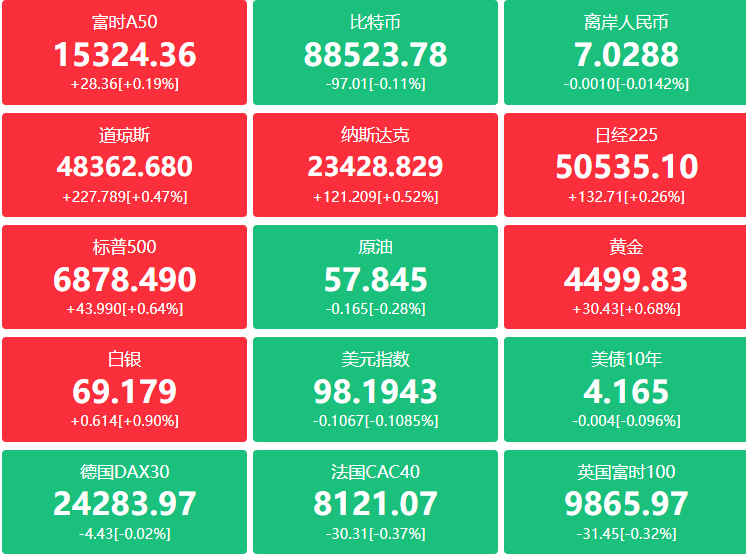
金银、油价、加密货币集体大涨,中概股拉升,特斯拉创新高,市值超1.65万亿美元
21世纪经济报道· 2025-12-22 15:23
Market Overview - Major US stock indices opened higher, with the Dow Jones up 0.23%, Nasdaq up 0.64%, and S&P 500 up 0.49% [1] - The seven major US tech companies saw a general increase, with Nvidia rising by 1.2% and Tesla reaching a historic high with a 3.38% increase, bringing its market value to $1.65 trillion, a cumulative increase of 57% over the last 120 trading days [3][4] Tesla Developments - Tesla's stock price reached $497.47, with a market capitalization of $1,654.5 billion and a P/E ratio of 326 [4] - Tesla signed an agreement with Matrix Renewable Energy to develop a battery storage project in the UK [3] Chinese Stock Market Outlook - Goldman Sachs predicts that the Chinese stock market will continue its upward trend into 2026, although at a slower pace [5] - Analysts expect a shift from "expectation-driven" to "profit-driven" market dynamics, with corporate earnings projected to grow by 14% in the next year and 12% in 2027, alongside a valuation expansion of around 10% [5] - The Chinese stock market could see a potential increase of 38% by the end of 2027 [5] Commodity Market Insights - Spot gold prices surged over 2%, reaching a historic high of $4,427.80 per ounce, while silver prices also broke through $69 per ounce, increasing by over 3% [6][8] - The rise in gold and silver prices is attributed to a combination of factors including a loose monetary cycle, high fiscal deficits, and a global manufacturing recovery [10] Gold Price Projections - Goldman Sachs analysts forecast that gold prices will continue to rise, with a baseline scenario of $4,900 per ounce next year, indicating potential upward risks [11] - The current price of gold is seen as part of a super cycle, with the $4,400 per ounce level possibly being a midpoint in this cycle [11]

国投期货 2026 年度策略报告:盈车嘉穗,风禾尽起-20251222
Guo Tou Qi Huo· 2025-12-22 06:36
Report Industry Investment Rating No relevant content provided. Core Views of the Report - Equity still has allocation value, waiting for the conversion from valuation-driven to earnings-driven [6] - In 2026, the basis central tendency may rise slightly, but the volatility remains relatively high [7] - In 2026, the equity market is expected to shift from valuation-driven to earnings-driven in the benchmark scenario [8] Summary according to the Table of Contents 1. Market Review and Macroeconomic Outlook - **A-share Market Review**: In 2025, major broad-based indices all closed up, with the ChiNext 50 leading with a nearly 60% annual increase. Most sectors in the CITIC primary industry index closed up, with the communication index leading with an over 80% increase. The share of equity ETFs increased, and northbound capital and margin trading funds were active [9][17][24] - **Macroeconomic Outlook**: In 2026, overseas liquidity may remain loose, and Sino-US economic and trade relations are in a phase of relaxation. Domestically, policies will be more precise and targeted, with fiscal policy remaining proactive and monetary policy staying moderately loose. Growth factors are expected to improve, and inflation is expected to rise moderately, driving the PPI to recover and improving corporate profitability [27][28][30] 2. Valuation and Drivers - **Steady Return of Chinese Capital Pricing Power**: The influence of US Treasury yields on A-share valuations is gradually weakening, while the impact of Chinese Treasury yields on the growth style is increasing, indicating a strengthening of the pricing power of Chinese Treasury yields for growth stocks [33][38] - **Current Valuation's Historical Position and Horizontal Comparison**: The PE of the CSI 300 and ChiNext indices is at the 64% and 35% historical quantiles respectively, not in a high range. Compared with global indices, A-shares are not expensive. The "Buffett Index" also suggests that the A-share market still has investment value [42][46][50] - **Dividend Yield and Risk Premium**: There is a "seesaw" relationship between the 10-year Chinese Treasury yield and the dividend yield of the dividend index. Currently, the stock market still has strong allocation cost-effectiveness, and the benchmark scenario for the index's upward drive in 2026 is expected to shift from valuation-driven to earnings-driven [53][59][63] - **Earnings Growth as a Strong Support for Relatively Strong Indices**: Earnings growth supports the relative strength of corresponding indices. In 2025, the earnings and revenue of small-cap and growth-style indices recovered faster, corresponding to the market style of small-cap growth [64][67][70] 3. Investor Structure and Basis Central Tendency Outlook - **2025 Basis Review**: In 2025, the basis central tendency of most futures index varieties continued to decline, with increased volatility in April. The influence of investor structure changes on the basis is significant, with the basis weakening in the first quarter and the basis central tendency of IC and IM contracts being lower than in previous years in the second half of the year [80] - **Changes in the Position of Public Funds in the Market Investor Structure**: Since 2022, the long-hedging power of public funds has gradually emerged and is currently stronger than the short-hedging power [88] - **Impact of Off-exchange Product Hedging on the Futures Index Basis**: The scale of off-exchange derivatives represented by snowball products decreased significantly in 2025, and their hedging impact is weaker than in the past two years. The long-substitution strategy of public funds is gradually emerging, and the relaxation of the futures index position limit of public funds may make them an important variable in observing the futures index investor structure [79][90] 4. Operation Outlook and Response - **Operation Outlook Scenario Analysis and Market Characteristics**: The benchmark scenario for the 2026 market is that the equity market shifts from valuation-driven to earnings-driven. There are also three other scenarios: earnings and valuation double-driven strength, valuation drag on weakness, and double weakness in earnings and valuation with risk warnings [114][118][119] - **Response Strategies under Different Scenarios**: Under the benchmark scenario, consider long-hedging when the basis is relatively weak. In the stronger scenario, reduce short-hedging. In the weaker scenario, lock in lower short-hedging costs. In the double-weak scenario, increase short-hedging [121][122]
不给基金持有人短期“惊喜”或“惊吓”
Zheng Quan Shi Bao· 2025-12-21 04:23
Core Viewpoint - The A-share market is potentially entering a slow bull phase driven by dual factors of valuation recovery and profit improvement [2][6]. Group 1: Market Conditions - Current bank stocks offer a dividend yield exceeding 4%, significantly higher than the yield on ten-year government bonds, indicating a favorable investment environment [2]. - There is an expectation of a rebound in profitability for cyclical industries, contributing to a positive market sentiment [2][6]. - The average price-to-book ratio for the banking sector is currently 0.7, suggesting that the valuation disparity is unsustainable [6]. Group 2: Investment Strategy - The company employs a strategy of "extreme diversification + safety margin" to navigate potential market volatility, utilizing quantitative models to identify undervalued and profit-stable assets [2][3]. - The investment philosophy adheres to the "absolute return" principle, focusing on dynamic asset allocation based on market conditions rather than a fixed stock-bond ratio [3]. - The company emphasizes a balanced and diversified portfolio, with individual stock holdings rarely exceeding 1% of total positions, aiming for a long-term positive experience for investors [4]. Group 3: Sector and Stock Selection - The investment approach includes a balanced distribution across industries and a diversified stock selection, with a focus on low valuation and stable profit growth [4][5]. - The company tracks potential stocks using quantitative models to efficiently identify promising sectors and stocks, while final investment decisions are based on safety and return assessments [5]. Group 4: Outlook on Equity and Bond Markets - The equity market is expected to experience a slow bull trend, with improved market sentiment and potential for significant capital inflows [6]. - In the bond market, the company maintains a cautious stance due to historically low interest rates and limited room for further declines, focusing on mid to short-duration bonds for their value [7].

明年如何配置?AI还能投吗?这些基金经理发声
Zhong Guo Zheng Quan Bao· 2025-12-18 13:07
Core Viewpoint - The public funds anticipate a shift from liquidity-driven to profit-driven market dynamics by 2026, with significant opportunities in hard technology and AI sectors [1][2][3] Market Dynamics - Public funds unanimously identify "profit-driven" as a key theme for 2026, expecting improvements in overall A-share (non-financial) profit growth, particularly in TMT (Technology, Media, and Telecommunications) and manufacturing sectors [2] - The market is expected to transition from liquidity and valuation-driven growth to profit-driven growth, which is deemed necessary for sustained market performance [2][3] Investment Strategy - Diversification and rebalancing are focal points for investment strategies in 2026, with an emphasis on multi-asset allocation to navigate complex macroeconomic environments [4] - Key investment directions include gold, the ChiNext 50 index, and Hong Kong Stock Connect, alongside a cautious outlook on the bond market, which is expected to maintain value [4][5] Technology Focus - Hard technology and AI remain central to investment strategies, with expectations of continued strong performance driven by technological advancements and industry breakthroughs [7] - AI is highlighted as a core investment direction, with potential explosive growth in applications such as consumer electronics, smart vehicles, and robotics [8] AI Investment Insights - The AI sector is viewed as a critical investment area, with ongoing debates about its maturity and potential for growth. Current valuations of leading AI companies are considered reasonable, indicating no substantial bubble [8]
摩根士丹利:明年底沪深300指数目标4840点
Shang Hai Zheng Quan Bao· 2025-12-03 13:47
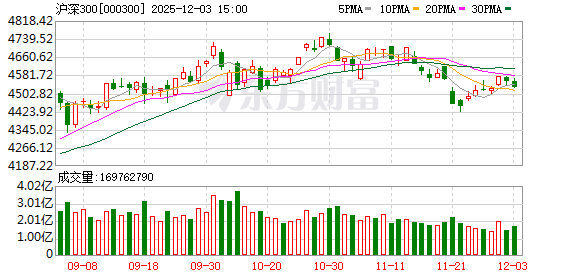
三是,随着市场对美元资产"一枝独秀论"祛魅,全球资金对中国资产配置兴趣回升。同时,国内资金开 始从定期存款向多元理财配置转变,保险和银行资管等机构开始"真金白银"入市。 在邢自强看来,全球流动性环境趋于宽松将支持风险资产表现,预计2026年上半年美联储将会有三次降 息,分别在1月、4月和6月进行,这为全球风险资产创造了有利环境。 12月2日,摩根士丹利举办线下媒体圆桌分享会,摩根士丹利中国首席经济学家邢自强和摩根士丹利中 国首席股票策略师王滢讨论了2026年中国经济和股市策略。 中国股市进入"估值结构性修复"过程 王滢认为,中国股市已经进入了"估值结构性修复"的过程。"今年A股、港股,包括全球机构投资人追 踪最为紧密的明晟中国指数,在估值上取得了非常大程度的修复。尤其港股恒生指数和明晟中国指数, 市盈率修复超30%。"她说。 摩根士丹利表示,随着市场对美元资产"一枝独秀论"祛魅,全球资金对中国资产配置兴趣回升,中国股 市重新被定义为"有成长性的市场"。该机构小幅上调了中国股票指数目标,将2026年12月沪深300指数 的目标点位定为4840点,并表示"明晟中国指数12个月前瞻市盈率在12至13倍之间是合理的" ...

多家机构把脉2026年A股市场,跨年行情如何布局?
Xin Lang Cai Jing· 2025-11-21 03:15
Group 1 - The core view is that the A-share market is expected to continue in a "slow bull" pattern in 2026, with several brokerages expressing optimism about market performance driven by key events such as the US-China trade agreement and the US midterm elections [1][2][3] - UBS forecasts that the MSCI China Index will reach a target of 100 by the end of 2026, indicating a 14% upside from current levels, supported by favorable factors including innovation and global competitiveness of Chinese companies [2][3] - The shift in market drivers from "valuation recovery" to "profit-driven" growth is anticipated, with expected earnings growth for the entire A-share market around 4.7% in 2026, highlighting the increasing importance of fundamentals [3][4] Group 2 - Key investment themes for the upcoming year include AI, with a focus on domestic chip production and applications in robotics and smart driving, as well as the globalization of Chinese companies transitioning to multinational operations [4][5] - The cyclical recovery in sectors such as oil, petrochemicals, and non-ferrous metals is expected to benefit from policies aimed at reducing competition and clearing excess capacity, with a forecasted narrowing of PPI declines [5] - Consumer sectors may see a rebound if extraordinary stimulus measures are introduced, with long-term focus areas including health, emotional consumption, and internationalization [5]
头部券商把脉2026 A股有望震荡上行,科技成长仍是投资主线
2 1 Shi Ji Jing Ji Bao Dao· 2025-11-17 23:16
Core Viewpoint - Major securities firms in China have released their investment strategy reports for A-shares in 2026, with a consensus on a "slow bull market" as the expected trend [1][3] Group 1: Market Outlook - The A-share market is anticipated to continue in a slow bull pattern, with a shift in driving forces from "valuation recovery" to "profit-driven" or "fundamental verification" [4][5] - The A-share market is expected to experience low volatility, with a focus on global exposure as a key variable for 2026 [3][4] - Analysts predict a profit growth of approximately 4.7% for the entire A-share market in 2026, with many industries nearing performance improvement [4][5] Group 2: Investment Themes - Three major investment themes have been identified: technology growth, Chinese enterprises going global, and cyclical resource products [10][12] - The technology growth sector remains a favored direction, with a shift in focus from concepts to performance, particularly in application breakthroughs [11][12] - Chinese enterprises' global expansion is viewed as a significant opportunity for profit growth and market capitalization [13] Group 3: Style Rotation - A potential style shift from "growth" to "value" is anticipated around June 2026, influenced by industry trends and liquidity conditions [8][9] - The market is expected to trend towards a more balanced style, with cyclical industries approaching supply-demand equilibrium [9][10] - Analysts suggest maintaining a focus on technology while also considering previously underperforming sectors such as real estate and consumer goods [10][12]





化工涨的比创新药还多?
Xin Lang Cai Jing· 2025-11-13 07:52
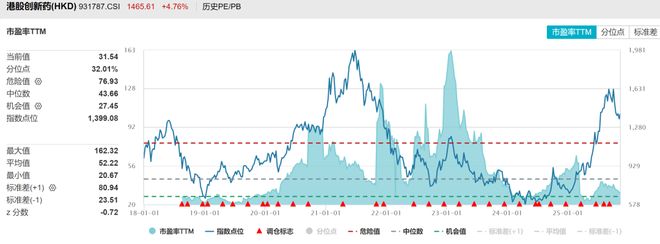
Core Insights - The chemical sector has outperformed the innovative pharmaceutical sector recently, with a notable increase of 3.7% in chemical stocks, leading to a total profit of over 20% from a rotation strategy between chemicals and green energy [3][20]. - The innovative pharmaceutical sector has also seen significant gains, with a current increase of 4.76% and a price-to-earnings (P/E) ratio of 31.83, which is relatively low compared to its historical average [5][6]. - The innovative pharmaceutical sector's growth this year has been driven by earnings rather than mere price increases, indicating a strong underlying performance [8]. Chemical Sector - The chemical sector has shown a profit of 15% after a recent bottom-fishing strategy, with the price now exceeding the previous selling price by 7% [2][3]. - The rotation strategy between chemicals and green energy has yielded a combined profit of over 20% [3][20]. Innovative Pharmaceutical Sector - The innovative pharmaceutical sector has experienced a significant rise, with a reported profit of 93.73% on a specific ETF holding, which is expected to exceed 100% with recent gains included [9]. - Despite the substantial price increase this year, the P/E ratio remains at a reasonable level, suggesting potential for further growth [6][8]. Market Trends - The market is witnessing a shift towards more stable investments, with investors inquiring about the potential for further investments in dividend and fixed-income funds [16][19]. - The overall sentiment indicates that while the market has recovered significantly, future profits will increasingly depend on identifying sectors with potential for substantial earnings growth [18].
4000点:这次和以往有何不同?
淡水泉投资· 2025-11-13 00:04
Core Viewpoint - The recent return of the Shanghai Composite Index to the 4000-point mark is characterized by a more cautious market sentiment compared to previous surges, indicating a need for careful evaluation of current market conditions [1][2]. Valuation Comparison - The current price-to-book (PB) ratio for A-shares at the 4000-point level is significantly lower at 35% compared to 92% in 2007 and 72% in 2015, reflecting improved asset quality and higher value for investors [2][5]. Equity Risk Premium - As of the end of October, the equity risk premium (ERP) for the CSI 300 Index stands at 5.03%, which is higher than the 2.69% observed during a similar market point in 2015, suggesting that current stock valuations remain reasonable without significant bubbles [5][10]. Market Characteristics - The current market is marked by structural differentiation rather than a broad-based bull market, leading to a sentiment of "the index is back, but the money hasn't returned" among investors [7][10]. Sector Performance - The market's profitability is concentrated in specific sectors such as technology and advanced manufacturing, while other sectors like consumer goods, finance, and real estate have shown limited growth [10][12]. Individual Stock Performance - In the current market cycle, less than 40% of stocks have seen gains exceeding 80%, and only about 29% have doubled in value, contrasting sharply with the previous cycle where nearly 60% of stocks gained over 80% [13][18]. Industry Valuation Disparities - Most industries are currently valued within the 25% to 75% range, with some sectors still considered relatively cheap (below the 25% percentile), indicating potential investment opportunities in undervalued assets [16][18]. Investment Focus - The focus should shift from index levels to structural opportunities within the market, particularly in the context of improving corporate earnings and the potential for significant growth in select sectors [19][20]. Seasonal Market Trends - The period from November to December is historically significant for positioning in the following year's market trends, as it often correlates with performance and can reveal undervalued opportunities due to institutional rebalancing [23][26]. Long-term Value Assessment - The return to the 4000-point level is not merely a repetition of past events; it reflects a reassessment of value driven by economic transformation and industry upgrades, emphasizing the importance of identifying quality assets for long-term investment [28].