
资产重估

Search documents
朱宁透露个人仓位:“个人A股持仓已达近十年最高,美股持仓则为近十年最低”
Xin Lang Cai Jing· 2025-12-19 09:40
Core Insights - The article discusses the upcoming 2025 Global Wealth Management Forum and highlights the current phase of asset revaluation in China, particularly in the A-share market, which is seen as a significant opportunity for long-term investment [2][8]. Group 1: Market Trends - The A-share holdings of the speaker have reached their highest level in nearly a decade, while U.S. stock holdings are at their lowest in the same period, indicating a shift towards value investing during a counter-cyclical phase [2][8]. - The revaluation of Chinese assets is closely linked to high-quality macroeconomic development and the cultivation of new productive forces, with retail investor sentiment acting as a reliable contrarian indicator [2][8]. - There is a significant shift in asset allocation among residents, with financial assets gaining prominence following adjustments in the real estate market, driven by aging population needs and excess savings entering the capital market [2][8]. Group 2: Investment Strategies - Investors are advised to focus on what to invest in, the composition of their portfolios, and aligning with their risk preferences and holding periods, rather than fixating on whether to enter the market [3][9]. - Emotional decision-making in investing is discouraged, emphasizing the importance of resisting herd behavior and emotional influences on investment choices [3][9]. - Personalized asset allocation strategies should be implemented based on individual career and existing asset conditions, with a growing recognition of the long-term investment value of real estate as market bubbles deflate [4][10].


从金属到股市,海外市场正在重新定价“美国经济加速增长”
Sou Hu Cai Jing· 2025-12-16 13:38
Core Viewpoint - The global financial markets are undergoing a significant repricing driven by a reassessment of the U.S. economic growth outlook, with cyclical assets outperforming defensive sectors and a notable rebound in risk appetite indicators [1][3]. Group 1: Market Dynamics - Goldman Sachs' risk appetite indicator reached 0.75, the highest level since January, indicating a strong performance of risk assets driven by improved growth expectations [3]. - The PC1 "global growth" factor recorded one of its largest rebounds since 2000 over the past three weeks, reflecting a significant reassessment of growth expectations [3]. - The market's growth reassessment is highly synchronized with global macro surprise indices, with macro data from developed and emerging markets generally exceeding expectations [3]. Group 2: Sector Performance - Cyclical sectors, particularly materials and financials, have significantly outperformed defensive sectors in this growth reassessment, with the S&P 500 expected to see a 12% growth in earnings per share by 2026 [4]. - The rise in U.S. and German 10-year government bond yields is primarily driven by real interest rates, while inflation pricing has lagged behind the rebound in cyclical assets [4]. - The commodity market has also benefited from improved growth expectations, with copper prices showing strong performance as an economic growth indicator [7]. Group 3: Asset Allocation Strategy - Goldman Sachs maintains a moderately risk-on asset allocation strategy for 2026, recommending an overweight in equities over the next 3 to 12 months, with neutral positions in bonds, commodities, and cash, and an underweight in credit [8]. - The importance of diversification and hedging strategies is emphasized to protect equity overweight positions, with tools such as front-end rate receivers and CDS buyers being considered effective for hedging against negative growth shocks [8]. - Current U.S. equity pricing reflects growth expectations close to market consensus but has further upside potential if economic data continues to exceed expectations, particularly if U.S. growth reaches Goldman Sachs' forecast of 2.5% [8].

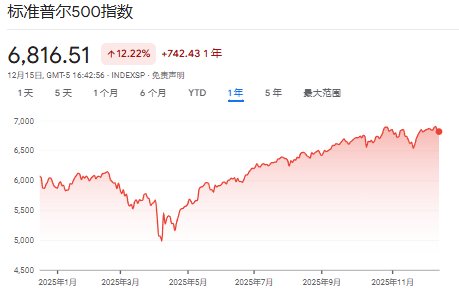
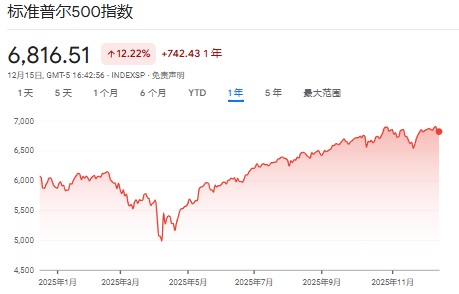
从金属到股市,海外市场正再重新定价“美国经济加速增长”
Hua Er Jie Jian Wen· 2025-12-16 13:28
从铜价反弹到股市周期性板块领涨,从债券收益率攀升到美元汇率重获动能——全球金融市场正在经历一轮广泛而深刻的重新定 价,核心逻辑指向对美国经济增长前景的重新评估。 据追风交易台,高盛Andrea Ferrario团队最新报告显示,该行风险偏好指标上周四达到0.75,创下今年1月以来最高水平。这一轮 市场重估的驱动力来自更乐观的增长预期,高盛PC1"全球增长"因子在过去三周录得2000年以来最大幅度的反弹之一。 在这轮重估中,周期性资产表现尤为突出。材料和金融板块领涨全球股市,而美国增长定价开始赶上世界其他地区,此前美国市 场年内表现相对滞后。与此同时,大部分债券市场出现抛售,实际利率上升成为推动收益率走高的主要因素。 高盛策略师认为,美股目前的定价水平反映2026年美国实际GDP增长接近市场共识的2.0%,但仍低于高盛预测的2.5%。这意味 着如果经济数据持续超预期,资产重估进程可能延续。 增长预期重估创多年新高 据高盛数据,其风险偏好指标上周四达到0.75,为1月以来最高水平。这一轮风险资产的强势表现主要由增长预期改善驱动,PC 1"全球增长"因子在三周内的涨幅创下2000年以来最大规模之一。 值得注意的是, ...
中信证券:A股配置上建议聚焦资源/传统制造业定价权重估与企业出海主线
Xin Lang Cai Jing· 2025-12-06 01:59
中信证券研报指出,在流动性改善、地缘扰动、AI泡沫短期无虞三重因素下,亚洲股市更需聚焦基本 面线索变化带来的结构性配置机会。美联储12月降息预期反转缓解亚洲市场宏观压力,而全球GPR指数 高位运行下俄乌冲突等构成阶段性扰动,AI领域现金流支撑与供应链瓶颈使极端泡沫叙事难现。具体 市场核心观点如下。1)A股:需基本面超预期突破,配置上建议聚焦资源/传统制造业定价权重估与企 业出海主线,关注低拥挤品种与红利标的。2)港股:受益内外部催化有望实现戴维斯双击,建议侧重 科技、医疗、资源品等五大方向。3)韩国股市:依托基本面、政策与流动性推动重估,建议重点关注 半导体/AI等行业。4)印度股市:具备补涨潜力,货币政策宽松背景下建议优先配置利率敏感型企业与 消费板块,逆向看多IT服务。5)日本股市:受益治理红利与外资增配,聚焦行业整合、资产重估等四 大方向。6)东南亚股市:呈现复苏态势,马来西亚建议关注AI与数据中心产业链;印尼建议聚焦消费 与新能源汽车;泰国建议首选消费和旅游板块,整体需密切跟踪宏观变量与政策动向。 ...

中信证券:亚洲股市更需聚焦基本面线索变化带来的结构性配置机会
Xin Lang Cai Jing· 2025-12-05 00:22
Core Viewpoint - Asian stock markets should focus on fundamentals due to improved liquidity, geopolitical disturbances, and short-term AI bubble concerns [1] Group 1: A-shares - A-shares require a fundamental breakthrough beyond expectations, with recommendations to focus on resource and traditional manufacturing sectors for pricing power reassessment and companies going abroad, while paying attention to less crowded and dividend-paying stocks [1] Group 2: Hong Kong Stocks - Hong Kong stocks are expected to benefit from both internal and external catalysts, with suggestions to emphasize five major directions: technology, healthcare, and resource products [1] Group 3: South Korean Stocks - South Korean stocks are driven by fundamentals, policies, and liquidity, with a focus on semiconductor and AI industries for reassessment opportunities [1] Group 4: Indian Stocks - Indian stocks have potential for catch-up growth, with recommendations to prioritize interest rate-sensitive companies and consumer sectors under a backdrop of loose monetary policy, while taking a contrarian view on IT services [1] Group 5: Japanese Stocks - Japanese stocks are benefiting from governance dividends and increased foreign investment, with a focus on industry consolidation and asset reassessment [1] Group 6: Southeast Asian Stocks - Southeast Asian markets are showing signs of recovery, with specific recommendations for Malaysia to focus on AI and data center supply chains, Indonesia on consumption and new energy vehicles, and Thailand on consumer and tourism sectors, while closely monitoring macro variables and policy trends [1]
低估值优质资产价值凸显 公募推出PB-ROE策略增强产品
Zheng Quan Shi Bao· 2025-11-26 18:46
Core Viewpoint - The article discusses the challenges faced by active fund managers in capturing stable alpha amidst fluctuating market conditions, emphasizing the integration of Smart Beta strategies to enhance investment performance [1][2]. Group 1: Market Dynamics - The Shanghai Composite Index fluctuated from 3800 to 4000 points and back to 3800 over the past three months, reflecting investor sentiment volatility [1]. - The market is transitioning from a high-growth phase dominated by "growth" to one led by "asset revaluation," prompting investors to rebalance their portfolios based on corporate earnings and valuation levels [2]. Group 2: Investment Strategies - Guangfa Fund's assistant general manager, Yang Dong, has been exploring the combination of subjective and quantitative strategies, introducing Smart Beta strategies to capture structural opportunities and achieve stable excess returns [1][3]. - The Guangfa Stable Strategy employs a mix of subjective long positions and active quantitative strategies, focusing on dividend assets in A-shares and Hong Kong stocks, achieving a cumulative return of 53.94% from January 4, 2024, to November 20, 2024, outperforming its benchmark by 29.14 percentage points [2]. Group 3: New Product Launch - Guangfa Fund plans to launch a new product, Guangfa Quality Selected Stocks, from December 1 to December 19, aiming to help investors capture long-term value from high-quality, low-valuation assets [3]. - The new strategy will utilize a combination of subjective long positions, active quantitative methods, and AI enhancements, focusing on companies with sustainable ROE and growth potential while avoiding value traps [3].
华泰证券:港股正在进入布局区
Ge Long Hui· 2025-11-24 00:23
Group 1 - The core viewpoint is that recent market volatility is primarily driven by liquidity, sentiment, and risk appetite, but the overall outlook remains optimistic despite concerns about economic data diverging from the stock market [1] - The domestic asset revaluation theme remains unchanged, with a persistent demand for core assets, necessitating a more discerning allocation strategy as valuations shift towards earnings [1] - Hong Kong stocks have experienced an earlier and deeper adjustment compared to A-shares, indicating a potential for value at the current position [1] Group 2 - Short-term capital may continue to seek safety and shift between high and low sectors, with a recommendation to focus on consumer services, construction, textiles, and home appliances, which have underperformed this year [1] - In the third round of revaluation since August, certain industries have seen limited gains but significant recent declines, indicating a higher probability of being "wrongly punished," with a focus on electronics, pharmaceuticals, automotive, and light manufacturing [1] - The technology sector in Hong Kong has faced considerable pullbacks, and while sensitivity to positive catalysts has decreased amid falling risk appetite, there remains a revaluation opportunity once liquidity conditions improve [1]

政策与创新是关键支撑 券商2026年度A股策略会集体锚定“新”机遇
Zheng Quan Ri Bao· 2025-11-22 01:41
Core Viewpoint - The market is focused on the expected development trends for 2026, with a consensus emerging that A-shares present structural opportunities and that the macroeconomic environment will continue to show signs of recovery [1][2]. Group 1: Economic Outlook - Major securities firms predict China's economic growth for 2026 will be in the range of 4.9% to 5.0%, with a "front low, back high" growth pattern expected [3]. - The overall judgment from economists is that the macroeconomic environment will be "stable and improving, with structural optimization" [2][3]. - Export resilience and ongoing industrial upgrades are viewed as key supports for the macroeconomy, with expectations of strong export performance in 2026 [2]. Group 2: Policy and Structural Changes - The core direction for policy in 2026 will focus on structural optimization and a balanced approach to supply and demand [3]. - There is an expectation of moderate expansion in fiscal policy, which will support the conclusion of the deleveraging cycle [2][3]. - The need to address weak domestic demand remains a critical issue for 2026, with price stability being essential for growth [4]. Group 3: Investment Themes - The investment focus for A-shares in 2026 is expected to shift from being driven by sentiment, funds, and valuation to being driven by performance verification [5]. - Key areas of interest include technology growth, external demand breakthroughs, and cyclical recovery [5][6]. - The AI revolution is entering a critical application phase, which is anticipated to support the performance of Chinese assets [6]. Group 4: Sectoral Insights - Three main structural themes for 2026 include recovery trades in cyclical sectors, technology industry trends particularly in AI, and the enhancement of manufacturing influence [6][7]. - The potential for Chinese companies to improve their position in the global value chain is highlighted, with a focus on upgrading traditional manufacturing and expanding global presence [7].


券商2026年度A股策略会集体锚定“新”机遇
Zheng Quan Ri Bao· 2025-11-21 16:52
Core Viewpoint - The market is focused on the expected development trends for 2026, with consensus emerging around structural opportunities in the A-share market and a continued recovery in the macro economy [1][3]. Group 1: Policy and Innovation - The annual strategy meetings of various securities firms highlight "new" and "seizing opportunities" as high-frequency keywords, reflecting insights into new market trends and opportunities [2]. - Themes from different firms include "Embarking on a New Journey" by CITIC Securities and "Riding the New Wave" by Huatai Securities, indicating a collective focus on innovation and market dynamics [2]. Group 2: Macroeconomic Outlook - Securities firms express a consensus on a "stable and improving, structurally optimized" macroeconomic outlook for 2026, with expectations of strong export resilience and continued industrial upgrades [3][4]. - Economic growth predictions for 2026 range from 4.9% to 5.0%, with a "front low, back high" growth pattern anticipated [3]. - Fiscal policy is expected to maintain a moderately expansionary stance, supporting the end of the deleveraging cycle [3]. Group 3: Investment Themes - The A-share market is expected to shift from being driven by "sentiment, funds, and valuation" in 2025 to "performance verification" in 2026, with a focus on technology growth, external demand, and cyclical recovery [5][6]. - Analysts emphasize that the "performance is king" narrative will dominate, with a potential for the A-share market to reach new highs due to increased allocations from both domestic and foreign investors [5][6]. - Key investment themes include recovery trades in cyclical sectors, technology industry trends, and the enhancement of manufacturing influence [6].


宏观超话:10月经济数据解读
2025-11-18 01:15
Summary of Conference Call Notes Industry Overview - The macroeconomic environment shows increasing downward pressure, with fixed asset investment declining year-on-year and external demand turning negative, indicating potential negative impacts on the stock market [1][3] - Industrial production growth has dropped below 5%, with high-tech industries experiencing a decline in prosperity, although high-end, intelligent, and green industries, as well as shipbuilding, aerospace, and automotive manufacturing, remain resilient [1][4] Key Economic Indicators - Retail sales of consumer goods are declining due to weakened demand, particularly in home appliances, furniture, and automotive sectors, while communication equipment and cosmetics show growth [1][6] - Investment across various sectors is weakening, with significant declines in real estate new starts and sales area, and housing prices experiencing a larger month-on-month drop [1][8] - Infrastructure investment has decreased more than expected, influenced by debt resolution, insufficient project reserves, and local government debt constraints, although digital infrastructure and energy security projects may provide some support [1][8] Sector-Specific Insights - Investment demand in the chemical, food, pharmaceutical, and non-ferrous metal industries has contracted, but the core logic of industrial upgrading remains intact [1][9] - Manufacturing investment shows positive signals, particularly in computer electronics and electrical machinery, with a need to observe the sustainability of this recovery and its impact on overall investment [1][10] Consumer Behavior and Employment - National dining consumption improved in October due to the National Day and Mid-Autumn Festival, but overall retail sales continue to decline [1][6] - Despite weak goods consumption, there are positive signs of recovery in service consumption, supported by policy measures [1][6] Challenges and Policy Responses - The economy faces challenges with internal demand slowing and external demand declining, which may impact the fourth quarter's economic performance [1][12] - Historical trends suggest that as economic downturns and employment pressures rise, there will be an increase in counter-cyclical policies, with potential for new policy deployments [1][13] Market Dynamics - The capital market's resilience may diverge from the slowing economic momentum, reflecting long-term economic logic rather than short-term fluctuations [1][14] - Structural changes in the economy, particularly in the technology innovation sector, are expected to drive asset revaluation, suggesting a need for patience regarding short-term fundamental fluctuations [1][15]