经济增长

Search documents
研究所晨会观点精萃-20251120
Dong Hai Qi Huo· 2025-11-20 01:21
Report Investment Ratings - The report does not provide an overall industry investment rating. However, specific ratings for different asset classes are as follows: - Index: Short - term shock, short - term cautious wait - and - see [2][3] - Treasury bonds: Short - term shock, cautious long [2] - Commodity sectors: - Black metals: Short - term shock, short - term cautious wait - and - see [2] - Non - ferrous metals: Short - term shock, short - term cautious wait - and - see [2] - Energy and chemicals: Short - term shock, cautious wait - and - see [2] - Precious metals: Short - term shock, short - term cautious wait - and - see, long - term buy on dips [3] Core Views - The global market is affected by the Fed's monetary policy expectations, domestic economic growth, and policy stimulus. The short - term upward drive of the macro - economy has weakened, and different asset classes show short - term shock characteristics. Attention should be paid to domestic economic growth and the implementation of incremental policies [2][3] Summary by Categories Macro Finance - Overseas, the Fed's meeting minutes showed serious differences, and many thought it was not suitable to cut interest rates in December. The market expected no rate cut this year, leading to a rise in the US dollar and Treasury yields, and an increase in global risk appetite. Domestically, China's October economic data slowed down year - on - year and fell short of expectations, and the central bank restarted Treasury bond trading to release liquidity. The short - term macro - upward drive has weakened, and the index will be in short - term shock [2] - Index: Driven by sectors such as precious metals, it rose slightly. Affected by economic data and the Fed's hawkish signals, the short - term upward drive has weakened, and it will be in short - term shock. Short - term cautious wait - and - see [3] - Precious metals: The market rose slightly at night on Wednesday. Affected by the Fed's possible inaction in December and the strong US dollar, short - term shock, long - term upward pattern remains. Short - term cautious wait - and - see, long - term buy on dips [3] Black Metals - Steel: The spot and futures markets declined on Wednesday. Demand continued to weaken, inventory decreased, and production decreased. There are no new contradictions, and the price is expected to fluctuate in a range [4][6] - Iron ore: The spot price fell slightly on Wednesday, and the futures price remained strong. The bottom of iron - making water production is uncertain, supply has changed slightly, and it is expected to fluctuate in a range [6] - Silicon manganese/silicon iron: The spot price was flat on Wednesday, and the futures price was affected by coal. Demand is still poor, and the futures price is expected to fluctuate in a range [7] - Soda ash: The main contract was weak on Wednesday. Supply decreased marginally but remained loose, and demand improved marginally. Short - term range shock, long - term bearish [8] - Glass: The main contract was weak on Wednesday. Supply was stable, demand improved marginally, and inventory was at a high level. It is expected to run weakly in the short term [8] Non - ferrous Metals and New Energy - Copper: Overnight, LME copper rebounded slightly. Supply concerns still exist, but US and domestic inventories are high, and there is a risk of price decline [10] - Aluminum: On Wednesday, Shanghai aluminum prices rebounded. Technically, there may be room for further rebound, but inventory is at a three - year high, and there may be a large correction later [10] - Tin: Supply is tight, demand is weak, inventory has increased for two consecutive weeks, and the price is expected to fluctuate at a high level [11] - Lithium carbonate: The main contract rose on Wednesday. The price of lithium ore increased, and the trading volume increased. Hold long positions cautiously [12] - Industrial silicon: The main contract rose on Tuesday. The organic silicon industry plans to reduce emissions and support prices. Pay attention to the continuation of funds and buy on dips [12] - Polysilicon: The main contract rose on Tuesday. There is a game between strong policy expectations and weak reality. It is expected to fluctuate in a high - level range [13][14] Energy and Chemicals - Crude oil: EIA data showed an increase in US refined oil inventories, and the hope of restarting peace talks between Russia and Ukraine led to a decline in oil prices. It is expected to remain under pressure [15] - Asphalt: The price remained low. Inventory was decreasing slightly, but demand was weak, and the over - supply pressure was high. Pay attention to the fluctuation of crude oil [15] - PX: The import from Japan is uncertain, and PTA demand provides some support. It is in a tight supply situation, and pay attention to cost changes [16] - PTA: The import of PX is uncertain, and downstream demand is weak. The supply is high, and the long - term bearish pressure is large [16] - Ethylene glycol: Port inventory has accumulated significantly, downstream demand is weakening, and the price is expected to remain low and fluctuate [16] - Short fiber: It rebounded slightly in the short term, but the later pressure is large. The terminal orders are decreasing seasonally, and it can be shorted on highs in the medium term [17] Agricultural Products - US soybeans: The overnight market declined. Brazil's November export volume is expected to increase, and there is an export order to China [19] - Soybean and rapeseed meal: The supply and demand of domestic oil mills are loose, the basis is weak, and there may be a phased correction [19] - Soybean and rapeseed oil: The price was boosted by EPA biodiesel news. The supply of domestic soybean oil is strong, and rapeseed oil inventory is at a low level [20] - Palm oil: The Malaysian futures market continued to rise, but domestic inventory increased, and it is expected to fluctuate widely [20] - Corn: The price in Northeast China remained stable. Inventory is low, and there is a willingness to buy in the market. The futures may repair the basis [20] - Live pigs: The morning price was stable and strong. Supply is excessive, and the futures may continue to decline [21]
哥伦比亚第三季度经济增长3.6%
Shang Wu Bu Wang Zhan· 2025-11-19 17:22
Economic Growth - Colombia's GDP grew by 3.6% year-on-year in Q3 2025, marking the highest growth rate since Q3 2022 [1] - The expansion was primarily driven by the public administration sector, which grew by 8%, contributing 1.3 percentage points to overall growth [1] Sector Contributions - The commercial, repair, transportation, storage, accommodation, and food service sectors experienced a growth rate of 5.6%, contributing 1.2 percentage points to GDP growth [1] - Notably, wholesale and retail trade surged by 8.6%, with strong performances in electronics sales, food services, and vehicle imports, particularly hybrid electric vehicles [1] Public Spending Impact - Economic growth was largely fueled by increased public spending, with consumption growing at over 4% [1] - The rise in social security expenditures also contributed to the growth, as the government continued efforts to settle outstanding medical system debts [1] Declining Sectors - The mining sector contracted by 5.7%, and the construction sector declined by 1.5%, marking the only shrinking industries in the quarter [1] - Metal mining saw a significant drop of 18.2%, while oil and gas extraction fell by 3.7%, and coal mining decreased by 5.6% [1]
美联储巴尔金:如果劳动力数量不增加,经济增长将完全取决于生产率。
Sou Hu Cai Jing· 2025-11-18 16:39
Core Viewpoint - The economic growth will be entirely dependent on productivity if the labor force does not increase [1] Group 1 - The statement emphasizes the critical relationship between labor force growth and economic performance [1]
美国如何避免破产?马斯克:AI与机器人才是拯救债务危机的关键
Jin Shi Shu Ju· 2025-11-18 07:55
Core Viewpoint - Elon Musk emphasizes that the only way to escape the debt crisis and prevent U.S. bankruptcy is through AI and robotics, highlighting the unsustainable growth of federal debt and its implications for the economy [2][3] Group 1: Economic Concerns - Musk points out that interest payments on national debt now exceed major federal expenditures, including military spending, which serves as a personal wake-up call for him [2] - He views national debt as a structural threat to the future of the economy, not just a political issue, reflecting concerns about government inefficiency and declining industrial productivity [2][3] Group 2: Technological Solutions - Traditional political measures are deemed insufficient by Musk, who argues that economic expansion, supported by advanced automation, is necessary to address the debt crisis [3] - His experience in capital-intensive industries like aerospace and automotive informs his belief that automation is key to improving efficiency and reducing costs [3] Group 3: Historical Context and Future Implications - Musk's optimistic view on technology is supported by historical precedents where rapid innovation led to significant output and tax revenue growth, aiding in debt management [4] - By linking fiscal sustainability with advancements in AI and robotics, Musk places the debt issue within a broader narrative of future economic growth, raising questions about whether emerging technologies can deliver sufficient productivity gains for long-term economic health [4]

日本GDP再现负增长
Sou Hu Cai Jing· 2025-11-18 07:46
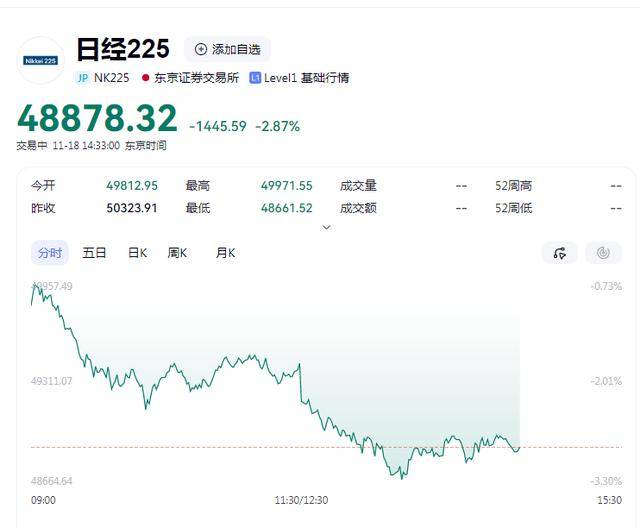
日本内阁府17日公布,日本三季度实际国内生产总值(GDP)按年率计算下降1.8%,自2024年第一季 度以来再次出现负增长。分析人士指出,受困于内需与外需的双重压力,以及对华关系持续紧张,日本 经济正滑向更为复杂的境地。 数据显示,日本今年三季度实际GDP(剔除物价变动因素)比上一季度下降0.4%。日媒分析指出,国 内需求疲软和出口低迷是导致GDP下滑的主要原因。 自5月以来,受美国关税影响,日本出口连续4个月萎缩。尽管日美双方于7月份达成协议,将"对等关 税"税率设定为15%,但历史高位的关税水平仍然抑制了制造业的发展,对其出口依赖型经济构成严重 冲击。受此影响,三季度货物及服务贸易出口大幅下降,环比下降1.2%,拖累GDP增速0.2个百分点。 进口因内需疲软环比下降0.1%。 与此同时,内需方面,占日本经济总量过半的私人消费增速也显著放缓,增速从第二季度的0.4%放缓 至0.1%,这再次表明,由于生活成本高企导致实际工资停滞不前,日本家庭仍在削减可自由支配的支 出。 截至发稿,日经225指数跌破49000点关口,日内跌超1300点。 来源:经济日报 日本内阁府此前发布中期经济预测报告称,考虑到美国关税政策 ...

韩国家庭债务高企叠加经济回暖 央行转向观望
Xin Hua Cai Jing· 2025-11-18 06:23
Group 1 - The growth rate of household debt in South Korea has slowed down in Q3 2024 due to government measures aimed at cooling the real estate market, but the overall scale remains at historically high levels [1][2] - In Q3, total household credit increased by 14.9 trillion KRW, with a quarter-on-quarter growth of 0.8%, a decrease from the previous quarter's growth rate [1] - The Bank of Korea is expected to maintain the current interest rate level for an extended period, with some economists predicting no rate changes until the end of 2026 [2][3] Group 2 - Despite the slowdown in debt expansion, the absolute level of household debt remains high, posing systemic financial risks, leading to a cautious monetary policy stance [2] - Recent economic data, including a rise in inflation and better-than-expected GDP growth in Q3, indicate that the Bank of Korea is not in a hurry to further ease monetary policy [2] - The unemployment rate in October slightly increased to 2.6% from 2.5% in September, while manufacturing employment showed signs of recovery after four months of decline [2][3] Group 3 - The Bank of Korea's monetary policy adjustments will depend on upcoming data, with the current stance favoring a continuation of the monetary easing cycle [3] - The central bank's policy path is primarily driven by domestic conditions, although U.S. rate cuts could provide more room for independent action [3] - The final monetary policy meeting of the year is scheduled for November 27, with expectations that the benchmark interest rate will remain unchanged due to various factors including household debt pressure and stable employment [3]
马斯克:不想破产,就只能发展AI和机器人
财联社· 2025-11-18 01:20
Core Viewpoint - Elon Musk emphasizes that the U.S. national debt poses a structural threat to the economy and suggests that artificial intelligence (AI) and robotics are essential for overcoming this debt crisis [1][2]. Group 1: Economic Concerns - Musk highlights that interest payments on national debt now exceed major federal expenditures, including military budgets, signaling a critical warning for the economy [3]. - He argues that traditional political tools are insufficient to address the debt crisis, asserting that economic expansion driven by advanced automation is necessary [4]. Group 2: Technological Solutions - Musk believes that only productivity-enhancing technologies can surpass the growth curve of national debt, drawing parallels to past technological breakthroughs that reshaped the economy [4]. - His perspective aligns with the long-held view among industrialists that technological advancement is a prerequisite for national resilience [5]. Group 3: Policy Implications - The discussion reflects a broader macroeconomic concern where rising interest costs limit fiscal flexibility and complicate responses to future crises [4]. - Musk's framework prioritizes economic growth over spending constraints, echoing a historical debate in U.S. policy regarding whether prosperity or discipline is a more effective path to stability [4].


美国六周政府停摆终结 银价上涨仍占主力
Jin Tou Wang· 2025-11-17 00:58
Group 1 - The silver market experienced a bullish trend, with a significant breakout above the key retracement area of $50.02-$51.07, reinforcing the upward momentum [1] - On Thursday, silver was trading above the key moving average MA60 and the Vegas channel, although the relative strength index showed negative signals [1] - Market sentiment remained generally bullish on Friday, indicating continued interest in silver [1] Group 2 - The recent six-week U.S. government shutdown officially ended, but its impact on the already challenged U.S. economy will persist, with full effects expected to take months to materialize [2] - The Congressional Budget Office (CBO) estimates that the shutdown will reduce economic growth by approximately 1.5 percentage points in Q4, effectively halving the growth rate [2] - Despite a potential rebound of 2.2 percentage points in Q1 2024, there will be a permanent loss of about $11 billion in economic activity due to the shutdown [2] - Trade agreements have been signed with several Latin American countries to reduce tariffs on certain imports, such as coffee and fruits, reflecting the current economic environment [2] Group 3 - On Thursday, silver prices tested previous highs around $54.5 but experienced a significant drop to around $52 before rebounding, closing near $53 [3] - On Friday, silver prices surged in the last trading session, approaching the key resistance level of $54.40, with a dominant bullish trend [3] - Positive overlapping signals appeared on the relative strength index, indicating a potential bullish divergence after reaching oversold levels, further strengthening the bullish momentum [3]
每日钉一下(普通家庭,如何分享经济增长呢?)
银行螺丝钉· 2025-11-16 13:46
Group 1 - The core concept of fund advisory is to address the issue where funds make profits, but investors do not [4] - Fund advisory services are designed to help investors achieve better returns through professional guidance [5] - The emergence of fund advisory is similar to the role of consultants in other specialized industries, such as healthcare and law [6][7] Group 2 - The economic growth dynamics in China have shifted from low-end manufacturing and real estate to mid-to-high-end manufacturing in recent years [12] - The share of mid-to-high-end manufacturing in exports has been gradually increasing, indicating a transformation in the economic structure [12] - Historical examples from the US, Germany, and Japan show that families can benefit from economic transitions through investments in index funds [13]

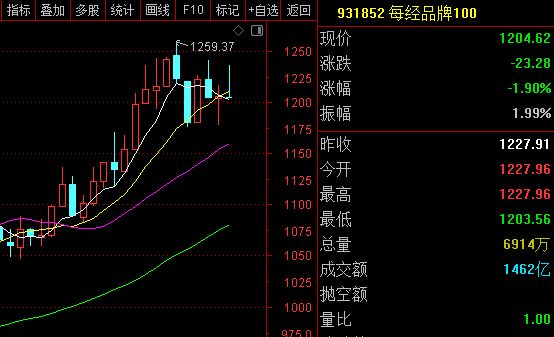
每经品牌100指数稳守1200点,10余只成分股周涨幅超过5%
Mei Ri Jing Ji Xin Wen· 2025-11-16 06:08
Market Overview - The A-share market is maintaining a volatile pattern under the policy emphasis on enhancing the resilience and risk resistance of the capital market, as well as improving the coordination between investment and financing functions [1][2] - The Every Day Brand 100 Index remains stable above the 1200-point mark, with several constituent stocks experiencing weekly gains exceeding 5% [1][2] Stock Performance - The Shanghai Composite Index fell by 0.18%, the Shenzhen Component Index by 1.40%, the ChiNext Index by 3.01%, and the STAR Market 50 Index by 3.85% during the week [2] - Notable performers include: - China International Marine Containers (CIMC) with a weekly gain of 11.33% - TCL Electronics with a gain of 10.29% - China Resources Land with a gain of 9.55% - 12 stocks, including China National Pharmaceutical Group and Haidilao, saw weekly gains exceeding 5% [4][5][6] Market Capitalization Growth - Agricultural Bank of China saw a market capitalization increase of 146.99 billion yuan, while Industrial and Commercial Bank of China, Tencent Holdings, and Bank of China each saw increases exceeding 50 billion yuan [4] Economic Indicators - The Consumer Price Index (CPI) for October rose by 0.2% both year-on-year and month-on-month, driven by a core CPI increase of 1.2% [6] - The overall economic operation remains stable, with challenges from external uncertainties and internal structural adjustments [6] Company Focus: China Resources Land - China Resources Land's stock performance was notable, with a weekly increase of 9.55% and a market capitalization increase of nearly 20 billion yuan [7] - The company is actively raising funds, including a mid-term note plan to raise 3.9 billion USD and a share placement to raise 2.06 billion HKD, which received strong institutional interest [8] - The funds raised will enhance liquidity for land acquisition and development costs, addressing the company's performance pressures amid a challenging real estate market [9] Financial Performance - In October, China Resources Land reported a total contract sales amount of approximately 15.2 billion yuan, a year-on-year decrease of 51%, and cumulative sales of 169.6 billion yuan for the first ten months, down 16.6% year-on-year [9] - The company aims to convert the raised funds into land reserves and project development, showcasing resilience in market fluctuations [9][10] Asset Management Growth - China Resources Land's asset management scale reached 462.1 billion yuan in 2024, a year-on-year increase of 8.1%, with shopping center asset management accounting for 64% of the total [10]