
产能过剩

Search documents
反内卷时代财富新密码
2025-08-05 03:18
Summary of Conference Call Industry Overview - The discussion primarily revolves around the **automobile industry** and the broader implications of **involution** in various sectors, particularly focusing on **price wars** and **homogeneous competition** [2][5][11]. Key Points and Arguments Involution in the Automobile Industry - The automobile market is experiencing significant **price fluctuations** due to intense competition, leading to a **price war** among manufacturers [2][3]. - In 2023, nearly **50% of car dealerships** reported losses, with over **40%** of them operating at a loss [3]. - The **inventory warning index** for dealerships has consistently remained above **50%**, peaking at **62%** in June, indicating a severe oversupply situation [3][4]. Homogeneous Competition and Innovation Deficiency - The industry is facing a **lack of innovation**, resulting in products that are increasingly similar, leading to **homogeneous competition** [5][6]. - Companies are relying on **price cuts** to gain market share, which is unsustainable and detrimental to profitability [5][6]. - The **manufacturing sector** is experiencing a **supply-demand imbalance**, with overcapacity in traditional sectors like steel and cement, while high-end manufacturing faces shortages [9][10]. Structural Issues in the Economy - The **dual pressure** of shrinking external demand and weak internal demand is causing persistent overcapacity in manufacturing [8][9]. - Key issues include: - **Suppressed consumer spending** due to slow growth in disposable income and inadequate social security systems [9]. - **Mismatch in industrial structure**, with traditional industries underutilized while advanced manufacturing sectors face supply shortages [9]. - **Investment-consumption imbalance**, where high investment rates do not translate into corresponding consumer demand [9][10]. Policy Responses and Recommendations - The government has initiated policies to combat involution, emphasizing the need for **enterprise autonomy** and **budgetary constraints** to encourage responsible resource allocation [11][12]. - A shift from **local government-led** industrial policies to **centralized** strategies is recommended to ensure fair competition and support for key strategic industries [13]. - The focus should be on fostering **innovation** and **technological upgrades** to help companies escape the cycle of price competition [15][16]. Support for Specialized Enterprises - The concept of **"specialized, refined, distinctive, and innovative"** enterprises is highlighted as a way to avoid involution by focusing on unique technologies and products [15][20]. - The establishment of the **Beijing Stock Exchange (北交所)** aims to support small and medium-sized enterprises (SMEs) in financing and innovation, addressing long-standing issues of **high financing costs** and **narrow funding channels** [19][20]. - The **北交所** allows for lower listing thresholds, enabling more SMEs to access capital markets, thus promoting innovation and growth [19][20]. Market Dynamics and Investment Opportunities - The **北交所** has seen significant growth, with over **50%** of its listed companies being specialized enterprises, particularly in high-tech sectors [24][26]. - The **北正五零指数** has shown impressive performance, with a **36% increase** year-to-date, indicating strong market interest in specialized firms [23][24]. - Investors are encouraged to consider the **high-risk, high-reward** nature of investing in specialized enterprises through the **北交所**, which offers unique opportunities for growth in the innovation sector [26]. Additional Important Insights - The discussion emphasizes the need for a **collaborative approach** between industrial and competitive policies to enhance technological resilience and drive industry upgrades [13][21]. - The **capital market's role** in supporting innovation through targeted policies and funding mechanisms is crucial for the sustainable growth of specialized enterprises [21][26].
永安期货有色早报-20250805
Yong An Qi Huo· 2025-08-05 01:38
锡 : 日期 现货进口收益 现货出口收益 锡持仓 LME C-3M LME库存 LME注销仓单 2025/07/29 -18866.43 -18168.11 52135 11 1855 505 2025/07/30 -15730.44 -20986.82 51663 -7 1945 580 | 2025/07/29 | -18866.43 | -18168.11 | 52135 | 11 | 1855 | 505 | | --- | --- | --- | --- | --- | --- | --- | | 2025/07/30 | -15730.44 | -20986.82 | 51663 | -7 | 1945 | 580 | | 2025/07/31 | -12318.38 | -23691.25 | 49644 | -16 | 1945 | 580 | | 2025/08/01 | -18781.98 | -18020.23 | 49454 | -1 | 1950 | 535 | | 2025/08/04 | -15533.72 | -20919.14 | 49437 | -39 | 1900 | 5 ...
财说丨半年报首亏、实控人撤离,翔丰华滑向“泥潭”
Xin Lang Cai Jing· 2025-08-05 00:08
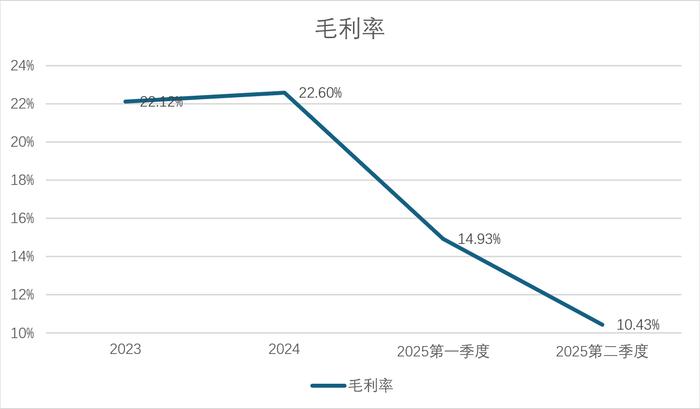
Core Viewpoint - Xiangfenghua (300890.SZ) reported its first half-year loss since its listing, with a loss of 2.95 million yuan, indicating significant financial distress in the lithium battery anode materials sector [1][2]. Financial Performance - In the first half of 2025, Xiangfenghua's revenue decreased by 2.80% to 688 million yuan, while net profit plummeted from 38.24 million yuan in the same period last year to a loss of 2.95 million yuan [1]. - The company's gross margin fell to 12.44%, down 57% from its peak of 28.79% in 2020, with the second quarter gross margin hitting a historical low of 10.43% [1][2]. - The net profit margin dropped from 5.3% to -0.49%, indicating a loss of 0.49 yuan for every 100 yuan in sales [1]. Industry Context - The lithium battery anode materials industry is facing severe price competition, with prices dropping by 40% from 2020 to 2024, leading to a staggering 98% decline in industry profits [2]. - The global production capacity for anode materials surged from 811,000 tons in 2020 to 3.546 million tons in 2024, an increase of 337% [2]. Capacity and Production Issues - Xiangfenghua's production capacity reached 90,000 tons by May 2025, with a recent expansion in its Fujian facility, despite the industry facing overcapacity [2]. - The demand for anode materials is projected at 2.47 million tons in 2025, while production capacity is expected to exceed 3.6 million tons, leading to significant oversupply [4]. Debt and Cash Flow Concerns - As of June 2025, Xiangfenghua's interest-bearing debt stood at 1.733 billion yuan, with a debt-to-asset ratio of 52.06%, reflecting a 3% increase from the end of 2024 [5]. - The company's operating cash flow turned negative, with a net outflow of 181 million yuan in the first half of 2025, and accounts receivable surged to 669 million yuan, a 32% increase year-on-year [5][6]. Management and Strategic Challenges - The core management has begun to reduce their stakes, with significant share reductions by major shareholders in late 2024 and early 2025 [8]. - Key projects, including the R&D center and artificial graphite production, have faced delays, indicating a lack of confidence in market recovery [8]. Market Dynamics - The industry is experiencing a "death spiral" where increased production leads to greater losses, with major players forced to accept unprofitable orders to maintain cash flow [9]. - Xiangfenghua's R&D spending was only 2.336 million yuan in the first half of 2025, representing less than 4% of total revenue, which is significantly lower than competitors [9]. Future Outlook - The only bright spot for Xiangfenghua is the energy storage sector, which saw a 64% increase in battery shipments in 2024, although the contribution of anode materials to this segment is limited [10].


“反内卷”叠加原材料价格上涨 纸企龙头发起新一轮涨价潮
Zheng Quan Shi Bao· 2025-08-04 18:48
Group 1 - The paper industry is experiencing a price increase wave, with leading companies like Nine Dragons Paper, Lee & Man Paper, and Shanying International announcing price hikes effective from August 1, marking the fourth round of price adjustments since July [1] - The primary driver for this price increase is the rising costs of raw materials, energy, and logistics, particularly affecting packaging paper prices [1] - The price of waste cardboard, a key raw material for corrugated paper, has a strong positive correlation with corrugated paper prices, with recent supply issues leading to price adjustments of 20-40 yuan/ton in certain regions [1] Group 2 - Manufacturers' pricing strategies aim to stimulate downstream purchasing and reinforce price increase expectations, encouraging packaging companies to procure in advance and reduce inventory pressure [2] - Despite frequent price hikes, weak terminal demand and overcapacity in the paper industry create uncertainty in the transmission of price increases through the supply chain [2] - The corrugated paper price increase has not fully translated to the packaging sector, with some packaging companies engaging in price competition due to insufficient orders [2] Group 3 - The overall profitability of the paper industry is expected to remain low in the second half of the year due to the linkage between raw material costs and paper prices [3] - Long-term challenges include overcapacity and insufficient demand, leading to severe competition and price wars among companies [3] - The Guangdong Provincial Paper Industry Association has initiated a campaign to promote high-quality development and combat low-price competition, indicating a push towards healthier industry practices [3]
海外视点丨受迫于矿石短缺,中国削减铜产量
Sou Hu Cai Jing· 2025-08-04 14:36
Group 1 - China's copper smelting industry is facing a turning point due to ongoing ore shortages, leading to production cuts while the government intensifies efforts to combat overcapacity across various sectors [2] - According to Shanghai Metals Market (SMM), copper production is expected to be 1.2 million tons in August, a decrease of 0.5% from July's peak, with further declines anticipated in September [2][3] - Despite recent record-high steel production, the resilience of the industry may have reached its limit, prompting policymakers to address issues of fierce competition and overcapacity that contribute to deflationary pressures in the economy [2] Group 2 - The current economic viability of smelting has been severely impacted by shortages of mined ores and scrap copper, which are essential for producing concentrates [2] - SMM reports that copper concentrate inventories at Chinese ports have fallen to their lowest level this year, slightly above 560,000 tons, forcing smelters to reduce output [3] - Maintenance activities at five smelting plants with a total capacity of 900,000 tons are expected to further decrease production in September [3]

全球甲基丙烯酸酯市场下半年回暖难
Zhong Guo Hua Gong Bao· 2025-08-04 09:27
Group 1 - The global MMA and acrylate market will remain under pressure due to weak demand, increasing capacity, and cautious purchasing attitudes, limiting recovery potential into the second half of 2025 [1] - In Europe, the MMA market is facing persistent issues of weak demand and oversupply, with producers expressing concerns about maintaining stability rather than expecting growth [2][3] - Downstream PMMA companies in Europe anticipate aggressive pricing strategies from Chinese and Korean producers, driven by geopolitical issues affecting the automotive and construction sectors [4] Group 2 - The US MMA market is closely monitoring the new 250,000 tons/year MMA plant by Rohm in Texas, which will continue to release capacity, while demand recovery in construction and automotive coatings remains uncertain [5][6] - The Asian MMA and PMMA markets are expected to struggle with demand recovery in the second half of 2025, following a period of weak demand and low pricing [7][8] - In India, the acrylic acid butyl ester market is under pressure due to new domestic capacity, with expectations of continued low demand, particularly in the coatings sector [8]
欧盟再提"产能过剩",要求中国放开稀土管制,却被中方反将一军
Sou Hu Cai Jing· 2025-08-02 12:45
Group 1 - The European Union (EU) is criticizing China for "overcapacity" in industries like new energy and steel while simultaneously demanding that China lift export restrictions on rare earth minerals, highlighting a double standard in their approach [3][8][9] - China holds approximately 87% of the world's rare earth resources, which are essential for various high-tech applications, indicating a significant leverage in global supply chains [5][6] - China's response to the EU's demands emphasizes the importance of regulating rare earth exports to protect national resources, asserting that market demand will dictate production capacity rather than external pressures [9][10] Group 2 - In 2022, China's exports of new energy vehicles to the EU increased by 35%, suggesting that European consumers prefer Chinese products despite claims of overcapacity [8] - The EU's request for China to take on "great power responsibility" for global supply chain stability is seen as hypocritical, given past instances where the EU did not advocate for such responsibilities when benefiting from cheap Chinese rare earths [3][6] - The current situation reflects a shift in power dynamics, with China now in a position to negotiate from strength regarding its rare earth resources, contrasting with previous times when it faced technology restrictions from the EU [10]

锂电负极行业首份半年报出炉,翔丰华毛利率下降6个百分点
Hua Xia Shi Bao· 2025-08-02 12:22
Core Viewpoint - Xiangfenghua (300890.SZ) reported its first half-year loss since its listing, with a revenue of 688 million yuan, a 2.8% year-on-year decline, and a net profit of -2.95 million yuan, a 107.7% year-on-year decrease, indicating significant challenges in the anode materials industry due to rising raw material costs and oversupply [3][4][5]. Company Performance - In the first half of 2025, Xiangfenghua's gross margin fell to 12.35%, down 6.23 percentage points from the previous year, while operating costs increased by 4.17 percentage points [5]. - The company experienced a significant drop in its net profit, with a non-recurring net profit of -14.80 million yuan, primarily due to non-operating income of 11.85 million yuan, including government subsidies [6][7]. - Xiangfenghua's market share is in the middle of the industry, with a production capacity utilization rate of 83.43% in 2024, and it shipped 68,900 tons that year [4]. Industry Context - The anode materials industry is facing oversupply and intense competition, leading to a divergence in performance among companies, with leading firms maintaining profitability while smaller firms struggle [4][10]. - The average gross margin for major listed companies in the industry was 22.26% in 2024, highlighting the pressure on margins due to rising costs and competitive pricing [5]. - The industry has seen a significant increase in production capacity, with output rising from 450,000 tons in 2020 to 1.89 million tons in 2024, resulting in a 320% increase [9]. Market Dynamics - The price of petroleum coke, a key raw material, surged over 70% in early 2025, impacting the cost structure of anode manufacturers [7]. - Despite a slight recovery in raw material prices in the second quarter, the overall profitability of the anode industry remains under pressure due to oversupply and price wars [8][9]. - High-end products are more profitable, with companies like Zhongke Electric maintaining profitability through premium offerings, while lower-end products struggle to generate profit [10].

德方纳米主要股东“掐点”减持 业绩深亏应收账款周转天数2年翻番
Xin Lang Cai Jing· 2025-08-01 13:52
Core Viewpoint - The reduction plan by major shareholder Qin Dongdong highlights the ongoing operational challenges faced by Defang Nano, as the company continues to report losses despite some revenue growth [2][4]. Group 1: Shareholder Actions - Qin Dongdong, holding 5.01% of Defang Nano, plans to reduce his stake by up to 2.7954 million shares, representing 1% of the total share capital, within three months after a 15 trading day period from the announcement [1]. - The timing of the reduction coincides with the end of a six-month lock-up period following the transfer of shares, indicating a strategic move [1]. Group 2: Financial Performance - In Q1 2025, Defang Nano reported total revenue of 2.004 billion yuan, a year-on-year increase of 5.9%, but still posted a net loss of 167 million yuan [2]. - The loss margin has narrowed by 9.51% compared to the same period last year, but the company has not yet achieved profitability [2]. - Sales of phosphate-based cathode materials reached 61,500 tons, marking a year-on-year growth of 36.85% and a quarter-on-quarter increase of 5.65% [2]. - The company continues to face a loss of 370 yuan per ton, although this is an improvement from the 1,100 yuan loss per ton reported in Q4 2024 [2]. Group 3: Operational Challenges - The accounts receivable turnover days have increased from 45 days in 2022 to 92 days by the end of 2024, significantly exceeding the industry median of approximately 70 days, indicating reduced cash flow efficiency [2]. - As of Q1 2025, the current ratio of Defang Nano was only 0.94, below the safe level, raising concerns about short-term solvency [2]. Group 4: Strategic Initiatives - In response to operational pressures, Defang Nano is pursuing four key strategies to improve its business situation: optimizing product structure, enhancing operational management, accelerating global capacity expansion, and fostering continuous innovation [3]. Group 5: Market Outlook - Some brokerages predict that Defang Nano may achieve a quarterly profit in the second half of 2025, although profit expectations for 2025-2026 have been revised downward [4]. - The timing of Qin Dongdong's reduction is seen as a cautious signal to the market, reflecting the company's ongoing struggles with systemic challenges such as industry overcapacity and raw material price fluctuations [4].

有色金属周度报告-20250801
Xin Ji Yuan Qi Huo· 2025-08-01 10:34
Report Summary 1. Report Industry Investment Rating No relevant information provided. 2. Core Viewpoints of the Report - Most metal prices in the domestic market declined this week, with significant drops in industrial silicon, lithium carbonate, and other varieties. The prices of some metals' spot and futures showed different trends. The inventories of copper in the three major exchanges continued to rise, and the copper concentrate processing fee remained at a historical low. The demand side of copper presented a mixed situation, with growth in the automotive and new - energy vehicle sectors but declines in the real - estate and photovoltaic sectors. Under the background of the "anti - involution" policy, the output of industrial silicon and polysilicon increased in July, and the futures prices of related varieties may be adjusted in the short term and face long - term over - capacity issues [2][11][16][30]. 3. Summary by Related Catalogs 3.1 Domestic Main Metal Spot Price Trends - This week, the prices of most metals in the domestic market declined. The futures prices of copper, aluminum, zinc, lead, nickel, industrial silicon, lithium carbonate, and polysilicon all decreased, with the largest decline of 14.41% in the lithium carbonate 2509 contract. The spot prices of copper, aluminum, zinc, lead, nickel, and industrial silicon also decreased, while the spot prices of alumina, lithium carbonate, and polysilicon increased, with the largest increase of 5.71% in lithium carbonate [2]. 3.2 Copper Inventory Trends in the Three Major Exchanges - As of July 25, the SHFE copper inventory was 84,600 tons, a week - on - week increase of 3,100 tons (+3.80%). As of August 1, the LME copper inventory was 141,800 tons, a week - on - week increase of 13,300 tons (+10.35%). As of July 24, the COMEX copper inventory was 257,900 tons, a week - on - week increase of 10,000 tons (+4.03%). The inventories in the three major exchanges continued to rise, and non - US copper inventories flowed back [11][16]. 3.3 Copper Supply and Demand - **Supply**: As of July 31, the spot TC of copper concentrate dropped to - 42.50 dollars per ton, a slight increase of 0.4 dollars per ton. The expectation of a tight supply at the mine end still exists, and the processing fee remains at a historical low [19]. - **Demand**: In June, the production and sales of automobiles and new - energy vehicles increased. The production and sales of new - energy vehicles increased by 35% and 36.9% year - on - year respectively, accounting for 45.8% of the total new vehicle sales. From January to June, the new construction area of housing decreased by 20%, and the completion area decreased by 14.8%. In June, the newly - added photovoltaic installed capacity was 14.36GW, a year - on - year decrease of 38% and a month - on - month decrease of 84.54% [23][25][27]. 3.4 "Anti - Involution" Policy Summary - Since 2024, a series of policies have been introduced to address "involution - style" competition, including measures to promote large - scale equipment updates, eliminate backward production capacity, and prevent low - price and disorderly competition. In June and July 2025, specific policies such as setting a price floor for polysilicon, raising the access threshold for new projects, and strengthening governance of low - price competition were introduced [28]. 3.5 Strategy Recommendations - **Short - term**: Pay attention to position management and beware of repeated risks. - **Long - term**: Entering the wet season, focus on the inventory clearance speed of the industry, and the long - term over - capacity situation remains [31][32]. 3.6 Key Variety Weekly Summary - This week, the three varieties on the GZEX adjusted across the board. The weekly decline of the industrial silicon 2509 contract was 12.60%, the polysilicon 2509 contract was 3.58%, and the lithium carbonate 2509 contract was 14.41%. The polysilicon market fluctuated widely this week, mainly due to the spread and clarification of a "small composition" about polysilicon storage. The output of industrial silicon and polysilicon increased in July. In the short term, the futures prices may be adjusted, and attention should be paid to repeated risks [30].