供给侧结构性改革

Search documents
广东发文促进经济持续向好服务做强国内大循环 将在稳就业、稳企业、稳市场、稳预期方面发力
Xin Hua Cai Jing· 2025-06-24 13:48
在着力扩大有效投资方面,用好国家政策和资金支持,加快"两重"项目实施,做好项目谋划储备,激发 民间投资活力,加力公共服务投资,全力推动投资回升。其中提到,扎实推进专项债券"自审自发"工 作,加快债券发行使用,优化额度分配机制,向项目准备充分、投资效率较高、资金使用效益好的地市 倾斜,指导国有企业按规定承接更多专项债券用作项目资本金。 (文章来源:新华财经) 在千方百计稳定就业方面,聚焦重点群体就业,拿出更多有力措施,加强政策支撑、培训赋能、风险预 研,着力稳定现有岗位、拓展就业空间,确保就业形势稳定。其中提到,加强对企业的用工指导、政策 咨询、劳动关系协调等服务,加快兑现扩岗补助、担保贷款、就业补贴等政策措施。 在深挖潜力提振消费方面,深入实施提振消费专项行动,推动大宗消费更新升级,激发服务消费潜力, 放大新兴消费带动效应,挖掘消费增量、释放消费活力。其中提到,鼓励各地结合实际通过发放购房补 贴、消费券等,加大对首次置业居民、多子女家庭、赡养老人家庭、农业转移人口等的购房支持力度。 新华财经北京6月24日电为有效应对当前我省外部环境不确定性因素增多、经济下行压力较大的形势, 统筹实施扩大内需战略和深化供给侧结 ...
周度经济观察:低通胀下的股债配置-20250624
Guotou Securities· 2025-06-24 05:06
Economic Performance - In May, the general public budget revenue growth rate was 0.1%, a significant drop of 1.7 percentage points from the previous month[4] - Tax revenue decreased by 1.4 percentage points compared to the previous month, marking the first negative growth since 2024[4] - Government fund income in May fell by 7.8% year-on-year, a decline of 15.5 percentage points from the previous month[5] Fiscal Policy and Market Impact - The decline in fiscal growth in May is expected to negatively impact total demand, with potential economic downtrends due to reduced exports and fiscal spending[6] - Government fund expenditure growth in May was 9.1%, down 35.2 percentage points from April, indicating a significant reduction in fiscal strength[6] - The low inflation environment is likely to persist in the short term, adversely affecting corporate profits, household income, and consumption[11] Asset Allocation Insights - The bond market is expected to see yields decline further in a low inflation environment, while dividend stocks continue to outperform[10] - The current liquidity in the financial market is relatively abundant, driven by strong bank credit lending intentions[11] - The performance of different asset classes reflects market pricing in a low inflation environment, with a focus on policy responses to inflation[10] Geopolitical and Policy Considerations - Geopolitical risks and unexpected policy changes remain significant risk factors for the economic outlook[3] - The Federal Reserve's recent meeting maintained the federal funds target rate, reflecting a cautious approach amid economic uncertainties[15]
5月经济运行的复合节奏
BOCOM International· 2025-06-17 13:45
Economic Overview - China's economic data for May 2025 shows structural differentiation, with consumer market recovery being the most significant highlight, as retail sales grew by 6.4% year-on-year, the highest this year, driven by policies like "trade-in for new" and holiday promotions [1][3] - Industrial production growth moderated to 5.8%, influenced by external factors, but high-tech manufacturing and equipment manufacturing maintained rapid growth around 9% [1][2] - Fixed investment growth slightly slowed, while foreign trade demonstrated resilience, with exports showing some differentiation in products and regions [1][7] Industrial Production - The industrial added value for May increased by 5.8% year-on-year, a decline of 0.3 percentage points from the previous month, primarily due to external factors affecting export delivery values and production-sales ratios [2] - Despite the overall slowdown, equipment manufacturing and high-tech manufacturing sectors grew by 9.0% and 8.6% respectively, indicating a continued trend towards high-end and intelligent manufacturing [2] Consumer Market - Retail sales in May saw a year-on-year increase of 6.4%, significantly exceeding market expectations, driven by the "trade-in for new" policy, concentrated consumption during the May Day holiday, and early promotions for the "618" shopping festival [3] - Categories such as home appliances, communication devices, and cultural office supplies experienced retail growth of 53.0%, 33.0%, and 30.5% respectively, showcasing the effectiveness of policy stimuli [3] Fixed Asset Investment - From January to May, fixed asset investment grew by 3.7% year-on-year, influenced by a moderate decline in manufacturing investment and real estate investment [5] - Manufacturing investment increased by 8.5%, reflecting a slowdown due to external uncertainties and declining capacity utilization rates, indicating potential for improved corporate investment sentiment [5] Real Estate Market - Real estate development investment in May decreased by 12% year-on-year, with new housing sales area and sales value declining by 3.3% and 5.9% respectively [6] - Recent government meetings have emphasized the need for stronger measures to stabilize the real estate market, with ongoing policy adjustments expected to support recovery [6] Foreign Trade - Exports in May grew by 4.8% year-on-year, a decrease from the previous month's 8.1%, affected by external demand fluctuations and high base effects [7] - High-tech products like machinery and electronics continued to show resilience, with exports of integrated circuits, automobiles, and ships growing by 35.4%, 13.8%, and 43.7% respectively [7][44] Financial Data - In May, the social financing scale increased by 2.29 trillion yuan, reflecting a year-on-year increase of 2.248 billion yuan, primarily driven by government bonds and direct financing [8] - The M2 money supply grew by 7.9% year-on-year, indicating marginal improvements in market liquidity, while new RMB loans totaled 620 billion yuan, with corporate loans accounting for nearly 530 billion yuan [8][39]
结合近期市场变化,再论生猪板块预期差
2025-06-16 15:20
Summary of Conference Call on Swine Industry Industry Overview - The conference call discusses the swine industry, particularly focusing on the impact of environmental policies in Hunan and other provinces on pig farming and supply dynamics [1][2][4]. Key Points and Arguments - **Environmental Policies Impact**: Hunan's strict environmental checks are accelerating the exit of smallholders from pig farming, which may significantly affect local pig production capacity. This policy targets farms with over 50 pigs and is expected to last from June to September [2][4]. - **Supply Dynamics**: The exit of smallholders has reduced their share in pig inventory to below 40%. The tightening of environmental regulations may also impact medium and large-scale farms, as few meet compliance standards [2][4]. - **Market Behavior**: In the Southwest region, farmers are increasingly raising larger pigs due to local dietary preferences and favorable feed prices. Current average slaughter weight is around 135 kg, and a reduction to 120 kg could increase supply pressure by approximately 10% [6][7]. - **Price Trends**: High piglet prices in the first half of the year are attributed to increased demand from the expansion of free-range farming in Shandong and the growing need for piglet fattening in the Southwest [9][11]. - **Substitution Effects**: Farmers are shifting from breeding sows to fattening piglets or finishing pigs, creating a substitution effect between these two farming methods [10][11]. - **Demand Comparison**: The Southwest region shows stronger demand compared to Shandong, driven by insufficient frozen meat stocks and anti-dumping policies limiting imports, which narrows the price gap between fresh and frozen products [12][13]. - **Cost Structure**: Listed companies with self-breeding and self-raising practices have a cost advantage, with production costs around 12-12.5 yuan per kg, compared to 13-14 yuan per kg for smallholders who purchase piglets [14]. Additional Important Insights - **Regulatory Effects on Market Behavior**: The recent ban on secondary fattening by the National Development and Reform Commission (NDRC) has paradoxically increased the enthusiasm for secondary fattening among farmers, as they anticipate price increases [8]. - **Future Outlook**: There may be a concentration of market supply in the second half of the year due to NDRC's requirements for large enterprises to reduce average weights. The impact of piglet diarrhea in the Southwest during the first quarter is expected to have a minor effect on supply in July and August [15]. This summary encapsulates the critical insights from the conference call regarding the swine industry, highlighting the interplay between regulatory changes, market dynamics, and cost structures.
国家统计局:要进一步统筹扩大内需和深化供给侧结构性改革 推动价格合理回升
news flash· 2025-06-16 03:04
Core Viewpoint - The National Bureau of Statistics emphasizes the need to further coordinate the expansion of domestic demand and deepen supply-side structural reforms to promote a reasonable recovery in prices [1] Group 1: Price Trends - In May, the consumer price index (CPI) for residents decreased by 0.1% year-on-year and fell by 0.2% month-on-month, indicating a shift from an increase to a decrease in prices [1] - The decline in prices is primarily influenced by international input factors and a decrease in food prices [1] Group 2: Policy Implications - The current price situation requires a comprehensive and dialectical view, recognizing both the effects of policies aimed at expanding domestic demand and the low overall price levels that affect corporate profitability and employment growth [1] - The core CPI growth rate is steadily expanding, and positive price changes are accumulating [1] Group 3: Future Directions - Moving forward, there is a need to further coordinate the expansion of domestic demand and deepen supply-side structural reforms [1] - The goal is to leverage the combined effects of macroeconomic policies, regulate market price order, improve supply-demand relationships, and promote a reasonable recovery in prices [1]
长裕集团上交所IPO“已问询” 氧氯化锆产能规模全球最大
Zhi Tong Cai Jing· 2025-06-15 23:20
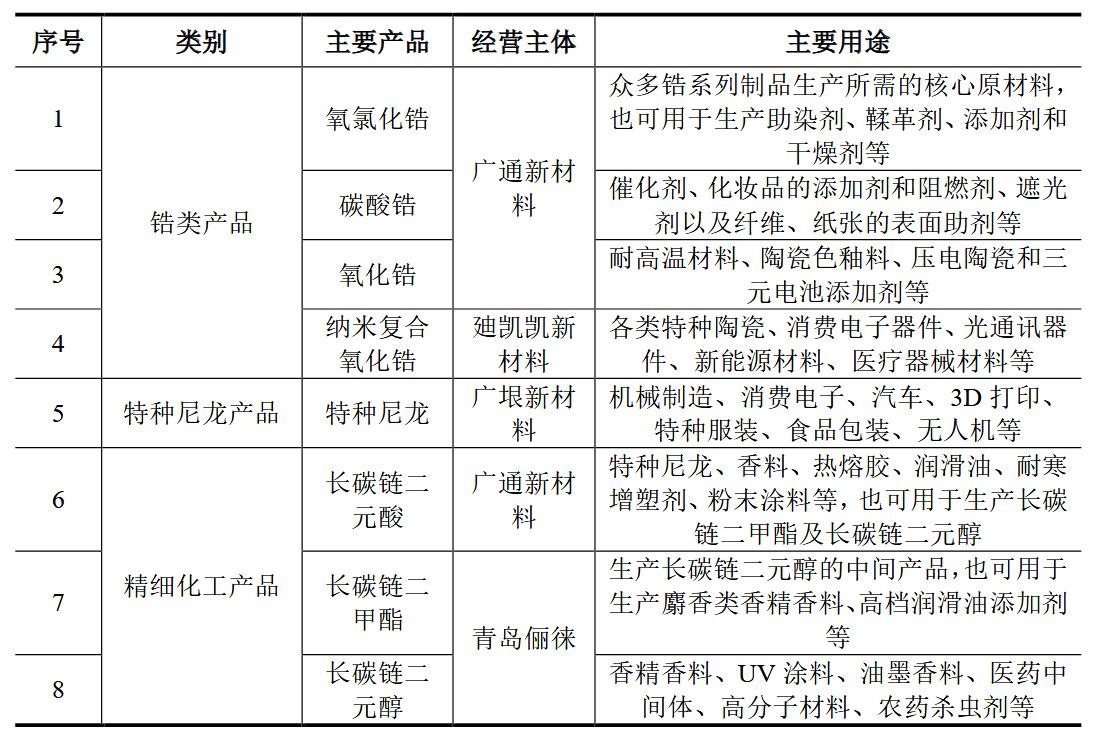
Core Viewpoint - Changyu Group has applied for a listing on the Shanghai Stock Exchange, with its review status changed to "inquired," aiming to raise 700 million yuan [1]. Company Overview - Changyu Group specializes in the research, production, and sales of zirconium products, specialty nylon products, and fine chemical products, with key products including zircon oxychloride, zircon carbonate, zircon oxide, nano-composite zircon oxide, specialty nylon, long-chain dicarboxylic acid, long-chain diol, and long-chain dimethyl ester [1]. - The company is a well-known supplier of zirconium and specialty nylon products, holding the largest global production capacity for zircon oxychloride and leading in specialty nylon production capacity and variety in China [1]. Product Applications - The products of Changyu Group are widely used in various sectors, including automotive, communications, consumer electronics, high-performance ceramics, and medical fields, with sales extending to regions such as mainland China, Europe, the United States, Japan, South Korea, India, and Southeast Asia [3]. - The company has established strong partnerships with notable industry players, including Guocera Materials, First Rare Elements, Japan's Tokai, BYD, Solvay, Jinhua Technology, Swiss EMS, and South Korea's Hanwha Group [3]. Financial Performance - For the fiscal years 2022, 2023, and 2024, Changyu Group reported revenues of approximately 1.669 billion yuan, 1.607 billion yuan, and 1.637 billion yuan, respectively, with net profits of approximately 255 million yuan, 189 million yuan, and 208 million yuan [3]. - The total assets of the company as of December 31, 2024, are reported at 1.671 billion yuan, with equity attributable to shareholders at 1.267 billion yuan [4]. - The company’s asset-liability ratio stands at 5.16% for 2024, with a basic earnings per share of 0.56 yuan [4]. Market Outlook - The demand for zirconium materials is expected to grow, particularly in defense, high-end manufacturing, and sectors like 5G and electronic information communication, driven by the ongoing structural reforms in the chemical industry and China's transition from a major economic power to a strong economic power [2]. - According to QYResearch, the global zircon oxychloride market is projected to reach 750 million USD by 2030, indicating a significant expansion in market capacity due to increasing downstream demand [2].

从资本市场透视供需再平衡:原因剖析与路径优化
Sou Hu Cai Jing· 2025-06-13 03:12
Core Viewpoint - China's economy is currently facing a complex situation of short-term demand insufficiency and supply surplus, reflecting both cyclical fluctuations and structural imbalances during the industrial transformation process. The capital market serves as an economic "barometer," capturing supply-demand changes and providing forward-looking economic signals for decision-makers. The article suggests enhancing short-term demand management while deepening supply-side reforms to optimize macro-control using capital market signals, thereby improving the efficiency and quality of supply-demand dynamic balance [1]. Group 1: Current Imbalance of Total Supply and Demand - Since 2022, persistent low domestic prices and capital market price adjustments reflect issues of insufficient total demand and supply imbalance [2]. - Total demand remains weak, with both investment and consumption under pressure. As of April 2025, CPI has been low for 25 months, and PPI has experienced negative growth. The GDP deflator index has declined for eight consecutive quarters, indicating weak future demand expectations [3]. - Investment in real estate has led to a significant drop in related asset prices, with real estate development investment growth slowing since April 2022, causing related industries like black metal smelting and cement to experience negative price growth [3]. - Consumer spending is also affected by slowing income growth, with actual income growth decreasing from 8.2% in 2015 to 5.1% in 2024, and retail sales growth dropping from 10.4% in April 2015 to 4.7% in April 2025 [3]. Group 2: Structural Supply Imbalance - Traditional industries face overcapacity pressures, with industrial capacity utilization hovering around 75%, below the internationally recognized level of 80%. As of April 2025, indices for traditional cyclical industries like steel and chemicals have dropped by 27.7% and 31.1% respectively from their 2022 peaks [4]. - Emerging industries are experiencing rapid expansion alongside price declines, with significant price drops in sectors like photovoltaics and new energy vehicles. The photovoltaic equipment index has fallen by 68.4% from its 2022 peak [4]. - External demand uncertainty is increasing, with export prices for products like optical fibers and new energy vehicles declining significantly, reflecting the negative impact of external demand fluctuations on enterprises [4]. Group 3: Analysis of Causes for Imbalance - The supply-demand imbalance stems from a combination of external complexities and domestic economic transformation challenges, influenced by cyclical factors, structural contradictions, and trend changes [5]. - Post-pandemic recovery has been asymmetric, with industrial production recovering faster than consumer spending, leading to inventory buildup and increased supply pressure [6]. - Investment is increasingly directed towards innovation-driven industries, with significant capital inflow into high-tech manufacturing, while traditional manufacturing sectors see capital outflow [7]. - The shift towards high-quality development is reshaping supply-demand relationships, with a focus on efficiency and green low-carbon initiatives impacting traditional energy-intensive industries [8]. Group 4: Policy Recommendations - The government emphasizes addressing structural supply-demand contradictions to promote balance, suggesting the use of market signals to guide policy formulation [9]. - Establishing a multi-dimensional monitoring network that includes stock market indices, futures price trends, and ETF fund flows is recommended to enhance macroeconomic assessment [10]. - Implementing market-oriented capacity governance mechanisms and targeted policies to promote industrial upgrades is crucial for addressing overcapacity and guiding enterprises towards quality improvement [11]. - Demand management strategies should focus on using market information for counter-cyclical adjustments, supporting technology innovation and improving income distribution to enhance consumer capacity [13].

5月核心CPI总体呈现稳中有升态势 国内经济韧性凸显
Zhong Guo Chan Ye Jing Ji Xin Xi Wang· 2025-06-13 00:13
Group 1: CPI Trends - In May, the Consumer Price Index (CPI) showed a month-on-month decrease of 0.2% and a year-on-year decrease of 0.1% [1][2] - The core CPI, excluding food and energy, increased by 0.6% year-on-year, with the growth rate expanding by 0.1 percentage points compared to the previous month [1][2][3] - Energy prices fell by 1.7% month-on-month, contributing to a 0.13 percentage point decline in the overall CPI [1] Group 2: PPI Trends - The Producer Price Index (PPI) decreased by 3.3% year-on-year and 0.4% month-on-month in May [4][5] - The average PPI for January to May showed a decline of 2.6% compared to the same period last year [4] - The decline in PPI is attributed to falling international oil prices and weak domestic demand, although some sectors are showing marginal price improvements [5] Group 3: Economic Policies and Outlook - Macroeconomic policies are showing effects, with improvements in supply-demand structures leading to positive price changes in certain sectors [2][3] - Short-term pressures on CPI are expected due to international energy price fluctuations and abundant food supply, while long-term recovery is anticipated as consumption demand is released [3] - Recommendations include enhancing government investment and focusing on high-tech manufacturing to support industry upgrades [6]
申万宏源,最新研判!
天天基金网· 2025-06-11 05:12
Core Viewpoint - The article discusses the potential for a bull market in the A-share market, driven by factors such as the "asset scarcity" among residents, improvements in corporate governance, and the "anti-involution" policies that are expected to enhance corporate profitability [5][6][7]. Macroeconomic Insights - The macroeconomic indicators are expected to undergo a "strong-weak conversion" in the second half of 2025, with manufacturing facing downward pressure while the service sector shows signs of recovery [1][4]. - The transformation of the Chinese economy has entered a new phase, with traditional sectors like real estate contributing less to economic growth, leading to a divergence in economic indicators [2][3]. Industry Transformation - The transformation of industries is gaining momentum, with high-tech industries now accounting for 16.3% of the industrial sector, indicating a shift towards new consumption patterns [3]. - The service sector is identified as a crucial area for absorbing structural employment pressures, but it currently suffers from supply shortages [4]. A-Share Market Outlook - The A-share market is poised for a potential bull market, with expectations that 2026 will outperform 2025, and the main bull market phase is anticipated between 2026 and 2027 [6][7]. - The current market is likely to remain in a consolidation phase until conditions are ripe for a larger market rally [7]. Investment Strategy - Key sectors for investment include AI, defense, and consumer goods, with a focus on high-quality themes in a volatile market [8]. - The Hong Kong stock market is expected to lead the rally, with A-share assets increasingly being listed there, particularly in the internet and high-dividend sectors [8].


年中展望 | 星火燎原(申万宏观·赵伟团队)
申万宏源研究· 2025-06-11 01:58
Core Viewpoint - The article discusses the transformation of industries and the necessity for policy innovation in response to economic changes since 2022, highlighting the divergence in economic indicators and the impact of external factors on domestic industries [1][6]. Group 1: Industry Transformation and New Challenges - Since 2022, the economic transformation has entered a "new stage," characterized by a downward trend in the contribution of traditional sectors like real estate, with growth rates for real estate-related industries dropping below 2% [7][24]. - The pressure in this new stage is increasingly focused on terminal demand, leading to a decline in PPI while CPI remains weak, indicating a shift of excess capacity to downstream sectors [13][24]. - The transformation has resulted in a significant decline in the growth rate of traditional industries, similar to trends observed from 2011 to 2015, which ultimately stabilized the economy [7][13]. Group 2: Policy Innovation - The effectiveness of traditional policy frameworks has diminished, necessitating comprehensive policy innovation to address the new economic landscape [1][35]. - By the end of 2024, a comprehensive optimization of the policy framework was initiated, focusing on supply-side structural reforms and enhancing the targeting of structural policies [35][42]. - The new policy framework emphasizes high-quality development, high-level openness, and sustainable growth, with a shift from investment-driven to people-centered approaches [3][121]. Group 3: External Shocks as Accelerators - External shocks, particularly during the tariff phases, have accelerated domestic industrial upgrades, with significant shifts in trade structures observed [64][65]. - The first phase of tariffs led to a notable increase in high-value-added industries, while the second phase primarily impacted low-value-added consumer goods, which were already experiencing significant internal competition [64][101]. - The export structure has improved, with a decrease in the proportion of exports to the U.S. and an increase in exports to non-U.S. economies, particularly in the context of the Belt and Road Initiative [83][90]. Group 4: Focus on "Anti-Internal Competition" and Service Sector - The new policy framework is expected to focus on "anti-internal competition" and the service sector, which can absorb structural employment pressures during the transformation process [4][121]. - The service sector has become the largest employment absorption area, yet it faces significant supply shortages, indicating a need for increased support and demand stimulation [4][121]. - By the second half of 2025, the main macroeconomic indicators may experience a "strong-weak conversion," with potential downward pressure on manufacturing and positive improvements in service sector investments and consumption [4][121].