
牛市

Search documents
A股猛攻3900点,中国资产杀疯了
Feng Huang Wang Cai Jing· 2025-09-17 05:41
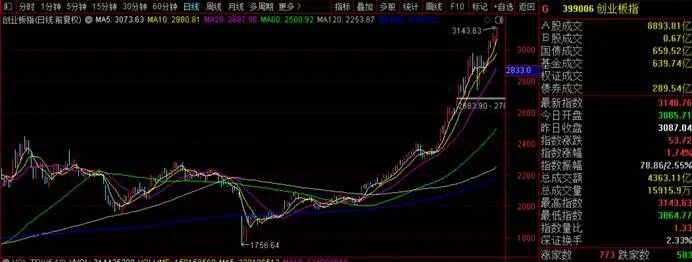
Group 1: A-Share Market Performance - The A-share market continues to show strong performance, with the Shanghai Composite Index closing at 3877.55 points, up 0.41%, and the Shenzhen Component Index rising to 13197.01 points, up 1.02% [1] - Since September 2024, the A-share market has entered a strong upward trend, with the Shanghai Composite Index increasing by 45% from its low of 2690 points, reaching a 10-year high [3] - The ChiNext Index has seen an impressive increase of 100% from its low, indicating robust market activity and investor confidence [3] Group 2: Foreign Investment in Chinese Assets - Over 90% of foreign investors express willingness to increase their exposure to Chinese assets, the highest level since early 2021 [7] - Global hedge funds are rapidly buying Chinese stocks, with a buy-to-short ratio of approximately 9:1, indicating strong bullish sentiment [7] - Fidelity Investments has increased its registered capital from $160 million to $182 million, reflecting foreign institutions' confidence in the Chinese market [8] Group 3: Long-term Bull Market Outlook - Historical trends suggest that China experiences significant bull markets approximately every ten years, with the current bull market driven by policy easing, a new technological revolution, and ample liquidity [11] - Analysts believe the current market is still in its early stages, with potential for significant growth, although it may not reach the extreme levels of previous bull markets [11] - The upcoming bull market is expected to surpass the previous high of 6124 points, with some estimates suggesting a potential target of 15,000 points from a starting point of 2600 [11] Group 4: Hong Kong Market Dynamics - The Hang Seng Index has continued its upward trend, closing at 26812.19 points, with the Hang Seng Tech Index rising by 3.5% [5] - The influx of capital into the Hong Kong market is driven by strong performance in technology and financial sectors [5] - Analysts suggest that the Hong Kong market may be poised for a rebound, particularly in internet, consumer, pharmaceutical, and non-bank financial sectors [12]

非银存款环比少增加近万亿元,居民入市脚步在放缓?
Hua Xia Shi Bao· 2025-09-17 01:38
Core Insights - The article discusses the trend of residents' deposits decreasing while non-bank deposits are increasing, indicating a shift of funds towards financial products and capital markets [2][3] - In August, despite a strong A-share market, the growth of non-bank deposits slowed down, raising questions about the sustainability of this trend [2][4] Group 1: Deposit Trends - In July, residents' deposits decreased by 1.1 trillion yuan, while non-bank deposits increased by 2.14 trillion yuan, indicating a significant shift of funds [2] - In August, non-bank deposits increased by 1.18 trillion yuan, which is a year-on-year increase of 0.55 trillion yuan but a month-on-month decrease of nearly 1 trillion yuan [2][4] - The trend of residents moving deposits to non-bank financial institutions is continuing but at a slower pace, suggesting potential changes in investor behavior [2][5] Group 2: Market Performance - The A-share market saw a rise from 3,562 points on August 1 to 3,871 points on August 26, leading many to believe that the market had entered a bull phase [3] - Despite the bullish market, the slowdown in non-bank deposit growth raises questions about investor confidence and potential profit-taking behavior [5][6] Group 3: Financial Products and Investment Behavior - The scale of bank wealth management products remained stable, with a slight increase in August, indicating continued interest in these investment vehicles [4][5] - The majority of bank wealth management investments are still in bonds, which have experienced volatility, yet there remains a preference for stable investment products among residents [5][6] - The overall trend of decreasing deposit rates is expected to continue, which may further encourage the movement of funds into the stock market over the long term [6]

Any Fed decision outside of 25bps cut will bring volatility to the markets, says Schwab's Aguilar
Youtube· 2025-09-16 20:52
Market Expectations - A quarter-point rate cut is widely anticipated, with 25 basis points being almost certain, while any other decision could lead to significant market volatility [2][3] - Historical data shows that after rate cuts, particularly when the market is near all-time highs, stocks tend to move higher, with 20 out of 20 instances indicating a positive trend [5] Economic Indicators - The labor market is a key factor influencing the expected rate cut, with inflation metrics also playing a crucial role in determining future cuts [3][4] - Consumer discretionary stocks are outperforming staples, indicating a bullish market sentiment, while high beta stocks are also hitting new highs [6] Tariff Concerns - Tariff uncertainties have diminished for the remainder of the year, although there is potential for these concerns to resurface in the future [7][8] - The impact of tariffs has been absorbed by companies with higher margins, allowing them to maintain profitability despite potential cost increases [9] Investment Strategies - There is a positive outlook for international stocks, particularly in Europe, due to attractive valuations and earnings growth, while small caps are viewed as underweight compared to large caps [10][11] - The market anticipates six rate cuts over the next 15 months, but the economy may perform better than expected, potentially leading to fewer cuts [11] Consumer Sentiment - Retail and consumer data are showing resilience, suggesting that the economy may continue to grow, supported by increased capital expenditures as companies resume delayed investments [12][13]

策略日报:蓄势-20250916
Tai Ping Yang Zheng Quan· 2025-09-16 14:42
Group 1: Macro Asset Tracking - The bond market showed a low opening and high closing trend, with a slight increase. The expectation is that the bond market will hit a new low for the year, targeting the low point around September 30, 2024, when the policy shifted last year [1][11] - The A-share market is maintaining a bullish trend, with a significant increase in trading volume and volatility after breaking the high point from October 8 last year. The outlook suggests that the stock market will continue to outperform the bond market [1][11] - The overall market is experiencing a V-shaped reversal, with the ChiNext index leading the gains among the three major indices. The total trading volume reached 2.36 trillion, with over 3,500 stocks rising, indicating a strong market consolidation at high levels [2][14] Group 2: A-Share Market Insights - The current Equity Risk Premium (ERP) for the A-share market is at 4.02%, which is significantly lower than historical lows observed in 2008, 2015, and 2021, indicating potential for further declines [2][14] - The ratio of total A-share market capitalization to GDP is currently at 0.75, which is 77% and 43% lower than the historical peaks in January 2008 and June 2015, respectively, suggesting room for growth in market capitalization relative to the economy [2][14] - The ratio of household deposits to A-share market capitalization is at 1.7, indicating that the process of reallocating household funds into the stock market may still be ongoing [2][14] Group 3: U.S. Market Overview - The U.S. stock market saw all three major indices rise, with the Nasdaq increasing by 0.94%, the Dow Jones by 0.11%, and the S&P 500 by 0.47%. The weak employment data has set the stage for a rate cut in September, although the market's pricing of a 50 basis point cut may be overly optimistic [3][17] - The U.S. economy remains robust, with second-quarter GDP growth revised upward, supporting a stable employment market. The labor market's slowdown provides a basis for the Federal Reserve's dovish stance [3][17] Group 4: Currency Market Analysis - The onshore RMB against the USD was reported at 7.1151, down 83 basis points from the previous close. The weak non-farm data has led to a decline in the dollar, while the offshore RMB has returned to an upward trend [4][23] - The recommendation is to short the dollar with a stop loss at the 99 level, while also suggesting that investing in A-shares, Hong Kong stocks, or precious metals like gold and silver may be better options compared to shorting the dollar [4][23] Group 5: Commodity Market Trends - The Wenhua Commodity Index rose by 0.66%, with coal and construction materials leading the gains, while corn and live pig sectors lagged. The index is supported at the intersection of the 60-day and half-year moving averages [5][26] - Despite the potential for a breakdown below support levels, the strong stock market and weak bond market combination suggests a bullish outlook for commodities, with a focus on long positions while managing risk [5][26] Group 6: Important Policies and News - The Ministry of Commerce and nine other departments released measures to expand service consumption, proposing 19 initiatives to stimulate consumer activity [6][29] - The People's Bank of China emphasized the need for global financial governance reform in response to new challenges in the financial stability framework [6][29] - Guangdong province is promoting AI integration in the toy industry, exploring new market opportunities through the combination of AI, toys, and robotics [6][29]
把A股账户全部清仓了
集思录· 2025-09-16 13:48
Core Viewpoint - The article discusses the author's decision to liquidate their A-share account and invest in fixed-term financial products, expressing a belief that the market may continue to rise but also a fear of potential losses based on past experiences [1][2]. Group 1: Market Sentiment - The author believes that the market trend indicates a potential rise above 4000 points, possibly reaching 4500 points, but expresses skepticism based on previous market cycles [1]. - The current bull market has seen a significant increase, with a rise from 2635 to 3870 points, representing a growth of approximately 46.87% [5]. Group 2: Personal Investment Strategy - The author shares their investment history, indicating that they built positions in the Hong Kong technology sector and A-shares, ultimately withdrawing their principal and leaving only profits [1]. - The strategy of liquidating positions to avoid potential losses is emphasized, with the author reflecting on past experiences of losing profits and principal during market downturns [1][3]. Group 3: Timing and Market Behavior - The article highlights the difficulty of timing the market, noting that many investors miss opportunities by selling too early or waiting too long to re-enter [5]. - It is suggested that any exit during a bull market can be seen as a correct decision, as the market's unpredictable nature makes it challenging to sell at peak points [7][11]. Group 4: Psychological Aspects of Investing - The author discusses the psychological impact of market fluctuations on investors, suggesting that emotional responses can lead to poor decision-making [10]. - The importance of maintaining a connection to the market, even with reduced positions, is emphasized to stay informed and engaged [11].

中金9月数说资产
中金点睛· 2025-09-15 23:31
Core Viewpoint - The demand continues to decline and is still searching for a bottom, with various economic indicators showing signs of weakness in August [4][10]. Demand Analysis - In August, the total retail sales (社零) grew by 3.4% year-on-year, a slowdown of 0.3 percentage points compared to July, marking the third consecutive month of decline [4][10]. - The structure of retail sales reflects a continued slowdown, particularly in the "old-for-new" category, which saw a decrease from 5.0% to 4.4% in growth [4][10]. - High-frequency data indicates that retail sales of home appliances and passenger vehicles have shown negative year-on-year growth since September, suggesting significant pressure on retail growth for the remainder of the year [4][10]. Fixed Asset Investment - Cumulative fixed asset investment growth fell to 0.5% year-on-year in the first eight months, down from 1.6% in July, with a month-on-month seasonally adjusted decline of 0.2% [5][6]. - The construction and installation sector remains a major drag, contributing a 1.6 percentage point decline to fixed asset investment, which has widened by 1.0 percentage points compared to the first seven months [5][6]. - Investment in real estate, infrastructure, and manufacturing showed year-on-year declines of -12.9%, +5.4%, and +5.1%, respectively, with all sectors experiencing a decrease compared to the previous month [5][6]. Real Estate Market - The sales area of newly built commercial housing in August saw a year-on-year decline of -10.6%, worsening from -7.8% in July, while the sales amount remained stable at -14.0% [28][29]. - The funding situation for real estate companies improved slightly, with the year-on-year decline in funds received narrowing to -11.9% from -15.8% in July, but new construction and project areas continue to show significant declines [29][30]. - The overall real estate sales volume and price improvement is contingent upon effective policies that enhance supply and demand dynamics [29][30]. Production Sector - The industrial value-added and service production indices in August were 5.2% and 5.6% year-on-year, respectively, indicating a continued decline in production growth [8][10]. - The export delivery value turned negative in August, with a year-on-year decline of -0.4%, reflecting weak domestic demand and certain industry pressures [8][10]. Market Performance - Despite the weak economic data, the A-share and Hong Kong stock markets have shown strong performance, reaching new highs for the year, driven by emotional and liquidity factors [10][11]. - The market's short-term volatility is expected to increase, but the underlying bullish trend remains intact, supported by structural improvements in key industries [11][12].

恒指创四年来新高,港股主题基金年内最高涨超172%
中国基金报· 2025-09-14 13:54
Core Viewpoint - The Hong Kong stock market is experiencing a significant rally, with the Hang Seng Index reaching a four-year high and thematic funds showing impressive gains, with some exceeding 172% year-to-date [2][4]. Group 1: Market Performance - The Hang Seng Index has risen over 31% this year, leading global major indices [4]. - Thematic funds have performed exceptionally well, with the top-performing actively managed fund achieving a year-to-date increase of 172.12%, while several others have seen gains between 70% and 130% [4][5]. Group 2: Factors Driving the Market - The rise in the Hong Kong stock market is attributed to a combination of fundamental and monetary factors, with both domestic and foreign investors sharing a bullish outlook on Chinese assets [5]. - Key drivers include valuation recovery, improved corporate earnings from leading companies, and the recognition of investment opportunities in AI and innovative sectors [5][6]. - The shift in overseas monetary policy, particularly the anticipated interest rate cuts by the Federal Reserve starting in Q3 2024, is expected to enhance liquidity in the Hong Kong market [5][6]. Group 3: Future Outlook - Fund managers express optimism for the Hong Kong market, noting a trend of increasing capital inflow from both domestic and foreign investors [8]. - The overall valuation of Hong Kong stocks is considered low, with expectations for continued performance in sectors such as internet, new energy vehicles, and AI [8]. - After a period of correction, the current valuations are seen as returning to historical averages, with potential for growth in technology, pharmaceuticals, and consumer sectors [8].

负债行为跟踪:牛市中期,杠杆已不是问题
ZHONGTAI SECURITIES· 2025-09-14 12:41
Market Trends - The core driving force behind the A-share market's rise this year is debt-driven capital allocation, with the proportion of margin trading in total A-share trading reaching new highs[4] - The average proportion of margin trading net purchases to circulating market value for popular stocks peaked at 9.4% (maximum 31.8%) but has since decreased to 5.5% (maximum 23.9%) after adjustments, indicating a healthier distribution of leveraged funds[4] Investment Strategy - The current bull market's main theme is clear: technology. Short-term speculative strategies like "high cut low" have low success rates, while funds are entering the market, including net inflows into ETFs and significant net purchases by main funds[5] - The market's rebound confirms that strong sectors remain strong, with greater elasticity expected after sector adjustments[5] Capital Behavior - The marginal pricing power in the first half of the year was driven by insurance and quantitative funds, focusing on high-dividend, technology growth, and small-cap stocks[7] - Recent selections in large-cap technology growth stocks indicate new capital entering the market, driven by favorable economic conditions[7] Risk Factors - Potential risks include statistical estimation errors, unexpected macroeconomic fluctuations, and market volatility beyond expectations[8]
财通证券:牛市未止,配置上维持科技+周期配置思路
Di Yi Cai Jing· 2025-09-14 08:45
Core Viewpoint - The market is experiencing a favorable sentiment with expectations of interest rate cuts in the U.S. and a return to previous high points in the domestic market [1] Group 1: Market Outlook - Inflation remains stable overseas, coupled with weak non-farm payrolls, leading to sustained expectations for interest rate cuts, with predictions of a cut in September and three cuts within the year [1] - The long-term market trend is supported by multiple favorable factors including proactive policies, industry catalysts, overseas monetary easing, and new capital inflows [1] - Short-term catalysts include Oracle's orders reflecting demand for computing power and the anticipated interest rate cut by the Federal Reserve next week [1] Group 2: Investment Strategy - The bull market is not over, despite increased market volatility, as leading stocks have not been abandoned [1] - The investment strategy focuses on technology and cyclical sectors, with a particular emphasis on gold, which has started to perform well due to the Federal Reserve's changing stance and weakening employment [1] - Attention is also directed towards the resurgence of innovative drug enthusiasm and the expansion of AI trends, while valuing leading internet and AI application stocks with low congestion [1] Group 3: Economic Context - The overseas economic cycle is nearing a bottom, while domestic efforts to reduce internal competition continue to advance, highlighting the value of leading cyclical resource stocks [1]
