以旧换新

Search documents
以旧换新添力 绿色消费升温
Jin Rong Shi Bao· 2025-10-15 02:17
Core Insights - The article highlights the significant impact of the "trade-in" policy on consumer behavior and the economy, showcasing impressive statistics that reflect its success in promoting green consumption and economic stability [5][9]. Group 1: Trade-in Program Statistics - 8.3 million trade-in applications for vehicles have been recorded since 2025 [2]. - 8.465 million electric bicycles have been exchanged in the first half of this year [2]. - Over 110 million units of 12 major categories of home appliances have been traded in this year [3]. Group 2: Growth in Recycling and Recovery - The recycling and dismantling rates of waste home appliances have increased by 14.83% and 20% year-on-year, respectively [4]. - The Ministry of Finance has allocated 69 billion yuan for the third batch of trade-in funds [5]. Group 3: Economic Impact and Consumer Reach - The trade-in program has generated over 1.9 trillion yuan in sales related to consumer goods, benefiting more than 320 million people [5]. - The combination of government subsidies, financial support, and merchant discounts has created a powerful effect in stimulating consumption [5][6]. Group 4: E-commerce Platform Innovations - E-commerce platforms are enhancing consumer experience through various incentives, such as JD's dual subsidies and Pinduoduo's additional recycling subsidies [6]. - Tmall's trade-in program covers over 1,600 categories and 20,000 products, with daily visits exceeding 150 million [6]. Group 5: Financial Services and Consumer Demand - Financial services are crucial for supporting the trade-in program, with a focus on consumer needs for simple, safe, and low-cost options [7]. - Green consumption is increasingly driven by consumer preferences for energy-efficient and environmentally certified products, with over 90% of home appliance sales being of first-level energy efficiency [7]. Group 6: Supply Chain and Green Transformation - The trade-in policy is fostering a closed-loop system in production, with a significant increase in the recycling of waste electrical and electronic products [8]. - Companies are integrating recycled materials into their production processes, enhancing product sustainability [8]. Group 7: Challenges and Future Directions - Challenges remain in the form of high pricing for green products and inadequate recycling networks [9]. - A collaborative effort among government, financial institutions, businesses, and consumers is necessary to enhance the effectiveness of the trade-in program and promote green consumption [9].


9月CPI同比降幅收窄至0.3%,核心CPI涨幅连续第五个月扩大
Sou Hu Cai Jing· 2025-10-15 02:03
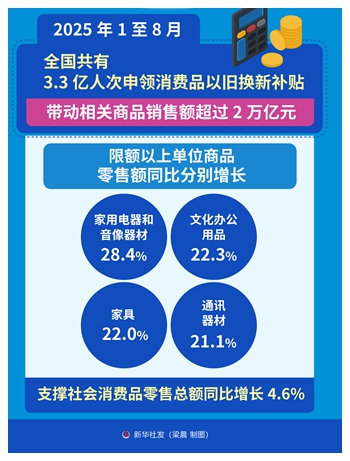
Group 1 - In September, China's Consumer Price Index (CPI) decreased by 0.3% year-on-year, with the decline narrowing by 0.1 percentage points compared to August [1] - The decline in CPI is primarily attributed to the tail effect, with the tail effect contributing approximately -0.8 percentage points to the CPI change, while new price changes contributed about 0.5 percentage points [1] - Food prices fell by 4.4% year-on-year, with pork prices decreasing by 17% and fresh vegetable prices down by 13.7% [1] Group 2 - Non-food prices increased by 0.7% in September, with service prices rising by 0.6%, remaining stable compared to the previous month [2] - The core CPI, excluding food and energy, rose by 1.0% year-on-year, marking the first return to a 1% increase in nearly 19 months [2] - Industrial consumer goods prices, excluding energy, increased by 1.8%, with notable price increases in gold and platinum jewelry at 42.1% and 33.6%, respectively [2] Group 3 - The low price level trend observed since the beginning of the year is attributed to a prolonged adjustment in the real estate market and a decline in consumer confidence [4] - External factors, such as significant drops in international oil prices, have also influenced domestic CPI [4] - The "old-for-new" policy is expected to support price increases in automobiles and home appliances [4] Group 4 - Looking ahead, the CPI is expected to rise in October due to the significant drop in the price base from the previous year and the continued impact of policies like "old-for-new" [5] - Three main factors are expected to keep CPI under pressure: oversupply and weak demand, increased regulation on low-price competition, and weak internal consumption dynamics [5]
关注半导体设备、工程机械等板块投资机会 | 投研报告
Zhong Guo Neng Yuan Wang· 2025-10-15 01:45
Core Viewpoint - The mechanical equipment industry experienced a slight increase of 0.2% in the week of October 9-10, 2025, ranking 18th among 31 primary industries, with specific sub-industries showing varied performance [1][2]. Industry Performance - The sub-industry performance was as follows: rail transit equipment (+3.07%), specialized equipment (+0.54%), general equipment (+0.51%), engineering machinery (-0.16%), and automation equipment (-1.74%) [1][2]. Market Trends - Recent trade tensions are intensifying, prompting a focus on self-sufficient industrial chains and domestic demand. The industry maintains a "recommended" rating, with attention on semiconductor equipment, scientific instruments, and humanoid robots for self-sufficiency, while engineering machinery, rail transit equipment, and general equipment are highlighted for domestic demand [2]. Sales Data - Excavator sales in August 2025 reached 16,523 units, a year-on-year increase of 12.8%, with domestic sales at 7,685 units (+14.8%) and exports at 8,838 units (+11.1%). This growth is attributed to a new round of replacement cycles and large project initiations [3]. Forklift Market - Forklift sales in August 2025 totaled 118,087 units, marking a 19.42% year-on-year increase, with domestic sales at 70,174 units (+19.3%) and exports at 47,913 units (+19.6%). The growth is driven by low base effects from the previous year and advancements in automation technology [4][5]. Industrial Robots - The production of industrial robots in August 2025 reached 63,747 units, a 14.4% increase year-on-year. This growth is linked to the "old-for-new" policy and favorable financing conditions for equipment upgrades, indicating potential investment opportunities in the sector [5].
双十一微观察:大促呈现哪些新风向?
Xin Lang Cai Jing· 2025-10-14 10:26
双十一风向的变化,预示着电商行业正从价格与流量的角逐,开始进入精细化运营的新阶段。 平台持续改善消费者体验 今年,双十一迎来第十七年。从最初的单日购物狂欢,到如今持续一个多月,双十一成为名副其实 的"购物季"。 本文转自:新华网 今年,早在国庆中秋假期前,即有平台启动双十一购物节,国庆档直接嵌入大促周期。相比往年,今年 双十一开启时间更早、持续时间更长,各平台不约而同简化促销玩法,即时零售也成为今年双十一的新 看点。 网经社电子商务研究中心主任曹磊认为,购物周期加长,一方面有助于缓解消费者的购物焦虑,另一方 面也有助于商家和平台合理安排促销节奏,更从容安排发货、促销定价与活动策划,从而提升整体购物 体验。 平台主打直降,满减无需凑单,红包即点即用……今年,各平台在简化促销规则方面也做了大量探索。 有网友感慨,"以前的双十一套路太多,现在直接满减很香,很实在。"此外,今年双十一也涌现出红包 口令、现货直供等一些新的促销玩法。用户不用再做促销规则"数学题",双十一正回归大促的初衷。 从消费者心智看,双十一作为电商最重要的年度大促的认知早已深入人心。在中国国际电子商务中心专 家李鸣涛看来,平台所要做的就是在当前的消 ...
申万宏源:白电板块股价安全边际高和弹性大兼顾 出口不改长期增长趋势
智通财经网· 2025-10-14 02:41
Group 1: White Goods Industry Overview - The white goods and kitchen appliances sector continues to show growth, benefiting from real estate policies and the "old-for-new" replacement program [1] - In the first eight months of 2025, the air conditioning industry produced 149.32 million units, a year-on-year increase of 6%, with sales reaching 152.57 million units, up 7% [1] - The domestic sales of refrigerators and washing machines also saw growth, with refrigerator sales up 4% and washing machine sales up 6% year-on-year [1] Group 2: Company Performance Expectations - Midea Group expects a 3% increase in revenue and an 8% increase in performance for Q3 2025 [2] - Gree Electric anticipates no change in revenue and net profit for Q3 2025 [2] - Haier Smart Home forecasts a 5% increase in revenue and a 10% increase in performance for Q3 2025 [2] Group 3: Kitchen Appliances Sector - The kitchen appliances sector is experiencing recovery due to real estate and the "old-for-new" policy, with Boss Electric expecting a 2% increase in revenue but a 7% decline in performance for Q3 2025 [3] - Other companies like Vatti and Yitian are also projecting flat or negative growth in revenue and performance for Q3 2025 [3] Group 4: Small Appliances Sector - The small appliances sector is seeing significant growth, with companies like Stone Technology expecting an 80% increase in revenue and a 40% increase in performance for Q3 2025 [4] - Other brands like Joyoung and Supor are also projecting varying degrees of growth in revenue and performance for Q3 2025 [4] Group 5: New Display and Lighting Sector - The emerging display sector is at a turning point, with Hisense Visual expecting an 8% increase in revenue and a 20% increase in performance for Q3 2025 [5] - Companies like OP Lighting and XGIMI are also forecasting modest growth in revenue for Q3 2025 [5]




家用电器:假期消费专题:出境游、线下演出高景气——25W40周观点-20251012
Huafu Securities· 2025-10-12 10:11
Investment Rating - The report maintains an "Outperform" rating for the industry [7] Core Insights - The report highlights a significant increase in holiday travel and consumption, with an average of 3.04 billion people traveling daily from October 1 to 8, a year-on-year increase of 6.3% [3][11] - Domestic consumption is showing steady improvement, with average daily sales in related sectors increasing by 4.5% during the holiday period, driven by strong performance in digital products, jewelry, and cultural services [3][15] - The offline performance of the entertainment sector is robust, with a 39.5% year-on-year increase in audience numbers for live performances during the holiday [3][20] Summary by Sections Holiday Consumption Trends - The report notes a rise in domestic travel, with 8.88 billion domestic trips taken during the holiday, an increase of 1.23 billion trips compared to the previous year [11][12] - The average spending per person decreased by 13% despite the increase in total expenditure, which reached 809 billion yuan [11][12] Retail and E-commerce Performance - Key retail and catering enterprises saw a 2.7% year-on-year increase in sales during the holiday [19] - E-commerce platforms experienced a surge in sales of green organic foods (up 27.9%), smart home products (up 14.3%), and domestic fashion brands (up 14.1%) [19][20] Investment Recommendations - The report suggests focusing on several sectors for potential investment, including: 1. Major appliances benefiting from trade-in programs, recommending companies like Midea Group, Haier Smart Home, and Gree Electric [4][23] 2. The pet industry, which is expected to remain resilient, with recommendations for companies like Guai Bao Pet and Zhongchong Co [4][23] 3. Small appliances and branded apparel, which may see a rebound in demand, with recommendations for companies like Bear Electric and Anta Sports [4][23] 4. Electric two-wheelers, with a strong outlook for domestic sales improvement, recommending companies like Ninebot and Yadea [4][23] Global Market Opportunities - The report emphasizes the long-term theme of international expansion, recommending companies like Ecovacs and Roborock in the cleaning appliance sector, and Midea and Haier in the major appliance sector [5][24] - It also highlights the potential for motorcycle brands to increase their market share overseas, suggesting companies like Chunfeng Power and Longxin General [5][24] Market Data - The home appliance sector saw a slight decline of 0.4% this week, with specific segments showing varied performance: white goods up 0.8%, black goods down 0.3%, and kitchen appliances down 1.0% [25]



金价,爆了!金店老板却不开心:买的人少了
Mei Ri Jing Ji Xin Wen· 2025-10-11 10:40
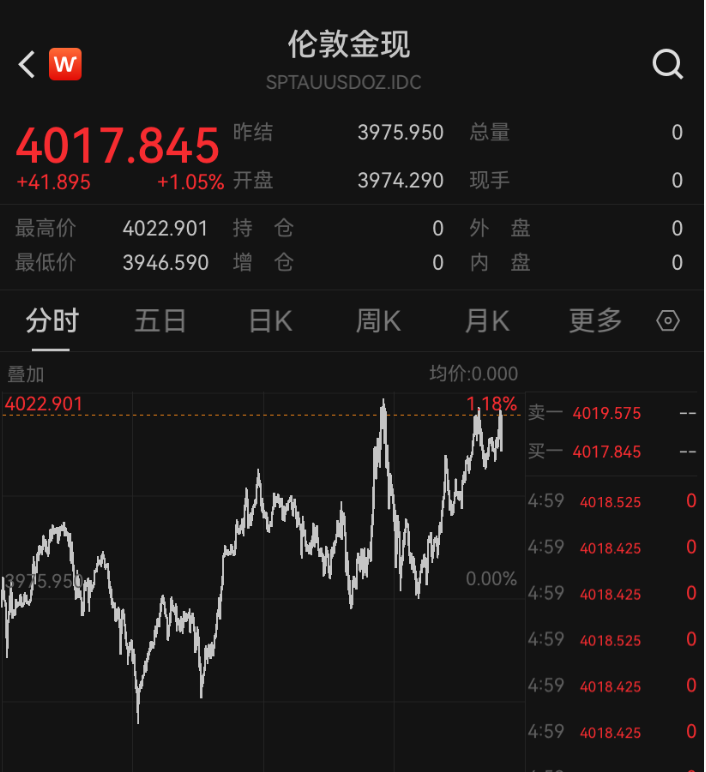
Core Viewpoint - Gold prices have reached new highs in 2023, with international gold prices surpassing $4,000 per ounce, reflecting a year-to-date increase of approximately 50% [1] Group 1: Market Trends - The current spot gold price is reported at $4,017.85 per ounce, with a daily increase of 1.05% [2] - Despite high foot traffic in the Shenzhen Shui Bei gold market during the National Day and Mid-Autumn Festival, actual sales have declined compared to previous years, indicating a disconnect between consumer interest and purchasing behavior [4][5] - Consumers are increasingly cautious about purchasing gold due to rising prices, leading to a more pronounced wait-and-see attitude [3][4] Group 2: Consumer Behavior - There is a notable shift in consumer preferences towards investment gold and gold recycling services, as traditional gold jewelry sales have decreased significantly [3][5] - Data from the China Gold Association indicates a 3.54% year-on-year decline in national gold consumption in the first half of 2025, with gold jewelry consumption down by 26% while gold bars and coins saw a 23.69% increase [3] Group 3: Business Innovations - Many businesses are adapting to the changing market by enhancing their product offerings and sales models, including the introduction of "smart gold stores" that streamline the buying and recycling process [6][7] - The Shui Bei market is leveraging its competitive pricing, with gold prices significantly lower than branded stores, attracting consumers looking for better deals [7] - The popularity of small-weight gold products and investment gold bars is on the rise, particularly among younger consumers, who are drawn to lower-priced items [10]
邮储银行青岛分行双补贴激活家电焕新消费热
Zhong Guo Jin Rong Xin Xi Wang· 2025-10-11 07:05
Group 1 - The core idea of the news is the successful implementation of a dual subsidy model in Qingdao, combining government incentives for replacing old appliances with bank discounts, which has significantly boosted consumer spending during the holiday season [1][2] - Qingdao's government has expanded its old-for-new appliance subsidy policy to include 12 categories, with subsidies reaching up to 2000 yuan, enhancing consumer interest in purchasing new appliances [1] - Postal Savings Bank of Qingdao has effectively integrated government subsidies with its own credit card promotions, creating a "policy dividend + financial benefit" effect that reduces shopping costs for consumers [1] Group 2 - This initiative marks the fourth old-for-new themed activity by Postal Savings Bank of Qingdao this year, demonstrating the bank's responsiveness to government policies and consumer needs [2] - The bank aims to extend its promotional efforts beyond appliances to other consumer sectors, fostering a diverse consumption ecosystem in Qingdao and contributing to the recovery of the local market [2] - The bank's promotional strategy includes a comprehensive online and offline approach, effectively communicating the benefits of the dual subsidy model to consumers, resulting in a nearly 30% increase in inquiries during the holiday period [1]

金价突破4000美元,深圳水贝黄金反而没去年好卖了
Mei Ri Jing Ji Xin Wen· 2025-10-10 14:34
Core Insights - Gold prices have reached new highs, surpassing $4000 per ounce, with a year-to-date increase of approximately 50% [1] - Despite high consumer traffic in gold markets, actual sales have declined due to consumer hesitation and price concerns [3][4] - The trend shows a shift towards investment gold and gold recycling, with a notable increase in demand for gold bars and coins [2][4] Group 1: Market Dynamics - The Shenzhen Shui Bei market, a major hub for gold trading, reported high foot traffic during the National Day and Mid-Autumn Festival, with around 150,000 visitors in eight days [3] - However, many merchants noted that sales were lower than expected, with some reporting worse performance compared to the same period in 2024 [3][4] - Consumers are increasingly cautious about purchasing gold due to rising prices, leading to a more pronounced wait-and-see attitude [3][4] Group 2: Consumer Behavior - There is a growing preference for small-weight gold products and gold recycling services, as consumers look for more affordable options [2][4][7] - The gold recycling business has seen a significant increase, with some merchants reporting a 50% rise in recycling transactions compared to previous years [4] - The "old for new" model is gaining popularity, allowing consumers to exchange old gold items for new ones at a lower cost [7] Group 3: Product Trends - Investment gold products, such as gold bars and coins, have seen a 23.69% year-on-year increase in consumption, while gold jewelry consumption has decreased by 26% [2] - The market is witnessing an increase in the sale of small-weight gold items, appealing particularly to younger consumers [8] - Merchants are innovating in product offerings, with some focusing on traditional craftsmanship and unique designs to attract buyers [6][8]

沈城“十一”节日市场活力足
Sou Hu Cai Jing· 2025-10-09 22:43
Core Insights - The article highlights the vibrant consumer activity in Shenyang during the "Double Festival" period, driven by various promotional activities and government support measures [3][5][6]. Supply Assurance - Shenyang's market is well-stocked with essential goods, ensuring a rich variety of food items for the holiday celebrations. As of October 8, the inventory of key necessities like grains, oils, and meats is sufficient, with major vegetable and fruit wholesale markets maintaining high stock levels [4]. Consumer Activity - Over 130 promotional events were organized across Shenyang, focusing on diverse sectors such as apparel, electronics, and dining. The city invested 8 million yuan in consumer vouchers to stimulate spending across various shopping scenarios [5][6]. Supportive Policies - The city implemented a "trade-in" program for vehicles and electronics, providing substantial subsidies. Daily subsidies for vehicle trade-ins reached 14 million yuan, with significant consumer spending expected from these initiatives [6]. Growth in Hospitality Sector - The restaurant and accommodation sectors experienced notable growth, with monitored dining establishments reporting a 6.3% increase in sales and accommodation businesses seeing an 18.2% rise in sales during the holiday period [7].