
财政政策

Search documents
2026年中国经济展望:风鹏正举
Ping An Securities· 2025-12-02 01:15
Economic Growth Outlook - The GDP growth target for China in 2026 is expected to remain around 5%[4] - The contribution of final consumption expenditure to GDP growth is projected to be 53.5% in 2025, up from 44.5% in 2024[26] - The anticipated growth rate of social retail sales is around 4% in 2026, with final consumption expenditure growth expected to exceed 5%[51] Export Performance - China's export share is projected to continue its upward trend, with an expected growth rate of 4-5% in 2026[21] - As of July 2025, China's export share reached 15.1%, up from 14.9% in 2024, indicating strong global competitiveness[14] Investment Stability - Real estate investment is expected to stabilize, with a projected decline of around 10.2% in 2026, a significant improvement from previous years[55] - Infrastructure investment growth is anticipated to rebound significantly in 2026, supported by new policy tools and long-term special bonds[74] Inflation and Price Trends - CPI is expected to rise to around 0.6% in 2026, driven by food prices, while PPI is projected to recover from a decline of -2.8% in 2025[95][116] - The core CPI is expected to maintain a higher level of around 0.8-1% in 2026, reflecting improved consumer confidence and spending[110] Fiscal Policy Outlook - The narrow deficit ratio is projected to increase to 4-4.3% in 2026, with a special bond issuance of approximately 1.5 trillion yuan[127] - New local special bonds are expected to be in the range of 5-5.5 trillion yuan, marking an increase from 2025[128]
机构展望明年经济增速在5%左右 宏观政策和重大项目将持续发力
2 1 Shi Ji Jing Ji Bao Dao· 2025-12-01 23:13
Economic Overview - The overall economic performance in 2025 is expected to show a "high first, low second" trend, with a projected annual growth target of around 5% [1][4][6] - The economy grew by 5.2% year-on-year in the first three quarters of 2025, with quarterly growth rates of 5.4%, 5.2%, and 4.8% respectively [1][2] Economic Indicators - The manufacturing PMI for November recorded at 49.2%, indicating a slight improvement but still below the expansion threshold [2][5] - The CPI decreased by 0.1% and the PPI fell by 2.8% in the first three quarters, reflecting weak overall demand [3] Sector Performance - Industrial value added grew by 6.2% year-on-year, while the service sector increased by 5.4%, indicating resilience in supply chains despite external pressures [3] - Exports showed strong resilience, with a 5.3% year-on-year increase from January to October, attributed to competitive products and diversified market strategies [4][10] Policy Recommendations - To counteract the economic downturn in the fourth quarter, more proactive macroeconomic policies are recommended, including increased fiscal spending and monetary easing [6][9] - Suggestions include raising the fiscal deficit rate to 5% and enhancing public financial support for consumption and infrastructure projects [8][10] Future Outlook - The economic growth for 2026 is anticipated to be around 5%, with expectations of a "low first, high second" trend due to new opportunities arising from the "14th Five-Year Plan" [6][8] - The need for a robust fiscal and monetary policy framework is emphasized to support economic recovery and growth [9][10]
机构展望明年经济增速在5%左右
2 1 Shi Ji Jing Ji Bao Dao· 2025-12-01 16:25
Economic Overview - In December, the economic performance for 2025 is expected to show a "high first, low second" trend, with a projected annual growth rate of around 5% [1][3] - The economy grew by 5.2% year-on-year in the first three quarters of 2025, with quarterly growth rates of 5.4%, 5.2%, and 4.8% respectively [1][3] Economic Indicators - The manufacturing PMI for November recorded at 49.2%, indicating a slight improvement but still below the expansion threshold [3][6] - The industrial added value increased by 6.2% year-on-year in the first three quarters, while the service sector grew by 5.4% [5][6] - CPI decreased by 0.1% and PPI fell by 2.8% in the same period, reflecting weak demand [5][6] Policy Measures - The government has introduced policies to stabilize investment and mitigate risks, including the accelerated deployment of 500 billion yuan in new policy financial tools [3][6] - There is an expectation for more proactive macroeconomic policies to support growth in 2026, including significant infrastructure projects and fiscal measures [9][10] Future Projections - For 2026, economic growth is anticipated to remain around 5%, with a potential shift to a "low first, high second" trend due to new opportunities arising from the 14th Five-Year Plan [10][13] - The fiscal deficit rate is expected to increase to 5% in 2026, with a focus on enhancing public spending and supporting consumer demand [11][12] Sector-Specific Insights - The export sector has shown resilience, with a 5.3% year-on-year increase in exports from January to October 2025, despite external pressures [6][13] - The real estate market continues to face challenges, with ongoing adjustments and a need for policy interventions to stabilize the sector [6][12]


2026年宏观利率及12月债市展望
2025-12-01 16:03
Summary of Conference Call Notes Industry Overview - The macroeconomic outlook for December 2025 indicates a weakening influence of the equity market on the bond market, with overall weak performance and reduced trading volume expected in the equity market. Seasonal factors typically lead to increased fiscal spending and loose monetary policy in December, which may result in a downward trend in interest rates [1][4][3]. Key Points and Arguments - **Monetary Policy**: The monetary policy is expected to maintain a supportive stance, with a high probability of interest rates declining in December due to seasonal patterns. However, the impact of upcoming important meetings on the market needs to be monitored [1][4]. - **Credit Spread**: The 1-5 year non-financial credit spread has returned to the 30th percentile of the past 24 years, indicating a thin safety cushion. The compression of non-financial medium to long-term credit spreads may face challenges due to year-end regulatory changes [5][3]. - **Fiscal Policy for 2026**: The fiscal policy is projected to maintain a certain level of spending intensity, with a deficit rate expected between 4% and 4.5%. The net financing scale of government debt may reach approximately 14.5 trillion yuan [12][10]. - **Investment and Consumption Outlook**: Investment and consumption are expected to recover moderately in 2026, but inflation remains an uncertain factor. The PPI decline is expected to narrow, while CPI may return to positive growth [7][16]. - **Interest Rate Projections**: The after-tax yield on 10-year government bonds is anticipated to fluctuate between 1.7% and 1.9%, with a median estimate between 1.75% and 1.95% [2][19]. - **Investment Strategy**: In a low-interest-rate environment, a focus on coupon strategies is recommended, along with opportunities for phase-based trading. The overall economic recovery is expected to be moderate, supporting a low-interest-rate environment [21][15]. Additional Important Insights - **Economic Structure Transition**: The current macroeconomic policy framework emphasizes structural transformation, with a focus on medium to long-term planning and industrial policy, aiming for sustainable growth while stabilizing short-term economic conditions [9][14]. - **Fourth Quarter Economic Support**: There is a significant amount of new funding (1 trillion yuan) allocated for the fourth quarter, which includes policy financial tools and local government debt limits, aimed at boosting economic growth [8][11]. - **Inflation Risks**: Inflation is identified as a key uncertainty for the bond market in 2026, with potential short-term volatility due to rising prices, although the overall macro policy aims to prevent financial system stagnation [16][20]. This summary encapsulates the essential insights from the conference call, focusing on the macroeconomic outlook, fiscal and monetary policies, investment strategies, and potential risks in the bond market.
机构展望明年经济增速在5%左右
21世纪经济报道· 2025-12-01 16:02
Economic Overview - In December, the economic performance for 2025 is expected to show a "high first, low second" trend, with a projected annual growth rate of around 5% [1] - The economy grew by 5.2% year-on-year in the first three quarters, with quarterly growth rates of 5.4%, 5.2%, and 4.8% respectively [1] Manufacturing and Investment - The manufacturing PMI for November recorded at 49.2%, indicating slight improvement but still below the expansion threshold [3] - The introduction of 500 billion yuan in new policy financial tools and the activation of 500 billion yuan in local debt are expected to provide additional investment funds [3] Economic Challenges - The economy is facing downward pressure in the fourth quarter, with growth expected to slow to around 4.5% [3] - Demand remains weak, as evidenced by a CPI decline of 0.1% and a PPI drop of 2.8% in the first three quarters [5] Export and Market Resilience - Exports showed strong resilience, with a 5.3% year-on-year increase from January to October, despite external pressures [6] - The capital market has strengthened, particularly in technology stocks, due to reforms and improved risk appetite [6] Future Economic Projections - For 2026, the economic growth target is also expected to be around 5%, with a focus on proactive macroeconomic policies to stimulate growth [8][10] - The "14th Five-Year Plan" will initiate significant projects aimed at infrastructure and consumption upgrades, which are expected to support economic recovery [9] Policy Recommendations - It is suggested to increase the fiscal deficit rate to 5% for 2026 to enhance public spending and support economic growth [12] - Monetary policy may see further easing, including potential interest rate cuts, to stimulate demand [12][13]

【固收】震荡中寻锚——利率债2026年投资策略展望
Xin Lang Cai Jing· 2025-12-01 10:58
Core Viewpoint - The liquidity tools in 2025 will continue to be optimized, with a focus on stabilizing the funding environment, particularly around the end of March when the funding situation is expected to shift from tight to loose [3]. Group 1: Market Overview - In the primary market, the net financing scale of interest rate bonds is expected to grow by nearly 40% in 2025, with the largest contribution from government bonds, followed by local government bonds, and an earlier issuance rhythm [4]. - In the secondary market, the 10-year government bond yield is projected to fluctuate between 1.6% and 1.9%, exhibiting an M-shaped trend with alternating upward and downward movements throughout the year [4]. Group 2: 2026 Bond Market Outlook - The fundamental outlook for 2026 suggests a move towards "supply-demand balance," with expected improvements in consumption, infrastructure investment, and real estate investment growth compared to 2025 [5]. - On the policy front, fiscal policy is anticipated to remain proactive, with a budget deficit target of 4% and a special bond issuance scale of 1.5 trillion yuan, alongside a new special bond quota of 4.4 trillion yuan [5]. Group 3: Supply and Demand Dynamics - The supply side for interest rate bonds in 2026 is expected to be similar to 2025, with a net financing amount of approximately 14.3 trillion yuan, including 6.5 trillion yuan in government bonds and 5.5 trillion yuan in new local government bonds [6]. - Demand for bonds may be slightly weaker in 2026, with banks facing operational pressures and public funds focusing on stability in their liabilities [6]. Group 4: Economic and Policy Changes - Changes in the economic environment, policy adjustments, and overseas liquidity tightening are anticipated to exceed expectations [7].

海外宏观周报:美联储官员释放鸽派信号,欧央行大概率按兵不动-20251201
Dong Fang Jin Cheng· 2025-12-01 09:17
Monetary Policy - Federal Reserve officials signaled a dovish stance, with support for a rate cut in December from officials like Waller and Daly[9] - Economic data showed a slowdown in U.S. retail sales and durable goods orders, indicating weakened consumer momentum[9] - The 10-year U.S. Treasury yield fell by 4 basis points to 4.02% as markets continued to price in rate cut expectations[23] European Central Bank - The European Central Bank (ECB) is likely to maintain current interest rates, citing economic resilience and stable inflation[10] - Market expectations indicate a low probability of further rate cuts in 2025, with a 40% chance of a cut by the end of 2026[10] Economic Data - U.S. retail sales grew by only 0.2% in September, significantly lower than August's 0.6%[13] - Durable goods orders increased by 0.5% in September, down from 3.0% in August, with non-defense orders rising just 0.1%[13] - Eurozone economic sentiment index rose to 97.0 in November, up from 96.8 in October, indicating improved economic confidence[22] Fiscal Policy - The UK government announced an additional £26 billion in taxes, raising the overall tax burden to 38% of GDP by the end of the parliamentary term[12] - The largest revenue increase will come from freezing the personal income tax threshold, expected to generate £12.7 billion by the 2030-31 fiscal year[12]
真该谢谢特朗普,美国这下搞不好要成“香蕉共和国”了
Sou Hu Cai Jing· 2025-12-01 08:31
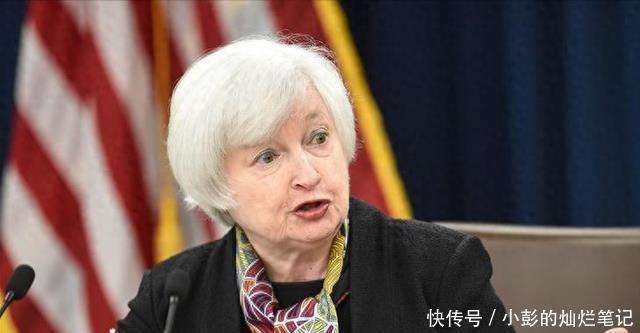
Group 1 - The core concern is the potential transformation of the U.S. into a "banana republic," as warned by former Federal Reserve Chair Janet Yellen, indicating a shift towards a fear-based operational model that undermines capital trust [1][11][23] - Yellen highlights the alarming silence among influential U.S. CEOs, who express fear of repercussions for crossing invisible lines, which is detrimental to business and innovation [5][7][21] - The independence of the Federal Reserve is at risk, with Trump attempting to exert control over monetary policy, which could lead to a collapse of monetary credibility and hyperinflation [14][18][23] Group 2 - The U.S. capital market is showing signs of instability, with a notable decline in the dollar's value and a lack of buyers for U.S. Treasury bonds, reflecting diminishing investor confidence [16][18] - In contrast, China's stable investment environment, characterized by clear regulations and government non-interference, is attracting foreign capital, highlighting a significant competitive advantage [19][23] - Yellen's warnings serve as a wake-up call for the American elite, emphasizing the long-term implications of eroding democratic institutions and the potential loss of the U.S. as a global capital haven [21][23]
中经评论:财政政策加力支撑经济回升
Jing Ji Ri Bao· 2025-12-01 00:57
Group 1 - The core viewpoint of the articles emphasizes the importance of fiscal policy in promoting economic development and achieving annual economic and social development goals [1][2][3][4] - National general public budget revenue increased by 0.8% in the first ten months, reflecting a stable and improving economic operation [1] - Key sectors such as equipment manufacturing and modern services showed strong tax performance, indicating significant industrial upgrading [1] Group 2 - Active fiscal policies have been implemented this year, increasing expenditure intensity and optimizing expenditure structure, particularly in key areas like social security and employment [2][3] - Expenditure growth rates in key areas include social security and employment at 9.3%, education at 4.7%, and science and technology at 5.7% [2] - The issuance of various government bonds, including special bonds and ultra-long-term special treasury bonds, has accelerated to enhance economic development momentum [2] Group 3 - Macro policies need to maintain strong support for consumption, investment, and enterprise assistance, with recent macro policies indicating a clear intention to "sustain efforts" [3] - The central government allocated 500 billion yuan from local government debt limits to support local governments and projects, increasing the total scale by 100 billion yuan compared to the previous year [3] - Proactive and scientific macro policies are essential for seizing opportunities and ensuring timely support for economic recovery [3][4] Group 4 - The current international environment remains complex and uncertain, necessitating macro policies to adapt to market changes and enterprise needs [4] - Emphasis on counter-cyclical and cross-cyclical adjustments in macro policies to fully utilize policy space and make precise decisions [4]
中国股票策略:年底获利了结拖累 A 股情绪小幅回落-China Equity Strategy-A-Share Sentiment Edged Down on Year-End Profit-Taking
2025-12-01 00:49
Summary of Key Points from the Conference Call Industry Overview - **Industry**: A-Shares in China - **Market Sentiment**: A-share sentiment has softened due to year-end profit-taking and increased volatility in the US market, with a cautiously constructive outlook maintained by the company [1][2][13]. Core Insights and Arguments - **Investor Sentiment**: - The weighted MSASI (Morgan Stanley A-share Sentiment Indicator) decreased by 1% to 50% compared to the previous cut-off date, and the 1MMA (1-Month Moving Average) dropped by 4% to 61% [2]. - Average Daily Turnover (ADT) for A-shares decreased by 6% to RMB 1,801 billion, while ChiNext turnover rose by 2% to RMB 506 billion [2]. - **Net Inflows**: - Southbound trading recorded net inflows of USD 2 billion from November 20 to November 26, with year-to-date net inflows reaching USD 167 billion [3]. - **Government Policy**: - Beijing is considering interest subsidies to lower mortgage costs, which could support listings and stabilize prices. A broad 100bps subsidy could cost approximately RMB 400 billion annually [4]. - The implementation of such policies could lead to a gradual recovery in housing demand and stabilize prices in higher-tier cities [4]. - **Market Volatility**: - Chinese equities have experienced heightened volatility since October, with a potential US market correction posing a significant risk to global risk assets, including Chinese equities [13]. - However, A-shares have shown the lowest correlation with US markets, suggesting potential for relative outperformance [13]. Additional Important Insights - **Foreign Investor Sentiment**: Positive feedback from foreign investors indicates a growing interest in the Chinese equity market, with expectations for continued net inflows in the coming year [14]. - **Catalysts for Improvement**: Key catalysts for a more bullish outlook on China include improved US-China relations and a more aggressive fiscal policy, particularly regarding housing inventory [15][16]. - **Earnings Estimate Revisions**: The breadth of consensus earnings estimate revisions remains negative but has shown slight improvement compared to the previous week [2]. - **Methodology of MSASI**: The MSASI is constructed using 12 individual indicators to capture various dimensions of investor sentiment, normalized to reduce noise and reflect medium-term trends [17][26]. - **Market Dynamics**: The report highlights the importance of monitoring various metrics such as ChiNext turnover, A-share turnover, and margin financing to gauge market sentiment and activity [19][20][21]. This summary encapsulates the key points discussed in the conference call, focusing on the A-share market dynamics, investor sentiment, government policies, and potential catalysts for future market performance.