
产能置换

Search documents
冠通期货早盘速递-20251027
Guan Tong Qi Huo· 2025-10-27 05:11
Group 1: Hot News - China's President Xi Jinping will visit South Korea from October 30 to November 1 to attend the 32nd APEC Economic Leaders' Meeting and conduct a state visit [2] - The Ministry of Industry and Information Technology is seeking opinions on iron - making and steel - making capacity replacement ratios, with a minimum of 1.5:1 in most cases and equal - volume replacement in three scenarios [2] - US CPI in September increased slightly less than expected, which may pave the way for the Fed to cut interest rates next week. The CPI rose 0.3% month - on - month in September and 3.0% year - on - year, while core CPI rose 0.2% month - on - month and 3.0% year - on - year [2] - China and the US held economic and trade consultations in Kuala Lumpur from October 25 - 26, and reached preliminary consensus on multiple important economic and trade issues [2] - The People's Bank of China will conduct 900 billion yuan of MLF operations on October 27, 2025 [2] Group 2: Key Focus - Key commodities to focus on include coking coal, coke, soybean meal, Shanghai copper, and Shanghai gold [3] Group 3: Holiday Overseas Market Performance - Commodity futures sector performance: Non - metallic building materials rose 2.95%, precious metals 30.89%, oilseeds and oils 9.67%, soft commodities 2.65%, non - ferrous metals 22.02%, coal - coking - steel - ore 13.28%, energy 3.00%, chemicals 10.74%, grains 1.13%, and agricultural and sideline products 3.66% [3] Group 4: Sector Position - The document shows the position changes of commodity futures sectors in the past five days, but specific data is presented graphically [4] Group 5: Performance of Major Asset Classes - Equity: Shanghai Composite Index rose 0.71% daily, 1.74% monthly, and 17.86% annually; other indices like S&P 500, Hang Seng Index also have corresponding performance data [5] - Fixed - income: 10 - year, 5 - year, and 2 - year treasury bond futures have different daily, monthly, and annual performance [5] - Commodity: CRB Commodity Index, WTI crude oil, London spot gold, LME copper, and Wind Commodity Index have their respective performance data [5] - Other: US Dollar Index and CBOE Volatility Index have corresponding performance [5] Group 6: Trends of Major Commodities - The document presents the trends of various commodities such as BDI, CRB spot index, WTI crude oil, London spot gold, LME copper, etc., through graphs [7]
算力“双雄”,齐创历史新高!
Zhong Guo Zheng Quan Bao· 2025-10-27 04:19
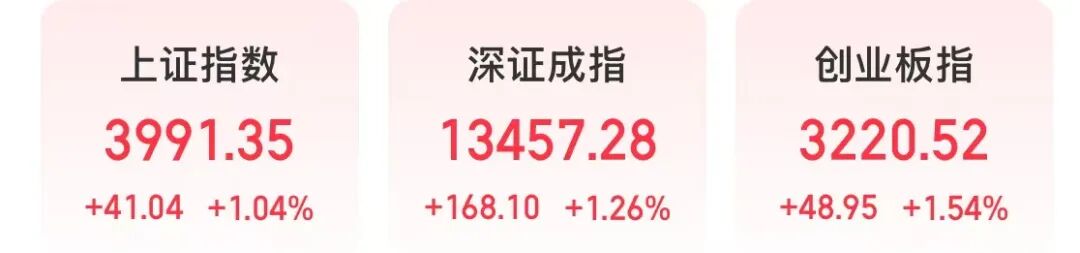
Core Viewpoint - The technology stocks and cyclical sectors are showing strong performance, with the Shanghai Composite Index reaching a new high of 3991.35 points this year [1]. Technology Sector - Technology stocks led the market in the morning, particularly in the semiconductor and computing power sectors, with notable performances from companies like Xinyi Technology and Zhongji Xuchuang, both reaching historical highs [1]. - Xinyi Technology's stock rose by 8.27%, with a trading volume of 18.114 billion yuan and a market capitalization of 401.37 billion yuan [1]. - Zhongji Xuchuang's stock increased by 3.34%, with a trading volume of 16.467 billion yuan and a market capitalization of 56.723 billion yuan [1]. - The combined market capitalization of these two leading companies in the computing power sector is approximately 968.6 billion yuan [1]. Cyclical Sector - The cyclical sectors, including steel, non-ferrous metals, coal, and electricity, experienced significant gains, reflecting a classic "coal, color, steel, and electricity" market trend [1][3]. - The steel sector saw substantial increases, with companies like Changbao Co. and Xinxing Ductile Iron Pipes achieving notable stock price surges [3]. - The steel sector index rose by 3.09%, with specific stocks like Anyang Iron & Steel and Changbao Co. increasing by 9.96% and 9.95%, respectively [4]. - The Ministry of Industry and Information Technology has proposed a draft for the implementation of capacity replacement in the steel industry, which aims to strengthen capacity constraints and improve long-term supply-demand expectations [6]. - The coal sector also showed positive movement, with stocks like Zhengzhou Coal Electricity and Shanghai Energy experiencing significant gains [8]. Market Performance - As of the morning close, the Shanghai Composite Index rose by 1.04%, the Shenzhen Component Index increased by 1.26%, and the ChiNext Index climbed by 1.54% [1].


产能置换方案修订,供需格局边际改善
Minsheng Securities· 2025-10-26 07:42
Investment Rating - The report maintains a "Buy" recommendation for several steel companies, including Hualing Steel, Baosteel, Nanjing Steel, and others, indicating a positive outlook for the sector [3][3][3]. Core Views - The revision of the capacity replacement plan by the Ministry of Industry and Information Technology is expected to improve the supply-demand dynamics in the steel industry marginally. The new draft includes stricter compliance requirements for capacity replacement, which may lead to a more regulated market [3][3]. - The report notes a decrease in steel profits, with specific margins for rebar, hot-rolled, and cold-rolled steel declining by 7, 17, and 23 yuan per ton, respectively, while electric arc furnace steel margins increased by 1 yuan per ton [1][1][1]. - Steel production increased to 8.65 million tons, with a notable rise in rebar production, while total inventory decreased by 260,100 tons, indicating a tightening market [2][2][2]. Summary by Sections Price Trends - As of October 24, 2025, the price of 20mm HRB400 rebar in Shanghai was 3,190 yuan per ton, down 20 yuan from the previous week. Hot-rolled steel increased by 20 yuan to 3,300 yuan per ton, while cold-rolled steel rose by 10 yuan to 3,780 yuan per ton [1][12][13]. Production and Inventory - The total production of the five major steel products reached 8.65 million tons, an increase of 83,700 tons week-on-week. The total inventory of these products decreased by 260,100 tons to 1,098.5 million tons [2][2][2]. Investment Recommendations - The report recommends focusing on companies within the steel sector, particularly those that are expected to benefit from the revised capacity replacement regulations. Specific companies highlighted include Hualing Steel, Baosteel, Nanjing Steel, and others across various segments [3][3][3].


中国建材涨超6% 预计前三季度扭亏为盈 水泥行业稳增长座谈会召开
Zhi Tong Cai Jing· 2025-10-21 04:02
Group 1 - China National Building Material (CNBM) shares rose over 6%, reaching HKD 5.99 with a trading volume of HKD 136 million [1] - The company issued a profit warning, expecting a profit of approximately RMB 2.95 billion for the nine months ending September 30, 2025, compared to a loss of RMB 684 million in the same period last year [1] - The expected profit increase is attributed to lower sales costs of cement and ready-mixed concrete, higher selling prices and lower costs of fiberglass, increased sales of wind turbine blades and coatings, higher profits from joint ventures, and increased net income from fair value changes of financial assets [1][1][1] Group 2 - The Ministry of Industry and Information Technology held a meeting to discuss growth stability in the cement industry, emphasizing the role of leading enterprises in implementing capacity replacement and regulation policies [1] - By the end of 2025, companies are required to develop capacity replacement plans for excess registered capacity, promoting alignment between actual and registered capacity [1] - Industry associations are encouraged to enhance self-discipline, conduct supply-demand balance research, organize staggered production, and provide average cost research to assist operators in reasonable pricing and prevent unfair competition [1][1][1]
港股异动 | 中国建材(03323)涨超6% 预计前三季度扭亏为盈 水泥行业稳增长座谈会召开
Zhi Tong Cai Jing· 2025-10-21 03:49
Group 1 - China National Building Material (03323) shares rose over 6%, currently up 6.02% at HKD 5.99, with a trading volume of HKD 136 million [1] - The company issued a profit warning, expecting a profit of approximately RMB 2.95 billion for the nine months ending September 30, 2025, compared to a loss of approximately RMB 684 million in the same period last year [1] - The expected profit increase is primarily due to lower sales costs of cement and ready-mixed concrete, higher sales prices and lower costs of fiberglass, increased sales of wind turbine blades and coatings, higher profits from joint ventures, and increased net income from changes in the fair value of financial assets recognized in profit or loss, partially offset by a decline in cement sales [1] Group 2 - The Ministry of Industry and Information Technology held a meeting to discuss growth stability in the cement industry, emphasizing the role of leading enterprises in implementing capacity replacement and regulation policies [1] - By the end of 2025, companies are required to develop capacity replacement plans for excess registered capacity, promoting alignment between actual and registered capacity [1] - Industry associations are encouraged to enhance self-regulation, conduct supply-demand balance research, organize staggered production in the cement industry, and provide average cost research to assist operators in reasonable pricing, preventing unfair competition such as selling below cost [1]
研究所日报-20251021
Yintai Securities· 2025-10-21 02:17
Economic Performance - China's GDP grew by 5.2% year-on-year in the first three quarters, with a 4.8% increase in Q3[2] - Industrial added value increased by 6.5% year-on-year in September, while retail sales grew by 3%[2] - Fixed asset investment declined by 0.5% year-on-year, and real estate investment fell by 13.9%[2] Policy and Market Outlook - The 20th Central Committee's Fourth Plenary Session began on October 20, focusing on the 15th Five-Year Plan, which may guide future capital market directions[3] - The U.S. and China are set to resume trade negotiations, with key issues including rare earths, fentanyl, and soybeans[3] Industry Insights - The cement industry is tightening capacity replacement policies, which may stabilize prices in the future[4] - As of September 2025, the number of electric vehicle charging facilities reached 18.063 million, a 54.5% increase year-on-year[4] Market Performance - A-share total market capitalization is 103.87 trillion, with a year-to-date increase of 18.01 trillion[15] - The average daily trading volume is 16.7431 billion, with a PE ratio of 22.09x[15] Investment Risks - Potential risks include insufficient policy support, unexpected adjustments in the real estate market, and escalating U.S.-China tensions[30]
电解铝:宏观扰动不改全球短缺格局,铝价仍逢低看多
Yin He Qi Huo· 2025-10-20 01:26
Report Industry Investment Rating No relevant content provided. Core Viewpoints - The global aluminum supply-demand situation remains tight in the medium term, supporting the upward trend of aluminum prices. Short-term view is to buy on dips and be cautious about chasing high prices. For alumina, the price is expected to stay at a low level, and more attention should be paid to further capacity changes [3][99]. Summary by Directory Strategy Outlook - Aluminum - **Derivatives**: Temporarily on the sidelines [3]. - **Macro**: Trump's tariff policy on China has escalated, but there are signs of potential negotiation. The 20th Fourth Plenary Session will study the 15th Five-Year Plan [3]. - **Industry Supply**: Overseas, the first - phase of Indonesia's Juwon project with 250,000 - ton capacity is in production. In China, some projects are expected to start production by the end of the year, while others may face delays [3]. - **Industry Demand**: The average weekly operating rate of domestic aluminum downstream processing leading enterprises is 62.5%, down 1.4 percentage points year - on - year. Different sub - industries show varying degrees of change in operating rates [3][64]. - **Inventory**: After the National Day holiday, aluminum ingot inventories increased seasonally but then decreased due to price adjustments. Overall inventory is expected to remain above 600,000 tons in the short term [3]. - **Trading Logic**: The panic caused by tariffs has improved, and the tight supply - demand situation supports the upward trend of aluminum prices. Short - term strategy is to buy on dips and be cautious about chasing high prices [3]. - **Trading Strategy**: Short - term, maintain the idea of buying on dips and be cautious about chasing high prices; arbitrage and options are temporarily on the sidelines [3]. Strategy Outlook - Alumina - **Logic Analysis**: The oversupply of alumina will become more prominent after the downstream electrolytic aluminum plants complete their stockpiling. Some producers have started minor production cuts, but it will take time to restore the supply - demand balance. The price is expected to stay at a low level [99]. - **Trading Strategy**: - **Unilateral**: Alumina price is expected to stay at a low level, and more attention should be paid to further capacity changes. - **Arbitrage**: Temporarily on the sidelines. - **Options**: Temporarily on the sidelines [100]. LME Market Performance - Includes data on aluminum ingot import and export profits, LME aluminum speculative fund net positions, LME aluminum price trends, overseas mainstream consumption area spot trade premiums, LME aluminum spot premiums and discounts, and LME aluminum inventories [5][7][9]. Domestic and Overseas Aluminum Inventory Performance - Covers aluminum ingot social inventories, aluminum rod social inventories, bonded area aluminum ingot inventories, aluminum ingot and aluminum rod weekly outbound volumes, and LME aluminum inventory seasonal charts [18][19][21]. Spread Situation - Analyzes price differences such as the Shanghai - Guangdong spread, mainstream consumption area basis, and differences between Shandong and East China aluminum prices [23]. Aluminum Primary Processing Product Processing Fees - Discusses processing fees for products like aluminum rods and aluminum plates in different regions, as well as the scrap - refined aluminum price difference [31][33][37]. Recycled Aluminum Alloy Market Situation - Covers waste aluminum production, ADC12 price, recycled aluminum alloy production, and related price differences and inventories [40][45][48]. Electrolytic Aluminum Supply Side - Analyzes China's electrolytic aluminum supply volume, production profit, net import volume, and the expected changes in domestic and overseas electrolytic aluminum production capacity [52][54][58]. Aluminum Processing Operating Rate Situation - The average weekly operating rate of domestic aluminum downstream processing leading enterprises is 62.5%, with different trends in various sub - industries [64]. Photovoltaic Component Production - In October, the expected photovoltaic component production is 51 - 52GW, with domestic production decreasing and overseas production remaining stable [68]. Automobile Sales - In 2025, China's total automobile sales are expected to reach 32.9 million, with significant growth in new energy vehicles, which will drive aluminum consumption [72]. Real Estate Completion - From January to August, the national housing completion area decreased by 17.0% year - on - year, indicating a weak real estate market [74]. Power Investment and Cable Consumption - As of September 2025, the domestic aluminum rod sample production capacity has expanded rapidly. Orders are expected to be saturated in the fourth quarter and next year, and the weekly operating rate in October is expected to remain stable or slightly increase [86]. Home Appliance Production Scheduling - In September 2025, the total production scheduling of three major white - goods decreased by 7.2% year - on - year, and the production scheduling of air conditioners is expected to decline in the future [90]. Export Trends - In August, the total export of aluminum products decreased year - on - year. Although the impact of tariffs has eased, the export volume is expected to decline this year [94]. Aluminum Supply - Demand Balance Outlook - Forecasts the global and Chinese aluminum supply - demand balance from 2018 to 2027, including production, demand, and balance [95]. Alumina - Strategy Outlook - **Raw Material**: Domestic bauxite supply in Shanxi and Henan is restricted by rain, while imported bauxite supply is increasing but the price remains stable [99]. - **Supply**: Some enterprises in Shanxi and Henan have carried out maintenance or production cuts. The national alumina operating capacity has decreased, and the import window has been open [99]. Alumina - Cost and Profit - In September 2025, the average profit of the alumina industry decreased. The profits of enterprises in different regions vary, and some high - cost regions are close to cash - cost losses [105][106]. Alumina - Production Capacity - The operating capacity of alumina has decreased marginally, with some enterprises in Shanxi and Henan adjusting production [110]. Alumina - Overseas Market - The overseas alumina transaction price is decreasing, and the import window remains open. More imported alumina is expected to arrive at ports by the end of the month [114]. Alumina - Futures Inventory - Alumina futures inventories continue to increase, with different inventory changes in various regions [118]. Bauxite - The price of bauxite remains stagnant. Domestic supply is affected by weather, and imported supply is increasing, but the price shows little change [121].
水泥行业近况跟踪及展望
2025-10-14 14:44
Summary of Cement Industry Conference Call Industry Overview - The cement industry is expected to see profits drop from an initial forecast of 40 billion to over 30 billion in 2025 due to weather conditions, funding shortages, and staggered production impacts [1][5][11] - The Ministry of Industry and Information Technology (MIIT) has proposed to address overproduction indicators by the end of the year and promote capacity replacement, with a current plan for 61 million tons of capacity replacement [1][5] Key Points on Cement Prices - Attempts to raise cement prices since late August have been largely unsuccessful, with only the Southwest and Central South regions seeing significant increases in September [1][3] - The East China Yangtze River Delta region has not seen price increases due to poor cooperation among companies and inadequate staggered production execution [1][3][4] - Overall, cement prices are expected to fluctuate upwards in Q4, with regional performance varying significantly [1][9] Demand and Supply Dynamics - The cement market has entered a traditional demand peak season, but actual demand remains weak, with a shipment rate of around 45% compared to 50%-55% in the previous year [2][11] - Factors affecting demand include adverse weather conditions and funding shortages for ongoing projects [2][11] - National cement production is projected to decline by approximately 5% year-on-year, with price performance hindered by inconsistent cooperation among major companies [11] Policy Impacts - The MIIT has issued a growth stabilization plan for the building materials industry, emphasizing the need to complete overproduction indicators by the end of 2025 [5][7] - Carbon emission quotas for 2024-2025 will continue to be allocated for free, with a likely standard set around 0.8, which will not impose significant short-term restrictions on the industry [8][12] Importance of Industry Self-Regulation - Industry associations are encouraged to strengthen self-regulation and organize staggered production to address market oversupply and weak demand [6][7] - The effectiveness of staggered production is hindered by poor cooperation among companies, particularly in the Yangtze River Delta region [6][11] Future Demand Projections - Cement demand is expected to decline by 6%-7% in 2025, stabilizing in 2026 as the real estate market enters a recovery phase [12][13] - Long-term projections suggest that demand could decrease to around 15 billion tons by 2030 [13] Regional Performance and Capacity Management - Regional differences in capacity replacement indicators are influenced by local government priorities and company responsiveness [16] - The implementation of staggered production policies is crucial for balancing supply and demand in the short term [14][20] Monitoring and Regulatory Developments - The establishment of an online monitoring system is underway, with plans for nationwide rollout in 2026 [21][27] - Future regulatory measures will need to align with carbon trading systems to ensure effective management and control [22][26] Conclusion - The cement industry faces significant challenges in terms of profitability, demand, and regulatory compliance, necessitating enhanced cooperation among companies and effective policy implementation to stabilize the market [1][5][11][12]
煤炭股尾盘涨幅扩大 三季度板块业绩有望环比改善 政策持续推动行业自律
Zhi Tong Cai Jing· 2025-10-09 07:49
Core Viewpoint - Coal stocks have seen significant gains, with notable increases in share prices for various companies, indicating a positive market sentiment towards the coal industry [1] Company Performance - Strength Development (01277) increased by 5.76%, trading at 1.47 HKD - China Coal Energy (601898) (01898) rose by 4.37%, trading at 9.8 HKD - Yida Commodity (01733) saw a 3.45% increase, trading at 0.9 HKD - China Shenhua Energy (601088) (01088) gained 2.91%, trading at 38.92 HKD [1] Industry Outlook - Zheshang Securities (601878) forecasts that the overall performance of coal enterprises will see a narrowing year-on-year decline by Q3 2025, with improvements expected on a quarter-on-quarter basis [1] - As the heating season approaches, power plants and heating companies are expected to replenish their stocks, which will support an increase in spot prices due to elevated long-term contract prices [1] - The ongoing "anti-involution" policy is anticipated to promote industry self-discipline, driving a reduction in coal supply and further supporting steady price increases [1] - Capacity replacement restrictions are expected to limit production scale, potentially leading to a decrease in capacity due to capacity indicators [1]


港股异动 | 水泥股集体拉升 建材行业稳增长方案出台 业内预计水泥行业年内将减少10%熟料产能
智通财经网· 2025-09-29 06:50
Core Viewpoint - Cement stocks experienced a collective surge following the announcement of the "Building Materials Industry Stabilization and Growth Work Plan (2025-2026)" by the Ministry of Industry and Information Technology and five other departments, indicating potential for industry recovery and consolidation [1] Group 1: Market Performance - Huaxin Cement (06655) rose by 5.1% to HKD 15.26 - Western Cement (02233) increased by 5.1% to HKD 3.3 - China National Building Material (03323) climbed by 3.23% to HKD 5.44 - Conch Cement (00914) gained 1.56% to HKD 23.48 [1] Group 2: Policy Impact - The new policy aims to implement a capacity replacement scheme for excess project filings by the end of 2025, which is expected to reduce clinker capacity by 10% [1] - The industry is anticipated to see accelerated price recovery as a result of these measures, alongside increased market consolidation among larger companies [1] Group 3: Industry Outlook - Guosheng Securities reported that the cement industry is still in a demand bottoming process, with companies enhancing production cut measures [1] - Cement prices are fluctuating around the industry's breakeven point, while the China Cement Association has issued guidelines to promote high-quality development and stabilize growth [1] - Large infrastructure projects are expected to boost regional demand in areas like Tibet and Xinjiang, with a focus on cost-advantaged leaders such as Conch Cement and overseas-focused Huaxin Cement [1]