
全球化

Search documents
一图读懂农夫山泉(09633.HK)2025全年业绩
Jin Rong Jie· 2026-03-25 11:59
Core Insights - The company achieved significant revenue and profit growth in 2025, with revenue surpassing 50 billion yuan for the first time, marking a year-on-year increase of 22.5% and a net profit growth of 30.9% to 15.868 billion yuan [3][5]. Revenue and Profit Growth - The beverage industry is experiencing a ceiling increase, with the company leveraging both water and beverage segments as dual growth engines [3][4]. - The drinking water business saw a year-on-year growth of 17.3%, supported by new water source developments in Hunan and Sichuan [5][6]. Brand Value and Global Expansion - The company ranked third in the 2025 global soft drink brand value assessment by Brand Finance, with a brand value of 11.09 billion USD, reflecting a 34% year-on-year increase [5]. - The company is expanding its global footprint, with products entering markets like Hong Kong and Singapore in 2025 [5]. Market Position and Product Innovation - The company holds the largest market share in China's packaged drinking water sector, with a strategic focus on building factories at water sources to enhance efficiency [6]. - The beverage segment, including tea and functional drinks, has shown robust growth, with tea beverages increasing by 29% to over 21.596 billion yuan [6][7]. Innovation Strategy - The company adopts a "slow innovation" approach, focusing on early market positioning and product diversification to mitigate volatility [9]. - New product launches include carbonated tea and various juice and soda options, expanding the product matrix to cater to diverse consumer needs [7][8]. Transparency and Trust - The company emphasizes transparency in sourcing and production, enhancing consumer trust through open factory visits and quality assurance initiatives [10]. - The company has engaged over 700,000 people in its sourcing initiatives, reinforcing its commitment to quality and brand value [10]. Team and Corporate Culture - The company has developed a mature team culture, focusing on grassroots growth and business expertise, which supports long-term stability and innovation [12][13]. - The corporate strategy emphasizes long-termism over short-term gains, positioning the company for sustainable growth and future opportunities [15].



【小鹏汽车(XPEV.N)】4Q25扭亏,2026E聚焦全球化突破与AI业务兑现——2025年四季度业绩点评报告(倪昱婧/邢萍)
光大证券研究· 2026-03-24 23:05
Core Viewpoint - The company has shown significant improvement in financial performance, with a notable increase in total revenue and a reduction in net losses, indicating a potential turnaround in its business operations [4][5]. Financial Performance - In 4Q25, total revenue increased by 38.2% year-on-year and 9.2% quarter-on-quarter to reach 22.25 billion yuan, with a gross margin of 21.3%, up 6.9 percentage points year-on-year [4]. - The company reported a Non-GAAP net profit of 510 million yuan in 4Q25, marking a significant recovery from a net loss of 4.6 billion yuan, primarily due to approximately 840 million yuan in other income, including government subsidies [4]. - For the full year 2025, total revenue rose by 87.7% to 76.72 billion yuan, with a gross margin of 18.9%, an increase of 4.6 percentage points year-on-year [4]. Automotive Business - The automotive business generated revenue of 19.07 billion yuan in 4Q25, reflecting a year-on-year increase of 30.0% and a quarter-on-quarter increase of 5.6%, with a gross margin of 13.0% [5]. - Research and Development (R&D) expense ratio decreased by 0.5 percentage points year-on-year to 12.9%, while Selling, General and Administrative (SG&A) expense ratio decreased by 1.6 percentage points quarter-on-quarter to 12.5% [5]. - The company has approximately 47.66 billion yuan in cash and cash equivalents as of 4Q25, with management guiding for vehicle deliveries in 1Q26E to be between 61,000 and 66,000 units [5]. Strategic Focus - The company is advancing its physical AI initiatives, focusing on global expansion and the realization of AI business opportunities [6]. - In 1Q26E, the automotive sector is expected to reach a bottom in industry fundamentals, with product structure improvements anticipated to offset demand declines and rising raw material costs [6]. - The management plans to launch four new global models this year under the "one car, dual energy" strategy, with expectations for increasing overseas market deliveries [6]. - The collaboration with Volkswagen is deepening, with Volkswagen being the first external customer for the VLA2.0+ Turing chip, which is expected to generate steady revenue and validate the company's AI technology competitiveness [6]. - The company is also progressing in the development of Robotaxi and humanoid robots, with plans for large-scale production of the new generation IRON robot by the end of 2026 [6][7].

上美股份(02145):深度报告:单聚焦锚定根基,多品牌迈向全球
Guohai Securities· 2026-03-24 14:46
Group 1 - Investment Rating: Buy (Initiating Coverage) [1] - Core Viewpoint: The report analyzes the rapid rise of the Han Shu brand and how Shangmei Co., Ltd. is advancing towards a multi-brand strategy [7][8] - Revenue and Profit Growth: The company has achieved significant revenue and profit growth, with a projected revenue of 91.72 billion, 111.55 billion, and 134.07 billion yuan for 2025-2027, representing year-on-year growth of 35%, 22%, and 20% respectively [8] Group 2 - Market Data: As of March 23, 2026, the current price is HKD 58.40, with a total market capitalization of approximately 23.25 billion HKD [4] - Performance Relative to Hang Seng Index: Over the past 12 months, Shangmei Co., Ltd. has outperformed the Hang Seng Index with a 35% increase compared to the index's 2.9% increase [5] - Brand Matrix Formation: The company is forming a strong brand matrix with Han Shu as the leading brand, contributing significantly to revenue growth [20] Group 3 - Multi-Channel Strategy: The company has established a comprehensive multi-channel strategy, leveraging platforms like Douyin for marketing and sales [10][20] - Product Innovation: The introduction of new products like the Hong Man Yao series has driven brand upgrades and sales growth [38] - R&D Investment: The establishment of research centers and collaboration with scientists has enhanced product development and innovation capabilities [34]
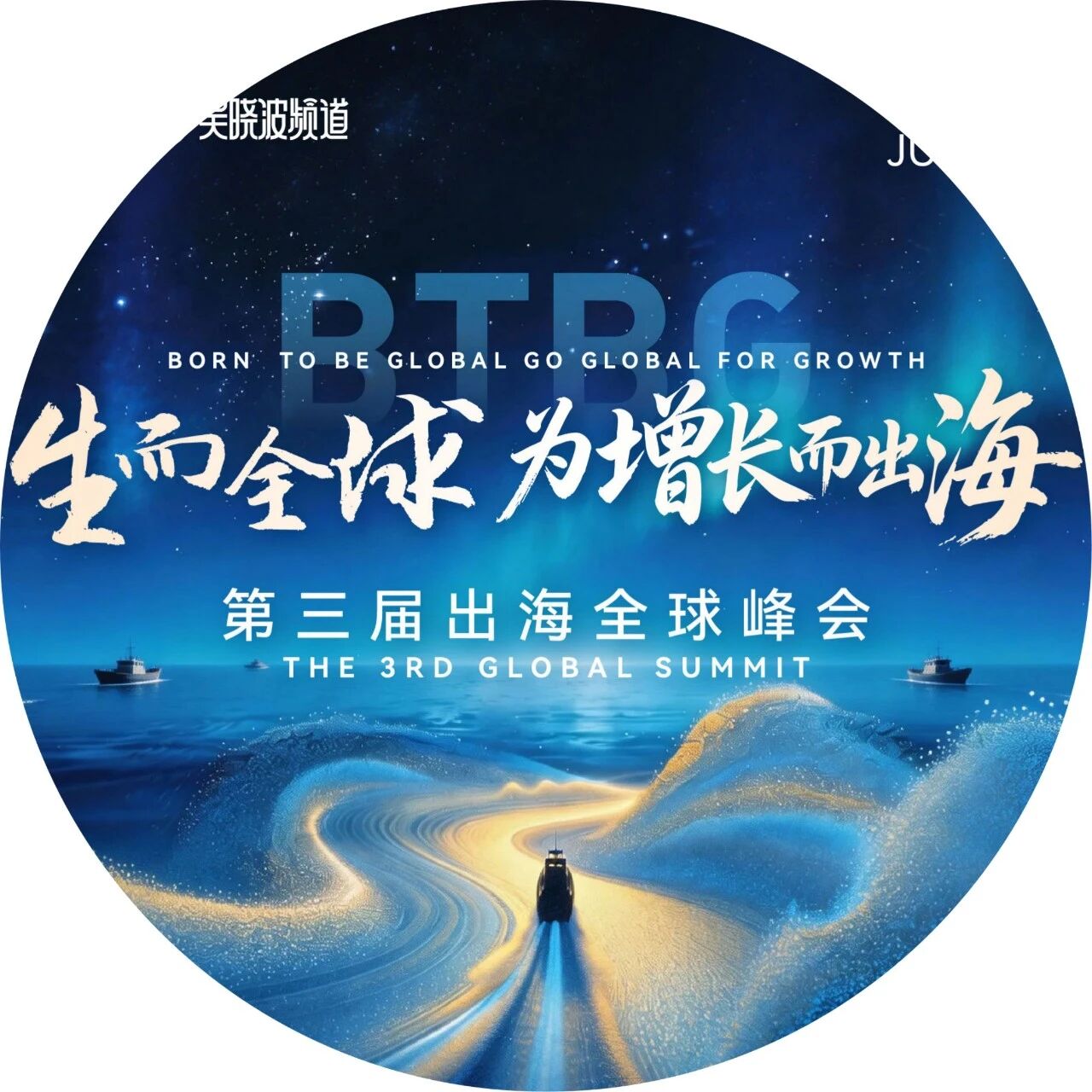
向全球要增长,第三届出海全球峰会6月开幕
吴晓波频道· 2026-03-23 00:21
Core Viewpoint - The article emphasizes the growing trend of Chinese companies going global, driven by the need for higher profits, larger markets, and more opportunities, marking a shift from being pushed to proactively seeking international expansion [3][10][11]. Group 1: Current Trends in Global Expansion - In 2024, China's foreign direct investment reached $192.2 billion, with 34,000 domestic investors establishing 52,000 overseas entities across 190 countries and regions [3]. - By 2025, the import and export volume of private enterprises reached 26.04 trillion yuan, a year-on-year increase of 7.1%, accounting for 57.3% of the total import and export volume [4]. - The article highlights the diverse products and services that Chinese private enterprises are exporting, including clothing, cosmetics, photovoltaic panels, and electric vehicles, contributing to significant growth figures [5]. Group 2: Shifts in Entrepreneurial Mindset - Three years ago, the sentiment among entrepreneurs was largely reactive, with many feeling compelled to go global due to external pressures such as trade wars and market demands [8][9]. - By 2025, the mindset shifted to a more proactive approach, with entrepreneurs actively seeking international opportunities for growth and profitability [10][11]. Group 3: Insights from Global Markets - The article discusses various international markets, such as Indonesia, where a young consumer base presents significant demand, and Ethiopia, where there are supply gaps in essential goods [11][12]. - In regions like the Middle East, ongoing infrastructure projects create a continuous demand for construction materials and home furnishings, indicating potential growth areas for Chinese companies [12]. Group 4: Technological Advancements and New Business Models - The narrative highlights a transformation in China's global economic role, moving from a "world factory" to a leader in technology and innovation, with companies now exporting technology, patents, and operational services [16]. - The article references a historical perspective on China's economic positioning, illustrating how the country has evolved from a low-margin manufacturing base to a more sophisticated global player [15]. Group 5: Upcoming Global Summit - The third "Born to be Global" summit will focus on the theme "Go Global for Growth," aiming to explore growth paths and strategies for Chinese companies in a multipolar world [20][21]. - The summit will feature discussions on various topics, including supply chain restructuring, AI empowerment, and brand globalization, providing a platform for sharing experiences and strategies [21][22].
新泉股份(603179):业绩短期承压,全球化、机器人等新品双轮驱动
GF SECURITIES· 2026-03-22 09:56
Investment Rating - The investment rating for the company is "Buy" with a current price of 64.00 CNY and a fair value of 72.53 CNY [3]. Core Insights - The company is experiencing short-term pressure on its performance, but it is expected to benefit from globalization and new products in robotics, which will drive growth [1][7]. - In 2025, the company achieved a revenue of 15.52 billion CNY, a year-on-year increase of 17.0%, while the net profit attributable to shareholders was 820 million CNY, a decrease of 16.5% year-on-year [8][12]. - The revenue growth slowdown is attributed to a decline in wholesale sales from key clients, particularly international electric vehicle brands [8]. - The company is expanding its global footprint and actively investing in emerging industries such as robotics, which is expected to create a second growth curve [20]. Financial Forecast - Revenue is projected to grow from 13.26 billion CNY in 2024 to 30.84 billion CNY in 2028, with growth rates of 25.5%, 17.0%, 26.3%, 26.5%, and 24.2% respectively [2]. - The net profit attributable to shareholders is expected to increase from 977 million CNY in 2024 to 2.27 billion CNY in 2028, with growth rates of 21.2%, -16.5%, 51.3%, 38.4%, and 32.9% respectively [2]. - The earnings per share (EPS) is forecasted to rise from 2.00 CNY in 2024 to 4.45 CNY in 2028 [2]. Business Performance - The company reported a gross margin of 18.0% in 2025, down 1.6 percentage points year-on-year, primarily due to intensified industry competition and the ramp-up phase of overseas operations [12]. - The net profit margin for 2025 was 5.2%, a decrease of 2.2 percentage points year-on-year [12]. - The company is focusing on enhancing its product offerings and expanding its market share in the automotive interior and exterior parts sector [20].

中国公司全球化周报|TikTok Shop加速拓展欧洲市场/吉利汽车2025年海外销量达42万辆
3 6 Ke· 2026-03-22 02:18
Company Developments - TikTok Shop is accelerating its expansion into the European market, planning to enter the Netherlands, Belgium, Sweden, and Poland, which would bring its operations to ten countries in Europe. Currently, European sales account for only 5.4% of its global revenue, facing challenges from conservative consumer habits and strong competitors like Temu [2] - AliExpress has partnered with YouTube in South Korea, becoming the first Chinese e-commerce platform to join YouTube's shopping alliance program, aiming to enhance its distribution channels and introduce a wider range of global products [2] Automotive Industry - Geely Auto reported a total revenue of 345.2 billion yuan for 2025, a 25% year-on-year increase, with a core net profit of 14.41 billion yuan, up 36%. The company aims for overseas sales of 420,000 units, including 124,000 in new energy vehicles, which is a 240% increase [3] - Chery Auto announced a total revenue of 300.29 billion yuan for 2025, an 11.3% increase, with a net profit of 19.51 billion yuan, up 36.1%. The company sold 2.6314 million self-owned passenger vehicles, a 14.6% increase, with new energy vehicle sales growing by 72.5% [3] - Leap Motor achieved an export volume of 67,052 units in 2025, leading among new Chinese automotive brands. The company has established nearly 900 sales service outlets across about 40 countries [4] Investment and Financing - BYD plans to invest 300 million reais (approximately 390 million yuan) in Brazil to build its first electric vehicle R&D testing center, expected to be operational by 2028 [4] - Huawei's underwater robotics company, Submarine Innovation, completed nearly 100 million yuan in Series C financing, which will be used for core technology development and market expansion [8] - NUBON Bio completed over 100 million yuan in Series C financing, focusing on expanding its global commercial footprint, with 400 overseas clients [8] Market Trends - The global storage chip market is experiencing an unexpected price increase in Q1 2026, with NAND prices rising over 70% due to strong AI demand and supply constraints in consumer electronics [9] - The global electric vehicle traction inverter installation reached 9.65 million units in Q4 2025, marking a two-year high, driven by increased sales of battery electric vehicles [10] - Omdia forecasts that global micro-short drama revenue will grow to 14 billion USD by the end of 2026, with significant contributions from markets outside China, particularly the US [10]


中远海控2025年实现营业收入2195.04亿元
Zheng Quan Ri Bao Wang· 2026-03-20 05:49
Core Insights - COSCO Shipping Holdings Co., Ltd. reported a revenue of 219.5 billion yuan and a net profit of approximately 35.2 billion yuan for the year 2025, with a significant focus on container shipping and terminal operations [1][2] Financial Performance - In 2025, COSCO achieved an EBIT of 45.0 billion yuan and a net profit attributable to shareholders of about 30.9 billion yuan [1] - The container shipping business handled a cargo volume of 27.4 million TEUs, marking a year-on-year increase of 5.76%, generating revenue of 210.7 billion yuan with a gross margin of 19.44% [1] - The terminal business reported a total throughput of 153 million TEUs, up 6.22% year-on-year, with a revenue of 12.0 billion yuan and a gross margin of 25.91% [1] Capital Structure and Returns - By the end of 2025, the company's debt-to-asset ratio decreased to 41.42%, down approximately 1.28 percentage points from the previous year [1] - The cash and cash equivalents balance reached 150.9 billion yuan, and the company announced a cash dividend of 0.44 yuan per share, expected to distribute around 50% of the net profit attributable to shareholders for the year [1] Strategic Initiatives - COSCO has executed four rounds of share buybacks, totaling 866 million shares and over 9.8 billion yuan in buyback amounts [2] - The company aims to establish a global digital supply chain operation and investment platform centered on container shipping, integrating shipping, port, and logistics services [2] - COSCO maintains a fleet of 590 container ships with a capacity of approximately 3.6 million TEUs, leading the industry with a 75% share of owned and chartered vessels [2] Future Outlook - For 2026, COSCO anticipates increased complexity and uncertainty in the container shipping market, focusing on global and scalable development while enhancing digital, green, and integrated operations [3] - The company aims to leverage digital capabilities to optimize service efficiency and operational performance, striving to create a resilient and timely transportation service network for customers [3]
吉利汽车2025年总销量突破300万辆 吉利汽车在销量增长的同时,也呈现出经营效率改善的特征
Zheng Quan Ri Bao· 2026-03-20 03:01
Core Viewpoint - Geely Automobile achieved significant growth in 2025, with total sales reaching 3.025 million units, a 39% year-on-year increase, marking the first time surpassing 3 million units [2] Group 1: Financial Performance - Total revenue for 2025 was CNY 345.2 billion, reflecting a 25% year-on-year growth [2] - Core net profit attributable to shareholders was CNY 14.41 billion, up 36% year-on-year [2] - New energy vehicle sales reached 1.688 million units, a remarkable 90% increase, with the annual new energy penetration rate exceeding 50% for the first time [2] Group 2: Business Structure and Strategy - Geely's business structure in 2025 showed a strong performance across various brands, with Galaxy brand sales at 1.236 million units, a 150% increase, and Lynk & Co sales at 350,000 units, up 23% [3] - The company maintained resilience in fuel vehicle sales, with 1.314 million units sold, leading the Chinese independent brand fuel vehicle market [3] - Geely continues to pursue a multi-faceted energy strategy, integrating fuel, hybrid, extended-range, pure electric, and methanol technologies, providing strong volatility resistance [3] Group 3: Future Focus Areas - The company aims to enhance its focus on intelligence, product premiumization, and globalization as key growth areas [4] - Geely plans to export 420,000 vehicles in 2025, including 124,000 new energy vehicles, a 240% increase, with a target of 640,000 exports in 2026 [4] - The transition to a localized global strategy will involve a shift from trade-based exports to a comprehensive local supply chain approach [4]
中金• 全球研究 | 跨国公司成长启示录上篇(二):美欧日跨国公司观察
中金点睛· 2026-03-19 23:55
Core Insights - The article summarizes the successful experiences of multinational corporations (MNCs) from the US, Europe, and Japan, providing insights for Chinese companies in their globalization efforts. It highlights the common motivations for going global, such as overcoming growth ceilings, avoiding trade barriers, and optimizing cost structures, while also noting the distinct paths taken by different economies based on their unique resources and institutional frameworks [3]. Group 1: United States - US companies focus on high value-added sectors and technological leadership, driven by the need to counter domestic antitrust regulations and optimize production factors. The emphasis on supply chain security has become increasingly important in overseas investment decisions [3][4]. - The US has established a strong technological moat in high value-added fields, particularly in the tech industry, characterized by leading advantages, global tech discourse control, and a shift towards digital economy-driven globalization [3][4][18]. - As of 2022, US MNCs had nearly 40,000 foreign affiliates, generating over $27 trillion in revenue and $3 trillion in net profit, with significant contributions from Europe and the Asia-Pacific region [10][12]. Group 2: Europe - European companies expand overseas primarily due to limited domestic resources and high production costs, necessitating global resource integration to maintain competitiveness [4][42]. - The technological foundation of European firms is characterized by comprehensive capabilities that span from basic research to industrial application, creating significant barriers across the value chain [4][44]. - As of 2023, EU MNCs had over 200,000 foreign affiliates, generating nearly €20 trillion in revenue, with a significant portion coming from intra-European markets [45][49]. Group 3: Japan - Japanese companies transitioned from a "trade nation" to an "investment nation," driven by internal market saturation and external pressures such as trade friction and currency appreciation, prompting a shift towards overseas production [5][65]. - The localization of production has been crucial for Japanese firms, particularly in the automotive sector, achieving an 80% localization rate in overseas production [5][66]. - Japan's unique globalization path emphasizes capital and knowledge-intensive industries, with a focus on lean manufacturing and integrated support from trading companies [5][66].






吉利汽车(0175.HK)2025年年报点评:2026E产品结构改善 全域AI赋能+全球化提速
Ge Long Hui· 2026-03-19 23:21
Core Viewpoint - In 2025, Geely's total revenue is expected to increase by 25.1% year-on-year to CNY 345.23 billion, with a gross margin remaining stable at 16.6% and a net profit attributable to shareholders rising by 0.2% to CNY 16.85 billion, while core net profit is projected to grow by 36% to CNY 14.41 billion [1] Group 1 - Geely's total sales are projected to increase by 39.0% year-on-year to 3.025 million units in 2025, with new energy vehicle (NEV) sales expected to rise by 90% to 1.688 million units, accounting for 55.8% of total sales, an increase of 15 percentage points [2] - The sales forecast for 2026 indicates a steady growth target of 3.45 million units, representing a 14% year-on-year increase, driven by the expansion of luxury products under the Zeekr brand and new models from Lynk & Co and Galaxy [2] Group 2 - Zeekr's privatization was successfully completed by December 2025, with all revenue and profits being fully integrated into Geely, and Zeekr achieving profitability in Q4 2025 with a gross margin of approximately 23% [3] - Geely's global expansion is accelerating, with a target of 640,000 units in export sales for 2026, focusing on key overseas markets and increasing the number of overseas channels to over 2,200 [3] - The company is enhancing its AI capabilities, with plans for the mass production of the H9 model and the scaling of Robotaxi operations, aiming to create a comprehensive intelligent mobility ecosystem [3] Group 3 - The investment rating is maintained at "Buy," with a slight downward adjustment in net profit forecasts for 2026 and 2027, and a new forecast for 2028, alongside a target price adjustment to HK$25.70, reflecting a 13x PE for 2026 [4] - The positive outlook is supported by improvements in product structure and significant growth in export sales [4]