半导体周期

Search documents
锡牛或将启,布局迎时机
2025-08-26 15:02
Summary of Key Points from the Conference Call Industry Overview - The conference call focuses on the tin industry, specifically the global tin supply and demand dynamics, pricing factors, and production challenges in key regions such as China, Indonesia, and Myanmar [1][2][3][4][5]. Core Insights and Arguments - **Tin Price Projections**: To ensure a 10% production capacity, the LME tin price needs to gradually rise to $54,000, while the current price in 2025 is approximately $34,000 [1][3]. - **Global Tin Reserves**: As of 2024, global tin reserves are projected to be around 4.3 million tons, with China accounting for 23% of this total [1][4]. - **Supply and Demand Forecast**: In 2025, global tin supply is expected to grow by 1% to 377,000 tons, while demand is projected to increase by 3% to 385,000 tons, resulting in an 8,000-ton deficit [2][13]. - **Impact of Macroeconomic Factors**: The Federal Reserve's interest rate cuts, the upcoming consumption peak in September, and the launch of new electronic products are anticipated to drive tin prices upward [1][6][8]. - **Myanmar's Production Challenges**: Myanmar's slow recovery from production halts due to various factors, including geological issues and licensing delays, is expected to limit supply impacts until at least 2026 [7][9]. Additional Important Content - **Declining Ore Grades**: The global decline in tin ore grades is leading to rising production costs, with the complete cost expected to reach $34,000 by 2027 and $54,000 by 2030 [3]. - **Regional Production Insights**: Indonesia, as the second-largest tin producer, faces challenges in mining due to geographical constraints, with significant production drops from major companies like Timah [9][11]. - **Emerging Supply Sources**: South America and Africa are identified as potential future sources of tin supply, with expected production increases in countries like Peru and the Democratic Republic of the Congo, despite political instability [10]. - **Domestic Production Trends**: Domestic tin production in China has seen limited growth due to regulatory constraints, with ongoing projects progressing slowly [11]. - **Consumer Demand Drivers**: The global tin consumption is projected to reach 373,000 tons in 2024, driven primarily by the electronics sector, particularly soldering applications [12]. Recommended Companies - **Xiyu Co., Ltd.**: Noted for its resource expansion capabilities and potential in tailings recovery, with strategic partnerships for a northern industrial base [14]. - **Xinyan Silver**: Expected to see production increases from its projects, contributing several thousand tons to the market [14]. - **Huaxi Nonferrous Metals**: Positioned as a key player in resource integration in Guangxi, with potential production boosts from various mining projects [14].
嘉实基金陈俊杰:半导体行业有望迎来“周期+成长”时刻
Zhong Zheng Wang· 2025-08-26 13:53
Group 1 - The core viewpoint is that the development of artificial intelligence (AI) overseas is forming a commercial closed loop along the path of "models, data, applications," transitioning from effective breakthroughs in single fields to comprehensive development across multiple sectors, leading to significant efficiency improvements in various industries [1] - The focus on computing power is highlighted as a key growth area, with two core transitions to understand: the shift from model training to inference applications, and the transition from capital expenditure (Capex) to operational expenditure (Opex), which are crucial for hardware stocks to break traditional valuation limits [1] - The traditional semiconductor cycle is experiencing fluctuations in inventory cycles, gradually penetrating various segments of the industry, suggesting that the semiconductor sector is entering a phase of cyclical recovery and growth attributes that mutually reinforce each other [1]
成立两年半净值翻倍,嘉实全球产业升级是如何做到的?
Xin Lang Ji Jin· 2025-08-18 06:17
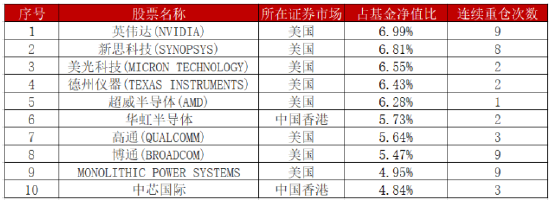
Core Viewpoint - The semiconductor sector has shown strong performance recently, driven by multiple factors including cyclical recovery and AI computing power, leading to improved performance of related active equity funds [1] Group 1: Fund Performance - The Jiashi Global Industrial Upgrade Fund, focused on global semiconductor investments, has seen its cumulative net value exceed 2 yuan since its establishment on February 9, 2023, with a doubling in value [1] - The fund's success is attributed to its forward-looking positioning in technology semiconductor companies amid global industrial upgrade trends [1] Group 2: Top Holdings - The top ten holdings of the Jiashi Global Industrial Upgrade Fund include several leading semiconductor stocks, with NVIDIA being the largest holding at 6.99% and having been held for 9 consecutive periods [2] - Other significant holdings include Synopsys (6.81%, 8 times), Micron Technology (6.55%, 2 times), and Texas Instruments (6.43%, 2 times) [2] Group 3: Investment Strategy - The fund manager, Chen Junjie, has extensive experience in the semiconductor industry and focuses on selecting quality stocks across US, A-share, and Hong Kong markets to pursue long-term sustainable returns [4] - Jiashi has been tracking the potential of AI since 2016 and has established a dedicated research team for smart and semiconductor industries, aiming to capture emerging growth opportunities [4] Group 4: Market Outlook - The semiconductor sector is currently experiencing a structural upturn driven by AI computing demand, which is expected to enhance overall industry demand [5] - Chen Junjie anticipates that the semiconductor industry will continue to benefit from a combination of cyclical recovery and technological innovation, leading to a "sweet spot" for growth [5] Group 5: Investment Approach - For ordinary investors, participating in the fund through regular investment can help mitigate the high volatility associated with the tech sector while benefiting from professional stock selection [6] - The fund's strategy aims to achieve steady asset allocation through gradual investment and long-term holding [6]

芯片ETF(512760)涨超1.5%,机构称半导体周期上行趋势延续
Mei Ri Jing Ji Xin Wen· 2025-08-14 05:47
Group 1 - The core viewpoint is that the global semiconductor cycle is experiencing an upward resonance, with numerous opportunities emerging in the technology sector. The semiconductor industry is in the early to mid-stages of a "growth acceleration period," driven primarily by AI demand, particularly for high-end chips like GPUs and HBM [1] - The current semiconductor cycle is characterized by structural prosperity in core segments such as GPU, HBM, and advanced packaging, driven by AI computing power demand, which is more incremental compared to the previous cycle that was mainly driven by consumer electronics [1] - The semiconductor sector typically exhibits a dual drive of "profit and valuation" during cyclical fluctuations, with market turning points often leading fundamental changes. The trend indicates that after Nvidia's leadership, the semiconductor cycle is expected to rise [1] Group 2 - The Chip ETF (512760) tracks the China Semiconductor Index (990001), which selects listed companies involved in semiconductor materials, equipment, design, manufacturing, packaging, and testing from the Shanghai and Shenzhen markets. This index reflects the overall performance of listed companies in the semiconductor industry [1]
西安奕材持续亏损预计2027盈利:长期借款近60亿,财务成本高昂
Sou Hu Cai Jing· 2025-08-14 02:48
Core Viewpoint - Xi'an Yiswei Material Technology Co., Ltd. (referred to as Xi'an Yicai) is set to undergo its IPO review by the Shanghai Stock Exchange, aiming to raise 4.9 billion yuan for its silicon industry base project, despite being an unprofitable company at the time of application [2][3]. Group 1: Company Overview - Established in 2016, Xi'an Yicai specializes in the research, development, manufacturing, and sales of 12-inch electronic-grade silicon wafers, which are essential for various applications in electronics and new energy vehicles [3]. - The company’s primary products include P-type silicon wafers, which dominate over 90% of the global 12-inch silicon wafer market [3]. Group 2: Financial Performance - Xi'an Yicai reported revenues of 10.55 billion yuan, 14.74 billion yuan, and 21.21 billion yuan from 2022 to 2024, with net losses of 5.33 billion yuan, 6.83 billion yuan, and 7.38 billion yuan during the same period [5]. - The company has accumulated losses of 19.54 billion yuan over the last three years, with a projected timeline to achieve profitability by 2027 [5][8]. Group 3: Product Sales and Pricing - The sales revenue from polished wafers was 4.19 billion yuan, 6.47 billion yuan, and 8.31 billion yuan from 2022 to 2024, with average prices declining by 7.08% and 18.91% in 2023 and 2024, respectively [4]. - Testing wafers generated sales of 4.75 billion yuan, 7.27 billion yuan, and 9.27 billion yuan during the same period, with average prices decreasing by 11.41% and 16.37% in 2023 and 2024 [4]. Group 4: Challenges and Industry Context - The company faces challenges due to the cyclical nature of the semiconductor industry, high investment intensity, and long customer certification periods, which hinder its ability to achieve profitability [5][6]. - Xi'an Yicai's gross profit margins were significantly lower than industry peers, with margins of 9.85%, 0.66%, and 5.49% from 2022 to 2024, compared to industry averages of 30.53%, 24.47%, and 14.91% [8]. Group 5: Debt and Financial Management - Long-term borrowings increased from 17.01 billion yuan to 58.68 billion yuan from 2022 to 2024, raising concerns about financial sustainability [11][12]. - The company’s financial expenses rose significantly, accounting for 6.54% of operating income in 2024, driven by increased borrowing costs [12]. Group 6: Governance and Shareholder Rights - Xi'an Yicai has undergone scrutiny regarding special shareholder rights and agreements, with commitments made to terminate certain rights to comply with regulatory requirements [14][15]. - The company has taken steps to ensure that any previously existing obligations related to shareholder rights are no longer applicable, aiming to mitigate potential risks to its capital structure [16].

招商电子:中芯国际25Q3指引收入环比增长,25Q4备货能见度降低
Zhi Tong Cai Jing· 2025-08-09 15:12
Core Viewpoint - Company reported Q2 2025 unaudited results with revenue of $2.209 billion, a year-on-year increase of 16.2% but a quarter-on-quarter decrease of 1.7%, exceeding guidance [1][3] - Gross margin was 20.4%, up 6.5 percentage points year-on-year but down 2.1 percentage points quarter-on-quarter, slightly above guidance [1][4] - The demand for customer inventory continued into Q3 2025, with expectations for increased shipments and average selling prices (ASP) in Q3, although visibility for Q4 inventory may decrease [1][2] Financial Performance - Q2 2025 revenue was $2.209 billion, a year-on-year increase of 16.2% and a quarter-on-quarter decrease of 1.7%, exceeding guidance [1][3] - Gross margin was 20.4%, a year-on-year increase of 6.5 percentage points and a quarter-on-quarter decrease of 2.1 percentage points, slightly above guidance [1][4] - Net profit attributable to the parent company was $132 million, down 20% year-on-year and down 30% quarter-on-quarter [1][4] - Cash flow from operating activities was $1.07 billion, with net cash used in investing activities at $1.56 billion and net cash from financing activities at $958 million [6] Operational Highlights - Q2 2025 shipment volume increased by 4.3% quarter-on-quarter to 2.39 million 8-inch equivalent wafers, with capacity utilization at 92.5%, up 2.9 percentage points [1][10] - ASP for 8-inch wafers decreased by 6.4% quarter-on-quarter due to production fluctuations and changes in product mix [1][10] - The company maintained a strong demand for its products, particularly in the analog chip sector, with significant growth in image sensors, RF, and automotive electronics [2][10] Q3 Guidance - For Q3 2025, the company expects revenue to increase by 5-7% quarter-on-quarter, with both shipment volume and ASP anticipated to rise [2][8] - Gross margin is expected to remain stable at 18-20%, primarily due to increased output offsetting rising depreciation costs [2][8] Market Dynamics - The company noted a significant increase in demand for analog chips, particularly in mobile fast charging and power management sectors, driven by domestic customers accelerating the replacement of foreign suppliers [2][10] - The automotive electronics segment showed steady growth, with double-digit percentage increases in shipments for PMICs, image sensors, and embedded storage chips [2][10] - The overall market remains in a supply-demand imbalance, with strong customer confidence leading to continued inventory buildup [2][19] Strategic Insights - The company is focusing on enhancing its product offerings to meet the evolving needs of customers, particularly in the power device market [23][24] - There is a strategic shift towards providing comprehensive solutions rather than single products, aligning with customer demands for integrated solutions [23][24] - The company is also working to balance the needs of international clients with the rapidly growing domestic customer base, particularly in the 8-inch wafer segment [24][25]

【招商电子】华虹25Q2跟踪报告:产能利用率满载叠加涨价,25Q3收入指引积极
招商电子· 2025-08-09 12:18
Core Viewpoint - The company reported Q2 2025 revenue of $566.1 million, an increase of 18.3% year-on-year and 4.6% quarter-on-quarter, meeting guidance. The gross margin was 10.9%, exceeding previous guidance of 7-9% [1][20][21]. Group 1: Financial Performance - Q2 2025 revenue was $566.1 million, driven by increased shipment volumes. Gross margin improved to 10.9%, benefiting from higher capacity utilization and average selling price (ASP) increases, partially offset by rising depreciation costs [1][20][21]. - Net profit attributable to shareholders was $8 million, up 19.2% year-on-year and 112.1% quarter-on-quarter [1][21]. - Operating expenses were $97.9 million, an increase of 8.4% year-on-year, mainly due to rising R&D and depreciation costs [21]. Group 2: Revenue Breakdown - Embedded non-volatile memory platform revenue reached $141.2 million, up 3% year-on-year and 8.5% quarter-on-quarter [2][23]. - Power device revenue was $166.7 million, a 9.4% increase year-on-year, driven by demand for super junction MOSFETs [2][23]. - Revenue from analog and power management ICs surged 59.3% year-on-year to $161.2 million, driven by increased demand for power management integrated circuits [2][23]. Group 3: Future Guidance - Q3 2025 revenue guidance is set between $620 million and $640 million, with a midpoint indicating a 19.7% year-on-year increase and an 11.3% quarter-on-quarter increase, supported by growth in AI and automotive sectors [1][20][25]. - Gross margin for Q3 is expected to be between 10% and 12%, with visibility for Q4 remaining low but still within this range [25][34]. Group 4: Capacity and Production - The new 12-inch production line in Wuxi is expected to reach full capacity by mid-2026, with half of the capacity already online [1][20]. - By the end of 2025, the utilization rate of the new plant is projected to reach 80-90% [25][35]. Group 5: Market Strategy - The company aims to enhance its competitive position in the wafer foundry industry by focusing on core competencies in product, process, R&D, and supply chain management [20][28]. - The strategy includes collaboration with domestic and international strategic customers to expand its global customer base [20][28].

【招商电子】中芯国际:25Q3指引收入环比增长,25Q4备货能见度降低
招商电子· 2025-08-09 12:18
Core Viewpoint - The company reported a revenue of $2.209 billion for Q2 2025, showing a year-on-year increase of 16.2% but a quarter-on-quarter decrease of 1.7%, slightly exceeding guidance [2][10]. Financial Performance - Q2 2025 revenue was $2.209 billion, with a gross margin of 20.4%, reflecting a year-on-year increase of 6.5 percentage points but a quarter-on-quarter decrease of 2.1 percentage points [2][10][14]. - The net profit attributable to the parent company was $132 million, down 20% year-on-year and 30% quarter-on-quarter [2][10]. - The company’s total assets stood at $49.4 billion, with total liabilities of $16.7 billion and total equity of $32.7 billion [10]. Market Demand and Product Performance - Demand for analog chips, particularly in smartphone fast charging, power management, and automotive electronics, has significantly increased, with a notable growth in image sensors and RF products [3][14]. - The company expects Q3 2025 revenue to grow by 5-7% quarter-on-quarter, with both shipment volume and average selling price (ASP) anticipated to rise [3][16]. - The company’s production capacity utilization rate reached 92.5% in Q2 2025, reflecting a quarter-on-quarter increase of 2.9 percentage points [2][14]. Customer Inventory and Supply Chain - Customer inventory replenishment is expected to continue into Q3 2025, although visibility for Q4 2025 is anticipated to decrease [4][16]. - The company has observed a strong demand for its products, with a significant portion of its revenue coming from domestic customers, particularly in the automotive sector [13][26]. Strategic Outlook - The company plans to maintain a stable and gradual expansion strategy, with capital expenditures projected at $7-8 billion annually [38]. - The company is focusing on enhancing its product offerings, including power devices and integrated solutions, to meet the evolving needs of its customers [24][25]. Industry Trends - The semiconductor industry is expected to maintain a steady growth trajectory, with a projected annual growth rate of 5-6% over the next two years, driven by demand in AI-related foundry services [35]. - The company is well-positioned to benefit from the ongoing domestic substitution trend, particularly in the networking and storage sectors, which are experiencing rapid growth [30][31].

中芯国际产能“拉满”,净利润同比降19%
2 1 Shi Ji Jing Ji Bao Dao· 2025-08-08 15:24
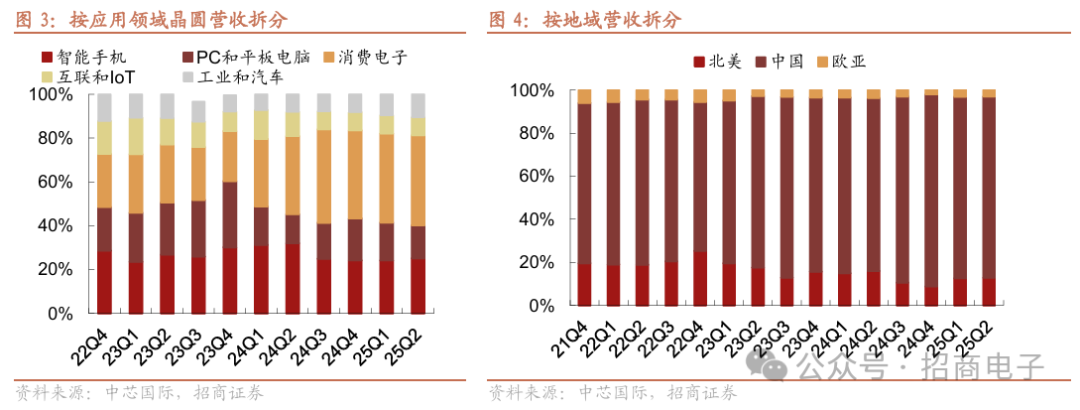
Core Viewpoint - Semiconductor foundry leader SMIC reported a mixed performance in Q2 2023, with revenue slightly declining but showing year-on-year growth, while net profit fell short of market expectations [1][2]. Financial Performance - Q2 2023 revenue was $2.209 billion, a decrease of 1.7% quarter-on-quarter but an increase of approximately 16.2% year-on-year [1]. - Net profit for Q2 was $132.5 million, down 19% year-on-year, and below market expectations of $167.1 million [1]. - Gross margin for Q2 was 20.4%, a decrease of 2.1 percentage points quarter-on-quarter but an increase of 6.5 percentage points year-on-year [1]. - For the first half of 2023, total revenue reached $4.46 billion, a 22% increase year-on-year, with a gross margin of 21.4%, up 7.6 percentage points from the previous year [5]. Capacity Utilization - Q2 capacity utilization rate was 92.5%, an increase of 2.9 percentage points quarter-on-quarter and up 7.3 percentage points year-on-year [1][6]. - The monthly capacity for 8-inch and equivalent wafers increased to 991,000 pieces by the end of Q2 [6]. Market Outlook - SMIC's guidance for Q3 2023 indicates a revenue growth of 5% to 7% quarter-on-quarter, with a gross margin forecast of 18% to 20% [1]. - The semiconductor industry is expected to grow at a rate of 5% to 6% in the coming year, with AI-related foundry demand potentially increasing even more [2]. - The company remains optimistic about future growth, aiming to exceed the average performance of comparable peers for the year [8]. Segment Performance - Revenue from the consumer electronics sector accounted for 41% of total revenue, while smartphones contributed 25.2% [5]. - The automotive and industrial sectors showed a growing revenue contribution, with automotive electronics experiencing a 20% quarter-on-quarter growth in Q2 [5]. - Demand for analog chips, particularly in fast charging and power management applications, has significantly increased, driven by domestic companies replacing foreign suppliers [5][6]. Pricing and Competition - The average selling price (ASP) of SMIC's products decreased by 6.4% quarter-on-quarter in Q2, but an increase in ASP is expected in Q3 due to the removal of discounts on 12-inch wafers [9]. - The company is cautious about price competition, indicating that it will support customers in maintaining market share if necessary [9].
中芯国际产能“拉满”,净利润同比降19%
21世纪经济报道· 2025-08-08 15:21
Core Viewpoint - SMIC's second-quarter financial results showed a mixed performance with a slight revenue decline but significant year-on-year growth, indicating resilience in the semiconductor industry despite challenges [2][3]. Financial Performance - In Q2, SMIC reported sales revenue of $2.209 billion, a 1.7% decrease quarter-on-quarter but a 16.2% increase year-on-year. Net profit was $132.5 million, down 19% year-on-year, falling short of market expectations [2]. - The gross margin for Q2 was 20.4%, down 2.1 percentage points quarter-on-quarter but up 6.5 percentage points year-on-year [2]. - For the first half of the year, SMIC's sales revenue reached $4.46 billion, a 22% increase compared to the same period last year, with a gross margin of 21.4%, up 7.6 percentage points year-on-year [5]. Capacity Utilization and Industry Outlook - SMIC's capacity utilization rate significantly improved to 92.5% in Q2, up 2.9 percentage points quarter-on-quarter and 7.3 percentage points year-on-year, indicating a recovery in industry demand [3][6]. - The company anticipates a revenue growth of 5% to 7% in Q3, with a gross margin guidance of 18% to 20% [2]. Market Segmentation and Demand - In Q2, 84.1% of SMIC's revenue came from the China region, with 12.9% from the U.S. and 3.0% from Europe and Asia [5]. - The consumer electronics sector accounted for the largest share of revenue at 41%, followed by smartphones at 25.2% and industrial and automotive sectors at 10.6%, with the latter showing continuous growth [5]. - Demand for automotive chips is expected to grow, driven by increasing shipments of analog power management, image sensors, and embedded logic chips [5]. Product Trends and Pricing - The average selling price (ASP) of SMIC's products decreased by 6.4% quarter-on-quarter in Q2, but an increase is expected in Q3 due to the removal of discounts on 12-inch wafer products [10]. - There is a trend of "downgrading" in mobile chip features, with advanced functionalities now being integrated into lower-priced smartphones, leading to increased demand for chips [10].