
居民消费率

Search documents
国泰海通 · 晨报1105|宏观、海外策略、海外科技、食饮
国泰海通证券研究· 2025-11-04 12:09
Group 1: Core Views on Consumer Spending - The "14th Five-Year Plan" emphasizes a significant increase in the resident consumption rate, aiming for around 50% in the next five years, reflecting a more pragmatic and achievable target compared to previous plans [3] - Various policy efforts will drive the evolution of the resident consumption rate, with projections suggesting it could rise to a range of 42%-47% by 2030, contributing an additional 2.9-3.9 percentage points to nominal GDP growth [5] Group 2: Analysis of Factors Affecting Consumption Rate - Since 1995, the resident consumption rate in China has decreased by 8 percentage points, with key contributing factors including ineffective redistribution effects (2.2 percentage points), limited channels for property income (1.4 percentage points), and fluctuations in average consumption propensity (3.9 percentage points) [7] - The importance of structural reforms in income distribution and consumer expectations is highlighted, indicating that achieving consumption targets requires a coordinated approach rather than merely setting goals [7] Group 3: Market Performance and Economic Indicators - Global indices mostly rose, with MSCI Global up by 0.6%, and emerging markets showing a 0.9% increase, while the U.S. 10Y Treasury yield saw a significant rise [8] - The earnings expectations for U.S. tech and consumer discretionary sectors were notably revised upwards, with the S&P 500's 2025 EPS forecast increasing to 270 [9] Group 4: Semiconductor Storage Controller Market Insights - The global SSD controller market is projected to grow rapidly, with an estimated size of approximately $24.965 billion in 2024, expected to reach $27.763 billion in 2025, and a compound annual growth rate of about 14.4% from 2025 to 2032 [14] - The competitive landscape features both independent manufacturers and IDM firms, with the former excelling in customer diversity and technical services, while the latter focuses on product integration for their SSD offerings [15] Group 5: Investment Recommendations in Consumer Goods - The beverage, snack, and food raw material sectors continue to show performance advantages, while the liquor sector is experiencing a significant downward adjustment, with Q3 2025 liquor revenue down by 18% year-on-year [16] - The consumer goods sector shows a mixed performance, with beer and soft drinks experiencing growth, while other segments like traditional liquor and prepared foods face challenges [17]


【策略周报】市场热情仍高,风格或有所切换
华宝财富魔方· 2025-11-02 11:28
Key Points Summary Group 1: Important Events Review - The Federal Reserve announced a 25 basis point reduction in the federal funds rate target range to 3.75% to 4.00%, citing moderate economic expansion, a slight increase in unemployment, and rising inflation levels since the beginning of the year [2] - China and the U.S. reached a consensus on various trade issues during a meeting between President Xi Jinping and President Trump, including maritime and logistics measures, tariff extensions, and agricultural trade [2] - In the first three quarters, China's total retail sales of consumer goods reached 365,877 billion yuan, a year-on-year increase of 4.5%, with significant growth in staple and upgraded goods [2] Group 2: Economic Planning and Policy - China released the full text of the 14th Five-Year Plan (2026-2030), emphasizing economic growth within a reasonable range and the role of domestic demand in driving growth, alongside increased focus on national security and technology goals [3] - The People's Bank of China announced the resumption of government bond trading operations, indicating a positive outlook for the bond market after a period of suspension due to market imbalances [3] - The U.S. Senate voted to terminate President Trump's comprehensive tariff policy, reflecting a shift in trade policy direction [3] Group 3: Manufacturing and Economic Indicators - The manufacturing Purchasing Managers' Index (PMI) for October was reported at 49.0%, a decrease of 0.8 percentage points from the previous month, indicating a contraction in manufacturing activity [4] - The production index and new orders index for October were 49.7% and 48.8%, respectively, showing declines of 2.2 and 0.9 percentage points from the previous month [4]

王一鸣谈“十五五”规划建议:持续增强高质量发展动力
Zheng Quan Shi Bao· 2025-11-01 02:35
Core Viewpoint - High-quality development is the primary task for building a modern socialist country and is the theme for the 14th Five-Year Plan period [1] Group 1: High-Quality Development - The focus should be on accelerating high-level technological self-reliance and developing new productive forces, achieving substantial breakthroughs in technological innovation and economic structure optimization [1] - A strong domestic market should be built to promote a consumption-driven economic model, ensuring a dynamic balance between supply and demand at a higher level [1] Group 2: Supply-Side Insights - Emphasis on leading the construction of a modern industrial system through technological innovation, capturing opportunities from the new round of technological revolution [2] - The manufacturing sector's reasonable proportion is crucial, with China's manufacturing share currently around 25%, which is still about 10 percentage points higher than the global average [2] Group 3: Demand-Side Strategies - Building a strong domestic market is essential, with a focus on combining investments in physical assets and human capital [3] - Increasing public service spending and enhancing human resource development are necessary to adapt to demographic changes and ensure sustainable economic growth [3] Group 4: Consumer Spending - Improving the resident consumption rate is linked to increasing resident income, which can be achieved through urban and rural income growth plans and reallocating investment funds to public services [4]
王一鸣谈“十五五”规划建议:持续增强高质量发展动力
证券时报· 2025-11-01 02:21
Core Viewpoint - High-quality development is the primary task for building a modern socialist country and is the theme for economic and social development during the 14th Five-Year Plan period [1] Group 1: High-Quality Development - Accelerating high-level technological self-reliance and developing new productive forces are essential for achieving substantial progress in technological innovation and economic structure optimization [1] - The strategy of expanding domestic demand is crucial for building a strong domestic market and promoting a consumption-driven economic model [1] Group 2: Manufacturing Sector - Maintaining a reasonable proportion of manufacturing is important, with China's manufacturing sector currently accounting for about 25% of GDP, which is still above the global average by nearly 10 percentage points [2] - The demand for manufacturing products tends to decrease as GDP per capita exceeds $10,000, while the demand for services increases [2] Group 3: Domestic Market and Investment - Building a strong domestic market requires a combination of improving people's livelihoods and promoting consumption, as well as investing in both physical and human capital [2] - The previous reliance on infrastructure and industrial project investments to stimulate growth has led to supply-demand imbalances, characterized by "strong supply and weak demand" [2] Group 4: Human Capital Investment - Increasing investment in public services and improving the proportion of public service spending in fiscal revenue are essential for enhancing people's income [3] - The focus on human capital investment is crucial as the total population decreases and the contribution of labor to economic growth declines [4] Group 5: Consumption and Income - Raising the resident consumption rate is linked to increasing residents' income, which can be achieved through urban-rural income growth plans and reallocating funds from traditional investments to public services [4]

如何投资于人?增加民生公共服务投入
Nan Fang Du Shi Bao· 2025-10-31 23:05
Core Insights - The article discusses the recently published "14th Five-Year Plan" and its implications for China's economic transformation and development goals [4][6]. Group 1: Economic Transformation - China's manufacturing sector is transitioning from a cost advantage to a comprehensive competitive advantage, supported by a super-large market, complete industrial chain, and rich talent resources [5]. - The super-large market, with over 1.4 billion people and more than 400 million middle-income individuals, is expected to unleash significant demand potential, benefiting manufacturing costs through economies of scale [5]. - The complete industrial chain advantage enhances industrial support capabilities, while the abundance of talent, particularly in STEM fields, strengthens industrial competitiveness [5]. Group 2: Development Goals - The plan aims for per capita GDP to reach the level of moderately developed countries by 2035, with an average growth rate target of 4.5% during the "15th Five-Year Plan" [6]. - The average growth rate during the "14th Five-Year Plan" is projected to be around 5.4%, contingent on achieving a 5% growth target this year [6]. Group 3: Unified National Market - The construction of a unified national market is essential for supporting domestic circulation and enhancing the internal dynamics of the economy [7]. - Current challenges include "involutionary" competition, distorted local investment policies, and market fragmentation, which hinder the free flow of production factors [7]. Group 4: Economic Development Model - The economic growth model is shifting from reliance on investment and exports to one driven by domestic demand, consumption, and endogenous growth [8]. - The article highlights the need to increase the household consumption rate, which has been relatively low compared to historical levels and international benchmarks [8][9]. Group 5: Investment in People - The plan emphasizes the importance of combining investments in physical assets with investments in human capital, advocating for increased public service and social welfare spending [9][10]. - By reallocating funds from traditional investment projects to enhance public services, the aim is to boost household income and consumption capacity [10].
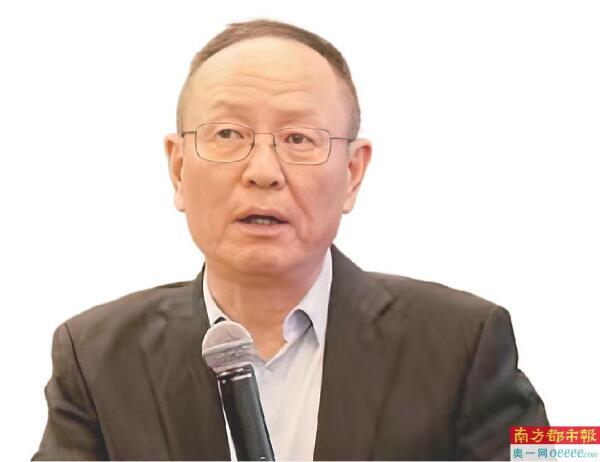
王一鸣谈全国统一大市场建设:应提高制度统一性、规则一致性
Sou Hu Cai Jing· 2025-10-31 08:42
Core Viewpoint - The "14th Five-Year Plan" outlines China's economic and social development goals for the next five years, emphasizing a shift from investment and export-driven growth to a model focused on domestic demand, consumption, and endogenous growth [1][12]. Group 1: Economic Transition - China's manufacturing sector is transitioning from a cost advantage to a comprehensive competitive advantage, supported by a super-large market, complete industrial chain, and rich talent resources [1][5]. - The super-large market, with over 1.4 billion people and more than 400 million middle-income individuals, is expected to unleash significant demand potential as income levels rise [5][6]. - The plan aims for per capita GDP to reach the level of moderately developed countries by 2035, with an average growth rate of 5.4% during the "14th Five-Year Plan" period [6]. Group 2: Domestic Market Development - The construction of a unified national market is essential for smooth domestic circulation, requiring the elimination of market segmentation and enhancing institutional uniformity and rule consistency [9]. - Current challenges include "involutionary competition," distorted local investment policies, and market fragmentation, which hinder the free flow of production factors [9][12]. Group 3: Consumer Spending and Public Investment - The shift towards a consumption-driven economy necessitates increasing the resident consumption rate, which has been relatively low compared to other countries [12][13]. - The plan emphasizes the need to increase government spending on public services and social welfare, reallocating funds from traditional investment projects to enhance public service and living standards [13].
“十五五”规划建议全面解读
Minmetals Securities· 2025-10-31 04:53
Group 1: Key Directions of the 15th Five-Year Plan - The 15th Five-Year Plan is positioned as a critical period for achieving socialist modernization by 2035, focusing on high-quality development and economic stability[1] - The plan emphasizes the importance of the real economy, with advanced manufacturing as the backbone, and aims to create a unified, open, competitive, and orderly market system[1] - The plan aims to enhance domestic circulation and promote consumption upgrades, with a focus on expanding the middle-income group[1] Group 2: Main Goals During the 15th Five-Year Plan - The primary goals include maintaining reasonable economic growth, steadily improving total factor productivity (TFP), and increasing the resident consumption rate[2] - The plan highlights the importance of common prosperity, technological self-reliance, and national security as key objectives[2] - The plan aims to achieve high-quality development by integrating digitalization, greening, and industrial innovation[2] Group 3: Focus on Domestic and International Circulation - Strengthening domestic circulation is crucial, with an emphasis on consumption upgrades and investment expansion[3] - The plan aims to eliminate barriers to the construction of a unified national market, facilitating smooth circulation of goods and factors across the country[3] - The plan emphasizes the need for effective investment, focusing on quality and efficiency rather than merely increasing investment volume[3] Group 4: Enhancing People's Livelihood and Common Prosperity - The plan aims to promote common prosperity by focusing on employment, income distribution, education, social security, and housing[4] - It emphasizes the need for equitable public services and improving the welfare of the population to enhance growth resilience[4] - The plan includes specific measures to support rural revitalization and agricultural modernization, ensuring food security and increasing farmers' income[4]
支撑“十五五”高质量发展,财政、货币政策新提法释放新信号
第一财经· 2025-10-29 15:47
Core Viewpoint - The "15th Five-Year Plan" emphasizes high-quality development without setting explicit economic growth targets, focusing instead on enhancing domestic consumption and ensuring sustainable fiscal and monetary policies [3][5][6]. Fiscal Policy - The "15th Five-Year Plan" suggests a shift towards a more sustainable fiscal policy, emphasizing the importance of active fiscal measures while ensuring fiscal sustainability [5][6]. - In the first three quarters of this year, China's general public budget revenue was 163.876 billion yuan, a year-on-year increase of 0.5%, while expenditure was 208.064 billion yuan, up 3.1% [5]. - The plan indicates a need for fiscal policy to support economic stability and new growth drivers, while managing debt effectively [6][7]. Monetary Policy - The plan prioritizes the improvement of the central banking system and the establishment of a comprehensive macro-prudential management framework [7][8]. - There is a focus on enhancing the transmission mechanism of monetary policy to better serve the real economy, with expectations of maintaining a moderately loose monetary policy [9][10]. - The central bank is expected to continue reforms to improve the efficiency of monetary policy transmission, addressing challenges in interest rate adjustments [9][10]. Consumer Spending - The plan highlights the importance of increasing the resident consumption rate, aiming to boost consumer spending through policy coordination and income enhancement [11][12]. - In the first three quarters, final consumption expenditure contributed 53.5% to economic growth, an increase of 9 percentage points compared to the previous year [12]. - Recent policies, such as the implementation of personal consumption loan interest subsidies, aim to lower borrowing costs and stimulate consumer demand [13][12]. Policy Implementation - The plan calls for the removal of unreasonable restrictions on consumption and the establishment of supportive measures for new consumption patterns [13][12]. - It emphasizes the need for precise policy delivery to enhance consumer confidence and reduce living burdens, thereby unlocking suppressed consumption potential [13][12].

“十五五”规划系列报告(七):提高消费率:愿景路径各几何?
Minsheng Securities· 2025-10-29 11:27
Group 1: Consumption Rate Goals - The "14th Five-Year Plan" proposes a significant increase in the household consumption rate, targeting an increase of at least 5-7 percentage points over the next five years[3] - By 2035, China's per capita GDP is expected to reach the level of moderately developed countries, with a potential increase of approximately 14 percentage points in household consumption rate compared to the average of 54% in major developed economies[3] Group 2: Pathways to Increase Consumption - Two main pathways to enhance the consumption rate are stimulating willingness and supporting capability, with the former reflecting consumer willingness and the latter reflecting income capability[4] - Historical evidence suggests that enhancing consumer willingness has been more effective in driving consumption rate improvements compared to merely increasing income capability[4] Group 3: Current Consumption Trends - Currently, China's household consumption rate is below 40%, while major developed economies have rates exceeding 50%, indicating a significant gap[5] - Consumer willingness in China is approximately 65%, compared to over 90% in major developed countries, highlighting a critical constraint on consumption rate improvement[5] Group 4: Potential for Consumption Rate Increase - In an extreme scenario where China's consumption propensity rises to 90%, the consumption rate could potentially reach 55%, indicating a remaining potential increase of about 15 percentage points[6] - If consumer willingness increases by 10% to around 75%, the consumption rate could rise by 5 percentage points to approximately 45%[7]
理解十五五规划的三个定量指标:——《十五五规划》系列报告三
EBSCN· 2025-10-29 06:45
Group 1 - The "15th Five-Year Plan" proposes three important quantitative indicators for economic development: steady improvement of total factor productivity, significant increase in the consumption rate, and maintaining economic growth within a reasonable range [3][10][15] - Total factor productivity is emphasized as a new indicator to measure economic efficiency and productivity development, with strategies including optimizing traditional industries, supporting emerging industries, and promoting core technology breakthroughs [3][10][11] - The plan aims to increase the resident consumption rate by 3-5 percentage points to 43%-45%, enhancing domestic demand as a key driver of economic growth [15][16][18] Group 2 - The plan outlines a clear blueprint for the next five years, with a focus on high-quality development, technological self-reliance, and comprehensive deepening of reforms [4][5] - It includes twelve key tasks across various sectors such as industry, technology, domestic market, and green development, with a notable shift in priorities compared to previous plans [5][8] - The emphasis on a strong domestic market and the need to break down barriers to create a unified national market is highlighted as essential for enhancing internal circulation [24][25] Group 3 - The plan stresses the implementation of more proactive macroeconomic policies to maintain economic growth within a range of 4.5%-5% [3][26] - It calls for strengthening counter-cyclical and cross-cyclical adjustments in macroeconomic policies, indicating a more aggressive approach compared to previous plans [26][27] - Financial policies are to be aligned with industrial development, emphasizing the importance of direct financing and the use of diverse financial instruments to support economic growth [31][32]